
Inactive· since Jun 9, 2026
- 35
- days it ran
- 0
- relaunches
Ad copy
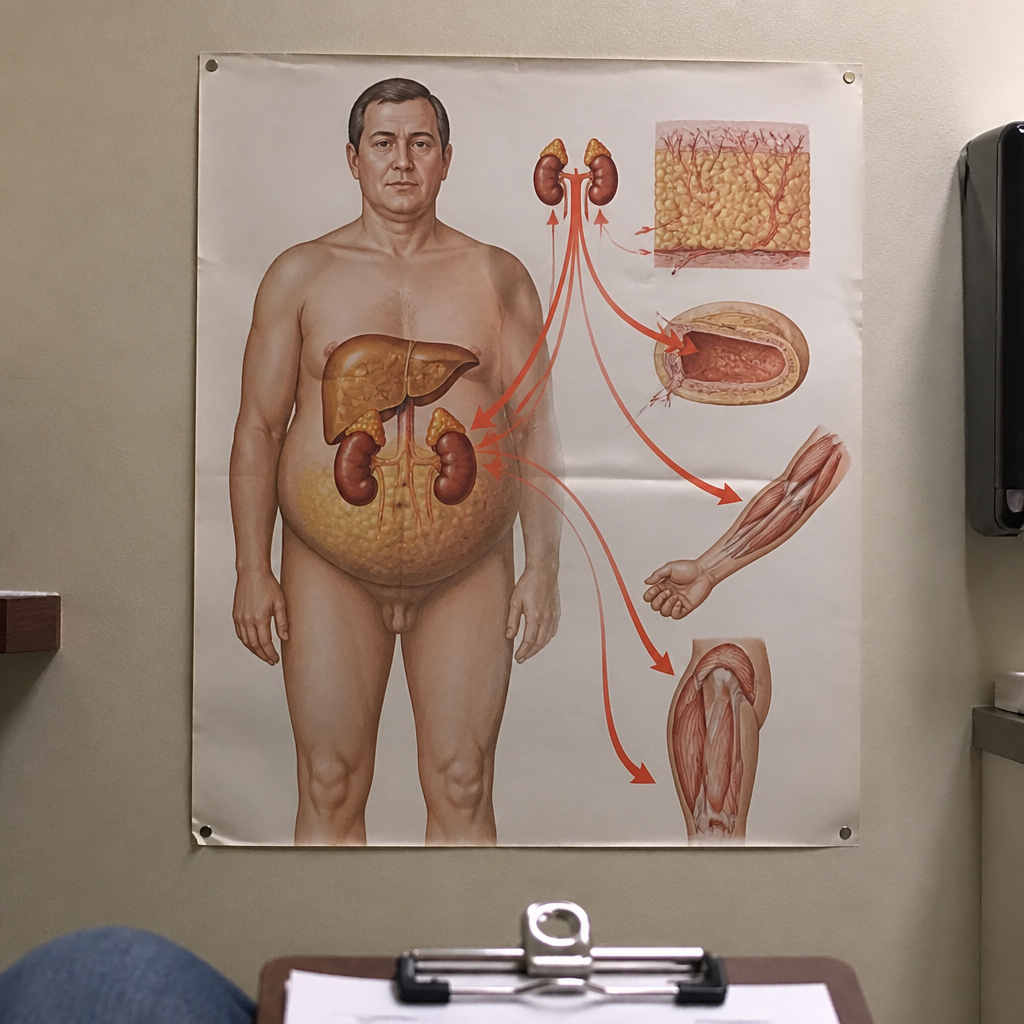
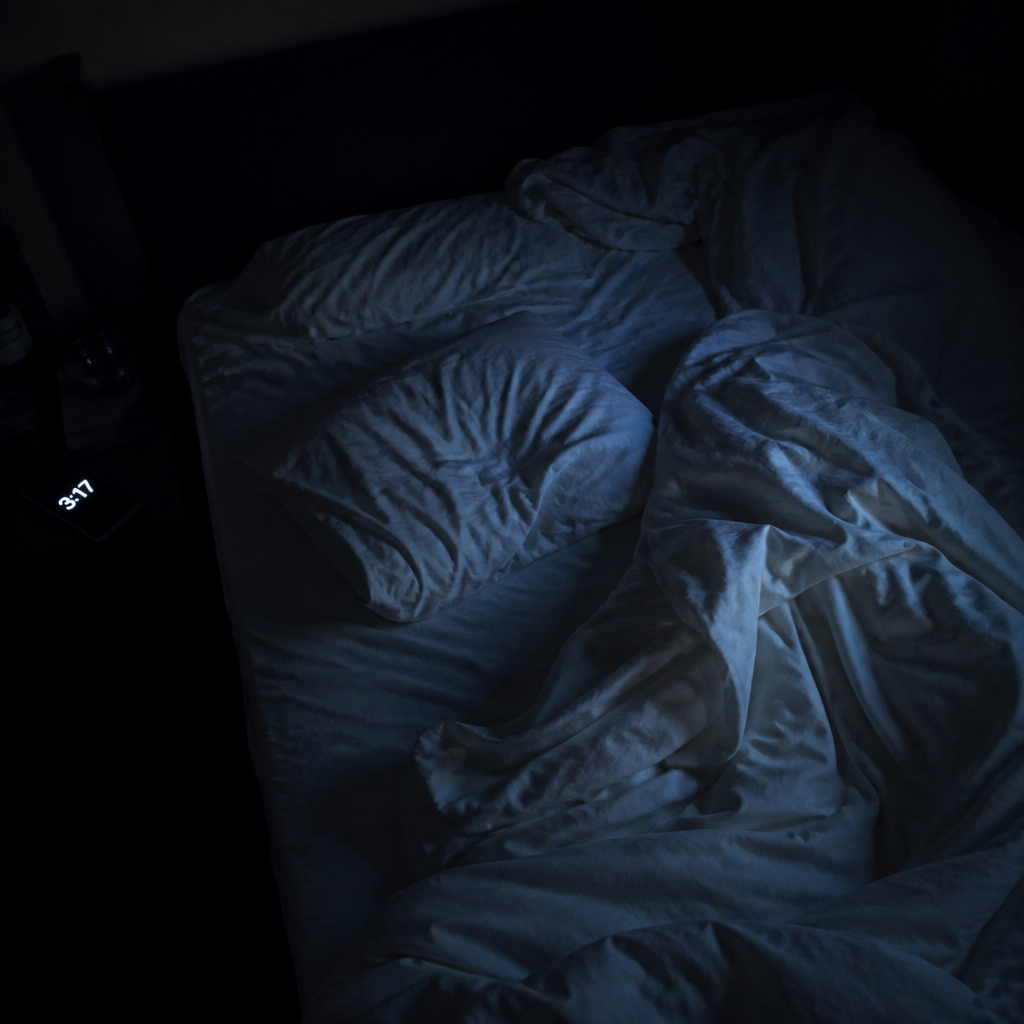
I'm a sleep coach for middle aged men who suffer from sleep issues, and last week a client of mine canceled his sleep therapy program. Not because he gave up. Because of something that happened during his sleep assessment that I've never seen in 22 years of coaching. I've been working with men over 50 for 22 years. I've seen every stage of sleep problem. Every level of brain fog. Every type of deterioration. I can tell within 30 seconds of watching a man walk into my office what trajectory he's on. Last week, I couldn't. A client came in expecting the worst. His nights had been getting worse for three years. His cognitive assessment six months ago was so low I'd started the conversation about early retirement. He was bracing for me to tell him it was time to stop fighting and start planning the rest of his life. I ran him through his assessment. And I stopped dead. His numbers looked different. I couldn't believe it. His sleep onset had dropped from 47 minutes to 12. His total sleep time went from barely managing 3 hours to a clean 7. His working memory test — the one that predicts cognitive decline — was faster than men ten years younger. I looked at him. "What have you been doing?" "Nothing crazy. Just something my brother-in-law told me about." I didn't believe him. "New CBT protocol? Ambien? Different prescription? New magnesium stack?" "Nothing like that. Just this one thing I've been taking for about two months." I pulled up his previous assessments and compared. His cognitive function had reversed by what looked like five years. His sleep architecture was rebuilding. I sat back in my chair. "I'm going to be honest with you. I don't think you need to think about stepping down or making life changes anymore." He looked confused. "But my memory —" "Your memory is functioning better than it was three years ago." Long pause. "So what do I do now?" "Keep doing whatever you're doing. Because it's working better than anything I was about to recommend." He walked out. And I spent the rest of the week wondering what he knew that I didn't. Here's what bothers me. I've been coaching men through midlife insomnia for my whole adult life. I know every sleep protocol, every supplement stack, every intervention that's supposed to work. And I see the same thing in my office every single day. Men in their 50s and 60s with their minds fading no matter what they do. Eyes burning after a one-hour meeting at work. Brains that can't hold the thread of a sentence. Gripping their third coffee of the morning like their job depends on it — because it does. Can't sit through a 20-minute conversation without zoning out. Groggy for days after every sleeping pill but never actually rested. Lying in bed 9 hours and still waking up exhausted. And the worst part? The fear. That quiet terror when they realize this might be it. The "package." The early retirement. The shell of a man in a recliner. That's what I see all day long. Men who are slowly losing their careers no matter how disciplined they get. And I help them. Temporarily. I adjust their routines. Increase their sleep window. Switch up the wind-down protocol. Then they come back eight weeks later and their numbers are the same or worse. Because melatonin and sleep hygiene are ways to minimize the symptoms of a broken cortisol rhythm. They don't fix the root cause. They can't restore the hormone pattern that your sleep depends on. They can't bring the cortisol down at night the way it needs to fall for your nervous system to actually power off. And no matter how much chamomile tea you drink or how many gummies you chew, none of that ever restores the rhythm that deep sleep depends on. I've suspected this for years. But I'd never seen someone who figured out how to actually reverse this problem. Until last week. I called him that evening. "I know this is unusual but I can't stop thinking about your assessment. What are you actually taking?" He didn't hesitate. "Something that restores the cortisol rhythm your sleep has been waiting on. Two capsules, about an hour before bed." We talked for 40 minutes. He told me he'd spent years trying everything I'd recommended. Doubled his melatonin. 3mg. Then 5mg. Then 10mg. Then "extra strength." More melatonin than he'd taken in his entire life. His sleep? Got worse. He started CBT-I. Twice a month. Sleep restriction. Stimulus control. Cognitive reframing. $150 a session. His therapist kept saying "you need to be consistent" like he wasn't trying. He tried three different "senior sleep" supplements. Took them religiously for six weeks each. Nothing. Still snapping awake at 3am. Still watching the sun come up. He tried sleep hygiene routines. Blackout curtains, 66°F bedroom, no screens after 8pm. Three months later, more wired than ever. He said he was about to accept it. Start looking at an early retirement package. But two months ago, something changed. He told me he'd started researching why guys over 50 lose sleep in the first place. Not treatments — root causes. He learned that when your nights keep getting worse despite everything you try, it's not because you need more melatonin or a different routine. It's because your cortisol rhythm has broken down — and nothing he'd been doing was addressing the rhythm itself. Here's the mechanism. Cortisol is your body's primary stress hormone. In a healthy body, it follows a precise daily pattern. It rises in the morning to power you through the day. And then it falls — steadily, completely — until it reaches its lowest point at night, giving your nervous system the signal it needs to power down and giving your body the recovery window it was designed for. That fall is the off-switch. Without it, the nervous system stays in low-grade fight-or-flight through what should be recovery hours. Cortisol surges at 3am when it should be at its lowest. The brain snaps awake. Heart pounding. Mind running. And no amount of melatonin overrides a cortisol surge — the stress hormone wins every time. After decades of chronic stress and the natural loss of HPA axis self-regulation that comes with age, cortisol stops following that pattern. It stops falling the way it's supposed to. And when the rhythm breaks, everything downstream breaks with it. Sleep fragmentation. Morning exhaustion after nine hours in bed. Cognitive decline that accelerates year over year because the overnight repair window your brain depends on is never opening. That's why his nights kept getting worse. Why the CBT-I never worked. Why every supplement had failed. He wasn't restoring the cortisol rhythm. He was sedating a nervous system whose stress hormone was still running underneath every intervention he tried. Like pressing the brake while the accelerator is stuck. Doesn't matter how hard you press. The hormone is still running the other way. "So what did you do?" I asked. "I started taking a complete cortisol reset formula. Every compound working together on the HPA axis from multiple directions simultaneously." He explained the two core pieces. Magnesium Bisglycinate — not generic magnesium oxide, the most bioavailable form studied specifically for its role in GABA production at night. GABA is the neurotransmitter that tells the nervous system to stand down. The body requires magnesium to produce it — and without sufficient magnesium, cortisol stays elevated long after the head hits the pillow regardless of everything else you take. That's the primary lever. As GABA production restores, the nighttime cortisol elevation that's been keeping the nervous system running starts to fall. The off-switch starts working again. PharmaGABA® — not synthetic GABA, the clinically validated naturally fermented form. The compound that specifically blunts the nighttime cortisol spike. The spike that fires at exactly 3am when cortisol should be at its lowest. This is the piece almost no formula includes. Without it, you can support GABA production earlier in the night and still have the nighttime spike ending sleep at 3am every single night. This compound closes that door specifically. "Most off-the-shelf sleep supplements are just melatonin in a different bottle. That's a hormone your body should still be making itself — and taking it externally doesn't touch the cortisol rhythm driving the insomnia underneath." "But this formula — with L-Theanine to quiet the background neural activation, and Apigenin to extend and hold the deep sleep window open — this actually addresses the rhythm. Not the symptom. The rhythm." "I know you're going to research it. It's called Night Recovery." Magnesium Bisglycinate, L-Theanine, PharmaGABA®, Apigenin. Every compound at clinical doses. The complete sequence. Two capsules, one hour before bed. "By night 7, the mental noise every evening was quieter. Not gone. But quieter. Night 14, I woke up and the room was bright. Not 3am bright. Morning bright. Day 30, I chaired our Monday morning leadership meeting. Two hours. Followed every thread. Remembered every name. Made a call my team had been waiting on for three weeks. By day 60, the deck was due Thursday. I drafted it Wednesday night. Then I returned three calls. Closed two follow-up emails. Fixed the budget line my CFO had flagged. All in one evening." "My wife just stood there in the kitchen. 'Two months ago you couldn't get through dinner. Now you're laughing again.'" I ordered a bottle that night. Not for a client — for myself. I'm 56 and my own sleep has been getting lighter for two years. I follow the sleep protocols I give my clients. I sleep more hours than most men my age. I do everything right. My sleep was stable. Better than average for my age. But not improving. Week one: the morning fog I'd been waking up with for years was noticeably lighter. Subtle, but there. Week three: I could sit through a full afternoon of coaching sessions without needing a second coffee. That hadn't happened in months. Week five: I traveled across three time zones for a conference. The next morning, I expected to be wrecked. I wasn't. No fog. No crash. Week eight: I ran my own cognitive assessment. My working memory had improved for the first time in two years. My REM sleep was up. Not by a little — meaningfully. Week ten: a client I've worked with for years stopped mid-session and looked at me. "You seem more energetic," he said. "What changed?" He was right. My brain had regained something I didn't realize I'd lost. That clear thinking. That easy focus. That feeling of being present. Not from a new protocol. Not from more melatonin. From restoring the cortisol rhythm so my brain could finally use the hours I was already giving it. If your eyes burn through morning meetings and you're gripping your third coffee... If sleep therapy leaves you groggy for days but never actually rested... If you've doubled your magnesium and your sleep keeps getting worse anyway... If you're scared of the conversation with your boss that ends a 30-year career... If you hear your wife on the phone with your kids having those conversations about "what's wrong with Dad"... It's not your fault. It's that your cortisol rhythm has broken down. Your sleep didn't break because of age. It broke because the HPA axis regulation that controls the hormone your sleep depends on stopped working the way it should. You can't fix that by taking more melatonin. More melatonin can't override elevated cortisol. The stress hormone wins every time. You need to restore the rhythm from the inside. You need Magnesium Bisglycinate at clinical dose to restore the GABA production your nervous system needs to stand down at night — and start the natural cortisol fall your sleep has been waiting on. You need PharmaGABA® to specifically blunt the nighttime cortisol spike — the one firing at 3am — and close the door that's been snapping you awake every night. Both compounds. The complete sequence. At clinical doses. Most sleep supplements focus on adding melatonin while ignoring that the cortisol rhythm driving the insomnia underneath is still running unchecked. And if your cortisol rhythm is broken, no amount of melatonin or sleep hygiene alone will rebuild what you've lost. That's why restoring the rhythm is the unlock. Then the deep sleep can actually happen. I'm a senior sleep coach. I've been doing this for 22 years. I design protocols that manage insomnia and slow the damage. But I can't restore a cortisol rhythm from the outside with protocols alone. That has to come from within. This is what's working for me — and for the client who canceled his program because he found the actual way to sleep through the night after 50. If you want to try what we're using, I put the link below. It takes about 7 to 30 days to feel real changes in your body. And they offer a full 30-day money-back guarantee. If you don't feel sharper, you get your money back. No questions asked. I spent 22 years helping men manage their insomnia symptoms. Two months ago, I started restoring my own cortisol rhythm from the inside — two capsules, an hour before bed. The difference showed up in my cognitive assessment before anyone noticed it in how I worked. Not because I changed my routine. Because my brain finally had the chance to switch off again. That's all. https://www.drinkharmonia.com/sleep
He canceled his sleep program.
Discover Harmonia—the smart cortisol cocktail that lowers stress, balances hormones, improves sleep, and boosts energy. Vegetarian, natural & USA-made.
LEARN MORELike this ad? Make it yours.
Crush rebuilds this exact creative around your product — your brand, your colors, your offer — in about a minute.