Cholesterol Support Group
Cholesterol Support Group Facebook ad: “It was never the cholesterol. It was your liver.”
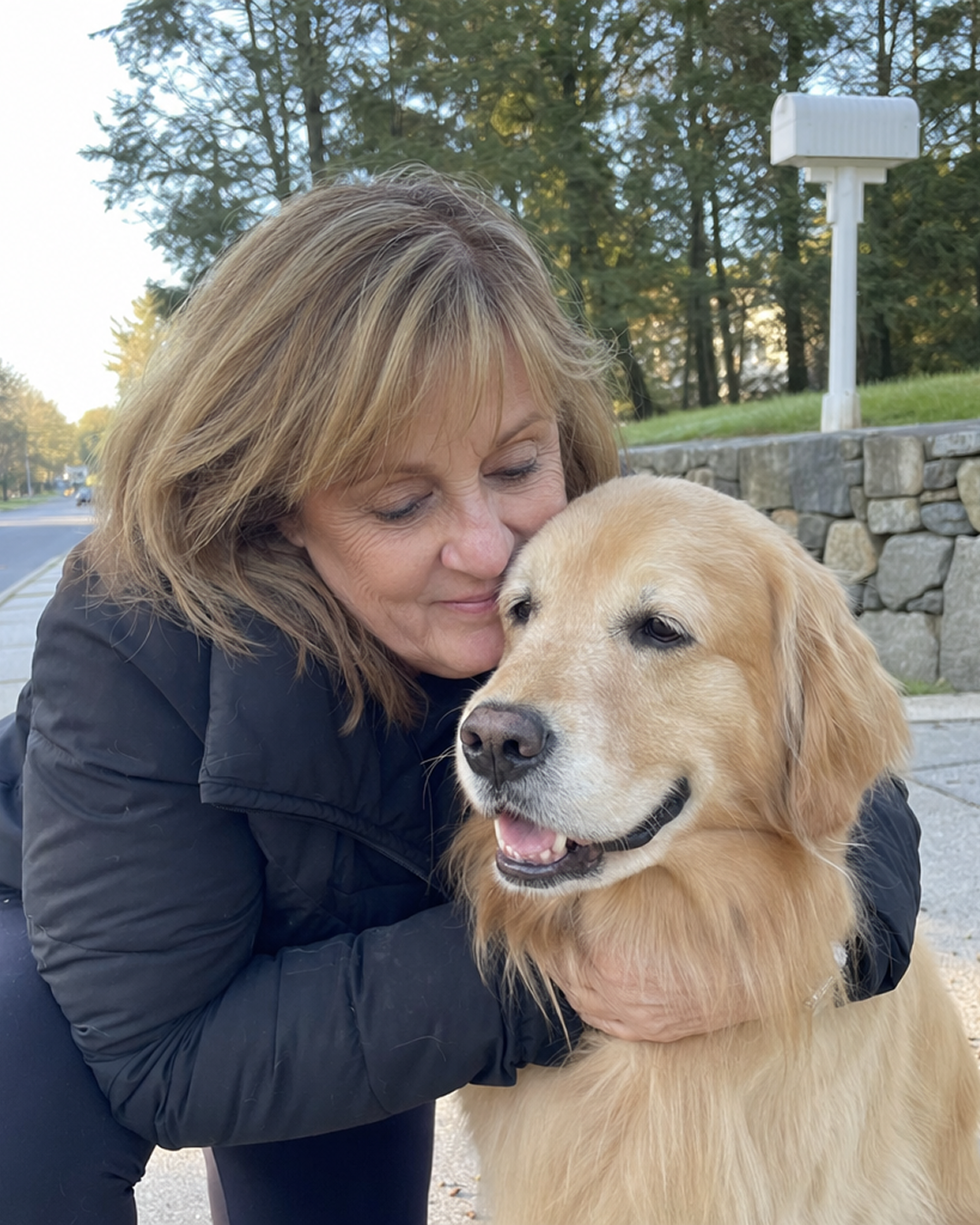
Ran for 1 day, from July 14 to July 15, 2026, the last day Crush saw it.
Run by Cholesterol Support Group on Facebook. Crush is not the advertiser and does not verify its claims. See this ad in Meta's Ad Library(opens in a new tab)
Want an ad like this for your product?
Crush makes new ad images for your product from this ad: your logo, your product photo, your offer.
Trials from $19.95 USD, then $79.95 USD a month. Cancel anytime.
About this ad
- Meta Ad Library ID
- 1006426808883359
- Platforms
- Facebook, Instagram, Audience Network, Messenger and Threads
- Relaunches
- 0
Ad text
I had a heart attack four months ago and I will never take another statin as long as I live. I want to explain what led me there. Because I did everything they told me to do for four years, and my heart still stopped in front of my neighbor's mailbox on a Sunday morning while my dog stood there wondering what was wrong. My name is Lisa. I'm 58. I taught middle school English for 30 years and retired last summer. I have been married to my husband David for 34 years. We have two grown kids and a granddaughter named Iris who is 3 and thinks my scar is a zipper. I want you to read this if you have high cholesterol, or if you're on a statin, or if you've ever heard a doctor tell you your numbers are "controlled." Especially if you've ever heard a doctor tell you your numbers are controlled. Because that is exactly what my cardiologist told me four months before I almost died. Let me tell you how it happened. I'd been on Atorvastatin for four years. My LDL had come down from 168 to somewhere in the high 90s in the first six months and it stayed there. Every annual check my cardiologist would pull up my labs on the screen, nod, and say "Lisa, you're a great case. Everything looks perfectly controlled. See you next year." I believed him. I had no reason not to. I took the pill every night before bed. I stopped eating red meat. I walked the dog every morning. I lost 14 pounds. My husband and I went for walks on the weekends and I never once got out of breath. But I have to tell you what the drug was doing to me the whole time, because I did not understand it then and I understand it now. My legs ached. Starting about six months in. Deep in my thighs and my calves. I would sit on the edge of the bed for a few minutes in the morning before I could put my feet on the floor. I mentioned it at my second annual check. My cardiologist told me it was normal at my age. He said "Lisa, you're 55, this is what 55 feels like for a lot of women." So I told myself that was what 55 felt like and I stopped mentioning it. The brain fog came next. Not being able to find the word I wanted mid-sentence. I would stand in the kitchen looking at the refrigerator wondering why I had opened it. I told myself it was retirement. It was the shift from teaching every day to not teaching. I read one article that said retirement is a real cognitive adjustment and I clung to it. The exhaustion hit around year three. Every day around 2 PM I would need to sit down. Not tired the way you're tired after a long walk. Tired the way you're tired when your body has decided it's done. I told my cardiologist. He said "have you thought about your thyroid?" He ran a thyroid panel. It came back fine. He said "sometimes fatigue in women your age just is what it is." I nodded. I took the pill every night. My LDL stayed where it was supposed to. My cardiologist called me a great case at every visit. Four months after the last one, on a Sunday morning in June, I was walking Charlie around the block the way I do every morning. He is a 6 year old golden retriever and he's used to a specific route. Left out of the driveway, four houses down, cross the street, all the way to the stop sign, right turn, and loop back. We got two houses past the stop sign and I felt something. Not chest pain, exactly. More like someone had put a heavy book on the middle of my chest and left it there. I told myself it was nothing. Kept walking. It got heavier. I sat down on the low stone wall in front of our neighbor Dave's house because my legs suddenly did not want to hold me anymore. Charlie sat next to me. I remember thinking that I needed to be back home before David got up for coffee because he'd worry. Then I don't remember anything. Dave found me a few minutes later when he came out to get the Sunday paper. He said I was slumped over on the wall with Charlie sitting perfectly still next to me not letting anyone near. He called 911 and then he called David. I woke up in the cath lab at 11:40 AM with a tube down my throat. They had put in two stents. My left anterior descending had been 90% blocked. The interventional cardiologist told my husband it was the widowmaker. He told him if Dave hadn't come out to get his paper when he did, I would not have been there when they arrived. My LDL that morning was 101. I want you to sit with that for a minute the way I have been sitting with it for four months. My LDL was 101. I was on Atorvastatin every single night for four years. I had done everything my cardiologist told me to do. And my widowmaker was 90% blocked and I collapsed on a stone wall on a Sunday morning at 58 years old. The drug had been doing its job on paper for four years. And underneath the paper, my arteries had been laying down plaque the whole time. Nobody told me that could happen. The day after I got out of the hospital, my cardiologist came to visit me at home. He is a nice man. I like him personally. I want to be clear about that. He sat in our living room and I asked him the only questions I could think of. I said "how did this happen to me?" He was quiet for a moment. Then he said something I have not stopped hearing. "Lisa, some patients still have events despite controlled cholesterol. We're going to increase your Atorvastatin to 40 milligrams and add Ezetimibe. We might need to add a PCSK9 inhibitor after that. This is unfortunately more common than people realize." That was the answer. More common than people realize. He was going to increase the drug that had let it happen and add another one on top of it. And this was going to be more common than I realized. I stayed polite. I thanked him for coming to visit me at home. I walked him to the door and I watched him drive away and I stood in my own doorway holding my chest where the scar was still healing. Then I went back inside and I sat down at the kitchen table and I made a list of the questions he had not answered. If the drug had been working, why was I holding my chest? If I had done everything right, why did my LDL of 101 not save me? If this was more common than people realized, why was the plan to just do more of the same thing? If statins work so well, why is heart disease still the number one cause of death in the United States? I stared at that list for a long time. Then I decided I was not going to be a passive participant in my own care anymore. My cardiologist had been the driver for four years. He was going to help me survive the immediate aftermath and then he was going to hand the wheel over. Because I was not driving into this again. David and I sat at the kitchen table that night. He is a retired engineer. He has always been the one who reads the manual. He looked at me and said "Lisa, we need to understand this. Really understand it. Because they don't." I want to tell you what I did next because I think it is what a lot of you would do too. I started with Google. Then I moved to the medical journals. Then I moved to Facebook groups. Then I ended up on Reddit at 2 in the morning reading a forum for post-heart-attack patients where every third post was some version of my story. LDL controlled. Statin every day. Heart attack anyway. Cardiologist adjusting doses. Same recipe, more of it. I read every "cholesterol solution" I could find. Every diet, every supplement, every alternative approach, every angry post from a naturopath, every reassuring post from a cardiologist. I made a list on the back of a receipt at the kitchen table. Then I made a decision I want you to understand the logic of. I stopped taking my Atorvastatin. I did it against my cardiologist's advice. I knew it was risky. My husband knew it was risky. But I had just had a heart attack on the drug at an LDL of 101. If the drug was going to save me it had already had its chance. And I needed to know what my body was going to do without it, because if I couldn't tell the difference between the drug and the supplements then I was going to spend the rest of my life afraid. I went to the pharmacy and I filled a plastic bag with $180 worth of what the internet said might help. Fish oil, the big red gel caps. Red yeast rice, the "natural statin" the forums swore by. Plant sterols. CoQ10, because at least my legs had stopped aching. Niacin. Bergamot. Garlic capsules. A $42 "heart cleanse" tea with a picture of a red flower on the box. A bottle of milk thistle from Amazon someone in a Facebook group recommended. A second bottle of milk thistle from the health food store because the reviews for that one were better. I lined them all up on the kitchen counter and I took the whole regimen every morning for three weeks. No Atorvastatin. Just the supplements. At three weeks I went to a walk-in lab and paid $85 out of pocket for a lipid panel. My LDL was 184. 184. Higher than it had been before I ever went on the statin four years ago. The supplements had not moved anything. The drug had been doing its job on the number the whole time. Without it, I was worse than I had been the day my cardiologist first wrote the prescription. I sat in my car in the parking lot of the walk-in lab and I cried. Not because the number was bad. Because I understood, sitting in that car, that everything on my kitchen counter was useless. The internet had sold me a bag of nothing. And the drug I had been so angry at was actually doing what it was designed to do. It just wasn't doing enough. That night I looked up every supplement I had bought. Red yeast rice contains monacolin K, which is biochemically identical to lovastatin, the original prescription statin. It IS a statin. Just unregulated at unpredictable doses. Same mechanism, same failure, wasn't going to save me from anything. Into the trash. Fish oil works on triglycerides and inflammation. Real benefits, but not for what had actually clogged my widowmaker. Wrong target. Plant sterols block cholesterol from being absorbed in the gut. That's the 15 percent side of the equation. They can knock 6 to 10 percent off the total. Doesn't touch whatever is producing the 85 percent inside my liver. The "heart cleanse" tea was hawthorn, garlic, dandelion, and "proprietary herbal blend." I looked up the proprietary herbal blend. There was no such thing. It was a marketing phrase for "we won't tell you what's actually in the bottle." The two milk thistles were unstandardized ground seed powder. The label said 1000mg on both. I could not find a silymarin percentage on either one. I did not know at the time that this mattered. It mattered. I put the whole regimen into a paper bag and put the paper bag in the garage next to the recycling because I couldn't bear to look at it. I restarted the Atorvastatin that night. David sat down next to me at the kitchen table. He said "Lisa. We need to talk to a different doctor. Not to switch. To ask a different question." That is when my sister-in-law told me about Dr. Weiss. Her husband had had a cardiac scare two years earlier. A near-miss during a stress test. His cardiologist had done what mine did. Increase the drug, add another. Her husband had asked around and gotten a referral to a preventive cardiologist named Dr. Martin Weiss at a hospital in Chicago. She said she had watched her husband's numbers turn around under Dr. Weiss over 18 months. She said "Lisa, call him. He explains things differently than the others do." I called Dr. Weiss's office the next morning. It took me six weeks to get an appointment. I brought David. I brought the folder of my labs going back four years. I brought the discharge paperwork from the hospital. I brought the list of every supplement I had tried and every dose of every drug I had taken. I brought the two bottles of failed milk thistle. He read the folder for a long time. Then he set it down and looked at me across the desk. He said "Lisa. You have been given a drug that treats one number, and no doctor has ever explained to you the mechanism that actually causes the plaque. May I explain it now? It is going to take a while." I said please. I am going to tell you what he told me the way he told me. The way I needed to hear it. The way I have never heard it explained by any cardiologist in four years of appointments. Your body needs cholesterol. It is not the enemy. Your brain needs it. Your hormones need it. Every cell membrane in your body needs it. So your liver makes it. Every day, all your life, without anyone telling it to. The food you eat is only about 15 percent of the cholesterol in your blood. Your liver makes the other 85 percent. That is why cutting eggs and steak for four years barely moves the number. I was working on the smallest piece of the equation while the part that actually makes the bulk of it stayed completely untouched. But your liver has a second job. It is also supposed to clean the cholesterol back out of your blood. Every liver cell has tiny structures on the surface called LDL receptors. Their job is to grab the bad cholesterol out of your bloodstream, pull it inside the liver cell, and flush it out through bile. Automatically. All your life. Without any drug. Two researchers named Brown and Goldstein won the Nobel Prize in Medicine in 1985 for figuring out exactly how those receptors work. That research is what statins were built on in the first place. This is not fringe science. This is Nobel Prize science. When the receptors are working, the cycle stays balanced. The number stays where it is supposed to be. Nothing builds up against your artery walls. You do not need a pill. So why do they stop working? Dr. Weiss said, "This is the part your cardiologist has almost certainly never explained to you. And it is the answer to your question about what happened." After 30, 40, 50 years of processed food, alcohol, medications, and every chemical your liver has to filter, fat starts building up inside the liver cells themselves. Not body fat. Fat trapped inside the liver. And as that fat accumulates, it physically buries the LDL receptors on the surface of the cells. They get covered. They can't reach the cholesterol in your bloodstream anymore. So the cholesterol keeps circulating. And it doesn't just sit in your blood. It starts laying itself down against the walls of your arteries. Layer after layer. Year after year. The plaque builds. It calcifies. And one Sunday morning at 58, some of it breaks loose and blocks your widowmaker and you sit down on a stone wall because your legs won't hold you. That plaque is what happened to me. Dr. Weiss said something then that I want you to hear. "Lisa. The statin does not clear the fat that buried the receptors. The statin does not touch it. What the statin does is force the liver to produce new receptors chemically, going around the buried ones. The number on the chart drops. Your cardiologist sees 101 and calls it controlled. But the fat is still there. The receptors it buried are still buried. And the plaque that was already laid down against your artery walls was still being added to the entire four years you were taking the drug. The drug controlled a metric. It never touched the disease." I sat there. David held my hand. I asked him, "So my LDL of 101 was accurate? It really was 101?" He said, "Yes. The drug did what it was designed to do on the number." I asked him, "And the plaque?" He said, "Was building anyway. Because nothing was addressing the reason the receptors were buried in the first place. Your cardiologist was managing the number. He was never managing the disease. Almost nobody in American cardiology is." Then he said one more thing that answered a question I had not yet asked. "Lisa. Your muscle pain. Your brain fog. Your afternoon exhaustion. That was not being 55. The same biochemical pathway the statin shuts down to lower your LDL is the same one your body uses to make CoQ10. The molecule your heart, your muscles, and your brain need for energy. Every day you were on Atorvastatin, that pathway was suppressed. Your body was running on less of what it needed. That is the muscle pain. That is the brain fog. That is the exhaustion. Your cardiologist called it aging. It was the drug." I did not cry in his office. I waited until I got to the car. I asked him what he does for his patients that is different. He said, "Two things. First, I look at what's actually happening in the arteries, not just the number on the panel. That's a coronary artery calcium score. Almost no cardiologist orders it as part of routine monitoring for a patient with controlled cholesterol. Yours would have shown significant plaque years ago if anyone had looked." He pulled up the CAC report from my hospital admission. My calcium score at the time of the heart attack was 412. He said, "Second, I look at the mechanism. Which means I address the reason the receptors got buried in the first place. There is a body of clinical research, mostly out of Germany and Central Europe, on how to actually clear the fat that has been suppressing the receptors. It is not a drug. It is three specific compounds working together. And when they work, the receptors come back online and the LDL comes down on its own, without a chemically forced pathway. Which also means the drug's pathway can be dialed back over time. Which means the CoQ10 depletion eases. Which means the muscle pain and brain fog and exhaustion lift." He said, "I want to be honest with you. I would like you to stay on your statin for now. You just had a heart attack. This is not the moment to discontinue medication. But I would like you to add these three compounds. And I would like to lower your statin dose over time as your numbers respond." I asked him what the three compounds were. He said milk thistle standardized to 80 percent silymarin. NAC at clinical dose. Choline at clinical dose. All three together. In one capsule. At the doses the German trials used. I told him about the two milk thistle bottles I had tried. I brought them out of my bag. I set them on his desk. He picked up the first one and read the back. He said, "Milk thistle, 1000 milligrams. That is the total amount of ground up milk thistle seed. Not the silymarin content. In most raw seed powder, the actual silymarin is 2 to 4 percent. That means this bottle contains maybe 20 to 40 milligrams of the active compound. The German trials use pharmaceutical grade extracts standardized to 80 percent. In a 300 milligram serving, that is 240 milligrams of actual silymarin." He set the bottle down. He said, "You would need to take this entire bottle every day for 20 days to get what one capsule of a properly standardized formula delivers in a single serving. And even then, this bottle contains no NAC and no choline. Silymarin without those two does not do what the research shows. You were taking a 20th of the active compound, and you were missing two of the three parts. It was never going to move your LDL." He read the second bottle. The $60 one. He said, "Same problem. Same raw powder, prettier label. Bigger dose of nothing is still nothing." I felt like I wanted to burn every bottle of milk thistle in America. He wrote the name down on a prescription pad. Not a prescription. Just the name. Happy Liver, from a company called Ritual Labs. He said they were the only brand he had found that hit all three doses at the standardization the research used, with every milligram listed on the label, no proprietary blends, and third party testing on every batch. European pharmaceutical grade silymarin, standardized to 80 percent. NAC at 600 milligrams, the same dose hospitals use for acute liver failure. Choline at 400 milligrams. He said, "One bottle of Happy Liver contains roughly the equivalent silymarin content of 20 bottles of the ones you brought me. And those 20 bottles would still not include any NAC or any choline. That's the difference between what you were taking and what the research actually uses." I ordered Happy Liver from Ritual Labs from his office parking lot. I paid for expedited shipping. I did not want to lose a day. Three capsules with water every morning. That's what Dr. Weiss told me to do. On top of my statin. On top of the Ezetimibe. On top of the CoQ10. The first week I felt nothing. The second week I noticed my legs stopped aching in the morning. Not less. Gone. I could stand up out of a chair without gripping the arms. I could walk up the stairs without stopping halfway. My brain fog started lifting around the same time. I found a word I had been reaching for and didn't get for two years. It was the word "predicament" and I remember exactly where I was standing when it came back to me. The third week I walked with Charlie for the first time since the heart attack. Just around the block. All the way. Without stopping. I cried in front of my neighbor's mailbox where they had found me. Charlie sat next to me the way he did that day. I told him I was sorry. Week six I did a finger-prick lipid test in my kitchen. LDL 74. I stared at the number. Then I did it again. Same reading. 74. I had been at 101 four months earlier on Atorvastatin alone. I was now at 74 on the same statin plus Happy Liver. That was 27 points below where the drug had been holding me by itself. And I could feel it in my body. The exhaustion at 2 PM was gone. I was walking again. I was reading again. Week eleven I did a full panel at Dr. Weiss's office. LDL 62. HDL up. Triglycerides down. Inflammatory markers down significantly. hs-CRP within normal range for the first time in the four years of records he had pulled from my old cardiologist. Dr. Weiss looked at the panel for a long time. Then he said, "Lisa. This is not a statin curve. This is the receptors coming back online. Your liver is starting to do the job it was supposed to be doing for the last 20 years. We are going to start lowering your statin dose over the next six months." I sat in his office and cried again. Which is embarrassing to admit. But that was the sentence I had wanted to hear from a doctor for four months and nobody had said it to me. That was two months ago. My statin dose is now half of what it was when I had the heart attack. My LDL is 64. My calcium score has not been re-scanned yet, but Dr. Weiss expects it to stabilize rather than progress, which is the best outcome anyone can offer someone who has already had a cardiac event. I walk with Charlie every morning. I have not felt the pressure in my chest one time since I started Happy Liver. My legs don't ache. My head is clear. I read three novels last month. I want you to know why I am writing this because I don't write things on the internet. I taught 12 year olds how to write essays for 30 years. I read novels. I keep a journal. I do not post on Facebook. My daughter set up my Facebook account for me in 2016 and I have used it maybe 40 times total. I am writing this because David asked me to. He said, "Lisa. There are thousands of women who are about to have your Sunday morning. If you write this and one of them doesn't, it was worth doing." So this is me writing. If you have had a heart attack and you are being told to just increase the drug that let it happen, I want you to know there is something the drug is not touching. If you have "controlled" cholesterol on a statin and you keep hearing the words "great case, perfectly controlled" and you cannot shake the feeling that something is still wrong, I want you to know that feeling is correct. If your legs ache and your head fogs and you can't get through the afternoon without lying down, and your cardiologist has told you it's aging or menopause or being your age, I want you to know it may not be. The drug depletes the same molecule your body needs to feel like yourself. If you have tried fish oil and red yeast rice and CoQ10 and cheap milk thistle from Amazon and nothing has actually moved the number in a real way, I want you to know why. They were all aimed at the wrong target, or they were aimed at the right target with the wrong formulation. Nobody explained the difference to you. Happy Liver from Ritual Labs. Three capsules every morning. Silymarin standardized at 80 percent. NAC and choline at clinical dose. Every milligram on the label. No proprietary blends. One bottle contains the active compound of 20 of the generic ones and includes the two ingredients none of them do. Not a substitute for the medication your cardiologist has you on. Not a decision to make without them. But the missing piece. The thing that addresses the reason the receptors are buried in the first place. The thing that would have been in my medicine cabinet for the last 20 years if anyone in American cardiology had bothered to tell me about it. It is backed by a 60 day money back guarantee. If your numbers don't move, you send it back. Full refund. In four years of taking Atorvastatin, and 12 different specialists between the ER and the follow-ups, nobody offered me a refund on anything. Think about that. 👉 https://rituallabs.shop/products/happy-liver If you have had a cardiac event, please do two things this week. First, ask your cardiologist for a coronary artery calcium score if you have not had one. It costs between $50 and $200. It is your legal right to request it. It will tell you what your LDL cannot. Second, look at the formula the German research actually uses. Not any milk thistle. Standardized silymarin, paired with NAC and choline, at clinical doses, in one capsule. Give your liver the chance to do what it was designed to do before the fat buried it 30 years ago. Both are today. I sat on a stone wall on a Sunday morning at 58 years old and I did not know if I was going to see my granddaughter turn four. I am going to see her turn four. I am going to try to see her turn 30. The drug alone was not going to get me there. Something had to change. This did. ~ Lisa Callahan, retired English teacher, mother, grandmother, heart attack survivor P.S. I want to be clear. I did not stop my statin again after I saw Dr. Weiss. He and I are lowering the dose slowly, together, as my numbers continue to move. Please do not stop your medication on your own after reading this. My three weeks off the drug were a mistake and I knew it was a mistake while I was doing it. Bring this to your cardiologist. Ask them to look at the German research on standardized silymarin. If they will not, find a preventive cardiologist who will. There is a growing number of them. I found mine because my sister-in-law made a phone call. Yours might come from asking one honest question. P.P.S. The 60 day guarantee is what convinced David it was worth trying. He is a retired engineer. He reads the fine print on everything. He said "Lisa, they'll refund us in full if it doesn't work. What is the actual risk here." There wasn't one. There isn't one for you either. Happy Liver produces in small batches to keep the standardization tight, which means they sell out. If it is available when you click through, don't wait. I don't know when the next batch will be ready. P.P.P.S. Charlie is 6. He is a very good dog. He sat with me the whole time I was on the wall and he didn't move until Dave came out. I think about that most mornings when I walk him past that spot now. I am writing this at my kitchen table with him at my feet and I am telling you that if this ad reaches one person who does not have to be found by their neighbor on a Sunday morning, then it was the best essay I have written in 30 years of teaching essays. 👉 https://rituallabs.shop/products/happy-liver
Where the ad sends people
rituallabs.shop
It was never the cholesterol. It was your liver.
Ritual Labs
Learn more: rituallabs.shop(opens in a new tab)