
Inactive· since Jun 16, 2026
- 77
- days it ran
- 0
- relaunches
Ad copy
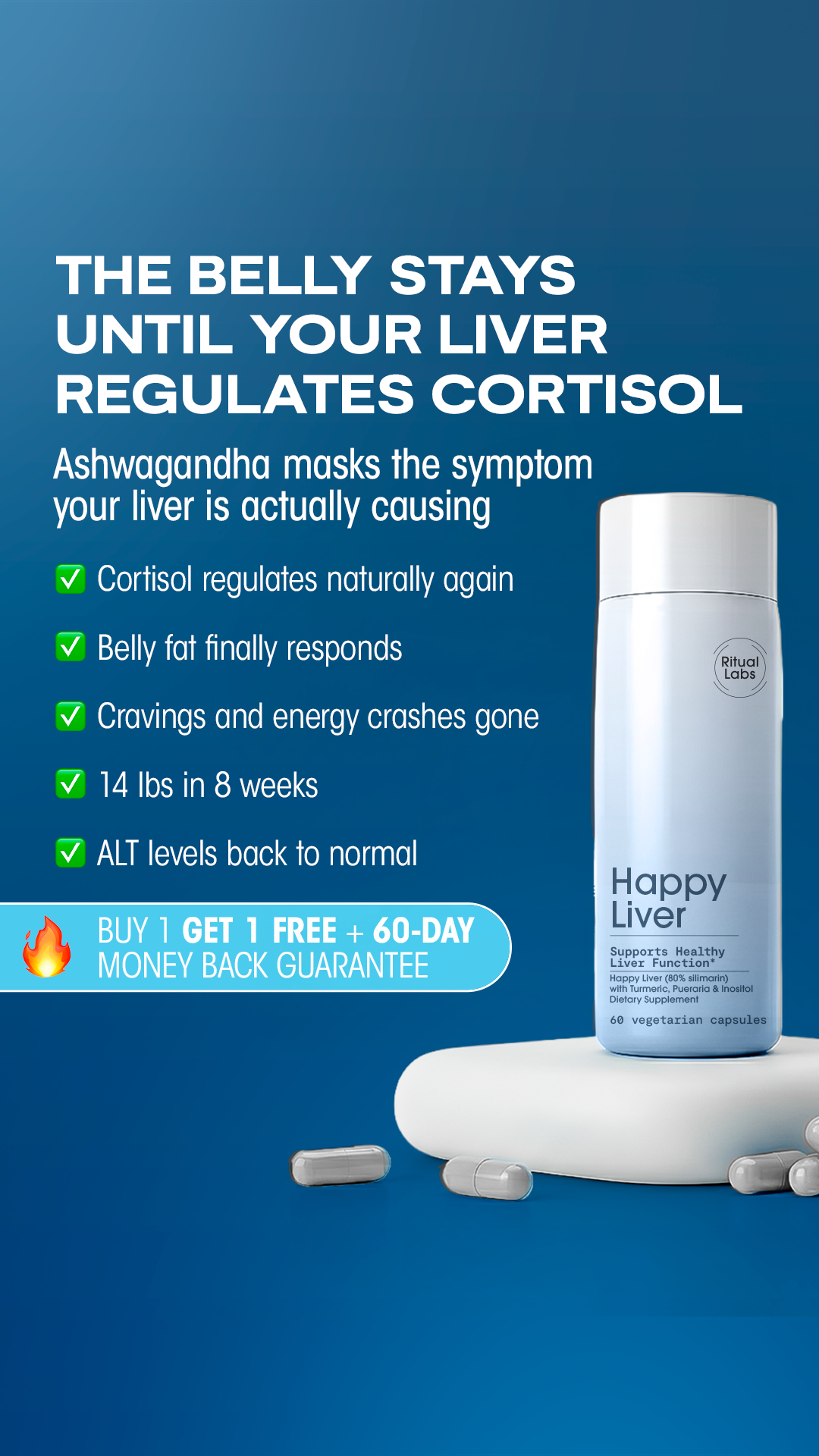
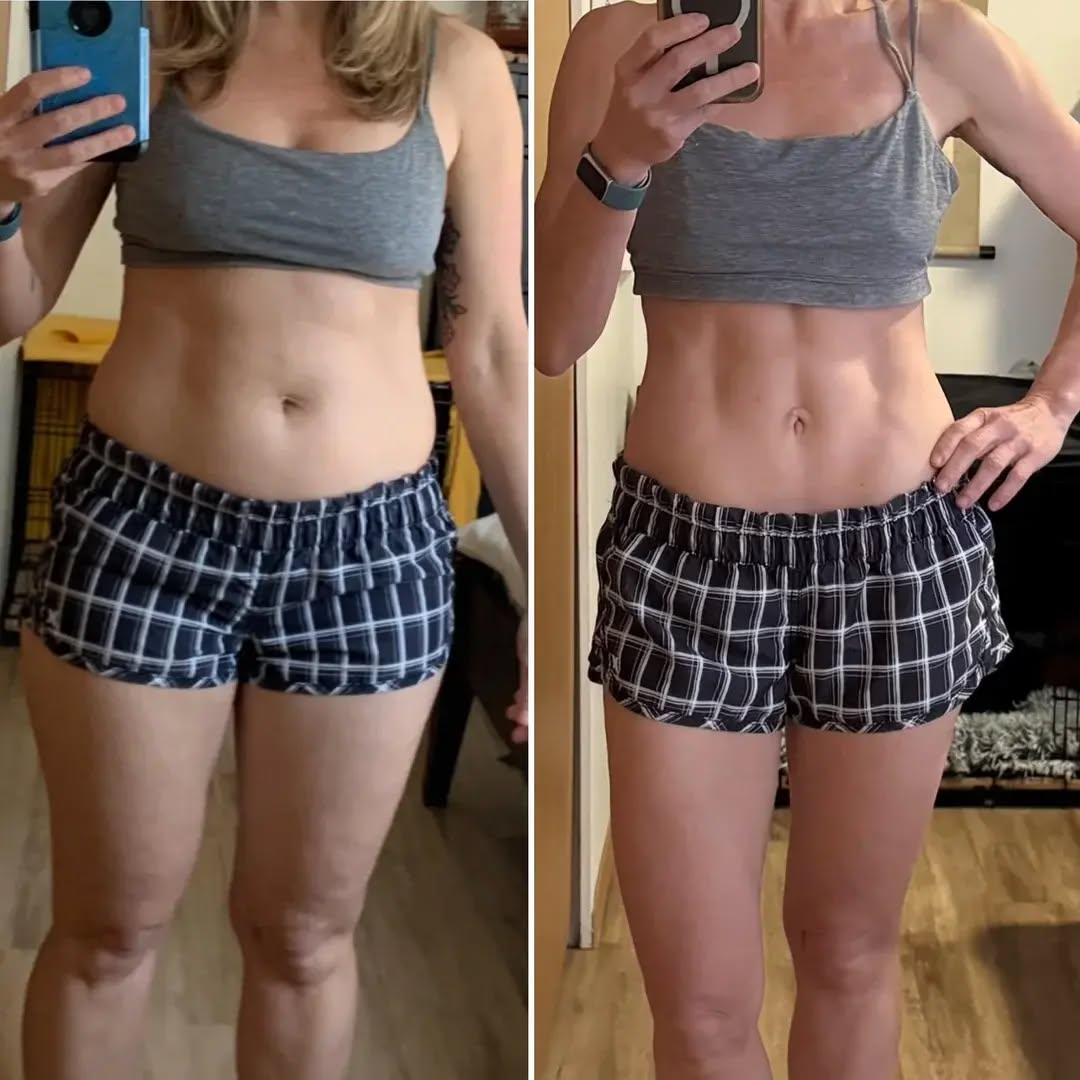
If you already know that cortisol is behind the belly pouch and the love handles and the lower midsection that redistributed itself somewhere after 40 and never came back. If you have already tried the ashwagandha and the rhodiola and the magnesium and the cortisol supplements and the adaptogens that every functional medicine person recommends. If you have done the breathwork and fixed your sleep and reduced your stress and the belly is still there, sitting exactly where it was. I want to explain something that took me an embarrassingly long time to understand. And once I explain it, the reason none of those things fully worked is going to make complete sense. Cortisol is not the problem. Cortisol is the symptom. The problem is the organ responsible for removing cortisol from your bloodstream once it has done its job. When that organ is overloaded, and in most women over 40 it is, cortisol does not get cleared the way it should. It accumulates. And accumulated cortisol tells your body to store fat specifically in the abdomen. That is your FUPA. That is your lower belly pouch. That is why the adaptogens helped a little but never actually moved the weight, because you were addressing the cortisol while leaving the organ that clears it completely untouched. I specialize in metabolic and hormonal health. I have been in practice for 16 years. And for most of those years I was telling patients the same thing everyone else was telling them. The cortisol advice was not wrong. Cortisol absolutely drives abdominal fat storage. The abdomen has 4 times more cortisol receptors than anywhere else in the body, which is why midsection fat is always the first to appear and the last to respond. When cortisol stays elevated it triggers insulin release, which signals the body to store fat specifically in that area. It raises ghrelin, the hunger hormone, and suppresses leptin, the hormone that signals fullness. Cravings become relentless. Sleep deteriorates, which raises cortisol further the next day, creating a loop that nothing in the standard toolkit could break. What I was missing was why cortisol was staying elevated in the first place. The liver is responsible for removing cortisol from the bloodstream. When cortisol has done its job, the liver breaks it down and clears it so levels return to normal. When the liver is functioning well, that process runs efficiently. Stress rises, cortisol does what it needs to do, and the liver clears it. But here is what happens after 20, 30, 40 years of modern life. Every processed meal goes through the liver. Every medication. Every glass of wine. Every environmental chemical the body absorbs. The liver is not diseased. It is not failing. It is behind. It is handling more than it can efficiently process at once, and when an organ is overwhelmed and triaging, it prioritizes survival functions. Clearing toxins that could cause immediate harm is urgent. Clearing cortisol is important but not immediately critical. So the liver deprioritizes it, and cortisol starts accumulating instead of being cleared. The adaptogens my patients were taking were attempting to lower cortisol while the organ responsible for removing cortisol from the bloodstream was still backed up and continuously producing the problem. It is like trying to bail water from a boat without closing the hole. You can manage the symptom slightly. You cannot resolve it. The liver is also the primary organ responsible for converting stored body fat into energy. When it is overwhelmed and triaging, fat metabolism gets deprioritized for the same reason. The organ focuses on what keeps you alive, and burning stored fat is not that. The fat sits there, particularly in the midsection, while the liver handles everything it considers more urgent. Women could eat 1,200 calories and watch the belly grow, because the organ responsible for metabolizing fat was too overloaded to get to it. Keto could produce some initial result and then stall. Walking every morning could improve everything except the midsection. Not because those things do not work. Because the organ that completes the process was never addressed. Once I understood this I went back into the supplement literature properly. I had been recommending milk thistle to patients with elevated liver enzymes for years and I knew the research on it was legitimate. Silymarin does protect liver cells from toxic damage. That part is real. But what I had not looked closely at was the grade question, and what milk thistle was failing to address even when it worked. I reviewed more than 30 liver supplement formulas over several months. Most failed immediately on grade. The silymarin in the majority of American milk thistle products is measured using a method that groups inactive compounds alongside the active fraction, which inflates the percentage on the label without the potency behind it. A label that says 80% under American testing is not the same thing as 80% under European pharmaceutical standards, which isolates only the active compound. Standard silymarin is absorbed somewhere between 20% and 50% from the gut depending on how it is processed. The European pharmaceutical extraction method was developed specifically to solve that absorption problem. Most of what my patients had been taking for years was a fundamentally different product from the one that showed results in the research. And even the right grade of milk thistle only reaches part of what is failing in an overloaded liver. The liver stores fat internally when it is overwhelmed. That accumulated internal fat is part of what degrades the organ's ability to function. A liver clogged with its own stored fat cannot efficiently clear cortisol or metabolize body fat the way it is designed to. There is a specific compound that helps the liver process and export this trapped fat. Inositol. In a clinical study over 8 weeks, the group taking inositol lost 45% more body fat than the group following the exact same diet without it. More than half of the inositol group showed measurable reduction in liver fat severity on imaging, compared to 16% in the group not taking it. When you help the liver clear its own internal backlog, the organ functions better across every process it handles, including cortisol clearance and fat metabolism. The third piece is the chronic low-grade inflammation that builds up in an overloaded liver. Most people cannot feel this. There are no obvious symptoms. But it is what makes the liver sluggish across all of its functions. Curcumin at a properly concentrated standardized extraction addresses this specific pattern of inflammation. In a clinical study on curcumin in patients with fatty liver over 8 weeks, close to 80% of the group taking curcumin showed measurable improvement in liver fat on imaging, compared to 27% in the group not taking it. Body weight, abdominal measurements, and liver enzymes all showed statistically significant improvements in the curcumin group alongside those imaging results. Three specific things. Pharmaceutical-grade silymarin at the absorption level the research actually used. Inositol at a full clinical dose for the fat export mechanism. Concentrated curcumin standardized for the inflammation pattern. Not one of the 30-plus formulas I reviewed had all three at the right grades and doses together. Most had one ingredient. Several had two at doses too low to produce a measurable effect. Some listed the right ingredients but used proprietary blends that made it impossible to verify what was actually inside. One formula matched everything I had been looking for. Before I say which one, I want to be transparent about something. I am not affiliated with any supplement company. I do not receive compensation for recommending products. What I do is research, and I share what the research points to because I spent too many years watching patients fail on approaches that were missing the fundamental piece. That is the only reason I am writing this. The formula was Happy Liver from Ritual Labs. European pharmaceutical-grade silymarin at 90% purity, verified by a third-party lab rather than self-declared by the manufacturer. Inositol at the full clinical dose, not a token amount added to make the label look complete. Curcumin at a concentrated standardized extraction that absorbs the way the clinical studies required, not generic turmeric powder at a fraction of the potency. I reviewed it for several weeks before I recommended it to a single patient. I cross-referenced the third-party verification. I confirmed the extraction method matched the European pharmaceutical standard I had been looking for across every formula I reviewed. I am not someone who recommends things lightly, and I was not going to hand this to patients who had already been failed repeatedly by things that overpromised. When I was satisfied that what was on the label matched what was actually inside, I started recommending it to the patients I had been unable to help with anything else. The results I saw were consistent enough across enough patients that I feel obligated to share this publicly. Week 1, most women reported the same thing first. Not the belly. The afternoon. The energy crash that had been arriving every day around 2 or 3 for so long they had stopped expecting anything from those hours started not coming. Sleep was deeper. The cravings that had been relentless, particularly in the late afternoon when cortisol spikes hunger hardest, were quieter. These are cortisol-driven symptoms and they responded first, because cortisol clearance is one of the first functions to improve as the liver starts recovering capacity. Week 2 to 3, the visible inflammation shifted. The morning face puffiness that most of these women had written off as just what they looked like now. The bloating that expanded through every afternoon and made every evening a negotiation with clothing. These changed quietly, and almost every patient heard about it from someone else before she noticed it herself. A husband asking if she had changed her diet. A sister saying the face looked different. The body was changing and they were the last ones to see it. Week 4 to 6, the midsection started moving. Not general weight fluctuation. Not water. The specific area that had refused to respond to everything else was changing in a way they could feel and see. Clothes from the back of the wardrobe were coming out. One patient, 48 years old, told me she had tried on a dress she had not worn in 3 years and it fit. She said she stood in front of the mirror for a while not knowing what to do with that. Week 8, the labs confirmed what the physical changes had already shown. Across the patients I tracked formally, average ALT had dropped 36 points and AST had followed in the same direction, with the majority coming back inside normal range for the first time in years. Liver fat on follow-up imaging had reduced measurably in the majority of cases. Morning cortisol levels, which I had been testing as part of baseline workups, had normalized in patients whose cortisol had been persistently elevated for years despite months on adaptogens. And this is the part I want to be specific about, because cortisol normalization is not an abstract lab result. When cortisol comes down, insulin stops being triggered constantly. When insulin normalizes, the body stops receiving the continuous signal to store fat in the abdomen. Ghrelin and leptin rebalance. Cravings drop significantly. Sleep deepens. And the midsection, which had been accumulating fat in direct response to elevated cortisol and impaired liver function, starts releasing it. The weight loss numbers at week 8 were the most consistent data point I tracked. An average of 14 to 17 pounds lost specifically from the midsection, in women who had been unable to move that number through diet and exercise for anywhere from 2 to 7 years before starting. Not total body weight. Not water fluctuation. Abdominal fat, measured and documented, responding to the same diet and activity level they had already been maintaining. The liver was doing what it had been unable to do, and the weight followed directly. One patient I want to mention specifically because her results were the clearest illustration of everything I have described here. 52 years old. 6 years of elevated enzymes. 6 years of midsection weight that had not responded to a single thing we tried together across that entire period. At week 8, her ALT was down from 74 to 29. AST from 68 to 31. Morning cortisol had normalized for the first time in the 3 years I had been measuring it. And she had lost 16 pounds in 8 weeks, almost entirely from the midsection that had refused to move for 6 years. 16 pounds in 8 weeks. From a woman who had been eating well, exercising consistently, and doing everything right for 6 years with nothing to show for it in that specific area. The only variable was the liver finally having what it needed to function the way it was designed to. Her primary care physician asked what she had changed at her next appointment. She told him everything. He wrote it down. I am sharing this because I keep seeing women doing everything asked of them and getting nowhere with the one thing that matters most to them. The cortisol is real. The midsection weight is real. The inability to shift it through diet and exercise alone is real. Only solving the root cause, which is cleaning the fatty liver, that it’s possible to break free from this. What is also real is that the organ driving all of those outcomes had never been addressed in a way that matched what the research actually supports. Milk thistle at the right grade. Inositol at a clinical dose. Concentrated curcumin. All three, verified, at the amounts that moved numbers in actual studies. That is what the liver needs, and it is what most formulas on the market are not providing. thanks for reading EDIT: A number of people have asked for the specific product because I did not include it in the original post. https://labsritual.co/products/happy-liver Happy Liver from Ritual Labs. Not on Amazon, their site only. There are products with similar names using different formulations, so confirm you are on the Ritual Labs site specifically before ordering. The formula uses European pharmaceutical-grade silymarin at 90% purity, third-party verified. This is the single most important thing to confirm before purchasing any liver supplement, most products on the market do not meet this standard. Why only recommend trying it because of the 60 day money back guarantee. Because if you see no meaningful difference in 2 months, you can just ask for a refund, which I honestly think is a no-brainer for those dealing with weight issues.
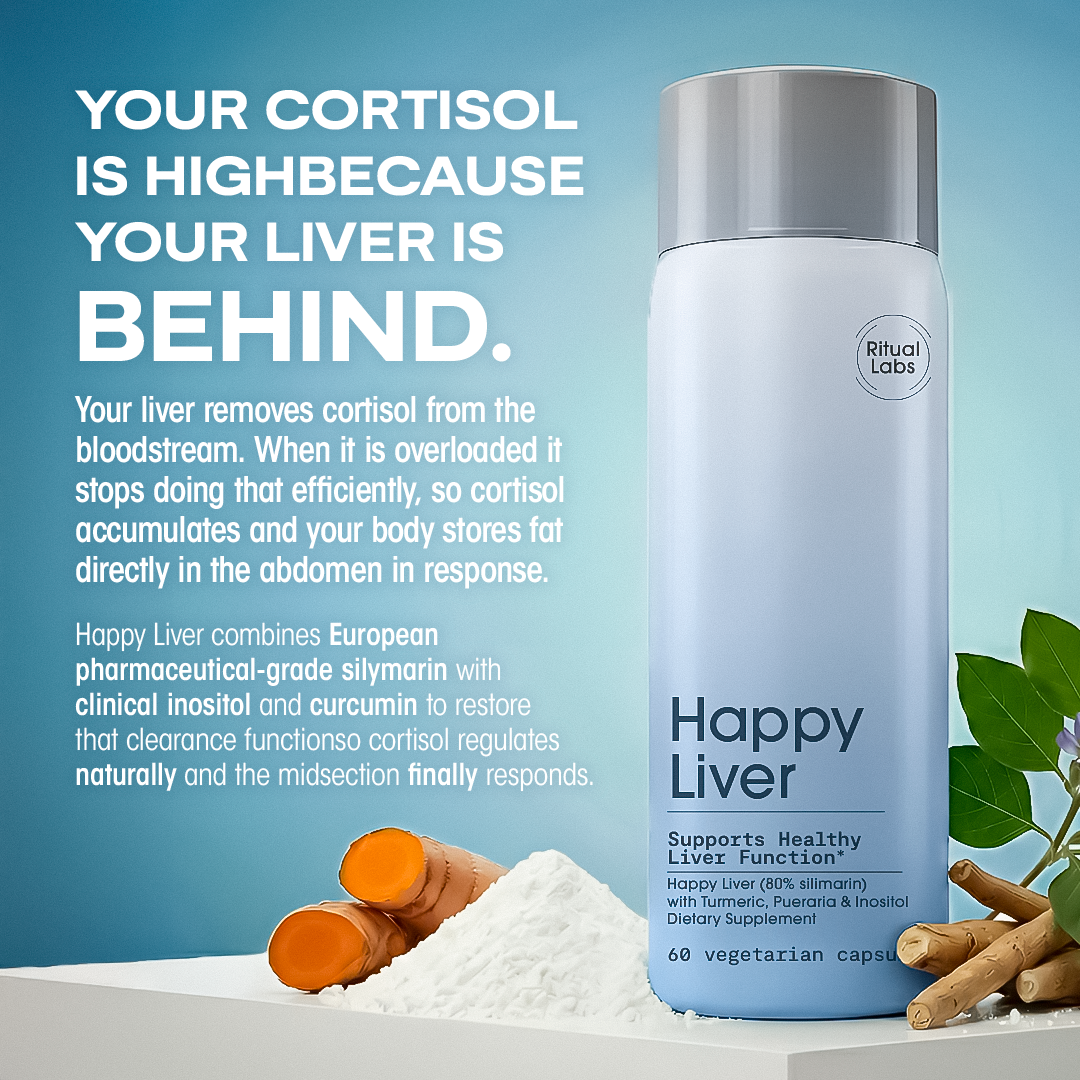
Your Cortisol Is High Because Your Liver Is Behind
Your liver processes everything - alcohol, medications, junk food, environmental toxins. Happy Liver provides daily protection with clinical doses of Milk Thistle, Turmeric, Pueraria, and Inositol
LEARN MORELike this ad? Make it yours.
Crush rebuilds this exact creative around your product — your brand, your colors, your offer — in about a minute.