
Inactive· since Aug 5, 2026
- 8
- days it ran
- 0
- relaunches
Ad copy
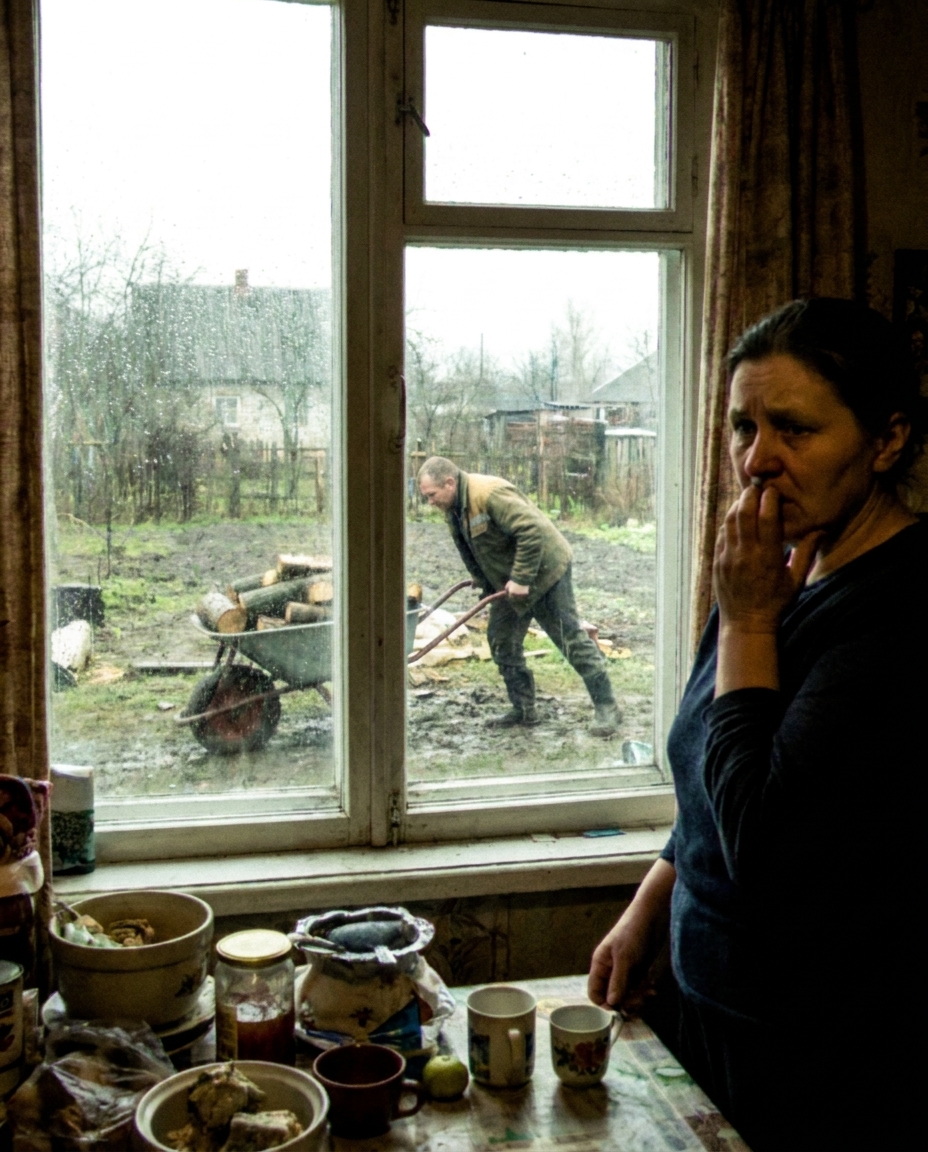
My husband was told his cholesterol was high in August of 2023. He was not a heavy man and he had never smoked a cigarette in his life. After that call he cut out red meat, butter and cheese. He walked two miles every morning. He lost 34 pounds. He took the statin for twenty months and got his LDL down to 96. He died of a heart attack on October 24th, 2025 at 4:52 in the morning. He was 58 years old. He cleaned out our refrigerator on August 11th. He ate oatmeal every morning for twenty-six months. He walked our black lab two miles before he opened the shop, and on this coast that means in the rain. He did everything his doctor told him to do, and then the things his doctor never asked for. The hospital bills were $142,000. The funeral was $13,900. His tide table is still clipped to the refrigerator. It's turned to the third week of October. He sold the boat in 2019 and never once stopped clipping the new one up. I can't turn the page. If I turn the page, he's really gone. I need to tell you what happened to Orin. Because every week I see the same two posts from women my age. "My husband's cholesterol came back a little high, doctor said cut back on red meat, any tips?" And then the other one. "His numbers finally came down on the statin, so I think we're okay now." It's the second one that makes me physically sick. If you're the wife of a man over 45 who's been handed a cholesterol number and a speech — or you got handed one yourself — please read this whole thing. I know it's long. I know you're scrolling. I know you have things to do. Ten months ago I would have given anything — everything — for someone to tell me what I'm about to tell you. Orin went in for his physical on August 8th, 2023. He felt fine. Better than fine. He'd just turned 56 that April. He still went out on his back under a boat to run coax, on gravel, at his age. His father is 89 and still drives himself to the store in Coquille. Three days later his doctor called the shop. Total cholesterol 296. LDL 219. HDL 43. They sent him for a scan. On September 5th a cardiologist put it on a screen and told him he had a coronary calcium score of 142. Moderate. "You've already got plaque in there," he said. "And you're fifty-six." Then he said the thing that decided the next two years of my husband's life. "Let's try lifestyle first. Cut the saturated fat, get ten percent of your body weight off, walk every day. We'll retest in six months — and if it hasn't moved, then we'll start you on something." Orin hung up that first call and sat at the kitchen table for forty minutes without saying anything. Then he stood up, opened the refrigerator, and started filling a garbage bag. I watched him throw out two blocks of Tillamook cheddar. Four sticks of butter. The half-and-half he'd put in his coffee every morning for thirty years. Two packages of bacon, unopened. The whole bottom shelf of the freezer — the corn dogs, the ice cream, and half a marionberry pie I'd made in July. Nobody told him to do that. They told him to cut back. "That's it," he said. "I'm done." And he was. For twenty-six months, he didn't break it once. Not at his niece's wedding in Medford. Not on our 35th anniversary in Bandon, where they brought out a marionberry cobbler with two forks and he asked them to take it back. Not at his own 58th birthday, where I made him grilled rockfish and a salad and he said it was the best birthday meal he'd ever had. He stopped going to the Sunday cookouts at the boat basin, because everyone was eating tri-tip off the grill and he couldn't stand there with a plate of plain chicken like a man being punished. He stopped the Saturday breakfast in North Bend he'd had with the same four men since 1991, because he couldn't sit and watch. And he lost Nels, who'd fished with him for forty years, and who told him he'd gotten to be no fun to be around, and stopped calling. He lost a piece of himself he'd been carrying for forty years. And he did it anyway. Because the doctor said to. He lost 34 pounds. He walked Bosun two miles every morning before he opened up, summer and winter, didn't matter. He bought a blender. Orin. A man who thought a smoothie was something you got at the mall. He took the fish oil his doctor "wasn't against." He took a multivitamin. He ate exactly what they told him to eat. He did everything right. The follow-up panel came back in February 2024. LDL: 209. Ten points. Six months of the hardest thing he'd ever done, and it moved ten points. And his HDL — the one they call the good one — had gone from 43 down to 37. The cardiologist said, "Cholesterol is stubborn. You did your part. Your body didn't. Let's start you on something." Simvastatin, 20 milligrams. August 2024: LDL 151. "Good. Not where I want you yet." He doubled it to 40. That's the summer his hands started. He was dropping small screws. March 2025: LDL 96. "Textbook," the man said. "Beautiful." That spring Orin couldn't open a jar. He couldn't hold a soldering iron steady enough to work, and he'd been doing that since 1986. He quit the Wednesday night radio net because he couldn't hold the microphone up for an hour. When he mentioned his hands he was told, "Men your age get stiff hands. Let's not go looking for zebras." On October 14th, 2025 they repeated the calcium scan. 142 had become 388. Moderate had become severe. His LDL was 96 and the plaque in his heart had almost tripled. The cardiologist said, "Calcium scores go up. Everybody's does — some of that is soft plaque hardening, which is what we want to see. Your LDL is exactly where I want it. Keep doing what you're doing." Orin came home that night and sat at the kitchen table. The same chair he'd sat in after the first phone call. He didn't say anything for a long time. Then he said: "Sigrid, I gave up everything. Everything I liked. For two years. My hands don't work. And it's worse." I told him to give it more time. I told him that man had been doing this for thirty years. I told him his number was better than mine. Five days later — five days — he woke up at four in the morning. He thought it was heartburn. He'd been chewing Tums since August and blaming Saturday's sausage. He was sitting on the edge of the bed in the dark, sweating through his shirt in a cold house, rubbing his jaw. I drove him to the hospital in Coos Bay. He was still talking. They ran the ECG and the young doctor's face did this thing. "Mr. Dahlgren, you're having a heart attack. A big one. We're flying you to Roseburg." Orin said, "But my cholesterol's ninety-six." The doctor just looked at him. "I know. I'm so sorry." He arrested in the air. They got him back. They opened the artery. I learned things about hearts that week I never wanted to know. The first is what the week before looks like. It isn't the movie. Nobody grabs his chest and falls over. It's an ache in the jaw. An arm that feels heavy or asleep. Sweating on a flat mile you've walked a thousand times. Heartburn that antacids don't quite fix, for weeks, in a man who blames dinner. If you take one thing out of all of this, take that. I learned what a balloon pump is, because they put one in him. The front wall of his heart was dead muscle. On day three he was awake and talking, and he asked me four times in one hour whether I'd pulled the pots. He sold the boat in 2019. Day four his kidneys started going. They talked about a pump he could live on. Then about him not being a candidate. Then they stopped talking about it. On the second day the cardiologist took me into the family room and put the pictures from inside the artery up on a monitor. "This one here — see how tight that is? That's eighty percent. That one didn't kill him." Then he pointed at a vessel that looked, to me, wider. Healthier. "That was maybe forty. That's the one that tore. The lining came apart and the whole thing clotted off in about four minutes." I said, "But his cholesterol was ninety-six." He was quiet for a second. "It usually is, by the time they get to me. I had a man in this room in July with an LDL of seventy-nine. The number tells me how much is in the blood. It doesn't tell me what shape the wall is in." October 24th. They'd asked me to step out. At 4:46 in the morning I heard people running in the corridor. At 4:52 a resident I'd never seen walked into the family room. I knew. "Mrs. Dahlgren. I'm so sorry. We did everything we could." I drove home over the coast range at seven in the morning. Two hours. I don't remember any of it. The blender was still on the counter. His walking shoes by the back door. The fish oil on the windowsill above the sink, right next to the multivitamin. His pill organizer, still loaded from Sunday on. His tide table was on the refrigerator where he left it. Where it sits today. I sat in his chair. I didn't move for seven hours. The house was so quiet I could hear Bosun breathing on the rug. Thirty-six years. And the loudest thing in my house was a sleeping dog. The funeral was November 1st. Orin's brother Kent drove up from Medford. Our daughter came from Bend, our son flew in from Boise, and the grandchildren wore suits that were too big for them. Our six-year-old granddaughter used to sit on Orin's knee in the shop and talk into the microphone. He told her she was talking to people in Alaska. She asked me where Papa was. I told her Papa was in heaven now. She thought about that. Then she said, "Can you call him? You know how to work the radio." I had to walk out of the room. After the funeral I tried to go back to normal. I couldn't. Because every time I opened Facebook there they were. "Six months of no red meat and it's barely moved, what else can we try?" And the one I can't read anymore: "His LDL is finally down, so we're in the clear." And I knew — I KNEW — some of them were about to do exactly what Orin did. The diet. The walking. The fish oil. The pill. The good number. And ending up where I am. I couldn't just sit there and watch it happen. So I started reading. Not because I wanted to. Because I had to. Because if Orin gave up twenty-six months of everything he liked for nothing, and I can't stop even one other family from this, then I can't live with myself. I read for weeks. Papers I went through three times before they made sense. A cardiology forum where men described Orin's exact two years. And two things kept coming up that nobody ever said to us. The first is why the diet didn't work. Your liver makes most of your cholesterol. Not your plate — your liver. And when you take it off your plate, your liver makes more to make up the difference. That isn't a failure of willpower. That's the system working the way it was built. That's the ten points, explained. The second thing is the one I can't stop thinking about. LDL isn't poison. Your body builds it on purpose — it's a delivery truck. It carries what your cells and your hormones are made of. You would die without it. The problem isn't the truck. It's what happens to it on the road. Free radicals — the things inflammation and stress and pollution throw off — attack those particles and rust them. A rusted particle behaves completely differently. It burrows into the wall of the artery, the body sends white cells after it, and what builds up underneath is a soft, inflamed lesion. And the soft one is what tears. Not the tight one. The number on the panel is the cover of the book. Nobody ever read what was inside. Read that again. Orin's artery didn't tear because he ate eggs for fifty-eight years. It tore because the thing that used to protect what he ate got bred out of the ground it grew in. Our grandmothers fried everything they owned in lard and they weren't dropping dead at fifty-eight. What changed isn't what's on the plate. It's the color that stopped coming with it. The compound that neutralizes those exact free radicals is called betalain — the deep crimson pigment in a real beet. For a hundred years beets have been bred for sugar and size and shelf life, bright red outside and hollow inside, and the pigment went with it. A study out of Penn State found that in one Lancaster County farming community, where they still grow the old way, the cardiovascular death rate runs 74 percent below the rest of the state. Cutting the fat off his plate barely moved the number, because his liver was making it. And the number was never what tore. I sat with that for three days. And then I looked at what I was doing. Because I'm 57. Because my own last panel came back at an LDL of 178 and my doctor said "borderline, let's keep an eye on it." Because I have been frightened for a year and doing nothing about it. I went to see Dr. Colvin, my internist for eleven years, and brought the fish oil off my windowsill with me. She turned the bottle over in her hand. "Fish oil moves triglycerides. That's not nothing. But triglycerides aren't what tore his artery — and a fish-oil capsule that's been sitting in a warm cupboard for a year is one of the most oxidized things in your house." Then I asked her about his hands. She put the bottle down. "The pathway a statin blocks to stop your liver making cholesterol is the same pathway your body uses to make CoQ10. That's what your muscles run on. Your heart is a muscle. It can drop as much as forty percent. And then we tell men his age that the tiredness and the hands are their age." It wasn't his age. It was never his age. Then she said the thing I'll never forget. "If somebody had been protecting Orin's LDL instead of just counting it, I think that might have been a different story." I stopped breathing for a second. "Then why didn't anybody?" She was quiet for a long time. "Because oxidation isn't on the panel, Sigrid. And if it isn't on the panel, it doesn't exist." I went to the Bi-Mart in Coos Bay the next day and stood in that aisle for forty-five minutes. Red yeast rice in three brands. Fish oil in four. Plant sterol chews. A "cholesterol support" tea with a heart printed on the box. Psyllium. Garlic capsules. A thirty-day artery cleanse in seven bottles. CoQ10, which nobody had mentioned to me once. And a beetroot. $19.99. A thousand milligrams. I bought the beetroot. I took it for six weeks and had my blood drawn. 178 to 174. Four points. I was ready to throw it in the trash, and then I read one more night, and what I found made me open a capsule out onto a saucer. It was brown. A beet bred for sugar has almost no pigment in it to begin with. And whatever survives the field gets cooked to death in a high-heat dryer, because heat is what destroys betalains. I had paid nineteen dollars for a bottle of brown dust. I was furious. I'm still furious. About two weeks later I was up at one in the morning in a cholesterol group I'd joined months before, and a woman in Missouri posted something that stopped me cold. Her husband was 57. LDL 209. Three years of the diet, then the statin, and the number came down to 101 exactly like they promised. But he'd been getting the calcium scan every couple of years, and it had gone from 180 to 291 — climbing about a hundred at a time, no matter what the panel said. Sound familiar? Then she found a beetroot. A real one. And when they rescanned him eighteen months later, the score came back 298. Seven points. After four years of jumping a hundred. And her husband hadn't changed one other thing. I read that post four times. So I started looking into what she'd actually bought. And what I learned is that there are four things a beetroot capsule has to get right at the same time, or you are buying garden dirt. It has to be the right beet. There's an heirloom line called Blutwurzel — blood root — grown by the same families on the same Lancaster County fields for six generations, never bred for sugar. Roughly ten times the betalains of anything in a grocery store. It has to be dried without heat. Shade-dried after the first frost, never high-heat spray-dried. This is the one nobody tells you, and it's the reason your last bottle did nothing. Twist a capsule open onto a white saucer. Crimson is alive. Brown is cooked. It has to be a real dose. At least 1,300 milligrams — not a pinch of beet hiding at the back of a proprietary blend. And it has to publish the lab report for the batch in your hand. Not a certificate for something they made in 2021. The batch you're holding. Four things. All four. At the same time. Or you're paying for brown dust. Anybody can print "beetroot" on a label. Not everybody will show you the paperwork. I went back through every bottle I'd stood in front of in that aisle. Not one of them did all four. Most did none. The only one I could find that did all four was Rosabella. Heirloom Blutwurzel, shade-dried, 1,300 milligrams, lab report published by batch. Two capsules in the morning, and ninety days to send it back — long enough to take it, get your blood drawn, and see for yourself. I almost didn't order it. After the aisle. After the fish oil. After the brown dust. After Orin. After all of it. But my brother Rex, in Klamath Falls, is 61 and sitting on an LDL of 217 his doctor told him to "keep an eye on." And Kent, Orin's brother, is 55, three years on Crestor, with hands he can't close. And my own number is going the wrong way. I ordered it. Rex first. I didn't ask him. I sent him a bottle and a note that said, "If you don't take one of these every morning I will never speak to you again, Rex. I mean it." He took them. He did not give up one single thing — he's stubborn the way Orin was stubborn, and he eats what he wants. He had blood drawn ten weeks later. His LDL came down from 217 to 141, which is the part everybody wants to hear about. That isn't the part I want to tell you. His HDL — the good one, the one they'll tell you is basically genetic, the one Orin spent two years of plain chicken and two miles a day watching go down six points — went from 38 to 52. Fourteen points up. On a man who changed nothing. His doctor asked him three times what he'd done differently. He called me from his kitchen. My sixty-one-year-old brother, crying on the phone like a kid. He said, "Sigrid, I think Orin died because nobody told him about this." I had to hang up. Then there's Kent, down in Medford. Three years on Crestor, hands he couldn't close around a coffee can, legs like sandbags on his own stairs, told at fifty-five that it was his age. He's eight weeks in. He's got his grip back and he's out in the yard again. I want to be clear about this part. Kent came off the Crestor with his doctor — tapered over three months, with bloodwork the whole way. He did not stop it on his own. If you're on one of these, don't stop it because a widow on the internet told you a story. Take this alongside whatever you're on and let your own doctor watch your own numbers. My neighbor two doors down is Maren. Her husband had a heart attack sixteen months before Orin did. Two widows on the same street. She started three days after I told her, just for prevention, and she says it's the first time since he died that she hasn't felt like she's standing in line waiting for her turn. I told my sister in Bandon. I told the women in my Thursday group. I told the men from Orin's radio club when they came by with a tray of lasagna. I'm not a doctor. I'm not a nurse. I did the books for a marine shop for thirty years and I couldn't read half of what I read this year without a dictionary open next to me. I'm a 57-year-old widow sitting in my dead husband's chair at two in the morning because I can't sleep and I can't stop thinking about Rex in Klamath Falls, and about the women posting "his numbers finally came down, so I think we're okay now." Here's what I know because I lived it. Cutting the fat off your plate barely moves the number, because your liver makes most of it — and it makes more when you eat less. The statin lowers how much gets made. It never touches what turns it dangerous. And it takes your CoQ10 down the same pathway, and then they tell you it's your age. The number says how much is in the blood. It says nothing about what shape the wall is in. Men die with beautiful numbers. Orin died with a 96. He gave up everything he liked for twenty-six months and took the pill for twenty of them, and it didn't save him, because nobody was aiming at the thing that actually kills you. I wish somebody had told us before August 8th, 2023. Before the phone call. Before the garbage bag in the kitchen. Before twenty-six months of plain chicken. Before the boat basin and the Saturday breakfast and Nels. Before October 24th at 4:52 in the morning. I can't go back. Orin can't come back. His tide table is going to stay on that refrigerator. But you can still go forward. Your husband can. Your brother can. You can. There's a page that explains all of it — the rust, why the diet barely moves the number, what the statin does and doesn't touch, and exactly what's inside the capsule. It's the page I found at one in the morning. Not the level. The lining. That's the line that finally made it click for me. I want you to read it. Not for me. For whoever you'd leave behind. Orin used to say, "You can't argue with the water. But you can read it a day early." He read the tide table every morning of his life for a boat he didn't even own anymore. He read the water. Nobody ever handed him the book for his own arteries. You've got the book. Read it a day early. — Sigrid Dahlgren, age 57, Coos Bay, Oregon P.S. His tide table is still on the refrigerator, still open to the third week of October. Ten months of tides have come and gone and that page has not moved. Every morning I walk past it and for one second I forget. For one second I think he's about to come down the hall and ask me where the dog's leash is. He's not. $142,000 in hospital bills. $13,900 for the funeral. Twenty-six months of a man giving up every food he liked, for ten points. Twenty months of a pill that got him to 96 and took his hands. And a capsule that costs less per day than the fish oil that sat on my windowsill going rancid. Please. Don't end up here. Don't let someone you love end up here. P.P.S. I'm writing this at 2:41 in the morning because I can't sleep and his side of the bed is cold and Rex is 61 and those women are still posting. Share this with anyone you love who's been handed a cholesterol number. Even "a little high." Even "borderline." Even if they're doing every single thing right. And especially — especially — if their number already came down. https://track.tryrosabella.com/cdc16426-3e48-40a7-9fad-21098084f6cf
Support stamina and heart health every day
LEARN MORELike this ad? Make it yours.
Crush rebuilds this exact creative around your product — your brand, your colors, your offer — in about a minute.