
Inactive· since Jun 28, 2026
- 39
- days it ran
- 0
- relaunches
Ad copy
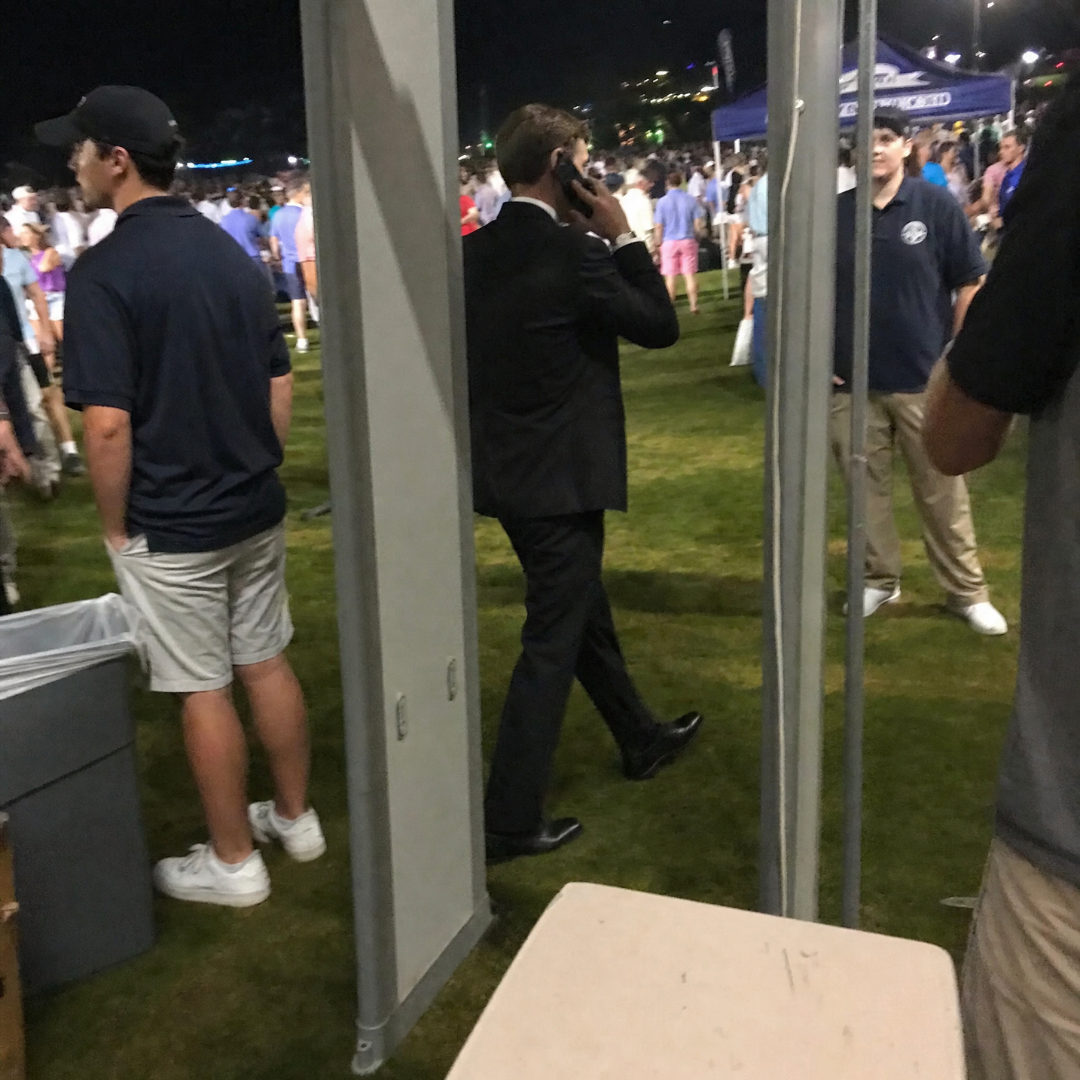
A man in a suit sat in the VIP section at the fights at the White House nine days ago and did not react to a single knockout the entire night. Never stood. Never clapped. Never looked up from his phone. Then during the main event, while the entire place was on its feet screaming, he stood up, turned his back on the octagon, and walked out. He came through my security gate and said something to the man next to him that I was not supposed to hear. I've been quietly getting my family ready ever since. June 14. White House South Lawn. Ninety-four degrees and the sun still wasn't going down. I was standing at Gate 7. Outer perimeter. Credentials checkpoint. My job was simple. Check the badge. Check the bag. Wave them through. Half the country tuned in that night because they needed one night where they didn't have to think about what's been happening overseas. The crowd was what you'd expect. Money. Polos and sneakers. Guys who flew in for the weekend. Women in heels that don't work on grass. Everyone had a drink. Everyone was talking loud. You could hear the octagon announcer from two hundred yards out and nobody cared. They were there to be there. I noticed him during the storm. They'd been watching the weather all day. When the lightning came they shut everything down. Fights delayed. Lights on standby. Thousands of people crammed into the shelter tents on the White House lawn waiting for it to pass. I stayed at my gate. Under a canopy that was shaking in the wind. Rain coming sideways. And from where I was standing I could see into the main VIP shelter maybe forty yards away. That's where I first saw him. Suit. Not a business-casual suit. A Tuesday-morning-in-a-federal-building suit. Dark. No wrinkles. Nobody else at that event was dressed like him. Phone to his ear. Pacing. While everyone else was drinking and laughing and killing time, this man was working. Now I need to explain something about myself. I did six years in the Army. Four at Fort Hood. You learn to read people. Not faces. Behavior. The way someone's shoulders sit. Whether their eyes are scanning or locked. You learn to pick up on the person in the room who isn't doing what everyone else is doing. This man was not doing what everyone else was doing. Storm cleared. Fights started. From my gate I had a partial sightline into the VIP seating area. Not close. But enough to see shapes. Enough to see who stood and who didn't. I watched him take his seat. He was somewhere in the front section. The section you don't get into with a regular credential. The section where the people with real access sit. First fight. Knockout. Crowd goes crazy. Everyone in that section is on their feet. He didn't stand. Second fight. Another knockout. Place is shaking. He didn't clap. The person next to him leaned in between bouts. They talked low. Intense. I couldn't hear a word from where I was. But I could see the body language. That wasn't small talk. That wasn't "hell of a fight." That was something else. Every fight. Every knockout. Every time the entire crowd lost its mind. He never looked up from his phone. I've watched a lot of people in a lot of places. You see someone who doesn't react to the room they're in, it means they're in a different room in their head. The room that actually matters to them. Whatever was on that phone mattered more than being on the White House lawn watching the biggest fight card of the decade. Then the main event started. The title fight. The one everyone came for. On the White House lawn. The whole place was on its feet. You couldn't hear yourself think. And this man stood up. Turned his back on the octagon. And walked toward the exits. Nobody leaves during the main event. Nobody. Not at a regular fight. Definitely not at the biggest card in the country on the White House lawn. You don't leave during that unless whatever's pulling you away is bigger than what's in front of you. He came through my gate. Him and one other man. Walking calm. Not rushing. Not talking loud. Already past this event in their heads. As they passed through, one of them said to the other: "Four weeks of fuel. That's it. Four weeks." They didn't see me. To men like that, a security guard is furniture. But I saw them. Saw the credentials around their necks. Saw which section they'd walked out of. And heard what one said to the other on the way out the door. They got maybe twenty feet past my gate. And one of them looked back. Not at me. Just over his shoulder the way people do. But I was already looking at him. Our eyes met. And he could tell from my face that I'd heard it. He said something to the other man. The other man kept walking. This one stopped. He stood there for a second. Then walked back toward my gate. Hands in his pockets. Not aggressive. Not nervous. More like a man who just realized he left something behind. He stopped a few feet from me. Neither of us said anything. Then he said, "Hell of a card tonight." I said, "You left before the main event." He looked at me. Almost smiled. "Yeah." "Must've been something important." He didn't say anything. I said, "Four weeks of fuel. That's a hell of a thing to hear walking out of the biggest fight in the country." He looked at me different after that. Not like I was security anymore. More like he was sizing me up. "You military?" "Six years. Army. Fort Hood." He nodded. Like that answered a question he hadn't asked yet. "You got a family?" "Daughter. Five." He let out a breath. Leaned against the barricade next to my gate. Put his phone in his jacket. "What do you know about what's going on right now? With the oil situation." I shrugged. "I mean, same as everybody. Gas went up. There's some kind of situation overseas with the shipping lanes. I think they signed a deal or something. Prices came down a little. I figured it was working itself out." He nodded slowly. "Yeah. That's what most people think." "It's not?" "Ships are moving. That part's true. But you know how many used to go through that lane every day before all this started?" I shook my head. "Over a hundred." "You know how many are getting through now?" "No." "Thirty. Maybe forty on a good day. And half of those are running dark. Transponders off. Hugging the coast to avoid the mines that are still in the water." He let that sit. "And every time a deal falls apart, which has happened seven times since March, that number drops back to single digits for a week." "So it's not really open." "It's open the way a highway's open when three lanes are closed and there's a wreck every other mile. Technically you can get through. But you're not getting what you need when you need it." I said, "But stuff is flowing. Some of it's getting through." "Sure. And a tanker that leaves today, right now, through that lane? You know when that oil becomes gas at a truck stop in Virginia?" "I don't know. Few weeks?" "Months. It has to cross an ocean. Dock at a port. Get unloaded. Go to a refinery. Get processed. Then move through pipelines and terminals and trucks before it ends up anywhere useful." "So the stuff trickling through right now..." "Doesn't get here in time." I said what everybody says. "But we produce our own oil. I keep hearing that. We're the biggest producer in the world or whatever." He almost laughed. "We are. We pump more oil than almost any country on the planet." "So why does it matter what's coming through some shipping lane on the other side of the world?" "Because our refineries can't use the oil we pump." I just looked at him. "The oil that comes out of the ground here is light. Thin. But the refineries in this country were built decades ago to process a completely different kind of oil. Heavy. Thick. The kind that comes from overseas." "Can't they just switch?" "Five years to rebuild a single refinery. So we pump our own oil and ship it to other countries because their refineries can handle it. And we buy the kind we actually need from overseas." "Through the shipping lane that keeps opening and closing." "Through the shipping lane that keeps opening and closing." I felt something move in my chest. Like a door closing far away. "So what's been keeping things running this whole time?" "The reserves." "What reserves?" "The government keeps emergency fuel reserves. Huge ones. Underground. Salt caverns. They've been there for decades. The whole point of them is exactly this. Supply gets cut, you've got a cushion while things get sorted out." "Ok. So we've got a cushion." "We had a cushion." He looked at me. "They've been draining those reserves every day since this started. Every day that shipping lane is closed or barely open, they pull millions of barrels out to keep gas stations running and trucks moving and prices from going through the roof." "How much is left?" "The main storage hub in Oklahoma hit what they call tank bottoms last week. That means there's barely enough to keep the pumps running. They're pulling nine million barrels a week out of reserves that were already low before any of this started." "How low?" "They were at about half before the conflict. Because they'd already been selling them off for years to manage prices. So they went into the biggest supply disruption in decades with half a tank." "And now?" "Now we're on fumes." "Four weeks," I said. "Maybe less." He looked at the ground. "You do the math. Nine million barrels a week going out. Almost nothing coming in that'll arrive in time. The oil we pump ourselves can't help because the refineries can't process it. And the replacement oil, even the little bit moving through that lane right now, doesn't show up for months." "So we're pumping oil we can't use. Importing oil we can't get. And burning through emergency reserves that are almost gone." "That's it. That's the whole picture." "And the prices coming down?" "That's the deal making the stock market feel good for a day. The market is not the supply. The supply is still draining. Prices could drop another dollar tomorrow and it wouldn't change the math. The fuel that was lost over the last four months is not coming back in time to fill the gap." He said all of it flat. No drama. I was quiet for a minute. "What happens when the reserves are empty?" "First thing is fuel rationing. Cards. Per-household limits. Military gets priority. Hospitals second. Essential workers third." "Everyone else waits." I said, "That can't happen here." "It already happened in the Philippines two months ago. National energy emergency. Declared it publicly. Nobody in this country even noticed." I didn't know that. "After rationing comes travel restrictions. Flights thinned. Routes cancelled. They won't call it restrictions. They'll call it a 'market correction.'" He looked at me. "But if you can't fill your tank and the flights are gone, what would you call it?" I didn't answer. "Then the grid. Brownouts first. Rolling. Two hours here, four hours there. California already put out a voluntary advisory last month." "Voluntary today." "Mandatory inside sixty days." Then he stopped talking. I waited. "But that's not the part I lose sleep over." He said it quiet. Almost to himself. "What do you mean? All of that isn't enough?" "All of that is bad. But all of that has a workaround. Gas gets rationed, you figure it out. Flights get cancelled, you stay home. Power goes in and out, you light candles. People adapt. They always do." He looked at me. "But there's one thing people can't adapt to." I waited. "When the grid starts going down, what do you think happens to the water?" I didn't say anything. I hadn't thought about it. "Your water doesn't come from a well. Neither does mine. Neither does anybody's in the suburbs. It comes from a treatment plant. And that treatment plant runs on electricity. The pumps that push clean water through the pipes into your house run on electricity." "Grid goes down..." "Pressure drops. Treatment stops. What comes out of the tap isn't safe to drink. And eventually nothing comes out at all." He said it like he was talking about a plumbing problem. Not the end of the world. Just a thing that happens when one system depends on another system and the first one breaks. "Texas. 2021. You remember that?" "The freeze." "The freeze. Grid failed for three days. Three days. And fourteen million people lost safe drinking water. Fourteen million. In America. In three days. And that was weather. That was an accident. That was temporary and everybody knew it was temporary." He let that sit. "What I'm describing isn't three days. And it isn't weather." I said, "Just buy water. Stock up." "Everybody says that. You know how fast bottled water disappears?" "No." "Your grocery store. The bottled water aisle. During a normal storm warning. Not even a real emergency. Just a warning. That aisle is empty in forty-eight hours." "Costco's out in seventy-two." "After that there is no water for sale anywhere. At any price. And every truck that would restock those shelves runs on the fuel that isn't there." He looked at me. "You can go a month without food. You can go a week without heat. You cannot go three days without water. That's not an opinion. That's biology." I thought about my daughter. Five years old. Walks into the kitchen twelve times a day and asks for water. It's the most normal thing in the world. You don't even think about it. You just hand it to her. "Here's the thing that keeps me up at night," he said. "A week from now. Maybe two. Your daughter walks into the kitchen and asks for a drink." "And you've got nothing to hand her." "No bottles. Nothing from the tap. Store's empty." He was quiet for a second. "That's the moment that breaks people. Not the gas prices. Not the brownouts. The moment you can't hand your kid a glass of water." I didn't say anything for a while. You could hear the crowd erupt behind us. Somebody won something. Neither of us turned around. "How do you know all this?" He looked toward the White House. Lights still on. "The people in the rooms I come from have known for months." "Half the people in that section tonight know." He almost laughed. But not the funny kind. "You think anybody in those front rows is worried about their water? You think any of those people are going to be standing in line at a gas station with a card waiting for their household limit?" I didn't say anything. "A man I work with bought a property in the mountains in January. Paid cash. Generator. Well water. Six months of food in the basement. He didn't tell anyone at work. Just did it." "A woman on my team has been shipping supplies to her mother's place in Tennessee since March. Quietly. Every weekend." "Three guys I know in different agencies have all done the same thing in the last ninety days." "No announcements. No social media. Just moving." "The people at this event tonight. The ones who flew in on private jets to watch a fight on the White House lawn. They've got land. They've got wells. They've got backup power and months of supplies already locked in." "They're not scared. They're ready." "You know who's not ready?" He looked at me. "The single mom in Ohio who's just happy gas came down thirty cents. The guy in a suburb outside Atlanta filling his truck every Friday thinking things are getting back to normal. The family in Arizona who heard the deal got signed and figured it was over." "Those people have no idea what's coming. And by the time they figure it out, the window to do anything about it will be closed." He straightened up off the barricade. He started to walk away. "Wait," I said. "What am I supposed to do with this?" He turned around. "You said you've got a family." "Yeah." "Then figure out water. Everything else you can work around. Food you can stretch. Power you can live without. But water. You figure that out first and the rest gets easier." "How? You just told me the stores will be empty in two days." He looked at me for a second. Then he walked back to my gate. He reached into the inside pocket of his jacket and pulled something out. Small. Light blue. About the size of a thick marker. He held it out to me. "What is this?" "This is how you figure out water." I took it. Turned it over in my hands. It was light. Felt like hard plastic. One end had threads on it like it would screw onto something. "It's a filter." "A filter." "Screws onto any standard water bottle. You fill the bottle from whatever freshwater source you can find. Creek. Pond. Rain barrel. Bathtub you filled in advance. Water goes through this and what comes out the other side is clean." "How clean?" "Bacteria. Parasites. Everything that makes you sick from untreated freshwater. Gone." I looked at it. This thing was smaller than a flashlight. "How long does it last?" "Four hundred gallons. One of these. That's a full year of drinking water for one person." "No batteries?" "No batteries. No power. Nothing to charge. Nothing to refill. You just fill the bottle and drink." He looked at the thing in my hand. "I've got a case of them at home. My family has them. My team has them. The people I told you about, the ones who've been quietly moving? Every single one of them has these." I held it up. "This little thing." "That little thing is the difference between having water and not having water when everything else I just told you comes true." "Keep it," he said. "I've got enough." Then his phone buzzed. He looked at it. Whatever was on the screen pulled him back into whatever world he'd stepped out of for the last twenty minutes. He didn't say goodbye. Didn't shake my hand. Just nodded once and walked toward the parking area. The other man he'd left with was leaning against a black SUV waiting for him. They got in and pulled out. That was it. I stood at my gate for another two hours. Finished my shift. Scanned badges. Waved people through. Did my job. But I wasn't there anymore. I was running through everything he'd told me. The reserves draining. The refineries that can't use our own oil. The shipping lane that keeps opening and closing. The four weeks. The grid. The water. I kept thinking about my daughter in the kitchen. Asking for water. The most normal thing in the world. And this little blue tube in my jacket pocket that some man I'll never see again told me was the answer to that. I went inside. Put the filter on the kitchen counter. Went to bed. Didn't sleep. Next morning I was standing at the counter staring at it. My wife came downstairs. "What is that?" "I don't know yet." I drove to the creek behind our neighborhood. The one my daughter isn't allowed near because the water looks brown and smells like mud. Filled a water bottle. Brought it home. My wife watched me screw the little tube onto the top of a bottle of brown creek water. "What are you doing?" I turned the bottle upside down and squeezed. Water in the bottle was brown. What came through the filter into a glass was clear. Not cloudy. Not yellowish. Clear. I picked up the glass and drank it. My wife looked at me like I'd lost my mind. "You just drank creek water." "Taste it." She didn't want to. She stood there with her arms crossed. Then she picked up the glass. Took a small sip. Then a longer one. "It tastes like nothing." "I know." She put the glass down. Looked at the filter. Looked at me. "How many of these can we get?" That was the moment I knew she understood. That was nine days ago. Three days after that conversation, the President stood up at the G7 and said we have four weeks of reserves before bedlam. Bedlam. His word. Not mine. On camera. In front of the world. Four weeks. The exact number the man at my gate said to the other man walking out of the fight. Three days after I heard it at a checkpoint on the White House lawn, the President said it out loud at an international summit. I sat on my couch and watched the clip three times. Then the shipping lane closed again. Three days after the deal. Ships dropped from thirty-five to twelve overnight. Half of them running with their tracking off. Everything he told me has been landing. One thing at a time. In order. I'm not a conspiracy guy. I'm not political. I don't post stuff like this. But I have a daughter. And I'm not going to be the guy standing in the kitchen with nothing to hand her because I saw the whole thing coming and talked myself out of believing it. My wife and I went looking for more of the filters that weekend. Found the company online. Small operation. They don't sell in stores. Don't sell on Amazon. You order direct from them and they ship it. We got four. One for each of us and two for my wife's parents. I've since sent the link to my brother. My buddy Marcus who got me the security gig. And three guys I served with. Some of them thought I was nuts. Two of them ordered that night. I'm not going to tell you what to do. But if you've been watching the news and feeling like something's not adding up. Like the prices coming down don't match what you're hearing. Like the deals keep falling apart and nobody's explaining why. You're not crazy. You're paying attention. The people who know are already moving. Quietly. The people at that event, the ones in the front rows, they figured out water months ago. The rest of us are just now catching up. Here's the link. Same one I used. Check if they still have them because the last time I looked they were going fast. https://primitivelabsresearch.com/products/hydra-x1-portable-filtration-unit **P.S.** Three days after my conversation at the gate, the President said "four weeks of reserves" and "bedlam" on camera at the G7. June 17. The man at my gate said "four weeks of fuel" on June 14. I don't need anyone to tell me what that means. **P.P.S.** My wife was the hardest sell. She thought I'd lost it when I brought home brown creek water and drank it through a blue tube at the kitchen counter on a Saturday morning. She didn't talk to me for an hour. Then she tried it. Then she went quiet. Then she said how many can we get. If your spouse thinks you're crazy for preparing right now I get it. Mine did too. Until she didn't. **P.P.P.S.** Each filter does four hundred gallons. That's a full year of drinking water for one person. No batteries. No power. No charging. Lifetime warranty. Sixty-day money back. Free shipping. These are the same ones the people I described in this post have been buying quietly for months. **P.P.P.P.S.** Someone's going to comment and say just buy cases of water. I thought about that too. Then I did the math. A case of water lasts a family of three about two days. You'd need over a hundred cases to get through a month. Where are you putting all that? And when everyone else has the same idea at the same time, how long before there's nothing left on the shelf? A case of water is a countdown clock. You drink it and it's gone. A filter is access. As long as there's a creek or a pond or a rain barrel or a bathtub you filled in advance. As long as there is freshwater anywhere you can walk to. You have clean water. That's the difference. https://primitivelabsresearch.com/products/hydra-x1-portable-filtration-unit
If you're a parent or grandparent, please read this👆
Lightweight portable emergency water filter removes 99.99% of contaminants. Perfect for evacuations, disasters, and family emergency preparedness. Free shipping.
SHOP NOWLike this ad? Make it yours.
Crush rebuilds this exact creative around your product — your brand, your colors, your offer — in about a minute.