
Inactive· since May 13, 2026
- 108
- days it ran
- 1
- relaunches
Ad copy
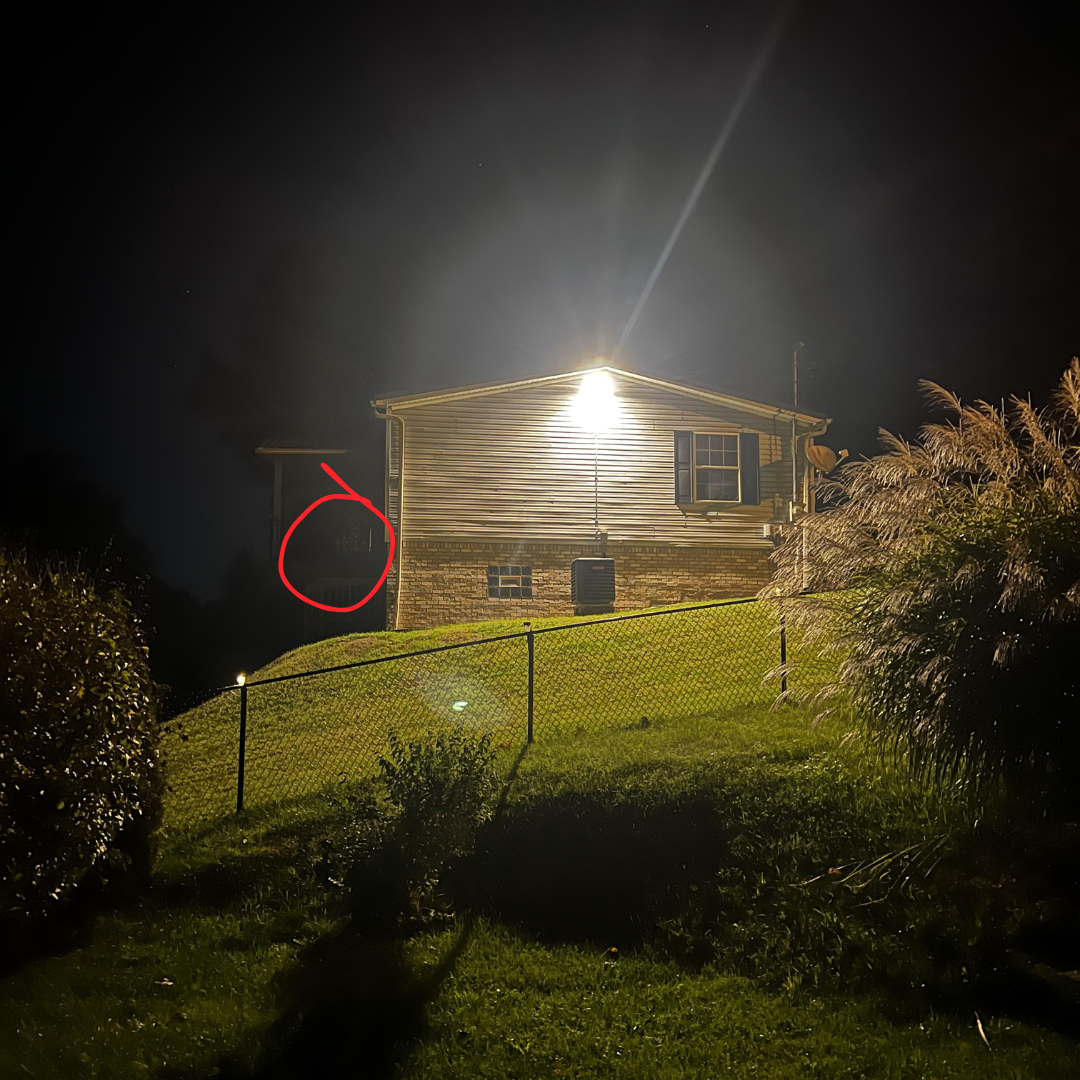
Last Sunday I was up at midnight with my insomnia when I looked out and saw every light on in my new neighbor's house — and a delivery truck unloading pallets onto his driveway. The next morning he sat me down on his porch and explained why every story on the news right now is a distraction — and the one thing they're quietly taking control of while the country isn't looking. I'll never forgive myself for not asking sooner. His name is Burt. He and his wife moved in last fall. 64. Silver crew cut. Starched button-down tucked into Wranglers. The kind of man who calls every woman on the block ma'am and means it. Quiet couple. Always a wave, never a conversation. And from the day they unpacked, something about that house was off. The first thing I noticed was the solar panels. He had the whole south-facing roof done in a week. A crew of four men, in and out by Friday. Then a second array mounted on the ground in the backyard. I mentioned it to my husband over coffee. "He's selling back to the grid. That's how they pay for it." I let it go. A month later there was a second electrical setup on the side of the house. It didn't connect to the utility line. Just ran straight into the garage. My husband spent four years in the Air Force. He knows what he's looking at. He put his fork down at dinner. "That's not selling back. That's running independent of the grid when he wants to." I let that go too. Then it was the tanks. Big white ones. Six of them lined up along the side of the house. Then the truck. Plain white. No company name on the side. Pulled into his driveway every other Saturday at 7 a.m. Then the freezer he wheeled into the garage in February. I never crossed the street. I kept telling myself it wasn't my business. Then last Sunday happened. I'd gone to bed at 10:30. Woke up with my heart racing the way it does some nights for no reason at all. I went downstairs to make tea. I didn't turn the kitchen light on. I never do at that hour. I just stood at the sink waiting for the kettle. That's when I saw it. Every window in Burt's house was lit up. Not a lamp here, a hallway light there. Every window. Upstairs, downstairs, the garage, the basement. The house looked like it was on fire from the inside. I checked the clock on the microwave. 11:58 p.m. I stood there in the dark with my tea getting cold. At 12:10 a truck pulled into his driveway. Plain white. Same kind of truck I'd been seeing on Saturday mornings — but this one had no markings at all, not even the small ones on the bumper. Two men got out. They didn't ring the bell. The garage door was already up. Burt was standing inside it, waiting. They unloaded six pallets onto his driveway. Wrapped in black plastic. None of them spoke that I could see. The men got back in the truck and drove off. The pallets stayed. Burt stood in the driveway for a long time after they left. Then he walked over to the edge of his lawn, turned, and looked directly at my kitchen window. I was standing in the dark. There's no way he could have seen me. He looked anyway. I didn't sleep the rest of that night. By 6:30 I'd given up trying. I made coffee. I watched the sun come up through the kitchen window. His driveway was empty. The pallets were gone. Like none of it had happened. I told myself I'd imagined the whole thing. I almost convinced myself. Around 8 I went out to get the paper. He was at the end of his driveway doing the same thing. He saw me. He raised his hand the way he always does. I raised mine back. And then — I don't know what came over me — I just stood there. Paper in my hand. Bathrobe. Slippers. Staring at him from across the cul-de-sac. He stared back. After a few seconds he started walking toward me. Slow. Hands in his pockets. He stopped at the edge of my driveway. "Morning, ma'am." "Morning, Burt." I should have said something normal. Beautiful day. How's your wife. Did you see the game. Instead I heard myself say, "I saw the truck last night." It came out before I'd decided to say it. He didn't flinch. He didn't look around to see if anyone was listening. He just nodded once, slowly, like I'd finally said something he'd been waiting eleven months for me to say. "You want to come sit on the porch?" he said. "I'll put a pot on. This isn't a driveway conversation." I followed him across the cul-de-sac in my bathrobe. I should have felt ridiculous. I didn't. His porch is the kind of porch you don't see anymore. Two rocking chairs. A small wooden table between them. A coffee pot already on the table, like he'd set it out before he went down to get the paper. He poured two cups. Black. Didn't ask how I took it. He sat down. Took a sip. Looked out at the street. Then he said, "How much have you noticed?" I told him. The solar panels. The line into the garage. The white tanks. The Saturday truck. The freezer. The lights last night. The pallets. He listened without interrupting. When I finished he said, "Your husband. Air Force?" "Four years." He nodded. "Then he'll understand what I'm about to tell you. Bring him over tonight. But you needed to hear it first. You're the one who's been watching." He set his coffee down. "Let me clear up the mystery first. Because I can see you've been carrying it around for a while." He pointed at his roof. "Panels are panels. They run the house most of the day. The line on the side of the house your husband spotted — that's an off-grid switch. It lets me cut the utility loose when I want to and run on my own power. Most days I don't bother. It's just there." He pointed at the side of the house. "The white tanks are water. Twelve hundred gallons total. Fed by rain catchment off the gutters and topped off with a hose every few weeks. The freezer in the garage is food. My wife cans most of the summer and we buy the rest from a fellow upstate." He pointed at his driveway. "The pallets last night were diesel. For the generators. I keep enough on hand for six months. The man who brings it doesn't put his name on the truck because the city doesn't love residential fuel deliveries. He comes at night because the neighbors don't love them either." He took a sip of his coffee. "Power, water, food, fuel. Four buckets." I sat there for a moment. "Burt," I said. "Why?" He looked at me. "Why what, ma'am?" "Why all of it. Why two years. Why a man your age spends his retirement filling tanks and stockpiling diesel in the middle of a normal cul-de-sac. What is it you're so sure is coming?" He didn't answer right away. He looked out at the street. Then back at me. "You sure you want me to answer that?" "Yes." "Once I tell you, you can't un-hear it. Won't watch the news the same way. Won't drink a glass of water the same way. You sure?" "Burt. I'm asking." He nodded once. "Alright." He set the cup down slowly. "What I just told you — that's the easy part. Anybody with a credit card and a weekend can figure that out. Buckets and tanks and a generator. My ten-year-old grandson could do it." He looked at me. "The hard part isn't filling buckets. The hard part is that most folks on this street are never going to fill them. And it has nothing to do with money or time. It's because they don't believe they need to." He leaned back in the rocking chair. "Let me ask you something first." "Alright." "What's the biggest story in the news this week?" I thought about it. I named a few things. The wars overseas. The shooting. The gas prices. He nodded the whole time I was talking. When I finished he said, "And what was the biggest story three weeks ago?" I had to think. I couldn't really remember. He smiled a little. Sad smile. "That's the trick," he said. "Brand new emergency every Monday. By Friday you've forgotten what Monday's was. By the next Monday you've got a fresh one to be afraid of." He leaned forward. "Now ask yourself. In all those stories, week after week, year after year — has there been a single one you could actually do anything about?" I sat with that. "No," I said. "No. Just things to be upset about. Things to argue with your sister about. Things to lose sleep over." He leaned back. "That's not an accident." "Burt — that sounds paranoid." "It does. I know it does." He took a sip. "My wife said the same thing the first time I started putting it together. Took her a year to come around. She's been the one pushing me harder than anyone for the last six months." He looked at me. "You don't have to believe me. But I'd ask you to listen to the rest of it before you decide." I nodded. "Go on then." "Picture a magician. Up on a stage. He's waving his right hand around big and loud, and the whole audience is watching the right hand." He waved his own hand for me, slowly. "What's his left hand doing?" I said, "Whatever the trick is." "That's right. Whatever the trick is." He set his hand back down. "What's on the news every night is the right hand. Big. Loud. Scary. Impossible to look away from." He paused. "And while you're watching it, the other hand is doing the trick." "What's the trick?" I said. He looked at me for a long moment. "You already know what the trick is. You've been feeling it for a while now. Most folks have. They just can't put words on it." He took a sip. "It's the same trick it always is. When somebody very powerful wants something from a very large number of people, and they know that very large number of people would never agree to it if they asked nicely — they don't ask. They wait." He looked out at the street. "They wait for everyone to be tired. And scared. And angry at each other. And then they offer to make it stop. And the people, by then — the people will give up almost anything to make it stop." He looked back at me. "That's the trick. That's the only trick. It's been the trick for a long time." I felt something cold move through my chest. I didn't say anything for a while. Finally I said, "What do they want?" He smiled the sad smile again. "Same thing it always is. Control. Total control. Over how you move. Over what you spend. Over what you say. Over what you eat. And the way you get total control over a person — the only way that has ever worked, in all of human history — is you control what they need to live." He looked out at the street. "Stop and think about your day. Just yesterday. Walk through it for me." I started to. He cut me off gently. "You woke up. What was the first thing you did?" "Turned on the light." "Power. Then?" "Coffee pot." "Power. Then?" "Shower." "The water heater runs on power. Then?" "Made breakfast." "Stove. Power. Refrigerator. Power. Microwave. Power." He kept going. "Drove to the store. The pumps that fill your tank run on power. The lights in the store. The freezers. The card reader you swiped. The traffic lights on the way home. Your phone. Your TV. Your air conditioning. Your alarm clock. Your garage door." He paused. "You did not do one single thing yesterday that did not run on the grid. Not one." He let that sit. "Most folks know this if you stop and ask them. But most folks have never stopped and asked themselves. We grew up flipping a switch. We don't think about it." He smiled the sad smile. "And that's the first piece of it. They know we are completely dependent on something most of us can't even explain. They know if they put their hand on that switch, they put their hand on every single thing in our lives." I nodded. "So that's it then. They control the power, they control everything." "That's what most folks would say." He took another sip of coffee. Set the cup down slowly. "But it's not actually right. And this is the part I want you to listen to carefully." He looked at me. "Power isn't the one." "Burt — you just spent ten minutes telling me everything I do runs on power." "I did. And it does." He took another sip. "Doesn't mean it's the one." He held up a finger. "You can live without power. Uncomfortable. But you can live. My own grandmother did it 'til she was fourteen." He held up a second finger. "You can live without money. People are doing it right now." A third finger. "You can live without food a long time. The body's built for it." He stopped. "There is one thing — only one — that you cannot live more than three days without." He didn't say it. He just looked at me. I sat there. I thought about my morning. The coffee pot. The shower. The ice in my husband's glass at lunch. My grandbaby's bath last Saturday. I thought about every single thing in my house that runs on the one thing. "Water," I said. He nodded. "Water." "That can't be right," I said. "If the power went out tomorrow my tap would still work. It has to. It's water." "Would it?" "It..." I stopped. "Most folks, if you ask them, they think water comes out of the ground," he said. "Like a spring. They think if the power goes out, they'll be inconvenienced. But they'll still have water." He shook his head. "Your water is on the grid. Every drop of it. The plant that cleans it runs on power. The pumps that push it to your house run on power. The pressure in your pipes — that is power. You turn the tap, and what you're really doing is asking the grid for permission." He let that land. "The day they decide to turn that handle — and they will turn it — your tap is the second thing that goes. The first is your air conditioning. The second is your tap. And you will not get a warning. You will get a notice in the mail two weeks after." I sat with that. I couldn't speak for a while. He didn't push me to. Eventually he said, "I am sorry, ma'am. I am sorry to be the one telling you this. But I would rather you hear it on a porch with a cup of coffee than the way most folks are going to hear it." He looked out at the street. "And the reason I'm telling you any of it is because I haven't told you the important part yet." He set his cup down. "Those twelve hundred gallons in the tanks against my house — that's two months for me and my wife. Maybe three if we're careful. After that they're empty just like everybody else's." He looked at me. "That's why I don't tell people about the tanks anymore. The tanks aren't the answer. The tanks are a head start." He paused. "What everybody actually needs — what I tell my brother, what I tell my daughter up in Vermont, what I tell my wife's sister down in Carolina — is something different. Not storage. Access." He stood up. "Come on out back. I'll show you." He stopped in the garage on the way and pulled two things off a workbench. An empty plastic water bottle — the kind you'd buy in a six-pack at the grocery store. And something small and blue. About the size of a thick marker. Like a fat straw with caps on both ends. That was it. I almost laughed. "That's it?" "That's it. Come on." His backyard sloped down past a row of trees. About sixty feet behind the house was a creek. Maybe four feet across. Brown water moving over rocks. I'd lived on this cul-de-sac for 23 years and I'd never once thought about that creek. He walked down to it in his boots. Crouched at the edge. Held the empty plastic bottle under the surface and let it fill up. The water in the bottle came up brown. Like coffee with too much milk. He stood up. Walked back to me. "That's what's in your tap right now if you turn it on," he said. "Before they clean it. This is what the plant takes in. This is what the grid turns into the water you drank with breakfast." He held the bottle up to the light. You could see things floating in it. Then he took the blue thing — the one from the workbench — and screwed it right onto the top of the bottle. Like a cap. It threaded on like it had been made for that bottle. He tilted it back. Took a long drink. He swallowed. He held it out to me. "Try it." I almost said no. I don't know why I took it. I tilted the bottle back. I drank. The water that came through that thing was clear. Not clearish. Not mostly clear. Clear. Like it had come out of a bottle at the grocery store. It tasted like nothing. It tasted like water tastes when you've been working in the yard all day and somebody hands you a cold glass of it. I lowered the bottle. I looked at him. He was watching my face. "That came out of the creek thirty seconds ago," he said. "What you just drank is cleaner than what came out of your tap this morning. And it didn't need power to do that. It didn't need a plant. It didn't need permission." I held it in my hand. It weighed almost nothing. Two ounces, maybe. The whole thing fit in my palm. "How does this work?" I said. "How is this even possible?" He took it back from me. Unscrewed it from the bottle. Held it up so I could see it. "Four layers. That's the whole secret." He pointed at one end. "First two layers are cotton. Catches the big stuff — the dirt, the leaves, the silt you can see in the bottle. Anybody can do that part. That's just a coffee filter." He turned it. "Next layer is charcoal. Same stuff they put in the filter on your refrigerator door. Pulls out the taste, the smell, anything funny in the water that your tongue would know was wrong." He turned it again. "Last layer is the one that matters. They call it a hollow fiber membrane. Picture a bundle of straws so small you'd need a microscope to see them. Each one has tiny holes along the side, but the holes are smaller than any bacteria or parasite that lives in fresh water. So when the water goes through, the water gets through and everything bad gets stopped. Period." He set it back down. "That's how you turn creek water into drinking water in two seconds. No power. No plant. No permission." I picked it back up and looked at it. It still didn't make sense to me. "Burt," I said. "If this is real — if this works the way you just showed me — why doesn't everybody have one of these in their house?" He smiled the sad smile again. "That's the right question." He took the filter back. Held it up. "Two reasons. First one is most folks have never heard of it. The big stores don't carry it. The famous brands you've seen in commercials make a different kind — not as fine, not as long-lasting. They're fine for a weekend hike. They are not what you want when the handle turns." He set it down. "Second reason is that membrane I just told you about. The hollow fiber. That's the bottleneck." He paused. "That layer takes a long time to make. The process is slow and it is exacting. The fibers have to be drawn out at exactly the right rate, bundled at exactly the right density, sealed at exactly the right temperature. Get any of it wrong and the whole batch is junk. The outfit my buddy runs — they can only put out so many a month. There is no shortcut. There is no version that comes out faster. The membrane decides the pace and the membrane will not be rushed." He looked at me. "There are bigger companies that would love to crank these out and undercut him on price. The reason they don't is they can't. Not at the standard my buddy holds. The corners you'd have to cut to go faster are exactly the corners that get somebody sick when they're drinking out of a creek." He picked it back up. "Which is why every batch he ships sells out. Most of his list is fellas like me. Corps men. Engineers. A few utility guys. Folks who know what's coming and know what they're looking at when they see this." He held it up between us. "This one filters 400 gallons before it needs cleaning. The kit comes with a syringe for that. Then it keeps going. One of these in your purse, one in your husband's truck, one in the bag by the back door — and you and your family have water for years. Anywhere there's a creek. Anywhere there's a pond. Anywhere there's a stream behind your house." He looked at me. "That is what they cannot take from us. That is the one thing on the list they cannot turn off." I'm writing this because Burt asked me to. He said, "You're going to want to tell people. And the only people who can do anything with it are the ones who hear it before everybody else does." That's you. You're the one reading this right now. You're the one who's been feeling it in your stomach when you watch the news and not had a word for it. You're the one whose husband isn't going to know what to do when the handle turns. You're the one who has a daughter, a grandbaby, a sister you love. You can have what Burt has. It's called the HYDRA-X1. Same one he showed me by his creek. Same one that turned brown water clear in front of my eyes. https://primitivelabsresearch.com/products/hydra-x1-portable-filtration-unit It weighs two ounces. It fits in a purse. It screws onto any regular water bottle the same way it screwed onto the one in Burt's hand. It has the same four-layer system Burt walked me through — the two layers of cotton, the charcoal, the hollow fiber membrane that stops 99.99% of bacteria and parasites from any creek, pond, or stream. It filters 400 gallons before it needs cleaning. The kit comes with the small syringe to clean it. Then it keeps going. It does not run on power. It does not need a plant. It does not ask for permission. The company that makes them is small. Burt was telling the truth about that. The membrane takes a long time to produce and the process can't be rushed. When a batch drops, the people who know about them clear it out fast. I went to their website that night, after my husband and I came back from Burt's house at 10 p.m. There were 218 left in stock. I ordered three. One for my kitchen. One for my husband's truck. One for the bag by the back door. The next morning I checked again. There were 47. By that afternoon they were sold out. They came back into stock yesterday. I don't know how long they'll be there. If you're reading this and the button below still works, that means there are still some left. If you're reading this and the button doesn't work, that means you waited too long. https://primitivelabsresearch.com/products/hydra-x1-portable-filtration-unit You don't have eleven months. You don't have eleven weeks. You might not have eleven days. You have right now.
If you're a parent or grandparent, please read this👆
Lightweight portable emergency water filter removes 99.99% of contaminants. Perfect for evacuations, disasters, and family emergency preparedness. Free shipping.
SHOP NOWLike this ad? Make it yours.
Crush rebuilds this exact creative around your product — your brand, your colors, your offer — in about a minute.