
Stopped· since Aug 25, 2026
- 29
- days it ran
- 0
- relaunches
Ad copy
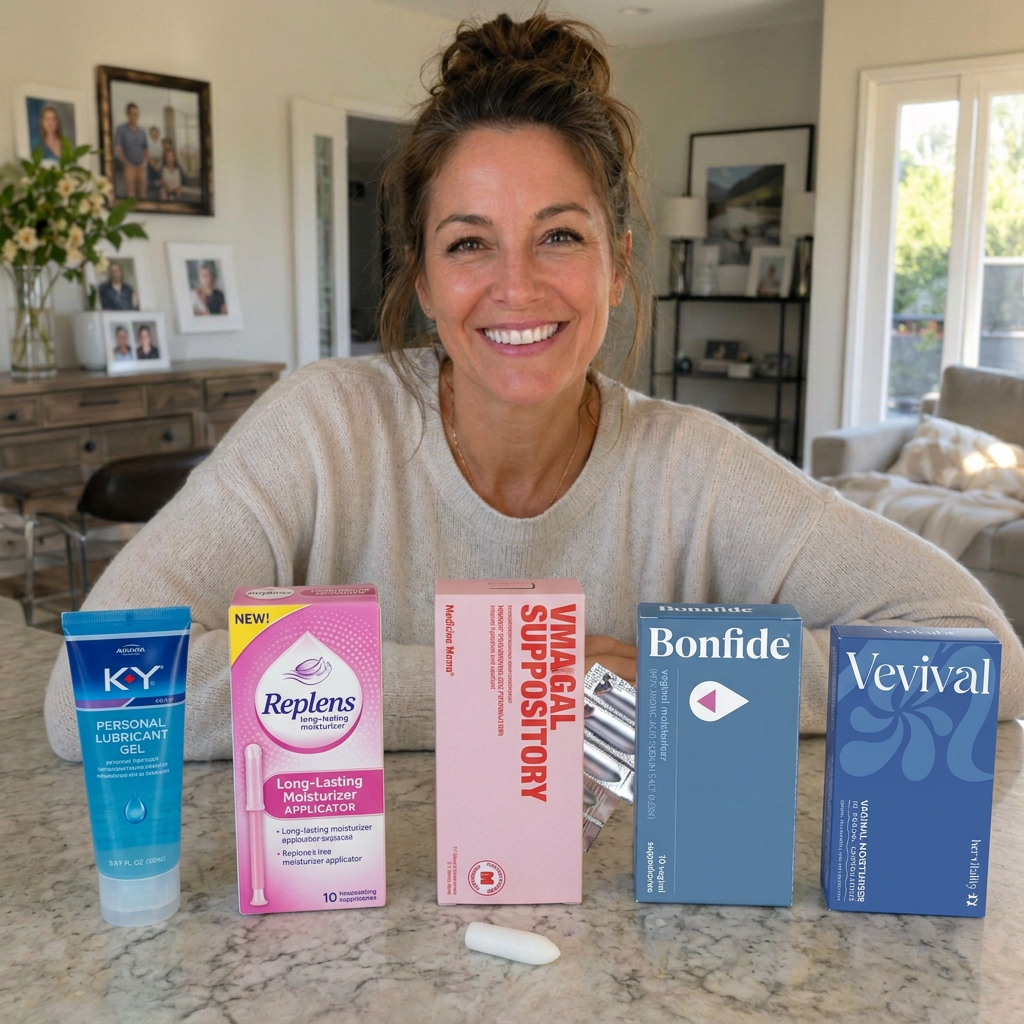
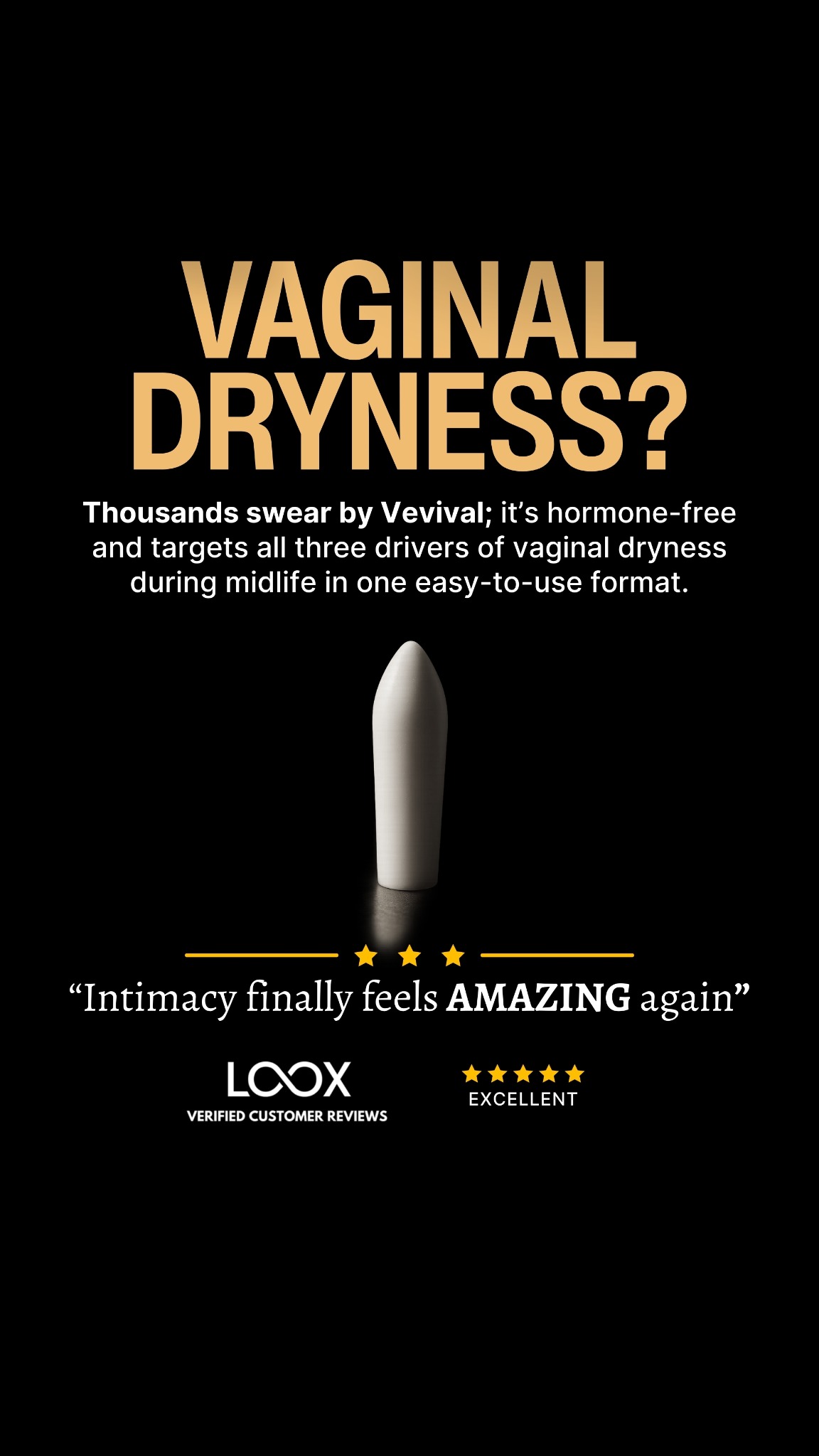
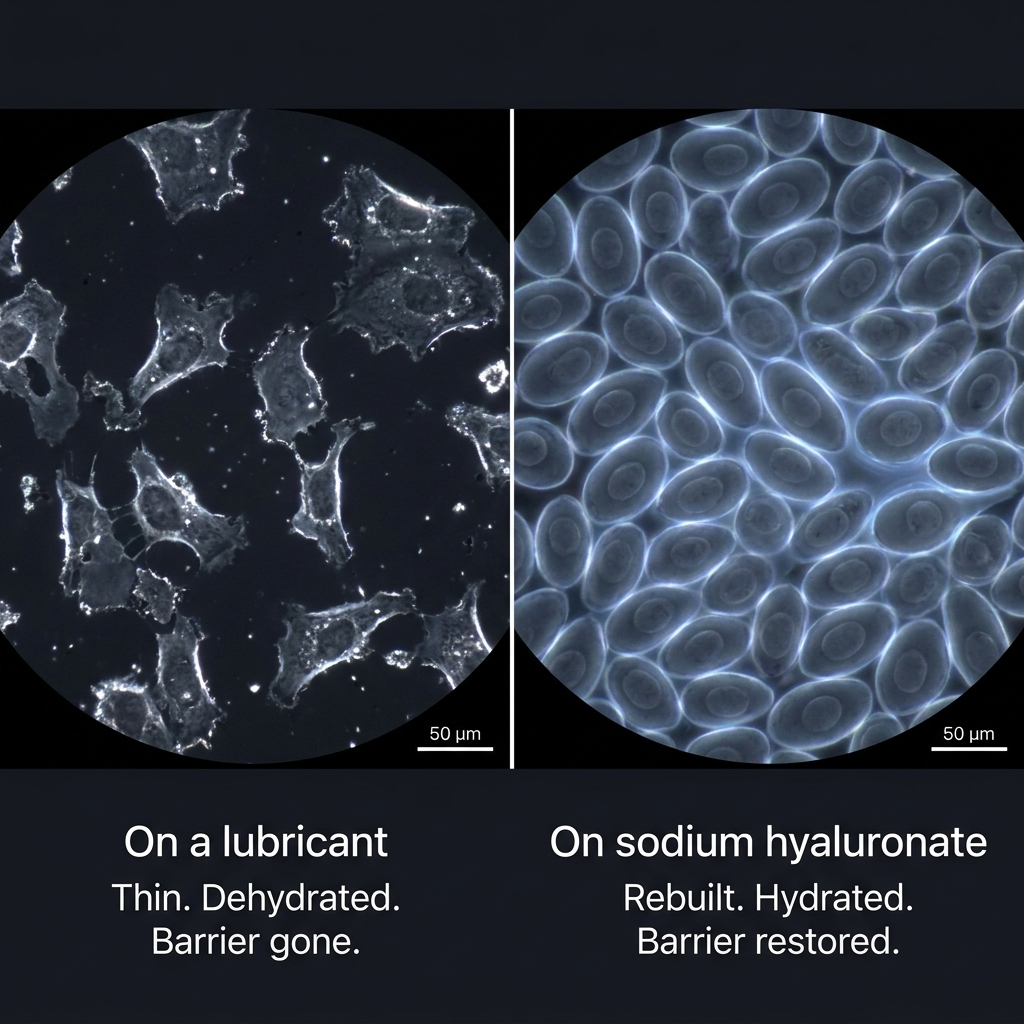
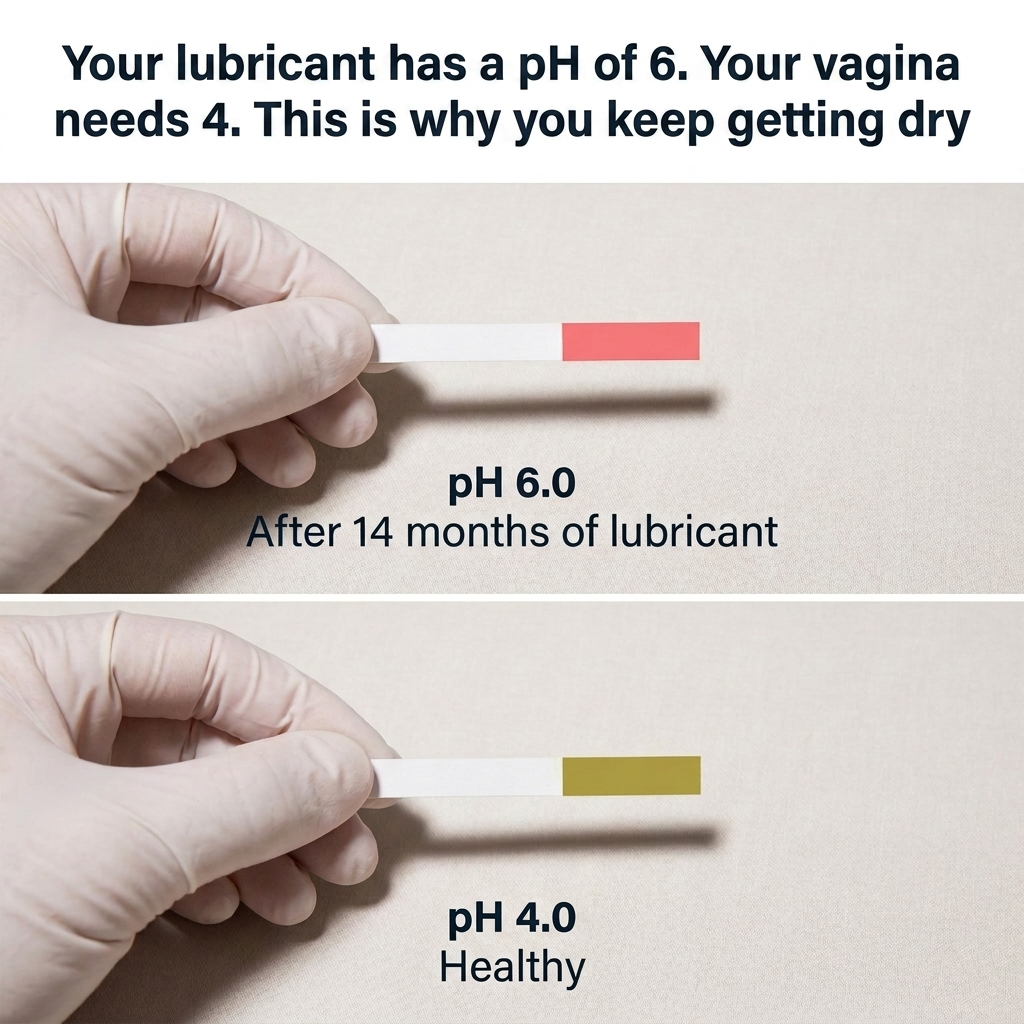
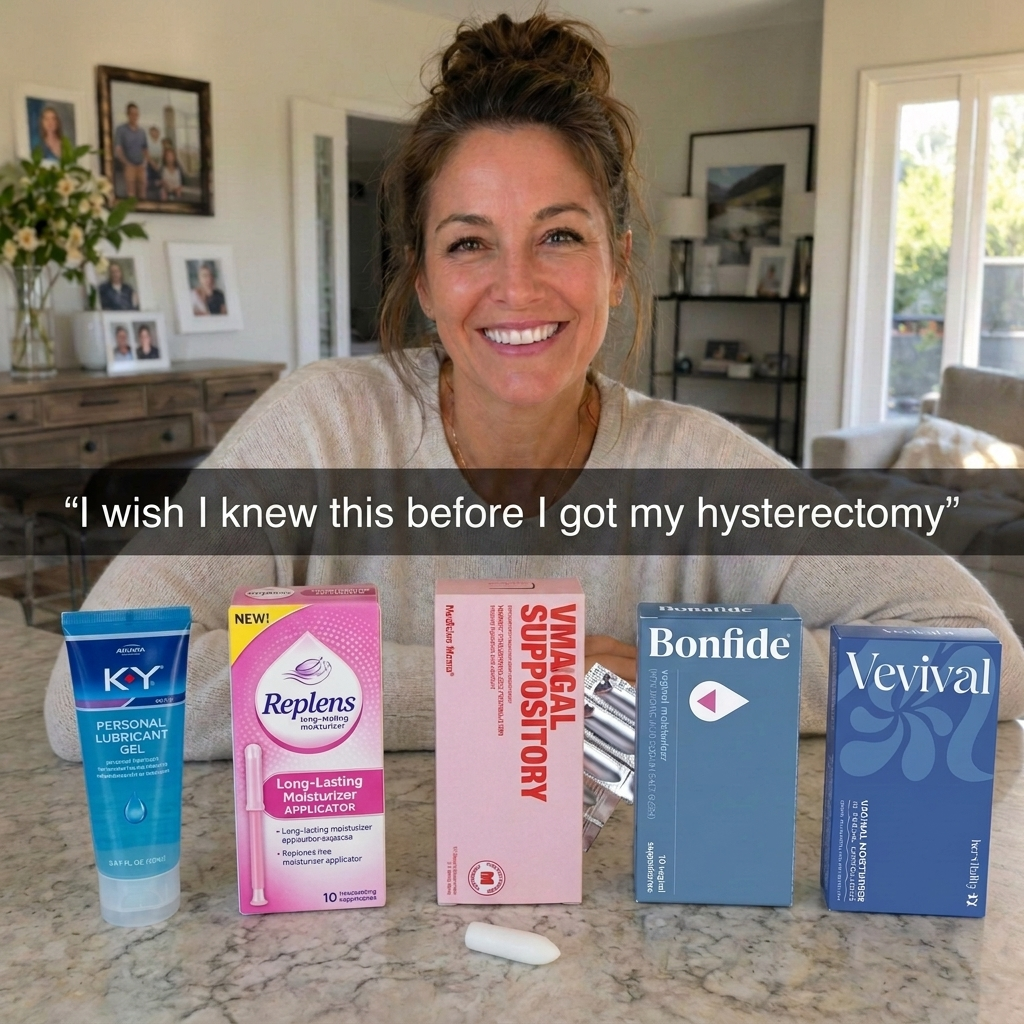
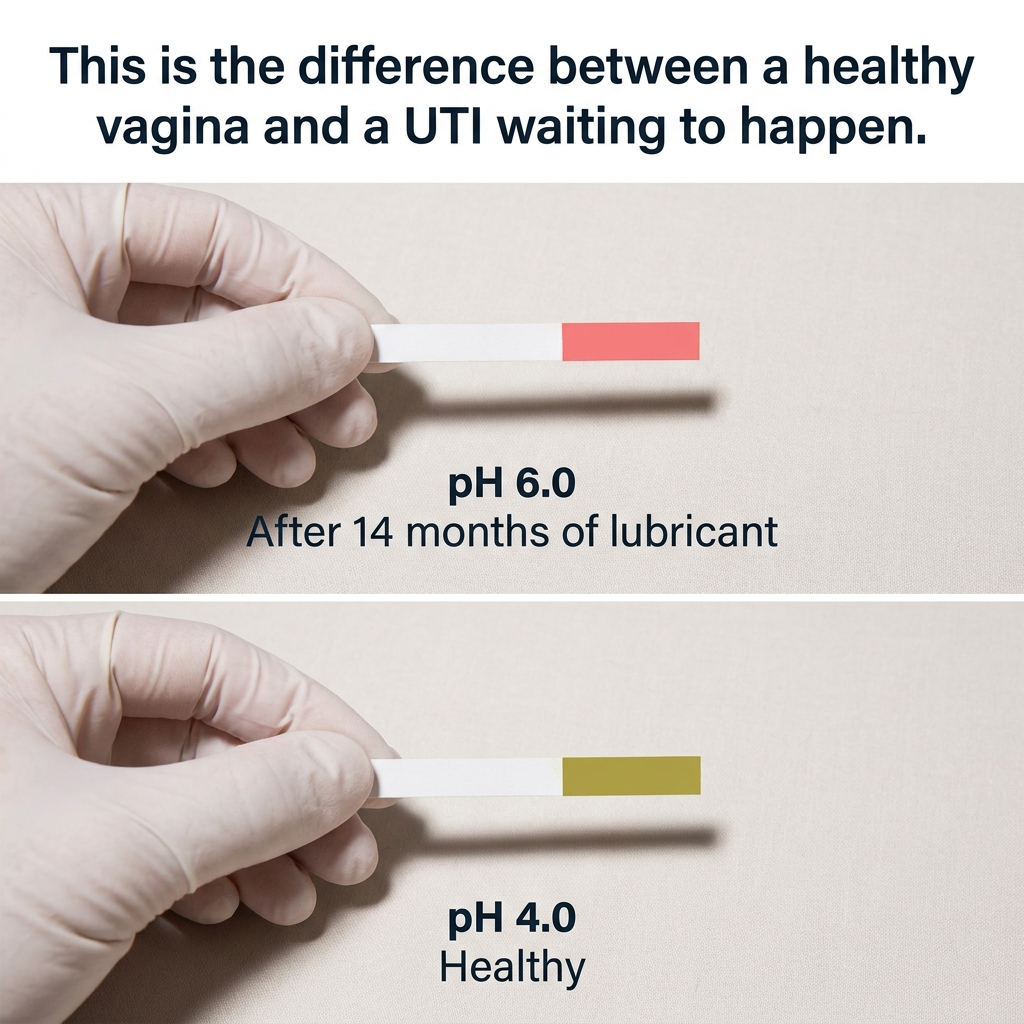
I owe an apology to about four thousand women, and I'm going to have to make it publicly, because I can't call all of them. For twelve years I told them the same thing about vaginal dryness. It was the standard of care. But it was also making them worse. I didn't know at the time. I do now. And I can't keep quiet about it anymore. I'm an OB-GYN. 12 years in practice. In that time I've said the same sentence to thousands of women sitting across from me. "Try a lubricant. Use it before sex. If it's still bothering you in six months, come back." That was my training. That was the standard of care. I never questioned it. Until it happened to me. I'm 52. Menopause started at 47, and I handled it the way I told my patients to handle it. Responsibly. By the book. But my body had been sending signals I kept reclassifying as normal. The burning. Not during sex — that I would have taken seriously. At my desk. Mid-afternoon, charting between patients, nothing happening at all. I'd shift in my chair, find the one position that made it tolerable, and stay there. The clothes. I stopped wearing certain trousers. I didn't decide to. I just noticed one morning that I'd been reaching past them for months. And the infections. Three in one year. Each one I diagnosed myself. Each one I wrote my own antibiotic for. Each one cleared, and each one came back about eleven weeks later. I documented it in my own chart the way I'd documented it in hundreds of others. Recurrent UTI. Common post-menopause. Then the thing that actually frightened me. I have a patient. Sixty-eight. Ten years past her hysterectomy, and she'd managed it exactly the way I told her to — lubricant, patience, come back if it's still bad. By the time I examined her, the tissue had narrowed. Not thinned. Narrowed. I could not complete a routine exam with a standard speculum on a woman I had been seeing for a decade. She asked me if it would go back. And I had to tell her that at that point we're talking about dilators. Physical stretching. Months of it. Because atrophy doesn't hold still — it's progressive, it doesn't reverse on its own, and there is no estrogen coming to rebuild what's gone. I drove home from that appointment doing math about myself. Five years since menopause. Fourteen months of a protocol that wasn't working. And I was on the same road she was — just further back on it. Then came the moment I'm actually ashamed of. I went to my own gynecologist for my annual. She asked, the way we all ask, whether I was having any vaginal symptoms. And I said no. I lied. To a colleague. In an exam room. Because I had nothing to offer myself beyond what I'd already tried, and saying it out loud would have meant hearing her recommend the exact thing sitting in my bathroom that wasn't working. I'm an OB-GYN. Women fly in to see me for this. And I couldn't say the word burning about my own body. So I did what I tell patients to do. My own protocol, exactly as I'd prescribed it hundreds of times. Moisturizer every few days. Lubricant before sex. Water-based first, then silicone when the water-based dried out in twenty minutes. I bought the expensive one, because that's what women in my waiting room did and I finally understood why. Fourteen months of that. Faithfully. The way I tell everyone to be faithful with it. I was worse at the end than at the start. Drier. The burning had gone from occasional to most afternoons. And I'd had my fourth UTI. And then I finally did the one test I'd never run on myself. Vaginal pH. It takes thirty seconds and a paper strip. It costs about a dollar. Healthy is around 4. Acidic. That acidity is the entire reason bacteria can't establish. Mine came back 6. I stood in my own office holding a strip that told me my body had stopped defending itself, after fourteen months of doing everything I tell everyone to do. And here's what I did in my own bathroom, which I think about constantly now. I stood there and thought: maybe this is just my body. My mother had this. Maybe it's genetic and I'm watching the same thing happen to me. A physician. 12 years of training. Blaming her own genetics for the failure of a protocol she prescribes eight times a week. That's exactly what my patients do. I'd watched them do it across the desk for 12 years — women apologizing to me for their own bodies, asking what they were doing wrong. But here's what I know after 12 years: when a protocol fails across dozens of patients who are all following it correctly, it isn't the patients. It's the protocol. And not once in 12 years had I stopped and asked why the first step wasn't working. That question kept me up until two in the morning. So I made coffee and sat down with my laptop and started reading. Not the guidelines I'd been following since residency. The actual published literature. What I found DESTROYED me. A lubricant was never designed to treat anything. It's a friction product. Its entire function is to reduce friction while it's physically there. That's the whole contract, and it's printed on the front of every box — personal lubricant. It doesn't act on tissue. It has no mechanism for acting on tissue. It's not a weaker version of a treatment. It's a completely different thing. And what was happening to me was never a friction problem. My estrogen dropped. Estrogen is the signal that tells the vaginal wall to hold its collagen, its elastin, its thickness. No signal, no rebuilding. The wall thins. Every year. And it does not come back on its own. So for 12 years I handed women a friction product for a tissue disease. Told them to be patient when it didn't work. And then did the identical thing to myself for fourteen months. That's a failure. A passive one. The treatment does nothing. Bad enough. What I found next is active harm. There's a measurement I had never once considered in twelve years of practice. Osmolality. How concentrated something is compared to the tissue it touches. If it's more concentrated than your tissue, it pulls water out of your cells. That's not a theory. That's osmosis. The World Health Organization published a formal advisory on this. In 2012. Their number: these products should sit at or below 380. Healthy vaginal fluid is about 370. Then independent labs measured what's actually on the shelf. Two thousand. Three thousand. Some over six thousand. Twenty to thirty times more concentrated than the tissue you're putting it on. And the literature is not vague about what that does. Hyperosmolar products strip the barrier layer of the vaginal epithelium and cause the surface cells to shed. The primary drivers named are glycerin and propylene glycol — the two cheapest ways on earth to make something feel slippery. So here's what I was doing to myself for fourteen months. I had thinning tissue. And every single time it hurt, I applied something that pulled more water out of it and stripped the surface off. Then I wondered why I was drier. But that's not the part that made me put the laptop down. Here's the chain I never assembled in twelve years. The vaginal wall stores glycogen. Glycogen feeds lactobacilli. Lactobacilli make lactic acid. That acid holds your pH at 4 — acidic enough that E. coli physically cannot establish. Hyperosmolar products are toxic to lactobacilli. So the lubricant kills the bacteria that keep you acidic. pH climbs. Four becomes six. And at six, your vagina is not a barrier anymore. It's hospitable. That's the UTI. Then I write an antibiotic — which kills the infection and whatever lactobacilli survived. She's clear for eleven weeks. She restarts the lubricant. And it happens again. I read that at three in the morning and felt my face go hot. I had been prescribing the thing that caused the infections I was treating. For twelve years. And I did it to myself. Four UTIs in fourteen months. I wrote every one of those prescriptions with my own hand while my own moisturizer kept my pH at six. My own strip said 6. I had the evidence in my hand and I filed it under "common post-menopause," same as I'd done to hundreds of women. I called Dia the next morning. She's a urogynecologist — she sees these cases all day. I told her all of it. The osmolality. The lactobacilli. The pH chain. She was quiet for a second. Then she said: "That WHO advisory is from 2012. The epithelial damage work is older than that. I don't know why we're still telling women to use lubricant for dryness." FOURTEEN YEARS. That advisory existed before half the women in my waiting room ever had their surgery. And it never once reached my prescribing habits — because the guidelines weren't updated, because nobody teaches this, because a lubricant isn't a drug, and nobody on earth has a financial reason to walk into my office and tell me otherwise. So I spent two weeks going through every non-hormonal vaginal product I could find in this country. They all have the same problem. They treat one thing. Hyaluronic acid alone — hydration, and nothing for inflammation, nothing for tissue, nothing for pH. Glycerin-based moisturizers — surface hydration, plus the glycerin problem I just described. A few with a repair ingredient but no pH formulation. And the rest just lubricate. Meanwhile four things are wrong at once. The tissue has no water in it. The tissue itself is thinning. It's inflamed — that's your burning. And the pH is gone, which is your infections. Four legs on the chair. Almost everything I found had one. Then I found one that had all four. It's called Vevival. European, certified as a Class IIa medical device — which is the detail that got my attention, because that classification requires clinical evidence before you're allowed to make a treatment claim. Nothing in that drugstore aisle has ever had to clear that bar. It isn't a gel. It's a suppository — in at night, melts at body temperature, stays against the tissue seven or eight hours instead of twenty minutes. Sodium hyaluronate for hydration. Binds a thousand times its weight in water and pulls moisture into the tissue. Mechanically the opposite of what I'd been recommending for twelve years. Vitamin E and centella asiatica for the tissue itself. Centella is what's used clinically on scars and wounds. Chamomile for the inflammation — the burning that not one product I ever recommended addressed in any way at all. And it's formulated to match vaginal pH and osmolality. That number. The one the WHO published fourteen years ago that nothing on the American shelf bothered with. 21+ published studies across the actives. Hormone-free — which matters enormously, because the women who need this most are frequently the ones who can't touch estrogen. Breast cancer survivors. Hormone-sensitive conditions. Or they simply say no. Nightly the first week. Then every three days. It goes down over time, not up. And a product you need less of is not a product anyone was ever going to stock next to the tampons. Here's what changed in my practice. I test pH now. Thirty seconds, a paper strip, about a dollar. In twelve years I had never done it once — I was diagnosing recurrent infections without ever measuring the one variable that permits them. And I stopped handing women a friction product for a tissue disease. I wasn't a bad doctor. I was following bad guidance. But my patients are the ones whose tissue paid for it. And their antibiotic courses. And in at least one case, ten years of narrowing that I now have to walk backwards with dilators. If you've been using a lubricant for months or years and you're dry when nothing's happening, burning on an ordinary afternoon, or on your third UTI this year — it isn't your body. It isn't your age. It isn't that you waited too long. It's the protocol. A lubricant cannot treat tissue. It was never built to. And if it's hyperosmolar, it is actively making the environment worse every time you use it. And this doesn't wait for you to decide. The tissue you have today is the most you're ever going to have. I've linked what I now recommend below. 👉 https://hervitality.co/pages/vevival-fmd-lf P.S. — Ninety-day money-back guarantee. Give it two weeks before you judge it. The first thing you'll notice is what stops happening — the sting, the next-morning dryness. The burning generally settles between weeks two and four. P.P.S. — I need to say this because someone will ask. I don’t care if you buy this brand or not. I reviewed every non-hormonal option I could find against the published literature, and this was the only one that addressed all four problems instead of one. If I find a better one tomorrow, I'll recommend that instead. I don't care about the brand. I care that women stop being handed a product made for sex when what they have is a disease of the tissue.
Like this ad? Make it yours.
Crush rebuilds this exact creative around your product — your brand, your colors, your offer — in about a minute.