Cardiovascular Support Group
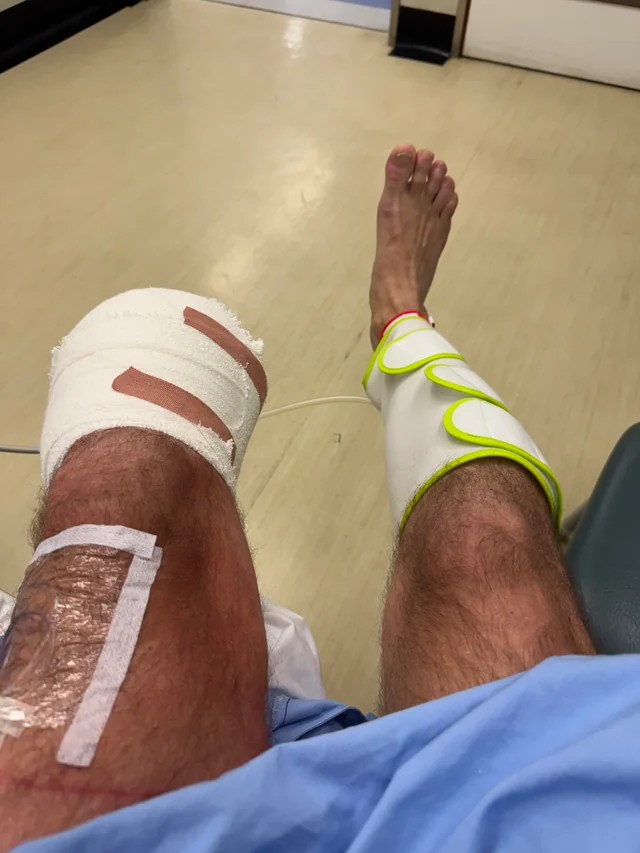
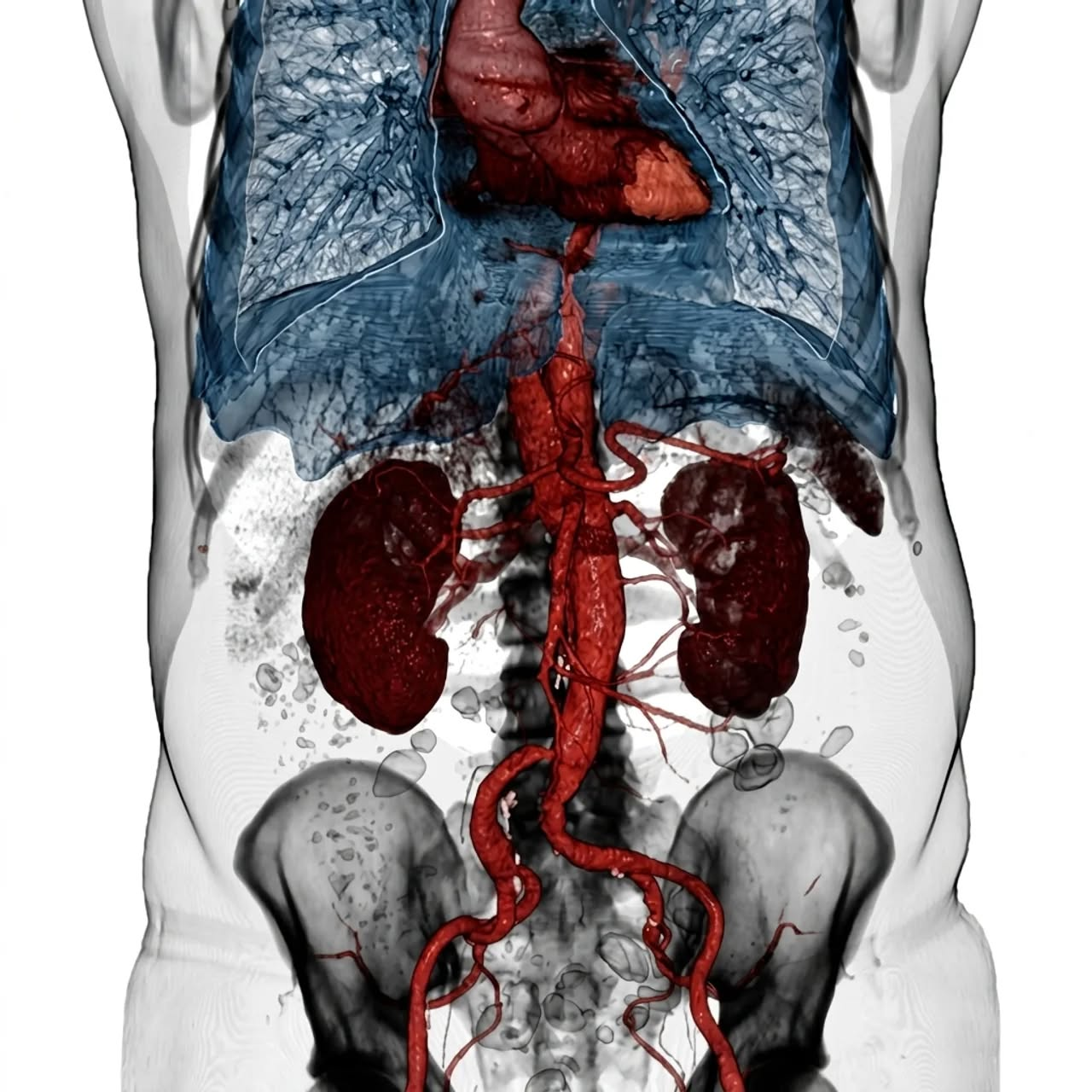
Cardiovascular Support Group Facebook ad: “His Right Leg Came Off At 67. His Left One Has 36 Months.”
Ran for 16 days, from June 12 to June 28, 2026, the last day Crush saw it.
Run by Cardiovascular Support Group on Facebook. Crush is not the advertiser and does not verify its claims. See this ad in Meta's Ad Library(opens in a new tab)
Want an ad like this for your product?
Crush makes new ad images for your product from this ad: your logo, your product photo, your offer.
Trials from $19.95 USD, then $79.95 USD a month. Cancel anytime.
About this ad
- Meta Ad Library ID
- 1023101280392795
- Platforms
- Facebook, Instagram, Messenger and Threads
- Relaunches
- 4
Ad text
When a man loses his right leg below the knee at 67, the discharge summary writes "below-knee amputation, status post critical limb ischemia." It doesn't write "his ankle-brachial index had been 0.78 at 58 and he had been told to take cilostazol and walk more, and the medical protocol that followed addressed his most occluded large artery while the microvascular and inflammatory disease that ultimately took his leg continued progressing everywhere else." It doesn't write "the disease that just took his leg is the same disease in his coronary arteries that will probably take his life within five years." It doesn't write "his contralateral leg has a 30% probability of the same outcome within 36 months." There is a reason for that, and it has nothing to do with paperwork. It has to do with what peripheral artery disease actually is. And once you understand what it actually is, you understand why cilostazol, the statin protocol, angioplasty, and bypass have never once reversed the underlying microvascular and inflammatory dysfunction driving PAD — and why a Nobel Prize awarded in October 2021 may matter more to you, personally, than every interventional procedure your vascular surgeon has ever performed. I want to tell you what peripheral artery disease actually is in middle-aged adults. Not the textbook definition. The real one. PAD is a systemic microvascular and endothelial inflammation problem disguised as a plumbing problem in your femoral arteries. Your leg arteries are not "just clogging because plaque accumulates with age." Your endothelium throughout your entire vascular system is failing. The plaque that produces the claudication symptom in your large leg arteries is the visible piece. The microvascular dysfunction and the chronic inflammation that determine whether your peripheral tissues can survive — whether your wounds heal, whether your nerves function, whether your limb remains viable when blood flow is compromised — is the invisible piece. And the standard PAD protocol treats the visible piece while the invisible piece kills the limb. The cold feet are the symptom you noticed. The calf cramping when you climb stairs. The numbness that comes and goes in your toes. The mild claudication that has shortened your walking distance from a half-mile to two blocks over the last three years. These are what brought you to your primary care doctor. These are what got you the cilostazol prescription. These are what your annual ABI measurement is tracking. But the actual damage — the damage that ends in critical limb ischemia, non-healing wounds, amputation, and the cardiovascular event that takes most PAD patients within ten years of diagnosis — is happening underneath the ABI number you measure. In the microvascular endothelium throughout your peripheral vascular system. In the chronic systemic inflammation that has been progressing for fifteen years. In the same vascular dysfunction that is simultaneously affecting your coronary arteries, your carotid arteries, and your renal arteries right now. Your peripheral vascular system is a manifestation of systemic atherosclerosis with a specific peripheral microvascular component. The large-artery plaque that causes claudication is what surgeons treat with angioplasty and bypass. The small-vessel and microvascular dysfunction is what determines whether the tissue downstream of any obstruction can survive — and what determines whether the next graft will heal, whether the next wound will close, whether the limb will remain viable. The claudication is the symptom. The microvascular and inflammatory dysfunction is the disease. It's all the same disease. Cold feet. Intermittent claudication. Cilostazol prescription. Angioplasty. Stenting. Restenosis. Femoral-popliteal bypass. Graft occlusion. Critical limb ischemia. Non-healing wound. Debridement. Partial foot amputation. Below-knee amputation. Above-knee amputation. The cardiovascular event that kills 30-40% of amputees within five years post-procedure. They are not fourteen separate complications. They are fourteen stations on the same trajectory — driven by the same systemic microvascular and inflammatory dysfunction, plus a standard treatment protocol that addresses none of it. The Society for Vascular Surgery acknowledges the systemic inflammatory mechanism on its clinical practice guidelines. The Inter-Society Consensus for the Management of Peripheral Arterial Disease has documented the endothelial dysfunction component of PAD progression for over fifteen years. Your vascular surgeon knows this. Your interventional cardiologist knows this. They have known this since fellowship. Now here is the part that should make you angry. There is not a single intervention in the standard PAD protocol that targets the microvascular endothelium or the underlying systemic inflammation. Cilostazol is a phosphodiesterase inhibitor with modest vasodilatory effects. It improves walking distance in some patients by improving blood flow through partially obstructed arteries. It has side effects — headache, palpitations, GI upset — that lead 20-30% of patients to discontinue within a year. It does not repair endothelial function. It does not address the inflammation. It manages the symptom. The statin and aspirin protocol reduces cardiovascular events in PAD patients. The 30% risk reduction is real and meaningful. The statin does not specifically target peripheral microvascular endothelial dysfunction, and the aspirin reduces platelet aggregation without addressing the underlying vascular remodeling. Angioplasty mechanically dilates an occluded segment of a large artery. Stents mechanically hold an occluded segment open. The restenosis rate at 18-24 months is significant — often 30-50%. The procedure addresses the visible obstruction. It does not address the disease driving the obstruction. Femoral-popliteal bypass surgically reroutes around an occluded segment. Graft patency at five years is approximately 60-70% for autologous vein grafts and lower for synthetic grafts. The graft occlusion rate accelerates in patients whose underlying disease continues to progress — which is most patients on the standard protocol. Amputation is the last-line intervention. It manages the consequences of critical limb ischemia in tissue that has progressed past the point where revascularization can salvage the limb. It is presented as the unavoidable endpoint. It is the unavoidable endpoint when the upstream microvascular and inflammatory machinery has been allowed to progress untreated for two decades. The standard protocol mechanically intervenes on the worst obstruction at each station of the cascade while the underlying systemic microvascular and inflammatory machinery continues to drive the same disease in every other segment of every other artery in your body. I have been calling it the vascular surgery escalation treadmill — and you have been on it from the moment your first ABI came back below 0.9. You started with the borderline ABI at 55. Your primary care doctor said start cilostazol, tighten up your statin dose, walk more. You tried. Maybe the walking distance came back to a half-mile after six months. Eighteen months later it was back to two blocks. Two years later your ABI was 0.62 and the cilostazol wasn't working anymore. The angiography was ordered. You had angioplasty of the right superficial femoral artery. Eighteen months later restenosis. A second angioplasty with a stent. Two years later you developed rest pain in your left foot. The angiography on that side showed extensive distal disease. A femoral-popliteal bypass was performed. The graft occluded at 14 months. A second bypass was attempted with a different conduit. By year nine from the original ABI, the toes on your left foot were dusky. By year ten, the discharge summary that says "below-knee amputation, status post critical limb ischemia." Every step of this is documented as "appropriate management of progressive PAD." Every step is moving you further from a vascular system that could have stabilized and even improved if the underlying microvascular and inflammatory machinery had been addressed at the receptor level. Your vascular surgeon is not the one who is going to step you off this treadmill. I want to say that carefully, because I respect vascular surgeons. The procedures they perform save limbs and save lives. But I have to be honest about how the specialty is organized. Your vascular surgeon trained for six years post-medical-school in interventional and surgical revascularization techniques. They are extraordinarily skilled at the mechanical intervention on the worst obstruction. They were not trained — and the specialty's economics do not incentivize — to focus on the upstream microvascular and inflammatory environment that determines whether the disease will progress to the next station of the cascade between interventions. Dr. Mary McGrae McDermott is the Jeremiah Stamler Professor of Medicine and Preventive Medicine at Northwestern University's Feinberg School of Medicine. She has been the principal investigator on multiple major NIH-funded PAD clinical trials including the LITE study, the PROPEL trial, and the LITE-2 follow-up. She has been publishing peer-reviewed PAD research for over 25 years and has been advocating for non-pharmaceutical and integrative approaches to PAD — including supervised exercise therapy, targeted nutritional interventions, and treatments addressing the inflammatory drivers of disease — specifically because the standard medical and surgical protocol has not changed PAD-specific outcomes meaningfully over the last two decades. Dr. McDermott is still publishing and practicing at one of the most prestigious medical institutions in the country. She is, however, a single physician with a single platform. There are roughly 3,500 vascular surgeons practicing in the United States, and most of them are still scheduling the next angioplasty for the first PAD patient who walks into their clinic with an ABI below 0.7. I'm telling you this because there aren't enough McDermotts to go around. You are not going to walk into your local vascular surgery clinic and have someone treat your PAD as a systemic microvascular and inflammatory condition addressable upstream. You are going to get the vascular surgeon who has 15 minutes for you and a procedure room scheduled for next month. So you are going to have to take the lead. Not by firing your vascular surgeon. Not by stopping your medications. Not by doing anything reckless. By learning what the system was never set up to teach you — how to address the actual mechanism the standard protocol is not targeting. The peripheral microvascular endothelium throughout your entire vascular system, and the chronic systemic inflammation that has been driving the same disease in every artery you have for the last two decades. In October of 2021, a researcher named Dr. David Julius at the University of California, San Francisco was awarded the Nobel Prize in Physiology or Medicine. His discovery was a tiny molecular doorway on the surface of human cells called TRPV1 — the transient receptor potential vanilloid 1 receptor. TRPV1 responds to capsaicin, the active compound in cayenne pepper. It won a Nobel Prize because of what TRPV1 does inside the lining of your blood vessels — including the peripheral microvasculature that determines whether your tissue downstream of any obstruction can survive. Published research has demonstrated that chronic capsaicin activation of TRPV1 triggers sustained eNOS-mediated nitric oxide release throughout the peripheral vascular system. The downstream effect: restored microvascular endothelial function, reduced peripheral tissue inflammation, improved peripheral perfusion measurable as improvements in ABI, claudication distance, and tissue oxygenation. It was the same molecule — nitric oxide — that had already won the 1998 Nobel Prize in Medicine. The molecule that, in peripheral microvasculature, determines whether your wounds heal, whether your nerves function, and whether your limbs remain viable. Multiple studies have specifically examined capsaicin and bioavailable TRPV1 agonists in the context of peripheral vascular disease. A 2023 paper in the Journal of Vascular Surgery documented improvements in peak walking time, claudication-onset time, and ABI in PAD patients on bioavailable capsaicin supplementation over 16 weeks — without changes to the patients' existing cilostazol or statin therapy. I want to be careful and honest with you here. This research is not a cure for established critical limb ischemia. It is not a replacement for the surgical evaluation your vascular surgeon is providing when you have non-healing tissue. The strongest evidence is in early-to-moderate PAD — ABI 0.6-0.9 — where the microvascular function can still respond. Anybody who tells you a softgel "regrows blocked arteries" is lying to you, and you should close their page immediately. But what this research does support is something far more important than another miracle claim. That there is a real, scientifically validated, Nobel-recognized molecular pathway for supporting peripheral microvascular endothelial function and reducing the systemic inflammation that drives PAD progression — a pathway your vascular surgeon was almost certainly never trained to consider before scheduling the next angioplasty. This is where Aurivita Capsaicin Power comes in. I'm not going to insult your intelligence with a "circulation miracle" pitch. You've seen too many of those. Arctic Blast. Nerve Renew. Nerve Control 911. Neuropathy Support Formula. Circulation Boost. VitalFlow Plus. The "cayenne tea trick." The "ancient cold-feet remedy." You've been burned. So have your friends. I'm going to do the opposite. Aurivita Capsaicin Power is built around 3 milligrams of standardized capsaicin per serving — extracted from cayenne pepper and delivered in a softgel format designed not to burn your stomach. Three milligrams is a thoughtful, low daily dose — enough to engage the TRPV1 pathway without GI upset. But capsaicin alone is only one piece. The peripheral vascular system has multiple inputs. So we built a stack of nine companion ingredients, each chosen because there is published human research on its role in peripheral vascular function, nitric oxide signaling, or PAD-relevant biomarkers. Beetroot extract — dietary nitrate is the most direct substrate for the nitric oxide pathway. Multiple published trials in PAD populations have demonstrated improvements in walking distance and peripheral perfusion with dietary nitrate supplementation. This is the lead supporting ingredient for the PAD use case. Hawthorn — supports vessel wall integrity and has published research on improvements in peripheral circulation parameters. Berberine — supports systemic inflammation reduction and glucose regulation, both of which are major drivers of PAD progression in the diabetic-PAD subpopulation. Cinnamon — anti-inflammatory effects and supports endothelial function. Turmeric, paired with BioPerine for absorption — curcumin reduces systemic vascular inflammation. BioPerine increases curcumin absorption by approximately 20 times. Korean Red Ginseng — published research on peripheral circulation improvements. Vitamin K2 — directs calcium away from arterial walls, which is specifically relevant in PAD because the medial calcification of large peripheral arteries is one of the prognostic markers of severe disease. Vitamin D3 paired with K2 — D3 deficiency is associated with worse PAD outcomes in observational studies. Vitamin E as the antioxidant capstone. That is the formula. Nine ingredients. Each one published. Each one disclosed in milligrams. Three softgels a day. I want to draw a hard line. Aurivita Capsaicin Power is not a cure for PAD or critical limb ischemia. It is not a "restore blood flow in 30 days" miracle. It is an upstream intervention supporting peripheral microvascular endothelial function and the systemic inflammation that drives PAD progression. It is not a replacement for the cilostazol, statin, aspirin, or any other prescription your vascular surgeon has prescribed. Do not stop any medication without your vascular surgeon's involvement. If you have critical limb ischemia or a non-healing wound, your immediate need is surgical evaluation, not a supplement — please act accordingly. It is not instant. Your peripheral microvasculature has been deteriorating for years. The fastest-acting ingredients engage the relevant pathways within days. The deeper work of supporting peripheral perfusion happens over weeks and months. That is why our guarantee is 120 days. That is the line. Now let me tell you what the people using Aurivita have started to notice. Results not typical, individual results may vary, statements not evaluated by the FDA, not intended to diagnose, treat, cure, or prevent any disease. The first thing most people notice is feet warming. Specifically, the chronic cold feet that PAD patients have lived with for years begin to warm within two to three weeks. The spouse usually notices before the patient does — the contact under the covers changes. This is the most consistent feedback we get in the first month. The second thing is claudication distance. The walking distance before calf cramping begins to lengthen within four to six weeks. The two-block distance becomes three, then four. The stairs that produced cramping at the second floor no longer do. The third thing is general energy. Improved peripheral perfusion has downstream effects on overall stamina. Many users report being able to do things they had stopped doing because their legs didn't support the activity. The fourth thing is the calf cramping itself — particularly nighttime cramping. PAD patients often experience cramping at rest, particularly at night. This frequently resolves within six to eight weeks. The fifth thing — and this is the one that takes 12 to 16 weeks — is the ABI on follow-up measurement. Many users come back from their next vascular workup with an ABI 0.10-0.15 points higher than the previous reading, and in some patients with measurable improvements in segmental pressures and toe pressures. Their vascular surgeon asks what they did. They tell. Some are intrigued. Some are skeptical. Almost all of them say, keep doing whatever you're doing. The deepest piece of feedback we ever got was from a man in Michigan who wrote to us seven months in: "My father had a below-knee amputation at 71. He lived the last four years of his life in a wheelchair. I have been on cilostazol for six years and my ABI was 0.71 last year. My ABI this month is 0.89. My vascular surgeon delayed the angioplasty he had scheduled for next month. I think I just walked away from my father's path." That letter is on the wall. I know you're skeptical. The peripheral circulation supplement industry has earned every ounce of your distrust. So let me be plain. The mechanism is real. TRPV1 won a Nobel Prize in 2021. Nitric oxide won a Nobel Prize in 1998. PAD as a systemic microvascular and inflammatory condition is published, validated, and on record through McDermott at Northwestern and across the broader vascular medicine literature. The label is transparent. Every milligram listed. No proprietary blends. The guarantee is 120 days. Get a baseline ABI, segmental pressures if available, and hs-CRP. Take Aurivita for four months. Retake the workup. If your numbers haven't moved meaningfully, return whatever's left — full or empty — full refund. No interrogation. I want you to picture two different futures. In one future, you keep doing what you're doing. The cilostazol manages your claudication for another year or two. Then the symptoms creep back. The angiography is ordered. The angioplasty is performed. Eighteen months later restenosis. A second procedure with a stent. Three years from now, the bypass. Two years after that, the graft occlusion. By year eight from now, critical limb ischemia. By year ten, the discharge summary that says "below-knee amputation." By year fifteen, either the contralateral leg or the cardiovascular event that takes most amputees within five years of the procedure. In the other future, you start a program today that targets the actual peripheral microvascular and inflammatory environment driving your disease. You give it 120 days. You watch your feet warm up. You watch your claudication distance lengthen. You watch your ABI come back higher than it has been in years. You go to your vascular surgeon and have the conversation about whether the next angioplasty needs to happen now or can be deferred. You preserve peripheral perfusion in tissue that, if left alone, would have progressed past the point of recovery. You preserve your leg. That is not a guarantee. I am not allowed to make that guarantee. But it is what is possible. And it is what is not possible if the next angioplasty closes another door in the cascade. If you've read this far, you already know. You knew before you started reading. You knew when your feet got cold. You knew when your walking distance shortened. You knew when you watched your father or your uncle live in the wheelchair after the amputation. You don't need another piece of evidence. You need 120 days before the next procedure starts the cascade in earnest. This is both. Tap below to claim your bottles of Aurivita Capsaicin Power, backed by our 120-day money-back guarantee. Three softgels a day. One pathway your vascular surgeon was never trained to consider before scheduling the next intervention. One Nobel Prize you almost never heard about. One chance — at 55, 60, 65 — to be the man who addressed peripheral microvascular dysfunction upstream of the revascularization cascade instead of the man whose discharge summary at 67 reads "below-knee amputation." I'll see you on the other side of 120 days. aurivita.co/products/cayenne-pepper-softgels
Where the ad sends people
aurivita.co
His Right Leg Came Off At 67. His Left One Has 36 Months.
Support strong circulation today with our powerful cayenne pepper formula. 180 softgels and 60 servings per bag.
Learn more: aurivita.co(opens in a new tab)