
Inactive· since May 7, 2026
- 52
- days it ran
- 1
- relaunches
Ad copy
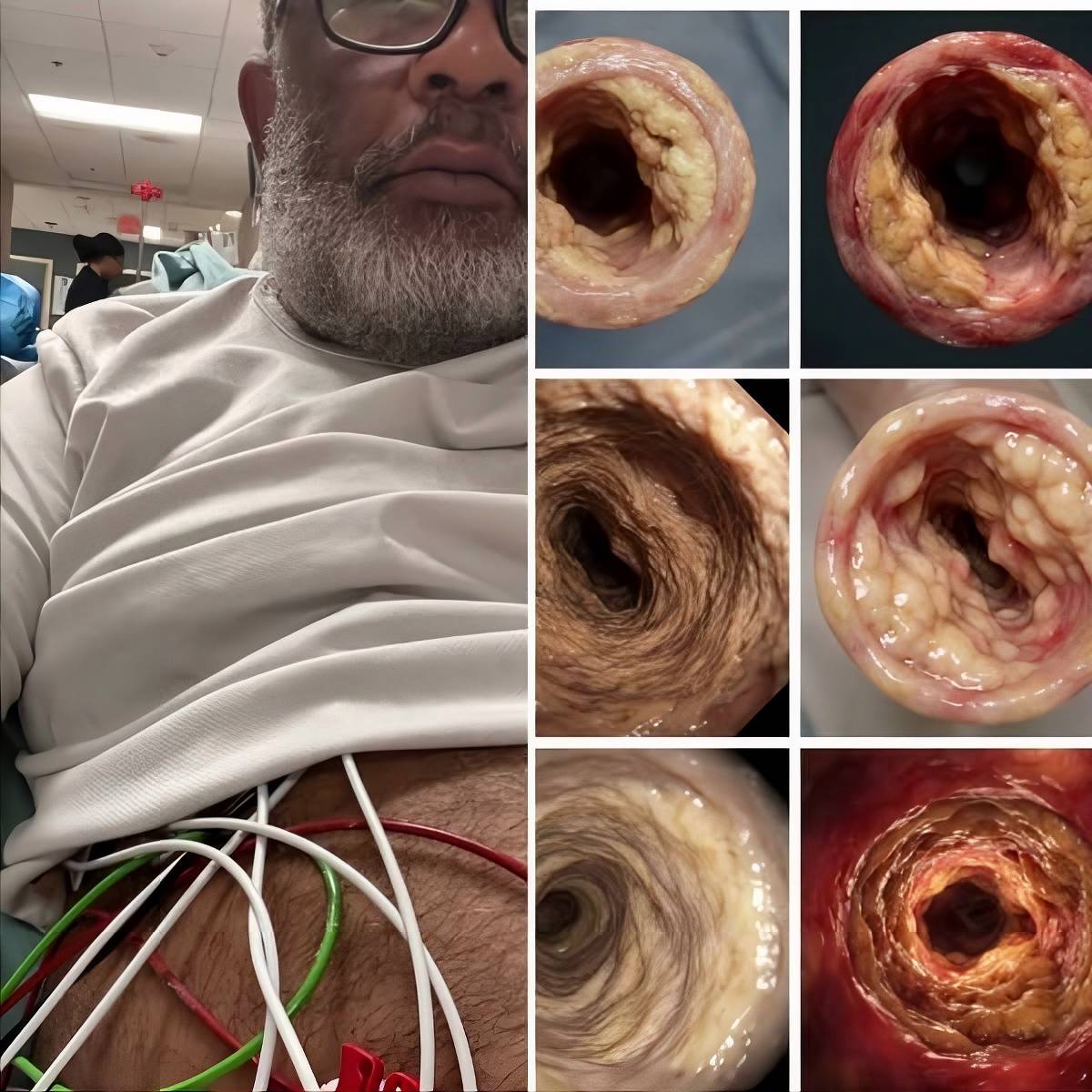
The Christmas card I mailed to my cousin Patty in November came back to my house in February with a yellow sticker on it that said DECEASED. I'm going to start there because that's where it started for me, and because if I try to ease into this I'll never write it. I came in from the mailbox on a Wednesday afternoon. It was raining. I had on my husband's old Carhartt jacket because I'd run out without my coat, and I had the mail in one hand and a bag of groceries from Kroger in the other. I dumped both on the kitchen counter and I started sorting the mail the way I always do, and there it was. The card I'd sent back at the beginning of November, in my own handwriting, with a yellow forwarding sticker slapped over Patty's address. DECEASED. Return to sender. I stood at that counter for a long time. The groceries sat there. A bag of frozen peas slowly thawed against my elbow. I didn't move. My name is Cheryl. I'm 57 years old. I live in a town called Findlay, Ohio, in a 2 story house on a street where I've lived since 1998. I work as a billing supervisor for a regional medical group. My husband Tom is 60 and he sells industrial pumps for a company out of Toledo. We have 2 grown sons, Adam and Ryan, both married, both out of state. My cousin Patty was 53. We grew up across the street from each other in Lima. Our mothers were sisters and they raised us almost like twins. Patty was 4 years younger but she always seemed older to me because she had this calm, settled quality even as a kid. She married a quiet man named Glen who worked for the post office. They never had children. They had a small house on a corner lot in Marion, with a little brick walkway and a flower bed full of daylilies that came up every June whether anybody planted them or not. I had not seen Patty in person in almost 3 years. We talked. Not as much as we used to. The kind of cousin relationship where you mean to call and the weeks turn into months. Christmas cards. A birthday text. A long phone call once a year that always ended with one of us saying we needed to do this more often. The last time I'd talked to her was in May. She'd called on my birthday. We talked for 38 minutes. She told me Glen had retired in March and they were thinking about driving out to see his sister in North Carolina. She said her knees had been bothering her. She said she'd been feeling tired in a way she couldn't explain. I asked if she'd been to the doctor and she said yes, her cholesterol was a little high, they'd put her on something, she was fine. She said she was fine. I let her say she was fine because she'd always been fine and there was no reason to push. The next time I would have heard from Patty was that Christmas card I sent in November. The card came back in February. I called my mother that night. My mother is 81 and lives in an assisted living place in Lima. She didn't know. Nobody in our family knew. Glen had not called anyone. I have wondered a lot about that since, what was happening with Glen, who Patty had been to him, why he didn't pick up the phone. I don't have answers to any of those questions and I don't think I'm going to get them. What I found out later, through Patty's sister-in-law on Glen's side who I tracked down through Facebook, was that Patty had a heart attack at home on a Saturday morning in late January. She was 53 years old. She was making coffee. Glen was outside. By the time he came back in, she was on the kitchen floor. That was the call. That was the entire story. A coffee pot still going on the counter. A mug she'd already gotten out of the cabinet. A sister-in-law who answered my Facebook message at 11:47 at night and gave me the details I had no other way of getting. I sat on the edge of my bed in the dark with my phone in my hand for an hour. I want to say something here, because I think it's the heart of why I'm writing this. Patty and I were the same person, biologically. That is not me being dramatic. We had the same maternal grandparents. Our mothers were sisters. Both of those sisters had heart issues, late in life, and our grandmother Loretta died of a heart attack at 67. Our family had a chart. My mother had drawn it out for us once at Thanksgiving in 2009, on the back of a paper placemat, with little arrows showing who'd had what. I was on the same branch as Patty. I had the same blood pressure tendencies as her. I had the same cholesterol issues as her. I had been told by my own doctor for the past 4 years that my numbers were "borderline" and that we'd "keep an eye on them." I had been keeping an eye on them by going in for a panel once a year, looking at the printout, frowning at it, putting it in a drawer with the other ones, and going on with my life. Patty had been doing the same thing. She had been one step further down the road. She'd been on a low dose statin for about 18 months. Her sister-in-law told me Patty had complained about feeling foggy on it, like her thoughts moved slower, but she'd been told that was unrelated, and to keep taking it, and her doctor had increased the dose at her last visit. My doctor had not put me on anything yet. My doctor had said we could try some lifestyle changes first. I had tried. I had cut out the half and half in my coffee. I had walked at lunch a few times a week. My next appointment was in March. The appointment was 5 weeks away when I got the card back. I made the appointment for the next morning instead. I went in on a Thursday and I sat across from a doctor I'd been seeing for 11 years and I told him my cousin had died of a heart attack at 53, in her kitchen, on a Saturday morning, with the same family history I have. I told him my numbers had been borderline for 4 years. I asked him what we were actually going to do. He pulled up my chart. He looked at it for a long time. He said the standard thing, which is that he wanted to put me on a statin. He said the statin would lower my LDL number by about 30%. He said that was the standard of care for someone in my situation, and that he should have probably suggested it sooner, given my family history. I asked him a question I had never thought to ask before. I asked him what the LDL number actually meant. Like, the actual mechanism. What happens with the cholesterol that becomes a problem. He blinked at me a little. I think he wasn't used to that question. He answered it though. He explained that LDL by itself isn't really the issue. The issue is when LDL gets oxidized inside your blood vessels. Oxidized LDL is what gets stuck on the artery walls and starts the plaque process. Regular LDL just does its job. It's the oxidation that turns it dangerous. I said, so the statin lowers the LDL number, but does the statin do anything about the oxidation. He said, well, no. The statin lowers the production. It doesn't address oxidation directly. I said, so we're lowering the total amount but we're not really addressing the part that becomes dangerous. He said, that's one way to put it. I said, what addresses the oxidation. He said, antioxidants. Diet. Lifestyle. There are things in the research, he said, but most of them don't have the kind of clinical track record that prescription medications do. I left with the prescription. I filled it. I took the first one. I am not telling you not to listen to your doctor and I am not telling you to throw out your medication. What I'm telling you is that I went home, and I sat at my kitchen table, and I started reading. I read for 4 nights in a row. Most of what I read was beyond me, frankly. I was a billing supervisor, not a biochemist. But I read enough to understand the basic chain. Cholesterol becomes a problem when it gets oxidized. Oxidized cholesterol is what builds up. The standard medical approach is to lower the total amount. The other approach, which doesn't get talked about as much in a regular doctor's office, is to address the oxidation itself. The thing I kept running into, in different articles and forum posts and a few research summaries I read 3 times each before I felt like I followed them, was a fruit called amla. Indian gooseberry. It contained a class of compounds called emblicanins, and those compounds appeared to do something I hadn't seen attributed to anything else I'd read about. They appeared to help protect cholesterol from oxidation in the bloodstream. The research I was reading wasn't anecdotal. There were actual clinical trials. People with elevated lipids, given amla extract, twice a day, for 12 weeks. The results showed improvements in total cholesterol, in LDL specifically, in triglycerides, and in markers of oxidative stress. That last part is what got me. Markers of oxidative stress. That was the piece my doctor had said wasn't really being addressed. I kept going. I read about the cycle, which I'd never had explained to me before. When your cells are under chronic oxidative stress, your body actually produces more cholesterol as a kind of repair signal. It's trying to patch damage. So oxidation drives cholesterol production. And then that new cholesterol is also vulnerable to oxidation. And then more is needed. And the whole thing feeds itself. If you only lower the production, you've turned down one side of the loop. If you can also reduce the oxidation, you start to turn down the other side. That made sense to me in a way the pamphlet at the doctor's office never had. I ordered Alevia Amla on a Sunday night. It came on Wednesday. I took my first 2 capsules with my coffee on Thursday morning, the same morning I took my statin. I'm telling you that part on purpose. I did not stop my prescription. I'm not a doctor. I'm a 57 year old woman whose cousin had just died, and I was going to use everything I could responsibly use. I want to tell you what changed and I want to be honest about it. The first 3 weeks, I didn't notice anything. I'd read the trials. I knew this stuff was supposed to work over months, not days. So I wasn't expecting the world. I just kept taking the capsules and writing the date on a sticky note on the fridge so I'd know when I'd started. Around week 4, my morning energy was different. I'd gotten used to a kind of low grade fog in the mornings that I'd been blaming on being 57 and on the statin and on a hundred other things. That fog started to lift. Not all at once. Just less. I'd be at my desk at work and realize at 11 in the morning that I had not yet thought about needing more coffee, which was not normal for me. Around week 6, my husband Tom said something at dinner. He said, "You're laughing more lately." I said, am I. He said yes. He said it had been a while. I sat with that for the rest of the evening. I had not realized I'd stopped laughing. I had not realized I had been quieter for the last year or two. The kind of quieter that you don't notice from the inside but the people who live with you do. Around week 10, I went in for a follow up panel. My doctor came in with the printout and he sat down and he said, what are you doing. I told him. He said, well, keep doing it. My total cholesterol had come down 38 points. My LDL specifically had come down 27 points. My triglycerides had come down even further. My HDL had ticked up 4 points, which he said was small but real and which he said was "not nothing." He said the statin alone did not usually get those numbers in 10 weeks. He said he was going to make a note in my chart. He said he had not personally suggested amla to a patient before but that he had read about it in 2 of the medical newsletters he subscribed to. He said, "Whatever you're doing is working." I drove home from that appointment and I cried in my car in the parking lot for about 15 minutes. I cried because I was relieved. I cried because Patty wasn't here. I cried because I have a younger brother named Mark who is 51 and who has the same family history and who has been ignoring his own numbers for 6 years and I was going to send him a bottle that night when I got home. I cried because I almost didn't read that night I got the card back. I almost just put the card in a drawer. I almost just made the next March appointment and gone in and accepted the prescription and gone home and put the bottle on the shelf next to my multivitamin and lived another 4 years on borderline numbers. I had been one good ignored Christmas card away from being Patty. I am telling you this because I think there are a lot of women like me out there. You have a family chart that scares you a little. You have a doctor who looks at your numbers and tells you they're borderline. You have a drawer full of past printouts that you don't want to look at again. You have a cousin or a sister or an aunt or a mother whose story is sitting in the back of your mind and you don't say it out loud, but you wonder sometimes. I want to tell you that there is more to this conversation than a single number on a piece of paper. Your body produces cholesterol on purpose. It's a transporter. It's a building material. It only becomes the kind of cholesterol that hurts you when it gets oxidized in your bloodstream by stress and inflammation and damage. The standard medical approach is to lower the production. That works, partially. It moves the number. But it doesn't address the oxidation that turns the cholesterol you do have into the dangerous version. Amla appears, based on the research that exists right now, to address the part the medication doesn't. That's not me telling you to stop your medication. I haven't stopped mine. That's me telling you there's another rung on the ladder that nobody talks about in a 15 minute appointment. Alevia Amla is what I take. I take 2 capsules every morning with my coffee. I have been taking them for 4 months. My cholesterol is the lowest it has been in 8 years. My morning energy is back. I have been laughing more. My husband noticed it before I did. The company offers a 90 day money back guarantee. 90 days. That was 3 months. It was the same window of time the trials I read about had used. If it doesn't do anything for you, you call them, you send the bottle back, and you get a refund. There's no risk. There's just a chance. I want to tell you something else. I sent a bottle to my brother Mark in February, the day after my doctor visit, with a note that said, please. He has been taking it for 6 weeks. He's not a Facebook person. He doesn't talk about supplements. But last week on the phone, he said he'd had his blood drawn at his last physical and his doctor had asked him what he'd changed. He said he'd told his doctor about the amla, and his doctor had said, hm. That was the whole story. His doctor had said, hm. That was enough for me. I keep the Christmas card I mailed to Patty in a folder in my desk drawer. The one with the yellow DECEASED sticker on the front. I don't know why I kept it. I think I keep it because I don't want to forget what it felt like to stand at that counter with the groceries on my elbow and realize I had been one number away from the same thing. I kept it because I'm 57 and I have a husband who needs me and 2 sons who need me and a mother who needs me and a brother who needs me and a future I want to be in. I kept it because the next card I send, I want to come to me, signed. That's all I have. If you have a chart. If you have a number. If you have a cousin. If you have a feeling. Don't wait until February. 👉 https://alevia.com/amla/33 P.S. I want to say one more time that I did not stop my prescription medication. I take both. The amla is not instead of. It's in addition to. Talk to your doctor. Tell them what you're doing. Let them see your bloodwork over time and let them tell you what they see. That's what I did, and that's what I'd want you to do. P.P.S. The 90 day guarantee is the part that mattered. I'm a careful person with money. I have been a billing supervisor for 22 years. I do not buy things off the internet on faith. The fact that I could try this for 3 months, the same window the trials use, and send it back if nothing happened, is the only reason I clicked the button that Sunday night. The company stands behind it. So I tried it. P.P.P.S. My brother Mark called me last Saturday and said he wanted to come visit Tom and me sometime this summer. He has not visited us in 4 years. I almost didn't say anything. I was afraid I'd ruin it by making it a big deal. I just said okay, that sounds great. Then I went into the bathroom and cried for about 5 minutes. P.P.P.P.S. If you read this far, I'm guessing you have a Patty in your life. Or you're afraid you might be one. I hope you're not. I hope you read this and decide to do something small while it's still small. 👉 alevia.com/amla/33
Like this ad? Make it yours.
Crush rebuilds this exact creative around your product — your brand, your colors, your offer — in about a minute.