Helen Smith
Helen Smith Facebook ad: “You are reading the Bible wrong.”
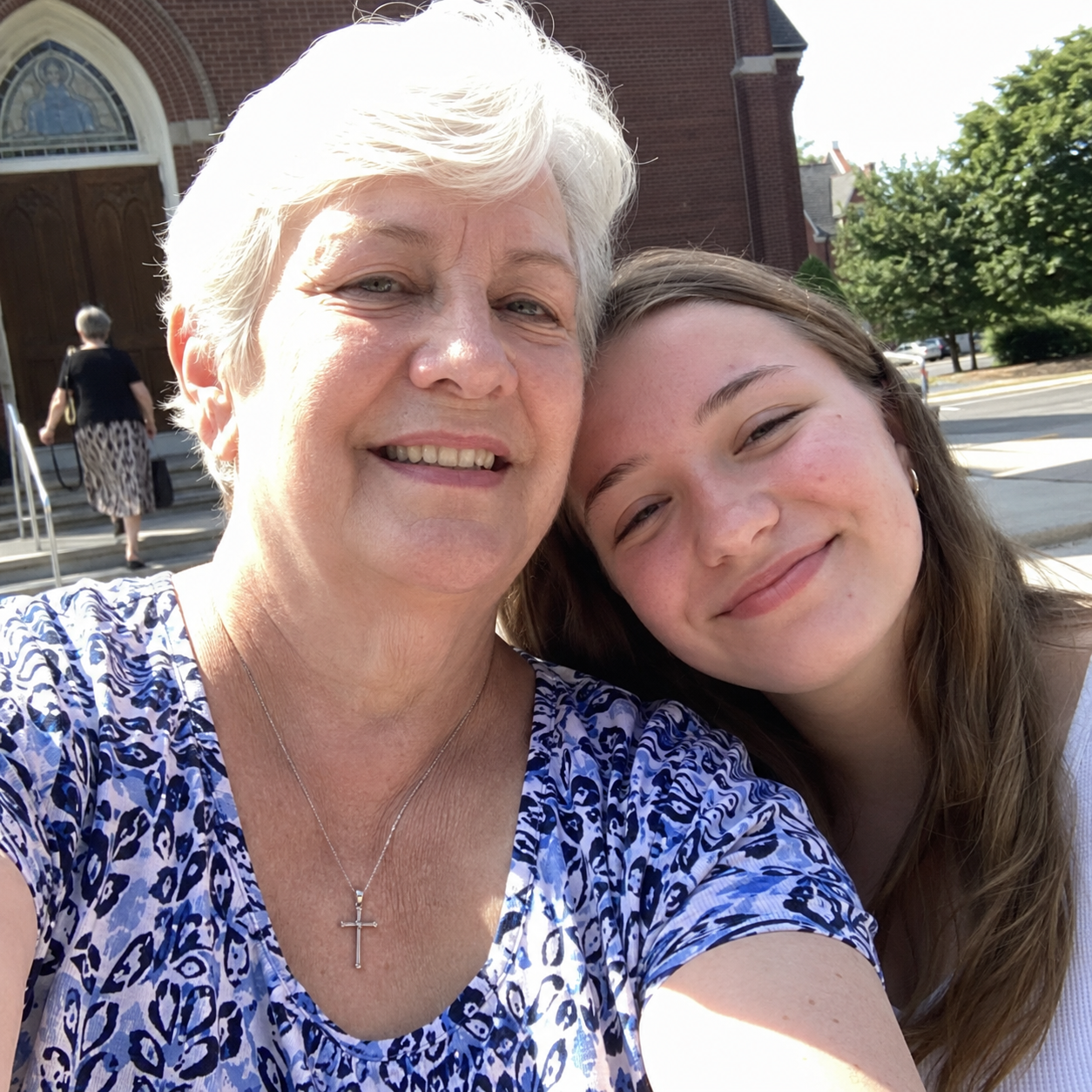
Ran for 9 days, from July 27 to August 5, 2026, the last day Crush saw it.
Run by Helen Smith on Facebook. Crush is not the advertiser and does not verify its claims. See this ad in Meta's Ad Library(opens in a new tab)
Want an ad like this for your product?
Crush makes new ad images for your product from this ad: your logo, your product photo, your offer.
Trials from $19.95 USD, then $79.95 USD a month. Cancel anytime.
About this ad
- Meta Ad Library ID
- 1027295253423664
- Platforms
- Facebook, Instagram, Audience Network, Messenger, WhatsApp and Threads
- Relaunches
- 0
Ad text
My granddaughter wrote a suicide note. At the bottom, in her handwriting, it said: "If the Bible is a lie then nothing is real and I don't want to be here anymore." She's 17. And nobody, not me, not her father, not her pastor could give her a single reason why it wasn't. Her name is Claire. Confirmed at 14. Mass every Sunday since before she could walk. Used to keep a rosary in her backpack. Used to underline verses with a green highlighter and tuck her Bible back under her pillow. No warning signs. No bad crowd. No rebellion. Straight A's. Altar server two years running. She'd been struggling with this for almost two years and I had no idea. Two years of reading her Bible and not understanding it. Two years of watching the story fall apart somewhere in the middle and not knowing why. Two years of asking questions and getting answers that weren't answers. She asked Father Paul. He told her to trust the Church. She asked her youth group leader. He told her some things aren't meant to be understood. She asked me. And I had nothing. I opened my mouth and nothing came out. Because the truth — the truth I had never said out loud to anyone — is that I had never read the Bible cover to cover either. I'd tried. Four times in forty years. And every time, somewhere around the same place, it stopped making sense. The story became something else. Something dense and procedural and impossible to follow. Like someone switched the book out in the middle of reading it. I stopped every time. Leviticus. Numbers. Somewhere in there. And I never told anyone because I thought I was the only one. Sixty years in the pew. Rosary in my purse. All four children baptized. All four confirmed. And I could not explain my own Bible to my own granddaughter. I couldn't even explain it to myself. I need to be honest about how long I carried this. Twelve years ago my daughter asked me to pick a reading for her youngest's baptism. Something from the Old Testament. Something beautiful. I sat at my kitchen table with my Bible open for an hour. I didn't know where to look. I didn't know what most of the books were. I picked a psalm because psalms were the only part I felt safe in. I told her I chose it because it was meaningful. The truth is I chose it because it was the only section I recognized. I never told her that. Eight years ago a woman joined our parish. A convert. Used to be Methodist. She'd been Catholic for two years and already knew more about the Bible than I did. She talked about Tobit at coffee and donuts once and I nodded like I knew what she was talking about. I didn't know what Tobit was. I didn't know it was in my Bible. I went home and looked it up and found it in the table of contents and stared at it. I'd owned this Bible for thirty years and I didn't know this book was in it. I never told anyone that either. Five years ago my Baptist son-in-law said at Thanksgiving that the Catholic Bible has extra books that don't belong. I went quiet. Changed the subject. Asked who wanted more pie. I felt my face get hot and I couldn't say a word because I didn't know why those books were there either. I couldn't defend my own Bible at my own table. I carried that one for a long time. Three years ago I signed up for a Bible study at the parish. Lasted three weeks. There were younger women there. Converts mostly. They had notebooks and colored tabs and questions I didn't understand. I felt like I was behind from the first night. It felt like homework. It felt like being tested. I quit and told my daughter I was too busy. She didn't ask any questions. I think she knew. So when Claire looked at me and asked if I'd ever actually read the whole Bible, I didn't have a lie ready. I just had the truth I'd been hiding from everyone for forty years. I couldn't read it either. And I didn't know why. That night I called Father Paul. "Father, Claire is in trouble. She's been trying to read the Bible for two years and she says it doesn't make sense. She came to you. You told her to trust the Church. That wasn't enough." Silence. "Father, I need to be honest with you. I can't read it either. I've tried four times. I stop at the same place every time. Somewhere around Leviticus the whole thing falls apart for me and I've never understood why. I've been Catholic for sixty years and I can't get through my own Bible." He was quiet for a long time. "Margaret, I'm going to tell you something I probably should have said from the pulpit years ago." "What?" "You're not the only one. I've counseled dozens of people in this parish who started reading Genesis with everything they had and quit within two months. Same place every time. Leviticus. Numbers. Deuteronomy. Same wall. Every time." "Then why has nobody ever talked about this?" "Because nobody has a good answer for it. The seminary taught me theology. It didn't teach me how to explain to someone why the Bible suddenly stops reading like a book." "So what do I do? My granddaughter is falling apart because nobody can tell her why her own Bible doesn't make sense. And I can't tell her either. What do I DO?" "I don't know." He didn't know. The priest didn't know. Nobody knew. That night I sat at my kitchen table. Laptop open. Coffee cold. It was past midnight. I'd been searching for hours. "Why does the Bible stop making sense." "Catholic Bible hard to read Leviticus." "Why is the Old Testament so confusing." Every Catholic site gave me the same nothing. "Pray for understanding." "Try a study group." "Start with the Gospels instead." "Some parts of Scripture require spiritual maturity." Nothing. Nothing I could bring to Claire and say here. Here's why it stopped making sense. Here's why it's not broken. Here's why you're not wrong for noticing. Then I found something. Buried on a Catholic forum. A woman, a few years older than me, had written: "I stopped reading at Leviticus three times before someone told me it's a different genre. The Bible changes from narrative to law without telling you. Nobody ever told me. Once I knew what I was reading, I finished it in four months." I stared at my screen. I read it again. A different genre. The Bible changes genre. Without telling you. I started pulling the thread. What I found over the next two hours I need to explain carefully. Because if you're anything like me — if you've been Catholic your whole life and nobody ever said this to you — it sounds too simple to be the answer. The Bible is not one book. It is 73 documents. Written across more than a thousand years. Bound in a single cover. And somewhere around Leviticus, without any warning, without any announcement, without a single heading that says this is now a different kind of text — the genre changes. It stops being a story. It becomes a priestly manual. Ritual law. Procedural instruction for the Levitical priesthood of ancient Israel. It was never written to be read as the next chapter of Genesis. It is a completely different kind of document that happens to be bound in the same cover. But nothing tells you that. Nothing in the text says "stop reading this as a story, because it isn't one anymore." There is no heading. No introduction. No transition. It just changes. And if nobody tells you — if nobody warns you before you open it — you read it the way you've been reading everything before it. As a story. And when it stops behaving like a story, you conclude you're the problem. You're not the problem. She wasn't the problem. I wasn't the problem. Claire wasn't the problem. The text changed and nobody told us. That's the whole thing. That is the only thing. And here's what made my hands shake at one in the morning: I found six women. Three different cities. None of them knew each other. All six had stopped reading the Bible in the exact same place. Leviticus. Numbers. Deuteronomy. Strangers. Quitting identically. At the same three books. That's not six people failing. That's a structural problem in the text happening to everyone because nobody gives them the one piece of information that would prevent it. One page. Before each book. Telling you what you're about to read. Who wrote it. When. What kind of text it actually is — history, prophecy, law, poetry, wisdom — before you open it and try to read it as something it isn't. The announcement the text never makes. Made before you open it. I found it at 1:47 in the morning. A companion guide. Catholic. One page per book. All 73 books of the complete Catholic canon, including the seven deuterocanonical books I could not have named if my life depended on it. Tobit. Judith. Wisdom. Sirach. Baruch. First and Second Maccabees. Seven books in my own Bible that I had never read. Never been taught. Couldn't name. Couldn't explain. For sixty years. I ordered it before I closed the laptop. It arrived on a Thursday. I didn't tell Claire about it. I needed to see for myself first. I needed to know if it actually worked before I put it in front of a girl who was already losing her grip on everything I wanted her to hold onto. I opened it to the page on Genesis. One page. Who wrote it. When. What it's about. What the Church has always understood it to teach. I read it in three minutes standing at the counter. Then I opened Genesis and started reading. And something was different. Not about Genesis. About me. I knew what I was holding. I knew what it was doing. I wasn't guessing anymore. Week two I hit Exodus. Read the companion page first. It told me Exodus begins as narrative and shifts into law. That the shift is not a mistake. It's a change in genre. The story becomes instruction — on purpose, for a reason — and it will come back to story again. I read Exodus. The whole thing. For the first time in my life. Week three I hit Leviticus. The wall. The place I had stopped four times in forty years. I opened the companion page. One page. And it said something nobody had ever said to me in six decades of being Catholic. Leviticus is not a story. It is a priestly manual. Ritual law for the Levitical priesthood of ancient Israel. It was never meant to read like Genesis. You are not failing to understand it. You are reading it as something it was never meant to be. I sat down at my kitchen table. I read it again. And I said something out loud, alone in my kitchen, that I had needed to say for forty years. "Nobody ever told me. Nobody ever told me it changed." I read Leviticus that week. And for the first time it didn't feel like hitting a wall. It felt like reading a manual and knowing it was a manual. Which is a completely different thing than reading a manual and thinking you're too stupid to follow a story. Week four I gave it to Claire. I didn't make a speech. I didn't explain the whole thing. I just put it on the kitchen table next to her Bible and said, "Read the page on whatever book you're stuck on. Before you read the book. Just read the page first." She didn't touch it for three days. On the fourth day I came home and found her at the kitchen table. Companion open. Bible open next to it. Green highlighter in her hand. My heart stopped. "Grandma." "Yeah, sweetheart?" "Did you know the Bible changes genre in the middle? Like it goes from a story to a law code and nobody tells you?" "I found that out three weeks ago." "I've been trying to read this for two years. Two years. And nobody — not Father Paul, not my youth group leader, not anyone — nobody ever told me the genre changes. I thought something was wrong with me." "I know. I thought the same thing for forty years." She was quiet for a long time. Then she looked at me with something I hadn't seen in her eyes in months. "Grandma, it makes sense now. It actually makes sense. Not because it got easier. Because I know what I'm reading." Week six she opened Tobit for the first time. "Grandma, have you read this?" "I read it two weeks ago." "This was in our Bible the whole time?" "The whole time." "Why didn't anyone ever tell us about these books?" "I don't know. I couldn't have named them two months ago. I can name all seven now." "What are they?" I held up my hand. "Tobit. Judith. Wisdom. Sirach. Baruch." I switched hands. "First Maccabees. Second Maccabees." She stared at me. "Grandma, what happened to you?" "Someone gave me the page that comes before the page. That's what happened." Week eight she read Sirach. She called me that night. "Grandma, I just read Sirach. The whole thing." "What did you think?" "I think I've been Catholic my whole life and nobody ever introduced me to my own Bible. I feel like I'm meeting it for the first time." "That's exactly what it feels like." Week ten her therapist called me. "Mrs. Brennan, I don't know what changed with Claire in the last two months, but she's different. She's not spiraling anymore. She's asking questions instead of shutting down. She told me yesterday, 'I don't have to just believe anymore. I can actually read it and it makes sense.' What happened?" "I taught her what she was reading before she read it. That's all. Nobody ever told her the Bible changes genre in the middle. Once she knew, the wall disappeared." Week twelve Claire went back to Mass. First time in months. After Mass she walked up to Father Paul. "Father, when I came to you and told you the Bible didn't make sense, you told me to trust the Church. Do you remember that?" He looked at her. "I do." "I almost walked away from everything because of that answer. Not from the Church. From all of it. Everything. Because if my own Bible didn't make sense and the only answer anyone had was 'just trust,' then I figured either the whole thing was a lie or I was too broken to understand it. And I couldn't live with either one." He didn't say anything. "My grandmother found a companion guide. One page per book. It tells you what you're about to read before you read it. I've read more of the Bible in two months than I did in two years of trying. Not because I got smarter. Because someone finally told me what I was holding." She looked at him. "You should probably learn this. Because there are kids in this parish right now who are where I was. And 'trust the Church' is not going to be enough for them either." Week sixteen Claire and I sat at the kitchen table together. She was reading Baruch. I was reading Wisdom for the second time. Neither of us said anything for an hour. We just read. When she closed the book she looked at me. "Grandma, I have a question." "Go ahead." "Can I get a copy for my friend Sophia? She told me last week she tried to read the Bible and quit. Same place I did. Leviticus." "Of course." "I'm going to write something on the front page. Is that okay?" "The flyleaf is blank on purpose." She wrote Sophia's name. And a date. And one line. I didn't read what she wrote. That was between them. 73% of young Catholics leave the faith by age 23. How many leave because the Bible stopped making sense and nobody told them why? How many are sitting in the pew right now, going through the motions, because they tried to read it once and hit a wall and decided the problem was them? It was never them. It was never Claire. It was never me. The text changed. Nobody announced it. And for two years my granddaughter carried the belief that she was the one who couldn't do it. That faith was supposed to make sense to everyone but her. That the Bible was clear to people who were smarter or holier or more faithful, and she just wasn't one of them. She was wrong. She was always wrong about that. The Bible isn't clear to anyone at the places where the genre changes without warning. It can't be. You can't read a law code as a story and understand it. It's impossible. And nobody was telling her that. The Catholic Bible Companion is 73 pages. One per book. It tells you who wrote it, when, what it's about, and what the Church has always understood it to teach. It covers every book of the complete 73-book Catholic canon, including all seven deuterocanonical books. There is no schedule. No group. No week you are behind on. No test. No page you should have finished by now. You open it when you want to know what you're about to read. That's the whole thing. It is printed on quality paper, bound to last, and made to be handed down. The flyleaf is blank. That's on purpose. If after 90 days it hasn't changed anything — if the Bible still feels closed, if the books still feel foreign, if the wall is still where it always was — send it back. Every penny returned. No explanation needed. But here is what I think will happen instead. You will read the page on Leviticus and understand, for the first time in your life, why it reads the way it does. You will read the page on Tobit and wonder why nobody ever told you this book existed. You will open Sirach and recognize something you have believed your whole life, finally said plainly in words you can hold onto. And one day, at a table somewhere, someone you love will ask a question about the Bible. And instead of going quiet and changing the subject, you will answer it. Not because you memorized something. Because someone finally told you what you were reading. Don't wait until she stops trying. Don't wait until the Bible goes back on the shelf with the ribbon still at Leviticus. Don't wait until "trust the Church" stops being enough. Give her the page that comes before the page. Before the wall becomes permanent. Before the silence gets mistaken for an answer. I almost lost my granddaughter. Not to the world. Not to some outside force. To a gap that should have been filled decades ago. A one-page gap. Seventy-three times. You don't have to lose yours. P.S. — Claire is 19 now. She reads Scripture on her own before class. Not because I ask her to. Because the version she has — the one with the page before the page — actually makes sense. She told me last month she's thinking about volunteering for the parish youth group. Not to teach. Just to be the person who tells them what they're reading before they read it. So nobody else hits the wall and thinks it's them. That's all she ever wanted. That's all any of them want. Someone to tell them what they're holding before they open it.
Where the ad sends people
somerwell.shop
You are reading the Bible wrong..
Somerwell Shop
Learn more: somerwell.shop(opens in a new tab)