Dog Arthritis Support Community
Dog Arthritis Support Community Facebook ad: “Support Mobility During Growth Phase”
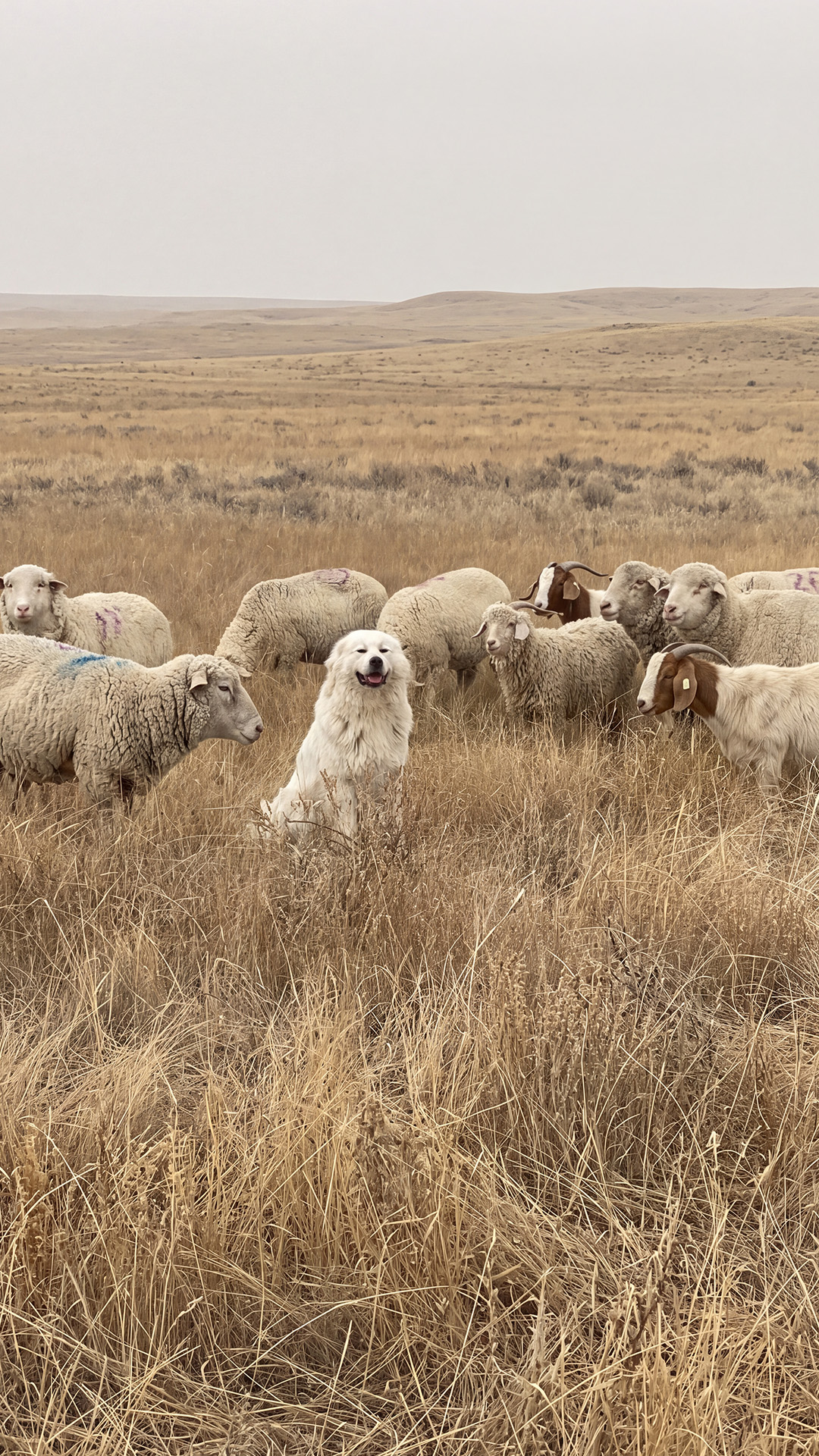
Ran for 2 days, from September 16 to September 18, 2026, the last day Crush saw it.
Run by Dog Arthritis Support Community on Facebook. Crush is not the advertiser and does not verify its claims. See this ad in Meta's Ad Library(opens in a new tab)
Make your own version of this ad
Crush makes it, launches it in your own Meta ad account, scales the winners and pauses the losers.
About this ad
- Meta Ad Library ID
- 1042310802184316
- Platforms
- Facebook, Instagram, Audience Network and Threads
- Relaunches
- 0
Ad text
I spent my whole life working for other farmers. Up before dawn every morning. Out the door before breakfast. First thing was always the same — walk the property, check on every animal, make sure nothing happened overnight. Feed the chickens. Feed the cows. Check the horses. Water troughs full. Fences intact. Then do whatever needed doing until the sun went down, and sometimes after. It was never my land. Never my animals. But I did the work like it was, because the whole time I had one thought in the back of my head — someday I'm going to have my own place. Frieda and I saved every penny we could for 20 years. We didn't take vacations. We didn't upgrade the truck unless the old one wouldn't start anymore. We put money away the way you put fence posts in — one at a time, slow, steady, and hoping the whole thing holds up when the wind hits. My parents helped where they could. Not a lot, but enough to close the gap when the right property finally came up. And it did. A goat farm in Gillespie County, Texas. Small. Rough around the edges. But ours. I was 42. Frieda was 39. We drove out to walk the property for the first time as owners, not workers, not hired hands, not somebody else's early-morning labor. Ours. That exciting feeling didn’t last to the end of the week. Because on that first walkthrough, at the edge of the tree line, I found something the previous owners never mentioned. Clear signs of predator activity. A trail dragged through the brush into the woods. I stood there staring at it for a long time, and the only thought I had was — we have a problem, and we need to solve it before we lose a single animal on this place that took us 20 years to earn. So we adopted a Great Pyrenees at 10 weeks old. Named him Mashed Potato. Put him out with the sheep and goats. We put him out to live with the sheep and goats from day 1, no indoor transition, no soft start. He was a livestock guardian dog, and his job started the moment he set foot on the property. Frieda and I watched him closely those first weeks. He was a night owl, like every Great Pyrenees I had ever read about online. He barked at everything. A leaf blowing across the pasture would set him off. A bird flying overhead would set him off. Clouds rolling in would set him off. If it moved or shifted or looked even slightly different from 5 minutes ago, he considered it a threat and he was going to let the entire county know about it. We would lie in bed at night listening to that deep booming bark echoing off the hills and just laugh. But underneath all the noise, the instincts were real. He knew our property lines within weeks. He was aggressive toward anything that didn't belong and impossibly gentle with people, kids, and other dogs. I had heard that a lot of livestock guardian dogs have a difficult time with poultry, so I made sure to introduce him to our chickens, ducks, and turkeys as early as possible. He took to them fine. He understood what was his to protect. Before Mashed Potato, we were losing animals constantly. Bobcats, coyotes, hawks, raccoons, foxes, ringtails. Sometimes they would take an animal right off the porch while we were inside making dinner. After he arrived, everything changed. An 85-pound dog barking and doing perimeter walks all night long turns out to be a convincing deterrent. The coyotes stopped coming close. I had read that Great Pyrenees could handle coyotes, wild boar, and even black bear with equal ease, and watching him work, I believed it. Having him out there unfenced on a small ranch was something I didn't know I needed until I had it. He grew fast. When I brought him home he was 27 pounds. Within a couple of months he had more than doubled that. We fed him 5 scoops a day and let him free-feed, eating at his own pace while Frieda and I distributed hay to the sheep and goats every morning at 6. In the afternoon at 6 we would go back out and feed the small stock again. It was a rhythm that worked, and Mashed Potato fit right into it. Then one morning I called him over for breakfast and he came, but slowly. Not his usual sprint across the pasture. He took a few little bites and moved off. I didn't think much of it. I figured he had tweaked something running the fence line during the night. Maybe a sprain. Maybe a rough encounter with uneven ground. He just needed to rest. And sure enough, it went away after about 3 days, and I forgot about it. 2 weeks later, it came back. This time it was obvious. He was favoring one hind leg, clearly moving differently than normal. I went over every inch of him. I checked his paws. I checked his hips. I checked his neck and his belly. I ran my hands through his coat sign he had contact with wildlife overnight.. There was nothing. His fur was intact. His skin underneath was clean. No sign of injury anywhere. I took him to the vet. The vet told me this was very common in Great Pyrenees. He said that sometimes these dogs grow so fast that it plays a role in how they move. He advised me to switch off puppy food because it contains a lot of protein, calcium, and calories, which can accelerate their growth even further. Switching to adult food was his recommendation. So I switched the food for Mashed Potato. But nothing changed. I went back to the vet. This time he did X-rays. The X-rays confirmed that nothing structural was wrong. No fractures, no joint damage, nothing strange at all. He said it was really just a growth phase. He gave us some prescription medication for pain and inflammation and sent us home. Mashed Potato improved. For a couple of days he was walking normally again, patrolling the farm, doing his job like nothing had ever been wrong. Then it faded. The limp came back. The reluctance to move came back. We were right where we started. 2 weeks passed and Mashed Potato would not leave his habitual sleeping spot under the big tree. He would just lie there, spent most of his time resting in his spot under the big tree. He only got up to eat or drink, and moved more slowly than usual. He was essentially lame, and the farm was unguarded. During that time we had losses in the herd. We found tracks on the property, small dog-like prints but narrower and more oval-shaped than Mashed Potato's paws. Coyotes. They were back. They were active again while he wasn't patrolling. I have an older cousin who has worked livestock his entire life. He inherited his farm from his parents. I call him for everything. Advice on the truck. Which suppliers to use for feed. Equipment recommendations for improving fencing, water troughs, hay racks. I even asked him once whether I could try selling goat milk direct to consumers picking up at the farm gate to make a little more profit. He is the person I go to when I have run out of my own ideas. I told him what was happening. The limping. The vet visits. The food switch that didn't work. The pain relief meds that we used. The losses we were seeing in the herd. He listened to all of it and then told me he had been through the exact same thing with his previous dog. His partner at the time had heard him complaining about it constantly. He had read somewhere in a dog article that it was normal for large-breed dogs to experience discomfort during big growth phases, and that it wasn't something to panic about. But he also said he wished he had started earlier with his own dog, because the longer the joints go unsupported during that phase, the stiffer things tend to get as the dog ages. Then he told me something that changed the way I understood the entire situation. He said most people assume that growing discomfort in large-breed puppies is a size problem. Big breed, growing fast, bones stretching, joints under pressure, a body ballooning toward 90 pounds at the speed of a weed. But the discomfort isn't just from growing. It's from what the body is doing in response to the growing. When bones develop fast, and in large breeds they develop incredibly fast, the body starts producing inflammatory signals. That is a normal part of the process. But the problem is that the body's response doesn't always know when to stop. It keeps going even when it doesn't need to. The signals keep firing. And the dog stays uncomfortable far longer than he should. Not because something is broken, but because his own system is reacting to a process that is natural. That is why some days Mashed Potato seemed fine and other days he just wasn't himself. The inflammation would come, ease off, then come again. Looking back, that explained everything. Every change I had made helped and then faded. The food switch. The prescription. I was treating what I could see on the surface, but the underlying response just kept cycling. I was never getting ahead of it. My cousin told me to look into green-lipped mussel. Not glucosamine. Not fish oil. Green-lipped mussel, specifically because of a rare omega-3 called ETA. He explained that ETA is found almost exclusively in 1 species of mussel from New Zealand, and that it is not like the omega-3s you find in regular fish oil. ETA helps manage the body's natural inflammation response. It doesn't try to shut anything down. Growth is a natural process and the body needs to do its job. ETA is simply a natural compound that gives the body nutritional support during 1 of the most physically demanding phases of a puppy's life. It supports what the body is already trying to do, just more effectively. Then he said something I didn't expect. He told me that before I grab the first green-lipped mussel supplement I find on Amazon or anywhere else online, there is something I need to know. Not all green-lipped mussel supplements are made the same way. And the way they are made determines whether the ETA is still there when the product reaches your dog. ETA is incredibly fragile. Heat destroys it. Standard processing degrade it. Even the way the mussel is harvested and stored can degrade the ETA before it ever reaches a capsule or a chew. He explained that ETA lives in the fat, and that the fat is the part that actually matters. But some processing methods strip the fats out before the powder is made. A label can still say green-lipped mussel on the front and be technically accurate, but if the fat content is low, the ETA is most likely gone. That's why processing and fat profile matter when choosing a green-lipped mussel product. What you need, he told me, is freeze-dried, full fat profile, with the ETA verified and intact. He said it took him a while to find a supplement that met those standards. The one he stuck with, and the one he still gives his own German Shepherd to this day, is GoPaws. Each chew contains 150mg of freeze-dried green-lipped mussel sourced from New Zealand with the full fat profile intact. It is backed by 500mg of glucosamine, 400mg of MSM, 110mg of chondroitin, plus Vitamin C and manganese to support the joint structure on top of everything else. It is independently lab-verified, contains no fillers, and uses no heat processing. He told me they only sell direct, not through Amazon, not through any third-party reseller. The reason is that freeze-dried green-lipped mussel degrades from heat and improper storage, and they will not risk the ETA breaking down sitting in a warehouse somewhere before it reaches your dog. I ordered GoPaws that night. It arrived in 5 days. I started Mashed Potato on the recommended dose with his midday meal, and it became part of our daily routine just like filling the water troughs and checking the fence line. The first week, I didn't notice much. Maybe he was a little more willing to stand up on his own. It was hard to say for certain. By the second week, I noticed him leaving his bed more often. He seemed more alert, more energetic, like something had shifted. By week four, he was walking throughout the day again, doing laps around the property. Not full patrols yet, but he was moving voluntarily and without hesitation that had become normal. By week six, he was back to herding sheep with me, something he hasn’t done in a long time. And by week eight, it’s been a long time since we have lost an animal from our livestock. I walked the property looking for tracks and found nothing. No narrow oval prints. No signs of coyotes, bobcats, raccoons, foxes, or anything else. For the first time in months, the farm was quiet in the way it was supposed to be quiet. Mashed Potato is now an adult dog of 8 years old. We still give him GoPaws, not for growing discomfort anymore, but for joint mobility. Large-breed dogs carry a lot of weight on those joints over a long life, and the support matters just as much after puppyhood as it does during. The farm is well managed. The livestock is healthy. The predators stay away. If you have read this far, here is what I want you to walk away understanding. Growing discomfort in large-breed puppies is not just about size. It is a natural inflammatory response to bone growth that overshoots what the body actually needs. And understanding that was what finally helped me give Mashed Potato the right kind of nutritional support. Standard omega-3s and glucosamine do their part, but lack the ETA in it. ETA from green-lipped mussel is what helps for growth discomfort and support joints. But the supplement has to be freeze-dried with the full fat profile intact. If the fat content drops below low during processing, we can’t be sure there’s still ETA inside. GoPaws delivers 150mg of freeze-dried, full-fat green-lipped mussel per chew, plus 500mg of glucosamine, 400mg of MSM, 110mg of chondroitin, Vitamin C, and manganese. It is lab-verified. No fillers. No heat processing. Sold direct so the product reaches your dog exactly the way it left the facility. And they stand behind it with a 90-day money-back guarantee. 90 days. That is three full months to decide if it is working for your dog. If it doesn't, you send it back and get a full refund, no questions asked. I am not paid to write this. I do not receive a single cent whether you try GoPaws or not. If you're looking for extra support for joint comfort and mobility during growth and beyond, this is what we chose. Because I went through it. I lived through every frustrating week of watching my dog struggle and my livestock disappear. And I do not want you to go through the same thing when there is something that can help. I get mine delivered every 30 days on auto shipping so my dog doesn’t miss out on anything. Get it directly from the maker: https://www.go-paws.com/products/hip-joint-support get the product I tested direct from the maker: https://www.go-paws.com/products/hip-joint-support
Where the ad sends people
go-paws.com
Support Mobility During Growth Phase
An all-in-one dog joint supplement with 6 active ingredients for cartilage support and inflammation relief. Vet-formulated. Try risk-free.
See details: go-paws.com(opens in a new tab)