
Inactive· since Jul 9, 2026
- 30
- days it ran
- 0
- relaunches
Ad copy
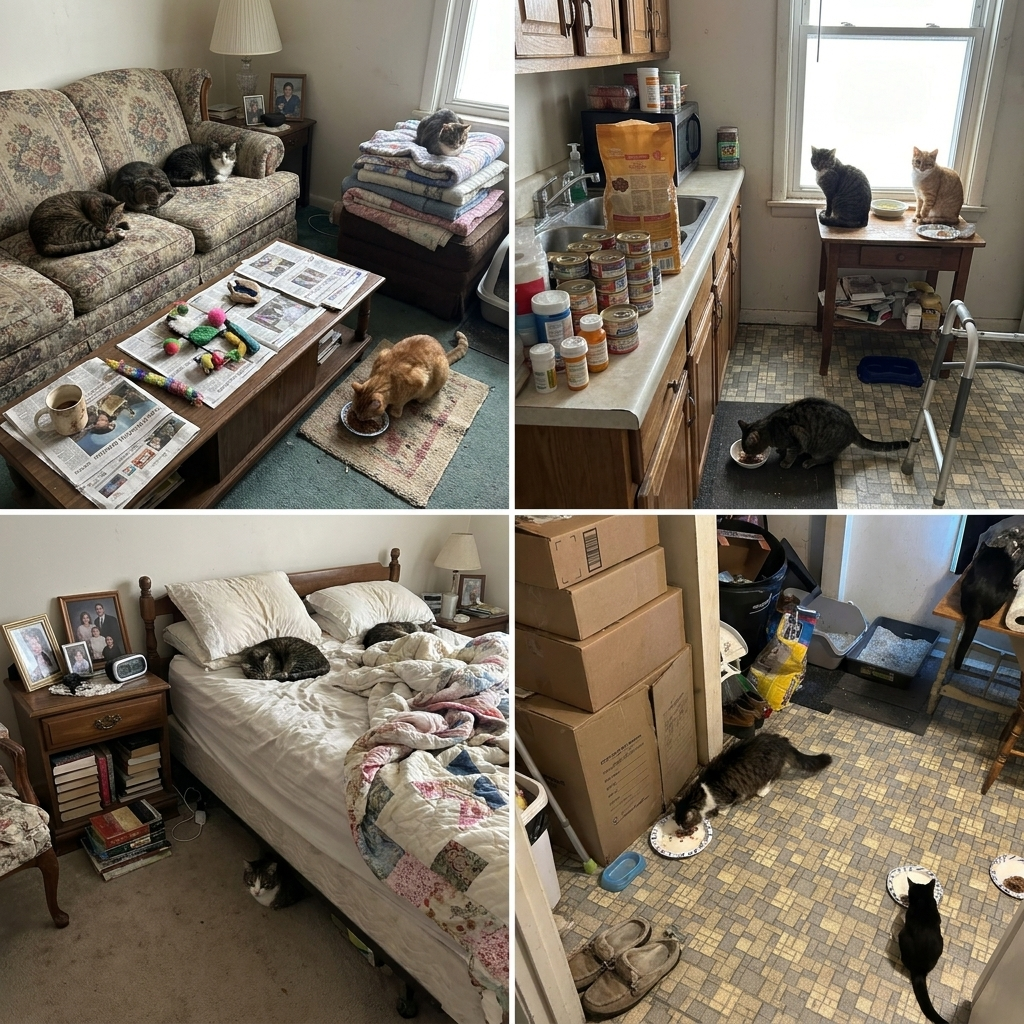
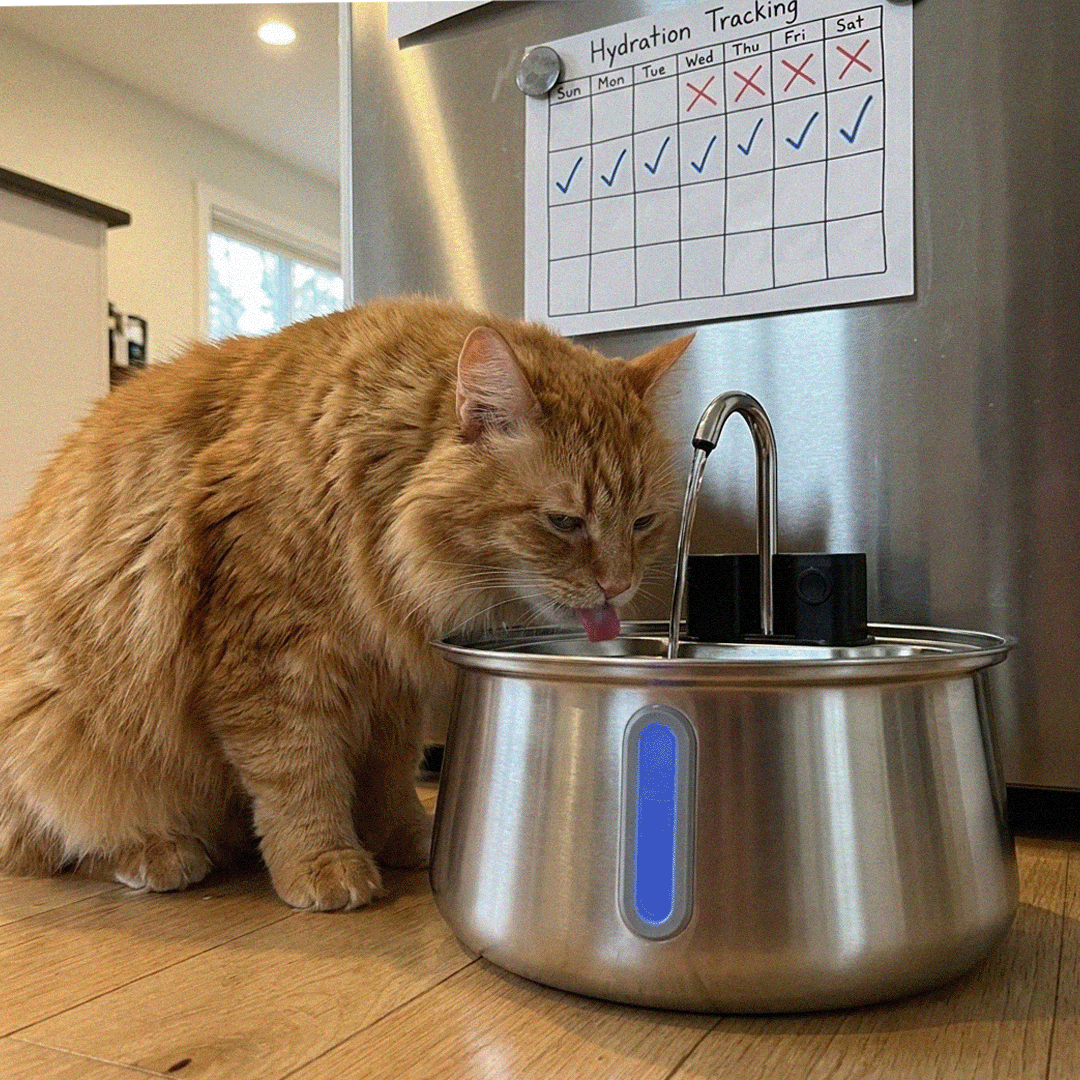
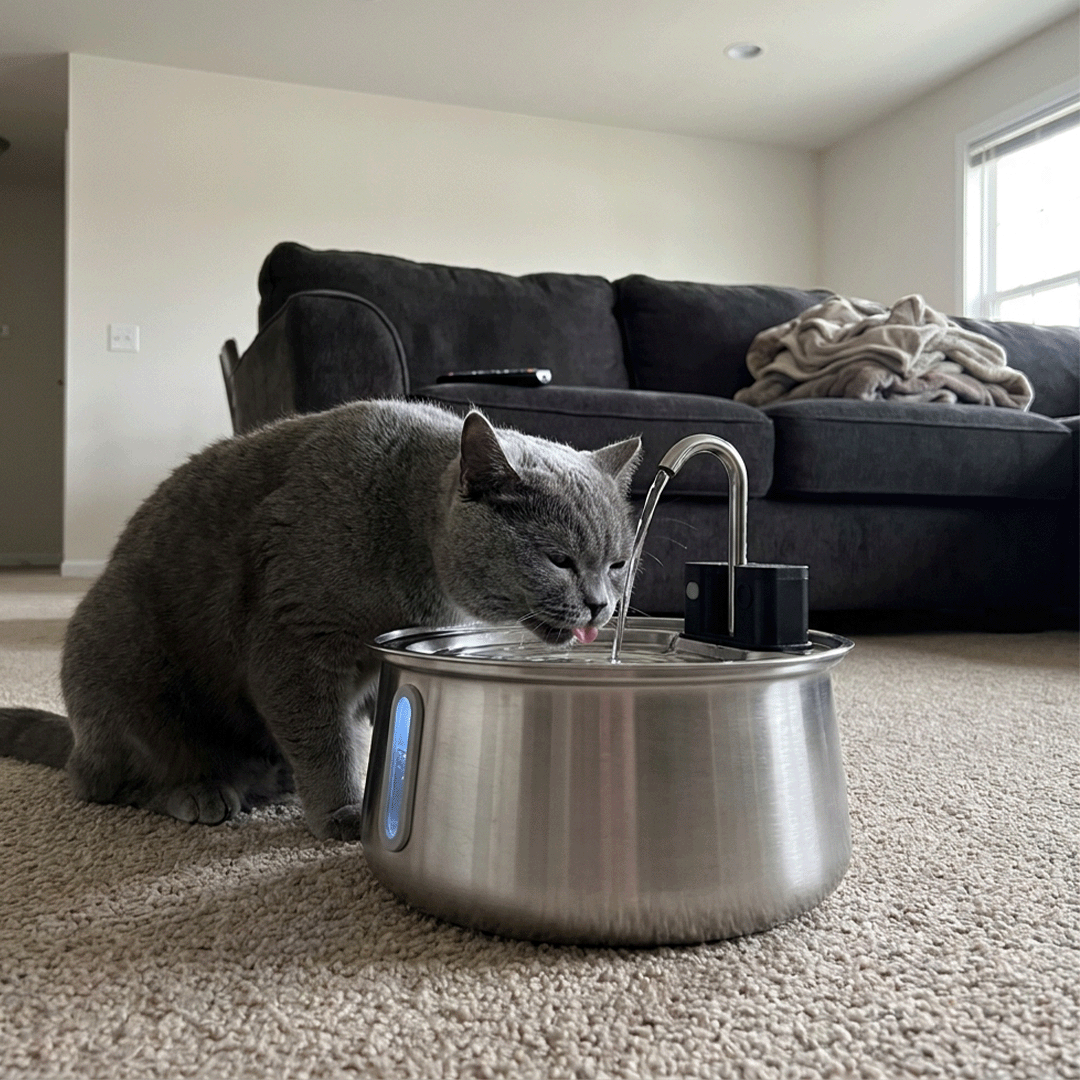
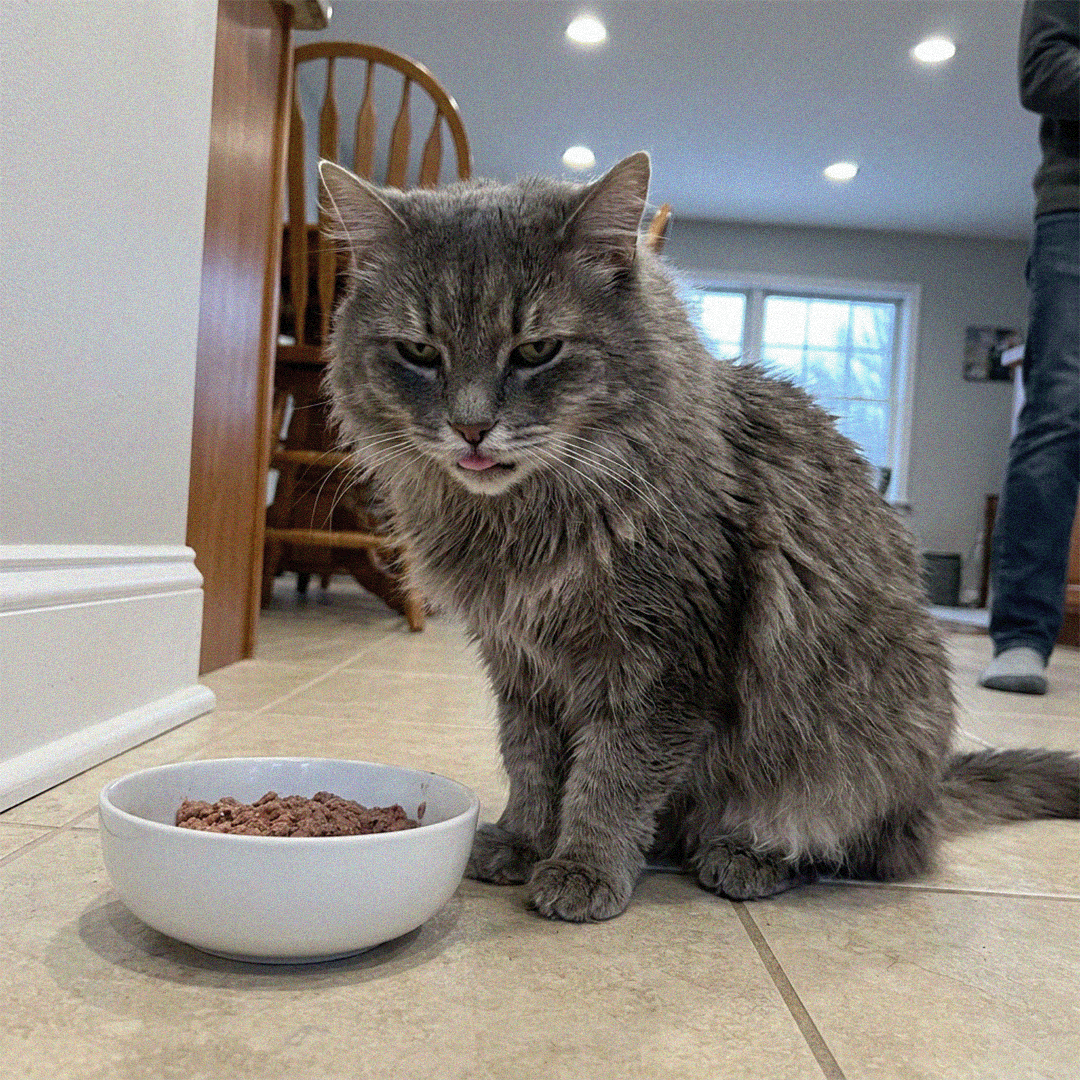
I bought cheap wet food for my cat, but she was just too old and too weak I'm writing this for anyone who has been using grocery-store wet food as their main strategy for keeping their cat hydrated and who has not really questioned whether it is doing what they think it is doing. I was that person for seven years. I want to share what I learned at my cat's annual checkup this spring, because the thing I had been doing was reasonable for a younger healthy cat and turned out to be inadequate for an older one, and I think there are a lot of guys like me doing the same thing for the same reasons and not knowing the line has moved. A little about me. My name is Joel. I'm fifty-six, widowed, and I live alone in a small stucco house in Surprise, Arizona, about twenty-five miles northwest of Phoenix. I work as an HVAC service technician and have been with the same company for eighteen years. My wife passed twelve years ago. I have one cat. His name is Biscuit. He is eleven years old, who came to live with me nine years ago when my younger sister moved across country for a job and could not take him with her. He has been the only living thing in my house since my wife died, and I have been responsible for him in a way I did not entirely expect when my sister handed him over to me at the airport with a carrier and a bag of food and a slightly apologetic look. I want to be honest with you about what kind of cat owner I have been for those nine years, because the kind of cat owner I have been is the reason this story exists. I am not somebody who reads cat blogs. I do not subscribe to anything. I have a vet I take Biscuit to once a year for his shots and his annual checkup, and otherwise I have been buying his food at the grocery store and doing what people who do not think about cats too much do, which is to keep the bowls full and assume things are fine when nothing is visibly wrong. About seven years ago, when Biscuit was four, I noticed his water bowl was not going down very much between refills. I asked the woman behind the counter at the pet supply store I sometimes stopped at on the way home what to do about a cat who did not drink enough water. She told me what most people would tell you. She said cats often get their water from their food, that dry kibble is low in moisture, and that switching to wet food was the easiest way to increase a cat's daily water intake. She said wet food is something like seventy or eighty percent water by weight, while dry food is maybe ten percent. The math was straightforward. I switched Biscuit to wet food. I want to tell you what kind of wet food I bought, because the kind of wet food matters in a way nobody told me at the time. I bought the cheap stuff at the grocery store. The four-pack of small cans for under nine dollars. The brand whose name is on every grocery store shelf in America. I was not making a research decision. I was making a tired-after-work decision in aisle seven on a Thursday evening. I bought it because it was wet food, because it was cheap, because Biscuit ate it. I assumed that wet food was wet food, and that the moisture content was the part that mattered for what I was trying to solve. I did this for seven years. Biscuit ate two small cans of cheap grocery-store wet food a day, plus a small amount of dry kibble as a topper. His water bowl level continued not to go down very much. I considered the problem solved, because by my logic the moisture in the food was making up the difference. He seemed fine. He had energy. He did the things eleven-year-old cats do. He sat on the back of my couch. He yelled at me when I came home from work. He slept on my legs at night. This past March, I took Biscuit in for his annual checkup. The vet I have been seeing for the last six years is a man named Dr. Lim who runs a small clinic in Surprise. He weighed Biscuit at the start of the visit. He frowned at the scale. He asked me to come over and look. Biscuit had been ten and a half pounds at his checkup the previous year. He was nine pounds even now. He had lost a pound and a half over twelve months, and I had not noticed because I see him every day and the change had been gradual. Dr. Lim did a full physical. He drew blood and took a urine sample. He told me he wanted to run a senior wellness panel because Biscuit was now in the age range where it was worth catching things early. He called me three days later with the results. Biscuit had chronic kidney disease, stage two on the IRIS scale. His creatinine was elevated. His SDMA, which Dr. Lim explained was a more sensitive early marker, had been climbing for at least the last year and probably longer. His urine specific gravity was below the normal range, which Dr. Lim told me meant his kidneys had lost a significant amount of their ability to concentrate urine. He told me Biscuit had been quietly losing kidney function for somewhere between two and four years before today. I want to tell you what Dr. Lim said in our follow-up appointment that week, because the conversation rearranged my understanding of what I had been doing for the last seven years, and I want to pass it along without dressing it up. He told me he was not telling me this to make me feel bad. He told me cats are wired to under-drink. They evolved from desert predators who got most of their water from prey, and their thirst drive is roughly half of a dog's. A cat who is not drinking enough does not act thirsty. He just slowly concentrates his urine, year after year, and his kidneys take the wear. Then he asked me what I had been doing about Biscuit's water intake over the years. I told him the story. Pet store woman seven years ago, switch to wet food, cheap grocery store cans, two a day for seven years. He nodded slowly. He told me that the woman at the pet store had given me reasonable advice for an average healthy adult cat, and that I should not be hard on her or on myself for it. Switching to wet food does increase a cat's total water intake, and for a healthy young cat with no kidney concerns, grocery store wet food does the job it is sold to do. He said he would not tell a thirty-year-old with a five-year-old healthy cat to do anything different than what I had done. The line, he said, moved at around year eight or nine for most cats. Around the time a cat enters senior territory, two things start happening at once. The first is that the cat's kidneys begin their slow age-related decline, which is normal feline aging and not a disease in itself but is the territory in which CKD develops. The second is that the demands on those aging kidneys make ingredient quality in the cat's food a bigger factor than it used to be. Cheap grocery store wet food, he told me, is typically much higher in phosphorus and sodium than wet food formulated for senior cats or for cats with kidney concerns. For a healthy adult cat those mineral levels are not a problem. For a senior cat whose kidneys are losing ground, those mineral loads are work that the kidneys do not have spare capacity for. The wet food I had been buying as my hydration solution had been, over the last two or three years, also been a mineral load the back end of Biscuit's system had been quietly struggling to clear. Dr. Lim was careful with how he framed this part. He did not say the wet food caused the CKD. He said CKD has multiple causes, most of which are not fully understood, and that genetics and age are the biggest factors. What he did say was that for the last few years of Biscuit's life, the food I had been giving him had been adding a small chronic stress to a system that was already aging, when food formulated for senior cats would have been kinder to the same system. The hydration question and the food quality question, he told me, are two different questions. I had been solving the first question with a solution that worked against the second. He told me what he recommends now that we know what we know. He prescribed a senior renal-support wet food, a specific veterinary formula that he sells through his clinic and that Biscuit started eating that week. He told me the food itself was not a magic intervention but that it would meaningfully reduce the mineral load on Biscuit's kidneys going forward and would give us a better baseline to work from. He told me Biscuit would need bloodwork every three to four months now for the rest of his life so we could monitor progression. He did not recommend subcutaneous fluids yet because Biscuit was at stage two and we had options. Then he told me one more thing that I want to pass along carefully because it was the part that I had not understood until he said it. He told me that the most important variable I controlled for Biscuit's kidney trajectory from this point forward, more important than the food, was his actual voluntary water intake. The food change would help with the mineral load. But Biscuit also needed to drink more water than he had been drinking, because the prescription food alone would not get him to where he needed to be on hydration. Dr. Lim told me that the single biggest reason cats with kidney disease do not drink enough water, even when they are offered fresh water in clean bowls, is that the water source itself smells contaminated to the cat in ways humans cannot detect. He explained the biofilm part carefully. Plastic surfaces in continuous contact with water develop a thin bacterial film called biofilm within twenty-four to forty-eight hours of being filled. Humans cannot see it or smell it. Cats can. A cat's sense of smell is somewhere between fourteen and forty times more sensitive than a human's. For a senior cat with already-compromised kidneys, who is already under-drinking by his evolutionary baseline, an extra layer of avoidance because the water source flags as contaminated to his nose compounds the problem significantly. He recommended a fountain made entirely of medical-grade 304 stainless steel. The same alloy hospitals use for surgical instruments. Non-porous at a molecular level, which means biofilm cannot grip the surface. The water stays palatable to the cat day after day instead of degrading on a forty-eight-hour cycle. He told me he recommends this material specifically because the standard plastic fountains sold at pet stores have the exact problem he had just described. I want to be straight with you about how I felt sitting in that exam room. I felt embarrassed. I felt like I had been doing something dumb for seven years without knowing it. Dr. Lim must have read my face because he said something I have thought about a lot since. He said that for most of human history nobody had information about cat hydration biology at the level we have now, and that the way most cat owners learn this stuff is exactly the way I had just learned it, which is one annual checkup at a time. He said it was not too late. Biscuit was at stage two, not stage four. The window to slow the progression was still open. I went home that afternoon and did two things. I switched Biscuit to the prescription wet food Dr. Lim had given me. And I ordered a stainless steel cat fountain online that night. I want to tell you that I cannot remember the brand name as I am sitting here typing this. I have the user manual in the kitchen drawer with the manuals for everything else I have bought in the last few years that I keep meaning to organize. I am going to find it this week and look up whether the company has a website where they sell the fountain directly. If I find the information, I will leave it in the comments below this post. If you are reading this and the comments are empty, that means I have not gotten to the drawer yet. Bear with me. The fountain arrived four days later in a heavier box than I had expected. I am an HVAC guy, so I have a tendency to inspect the parts on things before I plug them in. I took it apart on my kitchen counter. The reservoir was metal. The pump housing was metal. There was no plastic anywhere in the path the water actually moved through. The pump was quiet enough that when I plugged it in I had to put my hand under the spout to feel that water was flowing. I set it up on the kitchen floor near where Biscuit's water bowl had been living for the last nine years. Biscuit found it within an hour. He approached it suspiciously, the way Biscuit approaches anything new. He sniffed the falling stream for a long minute. He pawed at the surface of the water once. Then he lowered his head and drank from the stream for almost a full minute. I had not seen Biscuit drink water for any extended length of time in years. I had assumed, all the way up to that afternoon at the vet, that he was simply not a big drinker. I sat on the kitchen floor with my back against the cabinet and I watched him drink, and I felt something I did not entirely have a name for. I think the closest word for it is that I felt I had been wrong about my cat in a way that had cost him something, and that I was now trying to give some of it back. That was about three months ago. Biscuit uses the fountain every day. His water bowl, which I have left out as a backup, barely needs refilling because he prefers the fountain. He gained back half a pound at his eight-week recheck. His urine specific gravity had moved up into the lower end of the normal range. Dr. Lim told me that was a meaningful improvement and that Biscuit was responding to the combination of the prescription food and the increased water intake the way he had hoped he would. We will do another panel in three months. What I want to say to anyone who has been doing what I was doing is this. If your cat is healthy, under nine years old, and shows no signs of weight loss or behavioral change at his annual checkup, the cheap grocery store wet food is probably fine. I am not telling you to throw it out. I am telling you that the calculus changes when your cat gets into senior territory, and that the calculus changes again if your cat is losing weight you have not noticed because you see him every day. The hydration question and the food quality question are two different questions, and at a certain point in your cat's life they start needing two different answers. If your cat is past nine years old and you have been using grocery store wet food as your hydration solution and have not had recent bloodwork done, please consider asking your vet to run a senior panel at the next visit. The point is not to make you feel bad about anything you have been doing. The point is that kidney disease is silent for years before it shows up, and the cheapest move you have at this stage of your cat's life is to know where his numbers actually are.
Like this ad? Make it yours.
Crush rebuilds this exact creative around your product — your brand, your colors, your offer — in about a minute.