Stephanie Clark
Stephanie Clark Facebook ad: “Say goodbye to dry eyes”
Ran for 30 days, from June 19 to July 19, 2026, the last day Crush saw it.
Run by Stephanie Clark on Facebook. Crush is not the advertiser and does not verify its claims. See this ad in Meta's Ad Library(opens in a new tab)
Want an ad like this for your product?
Crush makes new ad images for your product from this ad: your logo, your product photo, your offer.
Trials from $19.95 USD, then $79.95 USD a month. Cancel anytime.
About this ad
- Meta Ad Library ID
- 1050039110691003
- Platforms
- Facebook, Instagram, Audience Network, Messenger and Threads
- Relaunches
- 0
Ad text
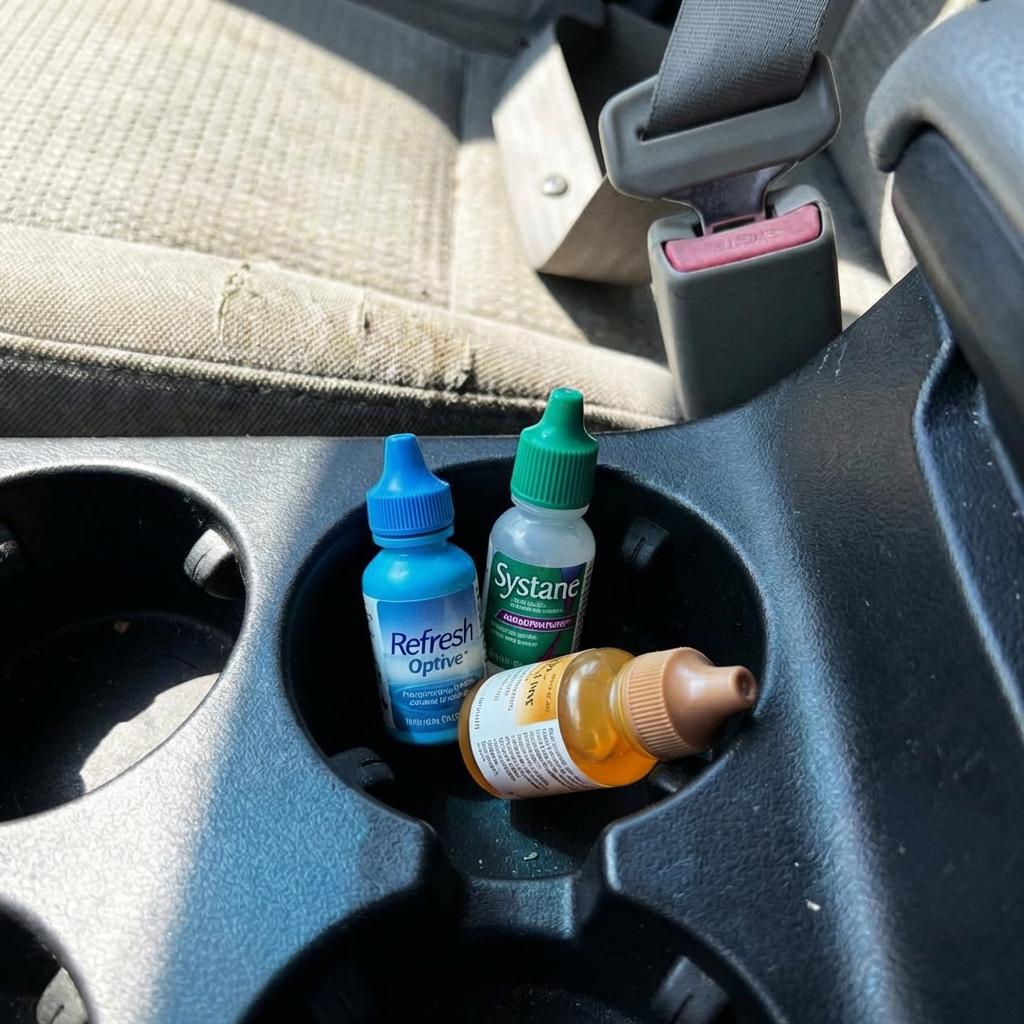
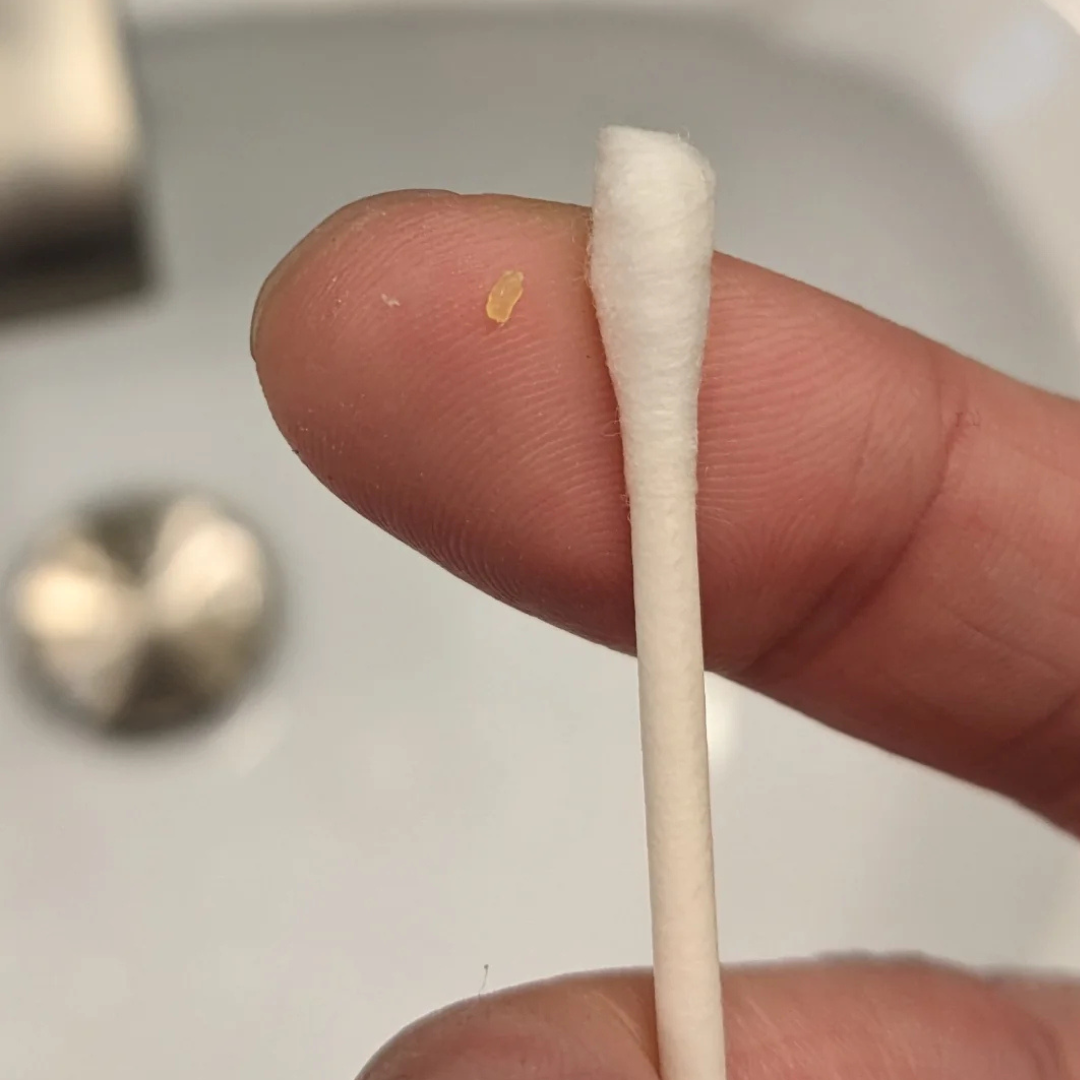
I'm so f****ing sick of people posting here saying eye drops, warm compresses and fish oil fixed their dry eyes. They didn't. Not really. I've tried all of them. So has everyone in my Facebook group. So has my sister. So has the woman behind the counter at the supplement store who, by the way, is still putting drops in her eyes every 10 minutes while she rings you up. Let me tell you what 2 years of "the standard dry eye routine" actually got me. Preservative-free drops every 10 minutes. $49 a bottle. "They keep your eyes wet." 6 bottles. 6 months. My eyes didn't get better. They got dependent. The relief lasted about as long as it took to blink it out, and then the burning came right back, and I'd reach for the bottle again like a smoker reaching for the pack. So I went to my eye doctor and he put me on prescription drops. $400 a month, barely covered. I gave it 4 months. My eyes stung worse for the first 3 weeks and he told me that was normal and to push through. I pushed through. By month 4 I was exactly where I started, just $1,600 lighter. Heated eye masks. $50. The warmth felt incredible for about 15 minutes. Then it cooled down and the grit and the burning came right back, every single time. Like clockwork. A fancier heated eye device, also $50. Broke after 2 weeks. Fish oil at $32 a bottle. 3 bottles. Did nothing for my eyes. Just fish burps for half a year and a refrigerator that smelled like a pier. A humidifier in the bedroom. Then a second one for the living room. Distilled water, cleaning the tank every week so it wouldn't grow mold. My eyes felt the same. Then the rest of the carousel. Flaxseed oil. Gel drops at night that glued my lashes together by morning. Warm washcloths held to my face while my coffee went cold. Baby shampoo to scrub my lids. A diffuser. Blinking exercises a YouTube video swore by. Add it all up. I sat down one night and actually did the math. 2 years. A little over $2,000. And my eyes still burned every morning before I'd even gotten out of bed. You know what every one of those things had in common. They all kind of worked. For a few minutes. Drops for 10. A warm mask for 15. And then my eyes went right back to feeling like someone had thrown sand in them, and I'm standing at the bathroom mirror at 6am, looking at the red, watery, exhausted stranger staring back at me, wondering if this is just what the rest of my life looks like now. That was me in February. I couldn't read a birthday card to my granddaughter without my eyes filling up and stinging halfway through. I'd stopped driving at night because headlights turned into starbursts. I'd quietly given up on the books stacked on my nightstand. My own eyes had become the thing that decided what I was and wasn't allowed to do. And every doctor said the same thing. "It's dry eye." "It's your age." "It's hormonal, there's not much we can do. Just manage it." Manage it. Forever. I sat at the edge of the tub that morning and I almost cried. Not from sadness. From rage. The kind of rage where you start to wonder if the whole dry-eye industry is just a machine built to sell you the next bottle, and the next mask, and the next prescription, forever, while nobody ever actually fixes the thing. I'm writing this from the other side of that morning. My eyes feel normal now. I read 3 chapters in bed last night. I drove home from my sister's after dark and the headlights were just headlights. It's been 11 weeks. No drops. No prescription. No washcloth ritual at dawn. What changed wasn't another product off the shelf. It wasn't a stronger drop or a fancier mask or a higher dose of fish oil. It was an entirely different understanding of what was actually wrong with my eyes. Something none of those bottles had ever touched. Something not one of the 3 eye doctors I'd seen in 2 years had ever explained to me. I'm going to tell you exactly how I found it. Because if you're anywhere near where I was, you need to hear this before you spend another 6 months and another $400 on the next thing that promises to be the one. Back to that morning. That night I couldn't sleep, which was nothing new. I was scrolling our town's community page in the dark. The one where neighbors argue about the school budget and post photos of bears in their trash cans. A woman a few streets over had written a long post. She was around my age. She said the dryness in her eyes had gotten so bad since menopause that she'd stopped going to her book club because she couldn't read under the lights anymore. She was asking if anyone knew a doctor who would actually do something instead of handing her another sample box of drops. 50-some comments. Most of them useless. Drink more water. Try the mask I use. The usual. But one comment near the top had 30-something replies stacked under it. A woman I didn't know said she'd been exactly there, 2 prescriptions deep and ready to give up, until she saw a dry-eye specialist on the other side of the city. Said the woman spent over an hour with her on the first visit and sent her home understanding her own eyes for the first time. Reply after reply under that comment. Women from my own zip code. She actually listened. She explained things no one ever explained. She didn't rush me out the door. I screenshotted the name and put my phone down. 45 minutes across the city. Out of network. $250 for the first visit, none of it covered. I almost didn't go. $250 on top of the $2,000 I'd already burned felt like one more donation to the same machine. But I kept thinking about that comment thread. All those women from my own town who weren't selling anything. So 2 weeks later I drove across the city on a Tuesday morning and sat in a quiet office with bookshelves and soft lamps instead of fluorescent lights, and a doctor with reading glasses listened while I listed every single thing I'd tried. She let me finish all of it. Then she set down her pen. "You've been treating the wrong thing," she said. I waited. "Every single thing you just listed works on the surface of your eye, or adds water, or adds moisture from the outside. Drops. Masks. Humidifiers. Fish oil. And none of it has lasted more than a few minutes. Do you know why?" I shook my head. "Because dry eye isn't a tear problem. It's an oil problem." I just looked at her. She pulled out a notepad and drew the rim of an eyelid, and a row of tiny glands along it. "Along the edge of your eyelids you have these little glands. Their whole job is to make oil. Every time you blink, they release a thin layer of it over your tears. That oil is what stops your tears from evaporating. Good oil, your tears stay put for hours. No oil, your tears evaporate in seconds and your eyes burn. Most people think dry eye means they don't make enough tears. For the vast majority, that's not it at all. They make plenty of tears. The tears just can't stay." Then she drew the same gland again, with little angry marks all around it. "Here's what's actually gone wrong. These glands are inflamed. Not red and swollen the way a sprained ankle is. Quiet, low-grade inflammation running along the rim of your eyelids, day after day, year after year. And that inflammation does two things. It thickens the oil inside the gland until it goes from thin and clear to stiff and gummy. And it swells the gland walls so the opening narrows. Thick oil, narrow opening. The gland clogs shut. No oil reaches your tears. Your tears evaporate. Your eyes burn." She tapped the drawing. "And it gets worse the longer it runs. Inflammation doesn't just clog the gland. It scars it. Every month it keeps smoldering in there, you lose a little more of that gland for good." She drew one more thing. A small flame. "This is the part nobody told you. The dryness you feel is not the problem. It's the smoke. The fire is the inflammation down inside the gland. You spent 2 years wiping at smoke while the fire kept burning." She tapped it. "And your timing is not an accident. When did this really start getting bad?" Around the time everything else changed, I told her. The hot flashes. The bad sleep. She nodded like she'd heard it 100 times. "When your estrogen and your androgen drop in menopause, inflammation climbs all over your body, and these little glands are some of the first to feel it. They slow down. They get inflamed. The oil thickens faster. That's why this hit you when it did. It isn't in your head, and it isn't just 'your age.' It's inflammation in a specific set of glands. And inflammation can be put out." I sat there for a long second. 2 years. 3 doctors. Not one of them had drawn me that picture. "So now look at everything you tried," she said, and counted them off on her fingers. "Drops wash water over the surface for a few minutes. They never reach the inflamed gland underneath. You were rinsing the smoke and ignoring the fire." "Your prescription drops try to calm inflammation, but only on the surface of the eye. They can't get down inside the oily gland where the fire actually is." "Warm masks and washcloths melt the clog for about 15 minutes. But the inflammation is still burning, so it thickens the oil and clogs the gland right back. That's your 15 minutes of relief, right there, and that's exactly why it never lasts." "Fish oil calms inflammation a little, everywhere in your bloodstream at once. But it can't concentrate where you need it, deep inside an oil gland. It's like running a fan in the kitchen while the stove is still on fire." "The humidifier adds water to the air. The gland is still inflamed and still clogged." She set the pen down. "Every single thing you've tried worked on something around the fire. The surface. The tears. The air. The irritation. Not one of them reached down into the gland and put the actual inflammation out. That's why nothing lasted. Nobody was treating the fire." $2,000. Wiping at smoke. I asked her what actually puts the fire out. She nodded like she'd been waiting for the question. "Whatever you take has to do 3 things. And almost nothing does all 3, which is why this is so rarely solved properly." She held up a finger. "1. It has to actually calm the inflammation. The fire itself, not the smoke." Second finger. "2. It has to be fat-soluble, so it can get inside the gland. The gland is full of oil. Water-based things wash right off the surface and never reach it. If it can't dissolve into oil, it can't get to where the fire is. That single fact disqualifies almost everything on the shelf." Third finger. "3. It has to be safe to take every single day, basically forever, because the inflammation creeps back the moment you stop protecting against it." She looked at me over her glasses. "There's exactly one thing I know of that does all 3. It's called astaxanthin. It's the deep red pigment that turns salmon and shrimp and flamingos pink. It's one of the most powerful natural anti-inflammatories we know of. And unlike almost every other one, it's fat-soluble. So it actually dissolves into the oil in your glands and calms the inflammation right where it lives, deep inside, where your drops could never reach." I asked her how she could be so sure it was that strong. She smiled. "Because the supplement industry already leans on it. Go look at a high-end fish oil capsule. A lot of them add astaxanthin right into the softgel, because it's potent enough to protect that delicate oil from breaking down before you ever swallow it. That is how powerful it is. Now picture that same power working inside your eyelid glands, calming the inflammation that's been clogging them shut for years." I had to sit back in the chair. "When the inflammation calms down," she said, "the gland walls settle, the oil thins back out, and the clog clears on its own. Fresh, thin oil starts flowing again. Your tears finally get the layer that keeps them from evaporating. You don't force your eyes to feel better. You take the fire out from under them, and they heal the way they're built to." Then she leaned forward, and this is the part I want you to read twice. "But before you go on Amazon and start grabbing bottles, you have to hear this. The dose is everything. The research that shows real change in these glands uses around 12 milligrams a day. Most bottles on the shelf have 4 or 6. You'd have to swallow 3 of them to match it. And a huge amount of what's out there is synthetic astaxanthin made in a lab, not the real thing grown from algae. If you buy the wrong one, you'll take it for a month, feel nothing, decide the whole idea is a scam, and go right back to your drops. And you'll be wrong." I asked her why my own eye doctors had never told me any of this. She shrugged. "Most of this research lives in nutrition and integrative journals they aren't reading. The inflammation-and-oil angle just isn't part of how most eye doctors are trained to handle dry eye yet. They're trained to manage the symptom. It'll probably be standard in 10 years. For now, you just have to know." She told me what to look for and wrote it on the notepad. Real astaxanthin from algae, not synthetic. 12 milligrams. Third-party tested, with the certificate published. No fillers. Made in the USA. She said she didn't push a specific brand on patients because she's not in the supplement business, but if I matched everything she'd just written down, I'd find the right one. Then she told me the timeline, because she said the people who fail at this all fail the same way. They quit too early. The first week or 2, you won't see much. But underneath, the inflammation is starting to come down. Some women just notice their eyes feel a little less raw. Weeks 3 and 4, the glands settle and the oil starts to thin, and that's usually when the constant burning starts to ease. Weeks 5 through 8, the clogs clear and fresh oil starts flowing again. That's the window where most people feel the real change. Mornings stop being awful. Screens stop being torture. Weeks 9 through 12, it holds. The fire stays out as long as you keep protecting against it. "The women who fail," she said, "are the ones who quit at week 2 because nothing happened yet. The biology takes time. Give it at least 8 weeks before you decide anything." She also said one more thing, quietly, that lit a fire under me. "Don't wait too long. A gland that stays inflamed and clogged for years eventually stops working for good. And a gland that dies does not grow back. The longer the fire burns, the more glands you lose. This is fixable. But the window is not forever." I drove home with 2 pages of her handwriting in my purse. That night I sat at the kitchen table with my laptop and started looking. Most of what came up failed her list immediately. 4-milligram doses. 6-milligram doses. Synthetic. No mention of where it came from. No third-party testing. Long lists of fillers I couldn't pronounce. I looked at probably 40 brands over 2 nights. The one that hit every single thing she wrote down was a small company called Viturea. Real astaxanthin from algae, not synthetic. A full 12 milligrams. Third-party tested with the certificate of analysis published right on the page. No fillers. Made in the USA. Every box checked. So I ordered a bottle that night. 1 softgel a day with food. Weeks 1 and 2, exactly like she said. Nothing dramatic. But by the end of week 2 my eyes felt a little less raw when I woke up. Small, but real. Week 3, I realized I'd gone most of an afternoon without reaching for a drop. Week 4, the burning that used to start the second I opened my eyes in the morning just wasn't there. Weeks 5 through 8, it kept going. The grittiness faded. I read a whole magazine on the porch in the sun without my eyes streaming. I drove to my sister's after dark and forgot to be afraid of the headlights. By week 9 I read 3 bedtime stories to my granddaughter, start to finish, and the only reason my eyes were wet at the end was her, not the burning. That was 11 weeks ago. My eyes feel like my eyes again. Here's what I want to say to you, because I'm guessing you're somewhere near where I was. If you've been cycling through drops and masks and fish oil and humidifiers, you are not crazy and you are not failing at this. You were handed the wrong tools. Every one of those things works on something around the fire. They were sold to you by an industry that either doesn't know about the inflammation, or knows and doesn't have anything that can reach it. Viturea reaches it. Directly. It does the one thing nothing else you tried could do. It calms the inflammation deep inside the gland, so the clog clears, so your tears finally hold. But it only works if it's the real thing. Real astaxanthin from algae, not synthetic. A full 12 milligrams, not 4. Third-party tested. No fillers. If a bottle misses even one of those, you'll think the whole idea doesn't work, and you'll end up right back where you started, with a drawer full of drops. Viturea is the one I found that hit every single thing on her list. 1 softgel a day with food. I've taken it every morning since. You don't have to scroll a community page at midnight, or drive across the city, or pay $250, or spend 2 nights comparing 40 brands to find this out. I already did all of that for you. Viturea has a 60-day money-back guarantee. Take it for 2 months. That's the timeline. The first couple weeks the inflammation starts coming down. Weeks 3 and 4 the burning eases. Weeks 5 through 8 your eyes start feeling like they did before all this. If your eyes aren't better in that window, you get every dollar back. The fact that a small company will stand behind it that way, when the drop industry that's taken your money for years never would, tells you something. I hope this reaches someone who needs it. I really do. Because no woman should spend 2 years and $2,000 on drops and masks and fish oil, being told it's just her age, when the whole time the real problem was a fire burning in glands nobody ever bothered to look at. https://viturea.com/products/astaxanthin-softgels-ded-um-new P.S. The inflammation deep inside your glands is the fire every drop, mask and humidifier is walking right past. None of them reach it. Astaxanthin is the only thing I've found that can, because it's one of the few anti-inflammatories that's fat-soluble enough to get inside the oily gland where the fire is. But it has to be the real 12-milligram dose from algae, or you're just swallowing expensive coloring. P.P.S. The 60-day guarantee covers the full timeline. 2 weeks for the inflammation to start coming down. 4 weeks for the burning to ease. 6 to 8 weeks to feel like yourself again. After $2,000 on things that never once reached the fire, that guarantee was the first time the math finally worked in my favor. P.P.P.S. There's a clock on this one, and it isn't a marketing gimmick. A gland that stays inflamed long enough eventually dies, and a dead gland does not come back. Every month you spend treating the surface is another month the fire keeps burning. Viturea is a small company and they do sell out. If it's in stock when you click, get the bottle. https://viturea.com/products/astaxanthin-softgels-ded-um-new
Where the ad sends people
viturea.com
Say goodbye to dry eyes
Viturea Astaxanthin reduces the chronic inflammation behind your dry eyes — the root cause that eye drops and other treatments can't reach.
Learn more: viturea.com(opens in a new tab)