Stephanie Clark
Stephanie Clark Facebook ad: “Say goodbye to dry eyes”
Ran for 36 days, from May 16 to June 21, 2026, the last day Crush saw it.
Run by Stephanie Clark on Facebook. Crush is not the advertiser and does not verify its claims. See this ad in Meta's Ad Library(opens in a new tab)
Want an ad like this for your product?
Crush makes new ad images for your product from this ad: your logo, your product photo, your offer.
Trials from $19.95 USD, then $79.95 USD a month. Cancel anytime.
About this ad
- Meta Ad Library ID
- 2373912209751154
- Platforms
- Facebook, Instagram, Audience Network, Messenger and Threads
- Relaunches
- 0
Ad text
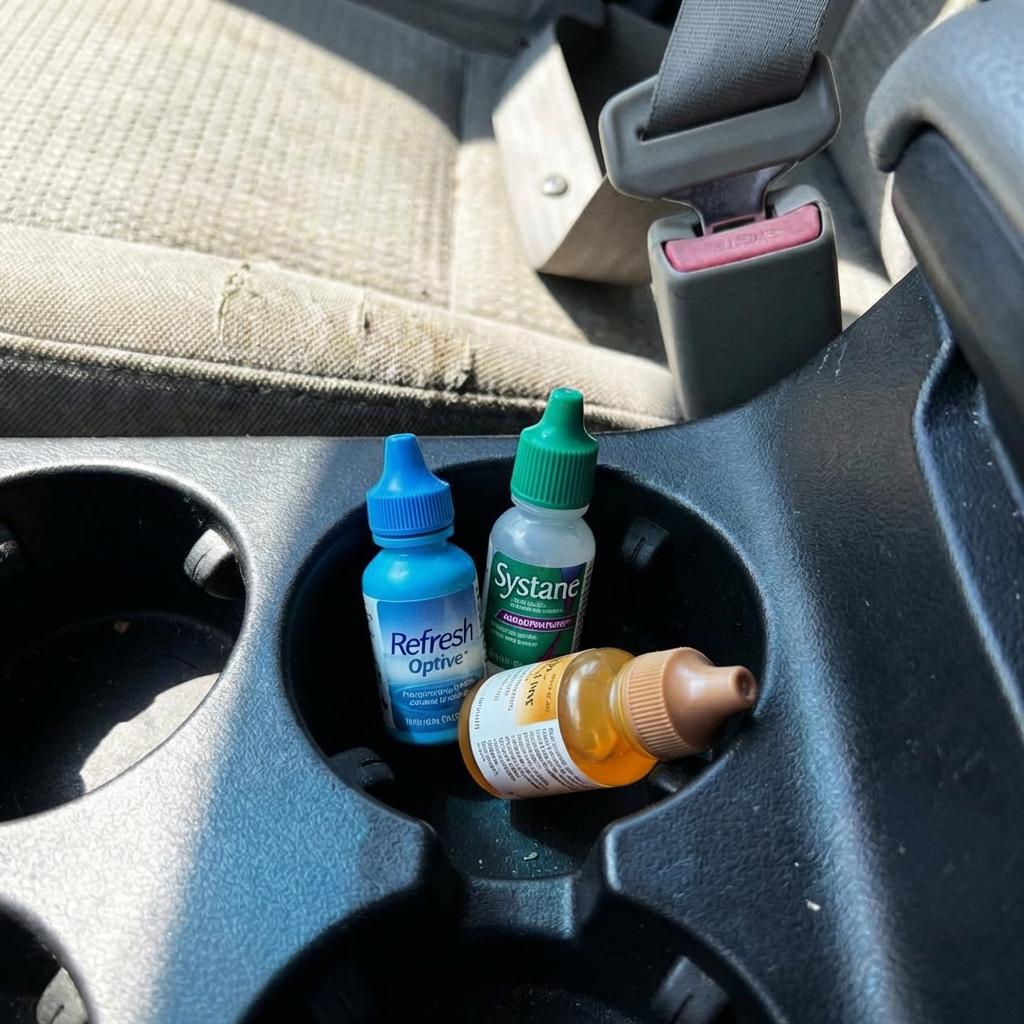
Nobody warned me that cataract surgery could leave my eyes so dry I can't read a birthday card from my grandkids without flinching in pain. I'm 63. I had my left eye done in March of last year. The right eye six weeks later. The surgeon called it a "miracle procedure." He said I'd be reading the menu at restaurants without glasses by the end of the month. And in a way, he was right. The cataracts were gone. The world was bright again. For about three weeks. Then the burning started. It started in the corner of my left eye. Just a little sting in the morning. I figured it was the post-op drops. I figured it would settle. It didn't settle. It spread. By week six, both eyes felt like there was sand under my eyelids. By week eight, I couldn't keep my eyes open in the wind. By week twelve, I was waking up at 4 a.m. with my eyelids glued shut. I'd peel them open in the bathroom mirror and my eyes looked like two raw stoplights staring back at me. I went back to the surgeon. He shined a light in my eyes for about ninety seconds. He said the words I'd hear from three more doctors over the next year: "Dry eye is very common after cataract surgery. Give it time. Use these drops." He handed me a sample of Refresh and walked out. That was the whole appointment. So I tried the drops. I tried Refresh. I tried Systane. I tried Systane Ultra. I tried Systane Complete. I tried the gel ones at night that make everything look like you're underwater. I tried Restasis, twice a day for four months, $600 out of pocket because my insurance didn't cover it. I tried warm compresses. I tried the microwaveable masks shaped like little eye pillows. I tried fish oil. I tried flaxseed oil. I tried a humidifier. I tried sleeping with a sleep mask. I tried sleeping without a sleep mask. I tried blinking exercises a woman on YouTube swore by. The drops would work for about five minutes. Five minutes. Then it was back to sandpaper. I stopped reading. I used to read a book a week. Now I couldn't get through a page without my eyes watering so badly I'd have to close them. I stopped driving at night. The oncoming headlights felt like someone was pressing thumbtacks into my corneas. I stopped going to the movies with my husband. He'd put his hand on my knee in the dark and feel me wincing. He stopped asking me to come along. Then in October my grandson Henry sent me a birthday card. He's seven. He drew a picture on the front of me and him fishing at the dock. Inside he'd written, in big crooked letters: "Happy birthday Grandma. I love you the most." I had to close the card after one sentence. I sat in the kitchen with the card on the table and just stared at it through the burning. I'd had cataract surgery so I could SEE my grandchildren more clearly. And now I couldn't even read what he wrote. That was the moment I knew something was very, very wrong. And that my doctors had no idea what it was. The person who finally told me the truth wasn't any of the doctors I'd been paying. It was my niece. She's an optometrist in Connecticut, but she doesn't do surgery. She works at a small practice that does nothing but dry eye. All day. Every day. For the last twenty years. Which is, it turns out, exactly the kind of specialist I should have been sent to in the first place. She came down for Thanksgiving and saw me squinting through dinner. She watched me dab my eyes with a napkin between every bite. After everyone had gone to bed, she sat down at the kitchen table with me and said: "Aunt Linda, I need to show you something. And it's going to make you angry." She slid a napkin across the table and wrote two words on it. Tear problem. Oil problem. Then she drew a line through the first one. "You don't have a tear problem. Your eyes are making plenty of tears. I can see it right now from across the table. You have an oil problem." I didn't understand. She said it like this. Healthy eyes have a thin layer of oil sitting on top of the tears. The oil is the seal. It's what stops your tears from evaporating the second they hit the air. Without it, your tears boil off in under five seconds, no matter how many of them you make. Your eyes feel like sandpaper. Even though you're crying. That oil comes from eighty tiny glands lined up behind your lashes. Top lid. Bottom lid. Both eyes. They're called meibomian glands. In four eye appointments over a year and a half, not one doctor had said the word. She put her hand on mine. "Your oil glands are clogged. Like grease congealing in a kitchen drain. The oil has thickened into a waxy paste, and the paste is blocking the openings. And nothing you've been doing, none of those drops, none of those compresses, is touching them." I sat there for a long time after she said it. For a year I'd been dropping Refresh in my eyes every twenty minutes. Squeezing the bottle until my fingers cramped. Carrying three different brands in my purse. Every single drop was water. And the problem wasn't water. The problem was oil. I had been pouring water on a grease fire. For fourteen months. She called it Meibomian Gland Dysfunction. MGD. The cause of about 86% of all dry eye in this country. And then she said the part I will never forget: "And cataract surgery is one of the most common things on earth that triggers it." I asked her how. When they do cataract surgery, the first thing they do is wedge your eyelids open with a metal speculum, for thirty to forty-five minutes. The speculum presses directly on the row of meibomian glands. Then they pump you full of post-op antibiotic and steroid drops, four times a day, for a month, and many of those drops are toxic to the glands themselves. Then your eye spends the next six to twelve weeks inflamed. And inflammation around the glands does what inflammation always does. It scars. It clogs. It chokes the channels off, one by one. I asked why the doctors had never told me any of this. She gave me a tired look. She said most general ophthalmologists are surgeons, not dry eye specialists. The standard playbook after cataract surgery is "prescribe drops and tell the patient to wait it out." If you want MGD actually diagnosed, you need a specialist with a machine called a meibographer that photographs the glands. Most patients never get sent to one. Then she said the thing that stopped my heart: "By the time most patients realize what's wrong, glands have already atrophied, shriveled up. And once a meibomian gland fully dies, it does not grow back." I asked her how many of mine I'd already lost. She said she couldn't tell without imaging. But she said: "If you don't do something soon, in five years you'll be using drops every fifteen minutes just to function. In ten years, you may not be able to keep your eyes open for more than a few minutes at a time." You have a window. The window is not forever. She walked through everything I'd tried. She didn't dismiss any of it. But she explained why none of it had worked. The artificial tears, Refresh, Systane, all of them, are just water. They cannot reach the oil glands. "It's like pouring water on a grease fire," she said. "It feels like you're doing something. But the actual problem is untouched." The warm compresses help for about ten minutes after you use them. They soften the wax. But the moment you stop, it congeals again. A band-aid, not a fix. Restasis is for a different kind of dry eye. It works on the water side. "If your problem is the oil glands, Restasis is the wrong key to your lock." The fish oil and flaxseed were closer to the right idea. The only way anything can actually reach the meibomian glands is from the inside, through your blood. Fish oil at least gets there. But it doesn't have what the glands actually need to recover. She turned over the napkin and drew three circles. The first circle was the problem itself. The glands are inflamed. Inflammation is what's killing them, one by one, every single day they stay clogged. So whatever helps has to be a strong enough antioxidant to actually shut that inflammation down. Not "support healthy eyes." Shut. It. Down. The second circle: it has to be fat-soluble. Because the oil glands are made of fat. Anything water-soluble, most vitamins, most antioxidants, gets filtered out by your blood long before it ever reaches the gland tissue. Whatever the glands need has to dissolve in fat, so the blood can carry it directly into the eyelid. The third circle: it has to be safe enough to take every day. Forever. Because the glands don't heal in a week. They heal slowly, over months. And the second you stop protecting them, the inflammation comes back. She tapped the spot in the middle where all three circles overlapped. "There is exactly one thing in nature that lives inside this triangle. One. I have been telling my dry eye patients about it for eleven years." And then she said the word I had never once heard from any of my four doctors. Astaxanthin. It's not in your fish oil. It's not in your one-a-day. It's barely in the standard western diet at all. The only real source in food is wild-caught cold-water fish, wild salmon, krill, a few shellfish, and almost nobody is eating enough to get a meaningful amount. She said the average woman my age is getting close to zero of the one antioxidant the oil glands actually depend on. Which is why the damage had been quietly stacking up for years before cataract surgery ever finished the job. When you take it, it gets absorbed into your bloodstream and travels into the fatty tissue inside your eyelids, the exact place drops can't reach. Once it gets there, it shields what's left of the glands from the damage that's been wearing them down. She said: "Once the damage stops, the glands finally get to do what they were always supposed to do. Make oil again." She wrote one word on a piece of paper. Slid it across the table. Astaxanthin. 12mg. Under it she wrote: Once a day. With food. She said: "12 milligrams is the dose used in the dry eye research. Most of what you see on Amazon is 4 or 6. It's not enough." She said: "Take it every day for sixty days, and don't expect a miracle in week one. But by month three you should know." I went home and looked. For two weeks I read everything I could find. I read the Japanese studies on tear film breakup time. I read papers on how astaxanthin reaches the eyelid from the inside out. I cross-referenced the dose on every bottle I could find at CVS, at the vitamin store, online. And what I found made me angry all over again. Most of the astaxanthin sitting on the pharmacy shelf, the brand-name bottles, the ones with the little eye drawings on the front, comes in at 4mg per softgel. A few are 6. The dry eye studies my niece had pointed me to used 12. Which means if you bought what's in front of you at the pharmacy, you'd have to swallow three softgels a day, every day, just to match the dose the research actually used. Nobody puts that on the front of the bottle. So I called my niece. I told her I'd been looking for two weeks and the math wasn't math-ing. I asked her: what do you actually give your own dry eye patients? She was quiet for a second. She said she doesn't usually name brands over the phone. And then she said: "There's one. It's a small company. They make a softgel at the full 12mg, the same dose as the studies, and they don't cut it with the cheaper synthetic versions. I've been sending my dry eye patients there for the last two years and I've watched their lid margins come back. It's called Viturea." I ordered two bottles that night. I didn't tell my husband. I'd spent so much on dry eye products by that point that I was embarrassed. Week one: nothing. I almost stopped. I texted my niece in tears. She said: "The glands take time. Keep going. You did not break them in a week and you will not fix them in a week." Week two: the morning crust started getting less. I could open my eyes when I woke up without prying them apart. Week three: I read four pages of a book before my eyes started to water. Four pages. I cried. Week four: I drove to the grocery store at 7 p.m. with the headlights on and didn't have to squint. My husband noticed I wasn't flinching anymore. He didn't say anything. He just put his hand on mine at a stoplight. Week six: I picked up a paperback and read for forty minutes straight in the bath. Week eight: I went to my niece's house for Christmas. She looked at my eyes under a light and her face changed. She said: "Linda, the lid margins look completely different. They're not inflamed anymore." She said the glands had started expressing oil again. She said some of them were probably coming back online. Henry sent me another card in March. For no reason. He just felt like sending one. I sat on my back porch with a cup of coffee. I opened it. I read the whole thing. He wrote: "Grandma, I am glad you can see me again." He's seven. He doesn't really know what that means. I do. Here's what I want to tell you, if you're reading this and you had cataract surgery and your eyes have never been the same. It is not "just dry eye." It is not "in your head." It is not going to get better with drops. You almost certainly have MGD. And the longer you wait, the more of those eighty little glands you lose for good. You have a window. The window is not forever. I lost mine for almost two years before someone told me the truth. I am one of the lucky ones who caught it in time. Many people don't. If you want to know where to start, my niece's one ingredient was the thing that turned the lights back on for me. Astaxanthin, at the 12mg clinical dose. The product I take is called Viturea. I am not a spokesperson and they don't know I'm writing this. I just don't want any other grandmother to sit at her kitchen table holding a birthday card she can't read. https://viturea.com/products/astaxanthin-softgels-ded-um-new They have a sixty-day guarantee. If it doesn't work, you don't pay. That's all I needed to know. I read Henry's card on the kitchen table this morning. Out loud. Twice. I can see my grandchildren again. I hope you get to see yours. https://viturea.com/products/astaxanthin-softgels-ded-um-new
Where the ad sends people
viturea.com
Say goodbye to dry eyes
Viturea Astaxanthin reduces the chronic inflammation behind your dry eyes — the root cause that eye drops and other treatments can't reach.
Learn more: viturea.com(opens in a new tab)