Cindy Lewis
Cindy Lewis Facebook ad: “Read this if you own a Pug”
Ran for 27 days, from July 25 to August 21, 2026, the last day Crush saw it.
Run by Cindy Lewis on Facebook. Crush is not the advertiser and does not verify its claims. See this ad in Meta's Ad Library(opens in a new tab)
Want an ad like this for your product?
Crush makes new ad images for your product from this ad: your logo, your product photo, your offer.
Trials from $19.95 USD, then $79.95 USD a month. Cancel anytime.
About this ad
- Meta Ad Library ID
- 1050834687392170
- Platforms
- Facebook, Instagram, Audience Network, Messenger, WhatsApp and Threads
- Relaunches
- 0
Ad text
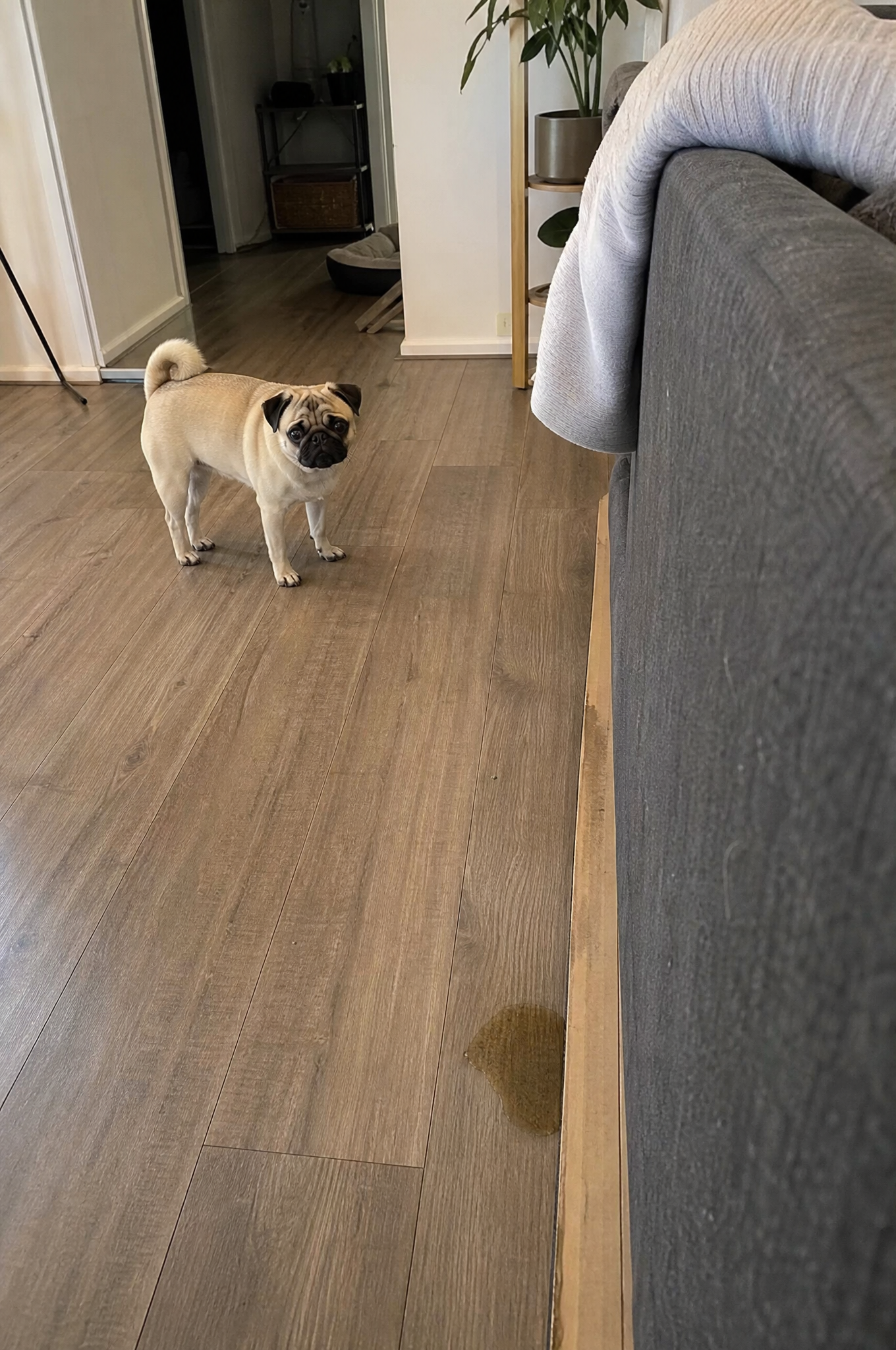
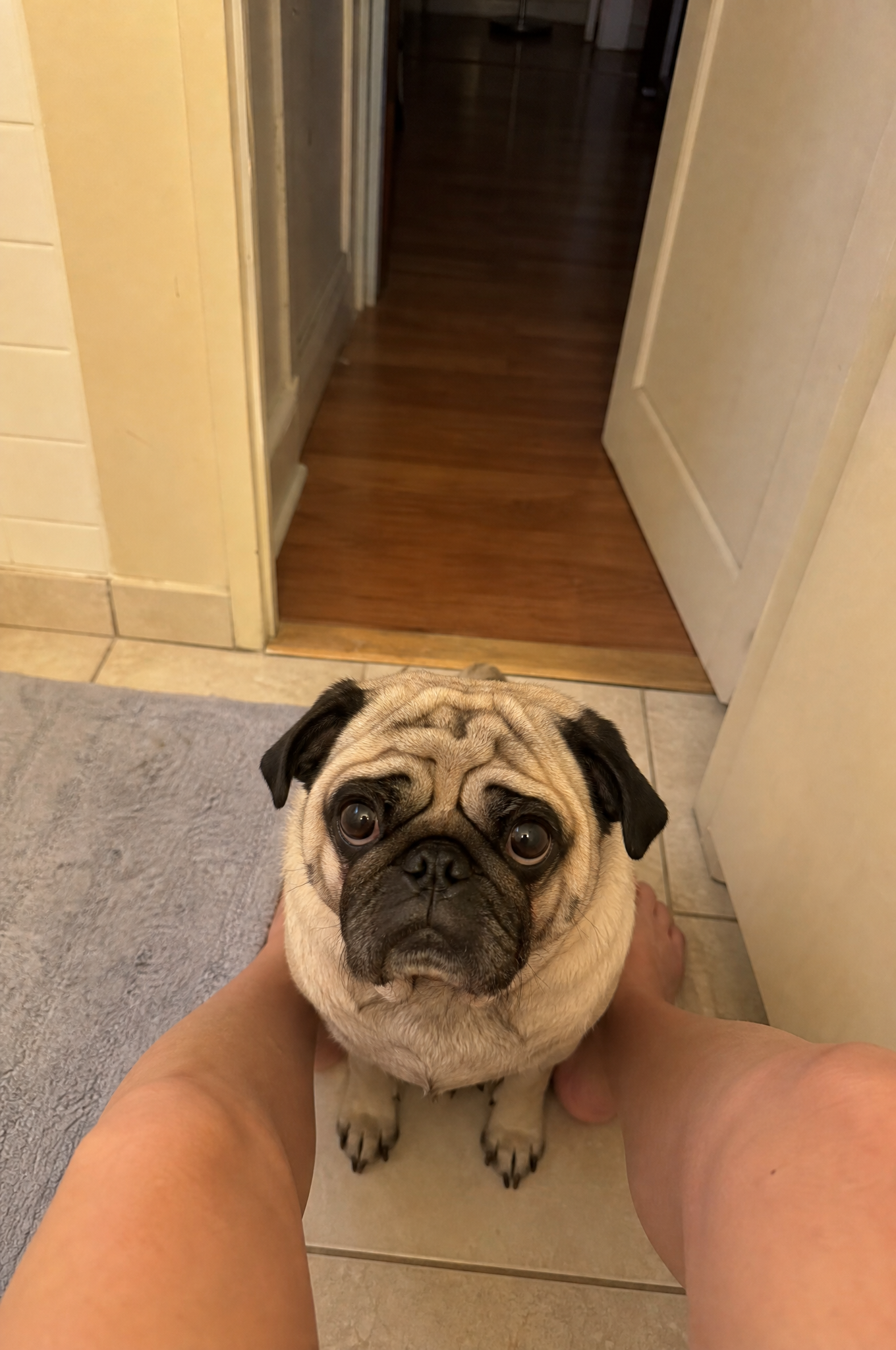
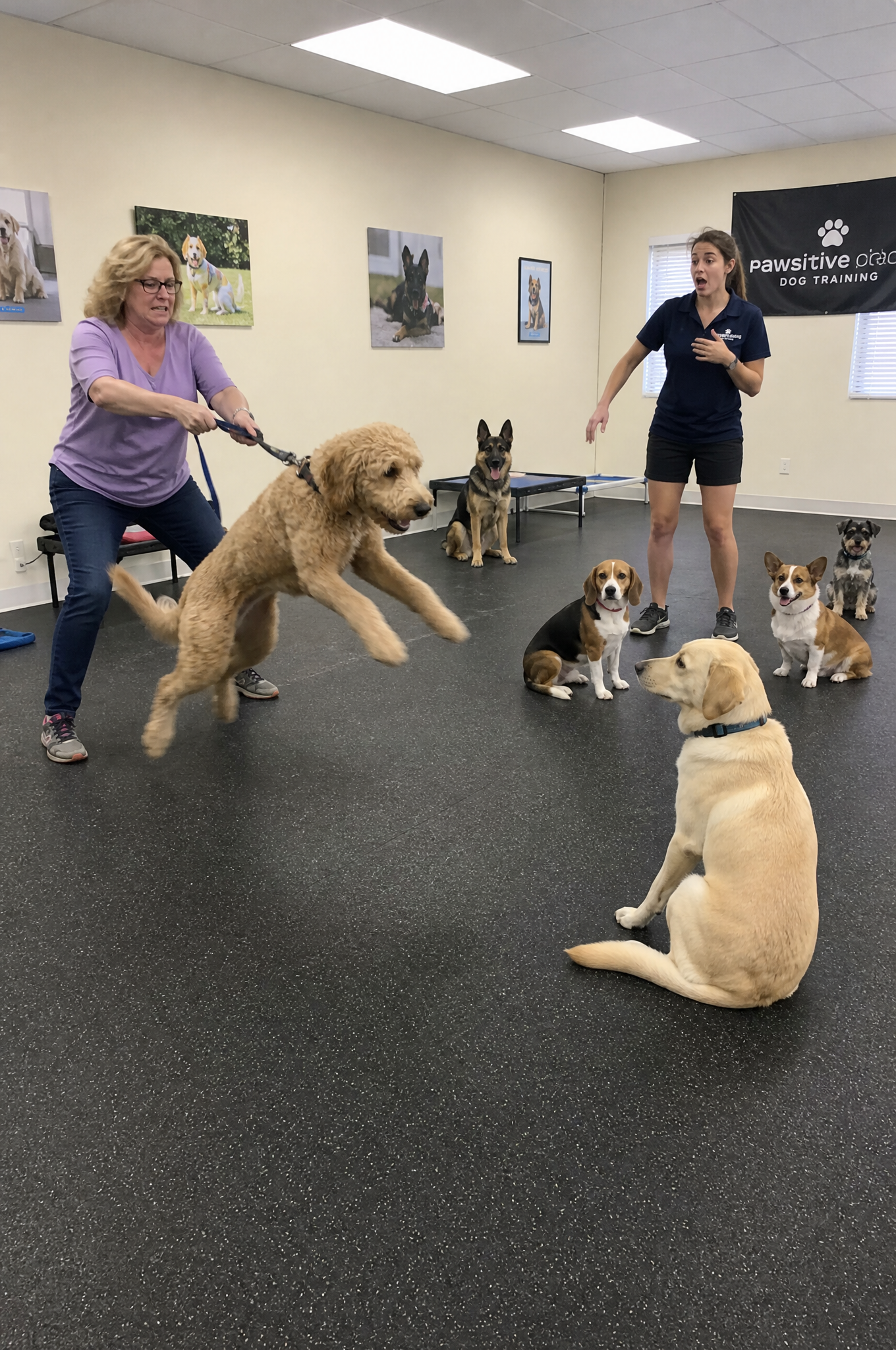
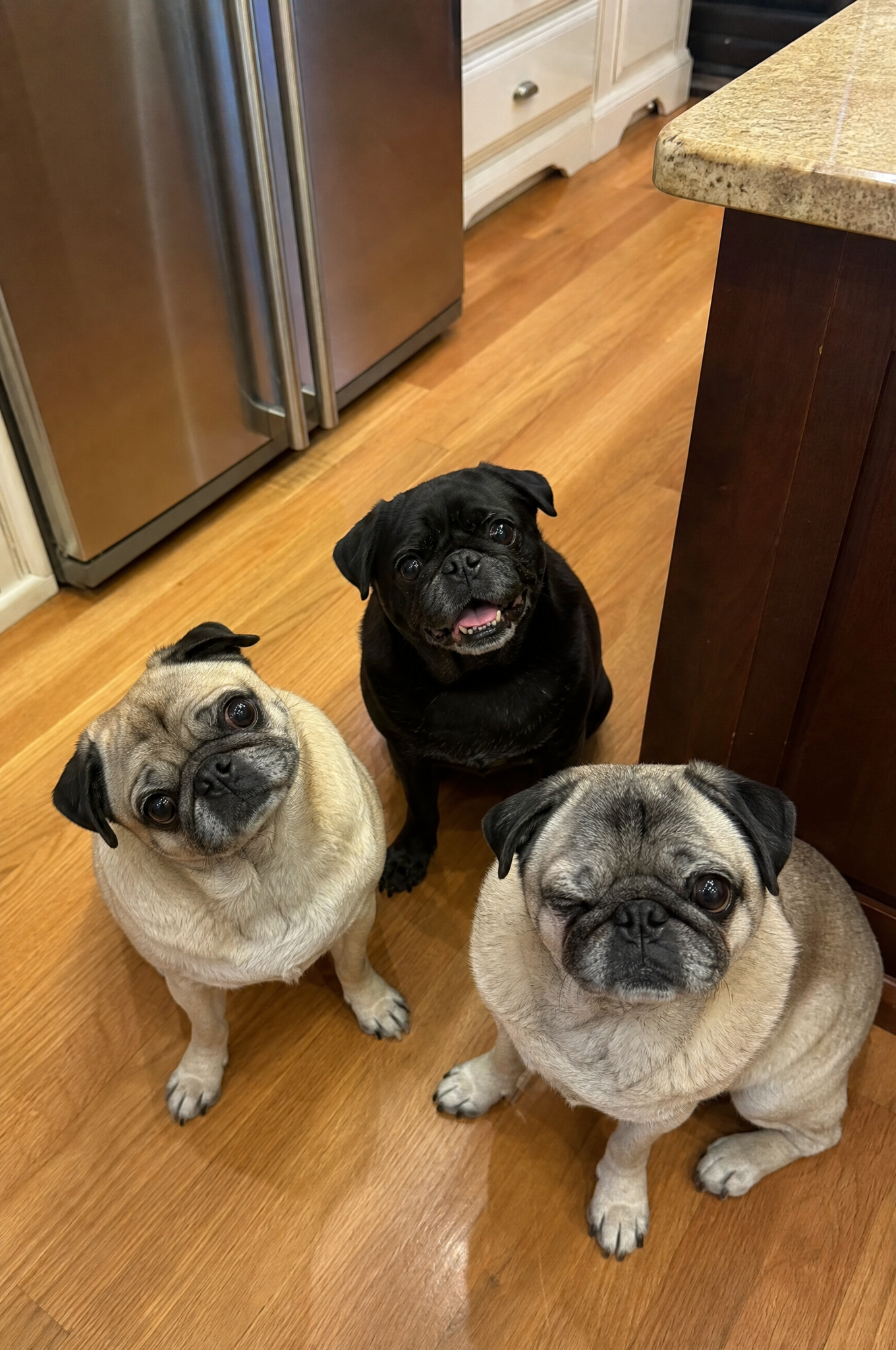
I've been a dog sitter for 27 years. Hundreds of homes. Thousands of dogs. But one family never left my mind. The Collinses. 3 Pugs. Ages 8, 10, and 12. All in the same house. All perfectly behaved. No demand barking. No shadowing their owners from room to room. No howling the second anyone left the house. No accidents behind the couch. I figured they just got lucky with the breeder. I'd heard that before, that it all comes down to the lines, that some breeders produce calmer dogs and some produce the chaotic ones and there's not much you can do about it once the genetics are set. Then I noticed what Mrs. Collins had me do every single time I arrived at the house. Every visit. Same routine. Without exception. "Don't greet them when you walk in. Don't look at them, don't talk to them, don't touch them. Walk straight in, set your bag down, and wait. When they settle, then say hello. Every time. Don't skip it." She'd written it on a sticky note on the inside of the front door. Underlined twice. I did it for 3 years without asking why. When I finally asked, Mrs. Collins told me something that changed everything I thought I knew about Pugs. My name is Cindy Lewis. I'm 56 years young. I've been a professional dog sitter in Roswell, Georgia since 1998. I'm not a trainer. Not a behaviorist. Just a woman who's spent 27 years letting herself into other people's homes and caring for their dogs while they're away like they're her own. I've seen everything. Sweet Pug puppies grow into 20-pound chaos machines their owners can't control. The demand barking that goes on for hours. The shadowing that means you can't walk to the kitchen without tripping over them. The screaming and howling the second anyone leaves the house. The pug that stands outside in the dark and the rain refusing to go to the bathroom. The ones that sneak behind the couch when you're not watching, then look at you like they have no idea what you're upset about. All of it. It's the typical Pug pattern. You accept it. You don't question it. You just tell yourself, well, Pugs are dramatic, that's just what they are. But the Collinses broke the pattern. I started sitting for them in 2016. They traveled often, Mr. Collins's job took him overseas 3 or 4 times a year, and Mrs. Collins would usually go with him for at least 2 of those trips. Sometimes 10 days. Sometimes 3 weeks. Their Pugs were already middle-aged when I met them. Rosie was 5. Biscuit was 7. And Frank, the oldest, was 9. I remember thinking: 3 Pugs in one house, this is going to be absolute chaos. I'd sat for Pugs before. I knew what I was walking into. Or I thought I did. I was so wrong. Every time I came over, every single visit for 3 years, those dogs were calm. Not tired. Not medicated. Calm. The kind of calm where a dog knows exactly what's expected of it and does it because the understanding is already there. Rosie at 6. Then 7. Then 8. No barking when I arrived. No spinning. No launching herself at my shins and screaming for attention. Biscuit at 8. Then 9. Then 10. Could be left alone for hours without a single accident, a single scratched door frame, a single honking wail that echoed through the walls. Frank hit 11. Then 12. Still settled and calm when I walked through the door. Still going to the bathroom on schedule outside in all weather. Still responding to his name when I called him from across the house on the first try. Meanwhile, I was watching my own Pug fall apart. My girl, Mabel, was a 3-year-old fawn, 18 pounds, black-masked face so perfectly wrinkled that strangers stopped me on the street to ask what she was. We paid $2,200 for her from a breeder two hours outside Atlanta. She was also completely out of control. She screamed. That's the only word for it. The high-pitched, operatic, ear-splitting pug scream that makes people think you're hurting the dog. She screamed when I sat down to eat dinner. She screamed when I turned on the TV. She screamed when I moved from the couch to the kitchen. She screamed when I put on shoes. She screamed when I picked up my keys. She screamed when I opened the front door, and she screamed even louder the second I closed it behind me. My downstairs neighbor knocked on the ceiling with a broom handle. Twice. The shadowing was relentless. I could not walk from one room to the next without Mabel attached to my heels like velcro. If I moved, she moved. If I stopped, she sat on my feet. Bathroom. Kitchen. Bedroom. She was there. Every single time. And if I closed a door between us, the scratching started within seconds. The potty training was a disaster. She'd been doing well until about 14 months, then she regressed completely and started sneaking behind the couch to go. I'd stand outside with her for 20 minutes in the morning, she'd sniff around, do a tiny fake squat to get the treat, then come back inside and go the second I wasn't watching. I started calling it the scam. She'd perfected the scam. The selective hearing was the worst. In the house, quiet evening, no distractions, she was brilliant. Sit. Wait. Shake. She could do all of it. She looked like a trained dog. She looked like I knew what I was doing. Then I'd put on my shoes and every command she'd ever learned evaporated. She'd start pacing and panting and whining before I'd even picked up my bag, because she'd catalogued every single thing I did before leaving and her panic started the moment she recognized the first step of the routine. I'd spent $1,300 trying to fix it. Group obedience class. $110. 6 weeks. The trainer told me to be more consistent with my corrections. I was consistent. Mabel was consistently theatrical. Private trainer. $150 a session. 3 sessions. $450. She told me to ignore the demand barking completely. I ignored it. Mabel escalated to a volume I didn't know an 18-pound animal was capable of producing. Because that's what Pugs do. They don't accept a blocked path. They find another gear. Board-and-train. $700 for 2 weeks. Mabel came home and was perfect for exactly 5 days. On day 6, I put on my shoes to go to the grocery store and she went straight back to panting, pacing, and spinning before I'd even touched the door handle. $1,300. A group class, a private trainer, and a board-and-train. And my dog still couldn't be left alone without screaming, still couldn't stop shadowing me from room to room, still hadn't cracked the potty training, still panicked the second she saw me reach for my keys. I stopped leaving the house freely. That's the part I'm ashamed of. I stopped making spontaneous plans. I stopped saying yes to things. I'd stand inside my own front door calculating whether the errand was worth what I'd come home to. Mabel's wailing was so loud and so sustained that I'd gotten a formal written complaint from building management. I was rearranging my life around an 18-pound dog and I didn't know what else to do. And every few weeks, I'd drive over to the Collinses' house and there it was again. The thing I couldn't explain. I'd walk through the front door and all 3 dogs would come to greet me, and then they'd just... stop. They'd stand there, tails curling, whole bodies vibrating with excitement, but they wouldn't jump. They wouldn't bark. They'd hold it together until I settled, and then they'd press their wrinkled little faces into my hands one at a time. Then I'd go to take them outside and all 3 would go straight to the bathroom. No fake squatting. No refusing the grass. No standing at the door waiting to come back in. Just three Pugs doing exactly what we'd come outside to do. At my apartment, taking Mabel outside was a negotiation. A 20-minute negotiation with a dog who weighed less than a bag of dog food. At the Collinses' house, it was the calmest 5 minutes of my morning. Same breed. Same size. Same dramatic Pug personality. Completely different dogs. The question ate at me for 3 years. What was different about this family? Then came the noise complaint letter. Official letterhead. Building management. One more documented complaint and I'd be in violation of my lease. I stood in my hallway holding that letter, Mabel honking and spinning at my feet having the time of her life, and I thought: I cannot keep doing this. I couldn't stay quiet anymore. When Mrs. Collins got back from her next trip, I asked. "That arrival thing, where you don't greet them when you first come in, and they just settle, where did they learn that? Where did all of it come from?" She looked at me like I'd asked why water is wet. "It's from a Pug Guide," she said. "The Calm Arrival Protocol. It's the first thing you teach. You don't use this with Mabel?" I'd never heard of it. She sat me down at her kitchen table and told me everything. "I used to think like you," she said. "I thought Pugs were just dramatic. I thought that was the breed. I thought you got a Pug and you got the screaming and the shadowing and the potty accidents and the separation panic and you just lived with it because that's what you signed up for." She pointed at Frank, asleep on the couch. 12 years old. Peaceful as a stone. "Frank was my first. He was a complete mess until he was almost 3. Screaming every time I left. Following me into the bathroom and scratching the door if I locked it. Accidents behind the furniture even though I'd had him for 18 months. I did 2 obedience classes and a private trainer and nothing stuck. Not one thing." "What happened?" "I found out the truth no trainer ever told me. Every method I'd paid for was designed for a completely different kind of dog." She leaned forward. "A Pug was bred by ancient Chinese emperors for one single purpose. Not to retrieve. Not to herd. Not to guard. To be with a human. Constantly. Every waking minute. That's the entire genetic program. When you leave, their brain doesn't process it as 'my owner went to the shops.' Their brain processes it as 'my entire reason for existing just walked out the door.'" "And when that brain goes into panic, it doesn't respond to standard training corrections. Because the panic isn't disobedience. It's a survival response. You can't correct your way out of a survival response. You have to rewire the association." I thought about every time I'd tried to correct Mabel's screaming. Every time I'd turned my back or left the room or said "no" firmly. Every time the trainer had said "she'll learn that barking gets no attention" and she'd learned absolutely nothing except to bark louder. "And the shadowing," she continued, "that's the same drive. Pugs were bred to never leave your side. Every time you accidentally reward the following, by letting them into the bathroom, by picking them up when they whine, by coming back through the door the second they cry, you're confirming what their genetic program already believes: that staying attached to you is the correct strategy and panic gets results." "So what do you do?" "You don't fight the wiring. You redirect it. You teach the companion brain that distance is safe, that your leaving always ends in returning, that calm behavior is what earns the connection they crave. When you do that consistently, the panic response unlearns itself, because the thing in their brain that drives the screaming and the shadowing stops being triggered." "That's what the arrival thing is?" "That's one piece. The guide has a whole system. The Calm Arrival Protocol teaches them that excited behavior never opens the door and calm behavior always does. The Micro-Departure Protocol teaches them that you leaving is boring and temporary instead of catastrophic, because you leave for 5 seconds, come back, leave for 8 seconds, come back, over and over until their brain recategorizes it as meaningless. The Potty Protocol addresses why Pugs fake-squat and refuse wet grass, because their barrel-shaped body sits so close to the ground that wet grass hits their belly and they'd rather hold it for 12 hours than feel that sensation, and there's a specific technique to bridge that. All of it designed for how a companion-bred brain actually works." She showed me the website. "This is The Complete Pug Guide. Everything from the separation anxiety protocol to the potty training to the demand barking to the wrinkle and health care, all of it. When you combine the pieces together, it's the complete system. Each piece on its own helps, but together they rewire the whole pattern. That's why my dogs are the way they are. Not because of the breeder. Because of the system." I thought about my $1,300. The group class. The private trainer. The board-and-train that lasted 5 days. The noise complaint letter sitting on my kitchen counter. The spontaneous plans I'd stopped making. "The trainers weren't bad people," she said. "They just didn't know what they were dealing with. Standard dog training treats every dog like a Labrador. Sit means sit. No means no. Ignore the behavior and it extinguishes. For Labs and Goldens and Shepherds, that's true. But a Pug has a 2,000-year-old companion program running in their brain, and that program doesn't respond to any of those methods. It needs something designed specifically for how it works. And this is the only thing I've found in 12 years of owning Pugs that actually gives you that." I went home that night feeling sick. Sick because for 3 years I'd watched those three Pugs being calm and settled and easy, and I'd assumed it was luck, assumed it was the breeder, assumed it was something the Collinses just had that I didn't. 3 years while my own Pug screamed, shadowed, fake-squatted, and triggered a formal lease violation letter. 3 years while I spent $1,300 on methods designed for a brain my dog doesn't have. I ordered it that night. Not because I believed it would work. Because I had already spent thousands on things that didn't work and the guide felt like nothing left to lose. It was a digital guide which was perfect for me because I couldn't afford to wait, I needed it now. I started reading it on my phone while Mabel snored next to me. And everything Mrs. Collins told me was true. The companion-bred brain that processes separation as a survival crisis. The reason ignoring the demand barking makes it worse before it gets better and why most owners give in at exactly the wrong moment. The reason the board-and-train collapsed in 5 days, because professional suppression of behavior without addressing the genetic driver underneath is temporary by design. The reason Mabel could be perfectly calm in a quiet house and lose every ounce of that calm the second I reached for my keys, because the training only worked when her attachment drive was dormant, and it was never built to survive the moment it ignited. And it gave me the complete system. Not just the Calm Arrival Protocol, but everything. The Micro-Departure Protocol that starts with leaving for 5 seconds. Not 5 minutes. 5 seconds. Because you can't teach a panicking dog to relax. You have to stay under the panic threshold every single time, and then slowly, deliberately, over days and weeks, move that threshold. Leave for 5 seconds, come back. Leave for 8 seconds, come back. Leave for 12 seconds. Leave for 30. And you never go beyond what they can handle without panicking, because every panic episode resets the work back to zero. The Trigger Scrambling technique that explained why Mabel started panicking before I even touched the door. Pugs are brilliant observers. They clock your routine. Hard shoes instead of slippers. Keys coming off the hook. Bag being picked up. By the time you open the front door they've been in a level-10 panic for 10 minutes already. The guide teaches you to pick up your keys 20 times a day without leaving. To put on your shoes and make a cup of coffee. To open the front door and close it without going anywhere. Until those triggers mean absolutely nothing because the pattern no longer predicts what she dreads. The Calm Arrival Protocol that fixed both her arrivals and her demand barking, because the same rule that governs the front door governs everything: calm behavior opens every door and earns every reward. Excited, screaming, spinning behavior gets nothing. Not a correction. Not a scolding. Just nothing. And the moment she settles, even for one second, that's the moment everything she wants becomes available. The Potty Protocol that finally explained the fake squat. Because Mabel wasn't being deceptive. She was being a Pug. Pugs are so food-motivated that they learn the rules of the transaction faster than almost any other breed. She knew that going outside equaled a treat. She also knew that wet grass is uncomfortable for a dog built 2 inches from the ground. So her brain found the loophole: go outside, do a plausible squat, collect the treat, come inside, and use the rug later when no one is watching. The guide teaches you how to verify the squat, how to remove the loophole, and how to use her own scent to mark where outside actually is, so her nose does the work of convincing her. The Wrinkle and Health Blueprint that told me things no vet had ever mentioned. That the corn-chip smell coming from her face folds meant active yeast and needed daily chlorhexidine wipes dried bone dry, not a wet washcloth left damp. That her corkscrew tail had a pocket underneath it that I'd never once cleaned and that's why she'd been scooting on the carpet. That the reverse sneezing episode that had sent me to an emergency vet at midnight was harmless and stoppable in 5 seconds by covering her nostrils and waiting for her to swallow. Plus so much more, it's incredible. I started the next morning. The Micro-Departure Protocol first. I put on my shoes. Picked up my keys. Mabel started panting. Started pacing. I sat down on the couch. She looked at me. Confused. I'd never done that before. I waited. She stopped pacing. She looked at me again. She lay down. I got up. Walked to the front door. Opened it. Stepped outside. Closed it. Counted to 5. Opened the door. Walked back in. Sat down. Didn't look at her. She'd barely had time to lift her head. Did it again. 5 seconds. Then 8. Then 5 again. Then 15. Day 2, I was up to 30 seconds before she showed any tension. Day 4, I walked to my car, sat in it for 2 minutes, came back. She was lying on the couch when I walked in. By day 7, I'd gotten to 20 minutes. The same brain that had been running a 2,000-year-old panic program was now learning a new one. Because when you leave and always come back before the panic starts, the panic eventually has nothing to attach to. And that was just one piece. By week 2, I'd started the Trigger Scrambling. I picked up my keys while I was cooking dinner. I put on shoes and watched TV for an hour. I opened the front door to get the mail and then sat back down on the couch. I did it so many times in so many random combinations that within 10 days Mabel stopped reacting to any of it. Keys on the hook, keys in my hand, shoes on, shoes off, bag by the door, bag over my shoulder, door open, door closed. All of it became background noise. Not because she gave up caring. Because her brain had done the math and concluded that these things no longer predicted what she used to dread. Week 3, the Calm Arrival Protocol. I stopped greeting Mabel when I came through the door. I'd walk in, set my bag down, go to the kitchen, put the kettle on. And I'd wait. The first day she screamed at me for 4 straight minutes. The second day, 2 minutes. By the end of the week, I walked through my front door and Mabel trotted over, looked at me, and sat down. She sat down. Not because she was less excited. Because her brain had learned that sitting down is what makes me crouch down and press my face into her wrinkled forehead. Week 4, the Potty Protocol. No more treat the second we stepped outside. Treat only when she actually went. And I stood completely still on her designated spot every single time, no exploring, no sniffing the perimeter, no walk until the job was done. The fake squats dropped off by day 3. By week 2 she was going on schedule, every time, even on cold mornings when the grass was wet, because I'd done the scent transfer technique and her nose knew exactly where outside was. The following month, my neighbor Sandra came over for the first time in a year. She'd stopped visiting because of the screaming, because she'd walk in the door and Mabel would launch into a 10-minute performance of barking and spinning and demanding that left us both exhausted before we'd even sat down. Sandra stood at my front door. Mabel came to the hallway. Looked at Sandra. Looked at me. Sat down. Sandra looked at me with an expression I will never forget. "What happened?" "I stopped trying to train her like a Labrador." Sandra reached down. Mabel pressed her wrinkled face into Sandra's palm. The lean. Not the launch. Not the scream. Just a Pug pressing her soft potato face into a hand and sighing. Sandra hasn't missed a visit since. I haven't missed a day since either. Mabel is 5 now. Can be left alone for 4 hours without a single howl. Greets people at the door with a sit and a wiggle instead of a scream and a spin. Goes to the bathroom outside on schedule in any weather. Comes when she's called the first time. Settles on her bed when I sit down to eat instead of screaming at my feet. Her wrinkles get cleaned and dried every morning and she doesn't scratch her neck until it bleeds anymore. Same dog. Same apartment. Same food. Same vet. One difference. A guide designed for the brain she actually has. And then came the sitting clients. Because here's the part I wish every Pug owner understood sooner. After Mabel, I started paying attention to every Pug I sat for. And the pattern was identical every single time. Owners who'd spent $1,000, $2,000, $3,000 on trainers. Dogs that could perform every command in a calm room and fell apart the second real life happened. The same demand barking. The same shadowing. The same accidents. The same separation panic. And every single owner said the same thing: "I don't know what's wrong with her. I've tried everything. I think she's just a dramatic Pug." I started recommending the guide to my clients. Not because I get anything from it. Because I was tired of watching Pug owners blame themselves and their dogs for a problem that was never about the dog and was never about the owner. It was about every method they'd been given being designed for a brain their dog doesn't have. The Hendersons' Pug, a 2-year-old named Pickles. Couldn't be left alone for 15 minutes without howling so loudly the apartment below could hear it through the ceiling. $600 on a separation anxiety specialist. Zero improvement. They started the guide. Within 3 weeks, Pickles could be left alone for 2 hours. Within 6 weeks, 4 hours. No howling. No scratched door frames. My client Denise's Pug, a 4-year-old named Winston. Had been having indoor accidents for 18 months despite being "potty trained." Her vet had ruled out medical causes. Two trainers. $800. Nothing worked. She started the guide. The fake squat stopped in a week. Winston has had zero indoor accidents in 3 months. The Garcias' Pug, a 3-year-old named Noodle. Demand barked at everyone in the house constantly, at mealtimes, at the TV, at anyone who sat down without inviting her onto their lap. Janine had stopped having people over. Her kids' friends didn't want to come anymore. She started the guide. By week 2, Noodle was settling on her mat when guests arrived. Janine's book club is back in her living room. None of these are miracles. This is what happens when you stop fighting a Pug's wiring and start working with it. Teach the companion brain that calm earns connection and panic earns nothing, and the chaos stops because the program finally has somewhere productive to run. I've been a dog sitter for 27 years. Thousands of dogs. Hundreds of families. Most Pug families watch the shadowing and the screaming start around 6 months and spend the next 3 to 5 years trying to manage it, cycling through trainers, buying calming supplements, watching YouTube, and slowly rearranging their lives around their dog's anxiety, telling themselves it's just the breed, that Pugs are dramatic, that there's nothing to be done. They do group classes. Private sessions. Board-and-trains. Calming chews. Anxiety wraps. All of it designed for retrievers and working dogs, applied to a companion-bred brain that processes every single one of those methods as confirmation that the world is unpredictable and panic is the appropriate response. But the Collinses never did that. 3 Pugs. 8, 10, and 12. Calm and settled their entire lives. The Calm Arrival Protocol every single visit. The Micro-Departure training from the beginning. The trigger scrambling. The potty protocol. The wrinkle care. The whole system, every day, from a guide that understood their breed. Now I do the same thing. And my Pug is the dog the Collinses' Pugs always were. The answer was in my hands for 3 years. Now it's in yours. The Complete Pug Guide is available now. Includes the full training and care system plus 4 free bonus guides: The Velcro Pug Confidence Protocol, The Pug-Proof Potty Guide, The Nope Reset Guide, and The Smooth Breather and Wrinkle Blueprint. Plus everything you need to understand their specific health vulnerabilities, their flat-face airway, their wrinkles, their eyes, and their unique anatomy, so you're never caught off guard at 2am wondering if what you're hearing is an emergency. 90-day money-back guarantee. If your Pug isn't dramatically better, you pay nothing. Start training them right 👉 https://pawpowa.com/pages/pug-guide Cindy Lewis The Collinses helped me. Now I'm helping you. P.S. 3 years. That's how long I watched those three Pugs be calm and easy and settled without asking where it came from. 3 years while my own Pug screamed through the walls, faked her squats, followed me into the bathroom, and got me a formal lease violation letter from building management. When I finally asked, I wanted to scream. The answer had been in my hands the whole time. The same price as a bag of calming chews that don't work. Less than a single session with the private trainer who told me to just ignore the barking. Less than the emergency vet visit I made at midnight because I didn't know what a reverse sneeze was. Don't wait 3 years. Start tonight. P.P.S. The Collinses' Pugs were calm, settled, and easy to manage at 8, 10, and 12. Mine screamed through the walls, faked her squats, and got me a formal lease violation notice from building management. Same town. Same breed. Same vets. Same pet stores. One difference. If your Pug is under 2, you are in the best position possible. The companion drive is still forming. The panic responses aren't locked in yet. The habits aren't cemented. The shadow-following and the departure screaming and the fake squatting are all new patterns, and new patterns are the easiest to replace. Start now, before the screaming triggers a formal complaint, before the accidents become a pattern that takes 18 months to undo, before the separation panic gets so ingrained that it takes twice as long to unlearn. The Collinses started their dogs early. That's why they never needed the $1,300 in failed trainers. That's why they never got the noise complaint letter. That's why 3 Pugs at 8, 10, and 12 behaved like the dogs everyone wishes their Pug would be. I watched them do it for 3 years before I finally asked. Now I'm telling you so you don't have to wait. 👉 https://pawpowa.com/pages/pug-guide
Where the ad sends people
pawpowa.com
Read this if you own a Pug ☝️
Pawpowa
Learn more: pawpowa.com(opens in a new tab)