Cindy Lewis
Cindy Lewis Facebook ad: “Read this if you own a Goldendoodle”
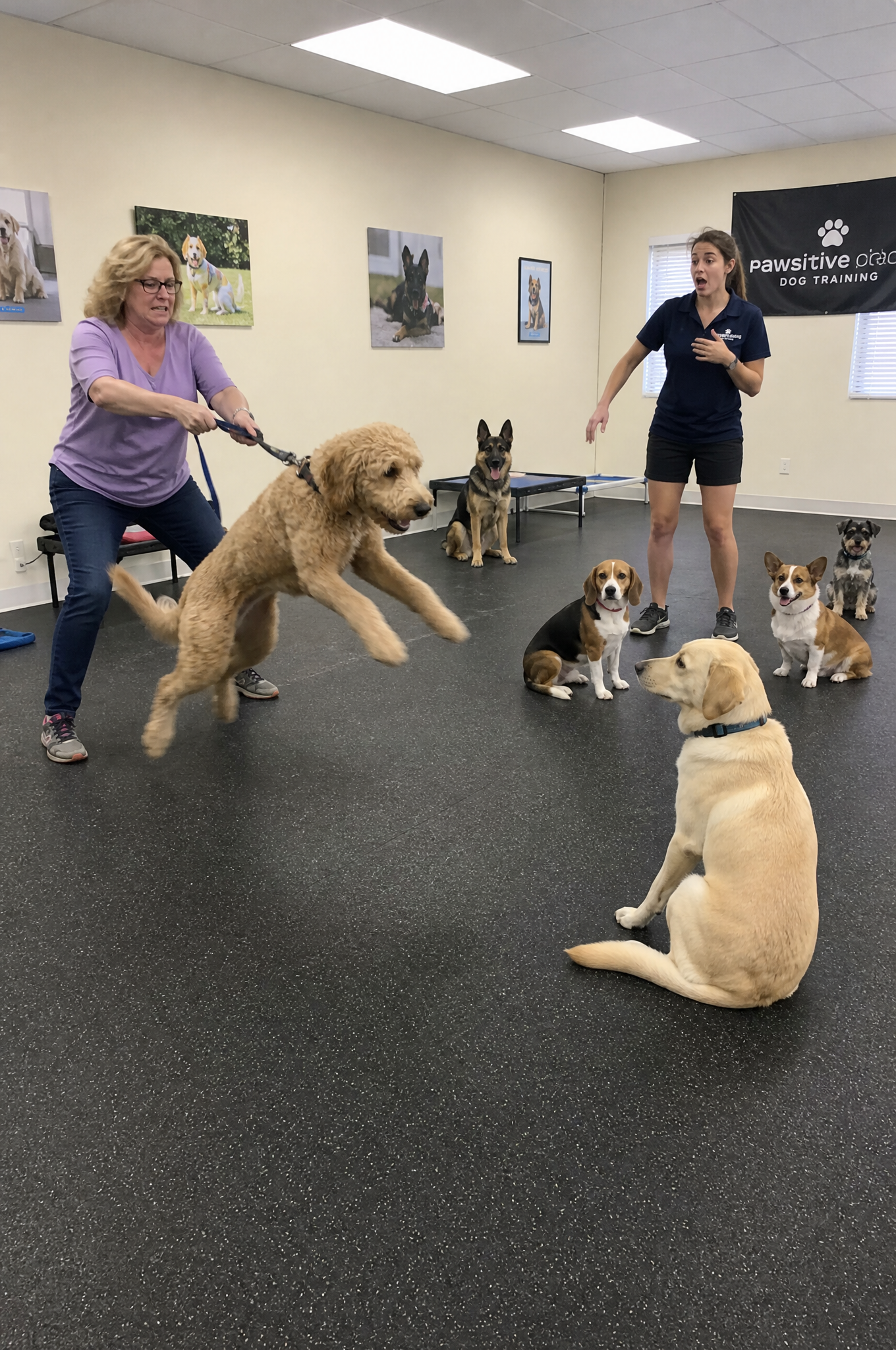
Ran for 44 days, from July 20 to September 2, 2026, the last day Crush saw it.
Run by Cindy Lewis on Facebook. Crush is not the advertiser and does not verify its claims. See this ad in Meta's Ad Library(opens in a new tab)
Want an ad like this for your product?
Crush makes new ad images for your product from this ad: your logo, your product photo, your offer.
Trials from $19.95 USD, then $79.95 USD a month. Cancel anytime.
About this ad
- Meta Ad Library ID
- 981154368291764
- Platforms
- Facebook, Instagram, Audience Network, Messenger, WhatsApp and Threads
- Relaunches
- 0
Ad text
I've been a dog sitter for 27 years. Hundreds of homes. Thousands of dogs. But one family never left my mind. The Parkers. 3 Goldendoodles. Ages 9, 11, and 13. All in the same house. All perfectly behaved. No jumping. No pulling. No barking at the door. No destroying the house when the family left. I figured they just got lucky with the breeder. I'd heard that before, that it all comes down to the lines, that some breeders produce calmer dogs and some produce the crazy ones and there's not much you can do about it once the genetics are set. Then I noticed what Mrs. Parker had me do every time I opened a door. Every single door. The back door to let them out in the morning. The front door for walks. The kitchen doorway before meals. Every time. "Don't open the door until they sit and look at you. Every door. Every time. Don't skip it." She'd written it on a sticky note on the inside of the front door. Underlined twice. I did it for 3 years without asking why. When I finally asked, Mrs. Parker told me something that changed everything I thought I knew about Goldendoodles. My name is Cindy Lewis. I'm 56 years young. I've been a professional dog sitter in Roswell, Georgia since 1998. I'm not a trainer. Not a behaviorist. Just a woman who's spent 27 years letting herself into other people's homes and caring for their dogs while they're away like they're her own. I've seen everything. Sweet Goldendoodle puppies grow into 60 and 70 pound tornados that their owners can't control. The jumping that leaves bruises. The pulling that dislocates shoulders. The screaming and howling the second anyone leaves the house. The destroyed crates, the chewed baseboards, the shredded couch cushions. The walks that stop happening because the owner physically can't hold the leash anymore. All of it. It's the typical Doodle pattern. You accept it. You don't question it. You just tell yourself, well, Doodles are high energy, that's just what they are. But the Parkers broke the pattern. I started sitting for them in 2016. They traveled often, Mr. Parker's job took him overseas 3 or 4 times a year, and Mrs. Parker would usually go with him for at least 2 of those trips. Sometimes 10 days. Sometimes 3 weeks. Their Goldendoodles were already middle-aged when I met them. Maple was 5. Oliver was 7. And Gus, the oldest, was 9. I remember thinking: 3 Goldendoodles in one house, this is going to be absolute chaos. I'd sat for Doodles before. I knew what I was walking into. Or I thought I did. I was so wrong. Every time I came over, every single visit for 3 years, those dogs were calm. Not sedated. Not tired out from a 10-mile run. Calm. The kind of calm where a dog knows exactly what's expected of it and does it because the understanding is already there. Maple at 6. Then 7. Then 8. Perfect recall. Loose leash. Settled on her bed when I walked through the front door. Oliver at 8. Then 9. Then 10. Could be left alone for hours without a single chewed object, a single scratch on a door frame, a single howl. Gus hit 11. Then 13. Still walking beautifully at the park. Still greeting me without jumping. Still responding to his name from across the yard on the first call. Meanwhile, I was watching my own Goldendoodle fall apart. My girl, Penny, was a 3-year-old F1B, 58 pounds, apricot, the kind of Goldendoodle that strangers stop their cars to compliment. We paid $2,600 for her from a breeder outside Savannah. She was also completely out of control. She jumped on every person who came through my door with the force of a wrecking ball. My mother stopped visiting after Penny knocked her into the hallway wall and left a bruise on her hip the size of a grapefruit. Walks were a war zone. She pulled so hard and so constantly that I'd switched from a flat collar to a harness to a gentle leader to a front-clip harness and back to the gentle leader, and none of it mattered because she would power through all of them the second she saw another dog or a person or a squirrel or a leaf blowing across the sidewalk. I had a permanent callus on my right palm from the leash burn. The selective hearing was the worst. In the house, quiet evening, no distractions, she was brilliant. Sit. Down. Stay. Shake. She could do all of it. She looked like a trained dog. She looked like I knew what I was doing. Then the doorbell would ring and every command she'd ever learned evaporated like it had never existed. She'd launch at the door, barking, jumping, spinning in circles, completely deaf to her own name. I could stand 3 feet from her screaming "Penny, SIT" and she would not hear me, because whatever was happening inside her brain at that moment was running so loud and so fast that my voice couldn't break through. I'd spent $1,400 trying to fix it. Group obedience class. $119. 6 weeks. Penny was the worst dog in the class. The instructor, a nice girl in her early 20s, told me to be more consistent with my corrections. I was consistent. Penny was consistently terrible. Private trainer. $150 a session. 4 sessions. $600. He told me to turn my back when she jumps. I turned my back. She jumped on my back. He told me to ignore the behavior. I ignored it. She ignored the ignoring and jumped harder. Because that's what Doodles do, they don't accept a blocked path, they find another way around it. Board-and-train. $700 for 10 days. Penny came home and was perfect for exactly 4 days. On day 5, my neighbor's kid rang the doorbell and Penny blew through every command she'd learned in 10 days of professional training in about 1.5 seconds flat. $1,400. A group class, a private trainer, and a board-and-train. And my dog still couldn't walk on a leash without dragging me, still couldn't greet a person without launching at their chest, still couldn't hear her own name when anything exciting happened within 100 feet of her. I stopped walking her. That's the part I'm ashamed of. I stopped because it was humiliating. I stopped because my wrist hurt constantly and the last time I'd walked her past the elementary school she'd lunged at a group of kids so hard she pulled me off my feet and I landed on my hands and knees on the sidewalk while 3 parents watched. I stopped walking my dog because I was embarrassed and in pain and I didn't know what else to do. And every few weeks, I'd drive over to the Parkers' house and there it was again. The thing I couldn't explain. I'd reach for the back door to let them out for their morning bathroom trip and all 3 dogs would sit. Automatically. Without a word from me. Maple, Oliver, and Gus, lined up at the back door, sitting, looking at me, waiting for the release. I'd say "okay" the way Mrs. Parker's instructions said to, and they'd walk through the door. Not bolt. Not shove past each other. Walk. Then I'd reach for the front door for their walk and the same thing would happen. All 3, sitting, making eye contact, waiting. Every single door. Every single time. For 3 years. At my house, opening any door was a full-contact sport. Penny would barrel through the second there was a crack wide enough for her skull. I'd be thrown against the door frame at least twice a week. The screen door had been repaired 3 times because she'd blown through it chasing something in the yard. At the Parkers' house, opening a door was the calmest 10 seconds of my day. 3 Goldendoodles sitting quietly, looking at me, waiting for permission. Same breed. Same size. Same energy level. Completely different dogs. The question ate at me for 3 years. What was different about this family? Then Penny knocked my 74-year-old neighbor, Mr. Reeves, off his feet on his own front lawn. He was walking to his mailbox. Penny was in the front yard with me, off leash because I'd given up on the leash and the yard was fenced except for the driveway gap, and she saw him, and she was through the gap before I could blink. She hit him in the chest. Full Doodle kangaroo bounce. 58 pounds at full speed into a 74-year-old man who weighs maybe 150 and walks with a slight shuffle because of his knees. He went down. Hard. On his hip. On the concrete driveway. I was there in seconds. He was on the ground. Penny was on top of him, licking his face, tail going, having the best moment of her entire life while a 74-year-old man tried to roll onto his side and figure out if anything was broken. Nothing was broken. By some miracle. His hip was badly bruised. His elbow was scraped and bleeding. His glasses had flown off and one lens cracked. His wife came out. Didn't say a word to me. Helped him up. Walked him inside. Closed the door. I stood in my front yard holding Penny's collar with both hands, shaking, thinking: my dog just put a 74-year-old man on the ground. My dog could have broken his hip. My dog could have killed him. And she's wagging her tail because she thinks she just made a new friend. My sweet Penny. 3 years old. The happiest dog I've ever known. And I was lying in bed at 2am terrified that her happiness was going to destroy someone. I couldn't stay quiet anymore. When Mrs. Parker got back from her next trip, I asked. "That door thing, where they sit and look at me before I open it, what is that? Where did they learn that?" She looked at me like I'd asked why water is wet. "It's from a Goldendoodle Guide," she said. "The Threshold Pause. It's the first thing you teach. You don't use this with Penny?" I'd never heard of it. She sat me down at her kitchen table and told me everything. "I used to think like you," she said. "I thought Goldendoodles were just chaotic. I thought that was the breed. I thought you got a Doodle and you got the jumping and the pulling and the selective hearing and the separation anxiety and you just lived with it because that's what you signed up for." She pointed at Gus, asleep on the couch. 13 years old. Calm as a stone. "Gus was my first. He was a nightmare until he was almost 4. Jumping on everyone. Pulling so hard on walks I had tendinitis in my right wrist for 6 months. Couldn't leave him alone for 20 minutes without him destroying something. I did 2 obedience classes and a private trainer and nothing stuck. Not one thing." "What happened?" "I found out the truth no trainer ever told me. Every method I'd paid for was designed for a different kind of dog." She leaned forward. "A Goldendoodle is half Poodle. And a Poodle brain does not process training the way a Labrador brain does, or a Golden Retriever, or a Shepherd, or any of the breeds that standard dog training was built for." "When you tell a Lab 'no' and turn your back, the Lab accepts the blocked path and stops. When you tell a Doodle 'no' and turn your back, the Poodle side of their brain treats it like a puzzle. They don't stop. They find another way around. That's why turning your back on the jumping doesn't work. That's why ignoring the behavior doesn't work. You're not dealing with a stubborn dog. You're dealing with a problem-solving dog who is smarter than every method you're paying for." I thought about every time I'd turned my back on Penny. Every time she'd jumped on my back instead of my front. Every time the trainer had said "she'll learn that jumping gets no attention" and she'd learned absolutely nothing except that my back was a bigger surface area. "And the Retriever side," she continued, "is a social drive so powerful that no correction can override it. The need to greet, to touch, to connect with every person they see is genetic. You cannot punish it out of them any more than you can punish a Border Collie out of herding." "So what do you do?" "You don't fight the wiring. You redirect it. You give the Poodle brain a problem to solve and the Retriever drive a job to do at the same time. When both drives have somewhere to go, the chaos stops, because the thing in their brains that causes the jumping and the pulling and the selective hearing stops happening." "That's what the door thing is?" "That's the foundation. The Threshold Pause teaches them that calm patience is what opens every door. Literally. Every door in the house becomes a chance to practice impulse control. Sit. Look at me. Wait. Then the door opens. You're not fighting the energy. You're giving their brain a job, be still, make eye contact, and the reward is the thing they wanted anyway, the door opening. Their genius brain figures out the pattern in 2 or 3 days and it becomes automatic." "But that's just one piece of it," she said. "The guide has a whole system. Brain games that tire them out mentally instead of physically because you can't out-exercise a Goldendoodle, they'll just become an athletic maniac. Settling protocols that teach them how to actually switch off, because Doodles don't know how to relax on their own, their working-dog brain tells them to always be 'on' and you have to manually install the off-switch. A recall method built for the way their brain calculates value, so they come to you even when there's a squirrel because you've made yourself worth more than the squirrel. Specific doorbell desensitisation so the sound stops being a trigger. All of it designed for how a Poodle-cross brain actually processes information." She showed me the website. "This is The Complete Goldendoodle Guide. Everything from the Threshold Pause to the brain games to the leash walking to the separation anxiety protocol, all of it. $37. When you combine the pieces together, it's the complete recipe. The door work teaches impulse control. The brain games drain the mental energy. The settling protocol installs the off-switch. The recall training hacks their value system. Each piece on its own helps, but together they rewire the whole pattern. That's why my dogs are the way they are. Not because of the breeder. Because of the system." I thought about my $1,400. The group class. The private trainer. The board-and-train that lasted 4 days. The rope burn on my palm. Mr. Reeves on the concrete. "The trainers weren't bad people," she said. "They just didn't know what they were dealing with. Standard dog training treats every dog like a Labrador. Sit means sit. No means no. Correction means learning. For Labs and Shepherds and Goldens, that's true. But Goldendoodles have a Poodle brain crossed with a Retriever drive and zero impulse control, and that combination doesn't respond to any of those methods. It needs something designed specifically for how it works. And this is the only thing I've found in 13 years of owning Doodles that actually gives you that." I went home that night feeling sick. Sick because for 3 years, I'd held the answer in my hands every morning, practising the Threshold Pause at every door in someone else's house with someone else's Goldendoodles. 3 years while my own Goldendoodle jumped, pulled, ignored me, and put a 74-year-old man on the concrete. 3 years while I spent $1,400 on methods designed for a brain my dog doesn't have. I ordered it that night. Not because I believed it would work. Because I had already spent thousands on things that didn't work and $37 with a 90 day money back guarantee felt like nothing left to lose. It was a digital guide which was perfect for me because I couldn’t afford to wait, I needed it now. I started reading it on my phone at 10pm while Clover slept next to me. And everything Mrs. Parker told me was true. The Poodle-Retriever drive collision. The problem-solving brain that treats blocked paths as puzzles. The social drive so powerful that no correction can override it. The specific neurological profile that makes generic training methods not just ineffective but counterproductive for them. The guide explained why the board-and-train collapsed in 4 days, because they suppress the behavior temporarily without ever addressing the drivers underneath. It explained why "turn your back" makes the jumping worse, because a Poodle brain treats your turned back as a new puzzle and escalates. It explained why Penny could nail every command in a quiet room and lose them all when the doorbell rang, because the training only worked when the drives were dormant, and it was never built to survive the moment they ignited. And it gave me the complete system. Not just the Threshold Pause, but everything. Brain games that use their food as mental fuel instead of dumping it in a bowl, puzzle feeders and towel burritos and scatter feeding in the grass, because 15 minutes of sniffing burns as much mental energy as a mile-long walk and actually lowers their heart rate instead of building an athlete. A settling protocol that teaches them to lie on a designated mat and switch off, because Doodles suffer from what the guide calls FOMO, fear of missing out, their working-dog brain tells them they need to patrol the house and guard the windows and manage the humans, and until you manually install the off-switch they will never rest properly. A recall method built around hacking their value system, because a Doodle's brain is a calculator, and when you're standing in the kitchen with cheese your "come" command is a 10 out of 10, but when they're staring at a squirrel you're a 2 out of 10, and the guide teaches you how to make yourself worth more than the squirrel every single time. Doorbell desensitisation where you ring your own doorbell 10 times a day until the sound becomes meaningless instead of a trigger for full-blown chaos. The "one and done" rule where you say a command exactly once and if they ignore you, you calmly make it happen instead of standing there repeating yourself 5 times, because every repeated command teaches them that your first 3 words are just background noise. Plus so much more, it’s incredible. I started the next morning. The Threshold Pause first. Same technique I'd been doing at the Parkers' house for 3 years. Back door. I reached for the handle. Penny shoved forward to bolt through, the way she always did. I let go of the handle. Stood still. Said nothing. She looked at me. Confused. She'd been blowing through this door for 3 years. I waited. She sat. Not because she was trained. Because there was nothing else to do and she's half Poodle and her brain was already solving the puzzle. I opened the door. She walked through. Not bolted. Walked. Day 2, she sat faster. Day 3, she sat before I even reached for the handle. By day 5, she was sitting at every door in the house automatically, the way the Parkers' dogs had been doing it for years, because her genius brain had figured out the pattern and categorised it as "the rule." The same brain that had outsmarted every trainer I'd paid was now working for me instead of against me. And that was just the door. One piece of the recipe. By week 2, I'd started the brain games. Penny's breakfast went from a metal bowl to a towel burrito with her kibble scattered inside. Watching her unroll that towel, using her nose and her paws and her problem-solving brain to get each piece out, I saw something I'd never seen in 3 years of living together. Focus. Genuine, sustained, quiet focus. When she finished, she lay down on the kitchen floor and sighed and closed her eyes. Just lay there. Calm. The dog who normally paced the house all morning looking for something to destroy was lying on the floor with her eyes closed because her brain had been given a job and the job was done and there was nothing left to patrol. Week 3, I started the leash walking protocol. The guide calls it "Red Light, Green Light." Loose leash, we move. Tight leash, I stop dead. No talking. No corrections. The first walk took 25 minutes to get to the end of my driveway. The second walk, we made it around the block. By the end of the week, Penny was walking on a loose leash past the elementary school, the same sidewalk where she'd pulled me onto my hands and knees 2 months earlier, and she was checking in with me every 30 seconds because the guide had taught me the Eye-Contact Lottery, a trick where you randomly reward them throughout the day for making eye contact without being asked, so checking in with you becomes the most profitable habit in their entire life. Week 4, I did the doorbell desensitisation. I rang my own doorbell 10 times on a Tuesday afternoon. The first 3 times Penny lost her mind. By ring 7, she looked up from her mat. By ring 10, she didn't move. The sound that had been a trigger for full-blown chaos for 3 years became nothing, because I rang it enough times without a visitor that her genius brain recategorised it as meaningless. The following Saturday, my mother came over. First time in 5 months. She stood at the door and I could see her bracing. I could see her hand go to the wall, ready to catch herself. Penny trotted to the front door. Sat. Looked at me. Waited. I opened the door. Penny stayed sitting. Tail going, whole body vibrating with the effort, but sitting. My mother looked down at her. Then at me. Her eyes were wet. "What happened to her?" "I stopped trying to train her like a Labrador." My mother reached down. Penny pressed her head into my mother's palm. The lean. Not the launch. My mother hasn't missed a Sunday visit since. Week 6, I went over to Mr. Reeves' house. I knocked on the door. Penny on her leash beside me. His wife answered. Her face went tight when she saw Penny. "I came to apologize again," I said. "And to show you something." Mr. Reeves came to the door. He looked at Penny. Penny looked at him. She sat. Tail going, whole body vibrating, but sitting. "She's sitting," he said. "She's sitting." He reached down slowly. She pressed her head into his palm. Gentle. No jumping. No launching. Just a dog pressing her curly head into an old man's hand. "Well," he said. "I'll be." I haven't missed a day since. Penny is 5 now. Walks beautifully on a loose leash. Greets guests at the door without jumping. Responds to her name on the first call, even at the park, even with dogs around. Can be left alone for 4 hours without a scratch on a door frame. Eats her breakfast from a puzzle feeder instead of a bowl and settles on her mat afterward like she's clocking out for a nap. Same food. Same vet. Same house. Same dog. One difference. A $37 guide designed for the brain she actually has. And then came the sitting clients. Because here's the part I wish every Goldendoodle owner understood sooner. After Penny, I started paying attention to every Goldendoodle I sat for. And the pattern was identical every single time. Owners who'd spent $1,000, $2,000, $3,000 on trainers. Dogs that could sit in a quiet room with treats in the trainer's hand and fell apart the second real life happened. The same selective hearing. The same jumping. The same pulling. The same separation anxiety. And every single owner said the same thing: "I don't know what's wrong with him. I've tried everything. I think he's just a crazy Doodle." I started recommending the guide to my clients. Not because I get anything from it. Because I was tired of watching Goldendoodle owners blame themselves and their dogs for a problem that was never about the dog and was never about the owner. It was about every method they'd been given being designed for a brain their dog doesn't have. The Hendersons' Goldendoodle, a 2-year-old named Beau, 71 pounds. Couldn't be left alone for 10 minutes without howling so loud the neighbors had filed a noise complaint. $800 on a separation anxiety specialist. Zero improvement. They started the guide. Within 3 weeks, Beau could be left alone for 2 hours. Within 6 weeks, 4 hours. No howling. No destruction. The Morales family's Goldendoodle, a 3-year-old named Luna, 63 pounds. Pulled so hard on walks that Mr. Morales, who is 67 and had a shoulder replacement 2 years ago, had to stop walking her entirely. 2 trainers. $900. Nothing worked. They started the guide. By week 3, Luna was walking on a loose leash. Mr. Morales walks her every morning now. He told me last week it's the best part of his day. My client Janine's Goldendoodle, a 4-year-old named Teddy, 74 pounds. Jumped on every person who entered the house. Janine had stopped having people over entirely. Her daughter's friends wouldn't come for playdates. She started the guide. By week 2, Teddy was greeting people at the door with a sit. By week 4, he was lying on his bed while guests sat in the living room. Janine's book club is back in her living room. None of these are miracles. This is what happens when you stop fighting a Goldendoodle's wiring and start working with it. Give the Poodle brain a problem to solve and the Retriever drive a job to do, and the chaos stops because the short circuit finally has somewhere to go. I've been a dog sitter for 27 years. Thousands of dogs. Hundreds of families. Most Goldendoodle families watch their puppy start jumping and pulling around 6 months and spend the next 3 to 5 years trying to manage it, cycling through trainers, buying equipment, watching YouTube, and slowly giving up, thinking their dog is just "a crazy Doodle" or "too stubborn" or "not that smart" or “they’ll grow out of it eventually.” They do group classes. Private sessions. Board-and-trains. E-collars. Calming chews. Gentle leaders. All of it designed for Labradors and Shepherds and Goldens, applied to a Poodle-cross brain that processes every single one of those methods as a puzzle to solve around rather than an instruction to follow. But the Parkers never did that. 3 Goldendoodles. 9, 11, and 13. Perfectly behaved their entire lives. The Threshold Pause at every door. The brain games before meals. The settle protocol on the mat. The whole recipe, every day, from a $37 guide that understood their breed. Now I do the same thing. And my Goldendoodle is the dog the Parkers' dogs always were. The answer was in my hands for 3 years. Now it's in yours. The Complete Goldendoodle Guide is $37. Includes the full training system plus 4 free bonus guides, the Mat-Free Doodle Guide, the Doodle Diet and Sensitivity Guide, the Doodle Anxiety and Independence Guide, and the Doodle Jumping and Biting Reset. Plus free monthly updates with new training games and behavior exercises for life. 90-day money-back guarantee, if your Goldendoodle isn't dramatically better, you pay nothing. Start training them right 👉 https://thedoodleway.com/pages/goldendoodle-guide Cindy Lewis The Parkers helped me. Now I'm helping you. P.S. 3 years. That's how long I practised the Threshold Pause on someone else's Goldendoodles without asking where it came from. 3 years while my own Goldendoodle jumped on every guest, pulled me off my feet, and put a 74-year-old man on the concrete. When I finally asked, I wanted to scream. The answer had been in my hands the whole time. $37. The same price as a bag of calming chews that don't work. Less than a single session with the private trainer who told me to turn my back. Less than the co-pay for the urgent care visit I was terrified Mr. Reeves was going to need. Don't wait 3 years. Start tonight. P.P.S. The Parkers' Goldendoodles were calm, obedient, and perfectly behaved at 9, 11, and 13. Mine jumped, pulled, ignored commands, and nearly seriously injured my elderly neighbor. Same town. Same breed. Same vets. Same pet stores. One difference. If your Goldendoodle is under 2, you are in the best position possible. The drives are still forming. The habits aren't locked in yet. The Poodle brain is still learning which patterns pay and which patterns don't, and right now it's learning that jumping pays and pulling pays and ignoring you pays because nothing has shown it otherwise. Start now, before the jumping injures someone, before the pulling causes a fall, before the selective hearing gets worse. The Parkers started their dogs young. That's why they never needed the $1,400 in failed trainers. That's why they never had a Mr. Reeves moment. That's why 3 Goldendoodles at 9, 11, and 13 behaved like the dogs everyone wishes their Doodle would be. I watched them do it for 3 years before I finally asked. Now I'm telling you so you don't have to wait. 👉 https://thedoodleway.com/pages/goldendoodle-guide
Where the ad sends people
thedoodleway.com
Read this if you own a Goldendoodle ☝️
Doodle Way
Learn more: thedoodleway.com(opens in a new tab)