The Pet Ear Health Foundation
The Pet Ear Health Foundation Facebook ad: “A vet's apology to floppy-eared dog parents”
Ran for 3 days, from August 6 to August 9, 2026, the last day Crush saw it.
Run by The Pet Ear Health Foundation on Facebook. Crush is not the advertiser and does not verify its claims. See this ad in Meta's Ad Library(opens in a new tab)
Want an ad like this for your product?
Crush makes new ad images for your product from this ad: your logo, your product photo, your offer.
Trials from $19.95 USD, then $79.95 USD a month. Cancel anytime.
About this ad
- Meta Ad Library ID
- 1050968137418613
- Platforms
- Facebook, Instagram, Messenger and Threads
- Relaunches
- 0
Ad text
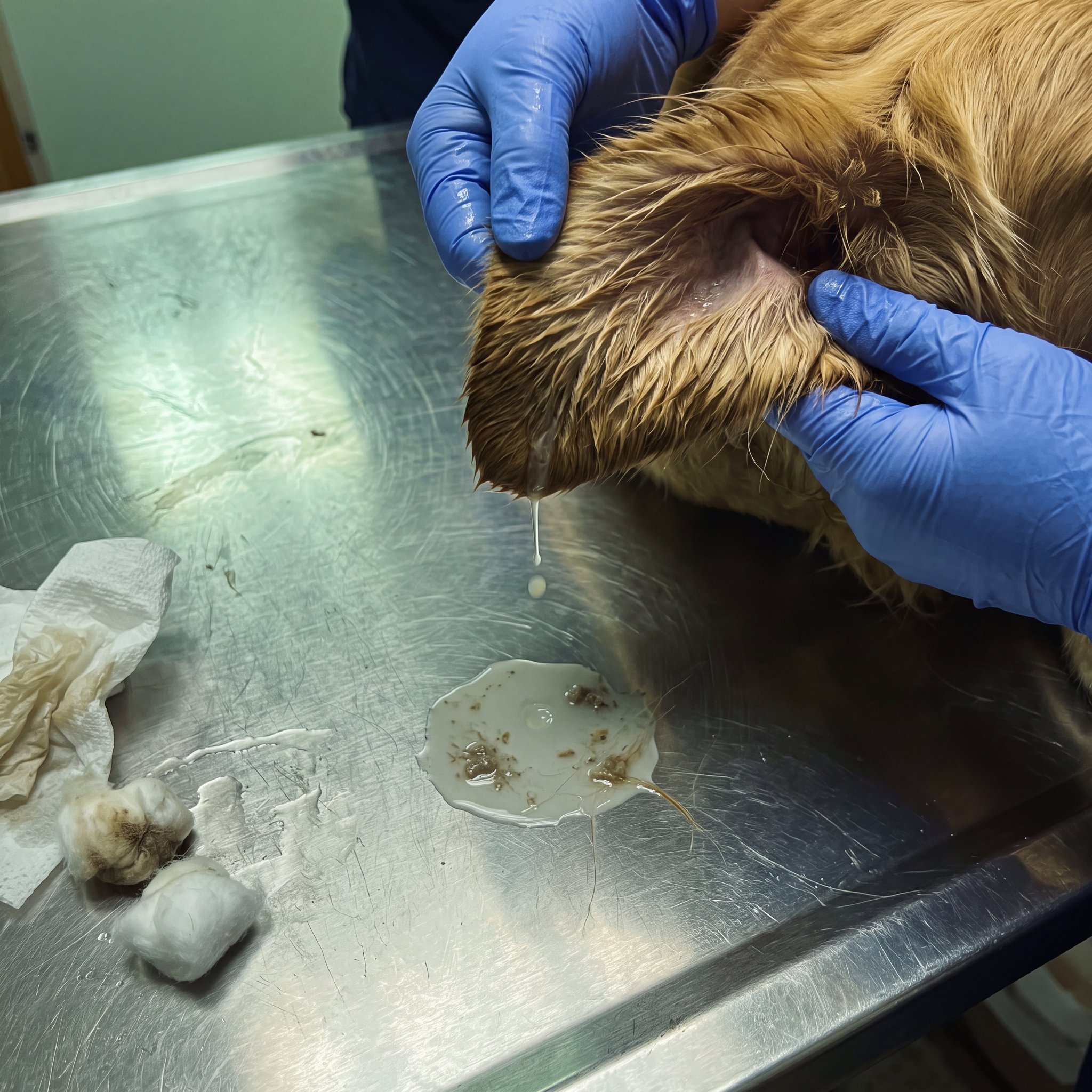
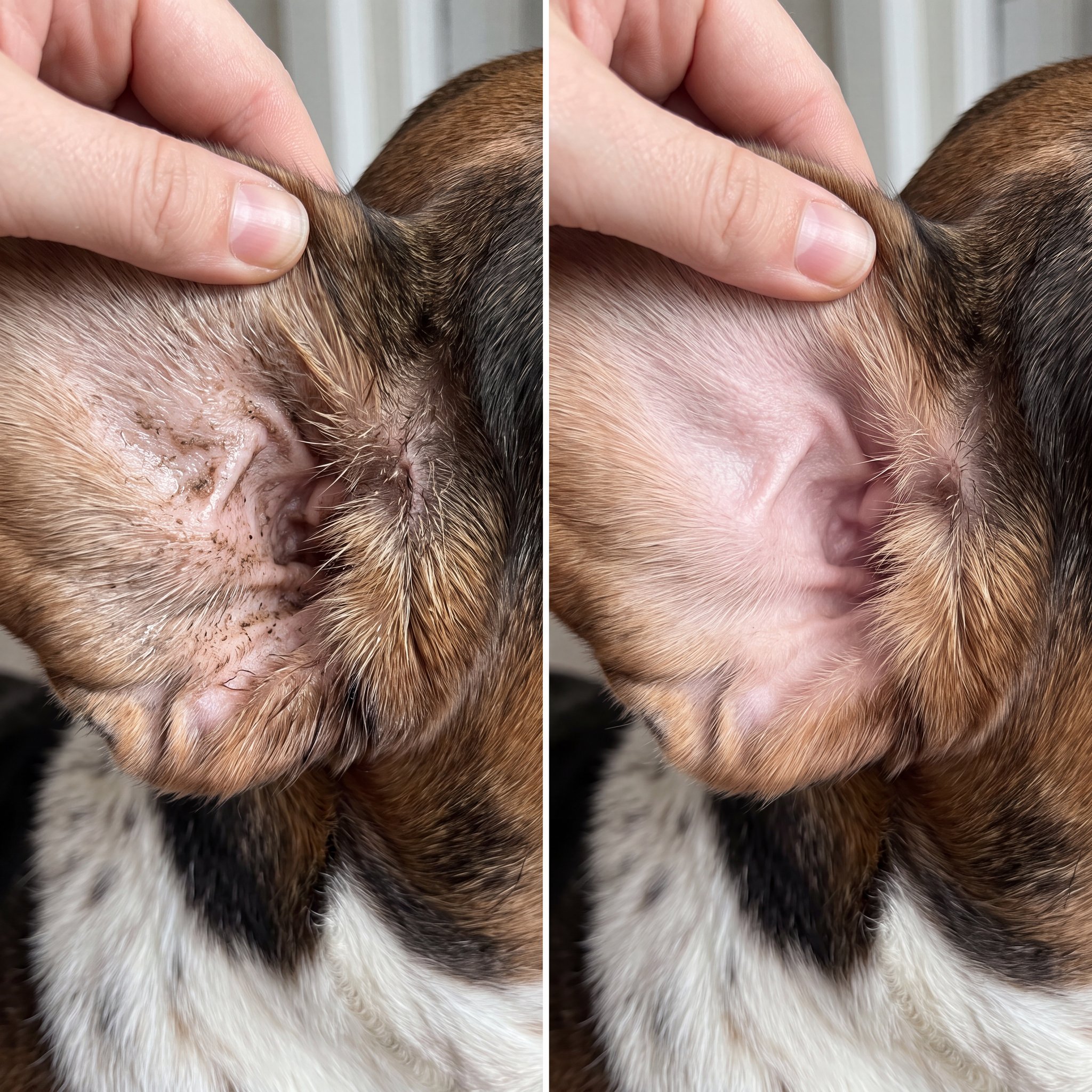
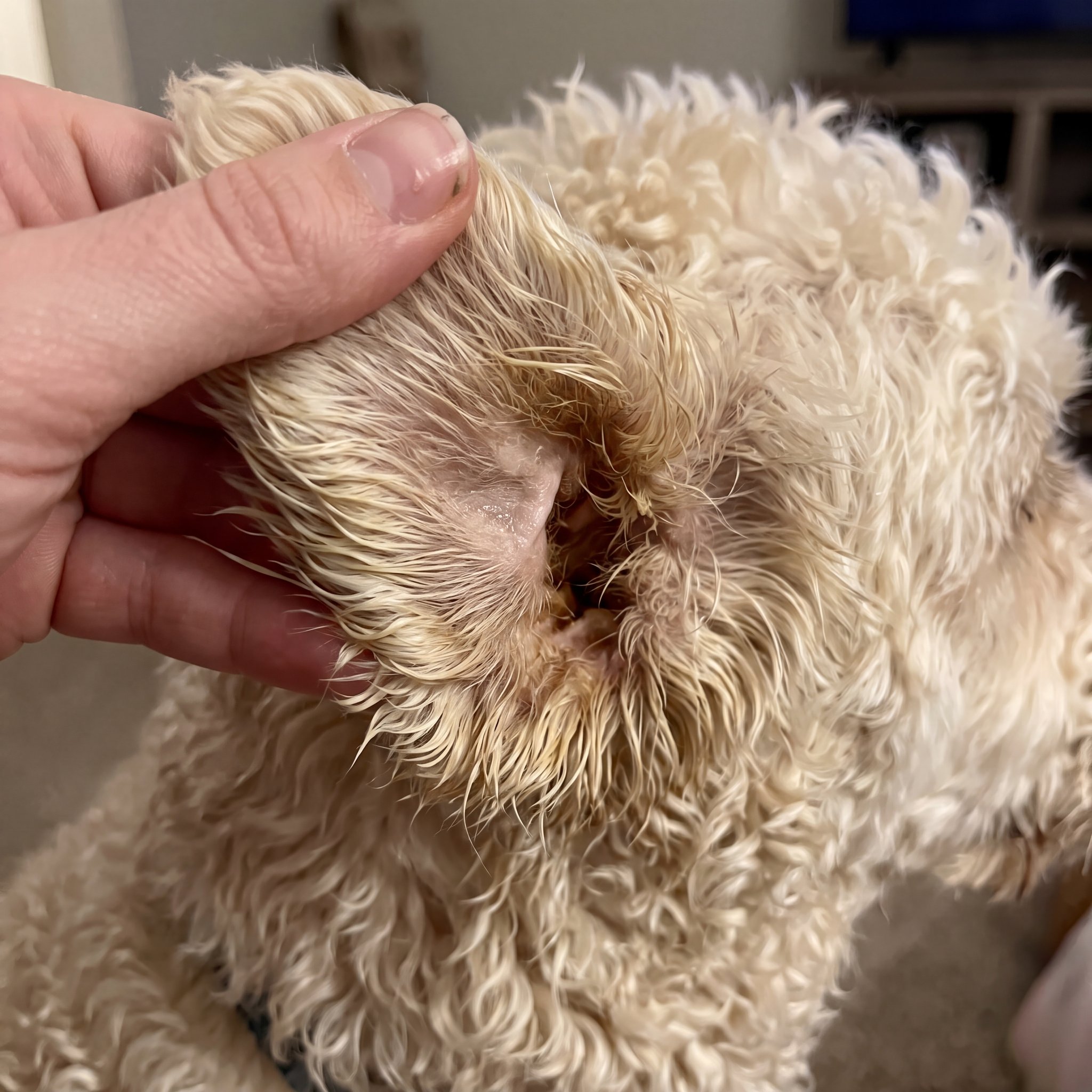
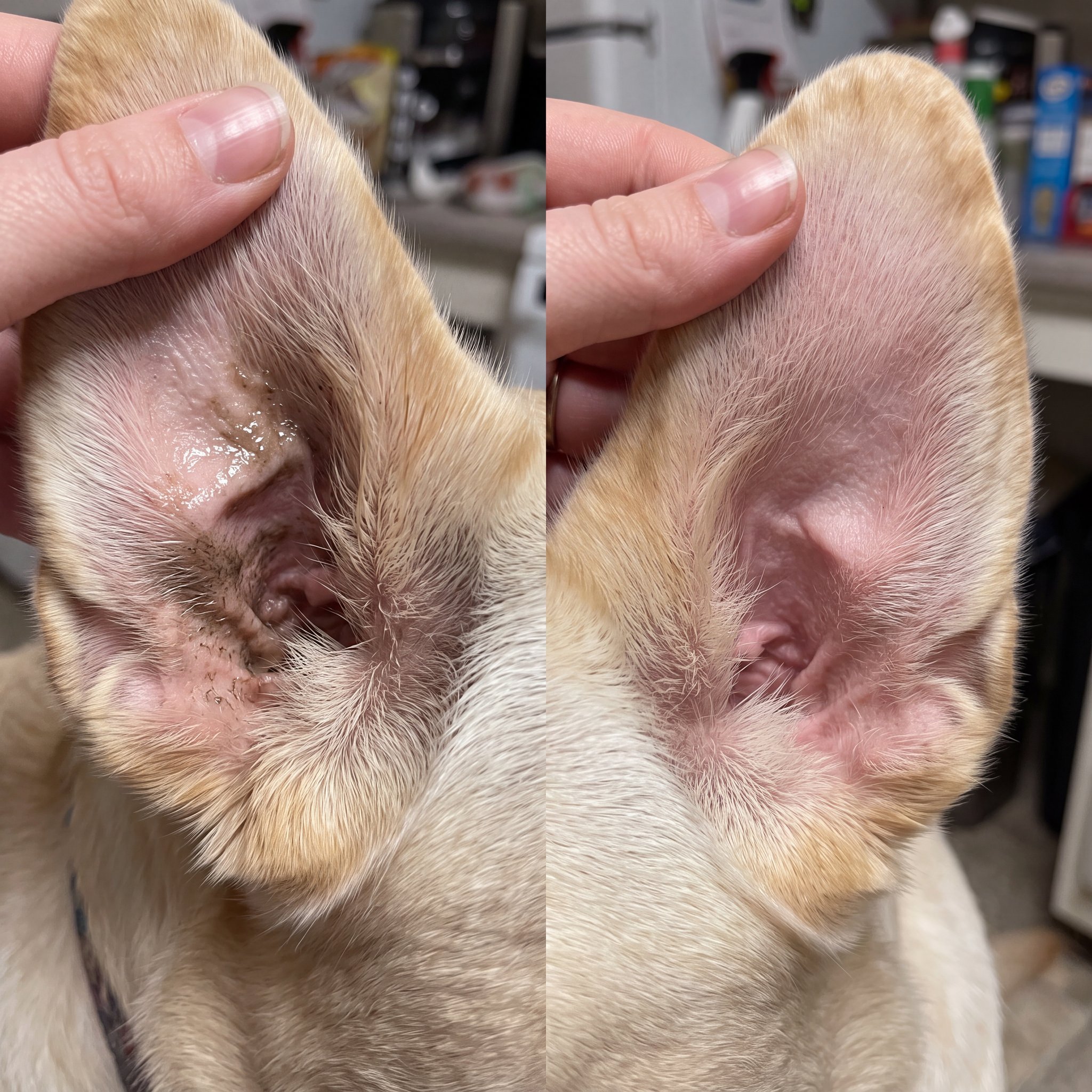
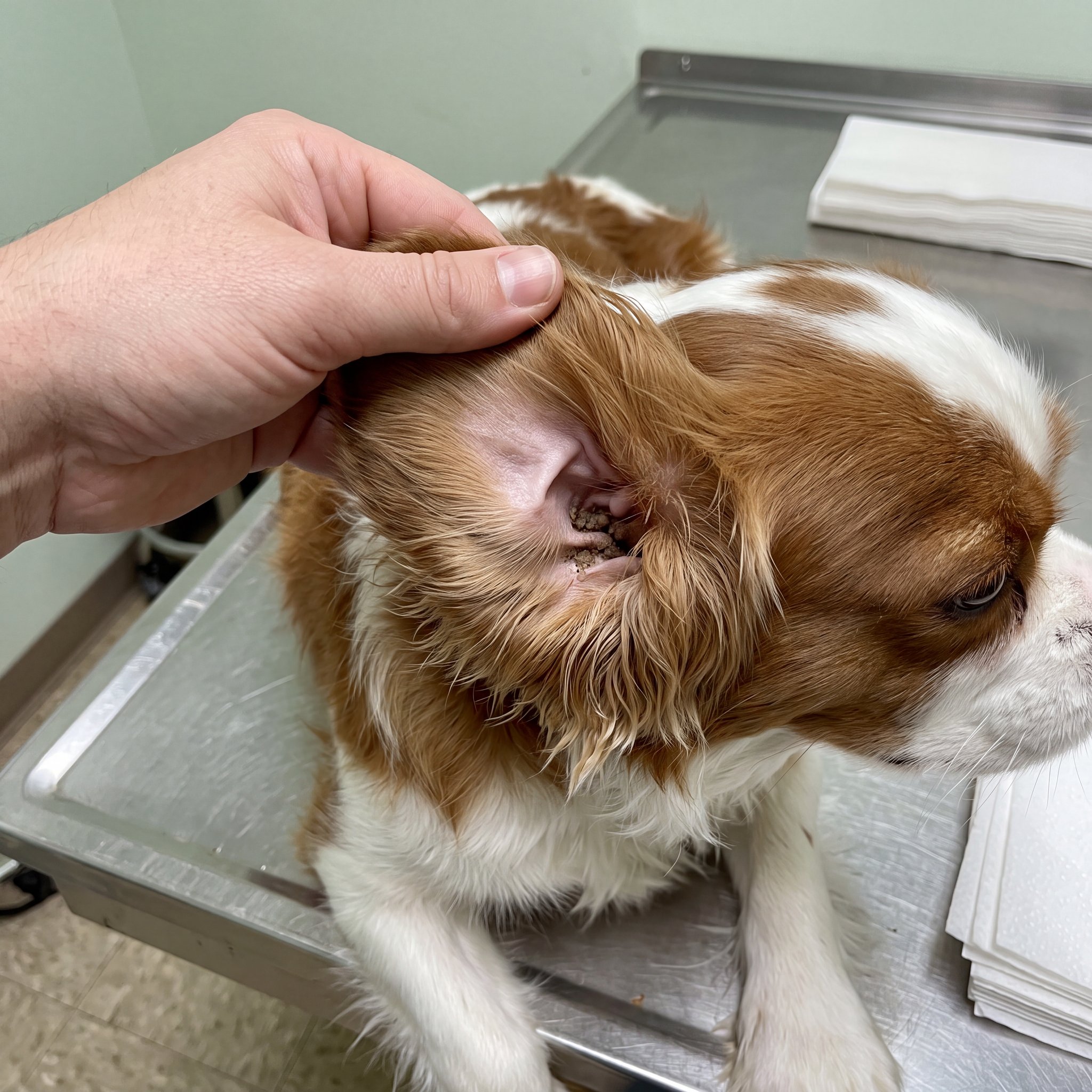
For 19 years, I gave nearly every owner of a floppy-eared dog the same ear-cleaning instructions. And for about eight out of ten of those dogs, the instructions were aimed at the wrong part of the ear. I'm Dr. Emily Hartman. I'm a small-animal veterinarian, and that sentence was very hard for me to write, because I'm the one who gave those instructions. If your dog's ears smell again within days of a good cleaning, and you've started to wonder whether you're doing it wrong or whether your dog is just difficult, I need you to hear this from someone who spent two decades getting it wrong: it is almost certainly not you, and it is not your dog. It's the advice. And once you see what the advice misses, you can't unsee it. Let me tell you about a dog named Bailey, because Bailey is the reason I finally figured out what I'd been getting wrong. Ear cases have always been one of the three most common reasons dogs come through my door. I've looked inside more ears than I could ever count, enough that I can usually tell a yeasty smell from a bacterial one the moment the owner opens the carrier. So this is not a corner of medicine I was new at. It's a corner I thought I had mastered. Which is exactly why what I got wrong stung so much. Here is the advice I gave, almost word for word, for most of my career. When a dog's ears smell, get a bottle of ear-cleaning solution, tip the head, squeeze the liquid down into the canal, massage the base until you hear it squish, let the dog shake it out, then wipe away whatever comes loose. Do it a couple of times a week. If it keeps coming back, come see me. And when it did keep coming back, which it did constantly, I told myself the owner wasn't being consistent, or that this particular dog was just prone to it. I never once questioned the instruction itself. Vets, generally, don't. It's what we were all taught. Bailey was a Cavalier King Charles Spaniel, all ears and eyes, and her owner Diane first brought her to me when Bailey was about a year old. The complaint was the usual one. A smell. A little brown gunk. Bailey tilting her head and rubbing the side of her face on the carpet. I looked in her ears, saw some buildup, and sent Diane home with the standard routine and a bottle of flush. Diane was the owner every vet hopes for. She did it exactly right. She never skipped a session, she was gentle, she bought the flush I recommended and then a stronger, medicated one when the first didn't hold. And every few weeks, there they were in my exam room again, the same smell, the same gunk, the same head tilt. By the time Bailey was two and three, we had settled into a rhythm that I'm not proud of. Diane flushing faithfully at home, Bailey coming in for recheck cleanings, me charging thirty-five dollars to flush the ears more deeply than Diane could, all of us feeling like we'd finally gotten ahead of it, and then two weeks later, back to the start. Diane apologized at almost every visit, as if the recurrence were a personal failing. By four and five, the smell never fully left anymore. Bailey had started flinching when Diane reached for the side of her head, because by then her ears were sore more often than not. Diane was exhausted, and she was carrying a quiet guilt that I had done nothing to lift. By the time Bailey was six, years of that constant, low-grade inflammation had thickened and narrowed her ear canals, the kind of change that doesn't reverse. And at that visit, Diane looked at me, tired to the bone, and said something I still think about. "I did everything you told me to do." She wasn't angry. That was the worst part. She was just stating a fact, and the fact landed squarely on me, because she was right. She had done everything I told her. The problem was what I had told her. I referred Bailey to a board-certified veterinary dermatologist, expecting to come away with a stronger prescription. Instead, the specialist asked Diane to show her how she cleaned Bailey's ears at home. Diane demonstrated, tipping the head and aiming the flush straight down into the canal, exactly as I had taught her. The dermatologist watched for about five seconds, then said, gently, "You're cleaning the wrong part of the ear." I was standing right there. 19 years in, and someone had just pointed at the center of a problem I'd been circling for two decades. Here is what she meant, and I need you to follow this closely, because this is the whole thing. You already know the frustrating part from your own life. You follow the instructions exactly, and the smell comes right back. So let's start there, because that experience is real and it's the first clue. Now picture two very different kinds of dog ear. A German Shepherd or a Husky has an ear that stands straight up. The canal is open to the air, more or less vertical, and it drains and breathes on its own. In an ear like that, debris really does collect down inside the canal, and a poured liquid flush can reach it and rinse it out. For those dogs, the flush advice is genuinely good. It works. But a dog like Bailey, or your Cocker, your Golden, your Basset, your Doodle, has the opposite ear. It's big and soft and it hangs down, folding over on itself and capping the canal like a lid. And on a dog like that, the wax and the grime and the smell don't sit deep in the canal at all. They collect up higher, along the rim and down inside the folds of the ear flap, in the warm, closed-off creases where the ear folds over and where it meets the side of the head. On these dogs, the deep canal is often the cleanest part of the whole ear. And a poured liquid flush physically cannot reach those folds. Gravity pulls it straight down into the canal, the way water runs off a roof, and it sheets right past every crease where the buildup actually lives. So an owner like Diane can flush faithfully, twice a week, for five years, and be diligently rinsing a part of the ear that was never the source of the smell, while the folds sit there untouched the entire time. Think of it like this. An erect ear is a cup left out in the rain. It fills, and it drains, and it stays reasonably clean on its own. A folded ear is a cup with a lid on it and a deep crease running down the side. Pour water into that cup and it sheets straight through the middle and out, while everything that matters stays packed into the crease. For years, I had owners rinsing the middle of the cup and wondering why the crease still smelled. Once the dermatologist said it, everything reorganized in my head at once. Every owner I had quietly judged for being inconsistent. Every dog I had written off as just prone to it. They hadn't failed. I had them aiming at the wrong half-inch of the ear, because I'd handed them a protocol built for a Shepherd and applied it to a Cavalier. So I went back through my own cases, dog by dog. The pattern was almost embarrassingly clean. The erect-eared dogs did fine on the flush. The folded-eared dogs cycled forever, no matter how good the owner was. It was never the product, and it was never the effort. It was the target. And here's the detail that still bothers me most. In 19 years of veterinary school, continuing education, and conferences, not once was I taught to have owners clean the folds and the rim on these breeds. The advice was always about the canal. If a career vet can miss this for two decades, you can imagine how an owner following a bottle's directions never had a chance. Now, I want to be very clear about one thing, because I take it seriously. If your dog has an active, painful infection, with a lot of redness, discharge, crying, or real pain, that is a visit to your vet, not something you handle with a wipe at home. What I am talking about here is the ordinary maintenance in between, the routine wax and buildup and odor that, cleaned in the wrong spot, is what slowly snowballs into the itching, the head-shaking, and eventually the bills. So here is what I started telling owners of folded-eared dogs, and what I want to tell you. Stop aiming down the canal. Start cleaning the folds and the rim, the parts you can actually see and reach when you lift the ear flap. And the only tool that properly follows the curve of a fold is a finger, because a finger bends into the crease, where a cotton swab stays rigid and straight, and a bottle just pours past. I learned the tool part the hard way too. At first I simply told owners to wrap a bit of gauze or a cotton pad around a fingertip and clean the folds that way. It kept failing, for a very physical reason. Gauze bunches up. A cotton ball falls apart. And most of the thin wipes people already had in a drawer would roll up around the fingertip and skate right over the top of the fold instead of getting down into the crease. The target was finally right, but the tool couldn't follow the fold, so the buildup stayed put. What actually worked was a finger wipe built for this, thick enough to wrap around your finger and hold its shape, so it follows the rim and gets down into the crease and lifts the buildup up and out instead of gliding over it. And because it's your own finger doing the work, you feel exactly where you are the entire time, which means you physically cannot jam it down deep the way a Q-tip does. It needs to be alcohol-free, because the skin in those folds is thin and, on most of these dogs, already irritated from years of harsh flushing. The one I keep in my clinic now, and the one I finally sent home with Diane, is Uproot Ear Wipes. 50 finger wipes in a canister, alcohol-free, made with shea butter and jojoba so they clean without drying the skin out. You slip one over your finger, lift the ear, and clean the rim and the folds. That's the entire technique. I'll tell you what happens when owners make that one change, because it's remarkably consistent. The first time Diane used one on Bailey, she followed the rim into the folds instead of going straight down, and the wipe came out gray-brown and loaded, from a spot she had never once cleaned in five years of trying. She texted me a photo of it. All the message said was, "It was right there the whole time." Within a week, Bailey stopped rubbing her face on the carpet, because the buildup in the fold, the part that itched, was finally gone. Within two weeks, the smell Diane had chased down the canal for five years was gone too, because she was finally cleaning the place it actually came from. I now watch this same arc play out with almost every folded-eared dog whose owner I teach the fold method to. The odor lifts, the head-shaking eases, and the fold stays clean and dry between wipes, so owners end up cleaning less often and getting more. I won't oversell Bailey's story, because you deserve the honest version. Those thickened canal changes from her first six years did not reverse. That damage was already done, and I own my part in it. But her day-to-day comfort changed completely, and the smell that had haunted Diane for years finally stopped coming back. The first time a recheck came back clean, Diane cried in my exam room, and I nearly did too. Some of those owners have since told me their regular vet noticed how good the ears looked and asked what changed. In a few cases, it was the same vet who had originally handed them the flush. The system that couldn't solve it takes the compliment. I've made my peace with that, mostly. If you're going to try this, let me tell you what to look for, so you don't repeat my gauze mistake. The wipe has to be thick enough that it won't roll up on your finger. It has to fit over your finger so you can actually follow the fold. It should be alcohol-free and gentle, because that fold skin is delicate. And it should stay moist all the way to the last wipe in the canister, not turn to paper halfway down. Those are the specs that matter, and they're the reason I settled on the one I did. I'm telling you all of this because I watched too many good, careful owners like Diane blame themselves for years for something that was never their fault. You were given the right amount of effort and pointed at the wrong spot. That's a correction, not a failure, and it's one you can make today. If you want to try it, Uproot has a bundle that brings the wipes down to about 29 cents each; it comes with a free gift, and it's backed by a 60-day money-back guarantee, so if cleaning the folds doesn't do for your dog what it did for Bailey and so many others, you send it back and you're out nothing but the smell. uprootclean.com/products/uproot-ear-wipes-1 One wipe, one finger, into the folds, not down the canal. That's the correction it took me nineteen years and one very patient Cavalier to make. P.S. If you've ever concluded that "nothing works" for your dog's ears, I'd gently push back on that. It's far more likely that everything you tried was aimed at the canal, which was never where the problem lived. Change the target before you give up on your dog. P.P.S. Bailey is nine now, comfortable, and still gets her folds wiped a couple of times a week. A dermatologist corrected me, and Diane forgave me. I'm writing this in the hope it corrects the record for you a lot sooner than it did for us. uprootclean.com/products/uproot-ear-wipes-1
Where the ad sends people
uprootclean.com
A vet's apology to floppy-eared dog parents
Ingredients and Their Benefits Aqua/Water/Eau: Base for a smooth, gentle formula. Propylene Glycol: Hydrates and prevents dryness. Caprylyl Glycol: Moisturizes with antimicrobial benefits. Glycerin: Softens and conditions sensitive ear skin. Citric Acid: Balances pH for gentle, non-irritating cleani...
Shop now: uprootclean.com(opens in a new tab)