The Estate Kit
 Facebook ad: “Knowing the process from the inside did not help me…”
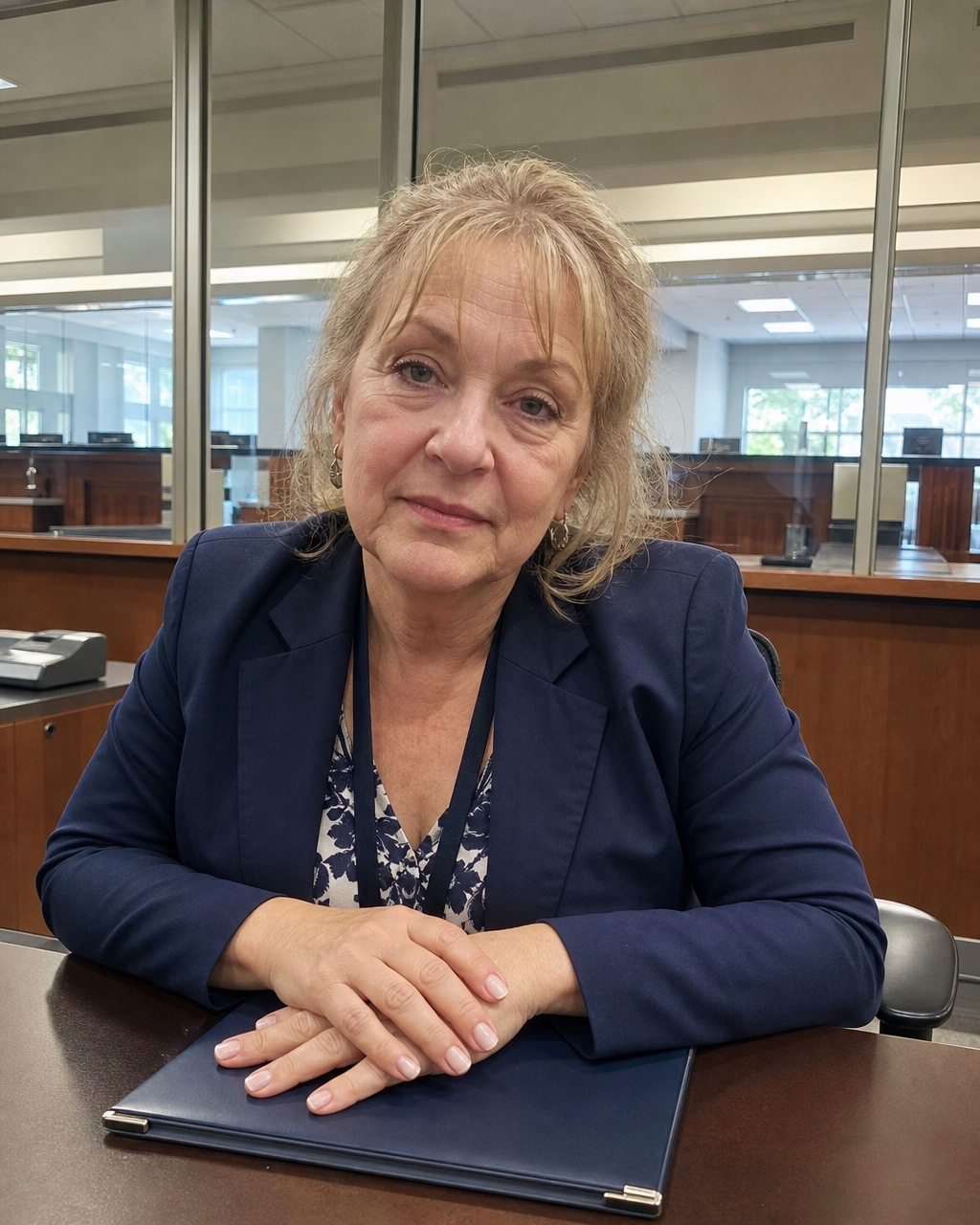
Ran for 39 days, from September 10 to October 19, 2026, the last day Crush saw it.
Run by The Estate Kit on Facebook. Crush is not the advertiser and does not verify its claims. See this ad in Meta's Ad Library(opens in a new tab)
Make your own version of this ad
Crush makes it, launches it in your own Meta ad account, scales the winners and pauses the losers.
About this ad
- Meta Ad Library ID
- 1056560633750442
- Platforms
- Facebook, Instagram, Audience Network, Messenger, WhatsApp and Threads
- Relaunches
- 0
- Niche
- Insurance
Ad text
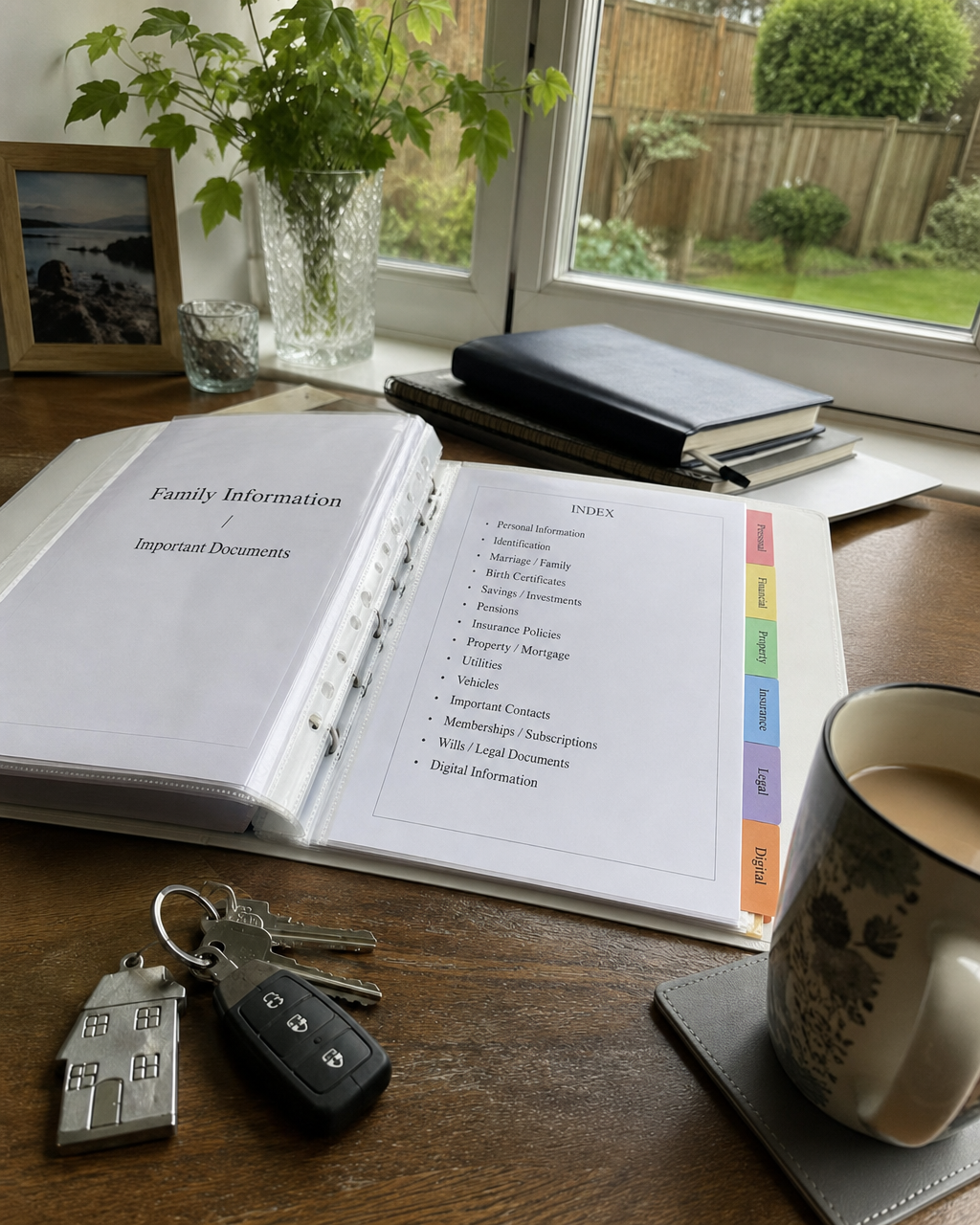
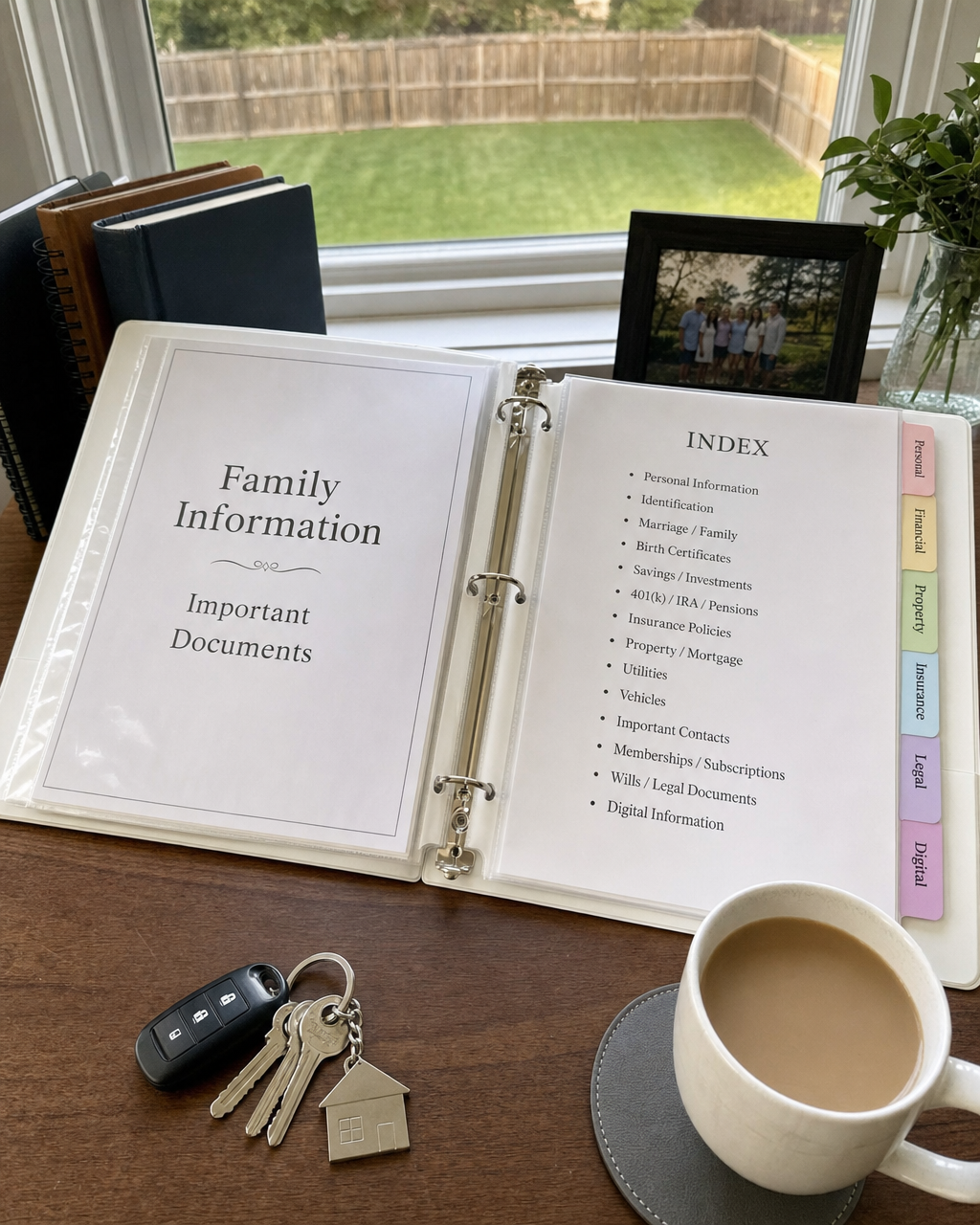
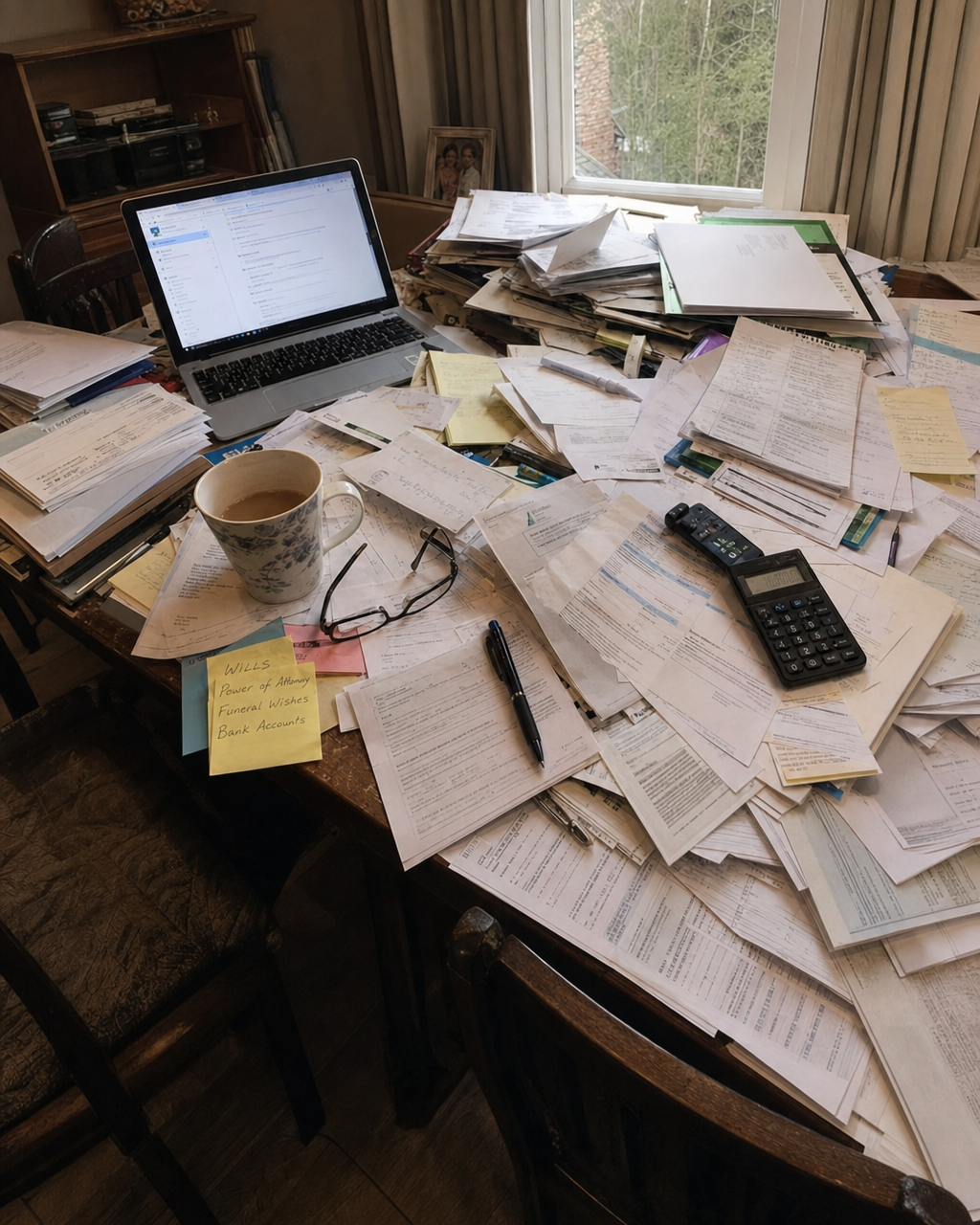
I spent 24 years at the estate services desk of an American bank. When my own husband passed, I still got it wrong. Here's what I wish every family knew. For 24 years, I sat behind the estate services desk of a regional bank. When someone passed away, their family ended up in front of me. Thousands of them, over the years. I watched the same scene play out again and again. The son with a grocery bag full of unopened statements, trying to figure out how many accounts his mother even had. The widow calling us for the fourth time because every department made her explain, again, that her husband was gone. The daughter in tears at my window, not because of the money, but because his account was frozen, the funeral home invoice had arrived, and nobody had told her what to do first. I must have said "I'm so sorry, but we do need the letters testamentary" more times than I can count. And here's the part that stayed with me. Almost none of these families were careless people. They had wills. They had attorneys. They loved each other. They were simply never left a plan. Three years ago, it happened to me. I'm 61. My husband Terry had a heart condition we thought was managed. He passed at home, on a Tuesday morning in March, with no warning at all. And I want to be honest about what came next, because it's the reason I'm writing this. I thought I, of all people, would be ready. I'd spent my career on the other side of that counter. I knew the forms. I knew what letters testamentary were before most people my age had ever heard the phrase. It still took me eleven months to settle Terry's estate. Eleven months. Me. The woman from the bank. The first week, I couldn't find his retirement paperwork. He had three 401(k)s from three different employers. I knew about two. I ordered four certified copies of the death certificate because four felt like plenty. I needed twelve. Waiting on the rest stalled everything by weeks. The funeral home reported the death to Social Security, and I felt relieved, until I realized Social Security tells Medicare and that's the whole list. Not the bank, the mortgage company, the insurers or a single 401(k) plan. Those were still my calls. Twenty-two of them, in the end, tallied on the back of an envelope. Some nights I'd sit at Terry's desk at two in the morning, going through drawers, and think: I did this job for twenty-four years, and I am drowning. What chance does anyone else have? People kept telling me the same two things. "The attorney will handle it." I did hire one. A good firm. It came to a little over $3,500 to handle probate, and they were worth every dollar of it, but here's what nobody tells you: the attorney can only work with what you give him. He didn't know where Terry's paperwork was. He didn't know about the savings bonds. His first request was a list of everything Terry owned, every account, every policy. In other words: the eleven months of digging was still mine to do. I generally tell people an attorney is the right choice for a complicated estate. But an attorney isn't a plan. An attorney is who you hand the plan to. "You're organized, you'll manage." I was organized. I always handled our paperwork. After Terry passed I even found a list I'd made years before, account numbers in a nice notebook from the office supply store. Half of it was out of date. And a list, I learned, isn't what you need at nine o'clock on the worst morning of your life. A list doesn't tell you the funeral director needs your facts to file the death certificate. It doesn't tell you to order the certified copies before anything else. It doesn't tell you who to call first, or that the Social Security payment landing the month after the death has to go back, or that survivor benefits start the month you apply, with back pay stopping at six months. Information without an order to follow is just a scavenger hunt with better handwriting. I tried the ready-made solutions too. After Terry's estate was finally settled, I promised myself my children would never go through what I went through. So I bought one of those "important documents organizers" from a big office supply store. I downloaded two free end-of-life planners as well, the kind with five-star reviews. I filled out the first few pages of each. And then I stopped, because I recognized them. They were my notebook again. Prettier covers, same problem. Boxes to write things in. No order. No deadlines. One of them was British, with a whole section on registering the death at a government office, which isn't a thing that exists here. Not one of them mentioned how many certified copies to order, what the funeral home does and does not report, or the six-month survivor benefit line. I put them in the drawer with the notebook and thought: maybe there simply isn't anything for this. Maybe every family just has to learn it the hard way, the way I did. Then, about a year ago, before I retired, a woman named Doris came to my window. Doris was 74. Her husband had passed three weeks earlier. I braced myself for the usual: the grocery bag, the missing documents, the months ahead of her. Instead she put a single blue folder on the counter. Inside was every account her husband held, listed on one page. The certified copies, already ordered, the right number of them. A letter for the bank, already written, that she'd simply signed. A checklist with the first items checked off in pencil. We did in one visit what normally takes families three or four. As she was packing up, I couldn't help myself. I told her, quietly, that in twenty-four years I'd almost never seen anyone come in this prepared, and I asked her how she'd done it. She smiled and said her husband had left it for her. He'd put it together one afternoon, years before, and kept it in the hall closet. Then she said something I've repeated to every one of my friends since: "A notebook isn't a plan, honey. He didn't just leave me his information. He left me the order to do it in." I'll be honest: I went home skeptical. I'd seen a hundred "get your affairs in order" products over the years, and in my experience most of them are the notebook problem in disguise. But I had also just watched a 74-year-old widow do in three weeks what had taken me the better part of a year. That evening I sat at Terry's desk, and instead of grieving over the drawers, I started really digging for the first time: what had Doris's husband actually used? Here's what I figured out, and I'll keep it simple. Settling an estate in America isn't really a paperwork problem. It's a sequencing problem. There are three windows after a death. The first forty-eight hours, when the funeral director needs the facts, ten to fifteen certified copies get ordered, and somebody finds the original will. The next six months, when the right people have to be told, in order, starting with what the funeral home reports (Social Security, which tells Medicare) and then everything nobody reports. And nine months, federal, no extension, to accept or refuse any part of what you were left. Do things in that order and the process moves. Miss the order, and everything jams: too few certified copies stalls the notifications, a missing will stalls the letters testamentary, a frozen account stalls the funeral bill. That was the difference between Doris and me. Not intelligence. Not love. Sequence. And that's exactly what every product in my drawer was missing. The office store organizers give you boxes with no order. The free planners give you an order from the wrong country. My notebook gave me facts with no instructions. The label says "get organized". What's inside is a scavenger hunt. So I stopped looking for a place to write things down, and started looking for an actual plan. It came down to three things, and it's the third one that almost nothing on the market has: ✅ A step-by-step plan, not blank pages, it tells your family what to do, who to contact and in what order ✅ Built for American families, the first 48 hours, what the funeral home does and does not report, letters testamentary, the six-month Social Security line, your state's rules ✅ The records feed the plan, every account and policy listed once, with ready-to-send letters, so the plan can actually be followed Doris, bless her heart, still had the email on her husband's old laptop. It was called The American Estate Kit. When I looked it up, the reviews described exactly what I'd seen on my counter. Patricia L., 66, in Kalamazoo, Michigan: "It's a plan my family can actually follow." Howard N., 74, in Tucson, Arizona: "They just open it and follow the steps." It cost from $49. I'd paid a little over $3,500 for probate help that still left the digging to me. At that point, the price wasn't the question. I ordered the Settled Family Pack that Monday evening. It arrived by email before I'd finished my coffee. I printed it at the kitchen table. The first thing I did was read it cover to cover with my bank hat on, looking for what it had missed. I found the certified copies guidance (order 10 to 15, it says, and I thought of my four). The page explaining why our joint account was mine that same week while Terry's sat frozen. And the trap I watched families walk into: the account a mother adds her son to just to pay her bills can end up his, the day she dies. The notification letters, ready to send, that would have saved me twenty-two calls. The six-month survivor benefit line, flagged in advance instead of discovered late. I filled it out the following Sunday afternoon. One quiet afternoon, the whole thing. Every account, all three of my own retirement plans this time, where the will is kept, who holds what, my wishes. Then I did something I recommend to everyone: I handed the folder to my son and asked him one question. "If anything happened to me tomorrow, tell me what you'd do first." He opened it, read a moment, and said: "Give the funeral director your information, order the certified copies, here's who to call." Then he went quiet, and said, "Mom. This would have saved us a year." That night I slept through the night for the first time in longer than I could remember. A few weeks later I showed my completed folder to Robert H., who ran the estate services counter at another bank across town, now retired. He paged through it and said something I'd heard him say for twenty years: two kinds of family come to a bank counter after a death. The ones who arrive with a plan leave with the estate mapped out in an hour. The ones who arrive with nothing are told, gently, that this will take many months. Both families loved their people just as much. Then he asked me to send him the link, for his own daughters. Since then I've given a copy to my sister, walked two of my neighbors through it, and mentioned it to more old colleagues from the branch than I can count. The ones who've done it all say a version of the same thing: it's a weight off. Not because anything is different today. Because everything is ready for the day it matters. Look. Here's the thing. For eleven months I believed exactly what most people my age believe: that a will and a good attorney are the whole job. I was on the other side of the counter for twenty-four years and even I believed it, until I had to live it. A will says who gets what. It doesn't tell your family what to do on the first morning, or in the sixth month, or the ninth. That part is either written down in advance, in order, or it's eleven months of your children's lives. And remember what Doris said at my counter: a notebook isn't a plan. If you take one thing from my story, take that. I wasted two years thinking my little book of account numbers had it covered. The blank-page organizers in the stores will do for your family exactly what mine did for me: nothing, in the wrong order. The kit comes with a 30-day money-back guarantee. Download it, print it, read the whole plan. If you don't honestly feel your family would know exactly what to do, email them and they refund you in full. In all my years at the bank, I never once saw an attorney's invoice come with "if this takes longer than it should, we'll give you your money back". Think about that for a minute. I sure did. And here's the thing. If Doris's husband hadn't sat down one afternoon, years before he was ever ill, Doris would've been the grocery bag at my window. If Doris hadn't put that blue folder on my counter, I'd still be telling myself the notebook in my drawer counts as being prepared. I'm sharing this because I hope it spares another family the eleven months. After twenty-four years at the estate services desk, I thought I'd seen every way to be prepared. Turns out, a widow on the other side of my counter knew something I didn't. Here's the kit her husband used: 👉 The American Estate Kit, from $49: https://theestatekit.com/us/estate-desk P.S. None of us gets a warning. Terry didn't. Doris's husband, as it happens, put his folder together four years before she needed it, on an ordinary afternoon, in good health. That's the only time this can be done: an ordinary afternoon, in good health. If your children are visiting in the next month or two, have it done and on the shelf before they come. It's delivered by email in minutes and finished in an afternoon, from $49. P.P.S. The 30-day guarantee is the part I keep coming back to. Read the entire plan before you decide to keep it. If it doesn't put your mind at ease, you get every dollar back, no questions asked. Whatever you decide, your family deserves more than a notebook. 👉 The American Estate Kit, from $49: https://theestatekit.com/us/estate-desk 🇺🇸 Built for American families, with a State Quick Sheet for your own state
Where the ad sends people
theestatekit.com
Knowing the process from the inside did not help me. Having it written down would have.
Get your estate and paperwork in order so your family is never left with a mess.
Learn more: theestatekit.com(opens in a new tab)