The Estate Kit
 Facebook ad: “At 61, I watched my youngest daughter find every account…”
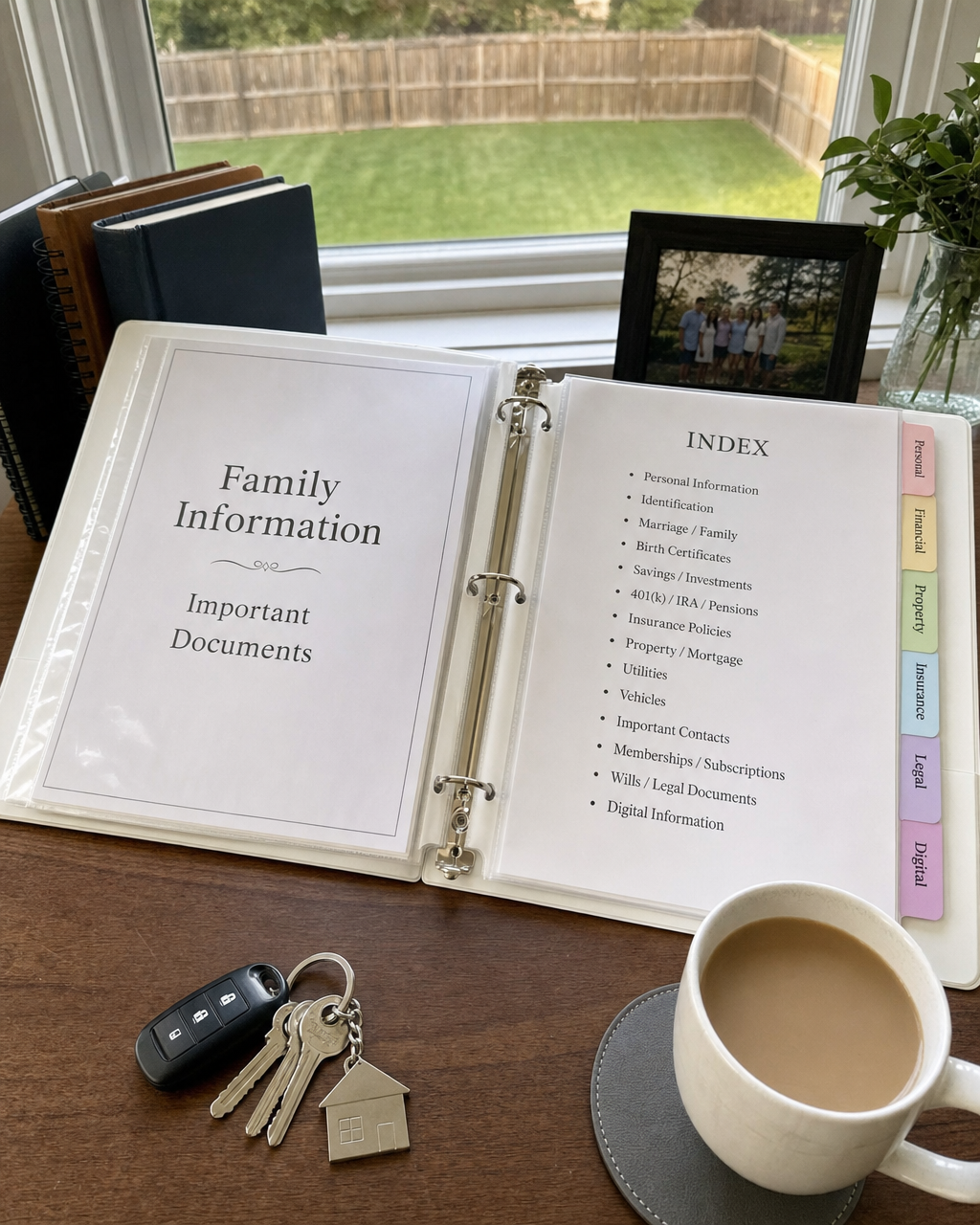
Ran for 51 days, from September 7 to October 28, 2026, the last day Crush saw it.
Run by The Estate Kit on Facebook. Crush is not the advertiser and does not verify its claims. See this ad in Meta's Ad Library(opens in a new tab)
Make your own version of this ad
Crush makes it, launches it in your own Meta ad account, scales the winners and pauses the losers.
About this ad
- Meta Ad Library ID
- 2283720709047224
- Platforms
- Facebook, Instagram, Audience Network, Messenger, WhatsApp and Threads
- Relaunches
- 0
- Niche
- Insurance
Ad text
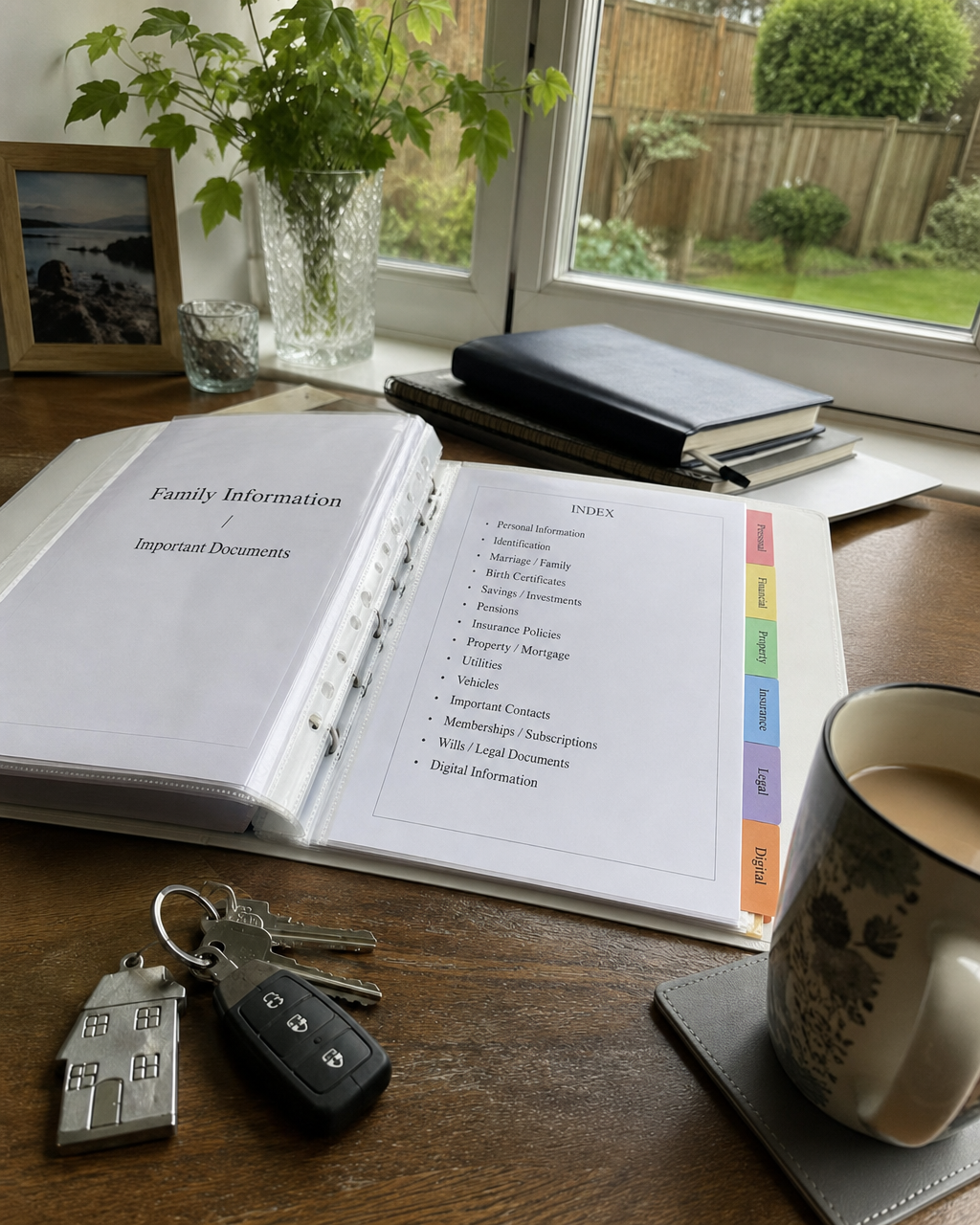
At 61, my daughter found every account, policy and password we own in nineteen minutes. Without one phone call to a helpline. Here is what I did. If you are a woman over 55 and you are the one who quietly keeps this family running, the one who knows which account the furnace plan comes out of and where the spare key lives, I want to tell you about the conversation I wish someone had sat me down for three years ago. It would have saved me a year of low-level dread, one of the hardest afternoons of my life in an estate attorney's office, and the money I wasted on things that did absolutely nothing. I am writing this because last month, at 61, I sat at my kitchen table and watched my youngest daughter find every account, every policy and every password we own in nineteen minutes. Without phoning anyone. Without asking me once. And the thing that finally made it possible was almost the opposite of what everyone had been telling me to do for years. My name is Carol. I am 61. I live just outside Fort Wayne, Indiana. Two grown daughters, one grandson who rates my pot roast far higher than my baking. I ran the office of a high school for twenty-nine years before I retired. Nothing in that building moved without me knowing where it was. Which is exactly why what happened between 58 and 60 rattled me. Before I tell you what I did about it, I need to tell you the part that matters. Because it changes what the fix actually has to be. Three years ago I would have told you we were sorted. Mirror wills, done properly in 2019. A file box in the writing desk labeled Important. Sensible, boring arrangements. The kind you check off and stop thinking about. Then my aunt June passed away at 87, and I was her executor. June had a will. June had a file box too. It still took eleven weeks to get her first account released. I counted, in the end, forty-one phone calls, most of them spent explaining the same sad news to a different call center. Her funeral sat on my credit card for four months. And a small policy only surfaced eleven months later, in a bank statement nobody had known to look for. At our last meeting, the estate attorney was very kind about it. He said most families arrive at his desk exactly the way we did. He also said that when families hand the whole thing over to a firm instead, the bills typically start around $5,000 and climb from there. On the drive home, my eldest said the sentence I have not been able to un-hear since. "Mom, please tell me ours is not going to be like that." I gave myself six months to make sure it was not. Here is what I tried first, because I am stubborn and I make lists. I made us an appointment and had the wills reviewed. $300, and worth it, but twenty minutes of that meeting confirmed the wills were fine and always had been. I bought a pack of plastic sleeves and rebuilt the Important box. I typed our accounts into a spreadsheet. I wrote the girls a letter about where everything was and put it in the desk. I told David, my husband, that everything was in the box, and he nodded the way husbands do. Five months in, I ran a little test. Sunday dinner, as casual as I could make it. I asked David to find our home insurance and tell me when it renewed. He found the box. He found three statements from three different years and could not tell which was current. He did not know which account the furnace plan came out of. The password list was two years stale. Twenty-five minutes in, he gave up and made a pot of coffee. Five months of genuine effort, and the box was still a scavenger hunt with a nicer label. I was also noticing other things that bothered me. The half past three accounting. Lying awake, running through the list of what the girls would not know to look for. The small jolt every time a renewal letter arrived from a company I had half forgotten we used. I had always assumed that low hum was just part of being the organized one at 60. It was not. The shift for me came from an unexpected place. A man named Gordon W. gave a talk at the library my neighbor Jean dragged me along to in October. Retired estate-settlement professional. Thirty-five years of it. The talk was billed as "putting your affairs in order". What it turned into was forty minutes on something I had never once heard explained properly. He said the document families put their faith in, the will, is not the thing their children struggle with. A will decides who inherits. It does not tell anyone what exists, where it is kept, or the order in which nineteen different organizations need to hear the news, each with its own clock. The struggle, he said, lives in the sequence. And in America the sequence has a shape. Forty-eight hours. The first window, before the paperwork machine starts — securing the house and mail, locating the original will, and engaging the funeral home. Six months. The notifications. There is no single call that tells everyone — the funeral home reports the death to Social Security, and Social Security tells Medicare. Nothing else. The bank, the mortgage, the insurers, the utilities, every one of those is a separate call. And the survivor benefits a widow can claim on her husband's record do not start on their own — they start when she applies, and the back pay is capped. Wait too long, and months of it are simply gone. Nine months. The deadline that catches everyone out. The federal window to refuse any part of an inheritance closes at nine months, with no extension — and the final tax return still has to reach the IRS, on a clock that does not pause while a family hunts for paperwork. Then he said the thing that made me write a note in my phone. "The families who cope are not the ones with the best wills. They are the ones where somebody left a sequence to follow. There is one thing I told my own children to expect from me, and it is not what any of you think it is." Not a thicker will. Not a safe. Not an app. A handover file, he said. Built in the order of the actual process, not the order of a stationery catalog. The plan on top. The records underneath, feeding it. I went home and spent two evenings checking him against ssa.gov and irs.gov. Not glossy websites. The official pages. He was right. The funeral director really does report the death to Social Security, not the family. That one report really does stop at Social Security and Medicare. The survivor check really does start only when someone applies — with the back pay capped. It is all there, once you know to look. So of course my first move was to order the cheapest thing online that looked the part. A $19.99 journal with a linen cover, one of those "when I am gone" memory books. I filled in about a third of it over six weeks. Then I understood the mistake. The chapters were alphabetical categories, not steps. There was nowhere for the order of who to call. No deadlines. No mention of probate, or the survivor-benefit clock, anywhere in it. I was essentially paying for nicer stationery. It went in the drawer with the plastic sleeves. I went back to what Gordon had actually described and wrote myself three requirements. It had to be built on the real American sequence. The funeral home, the one Social Security report and everything it misses, probate, the IRS, the actual deadlines. It had to hold the records that feed the plan. Prompts for the exact reference numbers and documents each organization asks for, not blank pages and good intentions. And it had to be printable and physical. One folder, on one shelf, that a person having the worst week of their life could follow page by page while a cup of coffee goes cold beside them. That is when I started looking at what was actually available to buy here. I came across The Estate Kit through a thread in a Facebook group I follow. A woman had posted photographs of her finished folder, and underneath them, the message her son sent after she showed him. The comments were genuine. Other women posting theirs, arguing about which pack to choose, the usual. What sold me was their plan page. Their handover kit is built around exactly the shape Gordon described. They call it 48-6-9. A Start Here card with the first actions in order. A checklist for each stage. A register for every account, retirement plan and policy. Ready-to-send letters for all the organizations that one Social Security report skips. Written for America, in plain English, printed at home the same evening. Every requirement I had written down, they had already addressed. 👉 This is the kit, if you want to look while you read (from $49): https://theestatekit.com/us/nineteen-minutes I ordered it on the Thursday. I did not tell David. I did not tell the girls. I wanted to do it quietly, at my own pace, without anyone else's opinion in the room. It took me two Sunday afternoons at the kitchen table. The prompts tell you what goes where, so there was none of the blank page dread the journal gave me. The first thing I noticed was not the folder. It was half past three in the morning. About nine days in, I realized I had stopped waking to run the list. The accounting had gone quiet. I was sleeping through to six, the way I used to. Jean noticed before David did. She said I seemed lighter on our Tuesday walk, and I could not immediately explain why. At the six week mark I ran my test again, because I could not wait any longer. Sunday dinner. I put the folder on the table in front of my youngest, Becky, and set her a challenge. The furnace plan. Dad's 401(k). The deed to the house. The life insurance policy, and who it names. Nineteen minutes. No phone calls. She found the lot, including two things I would have struggled to lay hands on a year earlier. She went quiet at the end, which is not like her. Then she said, "Mom, this might be the kindest thing you have ever done for us." Then April gave the folder a test I had not planned. David had a fall and spent two nights at Parkview. In the flurry of it, I pulled his page and had his insurance card, his Medicare number and his medications at the front desk in under a minute, with my hands shaking. That is when I understood the folder was never for some far off day. It is for any Tuesday. In May we had the wills looked over again, the scheduled visit. I brought the folder along, mostly to ask where it ought to live. I watched our estate attorney leaf through it for a full two minutes. He read the Start Here card twice. Then he asked me where it was from, and wrote the name on his pad. "I wish every client walked in with one of these," he said. "Keep it with the will. Not instead of it. With it." 👉 This is what he was leafing through (from $49): https://theestatekit.com/us/nineteen-minutes Here is what I would tell anyone my age who is sitting where I was sitting two years ago. If you have made a will, well done, and keep it exactly where it is. Gordon was right about the two documents. The will decides who inherits. The folder is what your family will actually hold in their hands during the weeks the will cannot help them. And if you decide to sort the folder, make sure it is actually the thing that works. A memory journal with alphabetical chapters is not. A spreadsheet only you understand is not. A box of plastic sleeves, I can tell you from experience, is not. You want a plan built on the real American sequence, with the records that feed it, physical enough to sit on a shelf and be followed page by page by someone who has never done any of this before. The Estate Kit is the only American kit I could find that meets all three straight off the page. Theirs is the one with the 48-6-9 checklists, the account register and the letters for everyone that one Social Security report misses. They offer a thirty day money back guarantee, which I think is fair, because thirty days is genuinely long enough to print it, fill it in and run the Sunday dinner test on your own family. If it does not pass, you email them and that is that. No forms, no argument. The quiet in my head arrived inside the first two weeks. The folder was done in two Sundays. The proof came at six weeks, in nineteen minutes, over a roast chicken. I am not telling anyone to skip the will or cancel the attorney. Ours drew ours up, and we will keep paying him to review it. But if you are where I was, wills done, file box labeled, and that low hum at half past three you have learned to call normal, then the folder is the part nobody ever sat you down about. I am still the one who holds this family together. The difference is that now there is a version of me on paper who can do it on a day I cannot get to the phone. I wish someone had told me at 58 what I know at 61. I would have started earlier and skipped the worried years in between. 👉 If you want to look at it yourself, this is the one on my shelf (from $49): https://theestatekit.com/us/nineteen-minutes
Where the ad sends people
theestatekit.com
At 61, I watched my youngest daughter find every account, every policy and every password we own in nineteen minutes.
See details: theestatekit.com(opens in a new tab)