Senior Health Guide
 Facebook ad: “The Gabapentin Warning Buried In 26,000 Records”
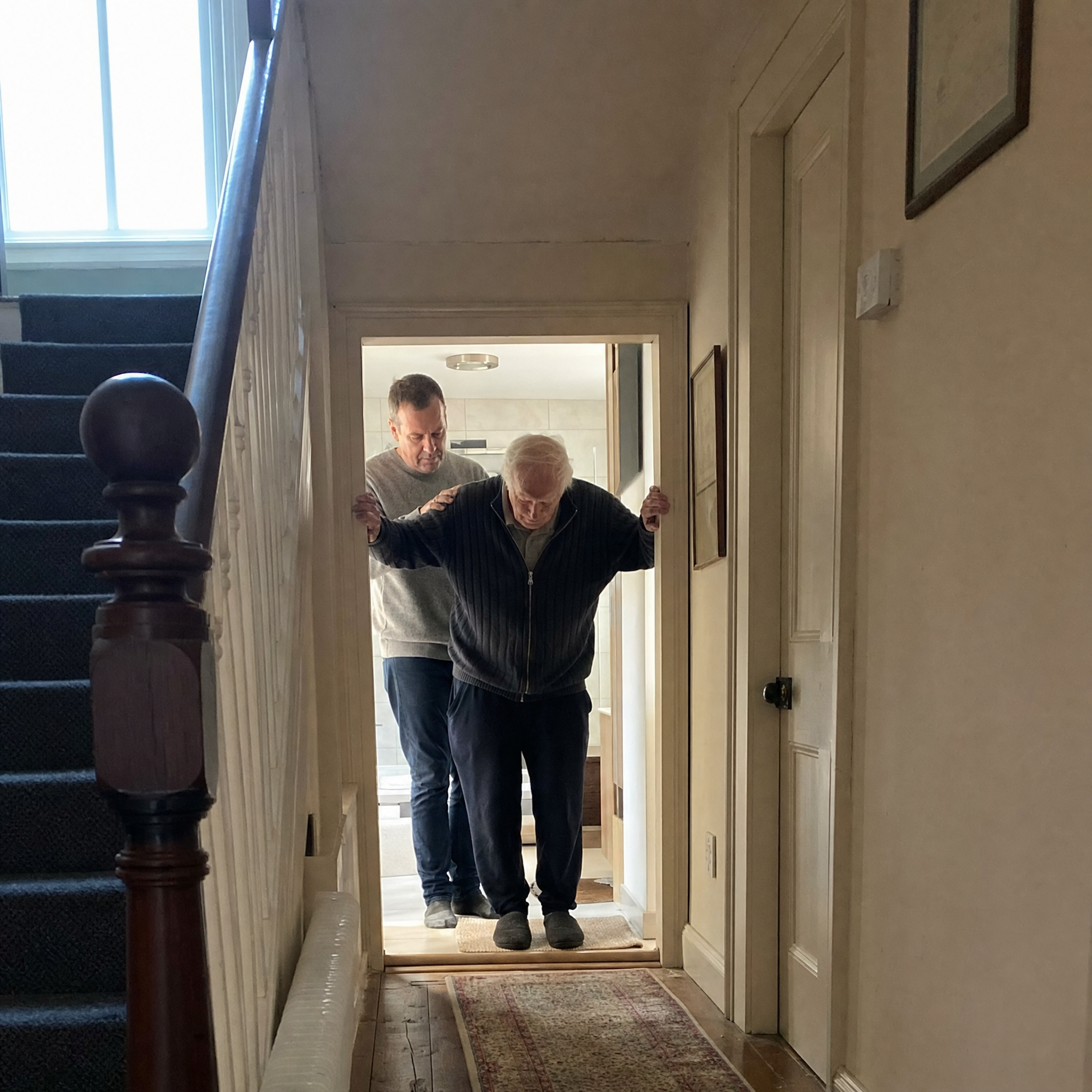
Ran for 35 days, from September 14 to October 19, 2026, the last day Crush saw it.
Run by Senior Health Guide on Facebook. Crush is not the advertiser and does not verify its claims. See this ad in Meta's Ad Library(opens in a new tab)
Make your own version of this ad
Crush makes it, launches it in your own Meta ad account, scales the winners and pauses the losers.
About this ad
- Meta Ad Library ID
- 1058224217026369
- Platforms
- Facebook, Instagram, Audience Network, WhatsApp and Threads
- Relaunches
- 0
- EU reach
- 299
- Niche
- Clinics & Medical
Ad text
She was 58, six years on gabapentin for her nerve pain, losing words mid-sentence — and every doctor she had blamed her age. None of them looked at the prescription a study of 26,000 patients has now linked to exactly that. ⠀ I'm a neurologist. I trained in Munich, practiced there eighteen years, and moved to Boston four years ago. And I need to tell you something about the gabapentin you've been taking for your neuropathy that no one in your care has said out loud. ⠀ You've been taking it responsibly. For years. Every dose, every refill, exactly as prescribed. ⠀ That is the part that keeps me up at night. ⠀ Because in July 2025, that study I mentioned was published in a journal called Regional Anesthesia & Pain Medicine, from the same group behind the British Medical Journal. And what it found about long-term gabapentin should have been on the evening news. ⠀ Patients who filled six or more gabapentin prescriptions were 29% more likely to be diagnosed with dementia, and 85% more likely to be diagnosed with mild cognitive impairment, within ten years. ⠀ And it got worse the longer they took it. Patients with twelve or more prescriptions — a year or more of steady use — were 40% more likely to develop dementia than those who took it less. ⠀ Read that again. The more faithfully you took it, the higher the number climbed. ⠀ Every refill you were proud of. Every month you didn't miss. Every time you did exactly what your doctor told you. Quietly stacking into the exact prescription count the researchers now say to watch. ⠀ The fog you've been blaming on your age. The names that won't come. The word that sits on the tip of your tongue and won't drop. You told yourself it was getting older. Your doctor probably told you the same. ⠀ Nobody looked at the pill. ⠀ Now — I am going to be honest with you the way I would want a doctor to be honest with me, because you deserve it and because you should trust nothing I say if I'm not. ⠀ This study shows an association. Not proof. The researchers say so themselves — they couldn't account for the exact dose or the exact length of use, and no one can say from this data that gabapentin directly causes dementia. It's also true that people who take years of pain medication tend to be in more severe pain to begin with, and chronic pain, poor sleep, and inactivity all raise dementia risk on their own. ⠀ So I am not telling you gabapentin gave you dementia. ⠀ I am telling you that the drug you were handed for your nerve pain is now linked to cognitive decline strongly enough that the researchers called for close monitoring of every adult taking it — and that not one of them warned you before they wrote the prescription. Again. And again. And again. ⠀ Here is what makes me angriest about it. ⠀ Gabapentin was never treating your neuropathy in the first place. ⠀ It works on the pain signal, up in the central nervous system — it turns down the volume on what you feel. It does nothing to the thing actually damaging your nerves: the inflammation in the tissue of your legs and feet, quietly stripping the protective sheath off the nerve while the pill keeps you from noticing. ⠀ So follow the logic all the way down, because it's uglier than it looks. ⠀ The inflammation in your legs was never addressed. So the neuropathy kept progressing. So you needed the drug longer. So the refills kept climbing. So the count that the dementia study is worried about kept rising — all because the one thing actually driving your neuropathy was never touched. ⠀ You weren't overprescribed by accident. You were overprescribed because nothing was ever fixing the reason you needed the prescription. ⠀ Think about what that means. You walked into a doctor's office with nerve pain. You did everything you were told. And years later you're walking out with a second diagnosis you never saw coming — one far more frightening than the one you came in with. You went in to treat your feet. You may be leaving with a threat to your mind. ⠀ In Germany, this is where we would have started. Not with a pill that quiets the signal from the brain. With the inflammation in the tissue itself. ⠀ For over a decade, specialists in Munich and Hamburg had been working with targeted botanical compounds applied directly to the affected tissue — going after the inflammatory cascade and the failing circulation driving the nerve damage, at the site, on the skin, instead of routing a drug through the entire body to numb the perception of it. ⠀ That research never crossed into standard American neurology training. Most neurologists here graduated before it reached them. They practice what they were taught. That is not their fault. But you are the one standing in the gap it left. ⠀ For the nerve tissue itself, that research kept coming back to a specific set of botanicals: Frankincense and Myrrh to calm the inflammation attacking the nerve, Angelica Sinensis to bring circulation back to the starved tissue, Comfrey to support the nerve's own repair. But the compounds were only ever half of it. The thing that made them work was how they were delivered — down to the tissue, not through the body. ⠀ Senzio Miracle Balm was built to close that gap — to put exactly those compounds where your pills never could: on the tissue itself. ⠀ A sesame oil and beeswax base carries them down through the skin to the peripheral nerve, where the damage actually lives. Not swallowed. Not filtered through your bloodstream. Not routed through the central nervous system the dementia study was so worried about. ⠀ On the skin. Into the tissue. At the source. That is the whole difference — the same compounds a capsule would waste, delivered to the one place they can do their work. ⠀ And one more the research added for you directly: Peppermint, for real relief you can feel from the very first night, while the deeper compounds go quietly to work on the cause. ⠀ Let me tell you what happened to the woman I opened with. ⠀ She was 58. Six years on gabapentin for the nerve pain in her feet, and in the last of those years she'd started losing words mid-sentence. Her neurologist had raised her dose twice. Her family had started finishing her sentences for her. Everyone around her had quietly filed it under age. ⠀ She came to me for a second opinion. She'd read something that frightened her about the drug she'd been taking for years, and her own neurologist had waved it off. She wanted to know from someone else whether she should be worried. ⠀ I told her the truth: yes, she should. And then I told her what I would and would not do about it. ⠀ I would not touch her prescription. That was not mine to change — she had a neurologist, and starting or stopping a drug like gabapentin is a decision for the doctor who manages her, not a specialist she saw once for a second opinion. I told her that plainly, and I'd tell you the same. Any doctor who reaches for another doctor's prescription pad through a single visit is one you should trust less, not more. ⠀ But here is what struck me, looking at six years of her chart. Every single thing that had ever been done for her neuropathy was the same move repeated — turn the dose up. Twice they'd raised it. Twice the relief came back for a while and then faded. And each of those increases was another notch on the exact exposure the research now warns about. The one thing nobody had tried in six years was the obvious one: going after the inflammation in the tissue that was causing the pain in the first place. Not because it doesn't work — because it was never part of what they were taught to reach for. ⠀ So that is what I added. Not another dose. The missing half. I had her work Senzio into her feet and calves every night, so that for the first time, something was going after the inflammation instead of only muffling what it produced. ⠀ Week 2: she slept through the night. The burning that had been waking her at 2am had gone quiet. ⠀ Week 4: she walked to her mailbox and back without the deep ache in her calves she'd stopped even mentioning because she assumed it was permanent. ⠀ Week 9: at her neurology follow-up, her exam showed no new nerve decline for the first time in three years — and the dose increase that had been pencilled in was held right where it was. ⠀ That last part mattered more than she realized in the moment. Remember why she'd come to me frightened — not the burning in her feet, but the words slipping out mid-sentence, the family finishing them for her. She had spent the last year watching that get worse in step with every dose increase. ⠀ I want to be careful and honest with you here, because this is where other people would lie to you. The balm did not touch her memory. It cannot, and I would never claim it did. What it did was quieter, and in the end more important: by finally treating the nerve pain at its source, it took away the reason her dose kept climbing. And the dose that stops climbing is the exposure that stops growing — the very thing the dementia study said to watch. She didn't get her fog reversed. She stopped feeding the thing that was linked to it. For the first time in six years, that number stopped rising instead of rising again. ⠀ I want to be clear about one thing, because it matters more than anything else in this message. ⠀ I am not telling you to stop taking your medication. I would never tell you that through a screen, and neither would any doctor worth trusting. Stopping gabapentin suddenly can be dangerous on its own. ⠀ I am telling you to do two things. ⠀ Take this to your neurologist. Ask them how long you've been on it, how many refills are on your record, and whether it's time to talk about that number in light of what came out last summer. ⠀ And in the meantime, give the tissue underneath — the inflammation that's the actual reason you're on the drug at all — the support that no pill was ever designed to reach. ⠀ Because every month that inflammation goes unaddressed is another month your neuropathy progresses, another month you need the prescription, another refill added to the count. ⠀ Try Senzio for 60 days. Right now it's 50% off, with a full money-back guarantee. Rub it into your feet and calves each night. Pay attention to what your neurologist measures — the burning, the numbness, how you sleep. ⠀ If nothing changes, you contact the team and every dollar comes back. No questions. ⠀ You did everything right. You took the medication. You filled the prescriptions. You followed the instructions to the letter. ⠀ You just weren't told what those years might be quietly costing you — or that the reason you needed them was never being treated in the first place. ⠀ Now you know both. ⠀ Talk to your neurologist. And give the tissue the help it's been waiting years for. ⠀ — Dr. Emily Hartman, MD Board-Certified Neurologist Formerly Munich Center for Peripheral Nerve Disease Currently practicing in Boston ⠀ P.S. — I am not asking you to quit your medication. I'm asking you to have the honest conversation with your neurologist you should have had before your first refill — and to finally address the inflammation the drug was never reaching. The study is real: Regional Anesthesia & Pain Medicine, July 2025, more than 26,000 patients. Look it up. Then go count your own refills. That number is the one the researchers said to watch.
Where the ad sends people
senzio.store
The Gabapentin Warning Buried In 26,000 Records
Unlock the power of nature with Senzio Miracle Balm. This herbal powerhouse soothes, heals, and rejuvenates your skin—experience the magic!
Learn more: senzio.store(opens in a new tab)