Dogs Are Pawsome
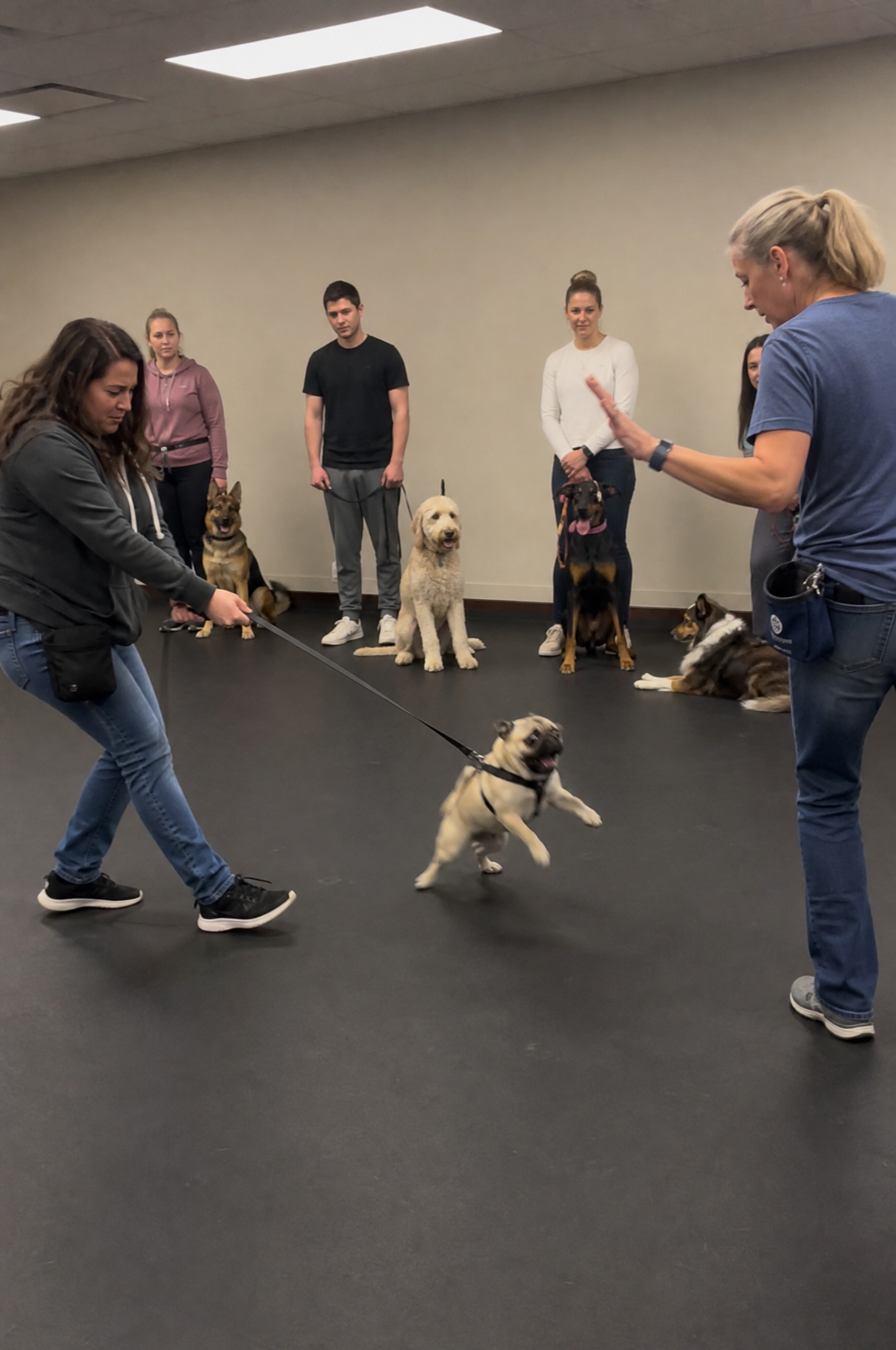
Dogs Are Pawsome Facebook ad: “Read this if you own a Pug”
Ran for 27 days, from July 25 to August 21, 2026, the last day Crush saw it.
Run by Dogs Are Pawsome on Facebook. Crush is not the advertiser and does not verify its claims. See this ad in Meta's Ad Library(opens in a new tab)
Want an ad like this for your product?
Crush makes new ad images for your product from this ad: your logo, your product photo, your offer.
Trials from $19.95 USD, then $79.95 USD a month. Cancel anytime.
About this ad
- Meta Ad Library ID
- 1058828287204665
- Platforms
- Facebook, Instagram, Audience Network, Messenger, WhatsApp and Threads
- Relaunches
- 0
Ad text
I've spent 15 years working with Pugs without e-collars, without medication, and without telling a single owner they need to walk their dog for 2 hours a day. When I see what generic trainers are telling Pug owners, I cannot believe what I'm hearing. I've worked in canine behavior and breed-specific training for over 15 years. The first 8 years, I trained everything. Labs, Shepherds, Goldens, Bulldogs, Huskies. Standard obedience. Standard methods. Standard results. Then I started getting Pugs. And everything I thought I knew fell apart. In my first year working with Pugs, I saw something that kept me up at night. Pug owners coming in with dogs that were physically healthy, genetically sound, deeply loved, and completely out of control. Constant demand barking. Shadowing so severe the owner couldn't walk from the bedroom to the kitchen without tripping over them. Separation anxiety that had destroyed door frames, scratched through drywall, and in one case produced a noise complaint letter that nearly cost a woman her apartment. Dogs that screamed like they were being murdered the second their owner picked up a set of keys. Dogs that had been standing outside for 20 minutes doing fake squats to collect treats and then coming back inside to go behind the couch. Dogs that followed their owners into the bathroom and scratched at the door like the world was ending on the other side of it. Every single owner said the same thing. "My trainer said to ignore the barking. My vet suggested trazodone. We've tried everything. We just keep managing it." Managing it. That word. In 15 years of working with dogs, I have never heard a word that caused more damage than "managing." You don't manage a problem that has a solution. You solve it. And the reason nobody was solving it was that every trainer, every vet, every YouTube video, and every obedience class these owners had paid for was using methods designed for a completely different kind of brain. Generic dog training doesn't fix what's actually happening inside a Pug. It only suppresses the symptoms. Here's what your trainer probably hasn't told you about why your Pug acts the way it does. There's a concept that most dog trainers have never been taught and most Pug owners have never heard. And the real cause behind every behavior problem your Pug has isn't stubbornness, isn't spite, and isn't bad breeding. It's genetic. It's neurological. And it's 2,000 years old. Your Pug isn't screaming when you leave because they're dramatic. Not because they're spoiled. Not because you've been too soft or too inconsistent or too attached. The reason your Pug short-circuits the second you pick up your keys, put on shoes instead of slippers, or walk out the front door is written into their DNA at a cellular level. Pugs were bred exclusively by ancient Chinese emperors for one single purpose. Not to retrieve. Not to herd. Not to guard. Not to work. To be with a human. Constantly. Every waking minute. As close as physically possible. That's the entire genetic program. The whole job description. 2,000 years of selective breeding for one trait above all others: absolute, unwavering, total human companionship. When you leave the house, your Pug's brain doesn't process it the way a Labrador's brain does. A Lab watches you go and settles on the couch because their genetic program includes a reasonable capacity for independent existence. A Pug's brain processes your departure as a survival crisis. Because to the companion-bred brain, you are not just their owner. You are their entire biological purpose walking out the door. And when that brain goes into panic, it doesn't respond to standard training corrections. Because the panic isn't disobedience. It's not attention-seeking. It's not manipulation. It's a 2,000-year-old survival response. And you cannot correct your way out of a survival response. Here's what makes it worse. Every mainstream training method makes this problem bigger, not smaller. "Ignore the demand barking and it will extinguish." This works on breeds with low persistence and a moderate social drive. Pugs were bred for maximum persistence in pursuit of human attention. That is their job. That is what they were designed to do. When you ignore a Pug's demand barking, you don't extinguish the behavior. You trigger the escalation protocol. They bark louder. Then louder. Then they add spinning. Then scratching. Then they find a pitch that vibrates your back teeth. Because every escalation is their brain running the same calculation: I need to reach my human. Current volume isn't working. Increase volume. The owner hasn't told the Pug that attention-seeking doesn't work. The owner has told the Pug that current volume is insufficient. "Cry it out. Put them in their crate and let them work through it." This is not just ineffective for Pugs. It is physically dangerous. When a Pug goes into full panic, their brain floods with stress hormones. Their breathing accelerates. Their already-compromised airway, the same flat face that everyone finds adorable, begins to swell internally from the exertion of sustained screaming. You cannot let a Pug scream themselves into exhaustion. The hyperventilation inflames their delicate airway tissues and can trigger life-threatening respiratory distress. The "cry it out" method was designed for breeds with full-length muzzles and unobstructed airways. Applying it to a flat-faced companion breed is the most dangerous advice being given to Pug owners right now. "Turn your back on the jumping. Ignore it." Pugs don't jump the way a Labrador jumps. They don't hit you in the chest with 65 pounds of momentum. They weave around your ankles, they scream at your shins, they spin in circles, they paw at your legs, they find whatever angle of your body is currently undefended and demand from it. When you turn your back, they don't stop. They come around to the front. They are not jumping because they haven't learned that jumping is wrong. They are jumping because reaching you, touching you, connecting with you is their genetic imperative. And a blocked path is not a signal to stop. It is a problem to solve around. "Be more consistent. Correct more firmly. Show them who's alpha." This is the most damaging advice being given to Pug owners right now, and it is damaging in a specific way that most owners never connect back to the training. Pugs are among the most emotionally attuned dogs ever documented. They were bred to read human emotion. To sit in the lap of an emperor and respond to every shift in mood. Their sensitivity is not a flaw. It is the point. It is what they were made for. When you apply firmness, corrections, or pressure to a companion-bred emotional sponge, you don't create compliance. You create anxiety layered on top of anxiety. The screaming gets worse because now it's driven by both the separation panic and the unpredictability of the corrections. The shadowing intensifies because you've become an unpredictable variable and they need to monitor you more closely. I have watched trainers take a Pug with a separation problem and turn it into a Pug with a fear problem. I have watched it happen more times than I can count and it makes me furious every single time. "They'll grow out of it. Some Pugs are just dramatic." This one breaks my heart the most. Because the owner believes it. They wait. And while they wait, the behavior compounds. The panic response gets faster. The threshold for screaming gets lower. What used to take picking up keys now starts with putting on shoes. What used to take putting on shoes now starts with standing up from the couch. The brain is not growing out of anything. The brain is getting better at panicking. And here's what nobody tells you about where this goes if you don't address the actual cause. It doesn't stay as "just barking" or "just accidents." It never plateaus. It always progresses. First, the separation panic escalates. Whining becomes howling. Howling becomes screaming. Screaming becomes destruction. The scratched door frame becomes a hole through drywall. Because every time you leave and the dog panics, the panic pathway in the brain gets worn deeper, faster, more automatic. The threshold drops. The dog that used to be fine for 30 minutes is now panicking at 5. The dog that used to settle after 10 minutes of crying is now sustaining it for 3 hours. The neighbors complain. The landlord sends a letter. The owner stops making plans. The owner stops going places. Then the potty training deteriorates under anxiety. The dog that was mostly reliable starts having accidents again, because an anxious brain is a dysregulated brain, and a dysregulated brain cannot maintain the pattern recognition that potty training depends on. Then the demand barking spreads. It started at departures. Now it happens at mealtimes. At the TV. At guests. At the owner sitting on the wrong side of the couch. At any moment where the Pug's brain decides that what is currently happening is insufficient and a louder version of whatever they're doing might improve it. Then the owner's life shrinks. They stop going out because of the guilt and the noise complaints. They stop having guests because of the barking and the chaos at arrivals. They stop leaving for more than an hour at a stretch. They arrange their entire schedule around a 20-pound dog and feel embarrassed to admit it. The dog they got because they wanted a companion becomes the thing that prevents them from having a life. I watched this progression happen with hundreds of Pug owners. And every single time, the owner had done everything they'd been told. They'd been consistent. They'd been patient. They'd spent the money. And none of it worked. Because every method they'd been given was designed for a brain their dog doesn't have. That's when I understood that the problem wasn't the owners. It wasn't the dogs. It was the method. And that's when I built something different. I spent 3 years developing a system from scratch. Not adapting generic obedience for Pugs. Not repackaging Labrador training with a smushed face on the cover. Building a complete behavioral framework engineered specifically for how a companion-bred brain processes information, stores patterns, and makes decisions. I called the core principle the Companion Brain Protocol. And it's built on one insight that changes everything: A Pug's chaos is not a disobedience problem. It's a rewiring problem. And the solution is not punishment, not medication, and not waiting for them to grow out of it. The solution is teaching the companion brain a new program. One where your departure predicts your return instead of your disappearance. One where distance is safe instead of catastrophic. One where calm behavior opens every door and earns every connection, and panic earns nothing. Because here's what nobody tells you about a Pug's brain. It is extraordinarily good at learning patterns. Emperors didn't breed these dogs for 2,000 years because they were slow. They bred them because they were attentive, responsive, and deeply attuned to routine. The same brain that learned that your keys mean you're leaving can learn that your keys mean nothing. The same brain that learned that screaming brings you back can learn that silence is what makes you return. The same brain that learned that shadowing you is the correct survival strategy can learn that lying quietly on a mat is what earns the connection it craves. You don't fight the companion brain. You give it a better program to run. I want to tell you about one Pug. Because what happened is what I see when owners finally address the right problem with the right approach. Her name was Bella. 4-year-old fawn, 18 pounds, face so perfectly wrinkled she had her own Instagram page with 12,000 followers. Her owner, Michelle, had spent over $3,800 in 3 years trying to fix her. Michelle lives outside Portland, Oregon, in a second-floor apartment with paper-thin walls and a landlord who had already sent one formal written warning about noise. Michelle had tried everything. Private trainer at $150 a session. 5 sessions. $750. The trainer told her to ignore the barking and reward quiet. Michelle ignored the barking. Bella escalated to a frequency that made the glasses rattle in the kitchen cabinet. The trainer said to keep going. Michelle kept going. Bella kept escalating. Session 5, the trainer said some Pugs are just particularly vocal and Michelle should consider whether her living situation was suitable for the breed. Separation anxiety specialist. $400 for an assessment and a written protocol. The protocol said to do graduated departures. Leave for 30 seconds. Come back. Leave for a minute. Come back. Michelle did it for 3 weeks. Bella screamed for the full 30 seconds, the full minute, every single time, because the protocol was built for dogs who have a panic threshold that can be worked under, and Bella's panic threshold was the exact moment the door clicked shut. Board-and-train. $900 for 2 weeks. Bella came home calm and responsive. Day 4, Michelle left for a grocery run. She heard Bella from the parking lot. Calming chews. 3 brands. $280 total. The first brand did nothing. The second brand made Bella slightly drowsy and still vocal. The third brand was expensive enough that Michelle felt guilty when it also did nothing. CBD oil. $89 a bottle, 2 bottles. Nothing. Trazodone, prescribed after Michelle called her vet in tears at 9pm on a Tuesday. 50 milligrams before anticipated absences. $34 a month. It reduced the volume. It also meant that when Michelle came home from work, Bella didn't meet her at the door anymore. Didn't do the full-body wiggle. Didn't make the little "roo roo" sound she made when she was happy. She was just there. On the floor. Existing. Michelle sat in my office and said the sentence I have heard more times than I can count in 15 years. "I don't know what happened to my dog. She used to be so alive. Now she's just here." I asked Michelle to tell me about Bella from before. Before the medication. Before the $3,800. Her eyes changed completely. "She was ridiculous. She'd do this full-body wiggle the second I walked through the door, her whole back end going, her little curly tail spinning. She'd make this sound, this roo roo sound, like she was talking to me. She'd find the sunniest spot on the floor and roll onto her back with all four legs in the air and just lie there like a little potato. She'd follow me from room to room and then sit on my feet and snore. She was so dramatic, so funny, so completely extra about every single thing." "She sounds like a Pug." Michelle laughed for the first time since she'd sat down. "She was the most Pug Pug who ever Pugged." "Do you want that dog back?" "More than anything. But the second the medication stops, the screaming starts again and I cannot lose my apartment." "What if the screaming stopped without the medication?" She stared at me. "I've spent $3,800 and nobody could do that." "Nobody tried. Everyone tried to suppress the screaming. I'm going to teach her brain that the screaming has nothing to scream about." I explained the Companion Brain Protocol. The 2,000-year-old genetic program. Why the graduated departures weren't working because Bella's panic threshold was below the minimum viable training window. Why the trazodone was silencing her instead of settling her. Why every method Michelle had paid for was designed for a brain Bella doesn't have. "Bella isn't broken," I told her. "Bella is running a survival program that was installed by 2,000 years of selective breeding and has never been given a reason to update. Every time you came back through the door after she screamed, the program got reinforced. Every time a trainer told you to keep going with methods that weren't working, the program got deeper. We're not going to suppress it. We're going to rewrite it." Michelle agreed to try. We tapered the trazodone with her vet over 3 weeks. And we replaced everything with the protocol I'd built. Day 1: The Micro-Departure Protocol. Not graduated departures. Not "leave for 30 seconds." I mean leave for 5 seconds. Open the door, step outside, close it, count to 5, come back in. Don't say goodbye. Don't say hello when you return. Sit on the couch like nothing happened. Do it 10 times. The entire architecture of Bella's panic was built on the association: door closes, human disappears, world ends. We weren't going to work within that association. We were going to dismantle it at the foundation. By leaving and returning so quickly and so many times that her brain had to reclassify the departure as temporary and boring before the panic could even fully load. Michelle called me after the first session. "She cried for the first 3. By the 7th she just watched me. By the 10th she didn't even get up." Day 3: We added the Trigger Scrambling. Michelle picked up her keys 20 times while watching TV without going anywhere. Put on shoes and made a cup of tea. Opened the front door to check the weather and closed it again. Picked up her bag and then sat on the couch for an hour. The triggers that had been loading Bella's panic program for 4 years became meaningless in 8 days. Because a Pug's brain is a pattern machine. The same machinery that had learned "keys mean leaving" learned "keys mean nothing" when the keys stopped predicting what they used to predict. Week 1: We added the Calm Arrival Protocol. Michelle stopped greeting Bella when she walked through the door. No eye contact. No "hello baby." No crouching down. She'd walk in, set her bag down, go to the kitchen, fill the kettle. Wait until Bella settled. Then, and only then, crouch down and let Bella press her face into her hands. The first day Bella screamed at her for 6 minutes straight. The second day, 3 minutes. By day 5, Bella trotted to the door when Michelle arrived, looked at her, and sat down. Not because she was less excited. Because her brain had learned that sitting down is what makes Michelle crouch down and press her forehead against Bella's wrinkled forehead. Week 2: The Demand Barking Protocol. Same architecture. Screaming at dinnertime, at the TV, at Michelle sitting in the wrong chair, got nothing. Not a correction. Not a scolding. Not even eye contact. The moment Bella was quiet, even for 3 seconds, that was the moment Michelle moved, spoke, looked, engaged. Within 5 days, Bella had stopped demand barking at mealtimes. Within 10 days, she'd stopped the TV screaming. Within 2 weeks, she was lying on her mat in the evenings while Michelle watched television. On her own mat. Voluntarily. In the same room. Not on Michelle's feet. Not on Michelle's lap. On her own mat, with her chin on the floor, making the little snoring sound she made when she was actually relaxed. Michelle sent me a video. "She's on her mat," she typed. "I didn't tell her to go there. She just went. She's snoring." Week 3: The Potty Protocol. Because Bella had also been having occasional accidents during periods of anxiety, and the fake squat had become a fixture of every morning bathroom trip. We implemented the Scent Transfer, the Boring Business Trip, the squat verification before any treat was produced. The fake squats stopped in 4 days. The accidents stopped in 2 weeks. Week 4: Michelle left for 2 hours. She set up her phone camera in the living room and watched from a coffee shop down the street. Bella sniffed the door for 90 seconds. Circled twice. Lay down on her mat. She didn't move for 40 minutes. Michelle sent me the video with no message. Just the video. Then, 3 minutes later: "I'm crying in a coffee shop." Week 6: 8pm. Thursday evening. Michelle on the couch watching television. Bella on her mat. Chin on the floor. Eyes closed. The little snoring sound. She stayed there for an hour and a half. Not because she was medicated. Because she was settled. Actually, genuinely settled. The full-body wiggle was back. The roo roo sound was back. The potato pose in the sunniest spot on the floor was back. And the screaming, the 4-year-old, $3,800, lease-threatening screaming, was gone. Michelle sat down one evening and added it up. Private trainer, 5 sessions at $150: $750. Separation anxiety specialist and written protocol: $400. Board-and-train, 2 weeks: $900. Calming chews, 3 brands: $280. CBD oil, 2 bottles: $178. Trazodone, 8 months: $272. Vet visits specifically about behavior: $340. Miscellaneous: anxiety wraps, pheromone diffusers, white noise machines: $210. $3,330. $3,330 on methods and medications that either did nothing or silenced her dog's personality while the actual problem, a companion-bred brain running a 2,000-year-old survival program that nobody had ever thought to rewrite, was never once addressed. They told her what to buy. What to try next. What dose to increase. Nobody told her why it wouldn't work. The why is the program. 6 weeks of the right system with the right approach. Bella is more settled than she ever was on trazodone and calming chews. Because the trazodone turned her brain off. The right system gave it a reason to stand down. When I looked at how Pugs were being handled across the industry, I assumed somebody had already built what I was seeing needed to exist. They hadn't. Every training program I reviewed was generic obedience with a flat-faced dog on the cover. Same correction protocols. Same "ignore the behavior" techniques. Same graduated departure methods that fail the moment the dog's panic threshold is lower than the minimum training interval. Same failure rate. Applied to a companion-bred brain that processes every single one of those methods as confirmation that the world is unpredictable and panic is the appropriate response. So I built The Complete Pug Guide. Every protocol inside it is engineered for how a companion-bred brain actually works. The Micro-Departure Protocol that dismantles separation panic at the foundation, not by working within the panic but by making the departure so brief and so repetitive that the brain has to reclassify it as boring before the panic can load. The Trigger Scrambling system that strips the emotional charge from keys, shoes, bags, and door handles, so your pre-departure routine stops being a countdown to catastrophe and becomes background noise. The Calm Arrival Protocol that rewires the greeting so calm behavior is what opens every door and earns every connection, and the spinning, screaming, demanding behavior earns nothing, not a correction, not a scolding, just a complete and total absence of the thing they want most. The Demand Barking Protocol built specifically for a breed whose persistence is genetic and whose escalation is automatic, so you stop accidentally training them to bark louder. The Potty Protocol that addresses the fake squat, the wet-grass refusal, the stealth accidents, and the substrate confusion that makes Pug potty training take far longer than it should. The Wrinkle and Health Blueprint covering everything from the Frito smell that means active yeast in the folds, to the tail pocket that nobody ever cleans, to the reverse sneeze that sounds like a cardiac event and can be stopped in 5 seconds, to the brown spots spreading across the eye that will cause blindness if not addressed, to the tracheal collapse that a neck collar is quietly causing on every single walk. Because loving a Pug means loving a dog with a specific, vulnerable body. And the owners who go into it knowing exactly what to watch for, exactly what the sounds mean, exactly what the symptoms indicate, are the owners who never get caught at 2am Googling "is this an emergency" in a panic. Plus so much more. I share this because I've spent years watching the same progression destroy the same bond between the same owners and the same dogs. Pug owners told that their dog is "just dramatic" and to keep ignoring the barking, while the ignoring trains the Pug to escalate because persistence is the only tool their genetic program knows. Owners told to medicate, while the medication silences the personality they fell in love with and leaves a ghost on the tile floor who used to do the full-body wiggle and doesn't anymore. Owners who feel like they're failing. Like they chose the wrong breed. Like their apartment is wrong or their schedule is wrong or they're not calm enough, consistent enough, patient enough. They're not failing. The methods are failing them. The system is failing them. The standard training industry treats every dog like a Labrador. Sit means sit. No means no. Ignore the behavior and it extinguishes. And for Labs and Shepherds and Goldens, that's largely true. But a Pug has a 2,000-year-old companion program running in their brain, and that program doesn't respond to any of those methods. It needs something designed from the ground up for how it actually works. That's what The Complete Pug Guide is. The only system built specifically for the dog that's actually in front of you. 90-day money-back guarantee. If your Pug isn't dramatically better, you pay nothing. You've spent years doing what you were told with nothing to show for it. It's time to train your Pug the right way. Read more about it here 👉 https://pawpowa.com/pages/pug-guide P.S. Michelle spent $3,330 over 3 years on trainers who told her to ignore the barking, calming chews that did nothing, and trazodone that turned her Pug into a ghost on a tile floor who used to do the full-body wiggle and didn't anymore. 6 weeks of the right system fixed what none of it could, because for the first time something addressed the actual program instead of suppressing the symptoms. The calming chews were masking the signal. The medication was silencing the personality. The right protocol gave the companion brain a reason to stand down, and the screaming stopped because there was finally nothing left to scream about. Don't spend 3 years and $3,330 medicating a survival response. Get the guide. Start the rewiring tonight. P.P.S. If your Pug is under 2 and the chaos just started, you are in the best position possible. The panic pathways aren't worn deep yet. The medication hasn't started. The association between your keys and catastrophe hasn't been reinforced for 4 years. Start now. Before the trazodone. Before the noise complaint. Before the threshold drops so low that putting on shoes triggers a full meltdown before you've even touched the door handle. Bella is proof. One owner tried the generic methods for 3 years and spent $3,330 and lost her Pug's personality to medication. Then she tried the right system and got her dog back in 6 weeks. The difference isn't the money. The difference is the method. Start today. 👉 https://pawpowa.com/pages/pug-guide
Where the ad sends people
pawpowa.com
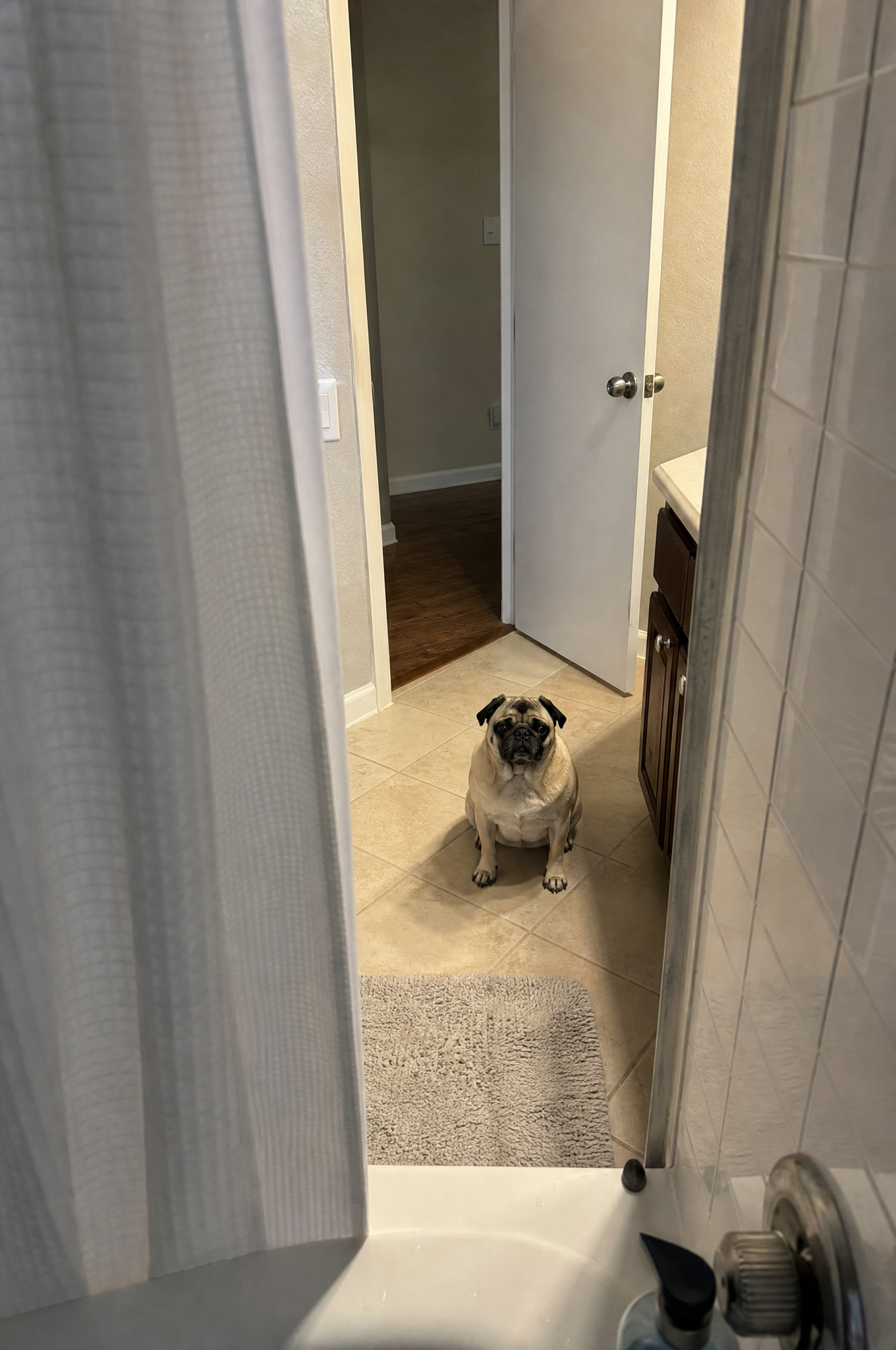
Read this if you own a Pug ☝️
Pawpowa
Learn more: pawpowa.com(opens in a new tab)