
Active· since Jul 11, 2026
- 64
- days running
- 0
- relaunches
Ad copy
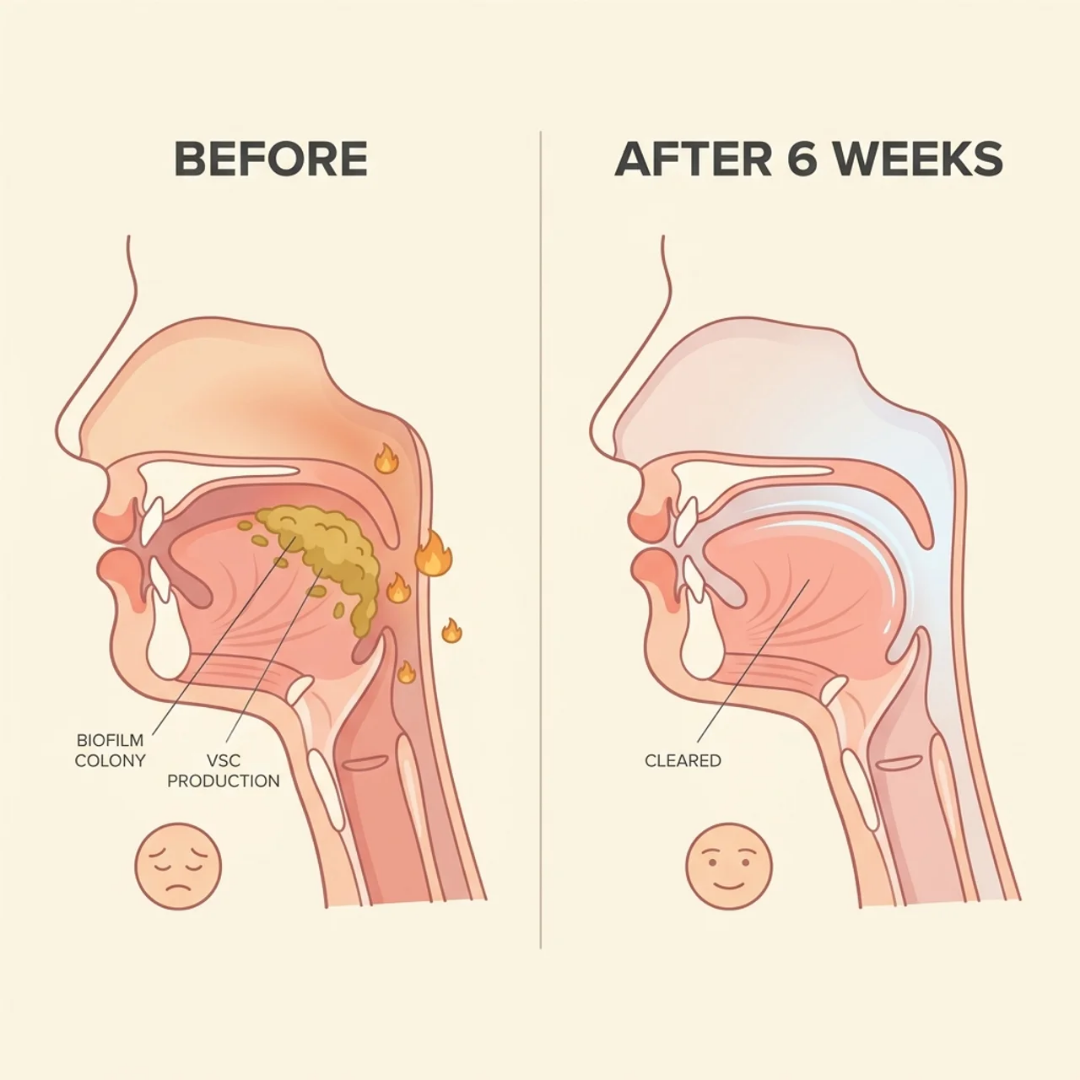
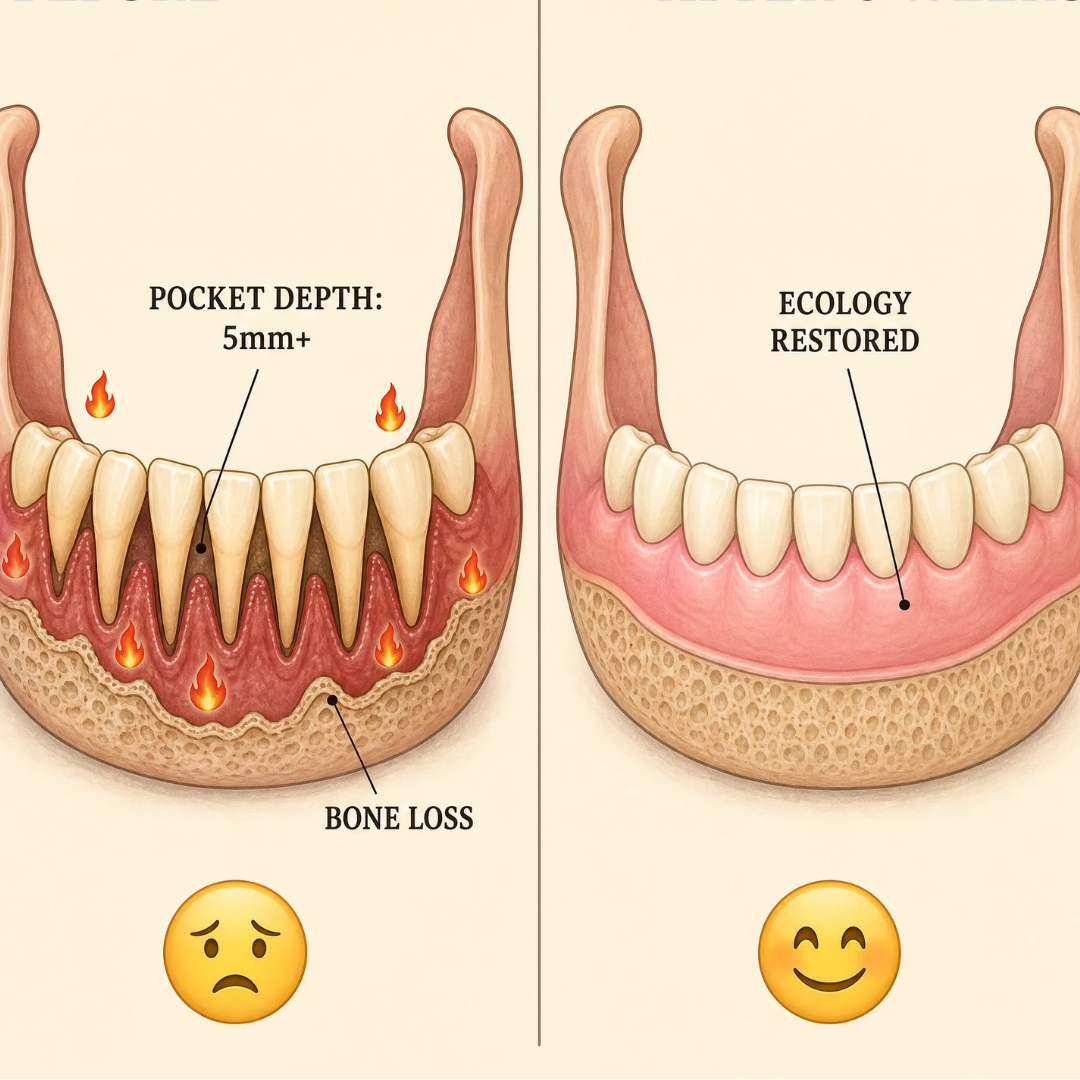
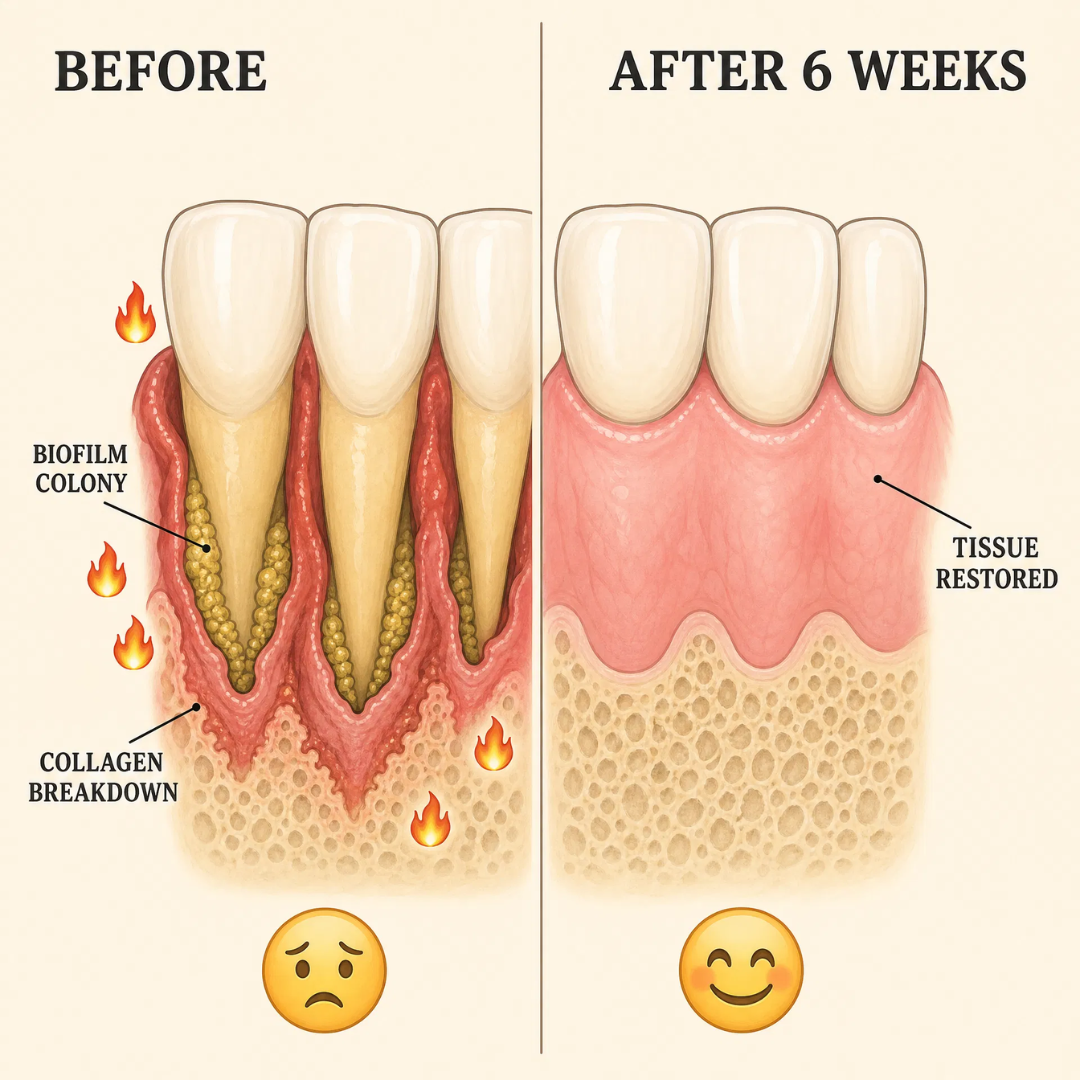
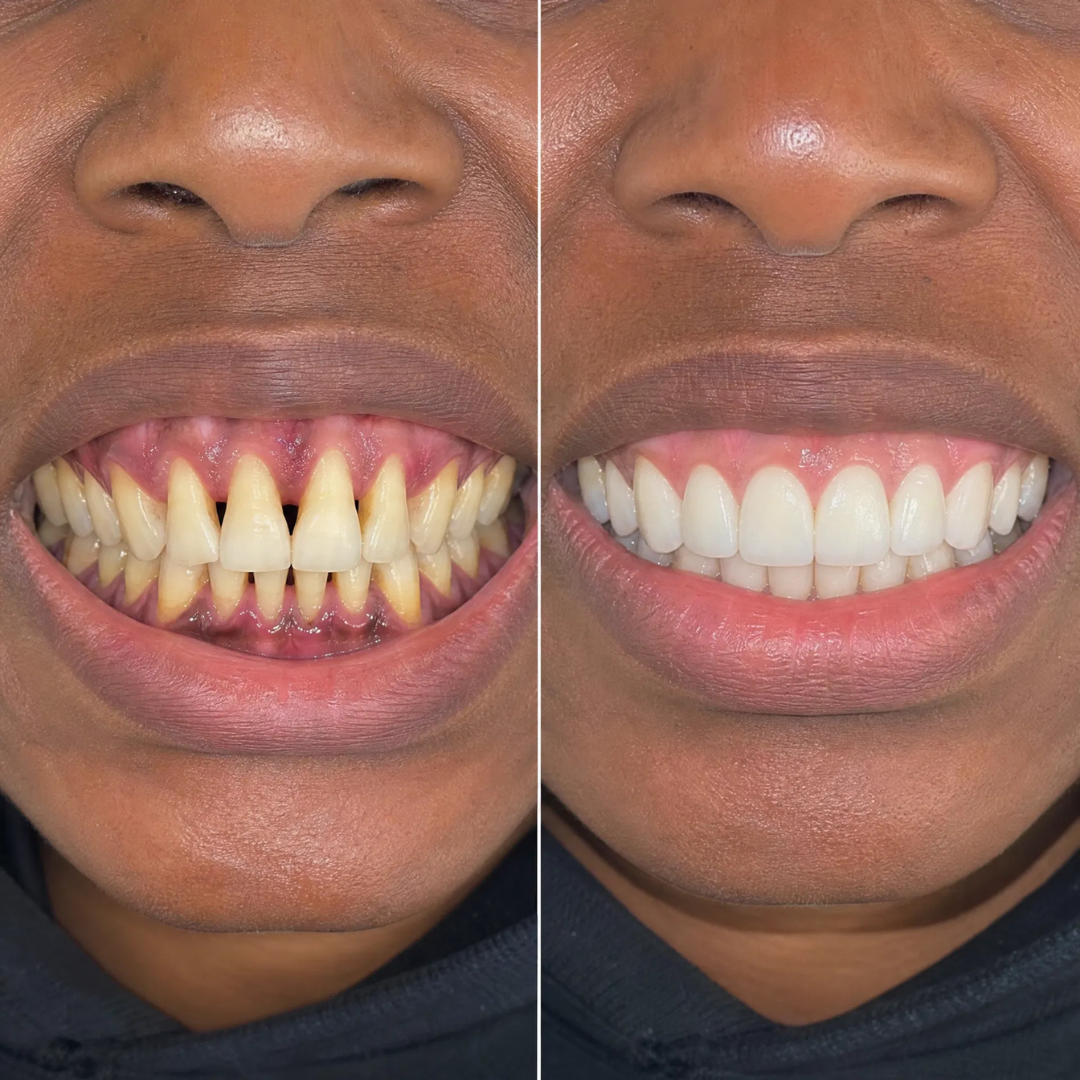
𝐈 𝐡𝐚𝐯𝐞 𝐛𝐞𝐞𝐧 𝐚 𝐩𝐞𝐫𝐢𝐨𝐝𝐨𝐧𝐭𝐢𝐬𝐭 𝐟𝐨𝐫 𝟏𝟗 𝐲𝐞𝐚𝐫𝐬. 𝐀𝐧𝐝 𝐢𝐟 𝐲𝐨𝐮𝐫 𝐠𝐮𝐦𝐬 𝐚𝐫𝐞 𝐩𝐮𝐥𝐥𝐢𝐧𝐠 𝐚𝐰𝐚𝐲 𝐟𝐫𝐨𝐦 𝐲𝐨𝐮𝐫 𝐭𝐞𝐞𝐭𝐡... I am about to tell you exactly what the dental system never explains to you. And why most periodontists — including me, for the first fifteen years of my career — have been treating the wrong thing. By the end of this, you are going to understand your own mouth better than your dentist has ever explained it to you. My name is Dr. Karen Harmon. Board-certified periodontist. Nineteen years treating gum disease, gum recession, and the slow, relentless destruction of the tissue that holds your teeth in place. And I am going to say something that took me fifteen years and one very uncomfortable conversation at a research conference to understand. Because three things are happening right now if you are reading this. One. Your gums are sending you a signal — bleeding, recession, sensitivity, teeth that look longer every time you check the mirror — that something is actively wrong. Two. The dental system is telling you the answer is to floss more carefully, come back in three months, and "keep up the good work." Three. The treatment model that generates billions in dental revenue every year is built around a procedure that temporarily fixes the symptom while the source that caused it keeps running. Let me tell you about one of my patients. Because her story is the story of every compliant, meticulous patient I have watched decline for nearly two decades. Her name was Gloria. 54 years old. For three years, this is what she lived with. Gums that pulled a little further back every time she really looked. A toothbrush that came back pink every single morning without fail. Teeth that had become so sensitive to cold that she stopped ordering ice in her drinks — a habit she'd had her whole life, quietly abandoned. She started holding her smile a certain way in photos. Mouth closed. Controlled. The smile she'd had for fifty years, managed now. She had been meticulous her entire adult life. Brushed twice a day with a Sonicare. Flossed every night — she had never once gone to bed without it. Used a Waterpik. Showed up to every appointment without exception. And her gums kept receding anyway. By the time she came to my chair, her lower front teeth had visible root exposure. The tissue had pulled back far enough that she could feel the difference with her tongue. Her pocket depths were at 5mm and climbing. She sat across from me and said something I have heard in some variation from hundreds of patients: "I do everything right. I don't understand why this keeps getting worse." And you know what the dental system had told her for three years? Her GP: "A little recession is normal as we age." Her general dentist: "You need to be more careful with your brushing technique." Her hygienist: "Your home care is actually really good. Just keep it up." Keep it up. This woman's gum line was visibly retreating from her teeth and we were telling her to keep doing what she was already doing. Then I recommended scaling and root planing. Deep cleaning. The standard of care. You know what happened? Four appointments. Anesthetic. Instruments below the gum line. Real discomfort. Real recovery. And six months later? Her pockets were back. The bleeding had returned. The recession was continuing. I scheduled her for another round. She looked at me across the desk and asked quietly: "Is this just how it goes forever?" I told her we'd monitor closely. But I didn't have a better answer. Because the treatment model I had spent nineteen years executing had no better answer. Clean, monitor, clean again, monitor, graft when it gets bad enough. That is the protocol. That is the revenue model. And it was failing Gloria the same way I had watched it fail hundreds of patients before her. I just didn't know why yet. Eighteen months ago, I was at the International Periodontics Research Congress in San Diego. During a mid-morning break I was standing at the coffee station, and I noticed the researcher next to me was someone I recognized from his published work on oral microbiome dysbiosis. Dr. Marcus Webb. Twenty-two years in periodontal microbiology research. Had spent his career studying not the mechanical treatment of gum disease but the bacterial ecology that drives it. I introduced myself. He looked at my name badge and smiled. "You're a clinician," he said. "Can I ask you something? In your practice, what percentage of your scaling and root planing patients are back at baseline recession by the twelve-month mark?" I didn't have to calculate it. I knew the number from years of charting. "Most of them. Anywhere from sixty to seventy percent." He nodded. Like that was the answer he expected. "Do you want to know why?" He pulled a notepad from his jacket pocket. Drew a simple diagram. A tooth. A gum line. A narrow channel below it. "Your treatment model treats recession as a mechanical problem. Plaque accumulates, you remove it. Tissue degrades, you graft it. That is like pumping water out of a flooded basement with a bucket while the pipe in the wall keeps leaking." He tapped the notepad. "This is not a mechanical problem. It is an ecological one. And the reason your patients keep returning to baseline is because you are treating the flood — not the broken pipe." I stood there holding my coffee and felt nineteen years of practice shift slightly under my feet. Here is what is actually happening in your mouth. What nobody has ever explained to you in the ten-minute appointment window your hygienist has before the next patient. Your gum pocket — the sulcus, the channel between your tooth and your gum tissue — is a sealed ecosystem. Warm, moist, protected from air and light. The ideal habitat for a structured bacterial community called a biofilm. Not a random collection of bacteria. A fortress. A self-organizing colony that builds a protective matrix around itself, anchors to the root surface, and becomes dramatically more resistant to removal than free-floating bacteria ever could be. Inside this biofilm, specific pathogenic species produce enzymes with one function: breaking down collagen. Not the collagen in your food. The collagen scaffold that physically holds your gum tissue attached to your bone. The structural protein that keeps your gum line where it belongs. When these enzymes degrade collagen faster than your tissue can replace it, your gum pulls away from the tooth. The pocket deepens. The bone follows. Your teeth look longer in the mirror because they are longer — the tissue that used to cover those roots is gone. Scaling and root planing physically disrupts this biofilm. It works. That is why SRP improves pocket depths and reduces bleeding. The mechanical debridement removes the bacterial colony from the root surface and the tissue gets a chance to recover. But the biofilm begins reconstituting within days to weeks. The same pathogenic species repopulate the pocket. The collagen degradation resumes. The same cascade restarts. And six months later, when your hygienist probes your pockets again, the numbers have crept back. Dr. Webb leaned forward and said the sentence that has reorganized my entire clinical understanding: "You keep cleaning the symptom. Nobody is changing the ecology that keeps producing it." Your hygienist removes the biofilm. Your body experiences temporary relief. The ecological conditions that allowed the pathogenic biofilm to thrive in the first place — a depleted population of protective bacterial species, an imbalanced oral microbiome — remain exactly as they were. And the biofilm that drives your recession builds itself back up. Every single time. Because nothing has changed the environment it lives in. Three specialists. Same patient. Nobody asking why the ecosystem keeps producing the same destructive colony. Then he told me what the peer-reviewed research actually shows. And what made my stomach turn is that this research isn't hidden. It's published. It's available. It's just not in the treatment conversation. Because there's no profit in putting it there. Your oral microbiome is not simply a collection of bacteria to be removed. It is a community with a balance — protective species holding pathogenic species in check. When that balance tips, when the protective species lose ground and the pathogens fill the ecological vacuum, the collagen-destroying biofilm takes over. The question that nineteen years of scaling and root planing never answered: how do you restore that balance rather than temporarily disrupting the biofilm that results from losing it? Specific probiotic strains — Lactobacillus reuteri DSM 17938 and Streptococcus salivarius M18 — do something that no cleaning instrument can: they competitively displace periodontal pathogens inside the gum pocket itself. Not killing bacteria with an antimicrobial that wipes out protective species alongside pathogenic ones. Competing with them. Occupying the ecological position the pathogens have been filling. Shifting the microbial balance of the pocket environment toward health rather than toward collagen destruction. The 2021 randomized controlled trial: 53% reduction in bleeding on probing in the probiotic group versus controls. Fourteen peer-reviewed trials synthesized in the Journal of Clinical Periodontology: consistent pocket depth reduction and bleeding improvement with these specific strains adjunctively delivered. A 578-patient, 14-month study at the University of Bologna: 91% of tracked sites stabilized or improved in patients receiving oral probiotic therapy alongside standard hygiene protocol. The control group on standard protocol alone: continued recession at 44% of sites. These trials are published. Peer-reviewed. Available to every periodontist in the country. Not one attending at any continuing education course I've sat through in nineteen years has mentioned them in the context of first-line treatment. Because the clinical culture is organized around the procedures that generate revenue. Scaling and root planing. Surgical grafts. Three-month recall appointments. Ongoing management of a condition whose source is never addressed. You cannot patent a probiotic strain. There is no pharmaceutical sales force pushing this mechanism into the treatment conversation. No representative standing in my waiting room with clinical literature and a lunch order. So the research exists and nobody joins the dots in a clinical setting. And your gums keep receding while you keep getting told your home care is excellent. Here is why the oral probiotics most people try don't move their numbers. This is critical, because what Dr. Webb described is not what you'll find in a generic probiotic mint from a drugstore display. The delivery problem. The gum pocket is a local environment. Changing its microbial ecology requires sustained contact between the clinical strains and the sulcus tissue. A capsule you swallow delivers organisms to your gut. The gum pocket never sees them in any meaningful concentration. The research that showed real outcomes used a slow-dissolving oral format — a lozenge that dissolves against the gum tissue and maintains sustained organism contact with the pocket long enough for competitive colonization to occur. Local delivery. Not systemic. This is the entire difference between a product that changes what's happening in your gum pocket and one that your gum pocket never encounters. The strain problem. The organisms that demonstrated competitive displacement of periodontal pathogens in peer-reviewed trials are specific: L. reuteri DSM 17938. S. salivarius M18. A generic probiotic blend with no strain specificity is not the same mechanism. Not even close. It is a different category of product operating on different biology. If the label doesn't name those strains at verified CFU counts, the pocket ecology you're trying to change is not being addressed. The viability problem. CFU claims on a supplement label are not verified counts. Most oral health supplements will not show you a Certificate of Analysis from an independent laboratory confirming the viable organism counts and strain-specific ratios at the time of use. You're taking the manufacturer's word for what's in the bottle. After the conference, I went looking for a formulation that matched what the research actually used. Slow-dissolving lozenge. L. reuteri DSM 17938 and S. salivarius M18 at clinical CFU counts. Collagen peptide complex for structural tissue support. Independent third-party Certificate of Analysis. Not label claims — verified counts from an outside laboratory. Verocare was the only product I found that met all four requirements. I started using it myself. Because I wasn't going to recommend something to a patient I hadn't evaluated firsthand. Week one: Applied as directed. Slow dissolution against the lower gum tissue. No dramatic sensation. I was tracking, not expecting. Day eleven: I noticed I wasn't producing the faint trace of blood on my floss that I had normalized as baseline for two years. I checked again the next morning. And the morning after. Three mornings in a row. Nothing. Week two: The cold sensitivity on my lower left — something I had been managing with sensitivity toothpaste for eighteen months, attributing to dentin exposure — was gone. I ordered a cold drink to test it specifically. No reaction whatsoever. Week four: At my routine maintenance appointment, my hygienist probed two sites she always flags on my lower anterior. She looked at the probe readings, then at her chart, then at me. "Dr. Harmon. These are different. Who have you been seeing?" I told her nobody. I was managing at home. She showed me the chart: 3mm and 3mm. Those sites had been at 4mm and 4.5mm for fourteen months. Week eight: Full periodontal charting. No site above 3mm. The first time that notation appeared in my own patient record. I sat in the chair and looked at the chart. I have been reading pocket depth charts for nineteen years. I know exactly what those numbers mean. And I know how rarely they move in that direction without surgical intervention. I called Gloria that week. "I need to be honest with you about something. The treatment I have been providing you is the correct standard of care and I am not taking that back. But there is a layer of your care that I was never trained to address and that I have not been providing. I didn't know to. But I do now." I told her about the microbial ecology of her gum pocket. About the biofilm reconstituting between cleanings. About the research that her nineteen-year periodontist had never read carefully until a researcher stopped him at a coffee station. She was quiet for a moment. Then she said: "So the cleaning is working. But something keeps undoing it." "Yes. That's exactly right. The cleaning disrupts the colony. But the environment that grows the colony never changed. So the colony comes back." "And this addresses the environment?" "That's what the research shows. And that's what I'm seeing in my own mouth." I sent her Verocare. Gloria, week two: The bleeding on her toothbrush stopped. She texted me. She had been seeing blood every morning for three years. She didn't know how to process waking up and not finding it. Gloria, week four: Her sensitivity to cold — she had stopped ordering her usual iced coffee at her work meetings, quietly, without telling anyone why. She ordered one. She texted me a photo of the cup. Gloria, week eight: She came in for her three-month recall. My hygienist probed her lower anterior sites — the sites she'd been watching decline for three years. 4mm. 4mm. 4mm. Down from 5mm and 5.5mm. Every tracked site stabilized or improved. The recession on her lower canines — the site we had been measuring with increasing concern — same measurement as the appointment before. No new recession. Not a fraction of a millimeter. She sat in the exam chair and I watched her face when the hygienist read the numbers. She started crying. Not sad crying. The kind where the body releases something it's been holding for years. She looked at me and said: "I kept thinking I was failing. I thought it was my fault." "It wasn't your fault. The protocol you were given was never designed to address the source." She put on her sunglasses in the parking lot and called her husband. He thought something was wrong. She had to explain through the call that something was right, for the first time in three years. I have quietly mentioned Verocare to twenty-one patients since the San Diego conference. Specifically the patients in what I now think of as the critical window — people whose recession is advancing, who are compliant and meticulous, who have been told their home care is excellent while their numbers keep moving in the wrong direction. The patients heading toward a graft conversation but not yet past it. Seventeen of the twenty-one have come back with readings that moved. Fifteen showed measurable pocket depth reduction. Two showed stabilization where progression had been continuous. The pattern is consistent enough that I have changed how I discuss adjunctive care with every new patient in this category. One of my patients — 59, had been tracking toward a six-tooth surgical referral for two years — came back with numbers that pushed the surgical timeline back by at least eighteen months, possibly permanently. Her hygienist walked out of the appointment room, found me in the hallway, and said: "What is she doing." Not a question. A statement. The kind you make when you've been charting someone long enough to know that what you just saw doesn't fit the trend line. Here is what I need you to understand about the dental system. And I say this as someone who has operated inside it for nineteen years and will continue to do so. The dental system is not hiding this from you because of malice. It is structurally incapable of prioritizing what it cannot bill for. Your hygienist's appointment is built around mechanical removal. Scaling. Polishing. Probing. Time for one more recommendation before the next patient is already in the chair. There is no billing code for "explained oral microbiome ecology to patient." There is no reimbursable procedure for restoring the bacterial balance of your gum pocket. There is a billing code for scaling and root planing. There is a billing code for connective tissue graft. There is a recall appointment fee for every three-month monitoring visit. The monitoring and management of your recession generates revenue. The elimination of the source that drives it — through a probiotic intervention that costs the practice nothing — generates nothing. So the source keeps running. And the appointments keep coming. And the numbers keep moving in the wrong direction while you are told your home care is excellent. You are not failing. The model is failing you. And the difference between those two things matters more than your periodontist has ever had time to explain. Here is what you need to understand about the window you are in. Gum recession compounds. The longer the pathogenic biofilm has been running unchecked inside your pocket, the more collagen degradation has accumulated, the more bone resorption has followed. Early-stage cases respond faster and more completely. Longer-term cases take more time. Advanced cases may have structural damage that limits how much the soft tissue can respond. If you have been watching your gum line change for more than a year, you are not at the beginning of this window. You are somewhere inside it. And every three-month recall cycle where the source is cleaned but not addressed is another cycle of reconstitution. Another round of collagen destruction. Another millimeter of recession that compounds the next. The cleaning is necessary. It is not sufficient. What your cleaning cannot do — what no mechanical instrument below the gum line can do — is change the microbial ecology of the pocket it's cleaning. That environment will produce the same biofilm until the environment itself changes. Verocare was formulated to change the environment. Try it for 30 days alongside your existing hygiene protocol. Pay attention to what your toothbrush looks like in the morning. Notice what happens when you reach for something cold. Then go to your next appointment and listen to what your hygienist says when she looks at her probe readings. If nothing changes — if your numbers don't move and your bleeding doesn't stop and your hygienist's notes read the same as every appointment before — you get every dollar back. No questions. No paperwork. I have performed periodontal surgery for nineteen years. Not one referral I have ever written came with those terms. Your gum tissue is not a sealed verdict. The ecology driving the destruction can still be changed. The biofilm that has been reconstituting between your cleanings — the source your scaling never reached — can be competitively displaced by organisms that belong there. The gum line you still have is worth protecting while you still have it. getveroglow.com/products/verocare™-oral-defense-for-gums ~ Dr. Karen Harmon, Board-Certified Periodontist | Boston, MA P.S. The 30-day money-back guarantee means your only risk is finding out whether it works sooner rather than later. If your next hygiene appointment looks exactly like every appointment before it, you pay nothing. I have never written a prescription that came with those terms. P.P.S. Verocare's probiotic strains require specific culturing conditions that take time. They don't compromise CFU viability for faster production. They sell out. I've had patients tell me they waited and then couldn't order when they were ready. By then, one of them had moved past the window and into the surgical consultation we'd both been trying to avoid. Don't wait. P.P.P.S. Gloria: "Three years of deep cleanings and my numbers never moved. Eight weeks of Verocare and my hygienist asked what I changed. I wish someone had told me before I spent three years thinking I was failing."
Like this ad? Make it yours.
Crush rebuilds this exact creative around your product — your brand, your colors, your offer — in about a minute.