
Active· since Jul 9, 2026
- 66
- days running
- 0
- relaunches
Ad copy
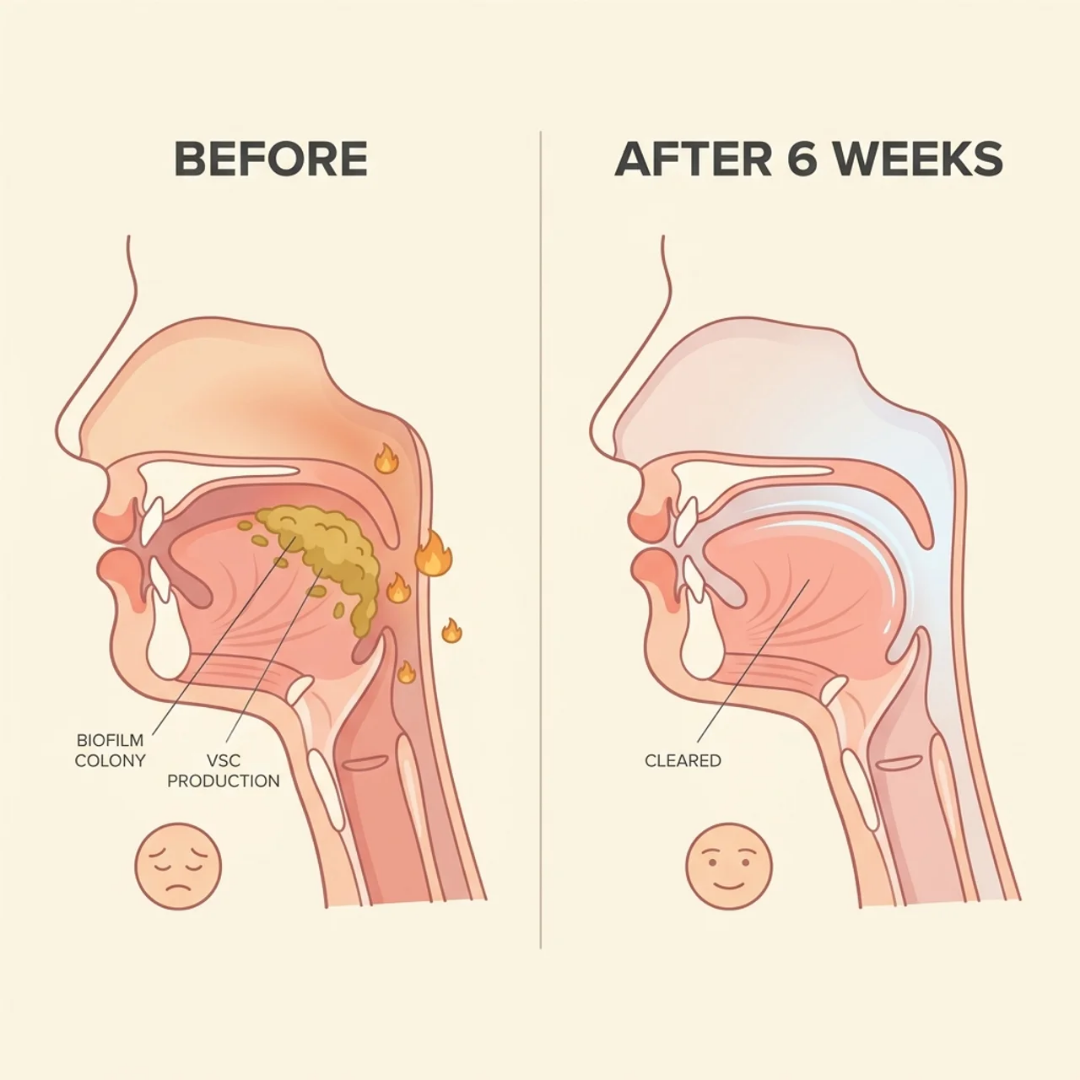
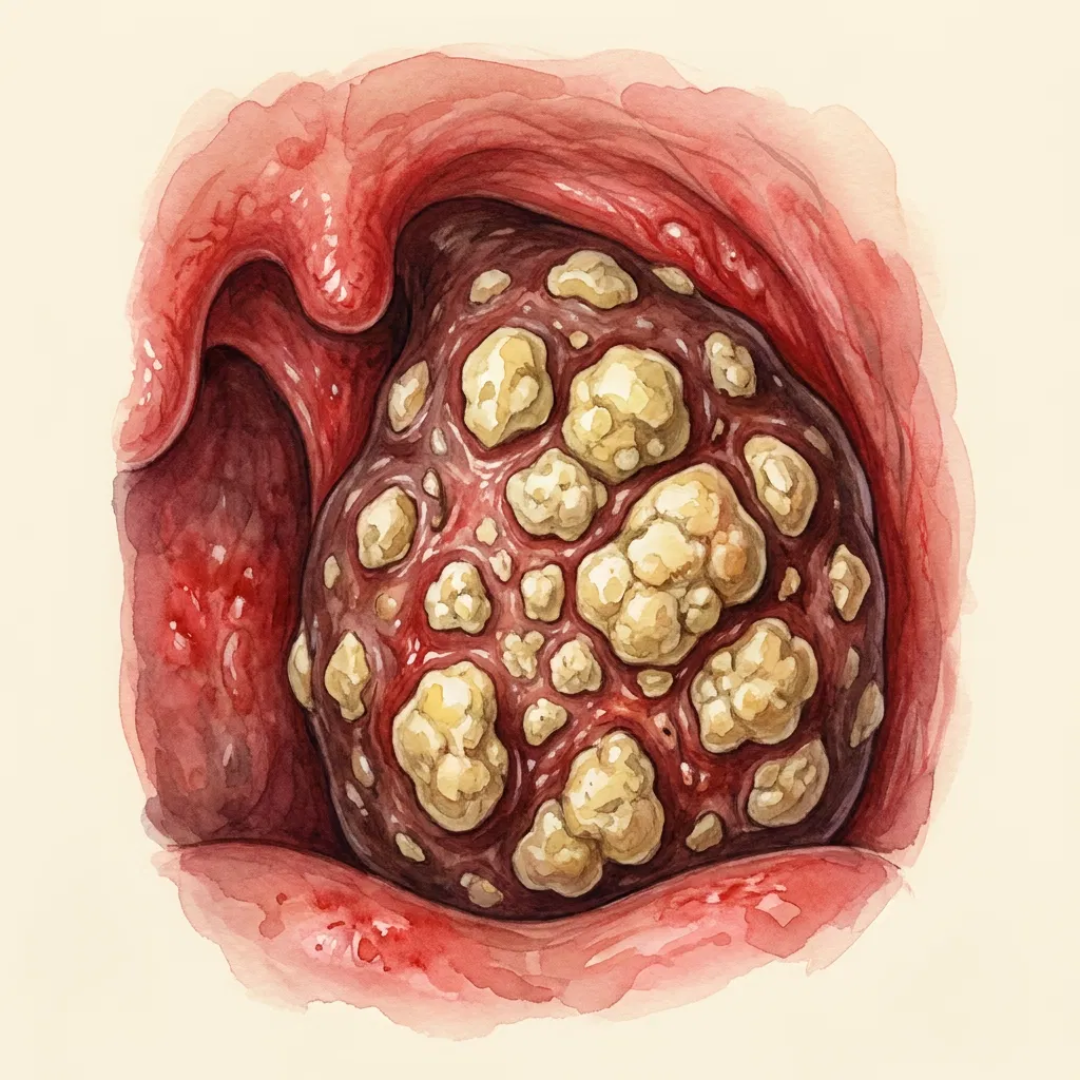
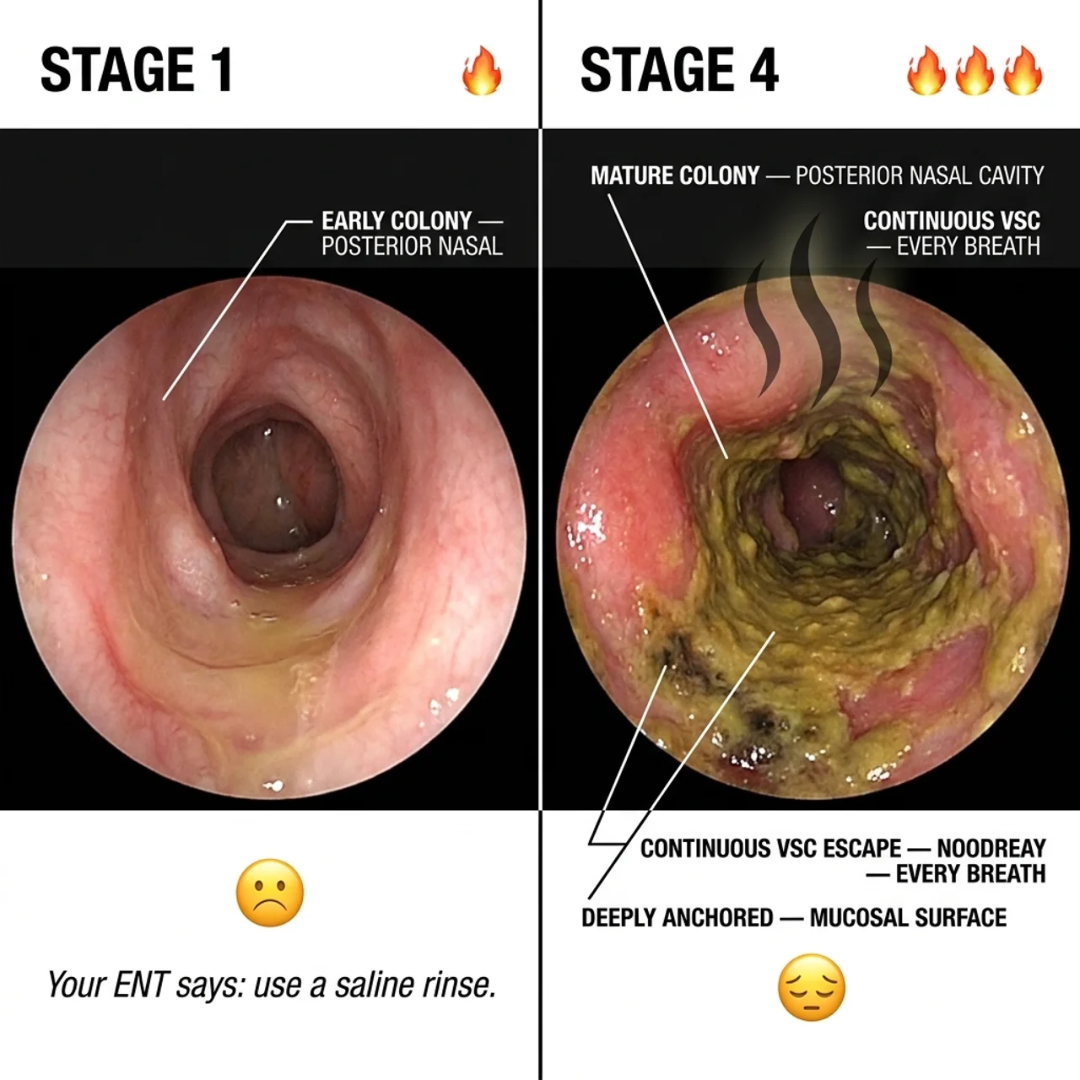
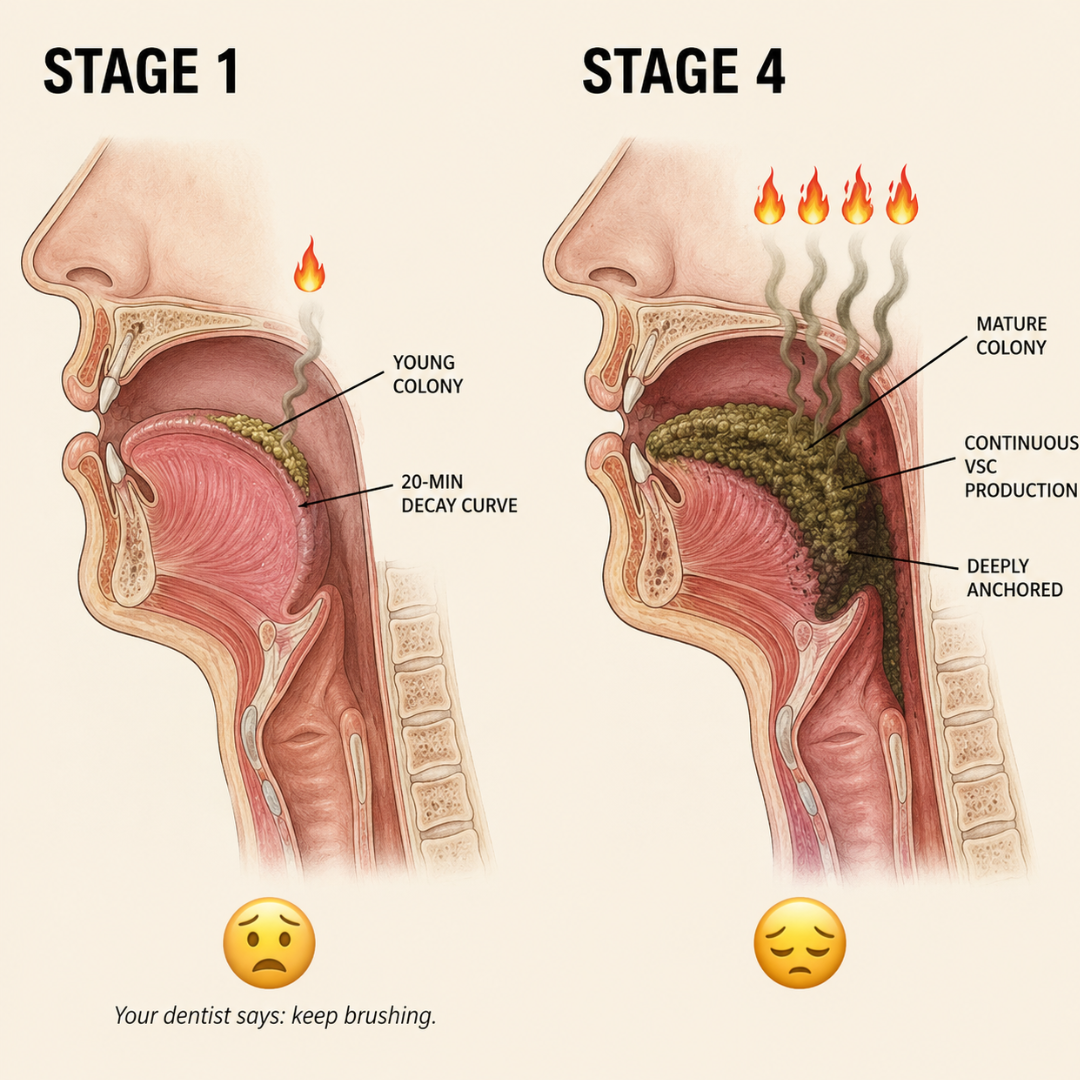
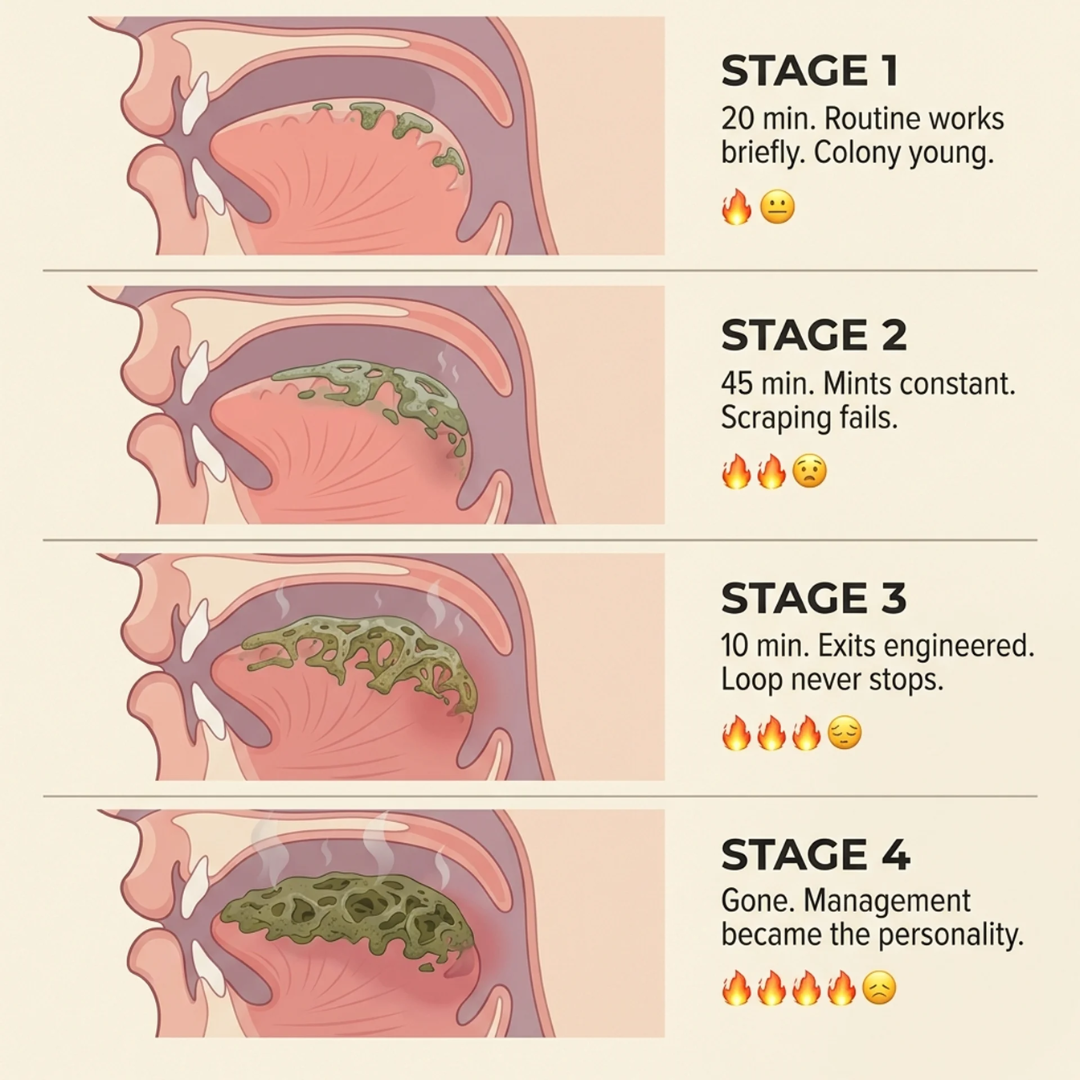
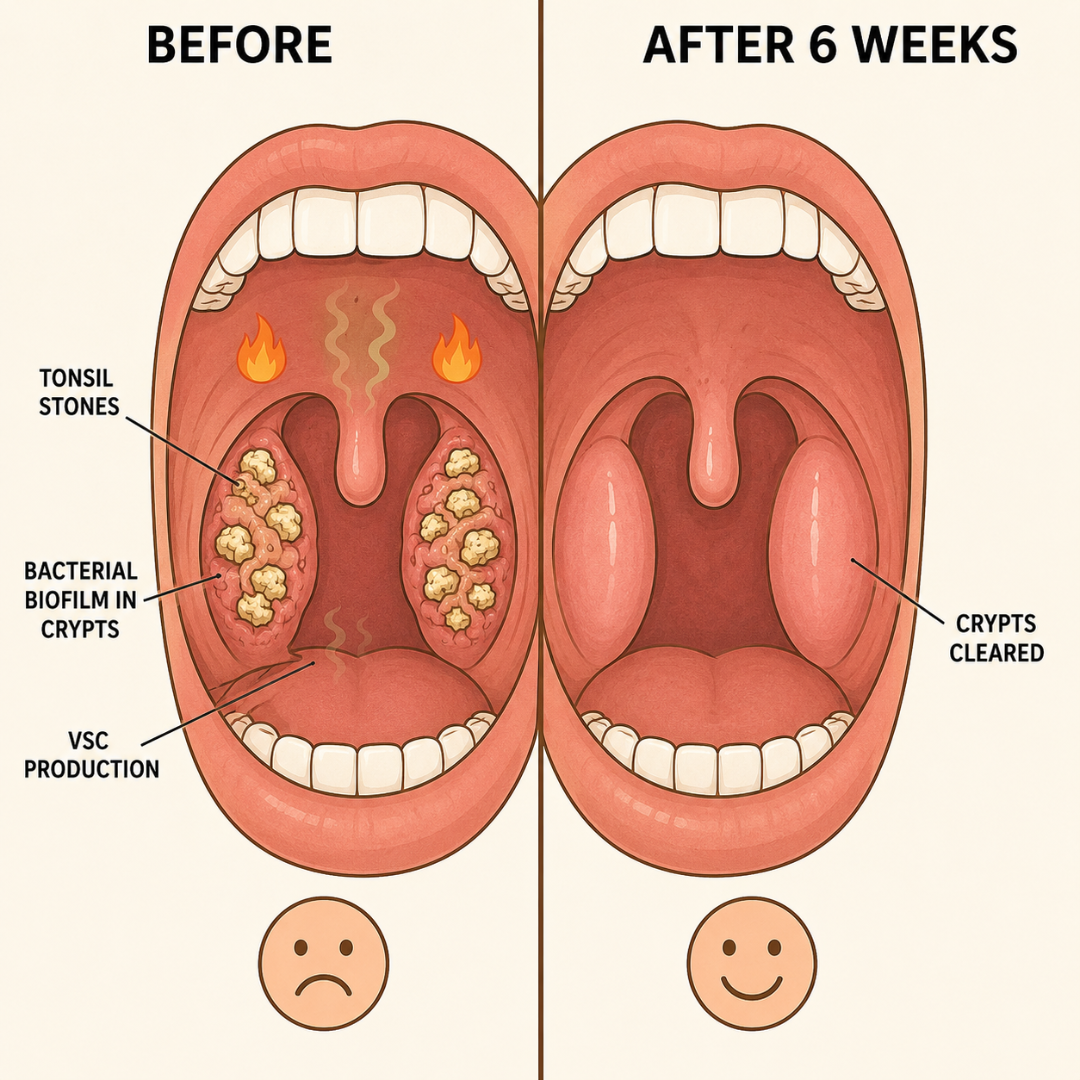
Chronic Tonsil Stones have four stages. The first three are completely reversible. Most American dentists won't tell you that — because they're only trained to manage stage four. I've been a ENT for 22 years. The first 20, I practiced in Milan. I moved to the United States two years ago when my wife's company transferred her to Seattle. I joined a dental practice here. Good practice. Good dentists. And in my first three months, I saw something that kept me up at night. Women in their 30s and 40s walking in humiliated. Carrying a cotton swab wrapped in tissue in their purse. Gagging quietly in bathroom stalls trying to dig something loose from the back of their throat before a meeting. Googling photos at 1am to confirm what they were looking at in the mirror. Every one of them said the same thing. "My dentist keeps telling me my tonsils are fine. It's just stones. Everyone gets them." Everyone gets them. In Italy, we don't dismiss a symptom just because it's common. Common and harmless are not the same word. Because by the time a patient is coughing up small white deposits weekly, checking the back of her throat with her phone flashlight before every date, and still can't explain why her breath turns metallic by 10am no matter what she does — something has already been failing structurally for years. Here's what no one has told you about where those stones are actually coming from. ──────────────────── Your tonsils are lined with small pockets called crypts. Deep inside those crypts — folded, warm, low-oxygen — lives a structured bacterial colony called a biofilm. This colony is not bacteria the way people think of bacteria — individual cells floating loosely. It is a physical matrix. An architectural structure. The bacteria live inside it the way people live inside a building, shielded from anything applied to the outer surface. These bacteria are anaerobic — they don't need oxygen. They thrive in exactly the low-moisture, low-oxygen environment your tonsil crypts and the back of your tongue both provide: sealed pockets, protected from every rinse, every gargle, every swab you've tried. They produce Volatile Sulfur Compounds. VSCs. The metallic, sulfurous, faintly rotten odor that returns within 20 minutes of your most thorough routine. Those white, foul-smelling deposits you've been digging out of your own throat? They're calcified debris — dead cells, mucus, and trapped bacteria from that same colony, hardening inside the crypt. The stone is not the disease. The stone is the residue the colony leaves behind while it keeps producing odor everywhere else in your mouth. When this colony goes unaddressed at the root, it doesn't stay the same. It progresses. Systematically. Through four identifiable stages. Most American dentists are trained to manage the symptom — pick out the stone, rinse with salt water — at stage four. They are not trained to recognize stages one, two, and three, when the colony is still fully reversible. Here is every stage. And here is what happens to the women who stay in the management cycle too long. ───────────────── STAGE ONE — The Phantom Taste Most people don't even notice stage one is a stage. You swallow and catch something — a faint sourness, almost metallic, gone before you can place it. No visible stones yet. No mirror-checking yet. Just an occasional taste you can't explain, and breath that's fine in the morning but turns by early afternoon. You brush a little harder. You add mouthwash. You tell yourself it's something you ate. Your dentist says: "Everything looks great in there." At stage one, the colony is still young. The crypts haven't started collecting debris yet. Enzymatic penetration works fastest here. Most people see the taste and the afternoon turn disappear within the first two weeks. But nobody tells patients they're at stage one. So they stay in the "it's nothing" cycle, month after month, while the colony matures underneath. Until stage two begins. ─────────────────────── STAGE TWO — The First Stone Stage two is the moment it stops being invisible. You cough, or you're brushing your tongue too far back, and something small and white comes loose. You look at it. You smell it. And you understand, all at once, that whatever that was — it has been living inside you. You start checking. Flashlight, mirror, phone camera. You learn the word "tonsillolith" at 11pm from a forum thread. You buy a water flosser specifically for this. You get good at removing them — genuinely skilled, in a way you never wanted to be. This is when the social withdrawal begins in earnest. You stop clearing your throat in meetings the way you used to, because you're afraid of what might come with it. You start covering your mouth when you cough. A slight angle on conversations that used to be face-to-face. My patient Sarah came to me at stage two. She was 34. An elementary school teacher in Austin — warm, well-liked, a close group of friends and a full social calendar. On paper, doing well. She sat in my chair with her hands folded too tightly in her lap. "I need you to tell me the truth," she said. "Not the polite version." She had been through salt water gargles, a water flosser, cotton swabs, TheraBreath, two different oral probiotics, and a complete dietary elimination of dairy because someone online said it caused stones. She had spent over four hundred dollars. In return, she still found a new stone every four to five days, and her breath still turned by mid-morning no matter what she'd removed the night before. She had been on eight dates in the past year. She had not kissed a single person. "I engineered every exit," she told me. "Before they could get close enough to notice." At stage two, the colony is well-established but still fully addressable. Enzymatic disruption combined with probiotic recolonization changes the environment inside the crypts and along the tongue — not just what you can dig out. Most people experience the deepest clearing between days 9 and 14, as the disrupted matrix breaks loose. But Sarah had not been told she was at stage two. She had been told stones were normal. So she stayed in the management cycle. And stage three began. ─────────────────── STAGE THREE — The Weekly Ritual Stage three is not just about the stones anymore. At stage three, the colony is mature and deeply anchored — in the crypts, and across the back of the tongue. Stones now form weekly, sometimes more. The breath turns faster, holding barely through the commute. And the removal ritual — flashlight, swab, gargle, repeat — has become something you do in private, on a schedule, like a chore nobody knows you're doing. But the most consequential damage at stage three isn't happening in your throat. It's happening in your life. The monitoring loop — checking with your tongue whether one's loose, calculating how long since your last gargle, reading the other person's face for a flinch — runs under every conversation, every date, every meeting. Sarah told me what stage three actually felt like. "I stopped laughing with my mouth open. I started choosing seats at restaurants based on which direction my breath would travel, not who I wanted to sit near. I check my throat with my phone camera before I leave the house — every single day. I've had this so long I thought it was just me. Just who I'd become." She paused. "My last relationship ended two years ago. I've never said this out loud, but I think this created a distance that slowly closed off the physical part of things. He never said anything. I just watched the spontaneous closeness stop happening." She wasn't doing anything wrong. The entire protocol she'd been following — dig it out, gargle, repeat — was designed to manage debris, not the colony producing it. At stage three, the colony requires consistent enzymatic and probiotic intervention over a sustained period — most people need six to eight weeks before the baseline shifts meaningfully. But the tissue is still fully responsive. The colony can still be disrupted and displaced. This is the critical window. Every month in the management cycle makes the next month harder to reverse. Because stage four is not a stone problem anymore. ─────────────────── STAGE FOUR — The Management Cycle Becomes the Life At stage four, the patient has stopped believing there is an answer. She has the water flosser. She has the swab technique down. She has read every forum thread and PubMed abstract on tonsilloliths. She has had the dentist tell her "it's just stones, everyone gets them" so many times she's stopped mentioning it. She has accepted — quietly, without announcing it — that this is simply her life now. The mints are always in her pocket. The mirror-check is always happening before she leaves the house. The exits from dates are always engineered. It's automatic. And underneath the acceptance is something harder: the quiet belief that she is not safe to be close to. That closeness has to be earned through preparation and management. But the biofilm, even at stage four, is still responsive. The colony can still be disrupted. The territory can still be reclaimed. What the industry doesn't tell you at stage four — what your dentist won't tell you because there's no prescription for it — is that the same mechanism that could have reversed stage one can still reverse stage four. It takes longer. It requires consistency. But the lining is still there. ──────────────────── Here's what your water flosser and your salt gargle are not telling you. The $17 billion oral care industry has known for decades that surface products don't reach the biofilm environment inside tonsil crypts or at the back of the tongue. They've known that alcohol-based mouthwash temporarily suppresses surface bacteria and then makes conditions worse — drying the environment, reducing saliva, creating exactly the low-moisture, low-oxygen conditions VSC-producing bacteria need. They kept selling it anyway. Digging out a stone removes debris. It doesn't touch the colony that made it. That's why a new one forms in days. You're clearing the driveway. The building is still standing. Your dentist says stones are normal because, structurally, they usually are common — but common isn't the same as unaddressed. Chronic halitosis and recurring tonsil stones are a bacterial environment problem in tissue most routine dental exams aren't built to evaluate or treat. You were not failing the protocol. The protocol was treating the debris, not the cause. ──────────────────── In Milan, we moved past "just gargle and pick them out" recommendations for chronic cases more than a decade ago. The protocol targets three sequential actions surface products cannot perform: ✅ Enzymatic penetration — specific enzyme compounds that dissolve the structural glue holding the biofilm matrix together, in the crypts and across the posterior tongue. Not suppressing surface bacteria. Breaking the colony architecture itself. ✅ Iron sequestration via Lactoferrin — cutting off the iron supply anaerobic bacteria require to reproduce. Without iron, the colony cannot rebuild at the rate it normally would after disruption. ✅ Competitive probiotic recolonization — introducing beneficial bacterial strains that occupy the territory the disrupted colony leaves behind, crowding out the return of odor-producing species. And format matters as much as formula. A rinse or gargle that passes through in 30 seconds doesn't stay in contact long enough for enzymatic penetration to occur. A slow-dissolving lozenge positioned at the back of the tongue delivers those compounds at the site of the colony — and holds them there while the enzymes work. ──────────────────── The product I recommend to my patients is VeroCare™ Oral Defence by VeroGlow. Enzyme Trio. Lactoferrin. Probiotic Recolonization Complex. Strictly alcohol-free. Slow-dissolving lozenge format for sustained contact at the site of the colony. Third-party tested. I have no financial relationship with this company. I recommend it because the mechanism matches the research and I have watched it work. Here is what happened to Sarah. ──────────────────── I showed her the biofilm diagram. I explained where the stones were actually coming from and why every gargle and every swab session had been managing evidence, not the source. She cried. Not from sadness — from the specific exhausted relief of finally having something named correctly. She ordered VeroCare that night. Day 4 — Made it to 11am before reaching for gum. Hadn't happened in two years. Week 1 — No new stones felt at her usual check. First time in months. Week 2 — Made it through a two-hour team meeting without touching the mints in her pocket. Checked them afterward. Still there. Week 3 — Talking to her best friend for 90 minutes without the monitoring loop running. Didn't realize it until she got home. Week 6 — First date. Dinner downtown. Forgot to do her usual mirror-check before she left the house. He walked her to her car at the end of the night. He kissed her. And she was entirely, completely just — present. She called me the next morning. "I think I've been using this as a reason to stay out of my own life," she said. "And it turns out it's not a reason anymore." ──────────────────── ⭐ Jane T., 43, Texas — "Tried BLIS K12, TheraBreath, two oral probiotics, every Reddit recommendation for three years. Six weeks in I went on a date and didn't think about my breath once. Didn't time a mint. Didn't engineer the exit. He kissed me and I was just there for it." ⭐ Trish M., 39, Oregon — "Got through a full day of parent-teacher conferences — back to back, close quarters — and found my mints still in my cardigan pocket at the end of the day. Hadn't touched one. Didn't even notice until I got home." ⭐ Carolyn R., 44, Florida — "I stopped laughing with my mouth open. I'd been doing it so long I thought it was just my personality. Eight weeks in I caught myself laughing in a meeting — fully, openly — and nobody shifted away. I cried in the car afterward." ──────────────────── If you're at stage one — an occasional taste you can't explain, breath fine in the morning and off by afternoon — the colony is still young. Most people see it disappear within the first two weeks. If you're at stage two — you've found your first stone, you've started checking, the mints are becoming a habit — the colony is established but fully addressable. Clearing typically happens between days 9 and 14. If you're at stage three — the weekly removal ritual, the monitoring loop under every conversation, the exits you no longer consciously plan — this is the critical window. Six to eight weeks of consistency produces a shift patients describe as the stones simply no longer being the organizing principle of their week. If you're at stage four — you've stopped believing there's an answer, the ritual has become the personality — the colony can still be addressed. It takes longer. It requires consistency. But the territory can still be reclaimed. Every month in the management cycle makes the next month harder to reverse. The 60-day guarantee means the first two months cost you nothing if the stones don't slow, if the taste doesn't change, if the monitoring loop doesn't quiet. ──────────────────── If you are living with: A stone you find every few days, no matter how carefully you gargle or how often you flush your crypts with a water flosser. A metallic taste that returns within 20 minutes of your most thorough routine. A mirror-check that's become part of your morning — flashlight, phone camera, throat, repeat. Dates that go well and end without a kiss because you engineered the exit before anyone could get close enough. A dentist who keeps saying it's "just stones, totally normal" while the colony that's producing them matures, undisturbed, every single month. Try VeroCare risk-free. Sixty-day money-back guarantee. No questions asked. One lozenge nightly. That is the protocol. Your water flosser was clearing the debris. VeroCare goes after the colony producing it. Try it now: https://getveroglow.com/products/verocare%E2%84%A2-oral-defence-for-bad-breath ──────────────────── ~ Dr. Michael Carter, DDS ENT — formerly Milan, now Seattle "By the time I see a patient at stage four, the protocol has failed them for years. The stones weren't the problem. The silence around what was making them was."
Like this ad? Make it yours.
Crush rebuilds this exact creative around your product — your brand, your colors, your offer — in about a minute.