Amalia Serrano
Amalia Serrano Facebook ad: “Chronic anxiety and 1 hidden cause, why I stopped reading…”
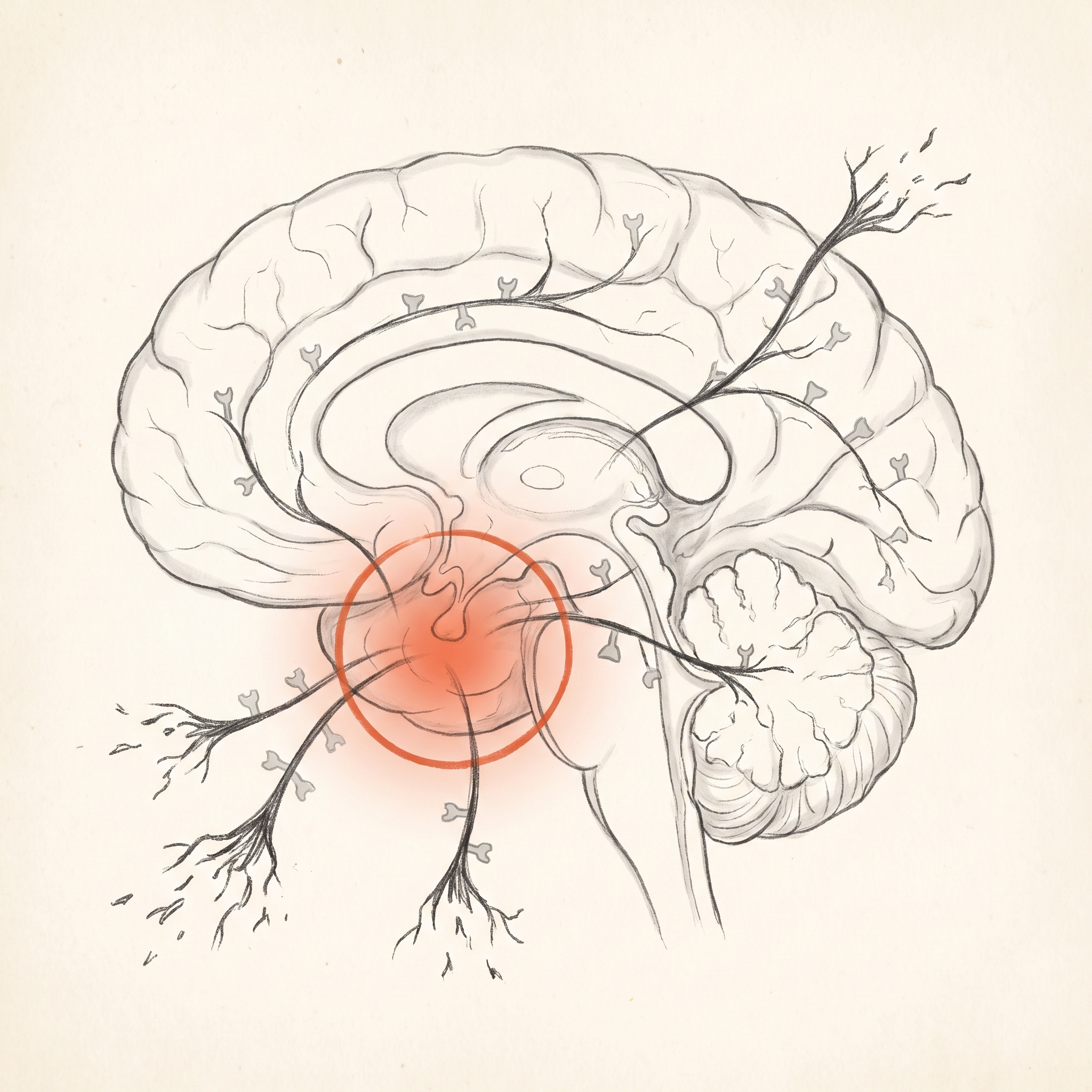
Ran for 1 day, from August 23 to August 24, 2026, the last day Crush saw it.
Run by Amalia Serrano on Facebook. Crush is not the advertiser and does not verify its claims. See this ad in Meta's Ad Library(opens in a new tab)
Want an ad like this for your product?
Crush makes new ad images for your product from this ad: your logo, your product photo, your offer.
Trials from $19.95 USD, then $79.95 USD a month. Cancel anytime.
About this ad
- Meta Ad Library ID
- 1061528230071919
- Platforms
- Facebook, Instagram, Audience Network, Messenger, WhatsApp and Threads
- Relaunches
- 0
Ad text
The anxiety got so bad last month that my six-year-old daughter asked me why I was always holding my stomach, and I told her MUMMY HAD A TUMMY ACHE, AND SHE WENT TO THE KITCHEN AND BROUGHT ME A GLASS OF WATER with both hands because she thought that would fix it. I'm thirty-eight. I've had anxiety for eleven years. And my child is already learning how to look after me instead of the other way round. That was the moment I knew something had to change. Not "manage better." Change. Here's what I'd already tried. Sertraline. My GP prescribed it when I was twenty-nine, three months after Lily was born. It took the edge off for the first year. Then it flattened everything. I remember standing at my daughter's first birthday party thinking I should feel something. Joy, pride, anything. I felt like I was watching it through a window. The anxiety was quieter, but so was everything else. I couldn't cry. Couldn't laugh properly. Sex drive gone. Put on over a stone. My GP said "that's normal" and suggested I stay on it. ❌ Then private therapy — CBT — for eight months at £90 a session. Seven hundred and twenty pounds total. The therapist was kind. She taught me grounding techniques and breathing patterns. Some sessions helped in the moment. But the moment I left the room and got back into real life — the school run, the bills, the bedtime battles, the 4am wake-ups — the techniques evaporated. I was breathing correctly while my body was screaming. Then supplements. Magnesium tablets from Boots. CBD oil from a health shop in town — £35 a bottle, lasted two weeks. Ashwagandha because a friend on Facebook said it changed her life. Rescue Remedy. Valerian root. Kalms Night. A probiotic someone on Mumsnet recommended for the gut-brain axis. Nothing. ❌ Total spend over those years: somewhere past £5,000. I stopped counting after a while. Every purchase was hope. Every morning after was the same knot in my stomach. The worst moment — the floor scene — was a Wednesday night last February. Lily was in bed. The flat was quiet. I was lying on the kitchen floor because the cold tiles felt like the only thing that could slow my heart down. My resting pulse was 118. I know because I checked on my watch. I wasn't panicking about anything specific. There was no trigger. My body was just running, all the time, and I couldn't make it stop. I lay there thinking: "SHE DESERVES A BETTER MUM THAN THIS." That's the thought that lives underneath all the others. Not the chest tightness. Not the jaw I catch myself clenching at my desk every afternoon. Not the nausea before meetings. Underneath all of it, the real fear: that my daughter is growing up with a mother who is physically present and emotionally absent. That she'll remember me as the mum who was always tense. Always distracted. Always holding her stomach. I used to read to her every night. Voices and everything — the bear, the witch, the mouse. She'd laugh and I'd laugh and those twenty minutes were sacred. Then the anxiety got worse and I couldn't concentrate on the words. I'd be reading Gruffalo and my mind would be racing through tomorrow's problems. I started letting the iPad do bedtime instead. She never complained. That made it worse. I stopped having people over. Stopped going to the mums' meet-ups at the park after school. Stopped texting friends back. My mum said gently one Saturday: "You're not yourself, love." And I nearly lost it because I genuinely couldn't remember who "myself" was anymore. My ex-partner and I had separated the year before. I don't blame the anxiety entirely — but it made everything worse. I was snapping at him constantly. Picking fights because the agitation had to go somewhere. He once said, "I don't know who I'm coming home to anymore." He wasn't wrong. I was reading an article at three in the morning — because that's what you do when you can't sleep, you scroll through health articles looking for answers — and I stumbled on something a neurochemist had written. She wasn't selling anything. She was explaining a mechanism. Her opening line: "Has anyone ever told you why your brain's calming system has stopped working?" No. Nobody ever had. She explained that your brain has specific calming receptors whose only job is to tell the nervous system to stand down. Those receptors are completely dependent on a single mineral to function. When you have adequate levels, the system fires and then shuts off. When you're depleted, the system can't shut off. The "off switch" has no fuel. She referenced a study showing that roughly 70% of Western adults are depleted in this mineral. Seventy per cent. And GPs almost never test for it. Not because they don't care. Because the system isn't built to look for deficiencies — it's built to prescribe. Then she explained the vicious circle — published research, not opinion. Chronic stress triggers cortisol. Cortisol causes your kidneys to excrete this mineral. As the mineral drops, the calming receptors stop working. Anxiety increases. More cortisol. More depletion. More anxiety. A loop that reinforces itself. She used a comparison that hit me hard. Imagine your calming system is a car's braking system. The brakes are there. The pedal is there. But the brake fluid has been draining for years. You're stamping on the pedal and nothing happens. Not because the car is broken. Because the reservoir is empty. Sertraline? That adjusts the serotonin system — completely different pathway. It doesn't refill the reservoir. CBT? A conscious tool trying to override a system that operates below conscious control. You're trying to think your way out of a fluid leak. The magnesium I'd been taking from Boots? The oxide form. It absorbs at roughly 4%. I was taking a tablet every morning and my body was using almost none of it. And here's the statistic that made me angry: 40–60% of people on SSRIs experience emotional blunting. That's not a rare side effect. That's the experience of the majority. And nobody told me that at the prescription counter. ❌ The protocol is the protocol. Mechanism. That word changed everything. You need two things working together, she wrote. The right form of this mineral — one that absorbs at 50–80% — combined with two specific compounds that support the calming receptors through entirely separate pathways. One compound crosses the blood-brain barrier within thirty minutes and increases the brain-wave pattern associated with calm alertness. The other acts on a receptor discovered in 2023 by researchers at the Scripps Institute and published in Science — it sends a direct "slow down" signal to the nervous system, reducing the physical tension that meditation can't reach. I didn't tell anyone I'd ordered it. If one more person saw me buying another supplement and gave me "that look," I couldn't have handled it. Night one: I slept until 5:30. That doesn't sound like much. I usually wake at 3, sometimes 2. Sleeping past 5 felt like a miracle. Day three: the knot in my stomach was still there when I woke up. But softer. Like someone had loosened a belt by two notches. I noticed it because for the first time in months, I had coffee before I noticed the dread. Coffee came first. That had never happened. Week two: I read to Lily. The Gruffalo, with voices. She laughed and grabbed my arm and I felt it — actually felt it, in my chest, in my throat. Joy. I hadn't felt that in so long I'd forgotten what it was. I cried after she fell asleep. Good tears. ✅ Month one: I went to the park after school with the other mums. Stayed for an hour. Didn't rehearse what to say. Just talked. One of them said, "You seem lighter." I nearly cried again. Month three: my mum came over for Sunday tea. She watched me putting Lily to bed — the story, the voices, the laughing — and afterwards in the kitchen she said, "There she is. There's my girl." I'm not cured. I still have stress. I still feel pressure. The difference is this: the stress doesn't have its claws in me anymore. I can see it without drowning in it. The brakes work again. If you're the mum lying on the floor at midnight wondering if this is just your life now. If you've spent thousands on tablets and therapies and supplements that never reached the real problem. If you've stopped reading bedtime stories because your brain won't slow down long enough to finish a page. If the worst part isn't the anxiety — it's what it's taken from you. Then read what I read. Dr Catherine Ashworth calls it "Calm Signal Shutdown." She writes like a scientist who's furious that nobody is talking about this. She doesn't sell anything. She just explains what's happening and what the research says about reversing it. It's the first thing that made me feel like I wasn't broken — I was depleted. Read it tonight. Before your daughter gets any older.
Where the ad sends people
ReadWhatHelps.com
Chronic anxiety and 1 hidden cause — why I stopped reading to my daughter
Women Over 35 Who've Tried Everything For Their Anxiety And Still Can't Get Through The Day Without That Tight Chest And Racing Mind, This Is Why
Learn more: sunvarra.com(opens in a new tab)