Midlife Wellness Community
Midlife Wellness Community Facebook ad: “If your afternoons cost more than they used to”
Started on August 2, 2026.
Run by Midlife Wellness Community on Facebook. Crush is not the advertiser and does not verify its claims. See this ad in Meta's Ad Library(opens in a new tab)
Want an ad like this for your product?
Crush makes new ad images for your product from this ad: your logo, your product photo, your offer.
Trials from $19.95 USD, then $79.95 USD a month. Cancel anytime.
About this ad
- Meta Ad Library ID
- 1078839308422671
- Platforms
- Facebook, Instagram, Audience Network, Messenger, WhatsApp and Threads
- Relaunches
- 0
Ad text
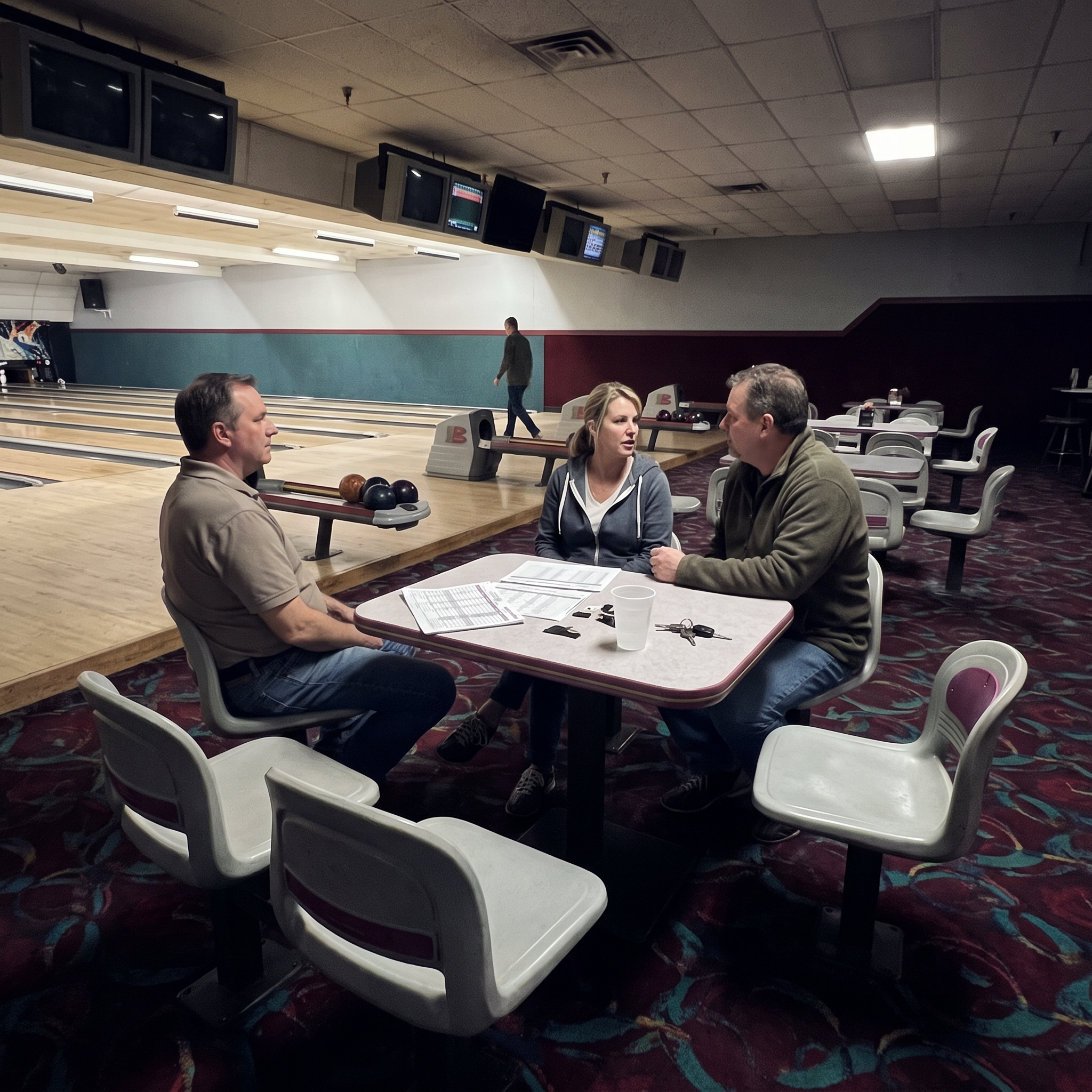
A woman on our Thursday night league paid her dues for a whole season she never bowled. Then the next September she wrote the check again. I'm the league secretary. I'm the one who takes the envelopes. So I'm the one who knew. If I had understood back then that those two checks were going to end up explaining why I stopped staying late in my own shop on Wednesdays, I'd have asked her about it a year sooner than I did. I didn't ask. I cashed the check, printed the standings, and let it alone. I should tell you what a Thursday league is, in case you've never been in one. I teach welding and auto body at the vo-tech. Twenty-six years. I bowl at a twelve-lane house out on the state route, the kind with the carpet from 1987 and a walk-in cooler behind the bar that runs all night and never quite gets cold. Twelve teams. Four to a team. Same forty-some people, September through April, since before my kids were born. I don't know most of their middle names. I know their averages, and I know which lane they hate. And I've been the secretary for nineteen years, which means every Friday morning I sit down with the score sheets and type up the standings and tape them inside the door. Denise was on Team 6. She's 46. She works in the billing office at the hospital, seven to three-thirty, twenty-two years. Both her kids are grown and out of the house. She had a ball in locker 14 with her name printed on the tape, because she'd had that locker so long the tape had gone yellow. And she was the one who stayed. That was the whole thing about Denise. League's over at nine and the lanes shut down and she'd still be at the tables at ten-thirty arguing with Terry about whether the oil pattern had changed. You know somebody like that. Every league has one. She's the reason the place isn't just bowling. Which is why the first week I noticed it, I didn't have anywhere to put it. It was a Thursday in November, second game. She'd thrown the first game right at her average. Nothing wrong with it. Then in the second she couldn't get the ball to the line. I want to be careful about what I mean. She wasn't throwing it badly. She'd stand at the approach with the ball up, and then she'd just stand there. Longer than you stand there. And when she went, her feet got to the line before the ball did, and it came off her hand low and slow and went nowhere. She was forty pins under herself by the sixth frame. She sat down after the second game and said she'd pulled something in her back and she was going to head out. She hadn't pulled anything. I watched her carry her own bag to the car. She came back the next week and did about the same. Then the week after that she didn't come. Then it was December and she wasn't coming. Nobody announced anything. Leagues don't do announcements. Here's what actually happened, and it's the part I still can't shake. When a team is short a bowler, the league takes a blind score. You use the missing bowler's average minus ten pins, and that's what the team bowls against for the night. So every Thursday, Team 6 rolled three games with three people and a number. And every Friday morning I sat at my kitchen table and typed that number into the standings, and taped the sheet inside the door, and there was Denise's name in the fourth spot with 152 next to it. One hundred fifty-two. Her average was 162. For two winters, a woman I'd bowled with for twenty years was a printed number on a piece of paper by the door, and the number was ten pins worse than she was, and I made it myself, every single week, and never once said anything to her about it. That's not a metaphor. I actually did that. And there was the other thing, which nobody ever said out loud. Denise drove Arlene. Arlene's 78. She's bowled in that house since the Ford plant was open. She doesn't drive after dark anymore and hasn't for years, so every Thursday at 5:40 Denise pulled into her driveway and honked once. When Denise stopped coming, Arlene stopped coming. Nobody talked about it. Nobody offered. It just quietly became true that two people were no longer in the building, and only one of them was tired. Then in September, the envelope came anyway. Her check for the new season, on time, same as the last twenty-something years. She never bowled a frame of it. I sat on that for a while and then in October I did something out of character, which is that I called her. Not gracefully. I said, "Denise, you've paid for two seasons you didn't bowl and I don't know what to do with your check." There was a pause. Then she laughed, and it wasn't a good laugh, and she said, "Do you want the short answer or do you want to hear the whole thing." I said I had time. I want to give you what she told me the way she told it, because it isn't what I expected. I expected something to be wrong. Something with a name. There was nothing with a name. She said she'd been tired for about three years. Not sick. Not overwhelmed. She'd get up at 5:15, work a full day, hold it together fine, and then somewhere between five and six in the afternoon it came down on her and there was nothing left on the other side of it. Her mornings worked. That's why the league never saw it until the ball wouldn't get to the line. She spent everything she had before three-thirty and turned up at 6:30 running on nothing. She said the worst part wasn't the tiredness. The worst part was that her evenings were completely, genuinely free — kids grown, nobody needing her, no second job, Terry's easy about dinner — and she couldn't spend a single one of them. She said, "I have every night of the week to myself and I sit in the chair." Then she said the thing I've repeated to about nine people since. She said, "I'm not busy. I'm not sad. I have the time. I just don't have any energy to spend on it." And she'd tried. That's what got me. She listed it off like she'd said it before, because she had. In bed by 9:30, and she tracked it, and it was seven and a half hours most nights. Walking three miles four days a week, which she started specifically to fix this. Cut the wine out entirely, then put it back, then cut it again to make sure. Cut coffee after noon. Took the vitamins off the shelf at the drugstore, the whole aisle basically, a year of that. Then two full blood panels, two years apart. Thyroid. Iron and ferritin. B12. Vitamin D. A1C. The metabolic panel. And the second time she paid out of pocket for a couple of extras because she'd read about them at night on her phone. Everything came back inside normal range. Both times. Every line on both sheets. And she said, "So then what's left is me." She'd decided she was just a tired person now. Like it was a category somebody had moved her into while she wasn't looking. Some people are tall. She's tired. Once she decided that, she stopped looking. That's the part that got me the most. Not the giving up on bowling. The giving up on finding out. Here's what I noticed after I hung up, and it took me about a week to see it. Every single thing on her list was a way of spending less. Go to bed earlier so there's more left tomorrow. Cut the wine so it doesn't cost you the next day. Skip the afternoon coffee so you sleep. Do less on the weekend so you've got something for Monday. Say no to Thursday so you can manage Friday. That's a budget. She'd been running a household budget on her own energy for three years, cutting one line item after another, getting more careful every year. And not one thing on that list had anything to do with how much she was making. I didn't know yet that a person's body makes energy rather than storing it. I just knew the shape of the list was wrong, and I couldn't say why, and it bothered me the way a noise in a car bothers you. Then in November a refrigeration guy told me what was wrong with the cooler. His name's Vern. He's about 63. He does the coolers and the ice machines for half the restaurants in the county and he's been doing ours for as long as I've been going there. I was up at the alley on a Tuesday morning dropping off score sheets and he had the panel off the walk-in behind the bar. I said something about how that box hadn't been right in two years. He said, "It's not broken." I said it never gets cold. And he said — and I'm going to give you this as close as I can, because it's the reason I'm writing any of this down — "Everything in there works. Compressor runs. Fans turn. Thermostat's calling for cold, so the machine's trying the whole time. It runs all night. That's why your bill's high. It's just low on charge." I asked what that meant. He said the refrigerant isn't fuel. It doesn't get used up. It's a carrier. It goes around in a loop — picks up the heat inside the box, carries it out, dumps it, comes back for more. Same stuff, around and around, all day. He said, "You're not low because something failed. Systems lose a little every year. Seeps out through the fittings. Nothing you'd ever find, nothing that leaves a puddle. One year of it, you'd never know." And then he said the part I actually wrote down in my truck afterward. "When it's low, it doesn't quit. "It just moves less heat per lap. Same electricity going in. Less cold coming out. "And there's no gauge on the wall for it. "Somebody's got to come out and put gauges on it, and nobody does that, because from the outside it just looks like a cooler that's a little warm." I stood there in that bar at ten in the morning and thought about a woman in a chair every night with her whole evening free. I went and read about it that week, because I wasn't going to repeat a refrigeration guy's story to somebody without checking it. Neither should you. Here's my version. It's a shop teacher's version and it's probably a little rough. Your body doesn't keep energy in a tank. There's nothing in you that fills up at night and runs down by evening. It builds it continuously, all day long, as fast as you're spending it. What it builds is called ATP. Every cell you've got runs on it. Your heart and your muscles and your brain take the biggest cut, because those three don't get to stop. The building happens inside your cells, in the mitochondria, and it happens along a chain. Fuel and oxygen go in one end and usable energy comes out the other. And partway down that chain there's a molecule whose whole job is to take a charge from one stage and carry it to the next, then come back and do it again. It doesn't get consumed. It goes around and around. That molecule is called CoQ10. When there's less of it, the chain doesn't shut down. It moves less per lap. Same food going in. Same air going in. Less usable energy coming out the far end. That's Vern's cooler. Nothing broken. Running the whole time. Never gets there. Your body makes its own. You make the most of it around age 20, and after that it drops a little every year, and there is no day it happens on and nothing about it announces itself. One percent is nothing. You'd never find it. There's a study from 1989 where they measured it directly in human tissue across a whole range of ages. In heart muscle, people aged 19 to 21 came in around 110 micrograms per gram. People in their late seventies came in around 47. I don't understand tissue chemistry and I'm not going to pretend to. I can read 110 and I can read 47 and I can read which organ they were looking at. And then the part that made me put the laptop down. It isn't on a standard blood panel. Not the CBC. Not the metabolic panel. Not thyroid. Not iron or ferritin. Not B12, not vitamin D, not A1C. There is a lab test for it. It's a specialty send-out — the sample has to be frozen within hours of the draw and run on a mass spectrometer, and it gets used for research and for suspected mitochondrial disease. Nobody runs it at an annual physical. Not on Denise, not on you, not on anybody. So both of her panels were right. Every number on both of them was accurate. Nothing was missed and nobody made a mistake. The workup she got is the workup everybody gets, and this isn't in it. That's the difference between "everything we checked was normal" and "everything is normal," and I'd never once noticed those were two different sentences. Now here's where you're about to raise your hand, because Denise did. She'd already taken CoQ10. Of course she had. A woman who buys the whole vitamin aisle has taken everything once. She went and got the bottle out of the cabinet over her stove and read it properly for the first time, standing at the counter, and then she called me and read it out loud. It was a fifty-plus women's multivitamin. Thirty-some ingredients. CoQ10 was in there, listed inside something called an Energy Blend, and the label printed one milligram number for the whole blend and not one for anything in it. So there is no way on earth to know how much CoQ10 was actually in that capsule. She took it at 4:45 in the morning with coffee, standing up, before she ate anything. And she gave it five weeks. Four things wrong with that, and every one of them is the same thing wrong: not enough of it was reaching her cells, for long enough to matter. The doses in the research sit at 200 milligrams and up, and hers was buried in a blend total, so she wasn't close, assuming there was anything meaningful in there at all. It's fat soluble, which means on an empty stomach with black coffee a real share of it goes straight through you and out. And it isn't a stimulant — it builds up in tissue over weeks. Blood levels don't even level off for two to four weeks, and most of what turns up in the research turns up between week four and week twelve. Five weeks isn't a failed test. Five weeks is where the test starts. She quit right about at the line and spent two more years certain she'd already tried it. The label wasn't her fault either. A proprietary blend isn't required to tell her what's inside it. She was reading a bottle that's allowed not to answer the question. Before she started, she called her doctor's office. I'm going to keep saying this part because it's the part everybody skips. She gave the nurse line the name, the dose, and the form, and asked whether there was any reason not to add it given everything else she takes. They called her back in two days. No concerns, bring it up at the annual. You're not calling for permission. It's a supplement. You're calling because that office has your whole medication list in front of them and you're going off memory, and because this does interact with some things. Blood thinners are the main one. And if you take a statin it's a real conversation with whoever prescribed it, because the pathway your body uses to make CoQ10 overlaps with the one for cholesterol. She started the first week of December. One capsule with dinner, because of the fat. She changed nothing else, which she pointed out was funny, because after three years of cutting things there was nothing left to cut. That turned out to be the cleanest way to test one thing that a person could ask for. What she takes is called solia. Two hundred milligrams of pharmaceutical grade CoQ10 per capsule, as ubiquinone. One ingredient. The entire label is CoQ10, rice flour, and a vegetable capsule — there's nothing else on it to wonder about and no blend total to squint at. Third party tested every batch before it ships, not once in a good year. Made in the USA in a GMP certified facility. One capsule a day, with a meal. That's the whole protocol, and honestly anything longer would have made me suspicious. She told me the first three weeks were nothing at all, and that she almost quit again out of pure habit, and the only reason she didn't was that she'd promised herself ninety days this time instead of five weeks. Here's what I saw, from the other end of the building. The last Thursday in January, locker 14 was open when I walked in. She bowled three games. She was terrible. She was 30 pins under her average and she stayed for all of it and complained about the oil the entire time. Second week of February, Arlene was in the passenger seat at 6:20 like the last two years hadn't happened. I found out later Denise started back up at 5:40 and one honk, same as always. Neither of them mentioned it to anybody. I only know because I was in the lot. And on a Thursday in March I came out of the men's room at ten-fifteen and Denise was at the tables with three other people, arguing about whether the house had changed the pattern, and I went home before she did. That's it. That's the whole thing I've got on her. I took the blind score out of the standings sheet in January, after two winters of typing it, and I put her name back in the fourth spot with a real number next to it. I'd be lying if I said I typed it like it was nothing. Now I have to turn this around on myself, because I told you at the start that her two checks ended up being about my Wednesdays. For about twenty years I kept the shop open after last bell on Wednesdays. Kids could come in and work on whatever they wanted. Their own truck, a project, whatever. It wasn't in my contract and nobody paid me for it and it is the only part of that job I'd have done for free. I'm 51. My last physical was fine — the doctor said the thing they say, which is that everything looks great. And for about two years now, the back half of my day has been going soft around four. I'd started scheduling all the paperwork for after lunch on purpose, and I told myself that was good time management. Then a Wednesday in the spring before all this, I had two kids in the shop working on a bumper, and I sat down at my desk to fill out a purchase order, and I woke up because one of them dropped a clamp. I don't know how long. Not long. They were nice about it, which was worse. I did Wednesdays twice more after that and then I stopped offering. I told the office it was a coverage thing. It was not a coverage thing. And here's the one I've never said out loud to anybody. On Thursdays I still went to league, but I started leaving at nine when the lanes shut down instead of staying at the tables. Which means for two years I drove home during the exact part of Thursday that was the reason I went. I never thought of any of that as a symptom. I thought of it as me getting older and being a little less generous with my time than I used to be. I'd have called it a character thing. So in December I made the same phone call Denise made. Name, dose, form, anything I should know given the blood pressure pill I'm on. My office called back the next afternoon. No concerns, mention it at the annual. I'm eight months in. I'm not going to give you a fireworks story, because I don't have one and I've stopped believing the ones I read. Nothing happened for the first few weeks, which by then I knew to expect. What I've got is smaller than that. The four o'clock thing shows up closer to six now and some days I don't notice it at all. And in April I put the Wednesday shop hours back on the board. I've done it every week since, and on the second one a kid finished a bumper he'd been carrying around in the back of his truck since October, and I was standing right there for it at five o'clock in the afternoon. I can't prove the capsule did that. I'm one shop teacher, not a study. Denise can't prove hers either and she'd say so first. Some people notice something in a few weeks. Some take a lot longer. Some don't notice much of anything. What I can tell you is what I watched with my own eyes across two seasons, from behind a counter, before I had any idea there was something to explain. So here's who I think this is for. If your evenings are actually yours — nobody needs you, nothing's on the calendar, you're not working a second job or up all night with anybody — and you still can't spend one of them. If the version of you that shows up before noon is fine, and the version after five has gone missing, and somebody in your life has already built their week around the missing one without ever bringing it up. If you've got a list you could recite in order because you've run yourself through it a hundred times, and every line on it came back clean. If your bloodwork keeps coming back normal and you keep feeling exactly the same, and somewhere in there you quietly moved yourself into the tired-person category and stopped looking for anything. If there's a thing you used to be the last one to leave, and you're not anymore. Or if you've got your own Denise. Somebody whose name is still on a list somewhere and whose seat has been empty for a year, and you noticed, and you never asked. One thing I want to be straight about, because it would be dishonest not to. If you're getting four hours of sleep because there's a baby, or you're working two jobs, or you're up at night with a parent — I'm not talking about you and a capsule is not going to fix a schedule. That's real and it's different and it deserves a different answer than this one. I'm talking about the people whose time is free and who still can't use it. Your list isn't wrong. Every line on it is a way of spending less. Not one line on it has anything to do with how much you're making, and your body doesn't store this stuff — it builds it as it goes, all day, every day. Normal bloodwork means the things they checked were normal. That's not the same sentence as everything is normal. And the thing that carries the charge down the line inside your cells isn't on the paper at all. Not on Denise's, not on mine, not on anybody's. If you want to do what she did, do it in this order. Call your doctor's office or your pharmacist first. Give them the name, the dose, and the form, and ask whether there's any reason not to add it given whatever else you take. One call. Most offices come back inside two days. If they say go ahead, it's one capsule a day, with a meal. Not on an empty stomach and not standing at the counter with your coffee at quarter to five. Change nothing else. Your list is fine. Leave it alone. And give it ninety days instead of five weeks. Five weeks is how a woman who did everything right spent two more years certain she'd already tried the one thing pointed at the actual problem. I'm not a doctor and I'm not going to talk like one. I teach kids to weld. I'm one guy who took two checks from a woman for two seasons she never bowled, and typed a number where her name should have been for forty-one weeks, and didn't ask her about it until the second year. https://trysolia.shop/products/coq10-cellular-energy-capsules P.S. The phone call is the step people skip, so I'll say it once more. You are not asking permission — it's a supplement, not a prescription. You're calling because that office has your full medication list and you're working from memory. Blood thinners are the main interaction to raise, and if you're on a statin, that's a conversation with the person who prescribed it. Denise's call took four minutes. And do not stop or change anything you've been prescribed because of a story you read on the internet. That includes a CPAP, thyroid medication, an antidepressant, HRT, any of it. This goes on top of what you're already doing. It doesn't take the place of one thing. P.P.S. There's a 90 day money back guarantee, opened or unopened, every penny, no questions. Ninety is the honest number and not a marketing one. Blood levels take two to four weeks just to level off, and most of what the research shows lands between week four and week twelve. Five weeks tells you almost nothing — that's the whole lesson of the bottle over Denise's stove. Use the entire ninety before you decide anything either way. P.P.P.S. On the price, because it's more than the drugstore bottle and I looked into why before I ordered. What you're paying for is one thing. Two hundred milligrams of pharmaceutical grade CoQ10 and nothing else on the label taking up room next to it. No blend, no combined total, no thirtieth ingredient eating part of the price. The rice flour and the capsule are what holds it — they aren't something you're buying. Now put that next to the cheap bottle, where the real problem isn't the price, it's that you can't account for it. A proprietary blend prints one number for the whole blend and isn't required to tell you how much CoQ10 is in there. So the shelf price is low and the price per milligram is a thing you cannot calculate. You're not saving money, you're buying a number you're hoping about. And potency is the one thing on a label a buyer can't check for himself. You can't look at a capsule and know. Somebody outside the company has to verify it, on every batch, not once in a good year with a badge on the website. That's part of what the price is. The dose math comes last: the common shelf dose is 100 milligrams, so it takes two of those to reach one of these, which closes most of the gap on its own. The multi bottle worked out to under a dollar a day for me. I was buying a large iced coffee out of the gas station on the state route most afternoons to fight a four o'clock it never once fixed. P.P.P.P.S. One more thing I hit while I was deciding what to buy, and it cost me an evening. There's a version sold as ubiquinol that runs about double, and the pitch is that it's the pre-converted form so your body is spared a step. Here's what I worked out. That conversion is the molecule's actual job. It takes a charge, hands it off, and flips back, thousands of times a second — that's the entire thing it does, the same way Vern's refrigerant goes around the loop. So you'd be paying double for a step your body does for free, and a body that couldn't run that step couldn't run the chain at all. On top of that, ubiquinol is the less stable of the two. It reacts with air, which is why it needs the special softgel, and a share of it turns back into the cheaper form on the way in regardless. And the decades of research — including that 1989 tissue work — largely ran on ubiquinone. If you already bought the expensive one, you weren't being careless. That pitch is built to sound like the more informed purchase, which is exactly why careful people are the ones who buy it. I almost did. P.P.P.P.P.S. They only sell it on their own site. It's not on Amazon and anything listed on a marketplace under that name isn't theirs. The reason is worth knowing: marketplace stock from different sellers gets stored together in shared bins, so the bottle that shows up at your door may not be the bottle that company shipped. I keep a spare in the cabinet, not for any dramatic reason, just because a gap in shipping is how a daily habit turns into a bottle you forgot about. P.P.P.P.P.P.S. Vern still does the cooler. I asked him in the spring how long he'd been taking his and he said his doctor put him onto it years ago after a physical and he's never thought about it since, and then he put the panel back on and left, because Vern isn't a talker. The cooler holds temperature now, incidentally. He charged it in November and told me it'll need it again in about four years, and that everything does, and that this is not a defect. P.P.P.P.P.P.P.S. The standings sheet is still taped inside the door. Denise is fourth on Team 6 with a 164 next to her name, which is two pins better than she was before any of this, and she will tell you that herself if you give her the opening. Locker 14 has fresh tape on it. And Arlene got picked up at 5:40 last Thursday, same as she has every Thursday since February, and neither of them has ever once mentioned the year she didn't. If there's somebody whose seat has been empty in front of you for a while, that's one awkward phone call. It's usually worth it. Kalén A, Appelkvist EL, Dallner G. Age-related changes in the lipid compositions of rat and human tissues. Lipids. 1989;24(7):579-584.
Where the ad sends people
trysolia.shop
If your afternoons cost more than they used to 👆
solia
Learn more: trysolia.shop(opens in a new tab)