Midlife Wellness Community
Midlife Wellness Community Facebook ad: “If the scan came back clean and you still can't finish a…”
Started on August 2, 2026.
Run by Midlife Wellness Community on Facebook. Crush is not the advertiser and does not verify its claims. See this ad in Meta's Ad Library(opens in a new tab)
Want an ad like this for your product?
Crush makes new ad images for your product from this ad: your logo, your product photo, your offer.
Trials from $19.95 USD, then $79.95 USD a month. Cancel anytime.
About this ad
- Meta Ad Library ID
- 2106746170197926
- Platforms
- Facebook, Instagram, Audience Network, Messenger, WhatsApp and Threads
- Relaunches
- 0
Ad text
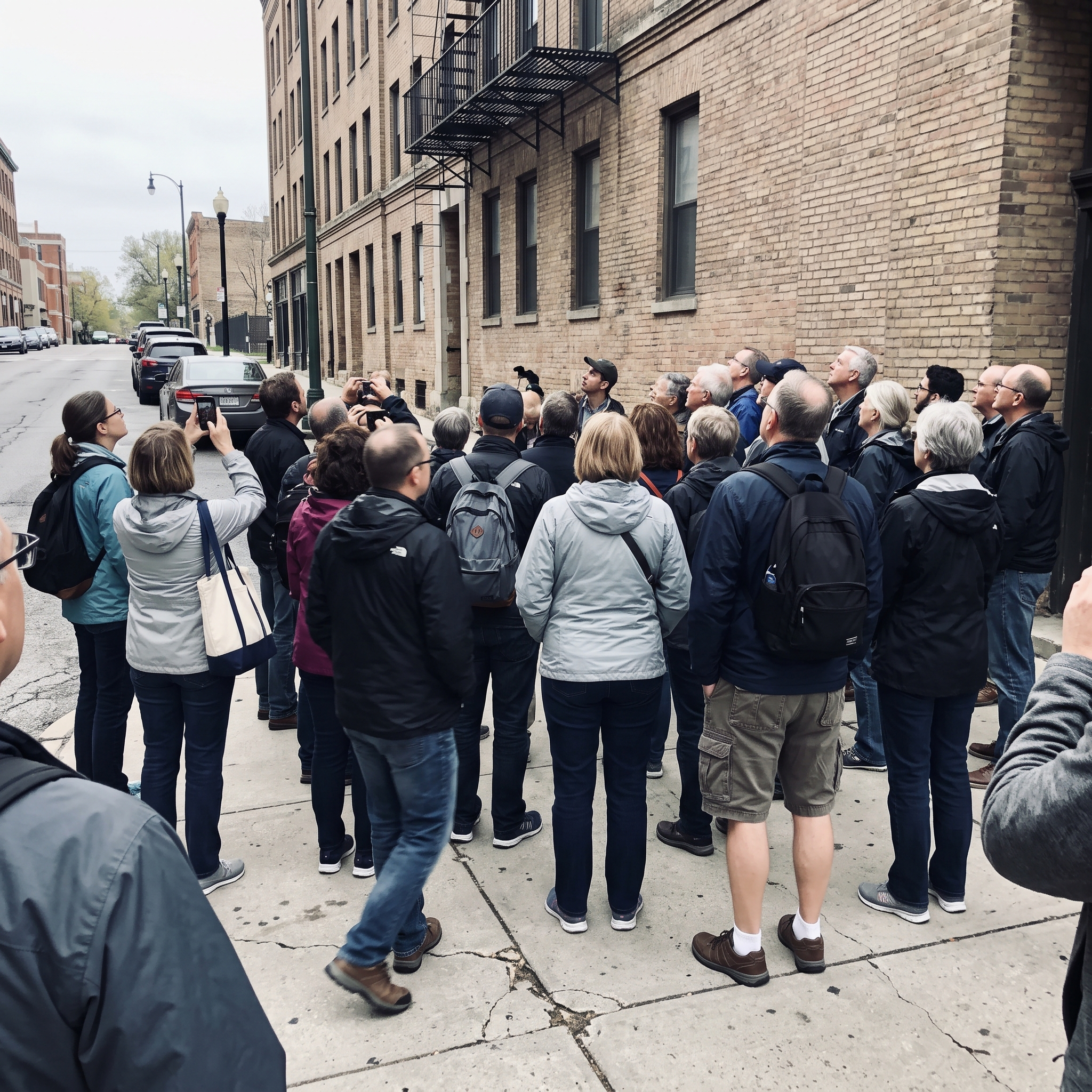
22 people stood on a sidewalk waiting for my business partner to say the name of a building. She has stood in front of that building twice a day since 2006. It's a stop on a walking tour she's been giving for 19 years. They waited 2 minutes. I know it was 2 because I looked at my phone when it started, and then I looked again. Somebody at the back of the group laughed. People do that when a pause runs long — they assume it's a setup and the punchline is coming. There was no punchline. She was looking up at 6 stories of brick trying to find a name she has said out loud 400 times a year, and she couldn't find it. Her name is Delia. She's 49. We've run the same little walking-tour company for 21 years — 2 vans, a folding sign out front of the visitor center, and a green golf umbrella she holds up over her head so the group can find her in a crowd. 19 of those years, the 11 o'clock has been hers. She knows the route the way you know the way to your own bathroom at night. The building is the old Hoyt place, up at Third. Iron fire escape on the front, the good kind, the one people take pictures of. She has a story about the family who built it that runs about 90 seconds, and in 19 years she has never once needed a note for it. Then she came over, put the umbrella in my hand, and went and stood at the back of her own group. I finished the tour. There's a sentence I almost said to her in the visitor center lot that afternoon. I didn't say it. I've been glad about that roughly once a week ever since, and I'll tell you what it was before I'm done. Here's what you have to understand about Delia. She is the one who knows. That was the whole arrangement for 21 years. I did the books and the vans and the insurance and the guy who plows the lot. She held everything else. Names, dates, which family owned the tannery, what year the fire was, what a corbel is. If I couldn't remember something, I didn't look it up. I asked Delia. That was faster and it was more accurate. She's the person other people ask. So the sidewalk was not a small thing, and I want to be careful not to make it sound like one. It wasn't the only thing, either. It was just the loudest. In August I opened the supply closet and found 3 unopened boxes of lanyards. We use maybe 40 lanyards a year. She'd bought the same box 3 times in 5 weeks and had no memory of any of it. She stood there looking at them like somebody else had put them there. In September she asked me when the Duffy group was coming. I told her the 14th. 11 minutes later she asked me again. I know it was 11 minutes because after the 2nd time I started watching the clock, which is a thing I'm not proud of. Somewhere in there she stopped eating lunch with me and started eating in her car. I didn't ask her about any of it. I want to be honest about the next part, because it's the part I actually think about at 2 in the morning. I stopped asking her things. Not on purpose. I'd have a question, and instead of turning around in my chair the way I had for 21 years, I'd just look it up myself. Took 10 seconds. Easier than watching her go looking for it. I did that for about 6 months before I noticed I was doing it. That's what I did to her. Nobody made me. I just quietly took the thing she was, and I started doing it around her. In November she went and got everything checked. I want to say this plainly, because I think people assume women like Delia don't go. She went. She went to the regular doctor first and she pushed, and then she went to the neurologist, and then she waited, and then she went back. She had an MRI. She had bloodwork twice — thyroid, iron, ferritin, B12, vitamin D, the whole metabolic panel. She had the genetic marker test. She sat in a room and did the cognitive assessment, the one where they read you a list of words and ask you for them later. She did all of it, and she didn't complain about any of it, and she never once asked me to come with her. She was not afraid of getting an answer. She wanted one. The call came in the 2nd week of January. Everything was clean. No tumor. No lesions. No plaque markers. Thyroid fine. B12 fine. Iron fine. The genetic test came back the boring way. She scored where a woman her age is supposed to score on the memory test. There was nothing wrong with her. She called me from the parking garage and said, "Well. It's all good news." And I said something like thank God, and she said, "Yeah," and then neither of us said anything for a second. She didn't sound relieved. That's the part I couldn't figure out for weeks. I think what happened is this. For 4 months she'd been carrying a thing she was terrified of, and terrified is at least a direction. You can point yourself at it. And then a doctor told her that the terrible thing wasn't there, and it left her holding exactly what she came in with — a woman who couldn't say the name of a building — with nothing left to blame it on and nothing left to go do about it. She got the good news and it took the fight out of her. The word for what she has, it turns out, is perimenopause. The fog part of it. Losing the word in the middle of the sentence. Walking into a room on purpose and having the purpose evaporate on the threshold. Nobody said that word to her in a single one of those appointments. Not once. I went home that night and I made a list of every test she'd had, because I wanted to look at all of it in one place. And there's one thing true about every single item on that list, and once I saw it I couldn't stop seeing it. Every one of those tests was a picture of whether something was missing. That's what an MRI is. It's a photograph. It looks for a thing that's there that shouldn't be, or a thing that's gone that should be. The blood panels are the same idea — is a substance present at the level it's supposed to be present at. The genetic test asks whether she was built with a certain risk in it. The memory test asks whether the damage has gotten bad enough to show up on a score. All of them look at what she's made of. Not one of them measured whether what she's made of can still make the energy to run on. That's not a gap somebody left in her chart. It's a gap in the whole set. Every test she took was structural, and what was wrong with her wasn't structural. Nothing was broken. Something was running slower, and there is no picture you can take of slower. I didn't get to that on my own. I got there on a roof, in February, from a woman who keeps bees. Trudy Pike is 71 and she has 6 hives on the roof of the Delaney Building, which is on our route. She's let us bring groups up there for years and she's never once asked for anything for it. I went up because I was avoiding the office. It was about 40 degrees and windy and she was doing whatever you do to hives in February. She had 1 open. It was dead. The whole colony, gone. I said something like, oh no, did they starve. And she said no. And she reached in and pulled out a frame and turned it over and showed me, and it was heavy, and it was full. Capped honey, edge to edge. More than they needed. She said in the winter they don't hibernate. They ball up in a cluster and they shiver, and the shivering is how they make heat, and the heat is the only reason any of them are alive in March. And she said if a colony can't make enough heat, they die about 2 inches from all the food in the world, because they can't move to it. Then she put the frame back and said, "Nothing's broken in there. They just couldn't make enough." I stood on that roof and thought about Delia's clean MRI. I read for about a week after that. Not blogs. I'm not clever enough to sort out blogs. I read the actual research, slowly, with a lot of looking words up. Here's what I got, and I'm going to say it the way I'd say it to you in the van, because that's the only way I understand it. Your body does not keep energy in a tank somewhere. There's no reserve it draws down. It makes energy continuously, all day, every second, as fast as it's needed, and what it makes is called ATP. Every cell in you runs on it. 3 places take the biggest share, because they're the 3 that never get to rest. The heart. The muscles. The brain. The making happens inside the cell, in little parts called mitochondria, and it runs like a line. Fuel and oxygen go in one end, usable energy comes out the other. In between there are stages, and a charge has to get handed from one stage to the next, and there's a molecule whose entire job is to do the handing. That carrier is CoQ10. It isn't a vitamin. You don't have to eat it. Your body makes its own — that's the point of it. And if the carrier runs low, the line doesn't stop. That's the whole thing right there. It doesn't stop. It runs slower. Same food in, same air in, less usable energy out the other end. Which is a state that has no name and no test and no symptom you could point at, except that everything you do takes more than it used to. And where does the body concentrate that carrier? The tissues with the highest continuous demand. Heart. Muscle. Brain. Then I found the part that made me put the laptop down. Your body's production of it peaks around age 20. And it goes down every year after that. Not in a drop. Gradually. There is no day it happens on. A 1% decline is not a thing a human being can feel. In 1989 a group of researchers measured it directly in human tissue — real tissue, across ages, newborn to 81. In nearly every organ they looked at, the peak was at 20 and it decreased continuously after. In human heart muscle they measured about 110 micrograms per gram at ages 19 to 21. At ages 77 to 81, about 47. Those are the 2 measured ends. Everything in between is the slow part nobody notices. Delia is 49. She's been somewhere on that slope her whole adult life, and so has everybody she knows, and so has every doctor she saw. (Kalén A, Appelkvist EL, Dallner G. Age-related changes in the lipid compositions of rat and human tissues. Lipids. 1989;24(7):579-584.) Now here's the part I had to check 3 times, because I assumed I was wrong. CoQ10 is not on a standard blood panel. Not the CBC. Not the metabolic panel. Not thyroid, not iron, not ferritin, not B12, not vitamin D, not A1C. It isn't on any of them. There is a test. It's a specialty send-out — the sample has to be frozen within hours of the draw and run on a mass spectrometer. International nutrition guidelines published in 2022 say there's no clinical reason to check it routinely. It gets used in research and for suspected mitochondrial disease. So I want to be extremely clear about something, because this is where people get angry at the wrong person. Nobody missed anything on Delia. Her doctor did not skip a box. That test is not part of a normal workup — not for her, not for you, not for anybody. The full workup she got was correct and it was complete, and it was complete for a set of questions that didn't include this one. Her scan was clean because the scan was looking at the structure. The structure was fine. And then Delia told me something that made me feel like an idiot. She'd already taken CoQ10. It was in a "meno support" complex she bought the previous spring. I went and dug the bottle out of her desk drawer and read the back of it, and there it was, 7th on the list, inside a proprietary blend. Which means the label prints 1 combined number for the whole blend and is not required to tell you how much of any single thing is in there. So the honest answer to "how much CoQ10 did Delia take last spring" is: nobody on earth can tell you. Not her. Not me. Not the company. She took it with her coffee. Delia drinks black coffee from a steel thermos from 6 in the morning until she eats, and she doesn't eat until after the 2nd tour. 21 years. CoQ10 is fat soluble. Taken on an empty stomach with black coffee, a significant share of it just goes through you. It needs food with some fat in it, or it doesn't get in. And she quit at 19 days. Which, honestly, is what a reasonable person does. 19 days of nothing and you stop. Except this isn't a stimulant. It doesn't do anything the first afternoon. It builds up in tissue, and blood levels don't reach steady state for about 2 to 4 weeks, and most of the effects in the research show up somewhere between week 4 and week 12. The opening stretch where you feel nothing isn't the thing failing. It's the loading window. It's supposed to feel like nothing. She had also, at one point, spent double on the fancy kind — ubiquinol, the pre-converted one, the one the softgel says your body doesn't have to do any work on. I looked into that too, because it was going to cost us money. Converting between the 2 forms is what the molecule does. That's the job. It takes a charge, hands it off, cycles back, thousands of times a second, all day. Selling you "pre-converted" is selling you a step your own body performs for free as its actual function. And the pre-converted form is the less stable one — it reacts with air, which is why it needs the special packaging, and a share of it turns back into the cheaper form on the way in anyway. On top of which, the decades of research, including the 1989 tissue measurements, largely ran on the plain form. I'm not calling anybody a sucker for buying it. It's a good pitch. It's engineered to sound like the smarter choice, which is exactly why careful shoppers pick it. Delia is a careful shopper. That's the point. So 4 separate failures, and 1 thing underneath all of them. Not enough of it reached the cell, for long enough to matter. That's it. That's the whole principle. The dose was unknowable, the delivery was wrong, and she quit 11 days before the window even opens. It was never going to work, and none of that is a failure of the ingredient. What we needed was a known amount of it, by itself, taken the way it actually absorbs, for long enough to find out. What she takes now is called solia. 200 milligrams of pharmaceutical-grade Coenzyme Q10 per capsule, as ubiquinone. 1 active ingredient. The full label is CoQ10, rice flour, and a vegetable capsule — the rice flour and the capsule are what hold it, they're not something you're buying. No blend. No proprietary total. No 11th ingredient taking up room on the label. Every batch gets tested by an outside lab for purity and potency before it ships, which matters more than it sounds like it does, because potency is the one thing on a supplement label a buyer physically cannot check. You cannot look at a capsule and know what's in it. Somebody outside the company has to say so, and it has to be every batch. Made in the USA in a GMP-certified facility. Vegan, non-GMO. 30 capsules, 30 days. 1 a day, with a meal. Not with coffee. With food. That's the entire protocol. Before she started it, Delia called her doctor's nurse line. Not for permission — because that office has her full medication list and it belongs in her chart. She gave them the name, the dose, and the form, and asked whether there was any reason not to add it given everything else she's on. They called back in 2 days. That call matters for real reasons. CoQ10 interacts with blood thinners. And your body's own production of it shares a pathway with cholesterol production, so if you're on a statin, that's a genuine conversation to have with the person who prescribed it. It takes 4 minutes and it is not optional. Now here's the sentence I almost said to her in the visitor center lot in October. I almost said: maybe you should just let me take the mornings. I want you to hear how kind that sounds. I meant it kindly. I'd have said it with my hand on her arm. And it would have been the end of her. Not dramatically. She'd have said okay, and I'd have taken the 11 o'clock, and in a year she'd have been doing my job, and in 2 she'd have been part-time, and at some point she'd have stopped being the person other people ask. I almost helped her disappear, gently, on a Tuesday, in a parking lot. And I'll tell you the other thing, which is that I'm 53. 4 years ahead of her. And somewhere in all of that reading I stopped taking notes about Delia and sat there with my hands in my lap thinking about the fact that I'd quietly cut the Q&A off the end of my own tour about a year ago, because I didn't want to get asked something. I never told anybody that. I'm telling you. She started at the end of February. Nothing happened in March. I want to be honest about that, because everybody selling you something wants to tell you you'll feel a warmth in your chest in 20 minutes, and that isn't how this works and I'm not going to pretend it is. 5 weeks of nothing. She said it felt like taking a vitamin, which is to say it felt like nothing at all. The first thing I noticed was in the van on a Thursday in early April. Somebody asked her a question from the back and she answered it. That's the whole event. She answered it at the speed a person answers a question. The week after that she came in with the schedule already worked out and told me she'd redone the Duffy booking. On the 2nd Saturday in April, Delia took the 11 o'clock. That's it. That's the sentence. She picked up the green umbrella off the hook by the door and she went out and did the tour she'd done 19 years, all of it, including Third and the Hoyt Building, and she came back 40 minutes later sweating and complaining about a man who wouldn't stop asking about parking. I sat in the office and did absolutely nothing for about 10 minutes. She has stayed on her patch, by the way. Nothing got stopped and nothing got replaced. Her doctor knows about all of it. This was a thing added on top of what she was already doing, and the day she starts treating it like a substitute for anything her doctor put her on is the day I take the bottle away from her. It's the end of July now. I asked her something in the van last week — I can't even remember what, some question about the Kellerman house — and I got the answer before I finished asking, in that flat way she has, like of course, why are you asking me a thing you could have looked up. 21 years I got that answer, and then for about a year and a half I didn't, and now I do. I don't have a chart to show you. I have a woman who used to hand me an umbrella. If you've stayed with me this far, I don't think it's because you care about a walking tour in a town you've never been to. I think you're somebody's Corinne, or you're somebody's Delia. So look at the behavior, not the feeling. Behavior is the part you can actually check. Has she stopped saying yes to the thing she used to run? Has she started letting somebody else finish her sentence, and thanking them for it? Does she come out of a meeting and not be able to tell you what got decided? Has she started buying things she already has? Has she taken herself off something — quietly, with a good reason attached — that she used to be the reason it worked? And has anybody gone looking, and come back and told her that everything looks fine? I'm not a doctor and I'm not going to tell you what any of that is. Delia went and got the full workup and I'd tell anyone to do the same thing, because ruling things out is worth doing and her scan being clean is genuinely good news. But I'll tell you what I know now that I didn't know in October. Clean means nothing was missing. It doesn't mean anything was measured about how much energy she can still make. Nobody ever measured that. There's no line on the sheet for it. And there was a version of this where I found that out 4 years from now instead, and Delia was part-time, and neither of us ever said out loud what had happened. 👉 https://trysolia.shop/products/coq10-cellular-energy-capsules — Corinne P.S. Trudy still has the hives. She gave me a jar in June with a strip of masking tape on the lid that says JUNE in ballpoint, and it's sitting on the shelf over my desk, and I look at it more than I'd like to admit. Those bees died in a box packed with food. They had everything they needed. They just couldn't make enough heat to cross 2 inches and get to it. Nobody who opened that hive would have found a single thing wrong. P.P.S. Before you start anything, call your doctor's office and give the nurse line 3 pieces of information: the name, the dose, and the form. Ask whether there's any reason not to add it given everything else you take. It matters if you're on a blood thinner, and it matters if you're on a statin. Ours called back in 2 days. And never start, stop, or change anything a doctor has prescribed you without talking to the person who prescribed it — including a patch, a thyroid pill, or an antidepressant. This goes on top. It does not replace. P.P.P.S. I looked into why it costs more than a drugstore bottle, because that's my job in this partnership. What you're paying for is 1 thing. 200 milligrams of pharmaceutical-grade CoQ10 and nothing else competing with it for room on the label. The cheap bottle isn't cheaper — it's unaccountable. A proprietary blend prints 1 combined number and doesn't have to tell you how much CoQ10 is inside, so the shelf price is low and the price per milligram you can actually account for is a number nobody can give you. Then there's the testing, which is the one thing on a label you can't verify yourself and somebody outside the company has to do, on every batch, not once in a good year. And then, last, the arithmetic: the common shelf dose is 100mg, so it takes 2 of those to make 1 of these. Multi-bottle works out to under a dollar a day. I have thrown away more than that in cold coffee out of that thermos every single morning for 21 years. P.P.P.P.S. 90 days, money back, opened or unopened, every penny. 90 and not 30 for a reason I'd rather say plainly: it takes 2 to 4 weeks to reach steady state and the research effects land somewhere between week 4 and week 12. Anything under a month tells you nothing at all. Delia felt nothing for 5 weeks and she was doing it right the whole time. P.P.P.P.P.S. They only sell it direct. It is not on Amazon or any marketplace, and anything listed there under that name isn't theirs. The reason is that marketplace inventory gets commingled — stock from different sellers gets stored together in shared bins, so the bottle that arrives at your door may not be the bottle that company shipped.
Where the ad sends people
trysolia.shop
If the scan came back clean and you still can't finish a sentence you started 👆
solia
Learn more: trysolia.shop(opens in a new tab)