Trevor Langford
 Facebook ad: “Everyone with sleep issues needs to see this”
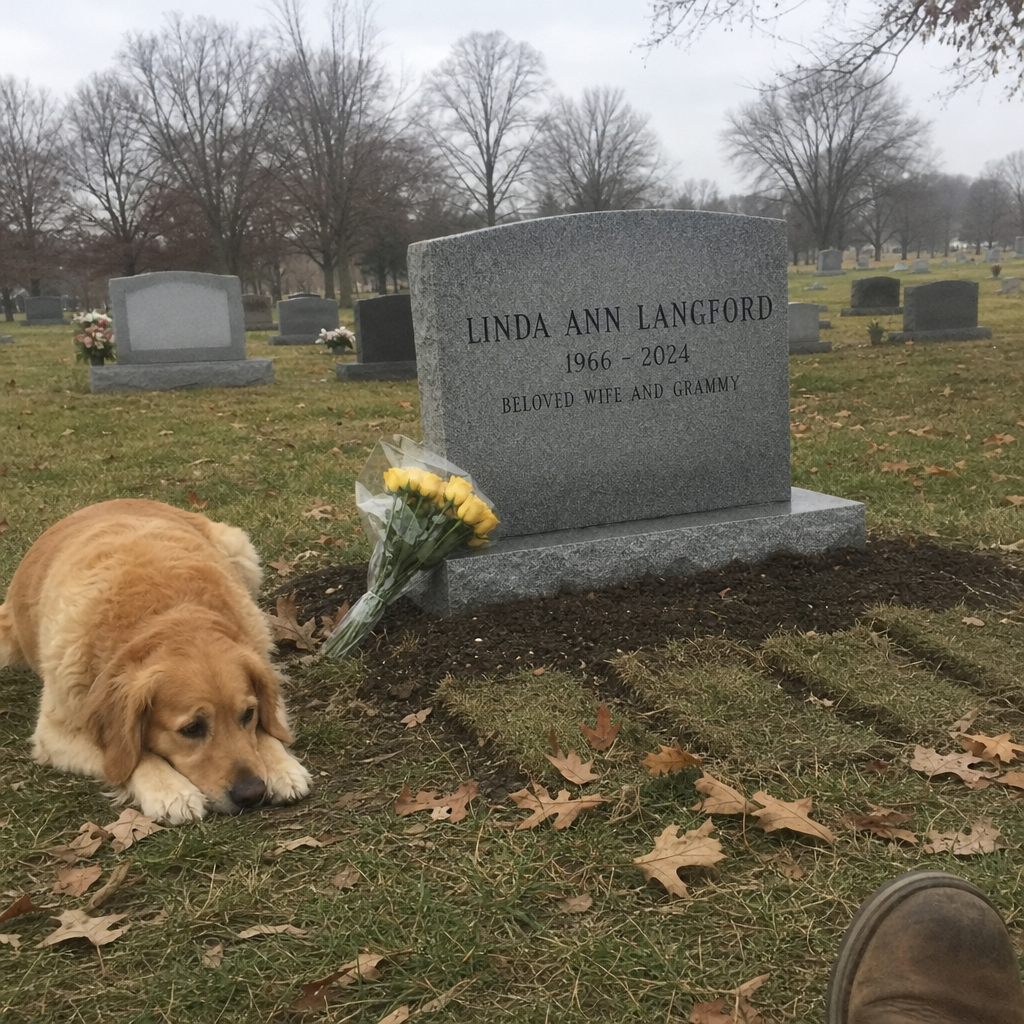
Ran for 49 days, from October 8 to November 26, 2026, the last day Crush saw it.
Run by Trevor Langford on Facebook. Crush is not the advertiser and does not verify its claims. See this ad in Meta's Ad Library(opens in a new tab)
Make your own version of this ad
Crush makes it, launches it in your own Meta ad account, scales the winners and pauses the losers.
About this ad
- Meta Ad Library ID
- 1091883220400675
- Platforms
- Facebook, Instagram, Audience Network and Threads
- Relaunches
- 0
Ad text
My wife was diagnosed with insomnia in June 2022. She'd never taken a sleeping pill in her life. After the diagnosis, she cut out caffeine. Went on a strict sleep schedule. Took her sleeping pill every night. Logged seven hours a night. She died of dementia on October 19th, 2024 at 4:17 AM. She was 63 years old. She cut out caffeine completely on June 12th. Did the sleep schedule for two years and four months. Logged seven hours a night. Walked our golden retriever three miles every single morning before work, rain or shine. She did everything the neurologist told her. The hospital bill was $71,000. The funeral was $11,400. Her reading glasses are still on the nightstand. I can't move them. If I move them, she's really gone. I need to tell you what happened to Linda. Because every week I see posts on Facebook from women her age — "I haven't slept right in years and now I'm losing words, my doctor said to stick with the Ambien, any tips?" — and it makes me physically sick. If you're a woman over 45 who can't sleep, or you love one, please read this whole thing. I know it's long. I know you're scrolling. I know you have things to do. Sixteen months ago I would have given anything — everything — for someone to tell me what I'm about to tell you. Linda went in for her annual physical on June 9th, 2022. She felt fine. Better than fine. She'd just turned 61. She was still coaching our niece's softball team. She still mowed her own lawn. She thought she was healthy and honestly so did I — she'd never smoked, never been a drinker, her mom was 87 and still driving. Sure, she hadn't slept through the night in ten years. Who our age does? Three days later her primary called. Memory screen: 25 out of 30. Normal is 26 and up. The bloodwork came back clean. The neurologist confirmed it two weeks later. Chronic insomnia. Ten years of it, and it was already reaching her memory. "There's no medication for the memory. We treat it with sleep. Ambien at night, seven to eight hours, no caffeine after noon, no screens in the bedroom. We'll retest in six months." Linda hung up the phone and sat at the kitchen table for forty minutes without saying anything. Then she stood up, opened the pantry, and started filling a trash bag. I watched her throw out the Folgers. The Maxwell House. The case of Diet Coke in the garage. The dark chocolate she kept in the freezer. The bottle of Chardonnay she'd had one glass of every Friday night since our wedding. Then she went upstairs and carried the TV out of our bedroom. "That's it," she said. "I'm done." And she was. For 28 months, she didn't break the schedule once. No coffee. No screens after 8. Lights out at 10. Not at her niece's wedding in Phoenix, where she left the reception at 9:15. Not on our 35th anniversary in Charleston where they brought out a complimentary glass of champagne and she asked them to take it back. Not at her own 63rd birthday dinner where the kids wanted to take her out and she asked to make it 5:30 so she'd be in bed by 10, and she smiled and said it was the best birthday she'd ever had. She stopped going to the Sunday night card games at her sister's because they ran past nine and she couldn't sit there watching the clock without feeling like an alien. She stopped going to the diner where she and her girlfriends had been meeting for Saturday breakfast since 1994 because she couldn't sit there with a cup of decaf while everyone else had the real thing. She lost her friend Barb, who told her "you're no fun anymore" and stopped inviting her. She lost a piece of herself she'd been carrying for 35 years. And she did it anyway. Because the doctor said to. She logged seven hours a night. She walked Riley — our golden — three miles every morning before work, summer and winter, didn't matter. She bought a sleep tracker. Linda. A woman who wouldn't own a cell phone until 2019. With a sleep tracker. I still can't picture it. She took the Ambien every night, exactly as prescribed. She took the drugstore melatonin her neurologist "wasn't against." She took magnesium. She drank chamomile tea every night. She did exactly what they told her to do. She did everything right. The follow-up came back on December 6th, 2022. Sleep tracker: 7 hours 4 minutes a night. Memory screen: 25. Six months of doing everything right and her memory hadn't moved. The doctor said, "Sleep repairs slowly. Give it more time. We'll retest in six months. Keep doing what you're doing." So she did. June 2023: 7 hours 9 minutes. Memory screen 24. Lower. December 2023: 7 hours 6 minutes. Memory screen 22. The MRI in October 2024 showed shrinkage in the part of the brain that holds memory. They changed the word on her chart to "Alzheimer's." She had progressed. Linda came home that night and sat at the kitchen table. The same table she'd sat at after the first phone call. She didn't say anything for a long time. Then she said: "Trevor, I gave up everything. Every night out. Every cup of coffee. For 28 months. And it's getting worse." I told her to give it more time. I told her the neurologist said it could take two years. I told her to trust the process. She nodded. She kept walking Riley. She kept the lights out at 10. She kept taking the Ambien. Five days later — five days — I woke up at 2 AM and her side of the bed was empty. I found her in the driveway in her nightgown, trying to start the car with the TV remote. I drove her to the ER. By the time they admitted her at 4:30 AM, she didn't know my name. Not "a little foggy." Gone. She looked at me like I was an orderly. Like someone had switched a light off behind her eyes. The ER doctor — a young guy, couldn't have been 35 — looked at Linda's chart and the new scan and his face did this thing. "Mrs. Langford, you're in severe delirium on top of advanced dementia. Your brain has changed a lot since your last scan. We're admitting you." "But I sleep seven hours a night," Linda said. "I've done everything they told me." The doctor just looked at her. "I know, Mrs. Langford. I'm so sorry." Linda spent 6 days in the hospital. I learned things about the brain I never wanted to know. I learned that when a brain gets that far gone, it loses track of where it is in time. Night and day stop meaning anything. They call it sundowning. It means your wife stops being your wife. She looks at you like she's trying to remember who you are. She says things that don't connect. On day 3, Linda asked me three times in twenty minutes if I'd fed Buster. Buster was the dog we had when the kids were little. He died in 2009. I learned that they give dementia patients melatonin at night. The nurse told me it's the same thing your own body makes to carry you down into deep sleep. She said patients like Linda barely make any of their own anymore. She said it's the only thing they've got for the nights, and at this stage they were hoping it could give her some rest. It gave her one quiet night. Day 4, she stopped swallowing. The doctors talked about a feeding tube. Then they talked about her not being a candidate because of how fast she was declining. Then they stopped talking about feeding tubes altogether. Day 5, the pneumonia set in. Her brain had forgotten how to swallow, and what should have gone to her stomach was going into her lungs. The nurse called it aspiration. I called our daughter. Day 6 — October 19th — I was in the family waiting room down the hall. They'd asked me to step out. At 4:11 AM I heard the long beep down the corridor. At 4:17 AM, a young resident I'd never seen walked into the waiting room. I knew. "Mr. Langford. I'm so sorry. We did everything we could." I drove home at 6:30 AM. The blackout curtains were still drawn. Her walking shoes by the back door. The Ambien on her nightstand, right next to the melatonin. Her reading glasses were on the nightstand where she left them. Where they sit today. I sat in her recliner. I didn't move for seven hours. The house was so quiet I could hear Riley breathing on the rug. 36 years. And the loudest thing in my house was a sleeping dog. The funeral was October 26th. Linda's brother flew in from San Diego. Our daughter came up from Atlanta with the grandkids. Our son flew in from Denver. The grandkids wore suits that were too big for them. My five-year-old granddaughter asked me: "Pop-Pop, when is Grammy coming home?" I told her Grammy was in heaven now. She said: "Can we call her there?" I had to walk out of the room. After the funeral, I tried to go back to normal. I couldn't. Because every time I opened Facebook I saw women Linda's age posting things like, "my memory screen came back at 24, doctor said it's just poor sleep, anyone tried magnesium?" Or, "Ambien and a strict bedtime for 6 months, I'm sleeping seven hours and my memory hasn't moved, what else can I try?" And I knew — I KNEW — some of them were doing exactly what Linda did. The schedule. The pill. The melatonin. The chamomile. And ending up where she is. I couldn't just sit there and watch it happen. So I started researching. Not because I wanted to. Because I had to. Because if Linda gave up two years and four months of everything she loved for nothing — if I can't save even one other family from what happened to mine — then I can't live with that. I read for weeks. PubMed papers I had to read three times to understand. Sleep forums where people described Linda's exact trajectory. Studies out of Japan and Germany. And one thing kept coming up, over and over, that no neurologist ever told us. The reason Linda's memory didn't come back is that the sleep routine only gets you the hours. It doesn't reach the part of sleep that does the repair. Specifically: melatonin. Melatonin is what your body makes every night to carry you down into the deepest part of sleep. And the deepest part of sleep is the only time your brain cleans itself — every night it rinses out the waste it made during the day, like washing the dishes before bed. Every cell in your brain depends on it. And here's what no one told us. Somewhere in your 40s, your body starts making less melatonin. Every year a little less. Modern life — screens, stress, sleeping pills — makes it worse. By your 50s most people are running on a fraction of what they had at 30 without knowing it. When your melatonin is low, you can lie in bed eight hours and never reach the depth. The rinse never runs. Waste backs up between the brain cells. It hardens. The part that holds your memories fills up first. The damage has nowhere to go. Read that again. Linda's memory wasn't failing because she didn't spend enough hours in bed. It was failing because her melatonin tank was empty — and once it's empty, even eight hours in bed will slowly fill your brain with what it can't clean out. And here's why the routine alone didn't save her: the schedule and the pill get you the hours. They don't refill the tank. Ambien knocks you out, but it blocks the deep part. On the tracker it looks like you slept. The rinse never ran. Her tank was already empty by the time the neurologist told her to cut the coffee. That's why her memory wouldn't move. She gave up everything she loved to protect her sleep, and the part of sleep that mattered was the part she never reached. I sat with that for three days. And then I started looking at what I'd been doing. I'd thrown out Linda's melatonin the week after the funeral. But I bought a new bottle for myself. Because I'm 62. Because I haven't slept a full night since October. Because I'd lost a word mid-sentence at church the week before. Because I was terrified. I took it for a month. My internist — a different one than Linda's, who I called because I trusted her — laughed when I told her. "Trevor, drugstore melatonin will put you to sleep. But you cannot refill a tank by pouring in from outside. It sits on top while your own production keeps falling underneath. Your body makes even less of its own. It doesn't refill anything." Then she said something I'll never forget. "If Linda had been on something that actually restarted her own melatonin, her story might have been very different." I stopped breathing for a second. "Why didn't her doctor prescribe that?" She was quiet for a long time. "Because we don't prescribe supplements. And the version that works isn't a prescription." I went to CVS the next day. I stood in that aisle for forty-five minutes. Melatonin gummies. Sleepytime tea. Valerian root capsules. Magnesium "sleep blends." ZzzQuil. 30-day "sleep reset" kits. Store-brand tart cherry juice — $6.99 a bottle, the cheap stuff. I bought the tart cherry juice. Drank it for three weeks. Checked my tracker. Nothing. I started digging again and what I found made me pour the bottle down the sink. Grocery store tart cherry juice is pasteurized at high heat so it survives shipping and a six-month shelf life. Heat destroys the anthocyanins — the compounds in tart cherry that give your body what it needs to make its own melatonin again. By the time that bottle hits the shelf, most of what mattered has been cooked out of it. You're paying for compounds that died in the factory. Cold extraction keeps them alive. A cold-extracted concentrate carries what the heat destroys. I had been doing the right thing in the wrong form. I was furious. I'm still furious. About two weeks later I was up at 1 AM on the insomnia subreddit — the same one I'd been reading since Linda died — and a woman in Ohio posted something that stopped me cold. She said she'd been diagnosed with insomnia at 54. Ambien for nine years. She did the schedule. Her memory screens slid anyway — sound familiar? — and then she found a cold-extracted tart cherry concentrate, standardized, at the dose the studies actually used. Her deep sleep went from 19 minutes a night to 64 in twelve weeks. Her neurologist cancelled her next memory screen. Without changing anything else. I read that post four times. I started looking into the formula she mentioned. And what I learned is that there are five things a serious sleep support has to do at the same time, or it's a waste of your money. It has to restart your body's own melatonin, not replace it. That's the anthocyanins in tart cherry. Not the melatonin the nurse was giving Linda at the end. Not a sedative. The thing your body uses to make its own again. It has to carry you into the deep sleep, not just knock you out. That's what your own melatonin does when it's running again. A sedative closes your eyes. Melatonin carries you down. This is the part nobody told Linda. She was logging seven hours a night and her brain never got rinsed. There was no deep sleep because there was no melatonin to carry her there. It has to be the real dose. 3,600 milligrams of anthocyanin-standardized extract. That's what the studies used. Not a splash of juice. Not a token capsule. It has to be cold-extracted, and standardized, working in sequence. One keeps the anthocyanins alive. The other proves they're in there, with the number on the label. And it has to be a concentrate, not a juice. Because heat has already killed what matters in the juice on the shelf. Five things. All five. At the same time. In a cold-extracted concentrate. I went through every product I'd looked at in CVS. Not one of them did all five. Most did one. The expensive ones did two. Not a single cold-extracted concentrate in the whole aisle. That's when I found GoodGrove. It was the only formula I could find that hit all five. Cold-extracted tart cherry concentrate. 3,600 milligrams of anthocyanin-standardized extract. Third-party tested in the USA. No fillers. Two capsules in the evening. 90-day money-back guarantee tied to your own sleep — if your nights aren't deeper, you get every penny back, no questions asked. I almost didn't order it. After the CVS aisle. After the melatonin. After Linda. After everything. But my sister was sitting on eleven years of insomnia and a memory screen her doctor wanted to "get on file." Our daughter in Atlanta hadn't slept through the night since her second baby. I had my own words slipping in the wrong direction. I ordered it. My sister first. Eleven years of insomnia. Ambien for eight of them, logging her hours, watching her memory slip anyway. I didn't ask. I sent her a bottle and a note that said, "If you don't take this every night I will never speak to you again, Joan, I mean it." She took it. She didn't give up her afternoon coffee — she's stubborn the way Linda was stubborn — but she took the two capsules every night. She went back to her doctor last month for her follow-up. Deep sleep: 61 minutes a night. Up from 18. In ten weeks. She hadn't changed anything else. Same pill, same walks, same life. The only thing she changed was two capsules with her evening tea. Her doctor cancelled the memory screen. She called me crying. My 65-year-old sister. Crying on the phone like a kid. She said, "Trevor, I think Linda died because nobody told her about this." I had to hang up. Then there's our daughter in Atlanta. 39, two little girls, up at 3 AM every night since the second one was born. Started taking it eight weeks ago. She says the fog she'd had for two years — the one her doctor told her was "probably just being a mom" — is gone. She says she can finish a sentence at 4 PM for the first time since the baby. Linda's best friend across the street, Patricia. Her husband died of Alzheimer's fourteen months before Linda. Two of us widowed on the same cul-de-sac. She started taking it three days after I told her, just for prevention. She says it's the first time since he died that she doesn't feel like she's waiting for her own diagnosis. I told my sister-in-law. I told Linda's brother in San Diego. I told the women in Linda's Bible study. I told Linda's old garden club friends when they came by to drop off a casserole. I'm not a doctor. I'm not a scientist. I'm not selling anything and I don't get one penny from any of this. I'm a 62-year-old widower sitting in my dead wife's recliner at 2 in the morning because I can't sleep and I can't stop thinking about Joan in Cleveland and our daughter in Atlanta and the women on the insomnia subreddit posting "I'm sleeping seven hours and my memory won't come back, what else can I try." Here's what I know because I lived it: The sleep routine gets you the hours. It doesn't refill what's been depleted. It doesn't clean the brain. Drugstore melatonin puts you to sleep. But you cannot refill a tank by pouring in from outside. Grocery tart cherry juice has been cooked. Cold extraction keeps what the heat destroys. Linda gave up everything she loved for 28 months and it didn't save her because nobody told her what was actually broken. I wish someone had told us before June 9th, 2022. Before the diagnosis. Before the trash bag of coffee in the pantry. Before the 28 months of lights out at 10. Before October 19th at 4:17 AM. I can't go back. Linda can't come back. Her reading glasses are still on the nightstand and they're going to stay there. But you can still go forward. Your mother can. Your sister can. You can. The page that explains all of this — the melatonin mechanism, why the sleep schedule alone wasn't enough, what your neurologist doesn't know about heat and tart cherry, and exactly what's inside GoodGrove — it's the page I found at 3 AM. Not sedating. Restoring. That's the line that finally made it click for me. I want you to read it. Not for me. For whoever you'd leave behind. 👇 https://trygoodgrove.com/cherry-sleep Linda used to say, "You can't change what already happened. But you can change what happens next." You can change what happens next. — Trevor Langford, age 62, Naperville, IL P.S. Her reading glasses are still on the nightstand. I still can't move them. Every morning I walk past them and for one second I forget. For one second I think she's about to come down the stairs and ask me where Riley's leash is. She's not. $71,000 in hospital bills. $11,400 for the funeral. 28 months of her giving up everything she loved for nothing. And two capsules a night that cost less than the coffee she gave up — two capsules my own doctor told me could have changed everything if we'd known. Please. Don't end up here. Don't let the people who love you end up where I am. 👇 https://trygoodgrove.com/cherry-sleep P.P.S. I don't work for GoodGrove. I don't get a penny from this. I'm writing this at 2:38 AM because I can't sleep and Linda's side of the bed is cold and Joan in Cleveland is 65 and the women on that subreddit are still posting at 2 AM and I'm terrified every time my phone rings. Share this with every woman you love who can't sleep. Even "just a few bad nights." Even "my tracker says I'm fine." Even if she's doing the sleep schedule perfectly. Especially then. Please.
Where the ad sends people
trygoodgrove.com
Everyone with sleep issues needs to see this ☝️
GoodGrove Tart Cherry Extract is a daily dietary supplement made for adults who want to support healthy uric acid levels already within the normal range, joint comfort, and recovery after physical activity using a simple, plant-based formula.* Each serving delivers 3,600 mg of cold-processed tart ch...
Learn more: trygoodgrove.com(opens in a new tab)