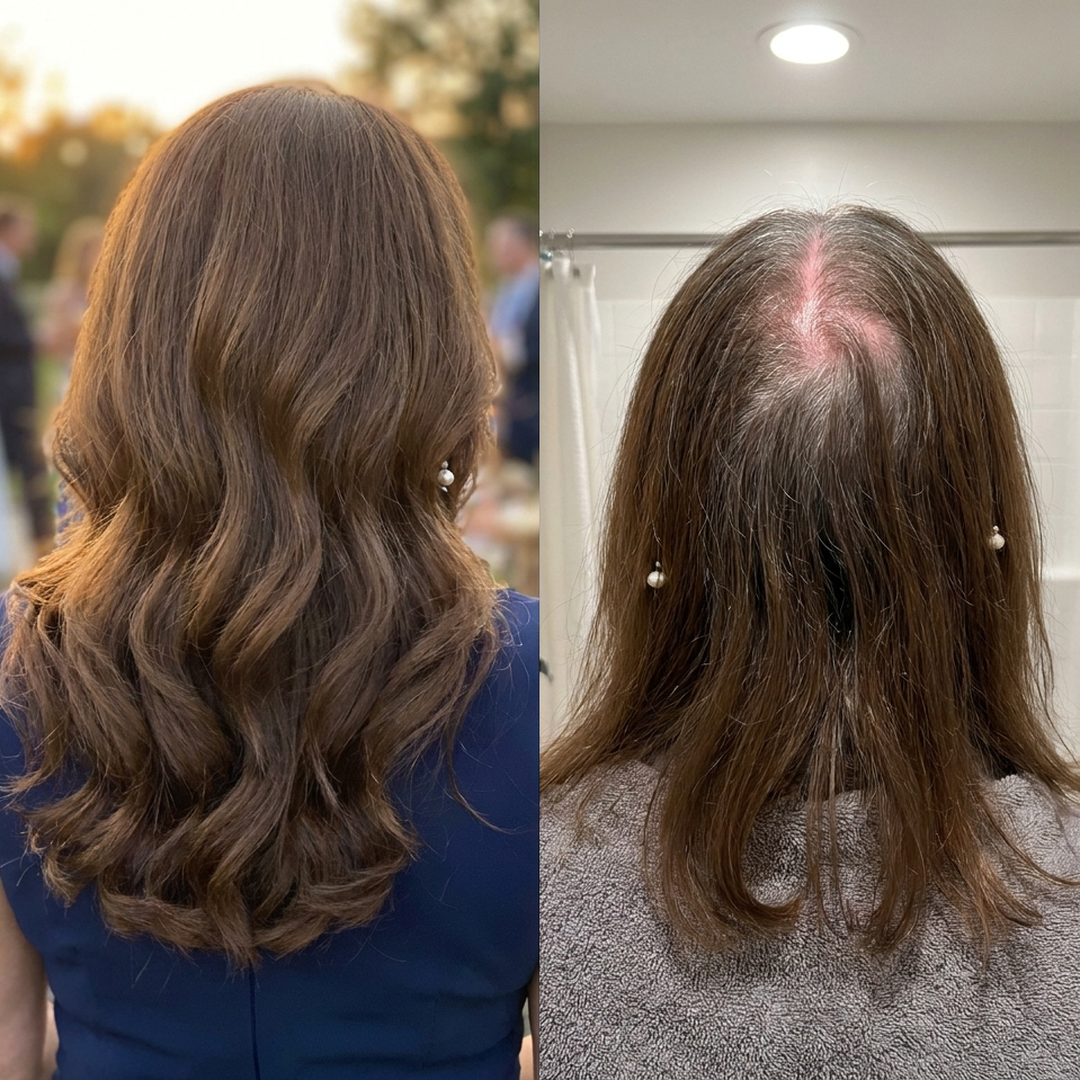
Emily Harrington Facebook ad: “Get Your Thick Hair Back!”
Running for 7 days since October 29, 2026. Crush last saw it on November 5, 2026.
Run by Emily Harrington on Facebook. Crush is not the advertiser and does not verify its claims. See this ad in Meta's Ad Library(opens in a new tab)
Make your own version of this ad
Crush makes it, launches it in your own Meta ad account, scales the winners and pauses the losers.
About this ad
- Meta Ad Library ID
- 1098735536127784
- Platforms
- Facebook, Instagram, Audience Network and Threads
- Relaunches
- 0
- Niche
- Hair Care
Ad text
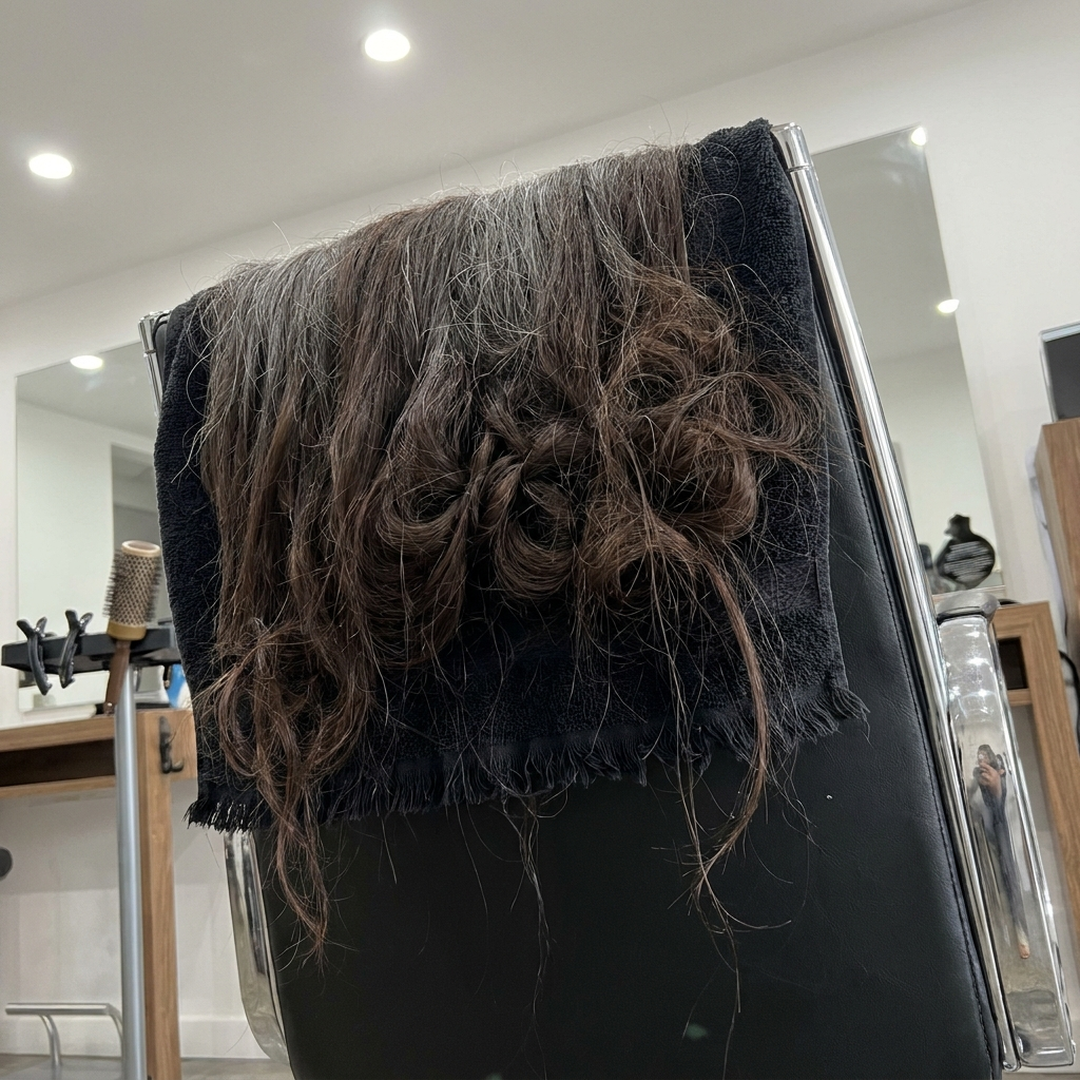
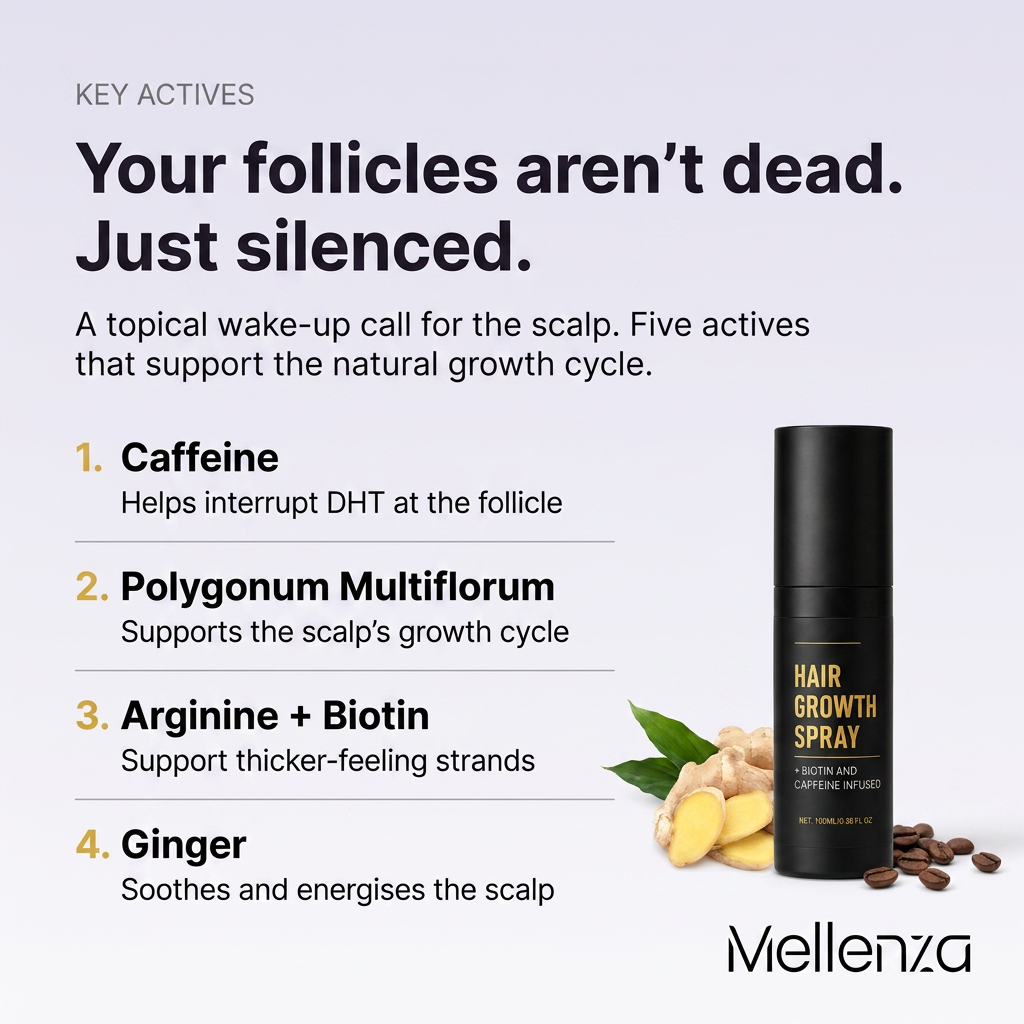
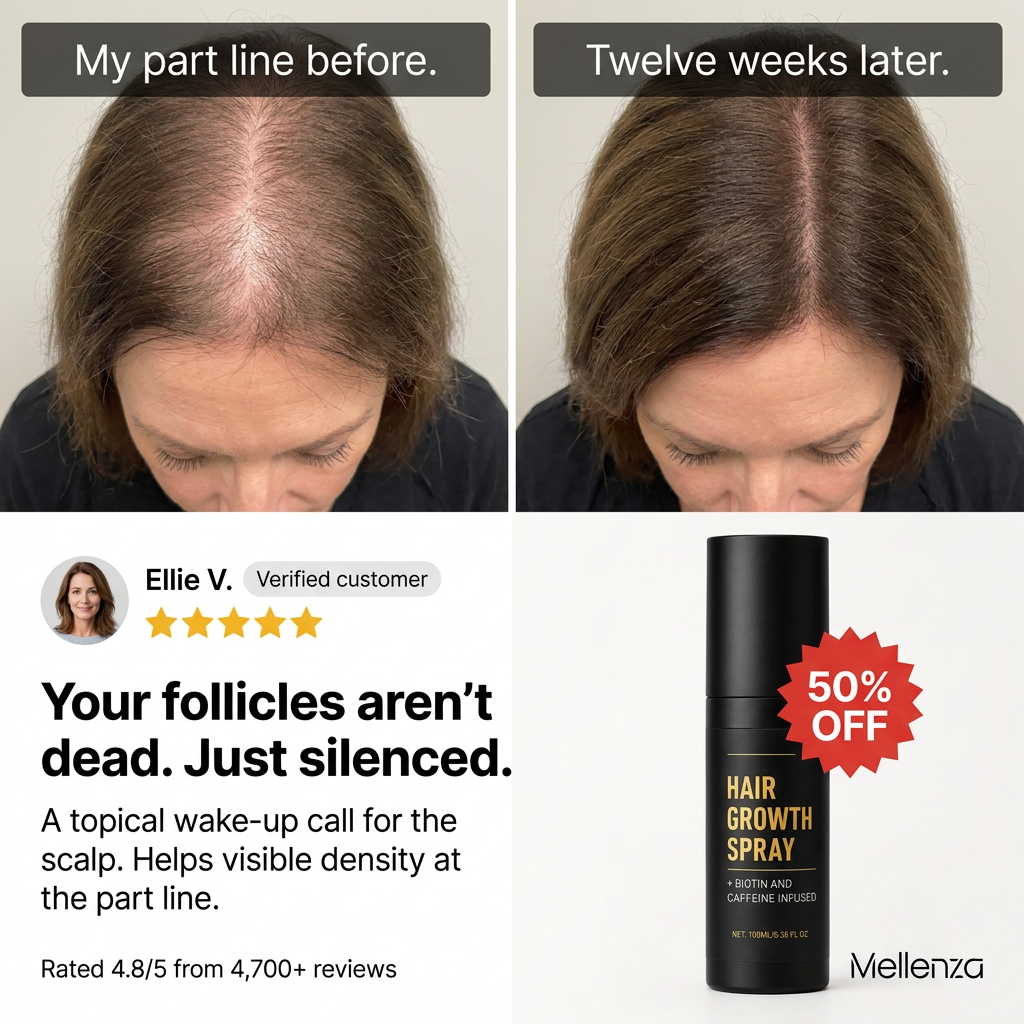
Please STOP buying hair growth supplements until you check how long your shampoo actually stays on your scalp. I know that sounds ridiculous. But I spent over £800 and nearly two years swallowing biotin tablets, choking down marine collagen powder, and massaging serums into my scalp every night before bed. None of it grew back a single strand. And the reason none of it worked was something so obvious, so simple, so infuriating that when I finally figured it out, I sat on the edge of my bath and cried. The thing that was holding my hair back was sitting on the shelf in my shower the entire time. I used to have thick hair. The kind of hair where my hairdresser would say “God, you have SO much hair” every time I sat in her chair. The kind that took 45 minutes to blow dry. The kind I actually complained about because it was “too heavy” and “too much.” I would give anything to have that problem again. I don’t know exactly when the thinning started. That’s the cruel part — it happens so gradually you don’t notice until it’s already bad. For me, the first sign was my ponytail. I’d always wrapped the hair tie around twice. Then one morning I wrapped it three times. Then four. And it still felt loose. I told myself I was imagining it. Then I started finding hair everywhere. On my pillow. On the back of my office chair. In the shower drain. On the bathroom floor. Wrapped around the bristles of every brush I owned. I’d run my fingers through my hair and three, four, five strands would come with them. Every single time. But the moment I knew — the moment I couldn’t pretend anymore — was during a work video call on Microsoft Teams. My colleague was sharing her screen and I caught my own thumbnail at the bottom. I was sitting under the ceiling light in our spare bedroom. I froze. I could see my scalp. Through my hair. In a thumbnail the size of a postage stamp. My parting looked like a motorway. The crown of my head — where my hair used to be thickest — was thin enough to see pink skin underneath. I turned off my camera for the rest of the meeting. I stared at my reflection that evening for a long time. Then I walked away and didn’t look again for a week. The next morning I started Googling. “Why is my hair thinning in menopause” “Best supplements for menopausal hair loss” “How to regrow thinning hair over 50” Every article said the same things: Try Plantur 39. It’s specifically for women over forty. Take biotin. Try marine collagen. Consider Viviscal. Talk to your GP about HRT. So I did. All of it. I was already on HRT — Evorel patches my GP had prescribed the year before for the hot flushes and the shattered sleep. They were brilliant for those things. But my parting was still widening. My ponytail was still shrinking. HRT alone clearly wasn’t the whole answer. I bought Plantur 39 — the famous one, marketed specifically for women over forty. Used it every morning for three months, exactly as instructed. Nothing. After about six months, my hair started snapping off in the brush. Brittle and dry in a way it had never been before. I ordered high-dose biotin tablets. Took them every single day for three months. Nothing — except my nails grew faster. I bought Viviscal Maximum Strength. £57 for a one-month supply. The tablets were enormous and smelled faintly of the sea. I choked them down twice a day for four months. £228 total. Nothing. I bought The Ordinary Multi-Peptide Serum from Boots and applied it nightly with a glass pipette. Eight weeks. Nothing obvious. I picked up Regaine 5% foam at Boots twice and put it back both times. I’d read too many threads on Mumsnet about the dread shed — the wave of shedding you’re supposedly supposed to go through before it grows back. I was barely holding on to what I had left. I couldn’t risk it. I tracked my spending one night because I couldn’t sleep. In 15 months, I had spent £836 on hair loss products. £836. And my hair was thinner than when I started. I went to my GP. Told her everything. She ordered blood work. Thyroid — normal. Iron — normal. Ferritin — within range. Vitamin D — slightly low, start a supplement. A text came through on the NHS App three days later. “Your recent blood test results are all normal — no further action required.” Normal. No further action required. I wanted to scream. “No further action required” wasn’t an answer. It was a dismissal. It was the NHS way of saying I don’t know, and I’m not going to try to find out. I left that appointment feeling more alone than I had in years. The thinning got worse. I stopped wearing my hair up because it showed how sparse the sides had gotten. I stopped sitting under overhead lights because they turned my scalp into a spotlight. I angled my laptop camera slightly upward on every Teams call to stop the ceiling light catching my parting. I started using Toppik concealer fibres. Not because I wanted to. Because I was terrified someone would see. One night my husband found me crying in the bathroom. I was holding a clump of hair I’d just pulled from the shower drain. He tried to hug me and I pulled away. “You don’t understand. You can’t understand. I’m losing myself.” That wasn’t dramatic. That’s exactly how it felt. My hair had been part of my identity my entire adult life. And it was disappearing, and nothing I did could stop it. I felt defective. Like my body was broken in some way that doctors couldn’t find and supplements couldn’t fix. Three weeks later, I went to get my hair cut. I almost cancelled the appointment. I’d been avoiding the salon for months because sitting in that chair, under those lights, with someone else looking closely at my hair — it felt like being exposed. But I went. And that appointment changed my life. My hairdresser — Diane — she’d been doing my hair for seven years. She knew exactly what my hair used to look like. So when she ran her hands through it and I saw her expression shift, I knew she could see it too. She didn’t say anything at first. Just kept sectioning, clipping, working quietly. Then, while she was rinsing my hair, she asked me something nobody had ever asked before. “What are you putting on your scalp at home — anything you leave in, or are you washing everything off?” I told her. The Plantur 39 shampoo. The matching tonic I applied after every wash. The overnight serum. She was quiet for a second. Then she said: “Can I be honest with you?” “Please.” “I think your caffeine shampoo might be part of the problem.” I almost laughed. My shampoo? I’d spent £836 on supplements, serums, and treatments. I’d had blood work done. I was on HRT. And she was asking about my shampoo? But Diane wasn’t joking. “I’ve been doing hair for 16 years,” she said. “And in the last few years, I’ve had more clients in their forties and fifties come in with thinning hair than in my entire career before that.” “Almost every single one of them is using a menopause caffeine shampoo.” “And every single one of them is washing it off after two minutes.” She let that sit for a second. “Here’s what most people have never been told. Caffeine actually has real research behind it for hair follicles. Published studies in proper dermatology journals. Real human follicle cells. It does something genuine at the root level — that’s not a marketing claim.” “But do you know how long caffeine needs to stay on your scalp to actually do anything useful?” I didn’t. “Not two minutes. Research shows it needs to penetrate the follicle. And that penetration takes time — hours. Twelve hours overnight, ideally.” “But every caffeine shampoo on the market is a wash-off product. You apply it, wait two minutes because the bottle says to, and then you rinse everything straight down the drain. Along with your scalp’s natural oils. Along with the protective barrier your scalp desperately needs — especially because falling oestrogen has already been depleting it for years.” “Over months. Over years. Your follicles don’t get what they need. The hair cycle shortens. The strands get finer. The parting gets wider.” “And no amount of biotin tablets or marine collagen is going to fix that. Because the problem isn’t what you’re swallowing. The problem is what you’re rinsing away every single morning.” I sat in that chair feeling like the floor had dropped out from under me. Two years. £836. Blood tests. HRT. Plantur 39 every single morning without fail. And the thing holding my hair back was the two-minute rinse I’d been trusting the entire time. I drove home in a daze. I walked straight to my shower and picked up each bottle. Plantur 39 shampoo. The matching tonic. The Nioxin system I’d been using for the past four months. I turned the Plantur tonic over and looked up the full ingredient list on my phone. Aqua. Alcohol Denat. Alcohol Denat. Second ingredient. Right after water. I felt my face get hot. The “menopause hair” tonic I’d been applying to my scalp every single morning — the one marketed specifically for women going through exactly what I was going through — had drying alcohol as its second ingredient. I had been stripping an already oestrogen-depleted scalp barrier with a drying alcohol tonic every single day while simultaneously taking supplements to try to grow back the hair I was washing away. It was like trying to fill a bathtub with the drain wide open. No wonder nothing worked. I was undoing every pound I spent the moment I stepped in the shower. I felt sick. Then I felt furious. That night I couldn’t sleep. At just past midnight I got out of bed, went to the kitchen table, opened my laptop, and started searching. Not “best menopause shampoo.” Not “hair loss supplements for women.” I’d done those searches a hundred times. This time I typed: “caffeine topical hair follicle contact time penetration research” And what I found made me want to throw my laptop across the room. Not because it was bad news. Because the information had been right there. The entire time. Study after study. Published research — in the British Journal of Dermatology — confirming exactly what Diane had told me. Caffeine is real. The research is solid. It counteracts the effect of androgens on hair follicles and stimulates hair matrix cells, particularly in female follicles. That part isn’t a marketing claim — it’s published science. But the same studies showed something the bottles never mention. Caffeine needs to penetrate the follicle to work. And penetration requires contact time — not two minutes. Research on topical caffeine absorption found meaningful follicular penetration occurring, but nowhere near in a two-minute wash-off window. I kept reading. Then I found the second piece of the puzzle — the one my GP’s blood tests had missed entirely. During perimenopause and menopause, falling oestrogen doesn’t just cause hot flushes. It specifically changes the local environment inside the scalp skin. The scalp loses protective lipids. It loses moisture. The scalp barrier becomes depleted — not in any way a standard NHS blood panel picks up, but right at the level of the actual skin and follicle. That’s why HRT can fix your sleep, your hot flushes, your joints — and still leave your parting getting wider month after month. The patch works systemically. Like watering a whole garden from thirty feet up in the air. Your hot flushes benefit. Your sleep benefits. But the “soil” right at the root of your scalp — already depleted, already stripped — stays dry, tight, and starved. No blood test shows that. No NHS lab range captures it. No pill or patch addresses it directly. The research explained why supplements fail for so many women with menopausal hair loss: Biotin supports keratin production — but your follicles can’t make use of it if the local scalp environment is stripped and depleted. Marine collagen provides amino acid building blocks — but amino acids can’t strengthen hair that isn’t getting the local nourishment it needs right at the root. It’s like delivering building materials to a construction site with no foundation. The materials just sit there. Useless. Because the ground-level problem was never addressed. And the ground-level problem, for millions of women in menopause, is a depleted local scalp barrier — stripped further every single day by drying alcohol tonics and wash-off shampoos. I read for three hours straight. By the time I looked up from my screen, it was after 4 AM. I had one question: if my scalp needs targeted nourishment directly at the root — not a pill that dilutes across my whole body, not a shampoo that rinses away in two minutes — how do I actually get that there? That’s when I found leave-in scalp mists. I know. A mist you apply to your parting at night and just leave in. It sounds almost too simple. But the science stopped me cold. A properly formulated leave-in — applied directly to the scalp with a precision nozzle, staying on for twelve hours while you sleep — doesn’t wash away. Doesn’t strip. Doesn’t rinse down the drain before it can do anything. Unlike supplements that have to travel through your entire digestive system and hope that some fraction eventually reaches your scalp through your bloodstream, a leave-in mist delivers actives directly where they’re needed. Topically. Right to the follicle. For hours. And it wasn’t just about contact time. The right leave-in could do several things at once: First — deliver caffeine directly to the follicle and keep it there for twelve-plus hours. Not two minutes. Twelve hours of the contact time the research actually shows is needed. Second — condition and support the local scalp barrier that falling oestrogen has depleted — the thing no blood test measures and no patch directly addresses. Third — reinforce the hair fibre itself. The brittle, dry, snapping strands that break off mid-shaft during brushing and blow-drying — making the parting and ponytail look even thinner than they actually are. I sat there staring at my screen thinking: this is it. This is what every single product I tried was missing. Not another pill to swallow. Not another serum to rinse away in the shower. Actives delivered directly to the place they’re needed, for long enough to actually work. But then I thought: if this is so obvious, why isn’t everyone doing it? And then it hit me — the menopause shampoo market is worth billions. Plantur 39. Alpecin. Nioxin. All of them wash-off products. All of them requiring you to buy month after month. There’s no money in telling women to stop buying expensive menopause shampoos and switch to a simple leave-in mist instead. They need you buying shampoo, tonic, and conditioner sets on repeat. They don’t make money if the answer is “the problem is your shampoo, and leaving something on overnight could change everything.” I spent the next three days researching leave-in scalp products. And I learned something that made me even more frustrated. Most scalp serums either came in heavy dropper-bottle formulas that required five full pipette-loads per application — far too much for fine, already-weighed-down menopausal hair — or they still contained drying alcohols that made the problem worse. And almost none of them were designed specifically for women whose hair had become fine, wispy, and brittle in midlife. I needed something water-light. Something that worked with greying, fragile, menopausal hair rather than against it. Something that absorbed invisibly so I could blow-dry for work without washing it out every single morning just to get rid of residue. That’s when I found Mellenza. I know. A 12-hour leave-in scalp mist, applied with a parting comb. It sounds almost absurdly simple compared to everything I’d already tried. But the formula stopped me cold. It wasn’t just the leave-in vehicle — the twelve hours of contact time versus two minutes. The active complex was built around the same research I’d been reading at midnight. Caffeine — but this time in a leave-in formula that actually stays on the scalp for twelve-plus hours. Not rinsed away. Not stripped. Twelve hours of the contact time the follicle actually needs. Polygonum multiflorum — a botanical extract studied in human dermal papilla cells for supporting the active growth phase of the hair cycle. Research-backed root support, not just a label claim. L-Arginine — an amino acid that bonds to dry, weathered, greying keratin and reinforces the cuticle from the outside. Less snapping in the brush. Less breakage during blow-drying that makes the parting and ponytail look thinner week after week. Biotin — but not in a tablet being diluted across my entire body and mostly ending up in my nails. Delivered topically, directly to the scalp and hair fibre, where it conditions the follicle and strand. And zero hormones. Completely safe alongside my HRT patches and my thyroid medication. Zero harsh drugs. No dread shed. No lifelong dependency on a pharmaceutical. It was the exact opposite of everything sitting in my shower. The spray came with a wide-tooth parting comb — so you part your hair first, mist directly onto the scalp skin, and the formula lands exactly where it needs to go instead of sitting uselessly on the hair shaft above. I sat on the product page for a long time. Read the ingredient list twice. Read every review I could find. Then I thought about the £836 already spent. Then I thought about what Diane had said. You’re not rinsing the problem away. You’re rinsing the solution away every single morning. And then I noticed the guarantee. 90 days. Not 30. Not 14. A full 90-day customer satisfaction trial — the actual length of a complete biological hair cycle. And it covered opened, used bottles. Return the empties and get a full refund. No questions asked. I ordered that night. When the package arrived, I’ll be honest — I was nervous. Not even about whether it would work. I’d been disappointed too many times to get ahead of myself. I was nervous about how it would feel on my hair. Everything I’d tried had either left my hair like dry straw or so heavy and coated I needed a full wash before I could leave the house. But when I held the bottle to my hand and sprayed once, I actually laughed out loud. It was like water. A fine mist that absorbed in seconds. Zero trace. Zero scent. I used it for the first time that evening. I parted my hair with the comb, section by section, and misted along each parting — the crown, the temples, the hairline. Six sprays. Massaged it in with my fingertips for about thirty seconds. My scalp didn’t feel greasy or tacky afterward. It felt calm. Hydrated. Almost like it had finally been given a drink of water after years of being dried out. My hair didn’t look dramatically different in the morning. I wasn’t expecting it to. But it felt different. Less tight. Less brittle. Like something had shifted. “Okay,” I thought. “Let’s see what happens.” Here’s what happened. Week 1. Less hair in my brush. Not a dramatic difference — but I noticed. Where I used to pull out what looked like a small bird’s nest after every brushing session, it was noticeably less. Maybe 30% less. The shower drain, which I used to clear every other day, didn’t clog once. I told myself not to get excited. I had been disappointed too many times. Week 2. The shedding continued to slow. My pillow, which always had strands on it every morning, was clean for the first time in months. And my scalp felt different. Not itchy. Not tight. Not dry. Just... settled. It sounds strange, but it felt like my scalp was finally breathing. Like it had been suffocating under all those drying tonics and wash-off shampoos and it was finally getting some air. I ran my fingers through my hair and only two strands came with them. Two. I used to lose ten or fifteen every single time I touched my head. Week 3. I was brushing my hair one morning and stopped mid-stroke. Something was different. The brush was meeting more resistance — not from tangles, but from volume. Like there was simply more hair on my head than there had been three weeks ago. I leaned close to the mirror. Looked at my parting. Was it... narrower? Or was I seeing what I wanted to see? I pulled up a photograph I’d taken of my crown under the bathroom spotlight a few months earlier — evidence I’d kept because I couldn’t face not having something to measure against. I held my phone next to my reflection. I wasn’t imagining it. The parting was narrower. Not dramatically. But visibly, undeniably narrower. My hands started shaking. Week 4. I saw them. Baby hairs. Tiny little strands, barely a centimetre long, growing along my hairline and along the edges of my parting. I got so close to the mirror my breath fogged the glass. Tilted my head under the bathroom light and examined my parting centimetre by centimetre. They were everywhere. Dozens of tiny new hairs growing in the spaces that had been empty for months. I took a photo and sent it straight to Diane. She replied within a minute. “I can see them,” I typed. “There’s new hair growing.” She didn’t sound surprised. She sounded satisfied. “I told you. Once you stop stripping and start feeding, your follicles respond. They were never gone. They were just starving.” Week 6. My husband was standing behind me while I was brushing my hair one evening, waiting for the bathroom. He tilted his head and said something that nearly made me drop the brush. “Hey — is it just me, or does your hair look thicker?” I spun around. “You can see it?” “I mean... yeah. It looks different. Fuller or something.” This man does not notice when I get my hair cut. He once didn’t notice I’d repainted the living room until three weeks later when I pointed it out. If he could see a difference in my hair, it was real. Week 8. I wore my hair in a ponytail for the first time in over a year. Not because I had to. Because I wanted to. Because it looked good. Because when I wrapped the hair tie around, I could only wrap it twice again. Twice. I stood in the bathroom staring at that ponytail in the mirror, tears streaming down my face, thinking about every Teams call I’d spent with my camera turned off. Every photograph I’d deleted. Every morning I’d spent patting concealer fibres into my parting before I’d let myself be seen. Every time I’d angled myself away from overhead lights. And all I had needed to do was stop rinsing everything away and start giving my scalp what it was actually starving for. All I needed to do was leave something on. It’s been four months now. I use the Mellenza leave-in mist every evening. That’s the only thing I changed. I stopped taking biotin. Stopped choking down marine collagen. Stopped the Viviscal. Stopped all of it. Just the mist. Thirty seconds before bed. That’s it. My hair is not back to where it was at its absolute thickest. I don’t know if it ever will be. But it is incomparably, undeniably better than it was four months ago. The thin spots are filling in. My parting looks like a parting again — a line, not a motorway. I can wear my hair up, down, in a ponytail, in a clip — however I want, without thinking about it. Without strategising. Without hiding. I went back to Diane last week for a trim. She sectioned my hair and stopped mid-clip. “Look at all this new growth,” she said, turning me toward the mirror. “See all these baby hairs? Your density is coming back. I can feel it.” Then she said something that hit me harder than I expected. “You know how many women sit in this chair every week and I can see their scalp thinning? They’re still buying the Plantur 39 that turned their hair to straw six months ago, and swallowing tablets that can’t get anywhere near their scalp. And I tell them. I tell every single one of them. And half of them don’t believe me. Because it sounds too simple.” She looked at me in the mirror. “You tried it. And look at your hair now.” If you’re reading this and you see yourself in my story — if your hair is thinning and you’ve tried Plantur 39, biotin tablets, marine collagen, Viviscal, or any shampoo or supplement that promised to help and didn’t — I need you to hear something. The problem might not be what you’re putting IN your body. The problem might be what you’re putting ON your scalp. And how long you’re actually leaving it there. Go to your shower right now. Pick up your caffeine shampoo. Read how long the instructions say to leave it on before rinsing. Two minutes. Maybe three. If your scalp — already depleted by falling oestrogen, already stripped by years of detergent and drying tonics — is only getting two minutes of contact before you wash everything away, your follicles are not getting what they need. And no biotin tablet on earth is going to fix a local scalp barrier problem that you’re stripping bare every single morning. It’s like watering a garden while someone stands behind you salting the soil every night. You can water all you want. The roots still can’t hold. You have to stop stripping first. Then you have to feed it — for long enough. That’s exactly what switching to Mellenza did for me. It stopped the rinse. It started delivering what my follicles needed. And it stayed on for twelve hours while I slept. Not because of magic. Because of science. Published, peer-reviewed science that the shampoo industry has no interest in putting on the front of a bottle. Your follicles probably aren’t dead. They’re dormant. They’re depleted. They’re waiting for the one thing they need. You’ve just been washing it away every morning. The mist I use delivers caffeine and Polygonum multiflorum directly to the parting with twelve-plus hours of contact time — not a two-minute wash-off. It contains L-Arginine to reinforce fragile, snapping keratin and reduce breakage, and Biotin delivered topically to the follicle instead of diluted through your digestive system. Zero hormones. Completely safe alongside HRT, levothyroxine, or any other medication. Zero harsh drugs. No dread shed. No lifelong dependency. It comes with a free wide-tooth parting comb so you can section first and mist directly onto the scalp skin — not the hair shaft. Exactly where it needs to be. And it comes with a 90-day customer satisfaction trial covering opened and used bottles with a free prepaid return label. If you’re not completely satisfied with how your hair and scalp look and feel, you get a full refund. No questions asked. I mention that because I know exactly what it’s like to spend money on something that doesn’t work. I’ve got £836 of proof sitting in a bag under my bathroom sink. This is the first thing I bought that gave me a genuine, risk-free window long enough to actually test it properly — a full hair cycle, not a fortnight. https://mellenza.com/pages/test-losticcbuda Don’t waste another month on supplements that can’t reach a scalp problem. Don’t spend another pound on caffeine shampoos that rinse away in two minutes and strip your scalp in the process. Don’t sit in your bathroom staring at a widening parting, convinced your body is broken. Your body probably isn’t broken. Your follicles probably aren’t dead. They’re depleted. They’re being rinsed clean every morning before they can hold onto anything. Stop stripping. Start leaving it on. Your hair is waiting to come back. You just have to stop washing it away. P.S. — My biggest regret is the two years I wasted on supplements and menopause shampoos while the real problem was sitting on my shower shelf the entire time. Every single morning wash was two minutes of contact and then rinsing the solution straight down the drain. If someone had told me this 24 months ago, I would have saved £836 and more sleepless Mumsnet nights than I can count. Don’t be me. Look at how long your shampoo stays on your scalp tonight. P.P.S. — If you try it, give it at least 3–4 weeks. Week 1 you’ll notice less hair in the brush and the drain. Week 2 your scalp starts feeling different — calmer, less tight, like it can finally breathe. Week 4 is when the baby hairs started for me, along my parting and hairline. And how it feels? It genuinely feels like a skincare routine for your scalp rather than a product sitting on top of your hair. Absorbs like water. My husband has no 😊 idea I use it. Zero scent. Zero trace. Just a parting that keeps getting a little narrower every week.
Where the ad sends people
mellenza.com
Get Your Thick Hair Back!
Women's Health · Updated September 2026 Menopause · Hair Routine 7 Mistakes That Make Menopausal Hair Loss Worse, And the 30 Second Ritual 10,000 Women Used to See Regrowth in 8 Weeks Dr. Sarah Mitchell — Women's Health Writer. If you're standing in front of the mirror doing the 3-elastic ponyta...
Learn more: mellenza.com(opens in a new tab)