Emily Harrington Facebook ad: “I Was a Hairdresser for 18 Years. I Still Lost Half My Hair.”
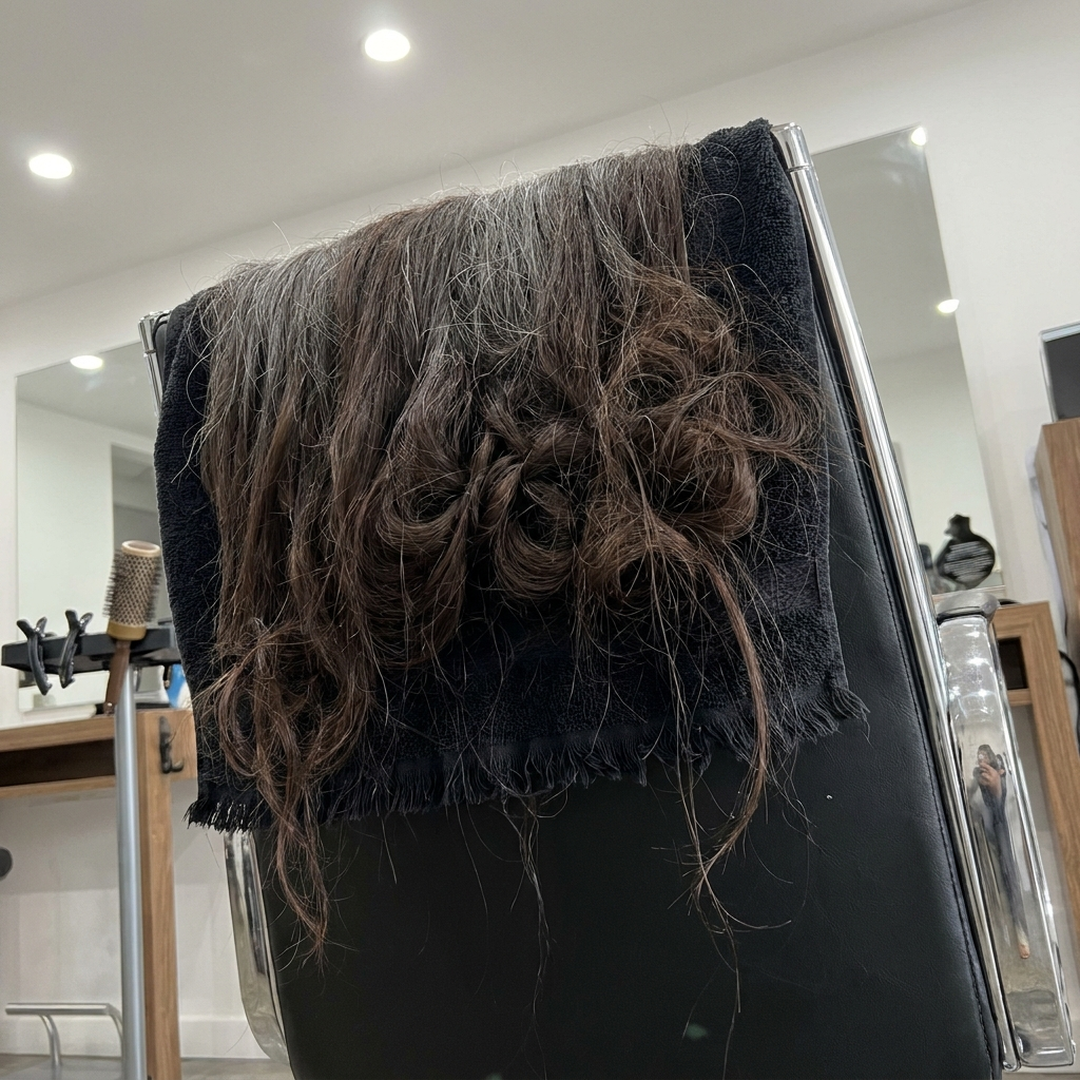
Running for 6 days since October 30, 2026. Crush last saw it on November 5, 2026.
Run by Emily Harrington on Facebook. Crush is not the advertiser and does not verify its claims. See this ad in Meta's Ad Library(opens in a new tab)
Make your own version of this ad
Crush makes it, launches it in your own Meta ad account, scales the winners and pauses the losers.
About this ad
- Meta Ad Library ID
- 1423235119996569
- Platforms
- Facebook, Instagram, Audience Network and Threads
- Relaunches
- 0
- Niche
- Hair Care
Ad text
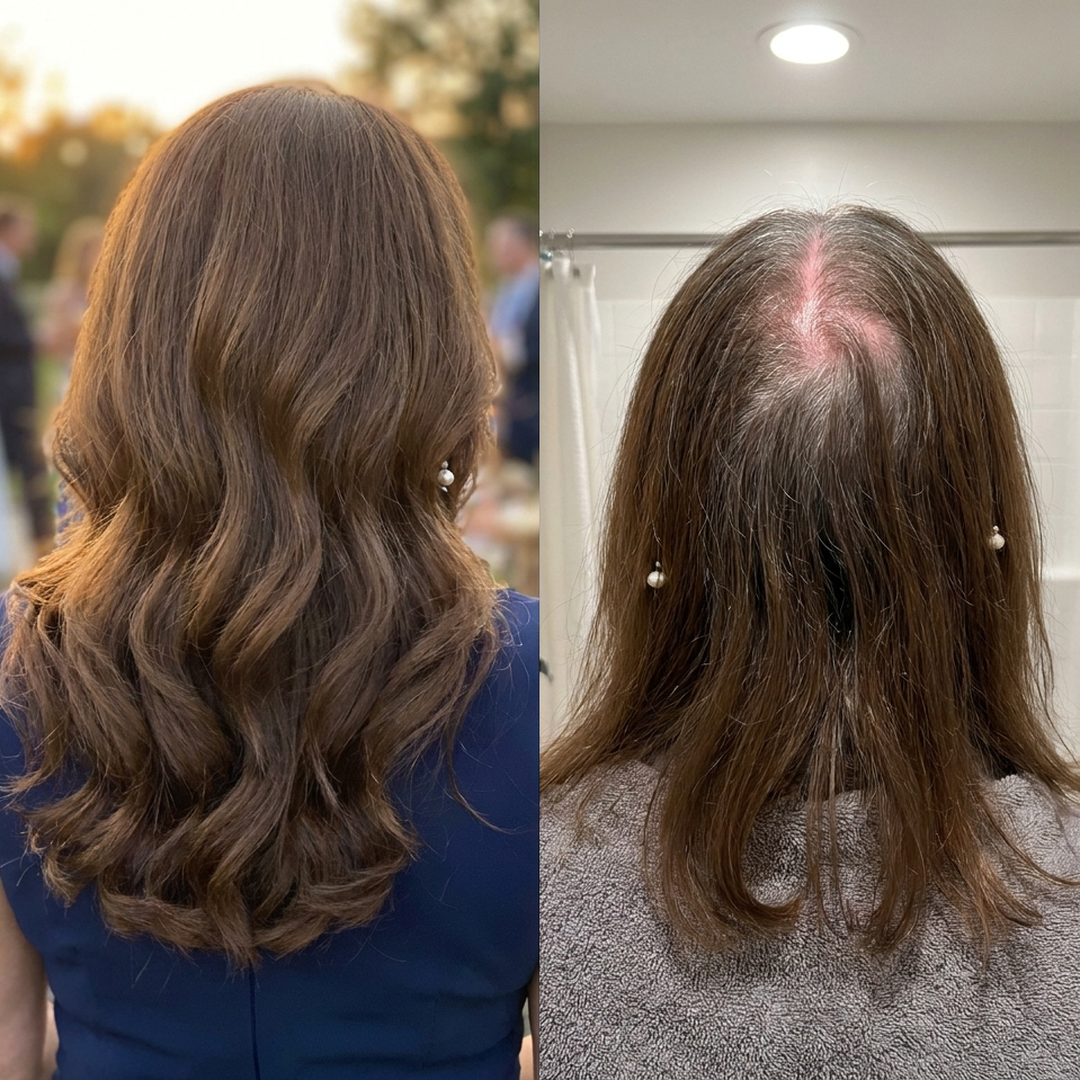
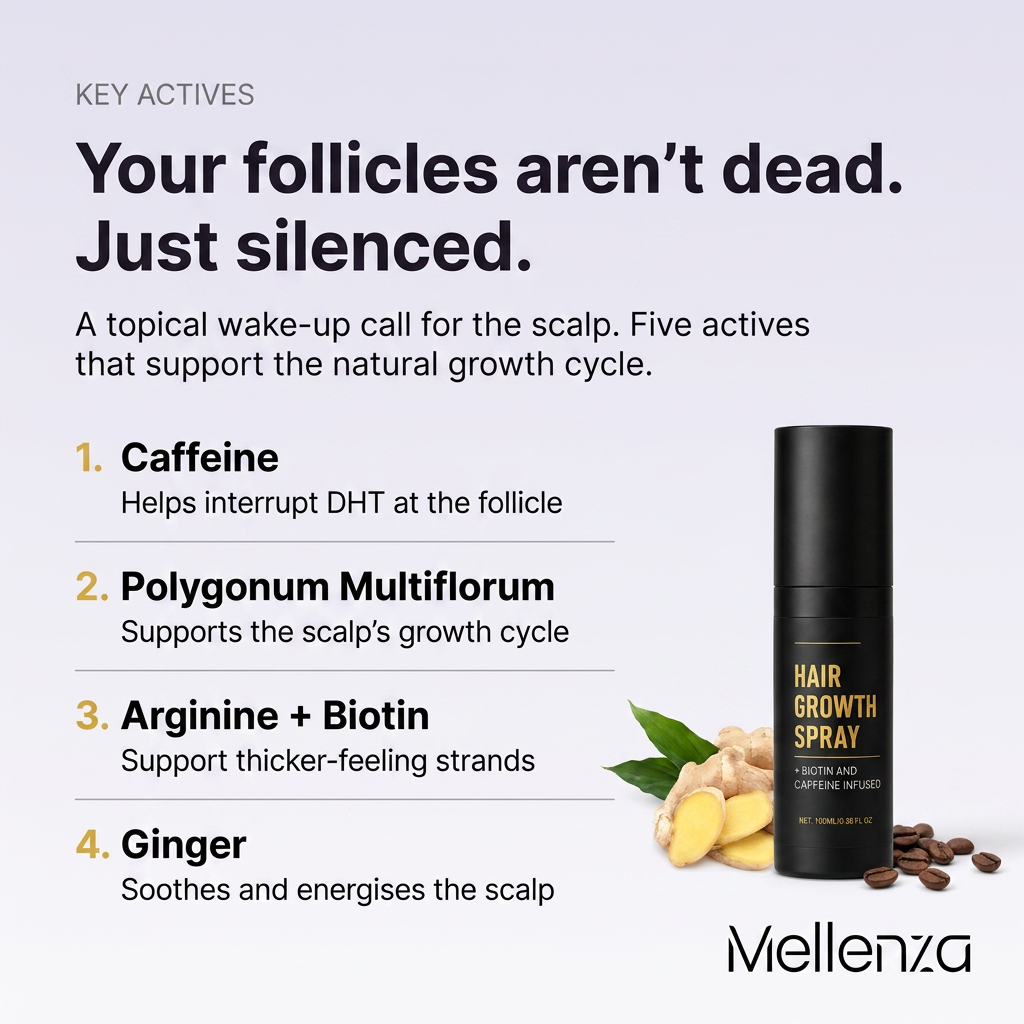
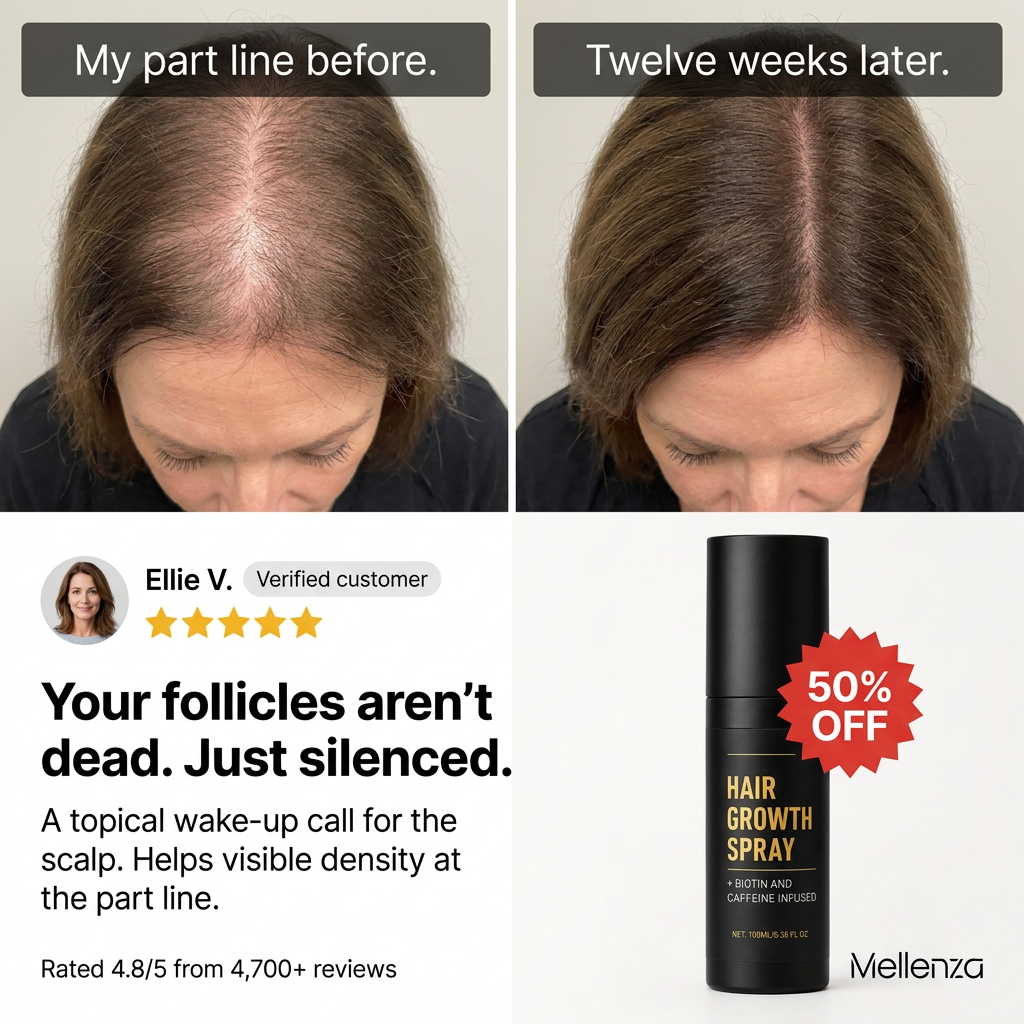
I’m going to say something that every woman in her late forties and fifties who is losing her hair needs to hear, and I don’t care if it upsets you. Switching to another menopause shampoo is not going to save your hair. Not Plantur 39. Not Alpecin. Not the £55 trichology drops your hairdresser recommended. Not the biotin tablets. Not the marine collagen. Not the HRT that fixed your hot flushes but left your parting getting wider every month. NONE OF IT IS GOING TO WORK. I know because I tried all of it. Every shampoo. Every supplement. Every “over-forty” hair system. For four years. And my hair died anyway. Not literally — but I watched it go from a thick, full mane to something so thin and sparse that I sat in my own salon chair and cried while I asked my stylist to cut it all off. I am a hairdresser. I have been doing hair professionally for 18 years. I ran my own salon in Manchester for eleven of those years. I gave advice about menopausal hair loss to clients every single week. And I missed it in myself. The worst part? My younger sister started doing the exact same things. The same shedding. The same widening parting. The same wispy fringe. And I almost let it happen to her because I was still reaching for the same products that had failed me. I’m done being careful about this. If your hair is thinning and you’re asking which menopause shampoo to try next, you are wasting time you do not have. Read every word of this. Because the answer is in here and it is NOT another bottle of caffeine shampoo. My name is Emily Harrington. I’m 52. I’ve been a hairdresser since I was 24. I trained in Manchester, spent six years in a high-end salon in the city centre, then opened my own place in 2008. At our busiest, we had four stylists and a waiting list. I have spent eighteen years looking at women’s hair. Running my hands through it. Feeling the density. Knowing what healthy looks like and what thinning looks like and what just-about-holding-on looks like. I have told hundreds of women what was wrong with their hair. And I missed it in my own. My hair was extraordinary, once. Not in a vain way. Just — genuinely thick. Dense. The kind that broke cheap hairbands. The kind that took two full boxes of dye and still looked rich. The kind my clients would actually reach out and touch because they couldn’t believe it was real. I was proud of it. I won’t pretend otherwise. It was part of who I was. I first noticed something wrong around 2019. I was 47. Perimenopause had started creeping in — the broken sleep, the occasional flush, the moments of complete mental blankness mid-sentence. But I wasn’t worried about my hair. My hair was fine. Then one morning I pulled it back for work and the ponytail felt wrong. Thinner. Not dramatically — but I felt it in my hand. I wrapped the hair tie around twice. I always wrapped it twice. Three times. Still felt loose. I told myself I was imagining it. Within three months I was finding hair everywhere. On the back of every chair in the salon. On my own salon floor. Clogging my shower drain at home. Across the dark towels I wrapped around clients’ shoulders. Caught in the bristles of every brush I picked up. I’d touch my own scalp during a rinse and see strands come away on my gloves. I told my clients to see their GP. I told them to get their ferritin checked, to look at HRT, to try Plantur 39 in the meantime. I went home and did exactly the same things. I went to my GP. She was kind. Ordered blood work. Thyroid — normal. Iron — normal. Ferritin — “within range” at 24. She mentioned HRT might help. “Hair thinning is very common through the menopause transition,” she said. “It often improves once things settle.” Things did not settle. I started my HRT — Evorel patches, which genuinely helped the sleep and the flushes. But my parting kept getting wider. I bought Plantur 39. Used it every morning for six months, exactly as directed. After about three months, my hair started snapping in the brush. The lengths became dry and brittle and broke off mid-shaft during blow-drying. Not shedding from the root — snapping off. The ponytail got shorter because the ends kept breaking away. I switched to Alpecin. Three months. Nothing. I ordered high-dose biotin tablets. Six months. My nails grew faster. My hair continued to thin. I bought Viviscal Maximum Strength. £57 per box. Took them twice a day for four months as directed. £228 total. Nothing I could honestly call an improvement. I tried a professional peptide scalp serum I had been recommending to clients. £48 a bottle. Dropped it onto my parting every night with the glass pipette. Eight weeks. Nothing clear. I picked up Regaine 5% foam at the Boots counter and read the box for ten minutes in the aisle. Put it back both times. The warnings about the dread shed — the wave of shedding supposed to happen before anything comes back — scared me too much. I barely had enough hair left to gamble with. I tracked my total spending one night when I couldn’t sleep. Shampoos, serums, supplements, private blood tests when the NHS queue was six months long. £970. And I was standing in my own bathroom looking at a parting so wide I could see pale scalp glowing back at me under the salon spotlights I’d had fitted because they were flattering. They were not flattering anymore. The moment I knew it was really over was when my regular client Judith — she’d been coming to me for twelve years — reached over during an appointment and touched my hair. “Emily,” she said. “Your hair.” Not unkindly. Just — she saw it. And the look on her face was the same look I had been giving my own clients for years. I went home that evening and sat in front of my bathroom mirror with a comb. I tried every parting angle I could think of. There was no angle that hid it anymore. The crown was visible. The temples were sparse. The fringe was wispy and sat flat no matter how I dried it. I was a hairdresser. I had recommended every product I’d tried to other women. I had watched my own hair thin for four years and treated myself exactly the way I told clients to treat themselves. And now I was looking at a head of hair that was a third of what it had been. A few weeks later I sat in my own chair and asked my most trusted stylist, Bex, to cut it. Short. Really short. She looked at me and I could see she understood exactly why. She cut it. I cried in the car on the way home. I had been growing that hair since I was a teenager. I had never worn it short. It was not who I was. But it was gone. And I had not saved it. About eight months after I cut my hair, my sister Claire rang me. She’s 44. Just entering perimenopause. Same thick hair we’d both inherited from our mum. “Em, I’ve been noticing a lot of hair on my pillow,” she said. I felt my stomach drop. “And the hairband. I’ve been wrapping it an extra time.” I knew. The second she said “an extra time,” I knew. Whatever had happened to me was starting to happen to Claire. And I had spent four years and £970 not solving it. I had nothing useful to tell her. But this time I was not going to take the same path. This time I got obsessive. I stopped reading beauty forums and started reading actual research papers. Papers I had never touched professionally because I had never needed to. The Journal of Investigative Dermatology. The British Journal of Dermatology. Clinical studies on follicular biology. Ingredient-level penetration science. And I kept seeing the same pattern. Woman notices menopausal thinning → buys caffeine shampoo → uses it for two minutes and rinses off → no real improvement → switches brand → same result → adds supplements → nails improve, hair doesn’t → eventually cuts hair short or gives up. The caffeine shampoos were not failing because caffeine doesn’t work. They were failing because of how caffeine was being delivered. Then, in a 2014 paper published in the British Journal of Dermatology — the actual research underpinning everything Plantur 39 had built its marketing on — I found one paragraph that stopped me cold. German researchers had studied follicular penetration rates of topical caffeine. They confirmed that caffeine does penetrate the hair follicle. In ex vivo human hair follicle cultures, it counteracted testosterone-induced suppression of hair shaft elongation. Specifically in female follicles. The science was solid. But the same paper noted something the shampoo companies had no interest in putting on the front of their bottles. Follicular caffeine penetration requires sustained contact time. Meaningful concentrations at the follicle level were not achieved in two-minute wash-off conditions. Hours of skin contact were needed. Every caffeine shampoo on the market was built on real science. And then packaged into a product you rinse down the drain before it can do anything. I kept reading. Then I found the second piece — the one that explained why my HRT hadn’t saved my hair and why my blood tests had been useless. During perimenopause and menopause, falling oestradiol doesn’t affect the body uniformly. It specifically depletes the local environment inside the scalp skin. The scalp loses protective lipids. It loses micro-hydration. The sebum production that keeps follicles anchored and the hair cycle running drops significantly. This happens at the level of the skin itself. Not in the bloodstream. Not in any way a standard GP blood panel would ever pick up. That is why ferritin at 24 being “within range” was irrelevant to what was happening at my parting. That is why my HRT fixed my sleep and my flushes and couldn’t touch my scalp. The patch delivers oestrogen systemically — across the whole body, broadly. But the local environment inside the scalp skin, the lipid barrier at the follicle, the micro-hydration that keeps roots anchored — none of that is directly addressed by a systemic patch. And then, every morning, I was washing whatever remained of that barrier away with a drying alcohol tonic and a surfactant shampoo. Stripping it further. And rinsing any active ingredients away before they could reach the follicle. I read for four hours. By the time I looked up it was past two in the morning. I had one question: if the scalp needs targeted nourishment delivered directly to the follicle for long enough to actually penetrate — what achieves that? Not a wash-off shampoo. Not a systemic pill. Not a patch. Something that stays. That was when I started looking at leave-in scalp treatments. Once I framed it that way, the answer seemed obvious. A properly formulated leave-in — applied to the parting and scalp directly, left overnight, giving actives twelve hours of contact instead of two minutes — would solve the penetration problem the research kept pointing to. I went on Amazon at half past two in the morning and ordered the best-reviewed caffeine leave-in scalp serum I could find. £22. Decent reviews. “Professional-grade leave-in caffeine complex.” It arrived three days later. I started Claire on it immediately. Applied it with the glass pipette to her parting, crown, and temples every evening before bed. Week one. Still shedding on the pillow. Still the same wraps on the hair tie. Week two. No change. She said her roots felt slightly tacky in the morning and looked flat at the hairline by the time she arrived at work. Week three. Still nothing. She started skipping days because the residue was bothering her. I was sitting at my kitchen table on a Sunday afternoon looking at the bottle, trying to work out what I was missing, when my phone rang. The call was from Dr. Priya Nair. Priya is a trichologist I had referred clients to for years — a consultant at a private clinic near Manchester. She trained in dermatology in Mumbai, then spent fifteen years in UK clinical practice. We had a professional relationship. I sent her clients whose cases were beyond what a salon could address. She occasionally rang me to ask what products they were using. She had called to follow up on a client I had referred. I mentioned, in passing, what I was doing with Claire. The Amazon serum. The leave-in idea. What I had read about contact time and follicular penetration. There was a pause. Then: “Send me a photo of that bottle.” I did. Another pause. Then: “Can I ring you back in five minutes?” She rang back in four. “That serum is not going to work, Emily. I’m sorry.” “Why not?” “Two reasons. First — the vehicle is wrong. It’s a humectant gel base. Humectant bases sit on the surface of the stratum corneum. They moisturise the top layer of skin and then they dry there. They don’t penetrate the follicular channel. The caffeine in that product is sitting on top of your sister’s scalp, not reaching the follicle. That is the residue she can feel.” “And the second reason,” she said, “and this is the one that almost nobody talks about — you are still missing the barrier.” “What do you mean?” “Emily — falling oestrogen doesn’t just create systemic symptoms. It depletes the lipid barrier inside the scalp skin itself. The microscopic moisture layer that keeps follicles anchored and the hair cycle running. That’s what your blood test missed. That’s what HRT doesn’t directly address. That’s what every wash-off shampoo strips further every single morning.” “So you need a leave-in, yes. But a specific kind. Water-light enough that it actually penetrates instead of sitting on the surface. Formulated for fine menopausal hair that cannot carry a heavy residue. And it has to stay on the scalp for twelve hours overnight.” “The serum you have is not that.” “So what is?” She was quiet for a moment. “I started recommending one product about six months ago. I checked the penetration vehicle, the active concentrations, the contact-time formulation before I used it with a single patient. It was the only product I found in the UK market that was actually engineered for this specific problem.” “It’s called Mellenza. A leave-in scalp mist. Fine-mist precision nozzle. Comes with a wide-tooth parting comb — you part the hair first and mist directly onto the scalp skin, not the hair shaft. The caffeine is in a water-light dermal mist vehicle that penetrates the follicular channel after twelve hours of overnight contact. Polygonum multiflorum to support the active growth phase at the root. L-Arginine and Biotin to reinforce the keratin cuticle and stop the mid-shaft snapping and breakage.” “Zero hormones. Safe alongside HRT and thyroid medication. No dread shed. Water-light — absorbs invisibly so your sister can blow-dry for work without washing out any residue first.” “Why didn’t you tell me about this three years ago?” I said. She was quiet for a moment. “Because three years ago you were still recommending caffeine shampoos to your own clients, Emily. I didn’t think you would listen. I’m sorry. I should have tried.” I sat with that for a long time after we hung up. Then I threw the Amazon serum in the bin and ordered Mellenza that evening. I started Claire on it the day it arrived. She parted her hair with the included comb, misted six sprays along the parting, crown, and temples, massaged gently for thirty seconds, and went to bed. She texted me in the morning: “Can’t feel anything on my hair at all. Is that normal?” Yes. That’s exactly right. Days one to five: she was still shedding in the shower. Still the same amount on the pillow. Day seven: she rang to say she’d wrapped the hair tie twice and the third loop felt like a habit rather than a necessity. Day nine: less on the pillow. She said it was probably nothing. I told her to keep going. Day twelve: she sent me a photo of her brush after a blow-dry. Noticeably less than her usual. Week three: she rang me. “Em, when I pick up a section it just — feels different. More weight in my hand. The same amount of hair but it feels thicker somehow.” I drove to her house and looked at her hair under my phone torch. She was right. The density at the parting had not changed dramatically yet. But the feel of a section in my hand had changed. More weight. Less brittle. The snapping had almost completely stopped. Week five: Claire photographed her parting next to the photograph she’d taken on day one. She sent them to me side by side. The parting was narrower. Not dramatically. But undeniably. I looked at those two photographs for a long time. Week seven: her hairdresser asked what she had changed. “She said my roots felt stronger. She used the word stronger.” Week ten: Claire sent me a video of herself putting her hair up. Thick ponytail. Wrapped twice. “Emily,” she said to the camera. “Twice.” I watched that video four times. And then I went and sat in my bathroom and looked at my own reflection. I had started Mellenza the same night I started Claire. My hair is not what it was. I cannot tell you it came back completely. I had four years of damage done before I found the right approach. The parting I let go wide for four years does not close in six months. But it has improved. More than anything else I tried in four years of trying. My parting is narrower than it was. Bex — who cut it all off, who saw me at my lowest — has commented on it twice now without me prompting her. Baby hairs growing in along the hairline and temples. New growth I can feel at the root. My hair is not back. But Claire’s is going to be fine. Claire’s hair is going to be fine because we caught it before four years had passed. And every time I look at my own reflection — the short style I never wanted, the temples filling back in slowly — I think about the four years I spent on products that were always the wrong delivery mechanism. I think about Plantur 39 rinsing down the drain every morning. I think about £970. I think about Judith reaching out in the salon and touching my hair and the look on her face. I think about sitting in my own chair and asking Bex to cut it all off. And I think: if someone had told me about contact time — about the two-minute problem, about the local scalp barrier — in 2019. If you are reading this and you see yourself in what I have described — if your hair is thinning and you have tried Plantur 39, biotin tablets, Viviscal, HRT, scalp serums, castor oil, or any supplement or treatment that promised to help and didn’t — I need you to hear something clearly. The problem is probably not what you are putting in your body. The problem is probably how long what you are putting on your scalp is actually staying there. Go to your shower right now. Pick up your caffeine shampoo. Read how long the instructions say to leave it on before rinsing. Two minutes. Maybe three. Two minutes of contact. Then rinsing with detergent. And then your scalp — already depleted by falling oestrogen, already losing the protective lipid barrier your blood test never measured — gets nothing for the other twenty-three hours and fifty-eight minutes. Your follicles need sustained contact. They need active ingredients to reach them — not sit on the surface for two minutes and wash away. They need a scalp barrier that is being nourished rather than stripped twice a day. No biotin tablet will fix a local scalp barrier problem. No systemic HRT patch directly addresses what is happening inside your scalp skin at the follicle level. No two-minute wash-off shampoo gives caffeine enough contact time to penetrate. It’s like rinsing off a face serum thirty seconds after you apply it and wondering why your skin is still dry. The ingredient was right. The delivery was wrong. You have been doing the same thing to your scalp for years. Stop rinsing the answer away. Then leave it on long enough to work. That is exactly what Mellenza did for Claire. The mist delivers caffeine in a water-light leave-in vehicle that stays on the scalp for twelve-plus hours overnight. Not two minutes. Twelve hours. Also contains Polygonum multiflorum to support the active growth phase of the hair cycle at root level. L-Arginine to bond to dry, weathered, greying keratin and reinforce the cuticle against mid-shaft snapping. Biotin delivered topically to the follicle rather than diluted across your entire digestive system. Zero hormones. Completely safe alongside HRT, levothyroxine, or any other prescription. No dread shed. No lifelong pharmaceutical dependency. No residue — absorbs invisibly so you can blow-dry as normal in the morning without washing it out. Comes with a wide-tooth parting comb. You section first, mist directly onto scalp skin, massage for thirty seconds. The formula goes exactly where the follicle is — not onto the hair shaft above it. And it comes with a 90-day customer satisfaction trial covering opened and used bottles. Use it every evening for a full 90 days. If you are not completely satisfied with how your hair and scalp look and feel, return the bottles — even empty ones — for a full refund. No questions. No small print excluding hair products. No 14-day window before you have had time to see anything real. I mention the guarantee because I know what it is to spend money on something that doesn’t deliver. I have £970 of proof under my bathroom sink. This is the first thing I found that gave me a genuine risk-free trial window long enough to actually evaluate it properly. https://mellenza.com/pages/test-losticcbuda Don’t waste another month on supplements that cannot reach a local scalp problem. Don’t keep using a caffeine shampoo that washes away in two minutes and strips your scalp in the process. Don’t sit at your mirror convinced there is nothing left to try. Your follicles are probably not dead. They are depleted. They are being rinsed clean of everything they need every single morning. Stop stripping. Start leaving it on. Your hair is waiting. You just have to stop washing the answer away. Don’t let yourself be me, sitting in your own salon chair asking someone to cut it all off. https://mellenza.com/pages/test-losticcbuda — Emily Harrington Beauty Therapist, 18 years Manchester EDIT: Several people have asked whether they can buy Mellenza from Amazon or other retailers. Please don’t. The delivery mechanism — the water-light mist vehicle and the precision nozzle — is as important as the active ingredients. Anything repackaged or sold through a third party won’t have the same formulation integrity. I learned this the expensive way with an Amazon caffeine serum that gave Claire three weeks of scalp residue and zero results because the vehicle base was wrong. Only buy direct from mellenza.com. The product and the delivery mechanism are the same thing. P.S. — My biggest regret is the four years I spent on caffeine shampoos that rinsed away every morning and an Amazon serum with a base that never penetrated. Every wash, every rinse, I was washing away the answer while my parting got wider and my ponytail got thinner. If Priya had told me about contact time and local scalp barrier depletion in 2019, I would still have my hair. I would not have sat in my own chair and asked Bex to cut it off. Don’t wait four years. https://mellenza.com/pages/test-losticcbuda P.P.S. — The Amazon serum I tried before Mellenza was the wrong delivery vehicle — designed to sit on the surface, not penetrate. Claire got three weeks of scalp residue and no improvement because the caffeine never reached her follicle. Two weeks on Mellenza and her shedding was slowing. Ten weeks and her hairdresser noticed the root strength. Don’t waste time on products with the right ingredient and the wrong base. Your hair cycle cannot afford it.
Where the ad sends people
mellenza.com
I Was a Hairdresser for 18 Years. I Still Lost Half My Hair.
Women's Health · Updated September 2026 Menopause · Hair Routine 7 Mistakes That Make Menopausal Hair Loss Worse, And the 30 Second Ritual 10,000 Women Used to See Regrowth in 8 Weeks Dr. Emily Harrington — Women's Health Writer. If you're standing in front of the mirror doing the 3-elastic pony...
Learn more: mellenza.com(opens in a new tab)