
Inactive· since Sep 17, 2026
- 2
- days it ran
- 0
- relaunches
Ad copy
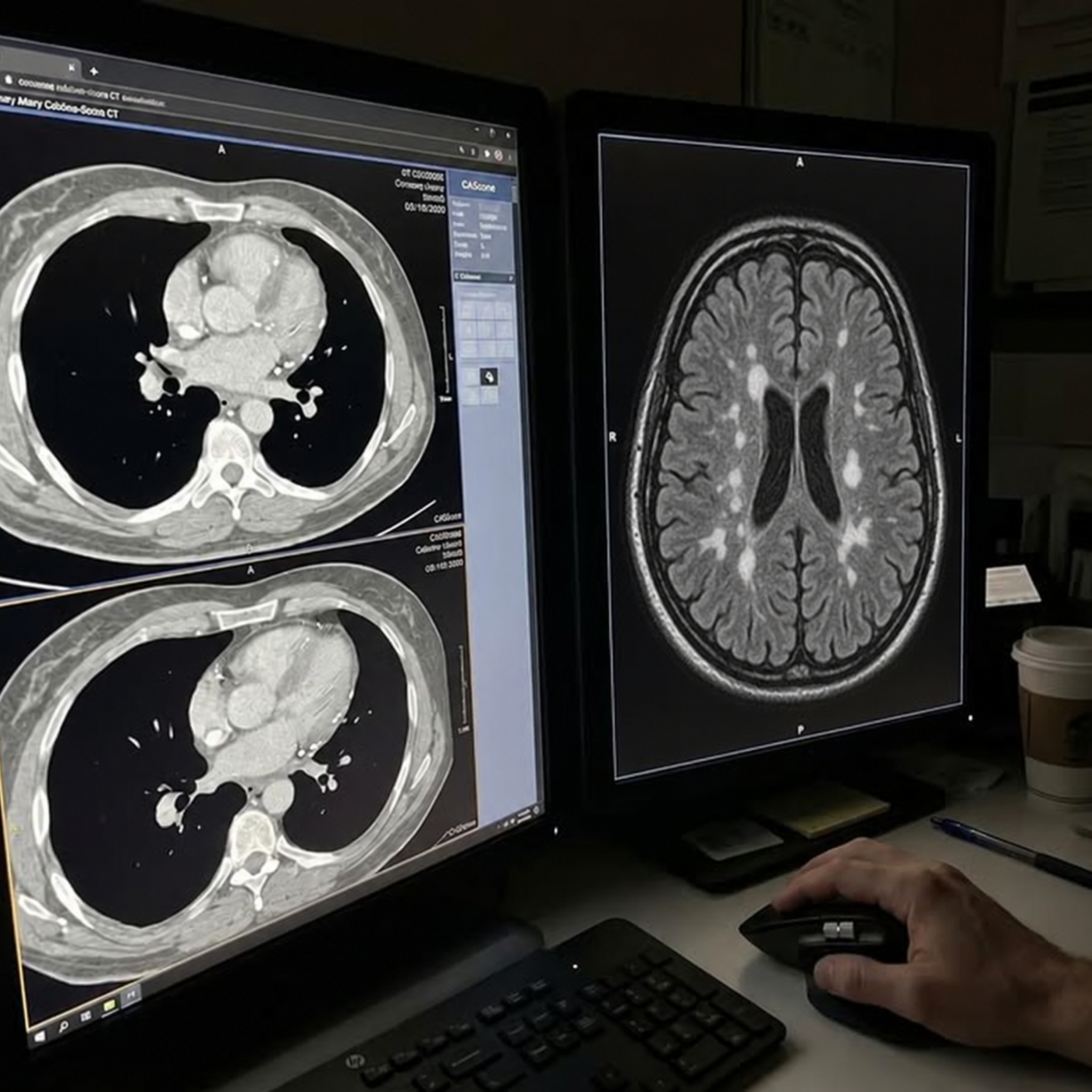
The MS specialist rejected my wheelchair application. If you have MS, your MRI is stable, and your right foot keeps catching, please read this before you book a wheelchair fitting like I did. I was 40 minutes from putting a $1,400 deposit down on a power wheelchair. I told my sister it was a "consultation." I had already tried four months of physical therapy... then vitamin D... then a cooling vest... then a $200-a-month stack of six different bottles from a Facebook group. Nothing. By month seven after my last stable MRI, I could not cross a parking lot without my cane, and I deleted every video that showed me walking. That is when an MS specialist named Michael Anderson put my file down on his desk, pushed my wheelchair application back across it, and told me he would not approve it. What he said next... about WHY I kept losing the ability to walk despite stable scans, changed everything I thought I knew about what was happening inside my nervous system. And it is the reason I am writing this post tonight. Because if you have MS, your scans keep coming back stable, and you are scared by a toe that catches, a leg that drags, and a hand that reaches for every wall for balance... Please read this all the way through. What I am about to share is the same information that gave me my walking and balance back in weeks.... and it could save you from needing a wheelchair you don't need. My name is Carol Goldberg. I am 63 years old. I live outside Columbus, Ohio, close to my sister. And like a lot of people with MS, my scans were stable, but I was feeling worse. I had lived with MS for 13 years. I had tried every diet, every exercise plan, and every supplement people recommended. Ocrevus stopped the relapses in a way nothing else ever had. No relapse. No new lesion. My neurologist was thrilled. My MRI was stable. My blood work looked good. He shook my hand and said, and I am quoting him exactly, "Whatever you are doing, keep doing it." So a couple weeks later I went shopping to buy a lighter cane that I thought I would only need outdoors. That mobility store was the worst afternoon I had experienced in years. Because the cane fit my hand perfectly, and my right toe still caught on the carpet before I reached the mirror. My right foot caught. My leg dragged. I swung my hip out to clear the floor. I watched myself cross the same ten feet three times. My right toe caught every time. I reached for a display shelf once. I stopped twice. I could not make my body walk the way it had before, no matter how hard I tried. My MRI was stable and I needed more help to walk than I had needed the year before. So I did what all of us do. I asked. My neurologist told me people with MS can need more help to walk over time, and that physical therapy could help me move more safely. I kept getting worse. I hired a physical therapist, who told me I needed more strength and better balance. Three sessions a week. Sit-to-stands, step-ups, resistance bands, treadmill work, and balance drills. The whole program. I did it for four months. On Ocrevus. I got stronger in the exercises and my right toe still caught. My timed 25-foot walk still took 11.1 seconds. Then came the shopping list. Vitamin D. Alpha-lipoic acid. Biotin. Probiotics. A green powder. CBD capsules somebody in an MS Facebook group recommended. I had tried EVERYTHING. Close to $200 a month across six containers. I stopped taking the alpha-lipoic acid after eleven days. It gave me heartburn during the first week, so I told my sister that nerve supplements "do not work for MS." And in the meantime, I needed the cane inside my house too. My right toe caught on the carpet at least once every day. I needed both hands on the rail to climb the stairs. When I stood up from the couch, I had to wait before I could take the first step. I stopped sitting in the bleachers at my granddaughter's games because I did not feel safe climbing the steps. I could name every physical change, at the exact moment everyone reviewing my scans was telling me the MRI was stable. And then came the day I decided the only answer left was a power wheelchair. I booked the wheelchair fitting on a Thursday. I told my sister it was just a conversation. It was not. I had the financing pre-approved. I had videos on my phone of myself walking from three different angles that I had recorded in my hallway with the door closed. I was going to pay a mobility clinic $1,400 for a power wheelchair because I believed I would keep needing more help to walk. That is how desperate I was. Dr. Anderson was 55. He listened to the whole thing without interrupting. The stable scans. The cane. The four months of physical therapy. The alpha-lipoic acid. The six bottles. Then he asked me one question nobody had asked me in 13 years: "Carol, what are you taking to support remyelination?" I said nothing. I said I was on Ocrevus. I said my neurologist had never used the word remyelination with me. He did not look surprised. He put my file down, pushed the wheelchair application back across the desk, and said he was rejecting it. I was mortified. I thought he was telling me there was no way to help me. Then he pulled his chair around to my side of the desk. "Carol, before you go home, I need you to understand something. The fact that your MRI is stable is not your problem. Your DMT is not your problem either. The wheelchair can help you cover distance. But it cannot address why your right foot keeps catching. If I approve your application today without explaining that, the damaged myelin will still need repair." For the first time in 13 years, someone was about to tell me why I needed more help to walk. He started from the beginning. He told me what I had was not "weak muscles." It was not "just what happens after years with MS." It was not my age, and it was not the physical therapist's program. "The nerve fibers in your brain and spinal cord are wrapped in a protective fatty coating called myelin. MS strips that coating off, and without the insulation the electrical signals slow down or fail to get through. Your body does try to repair the damage, but the inflammation eventually overwhelms the repair cells, leading to permanent damage and progressing symptoms."* I asked him what that had to do with my right foot. "The signal that tells your foot to lift has to travel from your brain, through your spinal cord, and into the muscles in your leg. Damaged myelin disrupts that signal. When the signal arrives too slowly or fails to get through, your toe catches and your leg drags. Same muscles. Same effort. A disrupted nerve signal." Then he said the part that scared me most. "MS treatment should have two jobs it needs address. The first is reducing the immune activity that damages myelin. The second is remyelination, which means rebuilding myelin after it has been damaged. Your DMT was designed for the first job. It was never designed to perform the second one." I sat there staring at him. He kept going. "A stable MRI means no new lesions appeared. That is important. But an MRI measures lesions. It does not measure whether the myelin in each old lesion was fully rebuilt. Your DMT reduced the attacks. The old myelin damage still needed repair." "So for years, the part of your treatment aimed at immune activity was doing its job. At the same time, the myelin damaged before and between those scans remained incompletely repaired. Those are two different processes." "Your scan is stable, Carol. Your repair is incomplete." Then he gave me the explanation I have not been able to stop thinking about since. "You are sitting in my office asking me to approve a power wheelchair. The chair can help you cover distance and keep you safe. It cannot rebuild the myelin around a damaged nerve fiber. Before you spend $1,400, I want you to understand the difference." That is exactly why four months of physical therapy did not change my timed walk. I was not refusing to work. Physical therapy strengthened my muscles and helped me move more safely. It did not rebuild myelin around the nerve fibers that controlled my right foot. He was not done. "And here is the part that explains everything else you described to me. The same disrupted nerve signal is why your toe catches on the carpet, why you swing your hip to clear the floor, and why you need both hands on the stair rail. Those are not three separate problems. They are three ways incomplete myelin repair is affecting how you walk." I sat in that chair in complete silence. Because every single person I had asked had discussed attacks, muscles, or symptoms. Thirteen years. Four months of physical therapy. Six bottles a month. A $1,400 deposit I was 40 minutes from paying. My records showed stable scans beside timed-walk results that increased year after year. I asked him the obvious question. "So how do I support the repair?" He said there is a way. But it was not another mobility device, and it was not what my neurologist or my physical therapist had been asked to focus on either. "You have to support remyelination. That means rebuilding the myelin. Not with more exercise added to a disrupted nerve signal. Not with a wheelchair that helps you cover distance but does not rebuild myelin. You supply the material and energy the repair process needs inside the cell, and you support the nerve signal while that repair takes place." "That is the step everybody skips, because a DMT is prescribed to reduce immune activity. It was not built to rebuild the myelin left damaged after that activity." I told him I had already tried supplements. I told him about the alpha-lipoic acid. Eleven days. Heartburn. My right toe still caught every day. He shook his head immediately. "Of course it did not help. And it was never going to meet the standard we are discussing. Let me tell you why, because nobody has." "First, remyelination needs three specific vitamins, which are B6, B1, and B12. Together, these are called the neurotropic vitamins because they support nerve health specifically. B12 supplies material used to rebuild myelin. B1 supports the cellular energy needed for that repair. B6 supports clean nerve signaling while B12 and B1 support the rebuilding process." "Second," he said, "the form matters. Most nerve supplements on the shelf carry the cheap synthetic forms. These vitamin forms are far less bioavailable than the active forms. The vitamin names can match while the forms and amounts do not." "And third, the vitamins still have to get inside the cell. Liposomal delivery encloses them in tiny phospholipid spheres. A cell membrane is made from the same material. The sphere and the membrane fuse, and the vitamins are released inside the cell, where the repair process uses them." "So the alpha-lipoic acid you bought gave you something completely different from what we are discussing. It did not contain the three neurotropic vitamins. It did not supply their active forms. It did not use liposomal delivery. And you concluded that supplements could not help your nerves."* "That result told you nothing about these three vitamins. You took alpha-lipoic acid, not the neurotropic combination. It was a different ingredient built for a different job." I asked him what I was supposed to buy instead. "Please do not just grab another nerve supplement off a shelf. The whole point is the three-vitamin combination, the active forms, and the liposomal delivery. He wrote a name down on a prescription pad and slid it across the desk. It was a brand called Nuvel. He told me it was the only formula he had found that met the full standard instead of relying on one vitamin and a familiar label: 5,000 mcg of active B12 per daily serving. B12 supplies material used to rebuild myelin. 2.4 mg of active B1. B1 supports the cellular energy needed for that repair. 3.4 mg of active B6. B6 supports clean nerve signaling. All three neurotropic vitamins together. Liposomal delivery. Each daily serving encloses the vitamins in phospholipid spheres designed to fuse with cell membranes and release the vitamins inside. Taken under the tongue. That is how the drops are used. The liposomes are the part designed to carry the vitamins inside the cell. Made in the USA. Third-party tested. No proprietary blend. Every featured amount printed on the label. "I take it myself," he said. "I have MS too. And I mention it to patients who ask me what supports the repair side after their DMT has addressed immune activity." "It is not in stores. You order it online. But it is the closest thing to a complete repair-support formula I have seen for what you are describing." He never charged me for the wheelchair fitting. My sister drove me home that afternoon. I did not even take my coat off. I sat down at the kitchen table, pulled the website up on my phone, and ordered it right then. It arrived three days later. I took one daily serving under my tongue. Here is exactly what happened over the next six weeks. Week 1. Nothing I could measure. But by day five, I had more energy at two o'clock. I reached the end of the afternoon without needing to lie down. I did not connect it to anything yet. Week 2. I walked down to the living room without needing to reach for the wall. My sister pointed it out before I noticed. Week 3. Strength came next. I stood up from the couch without pushing off with both hands, and I took the first step without waiting. Week 4. This is the week I recorded a video. Side angle. I had not recorded myself walking in seven months. My right toe cleared the carpet more often. I did not swing my hip as far to lift my leg. I watched it six times. Week 6. I walked through the grocery store carrying a basket. I climbed the bleacher steps with one hand on the rail. My MRI showed exactly what it had shown the day I sat in Dr. Anderson's office. No new lesions. Exactly the same. My timed 25-foot walk was the number that changed. At week eight, it had improved from 11.1 seconds to 9.4. At week twelve, it was 8.6 seconds. I went back to see Dr. Anderson for a follow-up he had not even asked me to book. I wanted him to watch me walk. He watched, smiled, and said: "Your MRI is still stable. Your timed walk improved. Keep doing it." And here is the thing. Before I posted this, I reached out to the people at Nuvel and told them the whole story. The 13 years. The four months of physical therapy. The $1,400 deposit I was 40 minutes from paying.* They were so taken aback that they wanted to get this into the hands of more people with MS who were experiencing what I experienced. So right now, there is a link where you can get it at a significant discount on your order. They are running a multi-bottle offer that costs a fraction of what I was spending on six separate containers that were never designed to work together. And they know that supporting myelin repair takes time. So they back it with a 90-day money-back guarantee. If after 90 days you do not walk more steadily, if your foot keeps catching just as often, if you do not feel the difference, you send it back and they refund every penny. So please, do not wait. Do not wait until you are sitting across from an MS specialist with a power-wheelchair application in your file. Do not wait another four months strengthening muscles without supporting the myelin around the nerve fibers that control them. Do not spend one more month believing that needing more help to walk is simply the price you pay for having a stable MRI. It is not. Your MS is not just an attack problem. It is also a repair problem. [https://trynuvel.com/products/vitamin-b-complex-liposomal](https://trynuvel.com/products/vitamin-b-complex-liposomal) If it is in stock, get the 90-day supply. One for you. One for the sister who also has MS. One for the person who has had stable scans for a year and now reaches for every handrail.* You will be glad you did. Trust me. I am 63 years old. I have lived with MS for 13 years. I was 40 minutes from paying a mobility clinic $1,400 when an MS specialist rejected my wheelchair application and explained my incomplete myelin repair. One daily serving gave me my balance back in six weeks. It can do the same for you. [https://trynuvel.com/products/vitamin-b-complex-liposomal](https://trynuvel.com/products/vitamin-b-complex-liposomal) Carol
Like this ad? Make it yours.
Crush rebuilds this exact creative around your product — your brand, your colors, your offer — in about a minute.