John Ross
 Facebook ad: “Read this if the Bible feels harder than it should.”
Ran for 1 day, from November 23 to November 24, 2026, the last day Crush saw it.
Run by John Ross on Facebook. Crush is not the advertiser and does not verify its claims. See this ad in Meta's Ad Library(opens in a new tab)
Make your own version of this ad
Crush makes it, launches it in your own Meta ad account, scales the winners and pauses the losers.
About this ad
- Meta Ad Library ID
- 1110330571996637
- Platforms
- Facebook, Instagram, Audience Network and Threads
- Relaunches
- 1
- Niche
- Parenting & Kids
Ad text
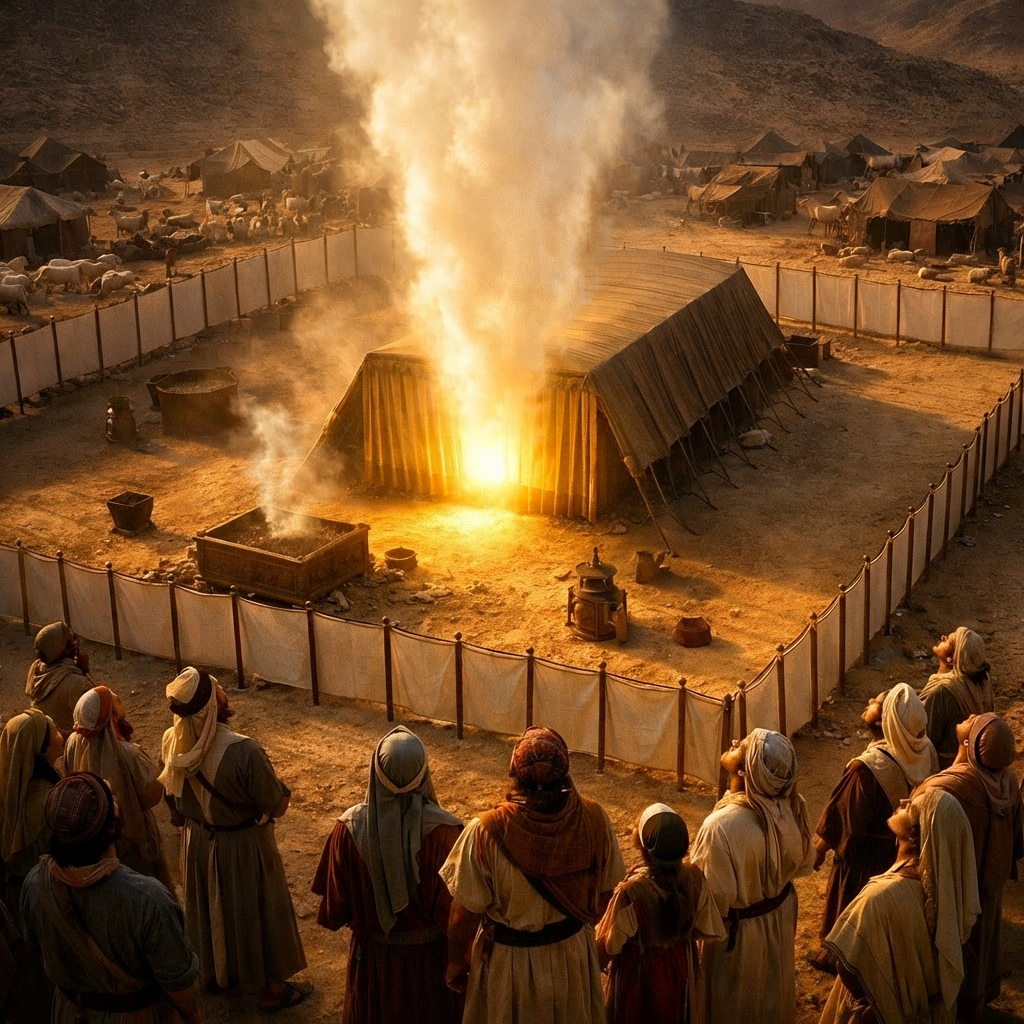
There is a word in the Lord's Prayer that appears nowhere else in ancient Greek literature. Scholars have been debating what it actually means for two thousand years. And every Christian has been saying it their entire life without knowing. The Lord's Prayer is the most recited prayer in human history. "Our Father, who art in heaven, hallowed be thy name. Thy kingdom come. Thy will be done on earth as it is in heaven. Give us this day our daily bread." Every Christian has said those words thousands of times. In church. Before meals. At bedsides. In funerals. In quiet moments alone. And hidden inside one of the most familiar lines is a word that breaks everything you thought that prayer meant. "Give us this day our daily bread." The word translated as "daily" is the Greek word epiousios. That word appears nowhere else in the Bible. Nowhere else in any ancient Greek text ever discovered. Not in secular literature. Not in inscriptions. Not in personal letters. Not in any document from the entire ancient Greek-speaking world. It is used twice in all of human history. Once in Matthew 6. Once in Luke 11. Both times on the lips of Jesus. Early church fathers did not know what it meant. Jerome, who translated the Bible into Latin in the fourth century, said he could not find an equivalent word in any language he knew. Origen, one of the greatest scholars of the early church, admitted he had never encountered the word before. Modern translators rendered it "daily" because they had to render it as something. But "daily" is almost certainly not what it actually means. The Greek word appears to be built from two roots. Epi, meaning "upon" or "above." And ousia, meaning "substance" or "being." Upon-substance. Above-being. Supernatural bread. Bread of the coming age. Bread that transcends physical need. Jesus may not have been asking for breakfast. He may have been asking for something that does not exist in the natural world yet. Something beyond this age. Something from the age to come. And He told His disciples to ask for it every single day. But that is just one word in one line of the prayer. "Thy kingdom come." The Greek word for "come" here is elthetō — a specific verb tense that does not mean "may it come someday." It means "let it arrive now. Bring it here. Already." "Thy will be done on earth as it is in heaven." That is not a request for God to override human behavior. In the original Greek, this is one continuous thought — asking that the reality of heaven invade the earth. That the rules of the age to come break through into the present. "Forgive us our debts, as we forgive our debtors." The Greek word for debts is opheilēmata. It is a financial term. A ledger term. Not a vague spiritual concept. Jesus taught His disciples to pray for their moral debts to be cancelled the way a creditor cancels a financial debt. "Lead us not into temptation." The Greek verb here is eisenegkēs — "do not carry us into." It is not asking God to prevent temptation. It is asking God not to bring us into the trial that is coming. The testing. The tribulation. Every single line is denser than it appears in English. Every phrase carries meaning that two thousand years of translation have flattened into something simpler than what Jesus actually said. And most Christians have recited this prayer since childhood without ever being told that the words they are saying do not mean what they think they mean. That is the problem I discovered sitting at my kitchen table with my son last spring. I have been teaching Scripture for 18 years. My son is twelve. And one night after dinner he asked me a question I could not answer. "Dad, what does give us this day our daily bread actually mean? Because we have bread. We have a whole loaf on the counter. Why do we ask God for something we already have?" I opened my mouth to answer him. And I stopped. Because he was right. I had said those words my entire life. I had preached on that prayer a dozen times from the pulpit. And I had never actually thought about what a twelve-year-old could see in one sentence. Why would Jesus teach His disciples to pray for bread they already had? I told my son I would look into it. That night after he went to bed I opened my Greek Bible software and searched for the word translated "daily." I sat at the kitchen table for three hours. Every commentary I pulled up said something different. Every scholar admitted the word was a mystery. Origen. Jerome. Augustine. All of them had wrestled with this one word and none of them had been able to agree on what it meant. It was not bread for the day. It was something else entirely. Something hidden in a word that Jesus may have invented specifically for this prayer. And in 18 years of teaching Scripture, nobody had ever shown me what was actually there. I sat alone at that kitchen table at two in the morning thinking about how many thousands of times I had said those words. How many times I had taught them to other people. How many Christians around the world were saying a prayer that morning that none of us had actually translated correctly. The Lord's Prayer was not confusing because it was unclear. It was confusing because we had been given a smoothed-over English version that had lost the weight of what Jesus actually said. And it was not my fault. It was not my congregation's fault. It was not my son's fault. Nobody had ever given any of us the roots. The next morning I started writing. Genesis. Everything someone needs to know before reading Genesis. Who wrote it. When. Why. What was happening. The main themes. How it connects to the larger story. Not a sermon. Not a devotional. Just the roots. Then Exodus. Leviticus. Numbers. Every single book of the Bible. Sixty-six pages. One page per book. It took me three months. Three months of putting 18 years of studying into a format any believer could use completely on their own. No pastor required. When I finished, I printed a copy and gave it to my son. "Read the page on Matthew first," I told him. "Then open to Matthew 6 and read the Lord's Prayer again." He came back an hour later with his eyes wide. "Dad. He wasn't asking for bread. He was asking for something from heaven. I never understood that before." I started giving copies to people in my church quietly. One at a time. Every single person said the same thing. "This is the first time I have ever understood what I was reading." Not because I am some brilliant teacher. But because I finally gave them what they actually needed. The roots. And once you have those roots, the Bible you thought you knew becomes something you have never actually encountered before. The Lord's Prayer is just one moment. There are thousands more waiting in the pages you have already read. Did you know that the Ark of the Covenant contained three objects — the broken tablets, the rejected manna, and the questioned rod — and that the Mercy Seat where blood was sprinkled sat directly on top of all three? That the gospel was physically sealed inside a gold box in the desert? Did you know that the name Barabbas literally means "son of the father" and that the crowd was given a choice between two men with the same title — the innocent Son of the Father and the guilty son of the father — and the guilty one went free? Did you know that when Jesus said "It is finished," the Greek word tetelestai was the same word stamped on receipts in the Roman Empire to mean "paid in full"? That His final declaration was not a statement of ending but of completion. A cosmic debt marked as settled. Context changes everything. Every single time. I call it FaithSprout. The 66 Roots Journey. 66 pages. One for every book of the Bible. Each page gives you what you need before you read. Who wrote it. When. Why. What was happening. The key themes. The symbolism. And how it connects to your actual life today. Written in plain language. No seminary terms. No complicated theology. Just the roots that make everything you have already read suddenly land with the full weight God intended. The Bible is not confusing because it is unclear. It is confusing because we are reading it without the foundation that made it clear to the people it was first written for. The disciples heard Jesus teach that prayer and understood every word. They knew the weight of epiousios. They felt the tense of elthetō. They recognized opheilēmata as a ledger term. Every phrase landed with the full force of what Jesus meant. We recite the English translation and miss almost all of it. This guide gives you that foundation back. If you have ever said the Lord's Prayer thousands of times without understanding what half of it actually means. If you have ever read a passage of Scripture and sensed there was something deeper underneath the words that you could not quite reach. If you have ever wondered what you would find in God's Word if someone just gave you the roots first. This is what you have been looking for. Jesus did not choose His words by accident. He never does anything by accident. Do not let a lack of context be the thing that keeps you from hearing what He actually said. Get closer to God by actually understanding His Word. Not just the familiar parts. All of it. The whole story. That is what The 66 Roots Journey was created for. And you can start yours by clicking below.
Where the ad sends people
faithsprout.store
Read this if the Bible feels harder than it should. ☝️
Understand all 66 books of the Bible more easily
Shop now: faithsprout.store(opens in a new tab)