Carol Jones
 Facebook ad: “Clinically Formulated Magnesium”
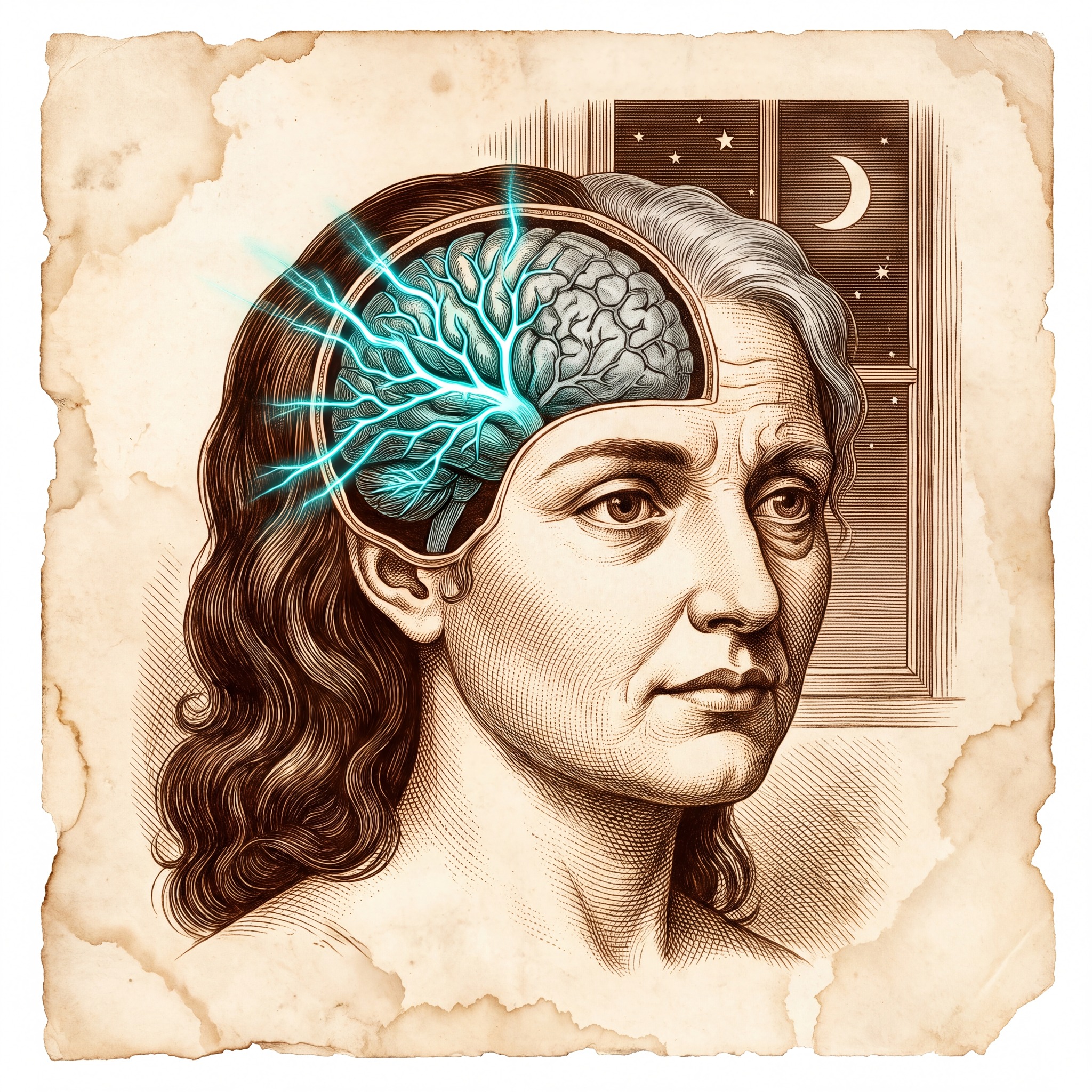
Running for 10 days since November 15, 2026. Crush last saw it on November 25, 2026.
Run by Carol Jones on Facebook. Crush is not the advertiser and does not verify its claims. See this ad in Meta's Ad Library(opens in a new tab)
Make your own version of this ad
Crush makes it, launches it in your own Meta ad account, scales the winners and pauses the losers.
About this ad
- Meta Ad Library ID
- 1122420170539809
- Platforms
- Relaunches
- 0
- Niche
- AI & Software
Ad text
I am a sleep physician. I sit in a dark room and watch your brain all night on a screen. I have done this 912 times in twenty-two years. The patients with insomnia keep turning up in the memory disorders clinic down the hall. Last March I found out why. On my own study. I am writing this because I owe it. Not to a company. Not to a colleague. To the 912 people whose brains I watched all night without ever asking why the deep part was missing. I know what the director of our sleep center will say when he reads this. I know what the pharmaceutical representatives who walk through our department every week will say. I have spent twenty-two years not saying it. I am done. If you take something to sleep right now — or someone you love does — and you have been told your sleep is fine, please read all of it. I know it is long. I will not waste a sentence of your time. My name is Delphine Ashby. I am 58 years old. Board-certified in neurology and sleep medicine. Twenty-two years running the sleep laboratory at a hospital that records close to a thousand overnight studies a year. I am the doctor you see after your family doctor says your sleep is fine. I am the one who watches. Nearly a thousand studies a year come through that laboratory. Software scores most of them and somebody signs off in the morning. The 912 are the ones I sat with myself, wave by wave, all night, in the room — because I have never trusted software to see what I can see. I chose this specialty because of my mother. She was 63. Retired postmaster. Insomnia from her early fifties. Ambien for eleven years. Never missed a dose. Her doctor told her at every six-month visit that her sleep was fine. Seven hours most nights. Memory a little foggy, but they were watching it. The chart was perfect. On a Sunday evening in October she walked out of her own front door in her nightgown and did not come back. My father found her at first light, face down in a pile of red oak leaves in the neighbor's yard. He thought she was resting. She was not resting. Exposure. She had been out for six hours. Dead before anyone knew she was gone. Diagnosed at 61. Gone at 63. Eleven years of the pill. Eleven years of "her sleep is fine." The chart was perfect. The woman was gone. I was 29 years old. Third year of my neurology residency. I stood in the hallway of a hospital I did not work at, looking at the chart of a woman I could not save, and I made the decision that shaped my entire career. I would become the doctor who watches the night itself. Who sees what actually happens in there. Not the report of it. Not the log. The night. Because if the word on a chart could not protect my mother, I would protect people with my eyes. Twenty-two years later I have done that 912 times. And I need to tell you what I saw. When I run an overnight study I am looking at a live tracing on a screen. Electrodes on the scalp, and every wave the brain makes for seven or eight hours rolling across in front of me. I can see exactly when you go under, exactly how far down you go, and exactly how long you stay there. But there is something else I see. Something that does not appear on a sleep log. Something your doctor will never see because your doctor reads the hours you reported. I read the night itself. I see the depth. A healthy night has mountains. Long, slow waves rolling through the first half of the night — twenty minutes at a stretch, sometimes forty. That is stage three. That is the deep part. On the screen it is unmistakable. A medicated night is something else entirely. It is flat. Fast. Shallow. Busy in all the wrong places. There are no mountains. The patient lies unconscious for seven hours and the tracing never once goes down where it is supposed to go down. I have printed these pages. I have held them. I have laid them side by side under a lamp. It does not look like sleep. It looks like anesthesia. We even have a word for it in the lab. Efficient. Sleep efficiency — the percentage of your time in bed that you were actually asleep. Anything over 94 percent is excellent. I have typed that number into a thousand reports on people whose brains did not go down once all night. Not once in twenty-two years did anyone teach me to report the other number. I said it out loud to a colleague once, during a study. Early in my career. He was watching the screen over my shoulder at two in the morning while we ran a 61-year-old woman who had been on Lunesta for nine years. "Look at the tracing," I said. "That's not sleep. That's a building with the lights off and nobody inside doing the cleaning." He nodded. We finished the study. We wrote the report. We never talked about it again. But I saw it again. And again. And again. Over twenty-two years and 912 nights I developed a pattern recognition that nobody trained me to develop, because nobody trained me to look at the depth. They trained me to score the hours. Here is the pattern. The patients with insomnia — the ones on a nightly sleeping pill, the ones whose sleep logs were fine, the ones whose doctors were satisfied, the ones who came to me after years of a medication they had been told was the safe choice — their tracings looked different from the patients who had never taken anything at all. Not better. Different. The unmedicated insomniacs had a broken night. Visible. Fragmented. Awake at 2, awake at 4, and I could see exactly what was wrong and exactly what to do about it. The long-term sleeping pill patients had something else. A long, smooth, shallow, unbroken tracing straight across the whole night. Not broken sleep — sleep with the floor taken out. Seven hours of it. And the deep part was not reduced. It was absent. And it had been absent, on every study I could find in their chart, for as long as they had been on the pill. I mentioned this to the director of our sleep center once. At a departmental meeting. Carefully. As an observation, not a conclusion. He said: "They're sleeping, Delphine. Their efficiency is excellent. What you're seeing is age-related change in sleep architecture." I did not bring it up again. But I kept a count. Not officially. In my head. How many of my 912 overnight patients were already on a nightly sleeping pill, with a sleep log their doctor called fine, when the deep part came back absent. I stopped counting at 500 because the number made me sick. More than half. And every time — every single time — the referring physician's note said some version of the same sentence: "Chronic insomnia, well controlled on current regimen." Well controlled. In my lab. With twenty-two electrodes on their head and no stage three all night. I put that pattern in a drawer in my mind and I left it there. Because I did not know what to do with it. I run a laboratory. I record and I report. I do not question the medications that the family doctors and the psychiatrists prescribe. That is not my role. Then six years ago my own internist sat me down with my own sleep diary. Sleep onset over an hour. Awake at 3 most nights. Five and a half hours on a good one. "Delphine, you know what the guidelines say." I did. I had watched 500 patients follow those guidelines into my lab. But I also knew that my mother's sleep log had read seven hours on the week she died, and her doctor had been calling it fine for eleven years while her mind quietly emptied out. I filled the prescription anyway. Zolpidem. Ten milligrams. Because I am a physician, and I could not keep running a sleep lab on five and a half hours, and I did not yet understand why the hours were not the right thing to watch. The drug worked beautifully on paper. Within four nights I was logging seven hours. Seven hours, every night, for the first time in a decade. My internist said the word "textbook" and smiled. I took it for six years. Six years of seven-hour nights. Six years of my internist smiling. Six years of feeling progressively worse and telling myself it was aging. The fatigue that hit me by 3 PM every day. I blamed the schedule. Sleep medicine is a nocturnal specialty. I have been keeping other people's hours for two decades. The names that stopped arriving on time. I blamed the volume. I see forty new patients a month. Nobody holds forty names. The fog that started settling over my thinking by late afternoon. I blamed stress. I blamed my age. I blamed the fact that I was 57 years old and running a laboratory that never closed. My husband noticed before I did. Graham is not a physician. He is a high school biology teacher who has been married to a sleep physician for twenty-six years and knows more about the brain than most residents. He said it once, in February, sitting across from me at dinner. Quietly. Like he had been holding it for months. "You're disappearing, Delphine. You're here but you're not here. You come home and you sit down and you don't get back up. That's not you." I told him I was tired. He didn't argue. He just looked at me the way he used to look at students who gave him the wrong answer and knew it. Last March I ran a study on myself. I do not know why I did it that week. I had never once done it in twenty-two years. Something in me — the part that had been counting medicated patients in my own lab for two decades and never saying anything — needed to see the tracing. I stayed after the last patient left. Wired my own scalp at the mirror in the tech room. Lay down on the bed in room two and slept seven hours and eleven minutes. I read it myself at six the next morning, alone at the workstation, in the same room where I have watched 912 other people sleep. Sleep efficiency 94 percent. Textbook. Total time in stage three: fourteen minutes. My hands went still on the keyboard. I could feel my pulse in my fingertips. A woman my age should get an hour or more. I have called patients at home with forty and told them to come in that week. I have scheduled follow-ups on thirty. I have looked at families across a desk and used the word "significant" for anything under twenty-five. I got up and walked into the lab. Empty. The bed still unmade from my own night in it. I stood in the room where I have done 912 studies and I looked at the bed where people lie down and let me wire their heads and trust me to know what I am doing. Six years of zolpidem. Six years of seven hours a night. Six years of a sleep log my internist called textbook while she smiled. And fourteen minutes of the only part of the night that does anything. I was looking at my own brain and I was seeing the same pattern I had seen on a screen 912 times. The floor gone. Quietly, every night, for six years, while every log and every chart said everything was fine. That night I did not go home. I went to my office and I ordered the workup I should have ordered five years ago. Not the standard panel. The full workup. Every system that runs on the night. The results came back over the following two weeks. I read each one alone, in my office, with the door closed. Brain. MRI, and a neurocognitive battery — a test I have never ordered on myself in twenty-two years. Processing speed in the 34th percentile for my age. It had been in the 88th when I was tested during a research study eight years ago. The afternoons I had been blaming on the schedule were measurable. And the MRI came back with an estimated brain age of 71. I am 58. My mother died at 63. The brain in my head was older than my mother ever got to be. Heart. Blood pressure 146 over 92 — the number my internist had been calling borderline for three years. We were watching it. Resting heart rate 84. Blood pressure is supposed to fall at night, and it falls in the deep part. Mine had been running at daytime pressure around the clock for six years. Blood sugar. Fasting glucose sitting just over the line where the lab starts printing it in bold. My A1C creeping the same direction. I had been waking up thirsty and getting up twice a night since the previous autumn. I told Graham it was a bladder thing — something every woman my age deals with. I never considered my blood sugar because I was not diabetic and the number was still close enough to normal that nobody had said the word. Nobody had flagged it. I had not flagged it myself. Peripheral vessels. I had been getting a cramping ache in my right calf when I walked from the parking garage to the hospital — six minutes, slight uphill. I had blamed my shoes. I ordered an ankle-brachial index. 0.87 on the right. Below normal. The arteries feeding my legs were narrowing. Eyes. I scheduled a retinal exam. Dilated fundoscopy. The ophthalmologist found early microvascular changes in both eyes. Small vessel damage. The kind of thing she told me she sees in patients with long-standing metabolic stress. She asked me if I was diabetic. I said no. She noted it and moved on. Five systems. My brain. My heart. My blood sugar. My legs. My eyes. Every one of them showing the same pattern. The same quiet deterioration. The same waste nobody rinsed out. And my sleep — the one thing anyone had been looking at for six years — logged seven hours a night. Stable. No significant change. And if I had gone through the system the way my patients do, each one would have sent me to a different specialist who would have prescribed a different drug. A neurologist and a cognitive medication for the brain. A cardiologist and a blood pressure pill for the heart. An endocrinologist and metformin for the blood sugar. A vascular surgeon and a blood thinner for the legs. An ophthalmologist and prescription drops for the eyes. Five specialists. Five drugs. Five measurements. Five charts in five offices. None of them talking to each other. And not one of those five drugs would touch the thing that was doing this to all five systems at the same time. What is doing this to five systems at the same time? I drove home that night with the reports in my briefcase. Graham was reading in the living room. He looked up when I came through the door and the book came down from his lap. "Delphine. What happened." Not a question. He could see it on my face. I sat down across from him and I told him. The fourteen minutes. The brain test — 34th percentile, down from the 88th. The number on the MRI. The blood sugar. The legs. The eyes. Five systems. I watched his face go white. I watched his hands close slowly around the arm of the chair. When I got to the brain age he put his hand over his mouth and held it there. "How bad?" he said. "It's early. All of it is early. But it is all moving in the same direction." He was quiet for a long time. Then he said: "Your mother was 63." I could not answer that. That night Graham went to bed and I sat at the kitchen table and opened my laptop and did something I had not done since my residency. I searched for the mechanism. Not the prescribing data. Not the efficacy trials. Not the guidelines I had followed for twenty-two years. The mechanism. The biology of what I had been watching on a screen for 912 nights and reading on five reports now sitting in my briefcase by the front door. I read until 3 AM. What I found was not hidden. It was sitting in Sleep and Neurology and Science Translational Medicine, journals I had been subscribing to for my entire career. The thing I had been trained to call sleep — the seven hours, the 94 percent, the log my internist smiled at — was not the thing that keeps a brain alive. The thing that keeps a brain alive only happens at a depth I had not reached in six years. The next morning was a Saturday. Graham was making coffee. I had not slept. He took one look at me and knew I had been up all night. He set a mug in front of me. Sat down across the table. He had been crying — I could see it around his eyes. He had gone to bed knowing his wife's brain, heart, blood sugar, legs and eyes were all quietly failing, and he had spent the night with that. "Did you find anything?" he said. "I found what's doing it. To all five." He wrapped both hands around his mug. Steadied himself. "Show me." "There's a stage," I said. "One stage of the night. It's the thing that connects all five reports. It's the thing I have not reached in six years. And it is the only window your brain gets to clean itself." He was watching me the way he watches a complicated experiment unfold in his biology lab. Not interrupting. Just tracking. "The clinical name is slow-wave sleep. Stage three. You only need to know the name once. What matters is what happens in it." I got up and ran the tap and stacked the dinner plates in the sink. Left them there, in the water, and sat back down. "Every cell in your body makes waste," I said. "You teach this. What happens to a cell that can't clear it?" He didn't have to think about it. "It poisons itself. That's day one of the unit." "Right. And every organ you have has a drain. Lymph. It carries the waste out while you go about your day. Every organ except one." I pointed at the ceiling, at nothing, the way you point at your own head. "The brain doesn't have a drain. The brain has a night shift. The channels open, fluid washes through the tissue, and everything the brain made that day gets rinsed out and carried away. Like doing the dishes before bed instead of leaving them in the sink." "And here is the part nobody told my mother. That night shift does its heaviest work at the depth. Stage three. It does not run while you are lying there at 2 AM. It does not run in the shallow part. It runs at the bottom. Skip the bottom and the waste just sits there. One night, you notice nothing. A thousand nights, and it isn't dishes anymore. It's hardened on. And that buildup is the thing they eventually put a name to." I looked at him. "That's the night shift, Graham. That's what I have been looking at on a screen for twenty-two years and calling a sleep disorder. Not sleep that's too short. Sleep with no bottom. In the brain that holds who my patients are. And the heart that never gets the one stretch of the night where the pressure comes off. And the blood sugar. And the legs. And the eyes. The same missing stage. Five systems." He was staring at the sink. "And the pill?" I reached over and hit the light switch on the wall. The kitchen went half dark. "Look at the sink." "I can't see it." "Right. The room looks clean. The dishes are exactly where you left them." I turned the light back on. "That is what the pill does. It does not run the night shift. It turns off the light so you stop noticing that nobody did." He was quiet for a long time. Then he said it. "So your pill has been turning off the light for six years. And the dishes have been stacking the whole time. That's what the fourteen minutes is showing." "Yes." "And the fog? The fatigue? The names?" "Different cost. Same pill." I got up and unplugged the toaster from the wall. Set it on the table. "This is the switch. Zolpidem works on one system in the brain — it turns the whole thing down. That's how it makes you unconscious. But the circuits that generate the slow waves run off the same system. Same assembly line. Same switch. You cannot turn one down without turning the other down. In my lab, on my tracings, the pill flattens the depth on the way to putting you out." I pointed at the cord, lying loose on the table. "That's what fourteen minutes is. I don't believe that is my age. I believe that is what the thing I have swallowed every night for six years was doing to my night." He looked at the unplugged toaster. Then at me. "So the drug that's supposed to give you sleep is taking away the only part of sleep that does any work." "Every night. Every system. For six years. The 3 PM fatigue. The names. The fog by four o'clock. The trips to the bathroom. That wasn't aging. That was six years of nights with the floor taken out." He reached across the table and put his hand over mine. I want to be clear about something before I go further. Your doctor is not the villain in this. Neither was mine. Neither was my mother's doctor who called her sleep fine for eleven years. They prescribed the best tool they were trained to use. The training is the problem. Every physician in the country learned the same textbook I learned, and that textbook measures the hours. Not one of them told us to look at the depth. "Is there anything that gets you back down without flattening it?" That was the question I had been up all night trying to answer. Graham got up and opened the cabinet above the refrigerator. The one where we keep supplements. He set four bottles on the table between us. "Valerian," he said, pointing at the first one. "My sister has taken this for eight years. Her doctor told her it's a safe way to sleep." "It takes the edge off getting to sleep in some people. Modestly. It does nothing for the thing underneath. Your sister's nervous system is still running hot at midnight. The valerian is a blanket over it." He pointed at the second bottle. "Magnesium. You have been taking this for three years. Your internist recommended it specifically because of the insomnia." This one mattered. Because he was right — I had been taking magnesium since year three of the zolpidem, specifically to get myself to the edge of sleep without raising the dose. I turned the bottle around and read the back to him. "One form," I said. "The cheapest one on the shelf. Magnesium oxide. It absorbed poorly in some small absorption studies, and it can cause loose stools, which is exactly why I have been taking half of what the label says for three years. One lonely form, at half a dose. It gets me to the door some nights. That's all. You can walk somebody to the front door all night long and if the stairs to the basement are gone, they never get down there. Both problems have to be solved. Getting down without the switch, and getting the switch out of the way so the depth can come back. This bottle barely does the first. Nothing in this cabinet does the second." He picked up the third bottle. Drugstore melatonin. "This was my idea. I read about it." I got up and walked into the hall and put my hand on the thermostat. "Your body has one of these for melatonin. Your brain makes its own supply every night — it is the signal that tells the whole body the day is over and it is time to go down. But as you get older, that signal tends to get weaker. Every year a little less. That is not a lifestyle problem. That is just biology." I turned the dial down and let him hear the furnace click off. "And when you bring the supply in from outside, from a bottle, you are pouring heat into the room instead of fixing the furnace. Plenty of people feel drowsy for three weeks. Then they need more. And their own signal — the one that is supposed to carry them down — is no stronger than it was the day they started." He looked at the fourth bottle. An over-the-counter sleep aid I had bought myself two years ago, for the nights the prescription wasn't enough, and stopped taking after a month. "And that one?" "Same story as the prescription, and then some. It turns off the light in the kitchen. The dishes don't move. And that class of drug has its own bill where memory is concerned, and that is not a debate anymore." He looked at the four bottles on the table. Then at the sink. Then at the unplugged toaster. "So nothing gets you down without the switch." "One thing might." At 3 AM I had found a body of research on the mineral sitting in my own cabinet. Published in journals I had been reading for twenty-two years. Not hidden. Not suppressed. Sitting in plain sight the way the tracings on my own screen had been sitting in plain sight for two decades. It starts on a dry common in Epsom, in the south of England, in 1618. A drought summer. Cracked ground. The story goes that a farmer's cows refused to drink from one bitter spring, and the water that was too bitter to drink turned out to be something else entirely. When it dried, it left a white salt behind. Magnesium sulfate. Epsom salt. For three hundred years after that, long before any researcher wired a scalp, grandmothers had been pouring that salt into a hot bath at night. Not for luxury. Not for tradition. Because they watched their husbands soak and they watched their husbands sleep — and they watched the clenched jaws let go, and the restless legs go still, and the men who paced the house at midnight finally lie down. Nobody called it a mechanism. They called it the evening bath. Then the science caught up, and it turned out the grandmothers had been onto something far bigger than a bath. Magnesium is a cofactor in more than 300 enzyme systems in the human body. Nerve function. Muscle function. Blood sugar control. Blood pressure regulation. That is not a supplement company talking. That is the National Institutes of Health. And nearly half of Americans do not get the amount they need from food. As we get older it gets worse — we eat less of it, we absorb less of it, and our bodies let more of it go. The supply runs out exactly when the nights start falling apart. And it has been through the kind of test that counts. A double-blind, placebo-controlled trial in older adults with insomnia. Real magnesium against a sugar pill, for eight weeks. And the mechanism is the thing I could not stop reading at 3 AM. Magnesium is not a sedative. It does not push on the switch my prescription pushes on. It does not clamp the assembly line shut. It does something else entirely. It supports GABA activity — the body's own calm-down signaling. The brakes your nervous system is supposed to apply by itself at the end of every day. And in that trial, the people taking magnesium fell asleep faster. Their sleep efficiency improved. Their insomnia scores came down. And then the line I read three times: their own melatonin went up, and their cortisol — the stress hormone that is supposed to be at its lowest at night — came down. Not a dose poured in from outside. Their own. The way it used to be. It does not put you under. It lets you down. I stopped reading when I hit that line. I read it again. Then a third time. Because I understood what it meant for me. I want to be precise here, because I am a physician and I will not overstate anything. No study I have found shows that magnesium builds stage three. I am not going to tell you it does. What it did for those people was help them get down, and stay down, with their own chemistry instead of a switch. And that was everything. Because the switch was the thing flattening my floor. If something could help me get down without the switch, I could finally sit in my internist's office and ask her to start taking the switch away. Get the pill out of the way, and let my own brain find its way back to the bottom on its own. Settle the nervous system. Get the switch out of the way. Two things the pill was never built to do. Two things my brain had been begging for. And there was a second line of research, and this one was about the fog and the names. One form of magnesium, L-threonate, was designed to cross into the brain and has been studied for the brain. In a six-week placebo-controlled trial, adults taking 2,000 milligrams of magnesium L-threonate a day scored better on overall cognition and working memory than the placebo group. I read the methods section, so I will tell you what it says: it was a small trial, it was funded by the company that makes the ingredient, and the volunteers were 18 to 45, not women my age. But it is real placebo-controlled human data, not a mouse study. It is the form with the most published human cognition trials I could find. "It gives you back your own?" Graham said. "Not a dose of it. Your own." "Your own brakes. Your own melatonin. Your own way down. And then the bottom of the night can come back on its own, once the switch is gone." He looked at the plates sitting in the sink. Then at me. "Then why doesn't everyone know about this?" I did not have a good answer. I still don't. I drove to the pharmacy that afternoon. Bought a bottle of magnesium sleep gummies. The one with the nicest label, a crescent moon on the front. I took two every evening for two weeks and tried cutting the zolpidem in half. I felt something. Slight. A little easier getting down. Enough to notice. Not enough to matter. On half the pill I lay awake until two. Three nights out of four I gave up and took the other half. Barely moved. That is when I went back to the research on dose — and understood why the American supplement industry had turned a genuine clinical finding into a product that barely works. The sleep trial used 500 milligrams of magnesium a day. The brain trial used 2,000 milligrams of threonate a day. Real doses. Every single day. That is what moved the numbers. I read the label on the gummies in my kitchen. One form. A fraction of either dose. Sugar listed before almost everything else. I looked into magnesium capsules. Same problem. I ordered three brands and lined them up on the counter and read the backs under the kitchen light. One form. One form. One form. Two of them were oxide, the form from my own cabinet. Not one of them had threonate. Not one of them had the dose of anything the research used. The American supplement industry found a mineral the body uses in more than 300 enzyme systems and did what it always does. Made the cheapest possible version. Slapped a moon on the label. Sold the word "magnesium" without the forms or the dose. Turned a grandmother's evening bath into a marketing category. There is only one way to do this properly. Several forms, each with a job, in amounts that mean something, split so the evening dose lands when the brakes are supposed to come on. Not one lonely form. Not a candy. I searched for a product made that way. One product met every requirement. Gold Seal's Magnesium Complete. Graham wrote the name down on the back of a napkin. His hand was shaking. Magnesium L-threonate, 2,000 milligrams — the same amount used in that brain trial. Magnesium bisglycinate — magnesium bound to glycine, gentle on the stomach, for the evening. Magnesium malate. Magnesium taurate. Plus P-5-P, the active form of vitamin B6. About 298 milligrams of elemental magnesium per serving. Four capsules a day: two in the morning, two in the evening. Every form named on the label. Third-party tested for purity and potency. No oxide. No gummy. Chelated and organic forms instead. To be clear, no trial has tested this exact bottle. The forms and the threonate dose are what the research used. That was the point. Graham asked me — standing in the kitchen looking at the drugstore gummies on the counter — why something this simple could work when everything complex had failed. I told him the truth. "Everything complex is profitable. A prescription sleeping pill is a manufactured molecule that requires a prescription and a lifetime of refills. The bottle on the counter is a candy that delivers a fraction of a real dose of one form. The supplements in that cabinet are formulations that were never built to do what the research did." "The simplest thing there is — a mineral grandmothers have been pouring into the bath for four hundred years — helps the body do what nothing complex can. That is not a limitation. That is the breakthrough. It does not override the system. It supports it. It helps your own brain put its own brakes on, so you can get down without the switch that flattens everything on the way. That is not simple — that is elegant. And there is no patent on a mineral. No pharmaceutical company will fund the research or the marketing for something they cannot own. That is why you have never heard this from your doctor. Not because the biology is weak. Because the business model does not exist." I ordered three bottles of Magnesium Complete that night. They arrived on a Tuesday. I read the back of the first bottle at my kitchen counter, because I had to see it. Four forms. Each one named. The threonate at the dose from the trial. Nothing like the one-word labels from the week before. I swallowed two capsules with a glass of water at nine o'clock and I sat down on the back porch and waited. Forty minutes. I need to be precise about this because I am a physician and I will not overstate anything. What I felt at forty minutes was not the depth. The depth does not come back in forty minutes. That takes weeks and shows up on a tracing. What I felt was the pull. A weight behind my eyes. The heavy, unhurried, unmistakable tug of a body that has decided the day is over — the thing your brain is supposed to do to you every night, and mine had stopped doing somewhere around 50. Not the flattened, underwater thing the pill does. Not sedation. Pull. At 9:40 PM. After two capsules. That felt like my own system coming back online. My own brakes. Something no pill I had swallowed in six years had ever given me, because the pill was never working with my brakes. It was going to the light switch. Graham was watching me from across the kitchen. He didn't ask. He could see it. Week one. On day four I did not see the clock at all. I went down before eleven and the next thing I knew it was light out, and I lay there for a full minute trying to work out what was different. Three nights that week I slept straight through. The 3 PM fatigue disappeared on day five. I read an hour of journals at my desk at four in the afternoon without my eyes going heavy. I had not done that in three years. Week two. The names started arriving on time. By day twelve I walked into the reading room and said good morning to all four of my techs by name without the half-second stall I had stopped noticing I was making. That Saturday morning Graham asked me who the couple was that we'd had dinner with in April. I had it before he finished the sentence. I stood there holding a dish towel, feeling the name arrive on time, and something tightened in my chest that had nothing to do with my brain. Week three. Sleep onset under twelve minutes — and I had cut the zolpidem in half, with my internist's blessing, the day I started Magnesium Complete. Six years earlier I had sat in her office and told her it took me over an hour to get down. I was going down faster on half the pill than I had ever gone down on the whole one. That same week I took the stairs up from the parking garage instead of the elevator, for the first time in over a year, because I was not dragging myself through the morning anymore. Week four. I ran the study that changed everything. On the full pill in March: fourteen minutes of stage three. On half the pill, with the evening capsules getting me down: fifty-two. I ran it again three days later. Fifty-five. I am not going to tell you the magnesium built those minutes. I believe the pill coming down is what gave me the floor back. What the magnesium did was make the pill coming down possible. The floor was back. Not creeping back. Back. For the first time in six years, the part of the night that actually does the work was happening in my head while I lay there and did nothing. Week six. Graham said something I was not expecting. We were walking from the car to a restaurant — a place we had not been to in over a year because I had stopped wanting to go out by evening. He was a half step behind me. He said it casually, like he was commenting on the weather. "You stopped saying the thing." "What thing?" "The thing. You'd say 'hand me the thing' and point. Every day. For two years. You didn't even know you were doing it." I had not known. "You haven't done it once since March. You just say the word now." I stood on the sidewalk and I felt something shift in my chest. Not a clinical observation. Not a number on a tracing. My husband had been tracking a symptom I did not know I had — and it was gone. Week eight. Full panel. My internist ran it — the same internist who had said "textbook" six years earlier. Blood pressure 128 over 80. Down from 146 over 92 in March. Resting heart rate 70. Fasting glucose back under the line where the lab prints it in bold. And I had slept through the night without getting up for three weeks straight. The twice-a-night trips I had been blaming on my age had simply stopped. I will be honest about those numbers, too. I had started walking again. I had stopped my evening glass of wine because I no longer needed it to unwind. I am not going to hand a capsule all the credit. Magnesium is part of how the body regulates blood sugar and blood pressure, and the FDA allows exactly this much to be said: consuming adequate amounts of magnesium as part of a healthy diet may reduce the risk of high blood pressure, though the FDA has concluded the evidence is inconsistent and inconclusive. I will take inconclusive and a cuff that reads lower. She read it twice. Scrolled back. Looked at me. "Delphine. What did you change?" I told her. She wrote it down. Then she took the nightly zolpidem off my chart herself and left it as needed. A bad night is a bad night, she said. Otherwise keep doing whatever you're doing. That evening Graham asked me how the labs looked. I showed him. He read them, then read them again. "Delphine. The pressure." "I know." "And the sugar number." "I know." He put the paper down. Looked at me for a long time. Then he said something so quiet I almost missed it. "You look like you again." Week twelve. I ordered the scan I had been afraid to order. A second MRI. The report gives an estimated age for the brain it is looking at. A number built from volume and white matter, measured against thousands of other scans. It is not a diagnosis. It is a mirror. And brain age does not stand still in a woman who is losing her nights. It climbs. A stable number is a good outcome. It is the outcome most neurologists will tell you to hope for. 71 in March. 71 in June. Not one year older in twelve weeks. I showed Graham that evening. He looked at the two numbers side by side. He did not say anything for a long time. I knew what he was thinking. I was thinking it too. My mother was 63. In March the brain in my head had been older than she ever got to be. And for the first time the trajectory was not racing toward her. It had stopped. He did not say it. Neither did I. He just put his hand on the back of my neck and held it there. I also re-ran the neurocognitive battery. Processing speed back to the 71st percentile, up from the 34th. The fog had not just lifted — it was measurable. And I ran one more study on myself that week. Off the nightly pill. Two capsules at nine. Sixty-eight minutes of stage three. Fourteen in March. Sixty-eight in June. I printed all of it — both MRIs, the panel, the three tracings — and walked it down the hall to my colleague Rosalind Benning. A neurologist who runs our memory clinic. Sixteen years of telling families what I was told about my mother. I put everything on her desk and I did not say anything. She read through it twice. Slowly. Flipped back to the two brain ages. Looked at the dates. "Delphine. These are yours?" "Yes." She was quiet for a moment. "What happened between March and June?" I told her everything. The pattern I had been seeing for twenty-two years. The five reports. The 3 AM research. The night shift and the switch. The dishes in Graham's sink. The mineral that helps you put your own brakes on. The gummies that didn't work. The dose gap. Magnesium Complete. Coming down off the pill with my internist. All of it. She listened for the better part of an hour. When I finished she sat back and said something I think about every day. "I see it too. I go back through the charts of the women who come to me at 62 with a memory complaint, and half of them have been on a sleeping pill for a decade with a log that says seven hours. I thought I was the only one who noticed." She paused. "Send me the name. Half my patients who can't sleep are on a pill and the wrong magnesium, or none at all. If you're right — if getting down without the switch is what gives the depth a chance to come back — this is the first thing I've seen in twenty years that I'd actually want my patients to talk to their doctors about." She has been mentioning it to patients who ask her what they can do for their sleep for three months now. She is careful. It is not a study. Their regular care stays exactly where it is, and she will not give me numbers until there is something worth writing up. But she called me nine days ago and said: "Delphine, they're sleeping. And a few of their prescribing doctors have started bringing the pills down." Not one of them has come back to my lab with a flat night. Last Sunday I ran four miles. I have not run four miles in two years. My head did not fog over by the time I got home. I came up the driveway and I could have told you the name of every person I passed. Graham was on the porch. He watched me walk up the steps without pausing, without gripping the railing, without the negotiation my body used to make with every incline. "You're back," he said. Not a question. A verdict. And last Tuesday Rosalind stood in my office doorway with my latest tracing and used the word I have been waiting twenty-two years to hear a colleague use about a patient — and never thought I would hear about myself. Improving. Not controlled. Improving. You are at a crossroads right now. I know because I stood at the same one. One path: you fill the prescription. Or you keep taking the one you are already on. The hours go up. The doctor smiles. And the night shift never gets its stretch at the bottom — not for your brain, not for your heart, not for your blood sugar, not for the small vessels of your eyes, not for the arteries that carry blood to your legs — silently, night after night, while every log says you are fine. The fatigue gets a little worse each year. You blame aging. The fog settles a little thicker each afternoon. You blame stress. The names stop arriving. You start saying "the thing" and pointing. You slow down in ways you cannot quite name but your husband can see. He watches the chart. He also watches the woman. And he knows which one is telling the truth. And one evening — maybe five years from now, maybe three, maybe next spring — you walk out your own front door into the dark and the street you have lived on for thirty years is a street you have never seen before, the way it caught up with my mother at 63 with seven hours a night and eleven years of "your sleep is fine" in her chart. That is one path. I have watched 912 people lie down in my lab and show me they were on it. More than half of them were on a sleeping pill, and a log that said seven hours, and a doctor who was satisfied. Another path: you give your own brakes back what they need. You take the magnesium the research actually used — not one lonely form in a candy, but four forms, with 2,000 milligrams of threonate for the brain and an evening dose for the way down. Something that supports your own calm-down signaling instead of overriding it. I am not telling you to throw your prescription in the trash. A bad night is a bad night, and that is between you and your doctor. But understand what the pill is. It turns off the light. It never runs the rinse. You support your own way down, you work with your doctor on the rest, and you run your numbers. You watch them move. Not just the hours your doctor has been smiling at. The stage three nobody has been measuring. The blood pressure. The blood sugar. You feel the fog lift. You feel the names come back. You watch the chart start telling the same story your husband has been telling you for two years. And when you walk into your next appointment, your doctor does not say "looks fine, keep taking it." Your doctor says something different. Something new. Improving. The 30-day money-back guarantee removes the risk from that second path. Try it for thirty days — long enough to feel whether your nights and your afternoons are changing. If nothing has moved, send it back and get your money back. Your sleeping pill does not come with a guarantee. Your sleep study does not come with a guarantee. The "your sleep is fine" reassurance your doctor gives you every six months does not come with a guarantee. Twenty-two years of "well controlled" does not come with a guarantee. My mother had eleven years of a chart that said seven hours and nobody offered to give anything back when they buried her. I chose the second path. It gave me back my nights, my afternoons, my names, my clarity, and the man sitting across from me at dinner who said I looked like myself again. Gold Seal's Magnesium Complete. Magnesium L-threonate 2,000 milligrams, plus bisglycinate, malate and taurate, with P-5-P. About 298 milligrams of elemental magnesium per serving. Third-party tested. Two capsules in the morning. Two in the evening. One glass of water. Every day.👉 https://goldsealsupplements.com/pages/mag-v1 P.S. — My mother took Ambien for eleven years. Her sleep log said seven hours at every visit. She was diagnosed at 61 and she died at 63 in a pile of leaves in the neighbor's yard, in her nightgown, one house from the front door she had walked through for thirty years. I built my entire career on the belief that if I could watch the night itself instead of the report of it, I could protect people from what happened to her. I have watched 912 nights. More than half of those 912 people were on the same class of pill my mother was on, with the same log that said seven hours, when the deep part came back absent. It was missing every time. I just did not know what I was looking at until I saw it on my own tracing. Please do not wait for yours. And remember the 30-day money-back guarantee. P.P.S. — I felt it about forty minutes after my first two evening capsules. You may feel it the first night, or it may take a week or two; everybody's starting point is different. Not the depth coming back — that takes weeks and shows up on a tracing, not on a porch. What I felt was the pull. A weight behind my eyes. The heavy, unhurried tug of a body that has decided the day is over, which is a thing your brain is supposed to do to you every night and probably stopped doing somewhere around 50. That is your own calm-down signaling getting what it needs — something your pill never gave you, because your pill was never working with your brakes. It was going to the light switch. If you have taken magnesium before and felt nothing, it is very likely because it was one form, at a fraction of the dose, in a candy. This is different. But the feeling is not the proof. The proof is your nights and your numbers. Run them. P.P.P.S. — About your prescription. Do not stop it. Start Magnesium Complete alongside whatever you are currently taking, exactly as prescribed. Never stop or change a prescribed medicine on a stranger's say-so, and I am a stranger. If you have kidney disease, or you take any prescription medication, talk to your doctor before you start any magnesium supplement. After your nights start changing — and you may feel it before anything is measured — bring it to your doctor and ask for the one number nobody has given you: minutes of stage three. Rosalind's patients all stay on their regular care, and the doctors who have brought their sleep medication down made that call themselves, based on their own patients. That decision came from their doctors, not from them. Mine took my nightly pill off my chart at week eight and left it as needed. That is how you do this correctly. P.P.P.P.S. — For the daughter reading this whose mother is the one on the sleeping pill. Or the one whose mother's sleep log said seven hours right up until the year everything changed. The missing depth does not care how good the log looks. If your mother is the one who has been taking something to sleep for a decade, sit down with her and her doctor, and bring this. If she is on it and you can see the fatigue taking her, the fog settling in by four o'clock, the names starting to fail, the woman who raised you slowly dimming while her doctor says her sleep is fine — trust what your eyes are seeing. The doctor watches the chart. You watch the woman. You are closer to the truth than the chart is. P.P.P.P.P.S. — If you have tried magnesium before and nothing happened, there is a specific reason. Most of what is on the shelf is one form, often oxide — which absorbed poorly in some small absorption studies and can cause loose stools — at a fraction of the doses the research used. The sleep trial in older adults used 500 milligrams of magnesium a day. The brain trial used 2,000 milligrams of threonate a day. I bought the gummies with the moon on the label and could not get through a night on half my pill. Capsules on the drugstore shelf were the same story — turn the bottle around and read the back: one form, one form, one form. The American supplement industry found a mineral the body uses in more than 300 enzyme systems and did what it always does — made the cheapest version and sold the word without the forms or the dose. Magnesium Complete is four named forms, chelated and organic, with the 2,000 milligrams of threonate the brain trial used, split morning and evening. Worth knowing before you dismiss magnesium based on a product that was never going to work in the first place. P.P.P.P.P.P.S. — Gold Seal is a small company. They make it in small batches, and the third-party testing adds time to every batch, which means they sell out. I tried to reorder after my first month and waited eleven days for a restock. Get it from the official page below, not from a random listing somewhere else, so you know exactly what is in the bottle you are swallowing. I keep two bottles in my house now so I never run out between orders. If you have a follow-up in the next month or two and you want to walk into that appointment with something real instead of the same "looks fine, keep taking it" conversation you have been having for years — start now. And remember the 30-day money-back guarantee. P.P.P.P.P.P.P.S. — I am writing this in my office on a Wednesday night because a woman lay down in room two last week — 64 years old, on a sleeping pill for nine years, referred to me for a repeat study after her family complained about her memory — and her stage three came back at sixty-one minutes. Her first study, fourteen months ago, was eleven. She told me she had read something a physician in another state had written, started Magnesium Complete for her evenings, and asked her own doctor to help her bring her pill down. That is the third time this year someone has come through my lab with a tracing I cannot explain by the standard protocol. I am done being quiet about the pattern. Please send this to anyone you love who takes something to sleep and has been told their sleep is fine. I have watched 912 nights. A log that said seven hours did not protect a single one of them.👉 https://goldsealsupplements.com/pages/mag-v1 ~ Delphine Ashby *These statements have not been evaluated by the Food and Drug Administration. This product is not intended to diagnose, treat, cure, or prevent any disease.
Where the ad sends people
goldsealsupplements.com
Clinically Formulated Magnesium
200,000 Happy Customers
Shop now: goldsealsupplements.com(opens in a new tab)