Listen Library
Listen Library Facebook ad: “To Find Out Download Now!”
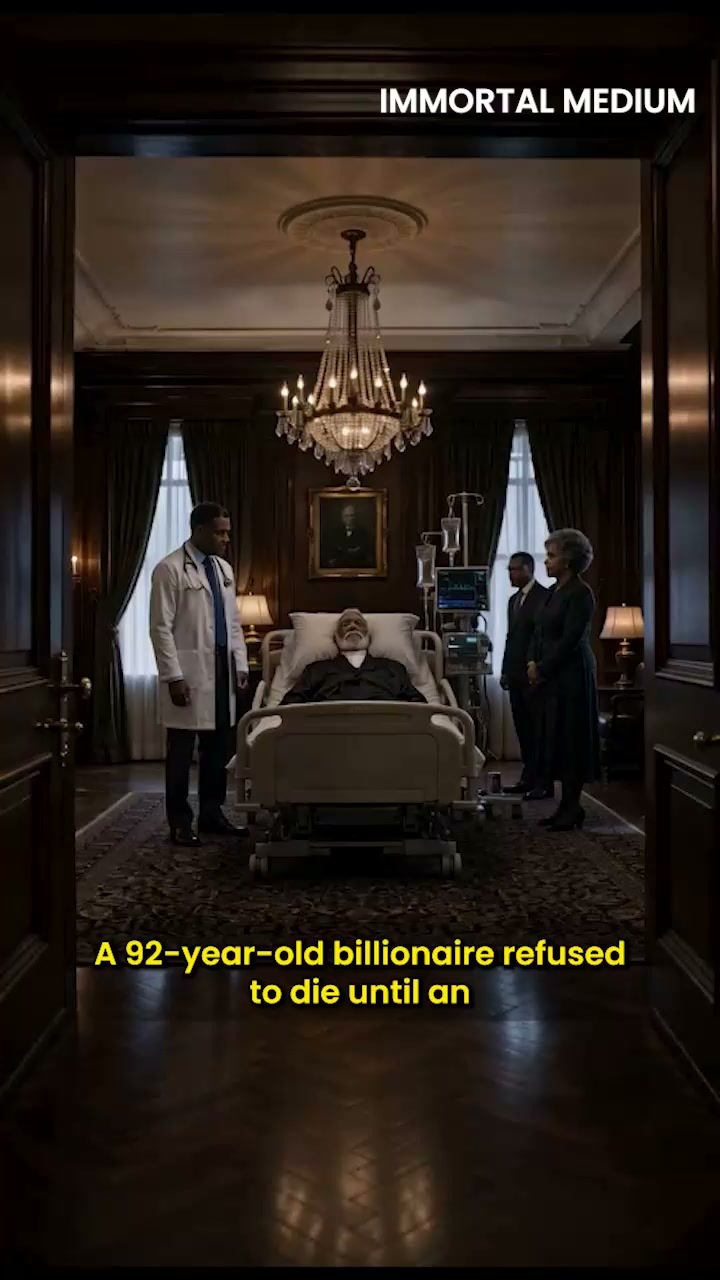
Ran for 3 days, from September 25 to September 28, 2026, the last day Crush saw it.
Run by Listen Library on Facebook. Crush is not the advertiser and does not verify its claims. See this ad in Meta's Ad Library(opens in a new tab)
Want an ad like this for your product?
Crush makes new ad images for your product from this ad: your logo, your product photo, your offer.
Trials from $19.95 USD, then $79.95 USD a month. Cancel anytime.
About this ad
- Meta Ad Library ID
- 1123752253650625
- Platforms
- Facebook and Instagram
- Relaunches
- 0
Ad text
A ninety-two-year-old billionaire refused to die until an eighteen-year-old girl came to see him. Alastair Crestwood's organs were shutting down. Every specialist who examined him reached the same conclusion: there was nothing left to treat. His body should have given out weeks ago. It didn't. Desperate, the family hired a psychic to enter the old man's coma and ask a single question. "What are you waiting for?" The answer was so simple it sounded ridiculous. "Her." That was all he gave them. For the next ninety days, the Crestwoods searched for a woman no one could identify. Then, one afternoon, a girl carrying a white parasol stopped outside their gates and told the butler, "I'm here for Alastair." The butler almost laughed. The girl looked too young to have met the old man, let alone call him by his first name. She couldn't have been older than nineteen, yet there was something profoundly unsettling about her. Her clothes belonged to another era, her posture never changed, and the look in her eyes made it impossible to guess what she was thinking. She listened patiently while the butler explained that the family wasn't receiving visitors. Only after he finished did she answer. "He's waiting for me." The words weren't dramatic. They were matter-of-fact, as though she were reminding him of an appointment everyone else had forgotten. "If you want him to die peacefully," she said, "take me to him." The butler found himself stepping aside before he'd even realized he'd made the decision. Julian Crestwood had spent the last three months watching his father disappear a little more each day. Every morning he expected the call that it was over, and every morning the old man was somehow still alive. Now someone expected him to believe that everything depended on a stranger who looked like a college student. He refused. The psychic had insisted the person Alastair was waiting for belonged to another generation, someone who should have been old enough to remember the Second World War. The girl turned to leave. "Very well," she said. "He'll continue suffering." Julian's certainty vanished. He hurried after her before she reached the front door, stopped her, apologized, and asked the question that had haunted his family for three months. "Who are you?" She didn't answer. "I knew him before you did." She walked into the bedroom as though she had been there countless times before. Doctors moved aside without being asked. Family members stopped crying. Even the machines seemed louder once the room fell silent. She touched the old man's forehead and quietly called him by a nickname no one in the Crestwood family had ever heard. "Pip." Alastair Crestwood opened his eyes. His children rushed toward him, believing the impossible had happened. They stopped halfway. The dying man pushed himself out of bed, ignored every member of his family, crossed the room on trembling legs, and knelt before the young woman. "This old servant greets Miss." Not one person in the room understood what they had just witnessed. But everyone understood something had gone terribly wrong. If the head of the Crestwood family had spent ninety years waiting for this girl, who, or what, had just walked into their home? The room does not breathe. Alastair Crestwood, the man who built the Crestwood empire from nothing, who his own sons spent their lives trying to earn approval from, who has never bowed to anyone, is on his knees on the floor. His face is streaked with tears. His body shakes with a joy so violent it looks like pain. His eldest son, Julian, sees the thumb ring. That ring has been on his father's hand since before Julian was born. A deep pigeon-blood ruby, set in a signet band. Julian begged for it as a child. His father said, " You will receive it when you are truly worthy of inheriting my identity. For fifty years, Julian did everything right. The ring never moved. Even three months ago, when Alastair was given three days to live, the ring stayed on his hand. Now Alastair slides it off and holds it out to his son. Julian's eyes fill with tears. His father says: "I have been her servant since I was a child. Now it is your turn. Swear that you will take care of her. Put her first in everything." Julian swears. He swears on his father's last breath, in front of the entire family. Then Alastair Crestwood closes his eyes. The tension in his face dissolves. After three months of torture, he lets go. He dies the way people finish their business die: calmly, completely, at peace. The family weeps. Elara picks up her parasol and walks toward the door. Before she leaves, Julian catches up to her. He shows her the ring. He explains the oath. He tells her she is the family's most honored guest and will be treated accordingly. She looks at the ring. She is quiet for a moment. Then she says: "Where do I sleep?" That is all. No acknowledgment. No thanks. A practical question from someone who has always been served and expects it to be done correctly. Julian gives her the quietest wing of the estate. That night, as black mourning drapes hang in the front rooms and the family keeps vigil for the dead, Elara lies in the back wing and opens her eyes. She is not looking at the ceiling. She is looking at the floor in front of her. In the dark, she sees an old woman in a black and gold burial shroud — dragged forward by something unseen, thousands of fine threads pierced through her at every point. Black blood drops from her eyes. Her mouth is open in a silent scream. Elara watches this without flinching. She says, quietly, into the dark: "Don't worry. I'll take care of it for you." The vision fades. She has seen what she needs to see. Someone has been trapped with a soul-binding cord — an ancient ritual that prevents the dead from crossing over, suspends them in agony, and eventually destroys the soul entirely. She knows who this woman is. She knows what was done to her. She will find out who is responsible. On the third day, the Crestwood estate fills with visitors to pay respects to Alastair. Some of them, Julian notices, are people he has never seen — people with the bearing of those who exist far above his level of society. They come in, bow to the dead, and leave without speaking. Julian looks toward the back wing where Elara is taking tea. Those people came because of her, he thinks. Not my father. Her. He has already sent investigators to trace Elara's background. He is waiting for the report with barely concealed urgency. That afternoon, Nathaniel — his eldest son, composed and methodical — comes to him with the results. The investigators sent back a blank page. Not incomplete results. Not insufficient records. A blank page. No birth records. No Social Security number. No educational records. No property. No digital footprint. No documentation of any kind. As though she appeared at the Crestwood Estate gate and came into existence for the first time at that moment. Julian stares at his son. Nathaniel's voice is steady, but his knuckles are white against the table: "No past. No background. No trace of the world." The two men sit with a thought neither of them will say out loud. What I'm afraid of, Julian finally says, is that your great-grandfather wasn't confused. The Ainsworths arrive — Eleanor Ainsworth's family, her brothers Donovan and Caleb, her sisters-in-law. Trailing at the back of the group: a man Leo Crestwood points out to Elara. That, Leo says, is Malachi Corvus. A specialist. The Ainsworth family hired him when their elderly matriarch was near death — couldn't let go. He performed a ritual. She passed quietly. Leo says this with faint unease he can't name or explain. He has never liked this man. Elara looks at Malachi Corvus. He looks back. Their eyes meet. Like ice breaking open. The thin curve at his lips lasts less than a second. Elara looks away — as though the encounter never registered. She asks Leo a single question: "Did you see your grandmother's body after he performed the ritual?" Leo says no. The casket was sealed immediately. For peace, they were told. Elara looks at him. Her eyes, cold as amber ice, hold something rare — a flash of irony. She says, "How do you know she passed peacefully if you didn't see her?" She pauses. "Thousands of soul-binding cords are meant to prevent someone from ever crossing over. Until the soul is destroyed." She opens her parasol. She walks away. Leo stands frozen. He has been dreaming about his grandmother for days — red threads through her body, her face distorted, struggling endlessly in darkness. He thought they were nightmares. On the mountain path behind the Ainsworth Villa, in the dead of night, Malachi Corvus walks toward the back hills. He moves without urgency. His black robe is pulled close. His face — where the hood falls back — is a ruin of mottled, burned-looking skin, dark brows set over inverted triangular eyes. But his neck, below the hood's edge, is bone white and smooth. The contrast is not accidental. From beneath the wide robes, a head emerges. It rests on Malachi Corvus's shoulder from behind. The head is small and white — the same white as his neck — and it is alive. Its eyes move. Its mouth moves. It is not attached to a body. It does not need to be. "Your plan is going to fall apart," it says. "Hehe. That girl — she seems to have figured out you're the villain." Malachi Corvus walks without slowing. The night air here is dense with old-growth forest, the kind that exists in the hills above the city. "She is not a ferryman," he says. His voice is extraordinary — the voice of a man who should be on a stage, not on a mountain trail with a severed head on his shoulder. The Little Head cackles. "Of course she's a ferryman. Sent by the Underworld to deal with you." "Even the Underworld is too busy to take care of itself," Malachi says. He sounds genuinely contemptuous. "Then what is she?" He is quiet for a moment. "She doesn't carry the aura of someone half-dead. Ferrymen are always half-dead. She is neither." The Little Head tries to bite him. He flicks it on the forehead. It droops and grins. "You're afraid of her. When she appeared in that sitting room — you were trembling." "I was at my most composed," Malachi says. "You looked at her for more than a minute," the Little Head says with pleasure. Malachi Corvus looks up at the dark tree line. He is thinking about a girl in a silk gown, holding a white parasol, looking through him as though he didn't merit a second glance. He has never encountered anything that looked through him that way. He finds he wants to know what she is. Shortly after, Elara walks uninvited into a private room where the Ainsworth family is gathered — and says four words that will destroy everything they thought they knew: "You buried your mother alive." The room erupts. Donovan Ainsworth — chubby, red-faced, head of the Ainsworth family — slams his fist on the table. His face goes ashen. "What nonsense are you saying? If you weren't a guest of the Crestwoods, I would make you regret those words." His sister-in-law stands up and demands an explanation. Elara glances at her — one glance — and she sits back down, face drained of color. Those eyes don't look like they belong to a living person. Elara ignores the sister-in-law entirely. She looks only at Eleanor Ainsworth, who is standing very still. "Do you really believe your mother was happy in life?" Eleanor cannot answer. "Does a natural death require a specialist to perform a ritual? Your mother was not an old woman eaten up by obsessions. Your family is wealthy. Her children are thriving. What exactly was she so worried about that she couldn't let go?" Donovan's patience runs out. "Our business has nothing to do with you!" He storms out. Eleanor, shaken but composed, tells Elara she will have someone escort her back to her room. Elara's eyelids drop slightly. Her voice carries the particular chill of someone who has already accounted for how this conversation will end. "Burying one's own mother alive is not only unacceptable in this world, but to every law above it. Think carefully about what I have said. This needs to be resolved as soon as possible." She pauses. "Otherwise, the Ainsworth family will face consequences that no amount of money can resolve." Then she turns and walks toward the door. As she passes the far corner of the room — where Malachi Corvus has been sitting in stillness, barely present, watching — she gives him a single cold look. Their eyes meet. Like ice breaking open. His thin lips curve upward. Interesting. Elara's gaze is indifferent. She looks away immediately, as though he hasn't registered in her attention at all. But she has seen enough. Outside, in the afternoon light, a vision surfaces: the old woman in the black and gold burial shroud, still struggling against thousands of fine threads piercing her body, reaching toward Eleanor's retreating figure. Elara says quietly to the vision: "Don't worry. It'll be quick." That night, the storm comes. Eleanor wakes screaming. She had been reaching for the window to shut out the rain — and a withered, freezing hand grabbed her wrist. She looked up and saw her mother's face: bleeding from all seven points, hanging from the window frame, smiling at her. She tells herself it was a nightmare. She lies back down. The window is open. Rattling rhythmically. Snap. Snap. Snap. She looks closer. On the glass, rhythmically tapping with perfect timing, is a pair of black funeral shoes. By morning, Eleanor is at Elara's door. She had to wait until nine o'clock. That is the rule. Elara does not see guests before tea. She knew Eleanor was coming — she had already told Butler Crestwood: if Mrs. Crestwood comes about the Ainsworth matriarch, she can wait until after tea. She will not indulge panic. Not for nightmares. Not for grief. Not for a woman worth hundreds of millions. Eleanor had to wait until nine in the morning. Eleanor asks: How did you know? How did you know about my mother? Elara says: "She contacted me." The silence that follows is the kind that happens when a person realizes they have agreed to a conversation they didn't know they were having. Eleanor asks — barely steady — "You mean... my mother?" Elara describes the burial clothes. Black and gold shroud. Hair arranged high on the head. Gold bracelets on each wrist — one engraved with the word Fortune, one with Longevity. Luminous pearls placed on either side of her face. With each detail, Eleanor goes paler. These details were known only to the three children present at the burial. Not the sisters-in-law. Not the extended family. Only Eleanor, Donovan, and Caleb. Eleanor says: "I believe you." Then: "But when they closed the casket, she was already gone." Elara raises her head. She closes the history book. "Gone? Who told you that?" Eleanor says the name: Malachi Corvus. Elara begins to explain. In a world that predates everything Eleanor knows — a world Elara moves through with the ease of long familiarity — gold in burial goods suppressed restless spirits. Jade was secondary. These were protective traditions. The luminous pearls were not protective. A pearl placed next to a dead person's eyes does not light their way. The afterlife is not navigated by light. The pearls were placed there to blind the old woman — to prevent her from finding the road forward. To trap her. Eleanor's voice breaks: "Then what were they for—" "After a person dies, they cannot see light. The pearls prevent them from finding their way out. As for the gold thread soaked in your family's blood—" Elara's voice does not change in tone. The words fall like stones anyway. "It is a soul-binding cord. Combined with the blood of her own children, it traps her soul permanently. She cannot cross over. She can only suffer until the soul itself is destroyed." Eleanor collapses onto the sofa. She says: "That makes us accomplices." "If you don't believe me," Elara says, "open the casket. Look for scratches on the inside of the lid." Then she opens her book. Eleanor grabs her hand. Her face has changed. The grief is still there — but something harder has come through it. She says: "Tell me what to do." Elara tells her the truth no one wants to hear. Simply removing the items from the casket will resolve nothing. Opening the casket, replacing the pearls with jade, tearing off the gold thread — it changes nothing. She was buried alive. She died with her eyes open. She was deceived into not finding her way forward. And her own children's blood was used to bind her soul forever. These things do not dissolve on their own. The old woman's hatred has had years to become something immense. "Right now, she is becoming a vengeful ghost. When she fully loses consciousness — when there is nothing left of her but hatred — she will come for her enemies. And your family's blood is in that cord. You are her enemies. All three of you." Eleanor trembles. "In three days at most," Elara says, "this becomes irreversible." Eleanor leaves without another word. The casket is exhumed at night. Only five people are present: Donovan Ainsworth, Caleb Ainsworth, Nathaniel Crestwood — Eleanor's son, steady-eyed even now — and two bodyguards. The tombstone reads: Wife of Arthur Ainsworth. Below that, in small, cramped, distorted handwriting: Carved by Arthur Ainsworth himself. The handwriting, Nathaniel notes, looks like someone who never learned to write. Like a child's first attempt. He files this away. The casket is lifted from the earth. In the moonlight it has a reddish tinge, though it should be black. Donovan moves to open it — and before he can apply force, the lid shifts on its own. Everyone stops breathing. Inside: crisscrossing crimson and gold threads, gleaming in the pale light like something that has been waiting. The threads fill the interior in every direction. Deliberate. A formation. And in the center of that formation: their mother. Not lying flat. Sitting up. Arms raised. Hands curved into claws. The fingernails are black and have grown beyond anything living. Her hands are covered in dried blood. Her face — frozen at the precise moment her strength gave out — carries an expression no one in this family can look at directly. Pain so extreme it has passed into something permanent. She had been alive when they closed the lid. She clawed at the inside of that lid until there was nothing left in her hands to claw with. Donovan and Caleb drop to their knees in the dirt, screaming for their mother. The moon disappears behind clouds. The woods go black. In front of them, at the level of her face in the open casket: two round, blood-red points of light. Her eyes. Open. Staring. Tap. Tap. Footsteps on wood. Slow. Deliberate. Moving closer. Caleb faints. Donovan is barely upright. Nathaniel cannot move. His lungs feel full of wet cotton. He can hear the footsteps approaching. He can smell something ancient and wrong. He cannot run. "Go back." A woman's voice from behind him — cold, absolutely calm. Like water that has just finished freezing. The smell vanishes. His body returns to him. He turns. At the far end of the path, walking toward him through the dark: Elara Vesper, in white, carrying an ancient lamp. Its light is dim and yellow. And the lamp, Nathaniel notices only moments later, contains no candle. She does not look at him. She is looking at the casket. She says: "I'll handle matters concerning the dead. You don't need to worry about this." The clouds part. The woods fill with white moonlight. The footsteps stop. Elara walks to the casket. She does not hesitate. She reaches into the crisscrossing threads and pulls the soul-binding cord free — methodically, without flinching. She sets it aside. She picks up the luminous pearls — placed beside the dead woman's eyes to blind her — and casually drops them on the ground. She wipes her hands. Nathaniel asks: "Will that ease her pain?" Elara says: "No." Donovan, head of the Ainsworth family, drops to his knees in front of her. He tells her his family was deceived. He tells her his mother's death was never what they intended. He speaks eloquently. He is a man who has spent thirty years running a major company, and he knows exactly how to construct a plea. Elara listens. She shakes the ancient lamp once. In the flickering of its candleless light, Nathaniel notices: the lamp's chamber is empty. The light has no source. She says: "Unfortunately, your heart is not sincere, and your words are not true." He stares at her. Cold sweat breaks out on his forehead. She lifts her foot and begins to walk. He moves to follow — and somehow the distance between them does not close. She says, without turning: "In three days at most, the old woman becomes a vengeful ghost. If the Ainsworth family doesn't want to live — keep pretending." Eleanor had waited at the foot of the hills through the night. She returns to the villa with Elara, who descended from somewhere higher on the slope at a moment no one witnessed. Donovan, when he sees Elara walk through the door, feels the particular relief of someone drowning who sees something solid nearby. He tells her the family story. The version his father told them — the one they have always known. Their mother, born Daisy, was an orphan who survived a desperate childhood through methods no one was proud of. Their father, Arthur Ainsworth, was a cultured, gentle man from a good family. They married under social pressure, built the Ainsworth Winery together, and had children. But Daisy was cold. Indifferent to all three of them from birth. She tried to drown Caleb multiple times as an infant — Donovan saw it with his own eyes. She ran away twice. She never once showed them maternal warmth. After her last return from running away, she became quiet, submissive, resigned. And then she got old. And she got sick. And she couldn't die. The children never visited. They never asked her what she was carrying. They believed entirely the version of events their father told them. Donovan finishes. He looks at Elara with the expression of a man who has just proved something. Elara taps the table with her closed fan. "She doesn't agree." Everyone turns. The space behind Donovan is empty. Elara says: "Your mother is standing directly behind you. She was calm when you started. She became agitated as you continued. She is still partially bound — when she struggles against it, her soul is struck. She is struggling anyway." She pauses. "Do you think it was the truth you told that made her ashamed? Or the lie you told that made her angry?" Donovan stands up. He swears on his life that he has told only the truth. Elara counts to three silently. "No. She has suffered injustice and been misunderstood by her own children for decades. The pain of that endured far longer than most things endure." Eleanor's head comes up. She is remembering her mother's last days. She visited often, even when her brothers didn't. One night she sat next to her mother's bed, watching the old woman who had suffered so much, and cried quietly to herself. The woman who had never been warm — who had never reached for her — suddenly cried out and stretched her hand toward Eleanor. Eleanor leaned close. Her mother was murmuring, half-delirious: "Sweetie, don't cry, don't cry... Mommy's here, Mommy's here..." Eleanor had never heard that voice before. She broke down completely. In the very next breath, her mother's grip on the sheets turned violent. Her face contorted. She cried out in a hoarse voice that sounded like it was tearing something open: "Arthur Ainsworth — you will die a horrible death!!" Eleanor raises her head now. "I don't think she hated us." Elara explains what she came to explain. She did not involve herself in this family's business by accident. Daisy Ainsworth came to her — with a rage so concentrated and so old that it had its own gravity. She reads modern American history now, getting caught up on the world she's been away from, because she needs to understand the people she encounters. She knows that contemporary people reject what they call superstition. She explains slowly, in terms that give them time to catch up. She can resolve things for the dead. That is what she does. Daisy Ainsworth came to her burning with sixty years of hatred. "If the hatred is not extinguished, removing the soul-binding cord changes nothing. She will still become a vengeful ghost. And when she loses consciousness — your family's blood is in that cord. You are the enemies she will hunt. Not the man who put her in the casket. You. Her three children. All of you." The room sits with this. Then Elara asks a question. She asks it with the calm of someone who already knows the answer. "Who told you the story of your parents?" "Our father." "All of it?" "Yes. Though many people in town knew my mother had run away with someone — I saw that myself. And I personally saw what she did to my brother." "Is your father an educated man?" Donovan blinks at the interruption. "Of course. He was always called a scholar." "Why did he become a monk?" "He loved our mother very much, but she hated him. He became a monk to ease her heart." Elara says: "I've finished asking." She opens her fan. "Even in a court of law, one party's account is not treated as complete truth. But you have accepted your father's version as absolute fact and have never once asked the other party." She glances at Donovan. "Your father is supposedly an educated man. But the handwriting on your mother's tombstone — five words, carved by his own hand — looks like a child learning to hold a pen for the first time." The color drains from Donovan's face. He had been there when his father carved that inscription. He had thought — grief makes a person's hand shake. But that is not how it works. The body remembers. Decades of writing are in the hand's muscles. Grief does not erase them. You only write like a child learning to write if you never learned to write at all. "If the most important thing in a story is false," Elara says, "then the story is false from beginning to end." The silence after Elara finishes is its own kind of sound. Nathaniel moves through the implications quietly in his mind. He has sharp instincts and a sharper education. His grandfather was educated. But no books. No correspondence anyone has ever found. No handwriting on anything. Educated men always leave traces. His grandfather started the Ainsworth Winery from knowledge he learned from books. But: an educated man in that era left written records — account books, letters, notes. His grandfather left none. Not a single page. His grandfather was beloved, gentle, patient. But: he handwriting on the tombstone belongs to someone who was never taught. If one thing is false, everything that rests on it is also false. Donovan murmurs, almost to himself: "Malachi Corvus was introduced by our father." Nathaniel goes completely still. Donovan continues, working it out aloud — his father came home only once in recent years. The day their mother was still barely breathing. He said: I can't bear to see her suffer. I've found someone who can help her find peace. He introduced Malachi Corvus himself. "Was Dad also deceived?" Donovan asks. His voice has the desperate, reaching quality of a man who needs something to still be true. "He would never harm us. He loved us. He always loved us—" Elara had seen the handwriting on the tombstone. She said nothing. They go to find Arthur Ainsworth. He is seventy-six years old. He has been living as a monk at Clearwater Monastery on Clearwater Mountain for years — handed off the family business, retreated from the world, and does not accept visitors except in major emergencies. Everyone says he is a transformed man. A man at peace. Before the family's car pulls out, Elara stands under a sycamore tree with her parasol tilted slightly to the left. The tilt is to make room. Beneath the umbrella's edge, invisible to everyone else, stands Daisy Ainsworth's spirit. The black aura around her has been growing since the night the casket was opened — fed by the story she just heard, the old lies freshly told by people she loves in front of the woman who can actually see her. Her hand is raised and pointing in the direction the car will go. Elara says to her, quietly: "I will take you there. I will also avenge you." She pauses. "But you will also pay a price." Black blood pours from the spirit's seven points and does not stop. The novice monk at the gate tells them, before they can ask, that Master Liaowu recently made a miraculous recovery. He had been gravely ill, the novice says. Then on April Fifteenth, he recovered overnight. April Fifteenth. The day Daisy Ainsworth died. Eleanor loses her balance. Nathaniel catches her. Arthur Ainsworth comes out — fat, amiable, his wide face creased into the smile of a man who has made his peace with everything. He looks like a department-store Buddha figurine. He welcomes his family with what sounds like warmth. Nathaniel watches his eyes. Long, narrow. Very dark. When he looks at people, he squints slightly — a coolness beneath the smile, like a second layer the smile was built to cover. Arthur asks what brings them all this way. Nathaniel tells him: they've come about his wife's burial. The smile dims. Donovan tests carefully. He phrases things gently, mentions the accusation of being buried alive as something they've heard from an outside source, suggests they're confused, and wonders if Malachi Corvus is reliable. Arthur says: "No one is allowed to question Malachi Corvus." He does not react to the words buried alive. At all. Donovan has run a major company for thirty years. He knows exactly what it looks like when a man hears something he already knew. He glances at Nathaniel. Nathaniel's expression gives nothing. But the vein at his temple is visible. Eleanor cannot hold back. She says, "Dad. She wasn't just buried alive — the formation they used was designed to make her a vengeful ghost. To make our family pay for it with our lives." Arthur's face sharpens. Not with concern. With calculation. He says: "You opened the casket?" Then, relaxing: "Forty-nine days have already passed. That's fine. Go home. Give her a proper burial. Move on." He waves them away. Eleanor says: "Dad. That's our mother." He says: "She's already gone. Why are we still talking about this?" Nathaniel looks at his grandfather — at the placid, comfortable face, at the eyes that show no grief, no horror, no surprise — and says what he is certain of: "You traded the lives of your three children for your own survival." He says it without accusation. The way a doctor reads a diagnosis. "She hated you. You were afraid of what she'd do after she died. So you used a ritual — soaked your own children in her blood, redirected her revenge toward them. When she loses her mind and comes for someone, she'll come for them. Not you. You'd be protected." He pauses. "You recovered on April Fifteenth. The day she died. You were feeding off the ritual even then." Arthur Ainsworth stops moving. The pleasantly Buddhist expression holds for three more seconds. Then something underneath it moves, like something large shifting under still water. He turns around slowly. He looks at his grandson. And his face fills with genuine admiration. "I never imagined I would have such intelligent descendants. Truly worthy of my bloodline." Nathaniel feels his stomach turn. Arthur explains himself with the breezy confidence of a man who has never faced a consequence for anything: "I gave them life. I gave them wealth. What does it matter if they repay me in kind? You children are too selfish. You take all the benefits but are unwilling to give anything back." He waves his sleeve. He turns to leave. He is smiling. He takes exactly three steps. Then he cannot take a fourth. His body locks in place. His face goes through a rapid series of changes — the pleasant monk's expression collapsing into something white and rigid. His pupils dilate. The bloodshot veins inside them are visible from across the room. He has seen something in front of him. Arthur's voice breaks: "Impossible. This is a monastery. She can't be here. She can't—" Elara steps forward. Her parasol tilted to the left. "Arthur Ainsworth. Look up." He looks up — against every instinct — and sees what is standing beside her. The face that has looked at him with contempt for decades. The face he sent into a sealed casket, alive and conscious. The face he has spent years building rituals to make sure would never reach him. He scrambles. He grabs a prayer bracelet. He charges back with it raised over his head, screaming at the spirit to die— Elara's foot catches him behind the knee. He goes down. He is screaming for the monks. They come running — finding Master Liaowu on his knees, weeping and howling about a ghost in the monastery. They look where he is pointing. They see Elara Vesper. A young woman with an unusual parasol and an expression that has not changed once in the presence of this chaos. The aura she carries is neither human nor demonic. It is something beyond both — pure, still, ancient. Abbot Clement comes out. He looks at Elara. He looks at her parasol. He goes very still. The parasol appears white in ordinary light. In direct morning sunlight, its surface shows crisscrossing patterns — intricate, ordered, like something that has a meaning he almost recognizes but doesn't dare to name. Abbot Clement takes a step back. He murmurs: "I understand. Cause and effect, karma — retribution will come." He puts his hands together. He bows his head. "Please." He leads the monks away. Every single one of them. Leaving Arthur Ainsworth on his knees, weeping, screaming for them to come back. Nathaniel watches carefully. He has studied people his entire adult life. He saw Abbot Clement's face when he looked at Elara — the shock, the recognition, the rapid decision to step aside and take everyone with him. Abbot Clement knows her. Elara, for her part, glances at Clement with a faint frown. As though the name means nothing to her. As though she has no memory of him at all. Nathaniel files this detail next to all the others, in the place in his mind where the questions about Elara Vesper are growing into something that feels less like curiosity and more like the edge of something vast. Elara sits in a chair. Her parasol is draped diagonally across the window, angled to cover the seat beside her — the seat no one else can see is occupied. Arthur Ainsworth is in the room. He is no longer bold. He is the size of what he actually is — a small, frightened man who has survived his entire life by making other people bear the consequences of his choices. He tries to threaten. He tries to bargain. He tries to call her a witch. She tells him: "Tell me what happened between you and Daisy. From the beginning." He says: "Why should I listen to you?" She tilts her head slightly. Her fingertips move, as though stroking a thread that cannot be seen. She says: "It's simpler not to tell it. Go ahead and take what's yours. You will have avenged yourself." Arthur Ainsworth hits his knees. He begs. He swears to tell everything, just don't let her out, please, please— Daisy's spirit has not moved. Elara understands: the old woman does not want revenge yet. She wants her children to hear the truth. After a lifetime of being called a monster by them, she wants them to finally know who she was. Elara says one word: "Speak." The real story begins. The child who grew up in poverty in a small upstate New York mountain town — stealing to survive, despised by everyone — was not Daisy. It was him. He had no name then. The town called him Little Beggar. A widow on the edge of town took pity on him when he was injured. She fed him. She treated him like her son. He grew up in her home, ate her food, slept in her house. One night, when he was old enough to understand what he wanted — he forced himself on her. She hanged herself before dawn. He ran. He hid in the forests above the town for three years. He became, as he describes it himself, completely feral. Then he came back down. He followed a wedding party into a neighboring town because the bride was beautiful and he wanted what the groom had. He followed them to the reception hall. He waited until the celebration was over. He circled to the back of the venue. He found a window. The bride was inside, taking off her veil. Her face, when the veil came off, was the face of someone who believed the next fifty years would be safe. The man called Little Beggar watched her through the glass. And he had an idea. Arthur Ainsworth is still talking. He has been talking for a long time. He has described himself as a child, the widow, the forests, the wedding party, the window. He is at the part of the story he has never told anyone. Not because he was ashamed. But because there was never anyone in the room who could make him tell it. Elara has said almost nothing throughout. She sits with the patience of someone who has waited out far longer stretches of time than this conversation. Her hands are still. Her face carries its usual expression — the particular blankness of someone who watches everything and reacts to nothing. But the parasol beside her is tilted. Making room. Beneath it: Daisy Ainsworth. The woman who lived sixty years under this man's shadow. The woman who endured everything he built and every lie he told — and every moment her own children looked at her with contempt for crimes she never committed, while the man who actually committed them was being called a saint. She is here. She is listening. The black aura around her has been growing since the night the casket was opened. It grows whenever he speaks — fed by each casual recollection, each moment he describes his crimes in the tone of a man reviewing his greatest accomplishments. But she is still. Just barely. Elara told her: you will pay a price. She said yes. She is paying it now — holding back, letting him speak, so her children can finally know. She has wanted this for decades. She has wanted them to know who she actually was. Donovan Ainsworth is no longer looking at his father. He is looking at his hands. He has hated his mother his whole life. The hatred has been a fact about him for so long that he stopped questioning it the way he stopped questioning his own name. She was the woman who didn't love them. The woman who tried to drown his brother. The woman who ran away. He saw it. He was told it. He lived inside that story for fifty years. He is now sitting across from the man who told him that story, listening to it come apart word by word. Because the story his father told them about their mother — her childhood, her survival, her shameless behavior — was not her story. It was his. Every accusation. Every vice. Every failing he attributed to Daisy Ainsworth was his own autobiography, repurposed and given to the woman he victimized so thoroughly that she could never contradict him without being called crazy. And now Arthur Ainsworth is sitting in a monk's robe, describing a wedding party, a window, a bride's face when her veil came off — and Donovan understands, with the particular clarity that only arrives when something you have believed your entire life collapses at once, that the story is nowhere near finished. What happened at that window? What was his idea? Arthur keeps talking. He has finally reached the one memory he buried deeper than all the others—the moment he stood outside a stranger's wedding window and decided to destroy a woman's life. Around him, no one speaks. Eleanor finally understands why her mother spent sixty years trapped between love and hatred. Nathaniel understands that the man who raised him was never the man he thought he knew. Arthur understands nothing. He still believes the ritual buried with Daisy's coffin is protecting him. He doesn't know Elara dismantled it. He doesn't know Daisy has heard every word of his confession. He doesn't know the woman waiting beneath the white parasol kept one promise. "I will avenge you." Elara doesn't interrupt him. She simply raises one hand. Her fingers move. Will Arthur finally face the woman he spent sixty years trying to silence? And when the truth is out... who is Elara Vesper, really?
Where the ad sends people
play.google.com
To Find Out Download Now!
Install mobile app: play.google.com(opens in a new tab)