Julia Bennett
Julia Bennett Facebook ad: “Read This If You're Tired Of Scrubbing”
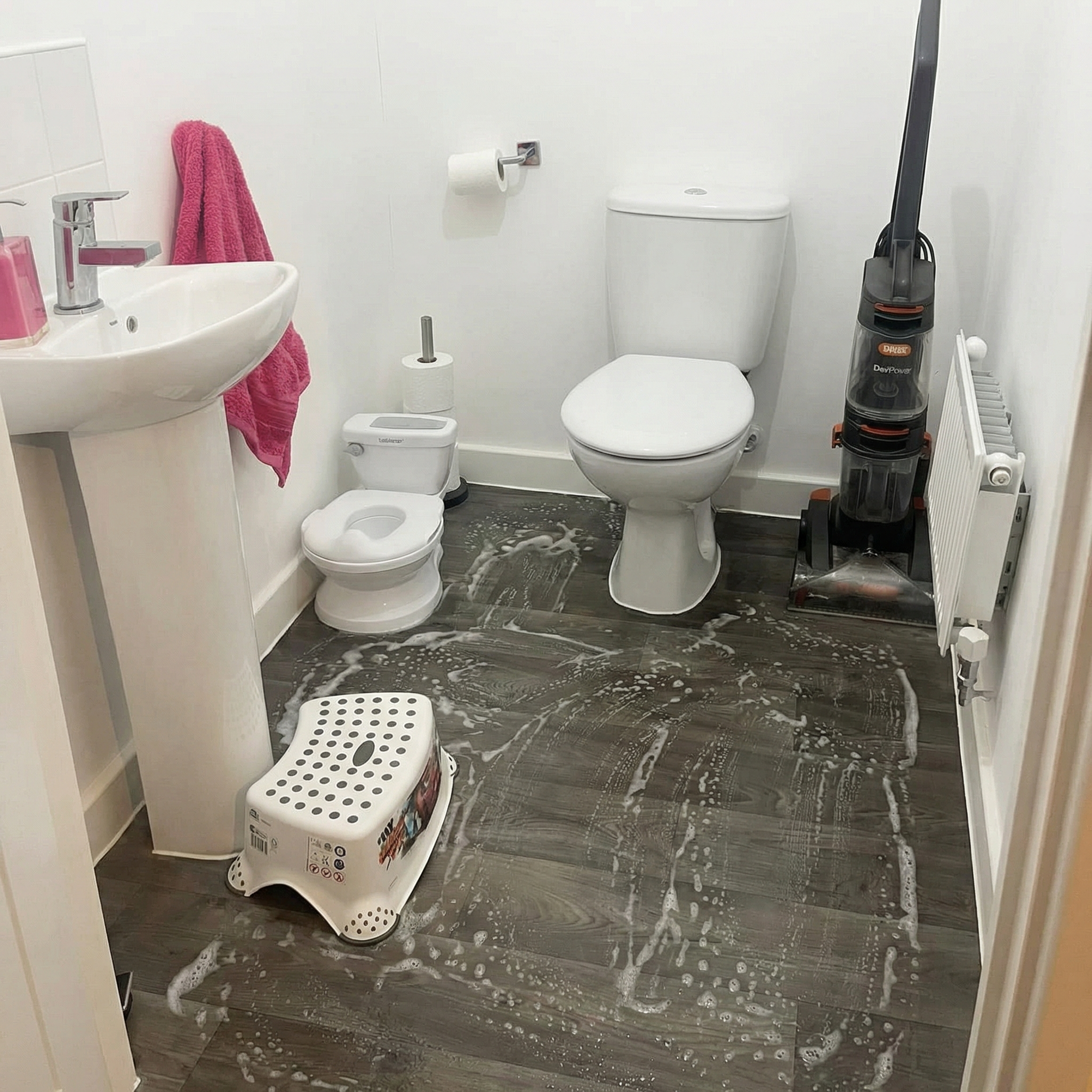
Ran for 21 days, from February 4 to February 25, 2026, the last day Crush saw it.
Run by Julia Bennett on Facebook. Crush is not the advertiser and does not verify its claims. See this ad in Meta's Ad Library(opens in a new tab)
Want an ad like this for your product?
Crush makes new ad images for your product from this ad: your logo, your product photo, your offer.
Trials from $19.95 USD, then $79.95 USD a month. Cancel anytime.
About this ad
- Meta Ad Library ID
- 1124341796384010
- Platforms
- Facebook, Instagram, Audience Network, Messenger and Threads
- Relaunches
- 6
Ad text
My dad's physical therapist asked why we hadn't changed anything in his bathroom after his fall. When I explained we'd installed grab bars and a shower bench, she said, "That's not what I'm talking about," and showed me the real reason 80% of her senior patients fall at night. I thought we'd done everything right. Dad fell six weeks ago. Middle of the night. In the bathroom. Fractured his hip trying to catch himself on the counter. Surgery. Three days in the hospital. Two weeks in rehab. The orthopedic surgeon didn't sugarcoat it. Hip fractures in seniors are the beginning of the end. Blood clots. Pneumonia. Infections. Rapid cognitive decline. "Thirty percent of elderly patients who fracture a hip don't survive the year," he told me. "And recovery at his age is unpredictable. The first fall is rarely the last fall." That sentence hasn't left my head since. The first fall is rarely the last fall. It follows me into sleep. Into work. Into every phone call after 10 PM where my heart stops before I even look at the screen. So I did what everyone told me to do. Hired a contractor. Installed grab bars in the shower. Next to the toilet. By the sink. Bought a shower bench. Non-slip mats. Raised toilet seat. Spent two thousand dollars making that bathroom safer. Dad hated all of it. "I'm not an invalid," he kept saying. "I don't need all this hospital equipment in my own house." It's a fight every single time I try to change something for his safety. He acts like I'm trying to control him. But I'm just trying to keep him alive. He used it anyway though. Because he was scared too. Even if he'd never say it. Physical therapy started three weeks post-surgery. Twice a week. Working on strength and balance. The therapist came to the house for the first session. Wanted to see his environment. Assess the risks. She walked through the bathroom. Looked at everything we'd installed. Nodded at the grab bars. The shower bench. The raised toilet seat. Then she stopped. "What have you done about nighttime visibility?" "We leave the bathroom light on," I said. She shook her head. "That's actually making things worse. What time did your dad fall?" "Around 2 AM." "And was the bathroom light on or off when he fell?" I had to think about it. The EMTs had asked the same thing. "Off. He said he didn't want to turn on the light because it would wake him up completely." She nodded slowly. Like she'd heard this a hundred times. "And that's exactly why he fell." She pulled out her phone. Showed me a chart. "Eighty percent of nighttime falls in seniors happen in low-light or no-light conditions. Not because of mobility issues. Because they can't see where they're going." I felt sick. "But we told him to use the light." "Every family says that. But seniors don't. Bright overhead lights destroy their sleep cycle. Takes them an hour to fall back asleep. So they gamble. They think they know the bathroom layout. They've used it for thirty years. They stumble in the dark because they're too proud to admit they need help." He'd rather fall than admit he needs a night light. That's my dad. She put her phone away. "Grab bars don't prevent falls if you can't see them to grab them. Everything you installed is useless if he's stumbling around blind at 2 AM." I just stood there. Two thousand dollars. An entire bathroom renovation. Made him feel like an invalid. And we'd missed the actual thing that caused the fall. "There's something else," she said. She walked over to the toilet. "How often is this being cleaned?" "I come over twice a week." "And between your visits?" "He wipes it down sometimes. Not thoroughly." "So three, four days between proper sanitizing. And he's using this toilet six, seven times a day. Multiple times overnight." She looked at me directly. "UTIs are the second leading cause of hospitalization in elderly patients. Most families have no idea. The bacteria builds up on toilet surfaces between cleanings. Compromised immune systems can't fight it off. The infection takes hold. Becomes sepsis." She paused. "Do you know what sepsis does to a 74-year-old man recovering from hip surgery?" I knew the answer. We'd almost lived it. "It kills them." "Often, yes. But even when it doesn't kill them, it triggers a cascade. Hospital stay. Delirium. They stop recognizing family members. Rapid muscle loss. Then another fall. Worse this time. Because they're already weakened from the infection." She pulled up something on her phone. "One UTI in a recovering senior can undo months of physical therapy progress overnight. I've watched patients go from walking with a cane to bedridden in two weeks. All from an infection that started on a toilet seat nobody cleaned frequently enough." My stomach dropped. Dad had a UTI four months ago. Then another one eight weeks later. His doctor said it was normal for older men. Put him on antibiotics. The second round made him so sick he couldn't eat for three days. Lost eight pounds. Looked frail for the first time in my life. And now he's recovering from a broken hip. Immune system already under strain. Using a toilet that gets properly cleaned twice a week at best. I'd been so focused on preventing the next fall I completely ignored the thing that could hospitalize him even faster. "What do I do?" She showed me an image on her phone. "The facilities I work with use these. UV sanitizers that clip onto the toilet. Run automatically after every flush. Hospital-grade sterilization. Prevents the bacterial buildup that causes infections." "It's got a motion-activated night light built in. Soft glow. Enough to see everything clearly. Doesn't disrupt sleep." "Handles both problems. Visibility and sanitation." I took a screenshot. "Where do I get this?" "Search for UV toilet sanitizer with night light. They're not expensive. Thirty, forty dollars." Then she looked at me seriously. "Your dad's recovery window is narrow. The first three months post-fracture are critical. One more fall right now would be catastrophic. A hip refracture at his age often means he never walks independently again." "And one infection could undo everything. Every therapy session. Every bit of progress. Gone." "The grab bars are fine. But they don't prevent the two things most likely to put him back in the hospital. Falls from not being able to see. And infections from bacterial exposure between cleanings." She left after the session. I sat in Dad's living room staring at the wall. How did I miss this? The surgeon talked about fall prevention. Never mentioned lighting. The contractor installed grab bars. Never asked about nighttime visibility. The hospital discharge nurse gave us a list. Grab bars. Shower bench. Raised seat. Nothing about lighting. Nothing about sanitation. Nothing about the bacteria building up every single day between my visits. Everyone focused on the mechanical supports. Nobody talked about the conditions that actually cause the falls and the infections in the first place. I searched for it that afternoon. Self Cleaning UV Toilet Sanitizer and Night Light. Nolara brand. Thirty-five dollars. They had a deal. Buy one get one half off. Ordered two immediately. One for Dad. One for our house. If it prevented one more fall, one more infection, one more ambulance ride, it was worth a thousand times that. Package came two days later. Brought it to Dad's house that evening. He was in his recliner. Still moving slowly. Still grimacing when he shifted his weight. "What's that?" "Something your physical therapist recommended. Takes one minute." He looked skeptical. "More stuff to make me feel like I'm in a nursing home?" "It's a night light, Dad. Clips on the toilet. Turns on by itself when you get up." His expression changed. "So I don't have to turn on that damn overhead light?" "Exactly." "Fine. Put it in." Sixty seconds. Peel the adhesive. Stick it on the rim. Charge it. That was it. Showed him how it worked. Motion sensor for the light. UV cycle when the lid closes. "That's all there is to it?" "That's all." He got up later that evening. I heard him walk down the hall. Waited for the overhead light to click on. It didn't. Two minutes later he came back out. "Could see everything. Didn't trip over anything. Didn't wake me up all the way either." I exhaled for the first time in six weeks. The next week his sleep improved. Said he wasn't dreading nighttime anymore. "Before, I'd hold it as long as possible because I knew I'd be awake for an hour after turning on the light. Now I just go when I need to. Fall right back asleep." My sister noticed too. "He sounds less exhausted." Two weeks passed. Physical therapist came back. Walked into the bathroom. Saw the device. "Good. You got one." She looked at Dad. "How's it working?" "Better than anything else in here. I can actually see without blinding myself." "Any falls?" "No." "Infections?" "No." "Keep it up. You're doing better than most of my patients at this stage." Three weeks. Four weeks. I realized I hadn't deep cleaned his bathroom in almost a month. Felt guilty. Kept meaning to get over there. Finally went Saturday. Braced myself. Expected the smell to hit me when I opened the door. That ammonia smell. The one that makes you worry the house smells like a nursing home. Nothing. No smell. No visible buildup. Just clean. "Dad, when did you last scrub this?" "Wiped it down last week maybe." A month ago that toilet would've been a disaster between my visits. The sticky floors. The lingering smell I was always terrified guests would notice. Now it was just normal. The UV sterilization was actually doing what she said it would. His six-week orthopedic follow-up was yesterday. X-rays looked good. Hip healing properly. Cleared for more mobility. The surgeon asked about complications. "Any setbacks? Falls? Infections?" "Nothing. He's been stable." The surgeon paused. "That's genuinely surprising. At his age, most patients have at least one setback in the first two months. Another fall. A UTI that complicates recovery. Something." "Whatever you're doing at home, don't change it." Dad glanced at me. I didn't say anything. But I keep thinking about what the surgeon said. Most patients have a setback. And what the therapist said. One infection can trigger a cascade that undoes everything. And what happens to the families who don't find out about this. The second fall. Worse than the first. Because they're weaker now. The infection that turns into sepsis. The emergency hospitalization. The conversation about assisted living that nobody's ready for. Five thousand a month. Minimum. And that's if you can find a bed. My sister asked about the device last week. "What's this light thing Dad keeps mentioning?" Sent her the link. Told her what the therapist said about the eighty percent. About visibility being the real issue. About infections starting on toilet surfaces nobody cleans often enough. She ordered one that night. "Mom fell twice this year. Both times at night. Both times in the bathroom. I'm not waiting for the third time. The third time is when everything changes." I put the second one in our guest bathroom. Not taking chances anymore. If Dad stays with us. If my mother-in-law visits. If anyone elderly uses that bathroom. It's handled. I keep thinking about what the physical therapist said. The first fall is rarely the last fall. But what if you can prevent the second one? What if the thing that prevents it isn't complicated or expensive or something your parent fights you on because it makes them feel like an invalid? What if it's just making sure they can see at 2 AM? And making sure the bacteria that causes infections isn't building up between the days you can get over there to clean? Two problems. One device. Thirty-five dollars. Compared to what's coming if you don't. Another fracture. Forty thousand dollars. If they survive the surgery. Sepsis from a UTI. Sixty thousand dollar hospitalization. If they come home at all. Assisted living because they're no longer safe alone. Five thousand a month. For however long they have left. I'm not trying to scare anyone. But nobody told me this six weeks ago. Nobody told me the grab bars weren't enough. Nobody told me about the lighting or the bacteria or what actually causes seniors to end up in facilities. We're six weeks post-fall. Dad's doing better than anyone predicted. The grab bars help during the day. When he can see them. When he's awake and alert. The night light handles 2 AM. When he's half asleep. When he's most vulnerable. When eighty percent of falls happen. That's the part everyone misses. That's what we almost missed. It's called Self Cleaning UV Toilet Sanitizer and Night Light. Nolara brand. Link's here if you need it. Buy one get one half off deal is still going. I'm not saying it fixes everything. Dad's still recovering. Still fragile. Still one bad night away from everything changing. But we're six weeks in with zero complications. Six weeks of healing instead of setbacks. Six weeks of him in his own home instead of a facility. Six weeks of me not waking up at every creak in the floorboards. Not sleeping with one ear open listening for the thud. The physical therapist said the first three months are critical. We're halfway there. And that thirty-five dollar device is doing more to protect him at 2 AM than the two thousand dollars in bathroom modifications. Most families don't find out about this until after the second fall. After the infection that won't clear. After the ambulance comes again. After the surgeon says the word "permanent." We almost didn't find out either. But we did. And right now Dad's still home. Still independent. Still healing. Don't wait for the second fall to start looking. By then it's usually too late.
Where the ad sends people
nolara.shop
Read This If You're Tired Of Scrubbing ☝️
Offering smart UV cleaning solutions and modern home decor. Chemical-free sanitization technology that keeps your home hygienically clean and beautifully designed.
Learn more: nolara.shop(opens in a new tab)