Lauren Mitchell
 Facebook ad: “My Brain Wouldn't Shut Off. Another Sleep Gummy? I…”
Running for 1 day since October 31, 2026. Crush last saw it on November 1, 2026.
Run by Lauren Mitchell on Facebook. Crush is not the advertiser and does not verify its claims. See this ad in Meta's Ad Library(opens in a new tab)
Make your own version of this ad
Crush makes it, launches it in your own Meta ad account, scales the winners and pauses the losers.
About this ad
- Meta Ad Library ID
- 1133436612473042
- Platforms
- Facebook, Instagram, Audience Network, WhatsApp and Threads
- Relaunches
- 0
Ad text
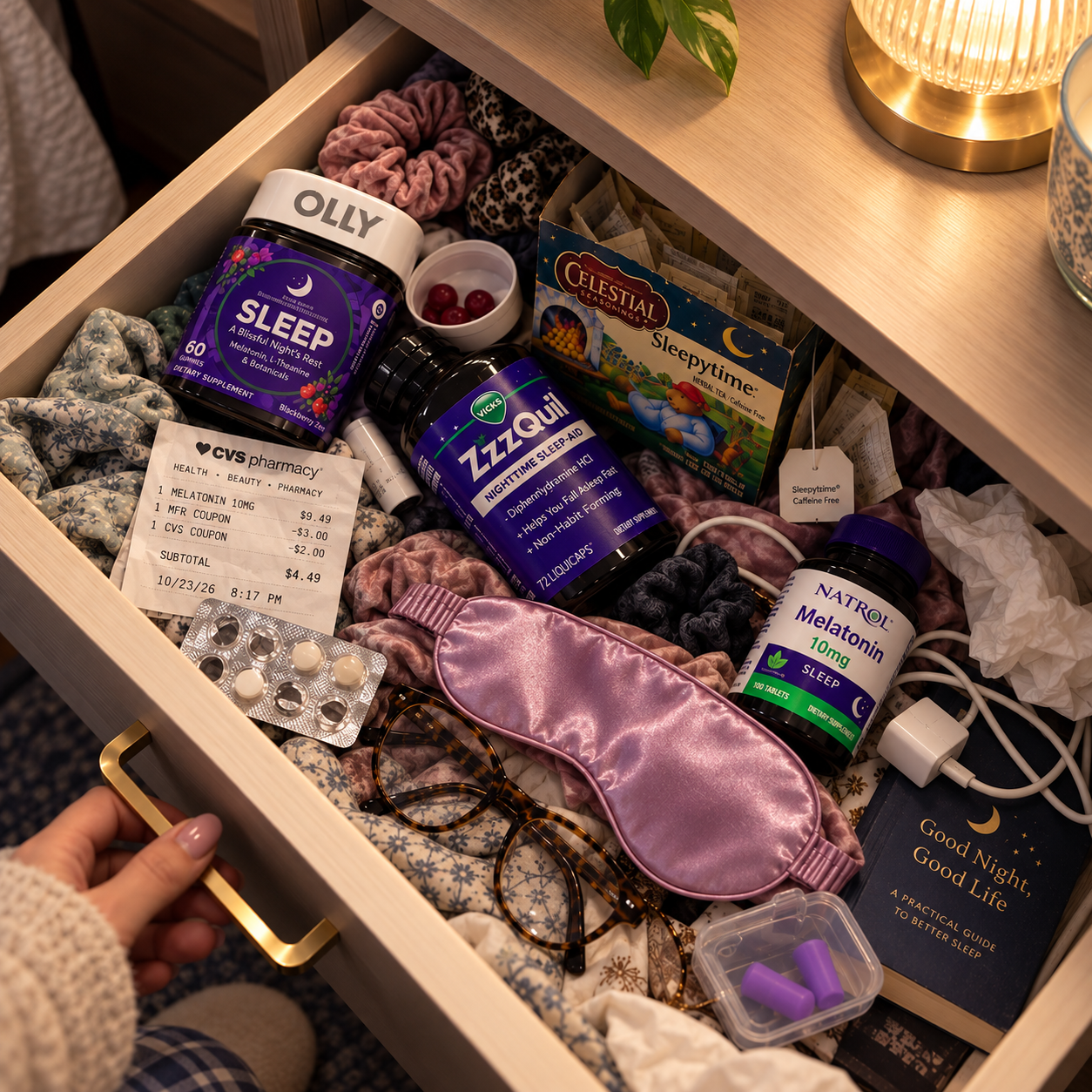
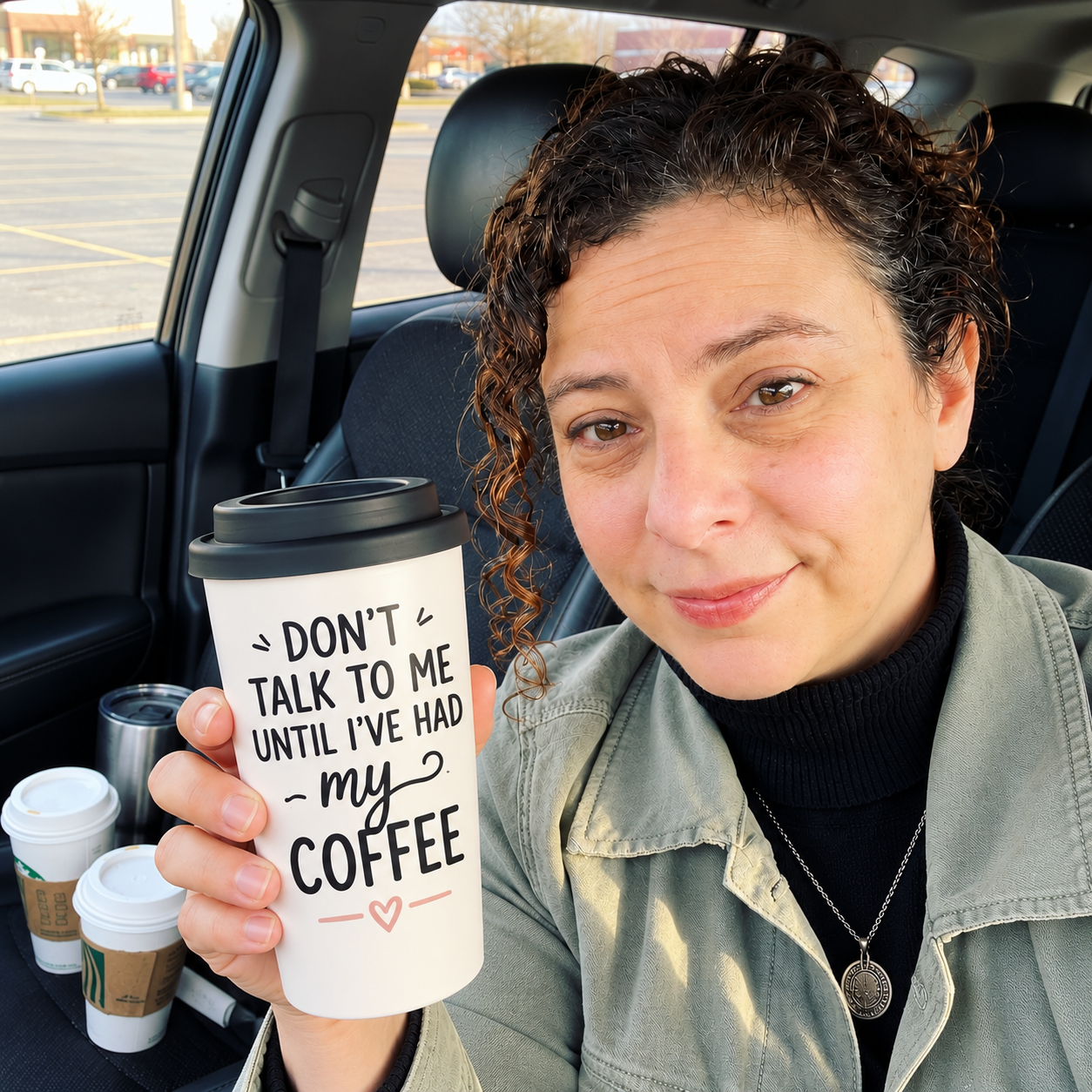
or years I joked that I just "wasn't a morning person." I thought that was just who I was. Then one morning my nurse friend said something that completely changed how I thought about my sleep. I used to laugh about needing coffee before I could have a real conversation. I had the funny coffee meme T-shirts, a collection of coffee mugs that was getting slightly out of hand, and one year my Secret Santa gift was a giant coffee cup that had everyone laughing. My friends and coworkers knew the drill. Don't expect much conversation until I've had my first cup. It was funny. It was part of my personality. Everyone was laughing with me, not at me. But the part I didn't joke about was how long it actually took me to feel like myself at work. That was becoming harder to ignore. Because I wasn't someone who lacked discipline. I wasn't someone who didn't take care of myself. During the day, I was usually the person people came to when something needed figuring out. A difficult problem. A stressful decision. A project that needed someone to take ownership. I liked being dependable. My brain was one of the things I was most proud of. I could connect ideas quickly, remember details, and stay calm when things got stressful. That was the part of myself I trusted. But eventually I noticed something strange. The same brain that helped me handle everything during the day was the thing I couldn't seem to turn off at night. Getting tired was never the problem. By 10:30 at night, I was done. Sometimes I'd be sitting on the couch barely following whatever was on TV because my eyes were already getting heavy. I'd think: "Finally. I'm tired. I'll sleep well tonight." Then I'd brush my teeth, get into bed, and expect my brain to shut down. But the second my head hit the pillow... It was like someone turned the lights back on. Suddenly my brain started pulling up everything I'd ignored during the day. The email I forgot to answer. The conversation where I wondered if I'd said the wrong thing. Tomorrow's schedule. The decision I hadn't made. The thing I needed to remember before morning. Then I'd look at the clock. 12:18. "Okay. If I fall asleep right now, I can still get six hours." I'd close my eyes. A little later, I'd check again. 1:03. Now I wasn't just awake. I was doing math about how tired I was going to be tomorrow. And somehow that made everything worse. The more I told myself I needed to fall asleep, the more awake I seemed to become. It felt like my body had already gone home for the night... but my brain was still sitting at work. At first, I blamed myself. Maybe I was bad at relaxing. Maybe I needed more discipline. Maybe other people were simply better at handling stress than I was. That bothered me more than I'd like to admit. Because I am usually good at solving problems. If something isn't working, I figure it out. So that's what I tried to do. I moved my bedtime around. I stopped drinking coffee earlier in the afternoon. I turned my bedroom into an icebox. I downloaded sleep apps. Tried breathing exercises. Tried meditation. Drank herbal tea before bed. Bought magnesium. Tried melatonin. Every time I tried something new, I'd think: "Maybe this will finally be the thing." Sometimes I'd even convince myself I'd figured it out. Then a few nights later, I'd be staring at the ceiling again while my brain replayed Tuesday's meeting like it had been assigned homework. The moment it really started bothering me happened during a work meeting. Someone was explaining something important. I was looking at the screen, nodding, taking notes, doing everything that made it look like I was following along. Then halfway through the conversation, I realized I had no idea what they'd just said. I was there. But mentally, I was trying to catch up. I remember looking down at my notes, trying to piece together where I'd lost the conversation. And I remember thinking: "What is wrong with me?" I hated that feeling. Because I'd always been the person who could keep track of everything. The person people trusted to remember the details and catch the things everyone else missed. And now I was sitting in a meeting trying to piece together what someone had just said. I didn't like feeling that way. Being sharp was part of who I was, and I could feel how much those difficult nights were affecting the way I showed up the following day. So one morning I mentioned the whole thing to a friend of mine who works as a nurse. I told her how I'd spend the entire day handling problems, answering messages, making decisions, and keeping track of everything. Then I'd get into bed exhausted, only for my brain to suddenly start working overtime. She asked me when my thoughts were the loudest. I told her it was the second I got into bed. She paused for a second. Then she said something I still remember. "It sounds like your body is tired, but your brain hasn't finished the day yet." That sentence stayed with me. Because honestly, that's exactly what it felt like. She asked me what I'd already tried. I started listing everything. Melatonin. Magnesium. Tea. Meditation. Breathing exercises. Changing my bedtime. Pretty much anything someone had suggested. She listened and said something that made me laugh. "Well, you've certainly been doing your homework." Then she explained that being physically tired and preparing for sleep weren't necessarily the same thing. I'd spend the entire day thinking, planning, remembering and solving problems, then expect my brain to switch off the second I got into bed. I hadn't really thought about it that way before. But understanding that didn't suddenly make me trust the next sleep product I saw. If anything, I was even more skeptical. Because I'd already been through the whole process. You see something that promises better sleep. You get hopeful. You buy it. You try it. And a few nights later, you're right back where you started. I was tired of getting my hopes up. I remember seeing another sleep product online and thinking: "Here we go again." Different bottle. Same promise. Something about falling asleep faster. Sleeping more deeply. Waking up refreshed. I'd heard all of it before. And I kept thinking, why should this one be any different? I actually closed the page the first time I came across MoonlitStars. I wasn't looking to spend another $30 on something that might end up sitting in my cupboard beside everything else I'd tried. But the problem hadn't gone away. I was still getting exhausted on the couch, getting into bed, and suddenly having my brain kick into high gear. I was still checking the clock. And I was still waking up wishing I could feel like myself a little sooner. A few days later, I was talking to my nurse friend again. We were catching up, and I mentioned that I'd had another rough night. She asked if I'd ever gone back to look at MoonlitStars. I told her I hadn't really thought much more about it. She laughed and said: "Fair enough. But at least look at what's actually in it before you write it off." I remember thinking about that afterward. I mean, I'd spent money on plenty of other things without really looking into what was inside them. So that evening, I decided to pull up the product again. I wanted to see what was actually different. The next time I spoke to my friend, I asked her: "Okay, so what made you choose this one?" She explained that she'd been using MoonlitStars herself because of the demands of her night shifts and long working hours. She'd wanted a melatonin-free option she could incorporate into her nighttime routine. She showed me the bottle and walked me through the ingredients. MoonlitStars contained L-Theanine, Magnesium Glycinate, Valerian Root Extract, 5-HTP, and Passionflower Extract. It didn't contain melatonin. She explained that melatonin was only one part of the body's natural sleep-wake processes. The body has its own pathways involved in preparing for sleep, and the idea behind the formula was to support some of those natural processes rather than simply adding melatonin. She pointed out that 5-HTP is involved in serotonin production, which is also involved in the pathway through which the body produces melatonin. The other ingredients brought different relaxation and nighttime-support components to the formula. She described the underlying idea as supporting the body's own "Self-Made Sleep Signal." I'd never really thought about sleep that way before. But I had another question. "Wait. It has magnesium in it too? I've already tried magnesium. Why would this be any different?" She explained that MoonlitStars wasn't simply another bottle of magnesium. It combined magnesium glycinate with the other ingredients in the formula, so I wasn't looking at just one familiar ingredient on its own. She also liked that it brought everything together in one melatonin-free formula rather than having to keep buying and experimenting with individual supplements. I went home and looked at the supplement facts myself. I wanted to know exactly what I was taking, what was included, and whether it was something I felt comfortable trying. And I still had a few reservations. What if it didn't work for me either? What if I spent another $30 and ended up with another bottle sitting in my cupboard? And just because something was melatonin-free didn't automatically mean it was right for everyone. I'd learned that much from trying different supplements. I also looked at the product details and customer reviews. I wanted to see whether other people were describing the kind of nighttime experience I was dealing with. I wasn't expecting their experiences to guarantee mine would be the same. But between understanding the formula, knowing it was melatonin-free, and hearing my friend's experience, I felt better about giving it a try. I still wasn't convinced it would solve everything. I just felt like I finally understood what I was buying. So I decided to give MoonlitStars a try. I also started paying more attention to how I finished my day. Instead of finishing work and immediately trying to sleep, I started giving myself a little space. I'd close my laptop instead of checking one last email. If something was on my mind for tomorrow, I'd write it down rather than keep repeating it in my head. I'd put my phone away for a while. Sometimes I'd take a shower. Sometimes I'd read a few pages of a book. And I'd incorporate MoonlitStars into that same evening routine. I didn't want to create some complicated bedtime protocol. I just wanted a more consistent way to finish the day. The first few nights, I honestly wasn't expecting much. I'd tried enough things by then to know better than to get too excited straight away. But I kept following the same routine. Laptop closed. Tomorrow's reminders written down. MoonlitStars. A little time to myself. Then bed. The first thing I noticed was that I was beginning to feel calmer at bedtime. It wasn't some dramatic moment where every thought disappeared. I still had things on my mind. There were still nights when I remembered something I'd forgotten to do or had a particularly stressful day. But bedtime gradually started feeling less like another battle I needed to win. During the first week or two, I kept returning to the same approach instead of changing everything whenever I had a difficult night. Over that period, I noticed deeper sleep and fewer wake-ups during the night. It wasn't perfect every single night, but I was beginning to feel like things were becoming more consistent. And gradually, I started paying more attention to what happened the following morning. For a long time, my mornings had felt like trying to start a computer that was still loading. I'd make coffee, open my laptop, and try to get my brain online. I'd reread emails. I'd struggle to feel fully present in conversations. And I'd spend the first part of the day trying to catch up with myself. But by weeks three and four, I noticed that I was waking up feeling more refreshed, with better energy and mood. Some mornings were still harder than others, of course. But I could get up, make my coffee, and start dealing with the day without feeling as though I needed to negotiate with myself for another twenty minutes. I could read an email and actually absorb it. I could have a conversation and stay present. I felt more like myself. One morning, I was making coffee in the kitchen when my husband mentioned that I seemed more awake than usual for that time of morning. It wasn't a big conversation. He hadn't been tracking my sleep or asking about my routine. He'd simply gotten used to giving me a little space in the morning before trying to have a proper conversation with me. This time, I was already there. That small comment stuck with me. Because what I'd wanted all along wasn't to become a different person. I wanted to feel like myself again. Looking back, I think the biggest difference was that I stopped constantly chasing another solution every time I had a difficult night. I started taking a more consistent approach to my evenings, and MoonlitStars became part of that routine. I wasn't expecting every night to be perfect. I just wanted to finish the day, get some proper rest, and feel more present when the next morning arrived. If you're someone who handles a lot during the day, remembers what everyone else forgets, and finally gets into bed only for your mind to start working overtime, I understand why you'd be skeptical about another sleep product. I'd been there. I didn't want another complicated routine or something that simply made me feel more tired. I wanted to finish the day, put everything down, and wake up feeling ready to be myself again. That's what made me consider MoonlitStars. It's the melatonin-free formula I chose to incorporate into my evening routine. If you're looking for a different approach to your evenings, you can take a closer look at MoonlitStars here.
Where the ad sends people
moonlitstars.com
My Brain Wouldn't Shut Off. Another Sleep Gummy? I Hesitated.
MoontlitStars Sleep Gummies feature a premium, melatonin-free blend of natural ingredients including 5-HTP, L-Theanine, Magnesium, Valerian Root, and Passionflower to help promote relaxation and support a calm bedtime routine, with a delicious sugar-free strawberry flavor.
Shop now: moonlitstars.com(opens in a new tab)