
Active· since Apr 9, 2026
- 163
- days running
- 0
- relaunches
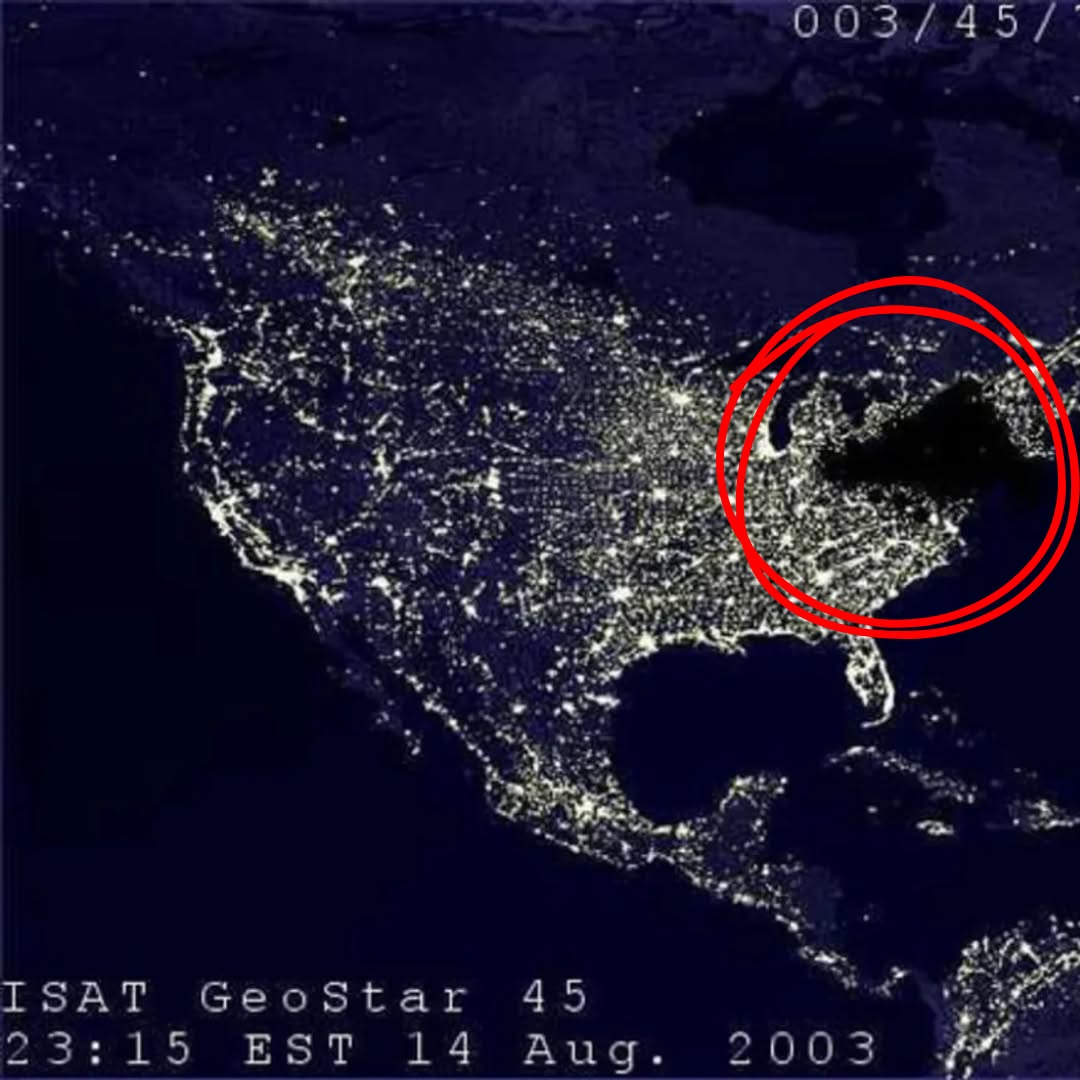
Ad copy
My son called me last night, relieved. "Dad, they made a deal. It's gonna be fine." I wanted to agree with him. But I'd just had a conversation with a former DHS cybersecurity director at a hardware store that morning. And what he told me about what hostile nations already have inside our infrastructure made it impossible to say those words back. It was a Saturday morning. I'd gone to Home Depot to grab a new sump pump hose. Nothing urgent. Just a weekend errand. The parking lot was busier than usual. I remember noticing that. Like everyone had the same restless energy — can't sit at home watching the news anymore, so you go buy something. I was in the plumbing aisle when I noticed the guy next to me. Late fifties. Quiet. Had that look like he hadn't been sleeping well. He was loading his cart with PVC fittings, connectors, some kind of manual hand pump setup — the kind of stuff you don't buy for a weekend project. I wouldn't have said anything except he was reaching for the same fitting I needed. "Looks like we're after the same thing." He handed it to me. "Take it. I've got enough." I looked at his cart. It was full. "Building something?" He glanced at me. Sized me up for a second like he was deciding whether to bother. "Setting up a gravity-fed water line from the creek behind my property to my house." I must have looked confused because he followed up before I could ask. "Just in case." I almost left it there. But something about the way he said "just in case" — not paranoid, not dramatic, just matter-of-fact — made me keep going. "You don't think the truce is going to hold?" He almost smiled. But not the good kind. "Do you?" I told him honestly I didn't know what to think anymore. That I'd been watching everything unfold overseas for weeks and I couldn't tell if it was winding down or winding up. He set a fitting down and looked at me directly. "What do you do for a living?" I told him I was in commercial insurance. He nodded. "I spent 26 years at the Department of Homeland Security. Last nine in critical infrastructure protection. Cybersecurity division." He said it the way someone says they used to work at the post office. No drama. No chest-puffing. "Retired two years ago. And I'll tell you something — I've never been more worried than I am right now." I asked him why. "Because everyone thinks this is over. Or close to over. And it's not." He picked up another fitting and put it in the cart. "What we just watched happen overseas — hostile nations choking off a fifth of the world's oil supply for over a month — that wasn't desperation. That was a capability demonstration." He looked at me. "They showed the entire world what they can do to critical infrastructure when they decide to. Oil was the easy target. Visible. Dramatic. Makes great television." He paused. "But it's not the target that keeps people like me up at night." I asked him what was. "The grid." He said it simply. Like he'd said it a thousand times before. "Our electrical grid." I told him I'd heard people talk about that but always figured it was kind of a worst-case-scenario thing. He shook his head. "It's not a scenario. It's an active operation." He leaned against the shelf. "In my last three years at DHS, the number of state-sponsored intrusions into the control systems that operate our power grid tripled. Not attempts on websites. Not phishing emails. Direct access into the systems that control the physical switches and relays that keep electricity flowing to your house." "These are sophisticated operations. Patient. Methodical. They're not trying to steal data. They're mapping the infrastructure. Pre-positioning inside the network. So that when they get the order — and I mean when, not if — they can take it down." I felt something shift in my chest. "How much of the grid?" "Enough," he said. "These aren't isolated targets. They're going after the interconnection points. The places where one failure cascades into the next. You take out the right nodes and the whole thing comes down like dominoes." He grabbed another piece of PVC. "And a truce overseas doesn't change any of that. The access they already have inside our systems doesn't disappear because somebody shook hands on television." I stood there for a second trying to process that. "So what happens," I said. "If they actually do it. What does that actually look like?" He didn't even hesitate. Like he'd run this scenario a hundred times. "No power. Everywhere. Not a storm outage where the trucks come in three days. A cascading failure across interconnected systems. Could take weeks to restore in some areas. Months in others." "No lights. No cell towers. No gas pumps. No supply chain. Hospitals on generator until the diesel runs out." He looked at me. "But that's not the first thing that kills people." I waited. "It's the water." He said it like he was tired of being the only one who knew this. "The water coming out of your tap right now is not gravity-fed. It's pushed there by electric pumps. Through treatment plants. Into pressurized systems. Up into your house." "Every single drop depends on the grid." "Grid goes down — pumps stop. Treatment stops. Pressure drops to zero. Your faucet is dry." "Not in a week. Not in three days." "In hours." I thought about my house. My wife. My son forty minutes away with his two little girls. "Most people have never thought about this for even five seconds," he said. "Because the water has always just been there. You turn the handle and it comes out. So it never occurs to anyone that it could stop." "But it can stop. And in every tabletop exercise I ever ran with state and local emergency officials — water was always the first crisis point. Always. Not food. Not fuel. Water." "Because you can stretch food for weeks. You can siphon gas. But without water the human body starts shutting down in about 72 hours. Children and elderly — faster." I asked him how much water people should be storing. He looked at me the same way the refinery guy in that Texas story probably looked at the guy who asked him the same thing. "That's what everyone asks. And it's the wrong question." "Why?" "Because stored water is a countdown timer. A gallon per person per day just for drinking. Family of four — that's 28 gallons a week. You got 28 gallons in your house right now?" I thought about it. A case of bottles. A few gallon jugs. Maybe four days. "And then what?" he said. "Day five. Day six. You're rationing. Day eight you're out. The stores have been empty since day two. The taps don't work. You can't boil what isn't flowing." "So what's the right question?" "The right question is — where do you get water when the system that delivers it to you doesn't exist anymore?" He pointed vaguely toward the back of the store. Toward outside. "There are freshwater sources within a few miles of almost every home in this country. Ponds. Creeks. Retention basins. Rivers. Lakes. Billions of gallons of water just sitting there." "So the water's there," I said. "The water was never the problem," he said. "The problem is everything living in it. Bacteria. Parasites. Giardia. E. coli. Cryptosporidium. You drink raw freshwater and you're on your back in hours. For a little kid it could be a lot worse." He reached into his jacket pocket and pulled something out. Small. Compact. Barely bigger than a marker. He held it up. "This is what I carried every day of the last nine years of my career. And it's what every member of my family carries now." I took it. Turned it over. "What is it?" "Portable hollow fiber membrane filter. Same core technology we used to spec for disaster relief and field operations. Thousands of hollow fibers packed inside — each one small enough to physically block bacteria and parasites while letting clean water through." "No batteries. No electricity. No grid. You screw it onto any standard water bottle, fill the bottle from whatever freshwater source you can find, and drink. That's it." "Weighs about two ounces. Filters up to 400 gallons. I've got one in every vehicle, one in my bag, one at my daughter's house, and a stack of them in my closet." He caught me looking at the thing in my hand. "Everyone in my family has at least two. One on them, one stashed. Because if something moves fast and people get separated — everyone needs to be able to get water on their own. No calling. No coordinating. No depending on anyone else." He took it back and put it in his pocket. "Stored water runs out. Access to clean water doesn't have to. That's the difference between a countdown and a lifeline." I asked him what brand it was. "Primitive Labs," he said. "Only one I trust. Military grade build. Lifetime warranty. 60-day money back. I've tested everything on the market and most of it is junk built for a weekend camping trip. This is the one that works when it actually matters." He started pushing his cart toward the end of the aisle. I stopped him. "Hey — can you send me the link? Where you get them?" He pulled out his phone. I gave him my number. "I'll send it when I get to the truck." He paused. "Buy more than you think you need. Get one for everyone in your family. Your parents. Your kids. Anyone you'd want to be okay if this thing goes sideways." "Because the day they need it — the shelves will already be empty and the taps will already be dry. And the truce that's making everyone feel safe right now won't mean a damn thing." He pushed his cart out of the aisle and I just stood there holding a sump pump hose I'd already forgotten about. He texted me the link twenty minutes later. I ordered eight that night. One for my truck. One for the house. One for my go bag. One for my son and his two girls. One for my daughter. One for my brother. And one for my 71-year-old mother who lives alone. When they showed up three days later I didn't just put them away. I drove down to the creek behind the elementary school near our neighborhood. The one I've driven past a thousand times without thinking twice. Filled a bottle straight from it. Brown. Murky. Bugs on the surface. Put the filter on and drank. Clean. Tasted like nothing. Just water. I went back a few more times that week. Retention pond behind the shopping center. The creek that runs along the bike trail. Same result every time. My wife tried it. Then she asked me to order more for her parents. We stopped seeing those creeks and ponds the same way after that. They weren't just scenery anymore. They were our plan. That low-level anxiety I'd been carrying for weeks — every time another headline came out, every time the truce looked like it was about to collapse — it was gone. Not because the threat went away. Because we weren't dependent on the system anymore. My son laughed when I handed him his. "Dad, relax." I told him I don't need him to understand it right now. I just need him to put it in the kitchen drawer and forget about it. Because the day he needs it — the taps will already be dry. And the deal that made him feel safe won't mean a thing. He put it in the drawer. If you've been watching what's happening overseas and that knot in your stomach didn't go away when the truce was announced — trust that feeling. You don't have to depend on what happens halfway around the world to keep your family's water running. You can take that completely off the table. Right now. Before the next headline. https://try.primitivelabsresearch.com/cmlzrfdnm022zm3cxh24flc51 They've been going in and out of stock since everything started overseas — check if they still have units available. By the time everyone else figures out what that man in the hardware store already knew, it'll be too late to do anything about it.
Like this ad? Make it yours.
Crush rebuilds this exact creative around your product — your brand, your colors, your offer — in about a minute.