
Inactive· since May 19, 2026
- 29
- days it ran
- 3
- relaunches
- 30,810
- EU reach
Ad copy
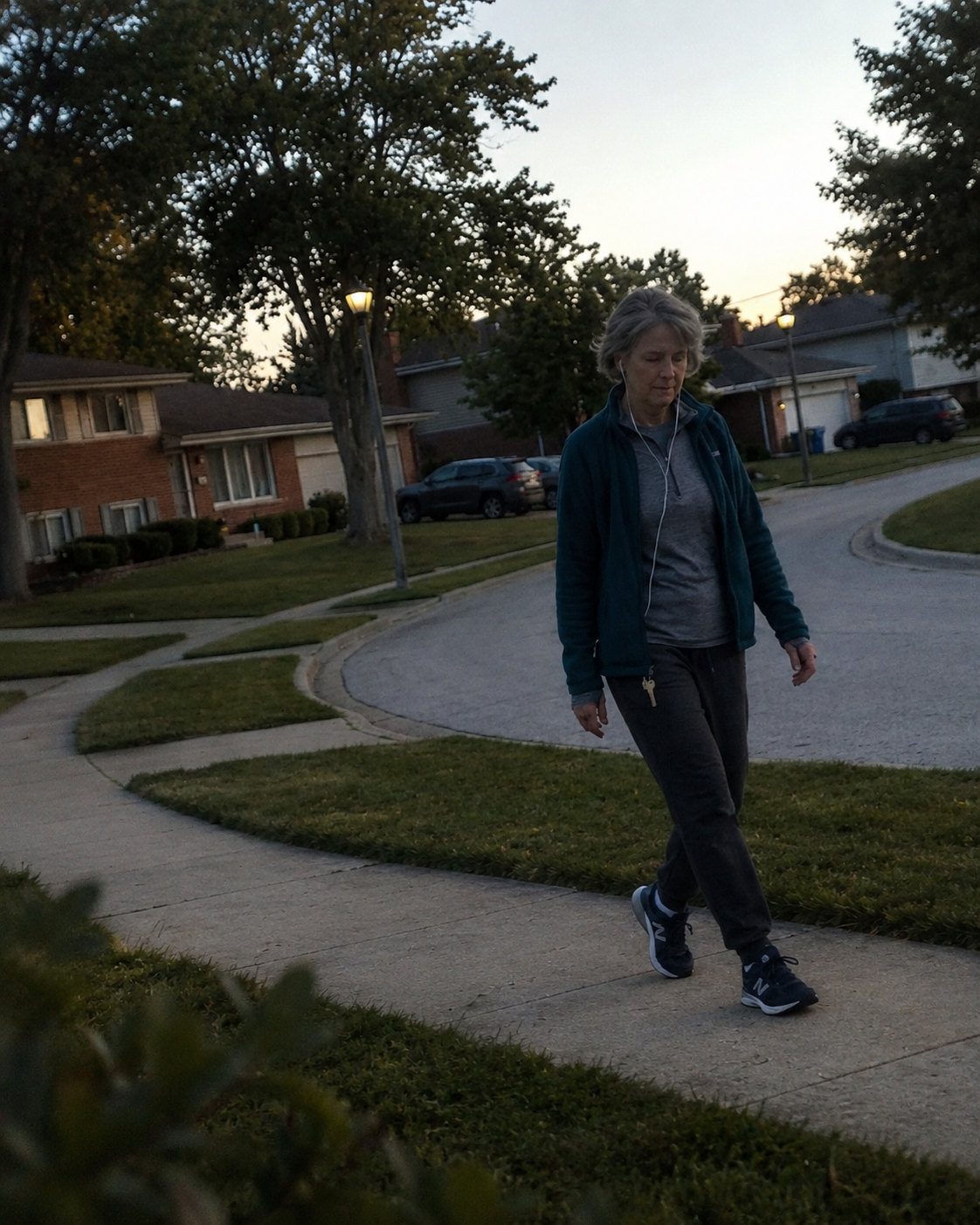
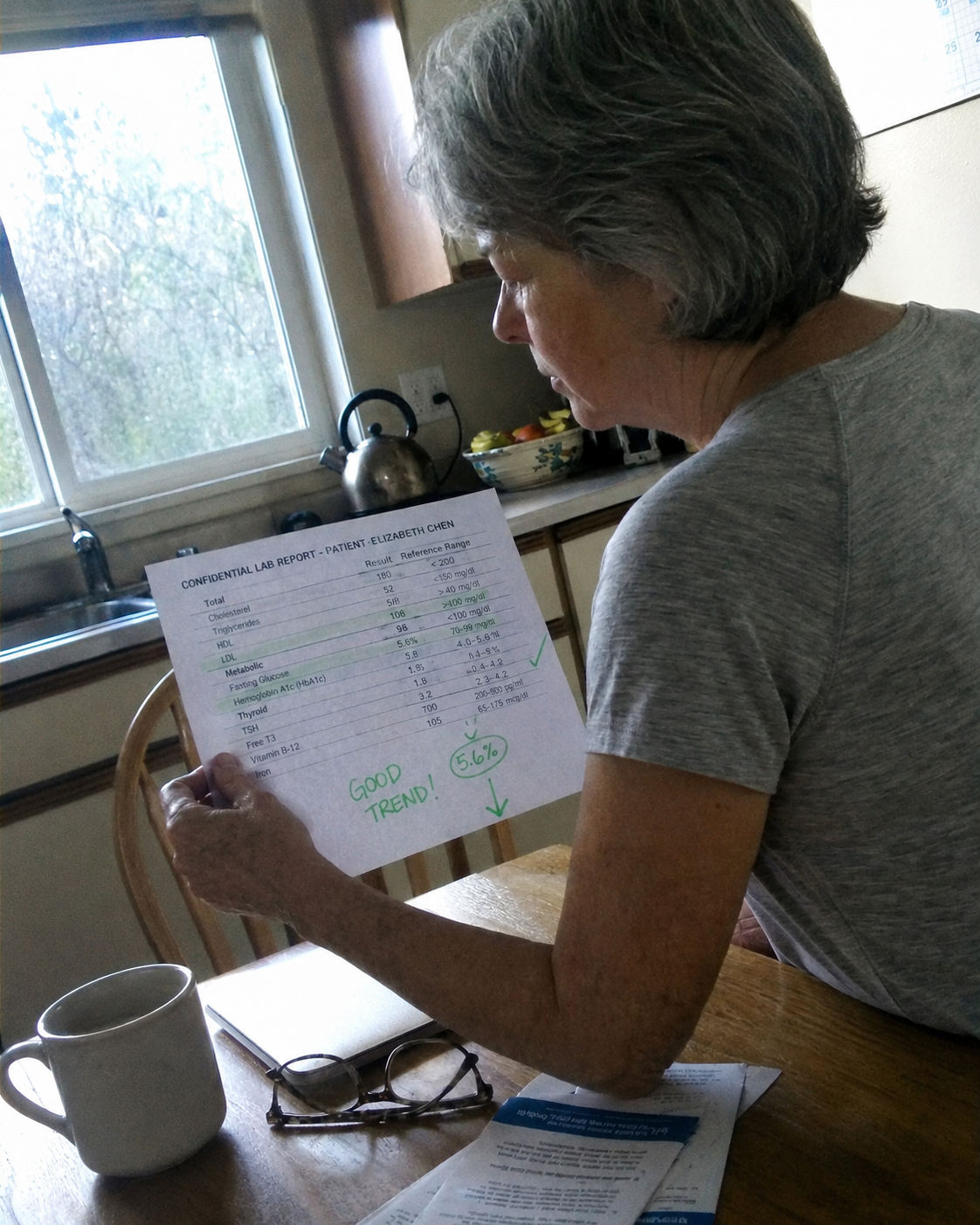
A Stranger on the Train Saw Me Stop to Catch My Breath. She Didn't Pretend She Hadn't. The train was about an hour into Virginia. I had gotten up from my seat to walk three cars back to the café car. I wanted a paper cup of tea. The train was steady. The aisle was clear. I made it through one car. Through the vestibule between cars. Through the second car. Then I had to stop. I stood in the vestibule between the second and third car, holding the rail next to the door, and I waited until I could breathe normally again. It took maybe forty seconds. I was sixty-four years old, riding the Amtrak from Charlottesville to New York to spend a long weekend with my son and his family, and I had just stopped in the vestibule of a moving train to catch my breath because I had walked the length of two railroad cars. I got my paper cup of tea. I made it back to my seat. I sat down. The woman in the window seat next to me — whom I had nodded to at boarding and not spoken to since — was looking out at the autumn trees. She didn't turn to me right away. But about a minute later, very gently, without looking at me, she said: "I saw you. In the vestibule. I'm not going to make a thing of it. But I saw you." I didn't know what to say. She turned her head then. She had a soft, knowing face. Maybe in her early seventies. Reading glasses on a chain around her neck. A book in her lap. She said: "I was you. About eight years ago. On a train just like this one. I'd like to talk to you, if you'll let me. But only if you'll let me." That was when I realized I was probably going to have a real conversation with a stranger for the first time in a very long time. Her name was Vera. She was seventy-two. She lived in a small town outside Roanoke. She was riding to New York for her granddaughter's wedding the following Saturday. Her husband had stayed home this trip — his knees, she said, did not love a long train ride anymore. She had two daughters and four grandchildren and a small mixed-breed dog at home named Walter, whom she missed already. She asked me about myself. I told her my name was Diane. I told her I was sixty-four. I told her my husband Frank and I had both retired about four years ago — Frank from electrical work, me from thirty-two years as a social worker in family services. I told her about our two kids and our three grandchildren and the small ranch house outside Charlottesville where Frank and I had lived for thirty-one years. I did not tell her, at first, about what had been happening in my body for the last year and a half. She did not push. We talked about other things for a while. The wedding. The book she was reading, which was a biography of a nineteenth-century botanist she said was much more interesting than I would expect. The autumn color through the train window. The small things two strangers say to each other when they have nine hours in a row and no other agenda. Somewhere around Manassas, Vera set her book down on her lap and looked at me. She said: "Diane. I'd like to tell you the story I would have wanted somebody to tell me eight years ago. If you'd rather we just kept talking about the leaves, I will entirely understand." I told her I'd like to hear it. Vera was sixty-four, she said, when she first noticed she was getting tired in a way she hadn't been tired before. The kind of tired that wasn't about sleep. The kind that didn't go away with a Saturday morning of rest. The kind that was just there now, underneath her days, in a way it hadn't been when she was fifty-eight. She told me she had been calling it "her sixties" for almost two years. She told me her bloodwork was always fine. She told me she had been to her doctor about it more than once, and her doctor had always been kind, and had always said the chart looked good, and had always said the body changes as we age and that what she was describing was within the range of what a body does. That was true. It also wasn't quite enough. Vera told me that one Saturday afternoon, about eight years ago, she had been at her kitchen table reading a book and she had read the same paragraph three times without realizing it. She had set the book down. She had looked out the window. And she had said, out loud, to no one: "I'd like to feel like myself again." That was the afternoon she had started reading. I want to be careful, here, about what Vera told me she found, because I went home and did my own reading afterward, and what I want to share with you is what I read, not what she told me she read. But she told me — gently, with the careful pacing of a woman who had spent a long career talking to other people about their lives — that what she eventually added to her mornings was a beetroot supplement. A brand called Rosabella. She told me she had picked it because she had read carefully and because the small company that made it cold-pressed the beetroot at low temperatures rather than processing it with heat, and because the careful, structure-function research community she had been reading talked about the active compound in beetroot — something called betalains — in the context of supporting healthy circulation, supporting cardiovascular wellness, and supporting the body's natural antioxidant balance, in people whose numbers were already in the range their doctors wanted them in. She said it that carefully. I am not paraphrasing. She told me she had called her doctor's office before she started. She had called her pharmacist before she started. She told me, in case it mattered to me, that her doctor and her pharmacist had both said it was a sensible thing for her to add at the dosage on the label, given what was on her chart. She told me she had taken two capsules with her coffee every morning since. She also told me, in the same careful voice, that she had no way to know whether the supplement was what had made the difference for her or whether she would have felt the way she felt anyway at seventy-two. She had added one careful thing. She had kept everything else the same. The years that followed had been different from the year and a half before them. That was as much as she could honestly say about it, and she had made her peace with not being able to say more. She told me she could not promise me that any of it would do anything for me. She said bodies are different and some women notice something and some women don't and some take much longer than others before anyone can tell. She said: "Diane. The most important sentence I am going to say to you on this train is this. Please call your own pharmacist before you add anything new to anything you are already taking. I don't know your chart. Your pharmacist does." I told her I take a multivitamin and a vitamin D and that is the entire contents of my pill organizer. She said: "Call your pharmacist anyway. It's a two-minute call. The people who know what's on your record are the right people to confirm a supplement is sensible for you." We talked for the rest of the trip. About her granddaughter's wedding. About Frank, my husband, and how he had quietly become the better cook of the two of us in retirement. About a flower garden Vera had been keeping in raised beds because her knees did not love the kneeling anymore but the rest of her still wanted the flowers. About the way a long marriage settles into your body across the decades, and the small ways it shows up in how you stand in your own kitchen. She gave me her phone number at Penn Station. I gave her mine. We hugged. I have not seen Vera since. We have texted twice. She sent me a picture of her granddaughter at the wedding. I sent her one of my own granddaughter at a soccer game six weeks later. That has been the extent of it. But I had nine hours of a careful older woman's quiet, generous attention on a train one Friday afternoon last spring, and that nine hours has been with me every day since. I want to be clear about something before I tell you what I did when I got home. I am not a doctor. I am not a nurse. I do not have any medical expertise of any kind. I was a social worker for thirty-two years. I am a wife and a mother and a grandmother and a woman who reads carefully and listens carefully and tries to be honest with herself about what her body is telling her. What follows is one woman's experience on the other side of one long train ride. Nothing more. I came home that Monday and I started reading. I read for about ten days. I am a careful reader by temperament and by training, and I did not want to add anything to my body that I hadn't taken the time to understand. What I read confirmed the shape of what Vera had said on the train. The active compound in beetroot is a family of pigments called betalains. They are one of the more potent antioxidants in the food supply. The research community has been studying them for decades, carefully, in the context of supporting healthy circulation, supporting cardiovascular wellness, and supporting the body's natural antioxidant balance — particularly in people whose numbers are already in the range their doctors want them in. The careful language. Not "fixes." Not "treats." Not "reverses." Just supports. The betalain pigment is heat-sensitive — that is just the chemistry of the molecule — and most processing methods involve high temperatures, which is the cheaper and faster way. Rosabella cold-presses their beetroot at low temperatures. It costs them more to do it that way. It takes longer. They do it anyway, because more of the active compound survives the processing. After thirty-two years of working with families and watching small institutions make small decisions when no one was watching, I have come to believe the small decisions an organization makes when no one is watching tell you everything. The other thing I liked was the simplicity. Two capsules in the morning with a glass of water. That is the whole protocol. I am sixty-four years old. I am not interested in another routine. Before I added anything, I made the call Vera had asked me to make. I called my pharmacist on a Wednesday morning. I have been filling my multivitamin and my vitamin D at the same independent pharmacy four blocks from our house for sixteen years. I told the pharmacist on duty what I wanted to add. I gave her the brand name and the dosage. She pulled up my profile. She told me she had no concerns at the dosage on the label, given my current routine. She told me to take the capsules in the morning, with my coffee, the way the bottle suggested. I also called my doctor's office that afternoon. I left a message with the nurse with the same information. The nurse called me back the next morning to tell me Dr. Reyes had no concerns and to let her know how I was feeling at my next appointment. Both calls together took me less than ten minutes. If you are reading this and you are on any prescription medication — anything cardiovascular, hormone therapy, anything at all — please make the call before you add anything new. I am a retired social worker in Virginia. I am not the person to confirm what is sensible for you. Your pharmacist and your doctor are. I started on a Monday in late April. I put the bottle on the counter next to the coffee maker. I took the two capsules with my first sip of coffee. The first two weeks I felt nothing in particular. I had read enough, by then, and I had Vera's careful pacing in my head, to know I shouldn't expect to. A supplement is not a drug. It doesn't switch on the way a drug switches on. It is something the body uses, slowly, in the work the body is already doing. I kept paying attention. What I noticed, I noticed in two specific places. The first one was the C&O Trail. There is an old rail-bed trail near our house. Frank and I had walked it together every Saturday morning for twenty-eight years. The full loop is two and a half miles. For the year and a half before the train ride, I had been doing a shorter loop — about a mile and a quarter — and telling Frank I just wanted a shorter walk that day. I had not actually wanted a shorter walk. On a Saturday morning in late May, about six weeks after I started, Frank asked me at the trailhead which way I wanted to go. I told him I wanted to do the full loop. We did it. He didn't say anything about it. He doesn't say anything about most things he notices. He just sees them. I did the full loop the next Saturday too. I did not say anything to him about Rosabella, or about Vera, or about any of it. The second place I noticed was a dinner party. We hosted four other couples for dinner on the last Saturday in June. Frank grilled. I made a peach cobbler. We ate on the back porch. It had been over a year since we had hosted anyone for dinner. I had been quietly telling Frank that we hadn't found a good weekend, or that the weather hadn't been right, or that the Stevensons were traveling, or that the Andersons had been busy with their grandkids. None of those things had been precisely true. I had not hosted anyone because hosting a dinner party for ten people was, for a year and a half, more than I had been able to do. That Saturday night, after everyone left, I stood in our kitchen with Frank, drying the wine glasses, and I told him I had had the best evening I had had in a long time. He nodded. He kept drying. I did not tell him about Rosabella either. I want to be careful about what I am saying here. I am not telling you that Rosabella walked the C&O Trail or set the dinner table. I had been doing other things since the train. I had been listening to my body differently. I had been walking a little more deliberately. I had been doing the small things I had been quietly stopping, on purpose, to see whether they were really beyond me or whether they had just been waiting for me to come back to them. Something had unlocked in me on the train that had nothing to do with a capsule on a saucer. There were several things changing at once, the way there are when a careful sixty-four-year-old woman finally has a stranger of seventy-two see her stop to catch her breath on a moving train, and finally tells the stranger the thing she had not been telling anyone for a year and a half. What I can tell you is that I added one small thing to a list of small things I was newly doing. I kept everything else exactly the same. And the months that followed were qualitatively different from the eighteen months that preceded them. I went into Dr. Reyes's office in October for my annual physical. She did the bloodwork. She looked at the results. She looked at me. She said: "Diane, your numbers are in the same good place they've been for years. But you look like a woman who's been listening to her own body lately." I told her about the trail and the dinner party. I told her about the beetroot. I told her I had called the office before I started. She nodded. She said: "That was the right way to do it. The research on antioxidant support is well-established. Keep going. I'll see you next year." I drove home from her office thinking that there is a kind of conversation a doctor can have with a careful patient that the chart doesn't quite hold, and that I had been on the lucky end of that kind of conversation for a long time without knowing how lucky I was. I am telling you this because I think you might be where I was last spring. A woman in her sixties, in fine shape on paper, tired in a way the chart does not name. Doing all the careful things — the walking, the eating, the sleep, the water — and still finding the days a little heavier than they used to be. Telling yourself it's your sixties. Telling yourself it's retirement. Telling yourself a great many things. If you've been doing that quietly for a year or two, I want to say something plainly. I am not telling you that beetroot will do for you what something has done for me. I don't know you. I don't know your chart. I don't know what you are already taking. Bodies are different. Some women notice something within the first two weeks of adding something like this. Some women take much longer. Some women don't notice much at all. What I am telling you is that there is a careful, slow, structure-function corner of the research conversation that talks about beetroot in the language I had been waiting to find. Not fixes. Not treats. Just supports. In people whose numbers are already in the range their doctors want them in. If that shape of language interests you, please make the call before you add anything. Call your doctor's office. Call your pharmacist. The two minutes it takes is the most important two minutes of your engagement with anything you put in your body. The brand I added to my morning is Rosabella. 1,300 milligrams of organic beetroot per serving, cold-pressed at low temperatures, grown by a small farming community in Lancaster County. Two capsules with a glass of water in the morning. That is the entire protocol. It is not a fix for anything. It is not a substitute for any medication, any hormone therapy, or any other treatment a doctor might prescribe. It is not a treatment for fatigue or for aging or for the quiet year and a half a careful woman can have between fifty-eight and sixty-four. It is one small thing some women add to the long list of things they are already doing for themselves, alongside everything else. P.S. Rosabella has a ninety-day satisfaction guarantee. Any reason at all. You don't have to prove anything to anyone — not to them, not about your numbers, not about how you feel. If you tried it and you're not satisfied, you're not satisfied. They refund you. That is the whole policy. I appreciate that kind of policy at sixty-four. P.P.S. They're a small operation working with a farming community in Lancaster County. The cold-pressing process takes longer than the conventional methods, so they sometimes run out between harvests. I keep an extra bottle in the cupboard now. P.P.P.S. I sent Vera a text in November telling her I had been doing the full loop on the C&O Trail every Saturday since June. She wrote back: "I'm glad. I'm so glad. I knew you were her the minute I saw you in that vestibule." I don't know how she knew. I have stopped asking. Some women just know. https://track.tryrosabella.com/cdc16426-3e48-40a7-9fad-21098084f6cf DISCLAIMER Individual experiences vary. These statements have not been evaluated by the FDA. This product is not intended to diagnose, treat, cure, or prevent any disease.
Support stamina and heart health every day
LEARN MORELike this ad? Make it yours.
Crush rebuilds this exact creative around your product — your brand, your colors, your offer — in about a minute.