
Inactive· since Aug 20, 2026
- 20
- days it ran
- 11
- relaunches
- 1,575
- EU reach
Ad copy
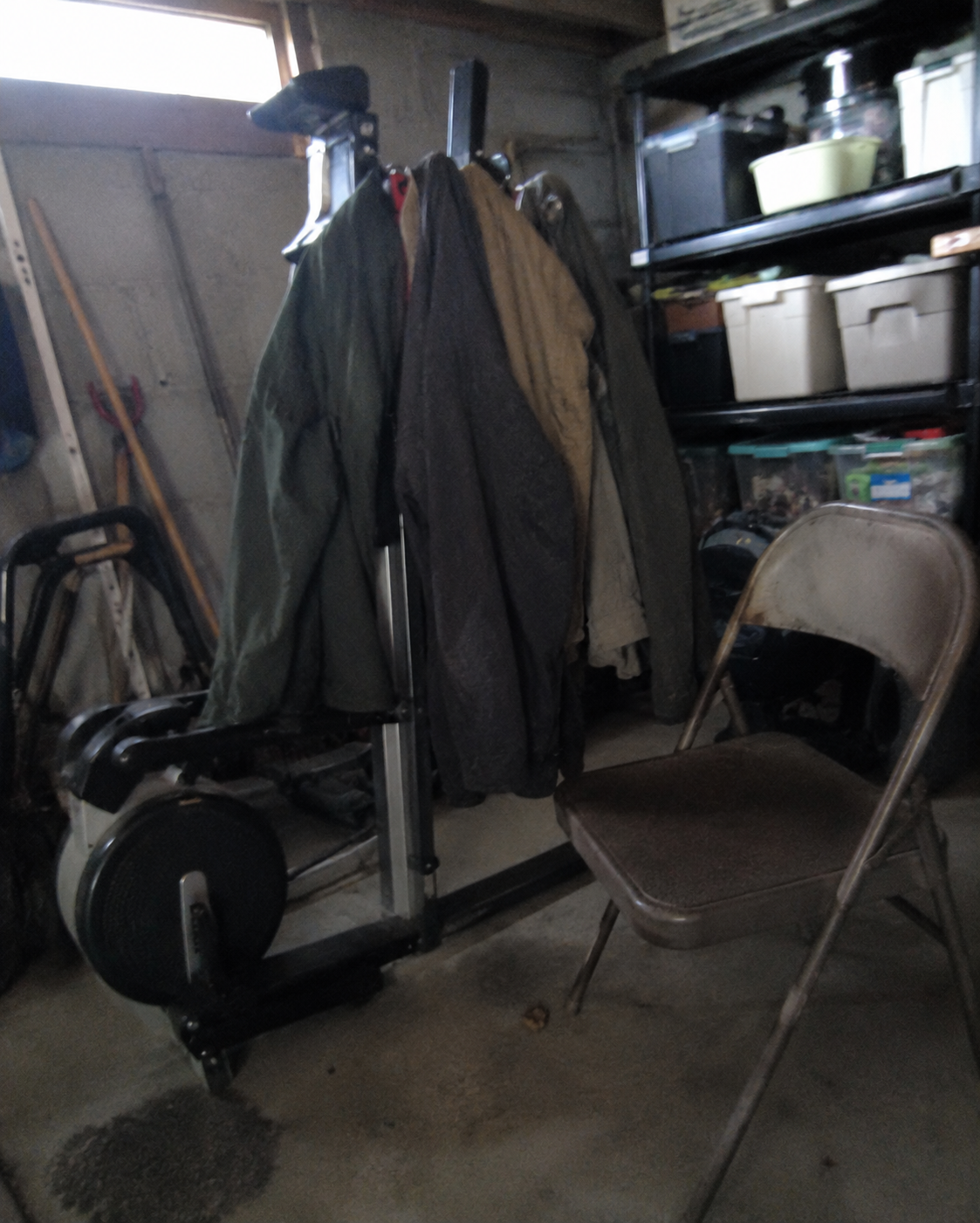
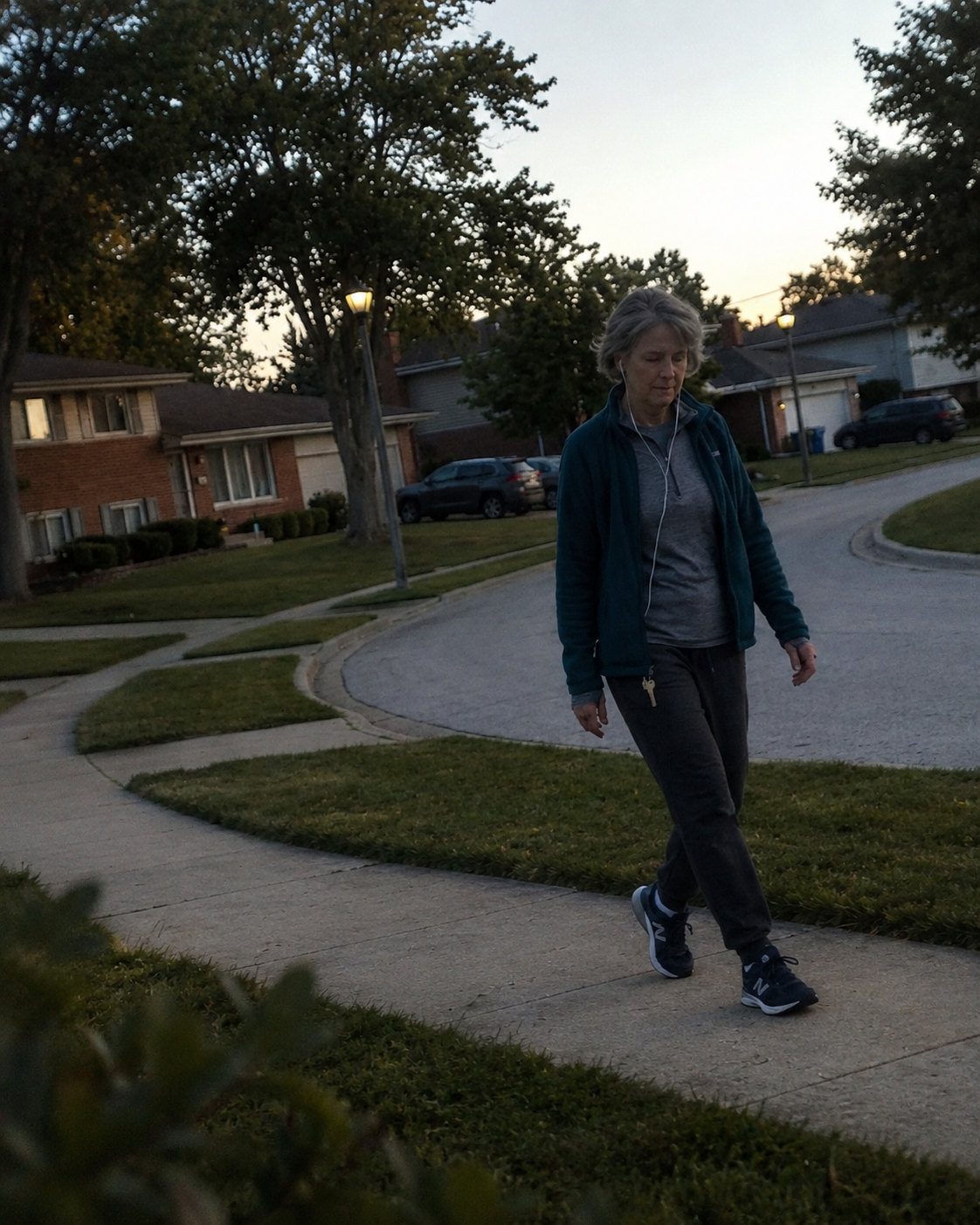
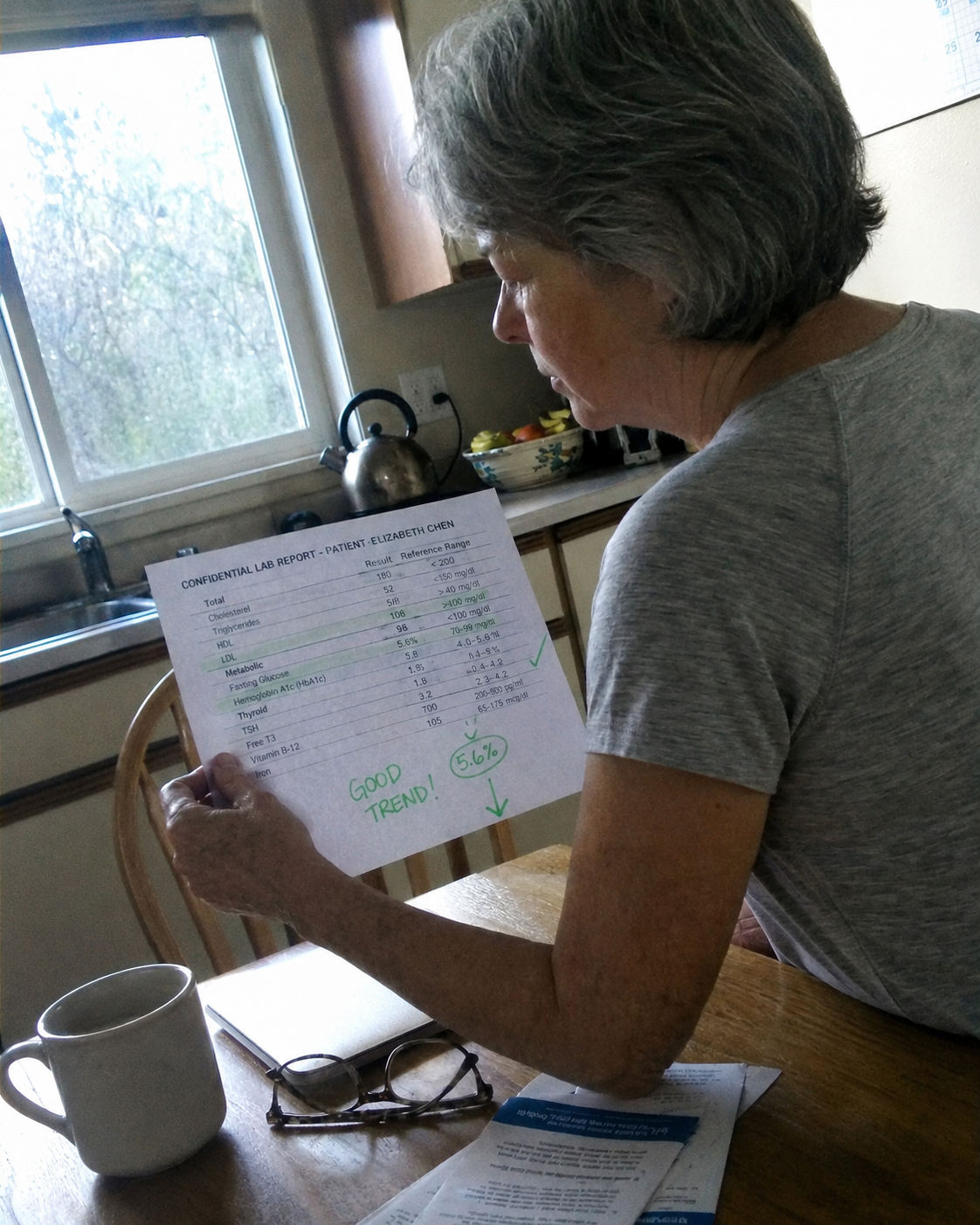
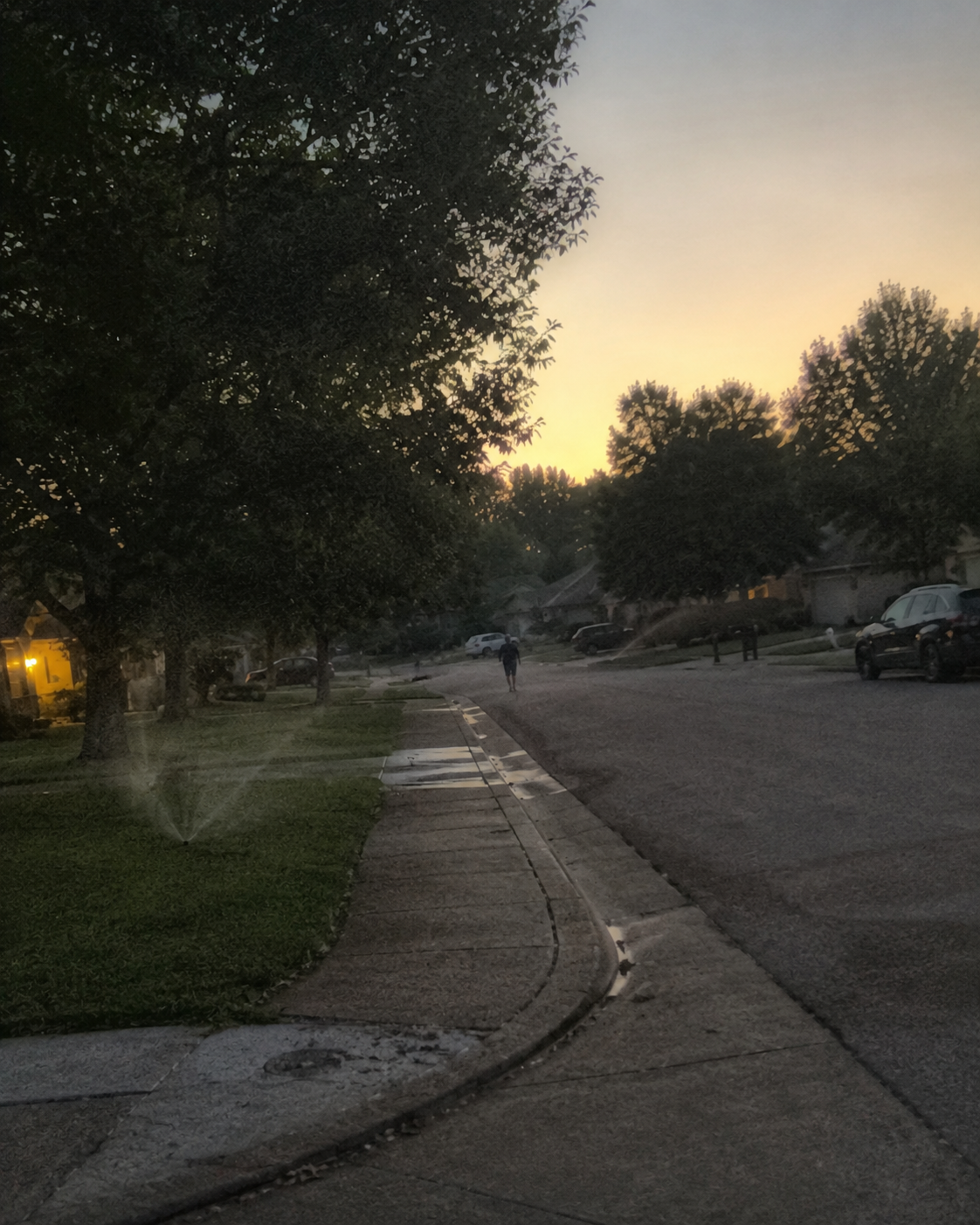
She Hasn't Missed a Morning in Thirty-One Years. Ask Her How, and She'll Tell You She Isn't Even Trying. Picture a street at ten to seven in the morning. An ordinary cul-de-sac. Sprinklers ticking. One porch light still on that somebody forgot. A woman comes around the corner at a walker's pace, white hair under a ball cap. Call her June. And in the third house on the left, a man is standing at his kitchen window with a coffee he hasn't sipped yet, watching her do something he has apparently never once seen in nine years of being her neighbor. Call him Ray. What June is doing is this: she is walking. And on her way past the second house, without breaking stride, she flips the Hendersons' blown-over recycling bin upright and rolls it two feet back from the curb cut. At the fourth house she picks up a newspaper bag from the driveway seam and lands it on the mat. At the sixth she pushes a gate shut that the wind has been working open all night. The latch clicks. She is already past it. None of it takes her longer than it takes to tell. She never stops walking. Ray stands at his window and does the arithmetic every neighbor eventually does. Ten to seven. She comes around that corner at ten to seven. She has come around that corner at ten to seven for as long as he has lived on this street — and, he will learn, for twenty-two years before that. Thirty-one years of ten to seven. Rain gets an umbrella. Snow gets boots. The walk happens. Now let me back up and tell you about Ray, because none of this lands unless you know him — and you do know him. There's a Ray on your street too. There may be a Ray in your mirror. Ray is sixty-two. He spent thirty-four years managing logistics for a regional grocery distributor out of Columbus — trucks, docks, schedules, the whole clockwork of getting ten thousand things to the right place before six a.m. He was good at it. Genuinely good. His gift, if you asked anyone who worked for him, was that Ray could look at any operation and find the wasted motion. He rerouted delivery loops that had run the same dumb way for twenty years. He once saved the company a documented four hundred driver-hours a year by changing which door the bread came in through. Other people's systems, Ray could fix in his sleep. His own systems are a different story, and that story has a burial ground. Ray is a planner. His plans have spreadsheets. His spreadsheets have tabs. Every January — and his wife Carol can date each one like a geologist reading rock — there is a new plan, researched like a procurement decision, with comparisons and reviews and a genuine conviction that this, finally, is the sensible one. There was the rowing year. The machine arrived in a box the size of a refrigerator, was assembled in an afternoon of real optimism, and now holds the good winter coats. There was the walking-app year. The app sent him encouraging messages until sometime in March, when it began sending him concerned ones, and he deleted it the way you avoid a person you owe a call. There was the meal-prep year. Sunday afternoons, containers, a labeling system Carol still calls, gently, "the museum exhibit." It produced six excellent weeks and one drawer of lids that match nothing. There was the year of the grand reorganization of the garage, which produced one labeled shelf and a folding chair where the rest of the project sat down to think. The chair is still there. Ray sits in it sometimes, which he is aware is a little on the nose. And here is the part that actually gets him — the part he'd never say at a barbecue. Every plan was right. He checks this. He is a logistics man; he audits. The rowing was a good idea. The meal prep was a good idea. Nothing on the spreadsheet was wrong. He did everything right, every January, and it still never felt right — and every spring the plan was gone anyway, quietly, without a decision, without a scene, the way fog leaves a field. And when it went, Ray did what planners do. He called it a discipline problem, filed it under his own name, and started pricing out next January. Thirty years of that. Thirty years of being a man who could reroute an entire trucking network but could not, by his own accounting, keep a Tuesday. So understand what it does to a man like that to stand at his kitchen window and watch a woman keep a thing for thirty-one years without appearing to try. It isn't curiosity he feels. It's closer to grievance. He starts watching for her. He'd deny the word "watching" — he is aware of her, the way you're aware of a train that's never late. October: ball cap swapped for a knit one. The walk happens. A morning in January so cold the snow squeaks: boots, and the walk happens, and on her way past she knocks the ice dam off the end of the Kowalskis' downspout with one practiced kick, without breaking stride. A morning in April, raining sideways: umbrella. The walk happens. The bin at the second house. The paper at the fourth. The gate at the sixth. Small kindnesses, every one of them on the move, none of them announced, all of them so old on this street that nobody sees them anymore — which is its own kind of remarkable, when you think about how hard everyone else works to be seen doing much less. Ray starts noticing what the street would look like without her, which is how you finally see a constant. Bins down after every wind. Papers pulping in the rain. That gate banging all night. The street runs on her, a little. It has for thirty-one years. And the street has no idea. Which brings us to the Tuesday the kindness finally gets noticed, and then repaid, and then — this is the bridge — becomes a conversation. Because one Tuesday in early fall, Ray is out at ten to seven dragging his empty trash bin up the driveway — out early for no reason he'd admit to — and June comes around the corner, on schedule, like weather that has decided to be reliable. And he hears himself say it. Badly. The way you ask a question you've been saving too long. "How do you do something every day for thirty-one years?" June doesn't stop walking. She has a system for conversations too, which is that you're welcome to walk along. So Ray, in his driveway shoes, walks along. "I don't do anything every day for thirty-one years," she says. "That sounds exhausting. I'd never have lasted a month at that." "You walk every day." "I walk every day," she agrees. "That's the one thing. Everything else you've seen me do —" She flips a bin. She doesn't even look at it. "— happens on the way. The gate's on the way. The Hendersons' bin is on the way. I'm not out here doing seven things, Ray. I'm doing one thing I'd do anyway, and the rest of it rides along." They walk a minute. The street goes by at her pace, which turns out to be a good pace for seeing it. "Can I ask you something?" she says. "You had the rowing machine. I saw the box that year. And there was a stretch you walked with your phone out in front of you like a divining rod. And the garage — Carol mentioned the garage." Ray takes this the way you take an x-ray being read aloud. "Programs," June says, and there's no unkindness in it at all. "Regimens. You know what a regimen is? A regimen is a plan that requires you to become a different person by Thursday." "When my knees were younger I had grand plans like anybody. I never met the different person. She never showed up. So I quit planning and I kept the walk, because the walk was already mine — and then I noticed the walk would carry things. Small things. Things with no weight to them." She looks at him, once — the once-over of a woman who has read this street for thirty-one years. "You keep a thing by making it small enough to ride on a thing you already keep. That's the entire secret. There isn't any more of it. People keep waiting for more of it." They walk on a bit. Ray, a systems man, is doing what systems men do with a sentence like that: stress-testing it. "That can't be the whole thing," he says. "Discipline has to be in there somewhere." "Does it?" she says. "You've watched me for — what, nine years now, since you're asking. Have you ever once seen me try?" He has not. That is, in fact, the exact content of the grievance. "Trying is what the heavy plans need," she says. "The walk doesn't need trying. It's not an achievement, Ray. It's a route. Routes don't take discipline. They take a starting point you already stand at every morning anyway." At his mailbox she peels off — "This is you" — and is around the corner before he thinks of a single thing to say back. Ray stands in his driveway a long time, holding a trash bin, doing his life's arithmetic. He does it the only way he knows: like an audit. Every January plan he has ever buried, laid out in a mental spreadsheet, with one new column he's never thought to add. Not was it a good plan. They were all good plans. The new column is: what did it ask for? The rowing asked for forty minutes that belonged to something else. The app asked for a version of Ray who checks apps. The meal prep asked for his Sundays. The garage asked for a Saturday that has never once existed. Every single one of them arrived asking his week for something his week didn't have — a new hour, a new errand, a new Ray. And when his week declined, he called it a discipline problem and priced out a new plan. Filed thirty years of ordinary arithmetic under his own character. Thirty years of doing everything right, and it never once felt right — because right kept meaning bigger, and the woman who just left him at his mailbox has spent thirty-one years proving it means the opposite. Small enough to ride on a thing you already keep. He goes inside and looks at his kitchen the way she looks at the street. What does he already keep? What has he never once missed? The answer is sitting on the counter with a red light on, half-drunk, the way it has been every morning of his adult life. Hold that thought. Because this is where the story goes — through that door, and no other — to beets. People have been eating beets for thousands of years. They were in the soups and cellars and pickle jars of half the world's grandmothers long before anyone could say why — kept on nothing but the accumulated verdict of generations. Today the why is better understood: beetroot naturally contains dietary nitrates, and the body converts those into nitric oxide, a molecule that helps support healthy blood flow.* Beets also carry betalains, the deep crimson pigments that give them their color. Nature did the formulating a long time ago. And beets, in every traditional form, are exactly the kind of plan Ray buries. The roasting is forty minutes. The juicing is a project with dishes and a stained cutting board. A beet, on an ordinary crowded Tuesday, is a regimen — a plan that requires you to become a different person by Thursday. The beet wasn't the problem. It's that every classic form of the beet asks your week for something your week doesn't have. It's heavy. And heavy plans lose to arithmetic — quietly, in March, without a decision ever being made. That's the entire reason Rosabella Beetroot exists, and it can be said the way June would say it: Two capsules, once a day. Small enough to ride on a thing you already keep — and Ray already keeps the coffee. What's in it reads in one breath. 1,300mg of organic beetroot powder per serving — a serving being those two capsules. One active ingredient, with the dose printed plainly on the label, nothing to decode. Non-GMO, third-party lab tested, produced under GMP, made in the USA from globally sourced ingredients. It contains no caffeine. Sixty capsules in a bottle; thirty days. And the part you don't usually read in something like this: nobody here is going to promise you a transformation. We're not going to tell you what you'll feel or when — bodies are different, and yours doesn't owe an advertisement anything. Ray has a garage full of things that promised him the moon in January. What can be promised is what's on the label — and a format with no weight to it, built to ride along on a morning you were already going to have. One thing before anything goes in a cart: talk to your doctor or pharmacist before adding any supplement, especially if you take any medication. This goes alongside the rest of a routine — the meals, the walks, the sleep — not in place of any of it. On Amazon, Rosabella Beetroot sits at 4.4 out of 5 across more than 14,000 ratings as of August 2026. And there's a 90-day guarantee: if you're not satisfied for any reason, return it within 90 days of delivery for a full refund. The ending is small. By now you know why. There's a bottle on Ray's counter, next to the coffee maker — which is, he has discovered, the one appointment he has never missed in his adult life. It was there in June. It's still there in October. In the long archaeology of Ray's plans, that makes it the first one that never needed a spreadsheet. He has checked. There's no tab for it. There's nothing to track. It rides along. Carol noticed around month two and said nothing, which after thirty-four years of Januarys is its own kind of standing ovation. And on Tuesdays, when Ray takes his own bin up the driveway, he takes June's up too. Hers is on the way. It rides along. He didn't announce it. She's never mentioned it. But a few weeks in, on a Tuesday, the woman who reads this street came around the corner at ten to seven, saw her bin already up, and gave the third house on the left a single nod. The nod you give a latch that has finally learned to click shut on its own. Ray has received awards. A plaque, once, from the distributor, for the bread-door thing. Framed. The nod is better. He's aware of how that sounds. The nod is still better. Some things you don't plan. You just find the thing you already keep, and you let one more small thing ride along. P.S. If your own Januarys have a burial ground — the programs, the regimens, the garage that sat down to think — your discipline was never the problem. The plans were heavy. Heavy plans ask your week for hours it doesn't have, and when the week says no, that isn't weakness; it's arithmetic. The kept things are the light ones. Start by finding the thing you already keep. P.P.S. What it is, plainly: organic beetroot powder in capsules — 1,300mg per two-capsule serving, one active ingredient, dose on the label, no caffeine, non-GMO, third-party lab tested. Thirty days a bottle. That's the whole story. P.P.P.S. The guarantee is satisfaction-based: not satisfied, for any reason, return it within 90 days of delivery for a full refund. Enough time to find out whether it becomes one of the things that rides along — which is the only test that matters anyway. Individual experiences vary. These statements have not been evaluated by the Food and Drug Administration. This product is not intended to diagnose, treat, cure, or prevent any disease.
Support stamina and heart health every day
LEARN MORELike this ad? Make it yours.
Crush rebuilds this exact creative around your product — your brand, your colors, your offer — in about a minute.