Pet Lover Tips
Pet Lover Tips Facebook ad: “Why Lysine Isn't Helping Your Sneezing Cat”
Ran for 4 days, from July 10 to July 14, 2026, the last day Crush saw it.
Run by Pet Lover Tips on Facebook. Crush is not the advertiser and does not verify its claims. See this ad in Meta's Ad Library(opens in a new tab)
Want an ad like this for your product?
Crush makes new ad images for your product from this ad: your logo, your product photo, your offer.
Trials from $19.95 USD, then $79.95 USD a month. Cancel anytime.
About this ad
- Meta Ad Library ID
- 1157777974096626
- Platforms
- Facebook, Instagram, Audience Network, Messenger and Threads
- Relaunches
- 0
Ad text
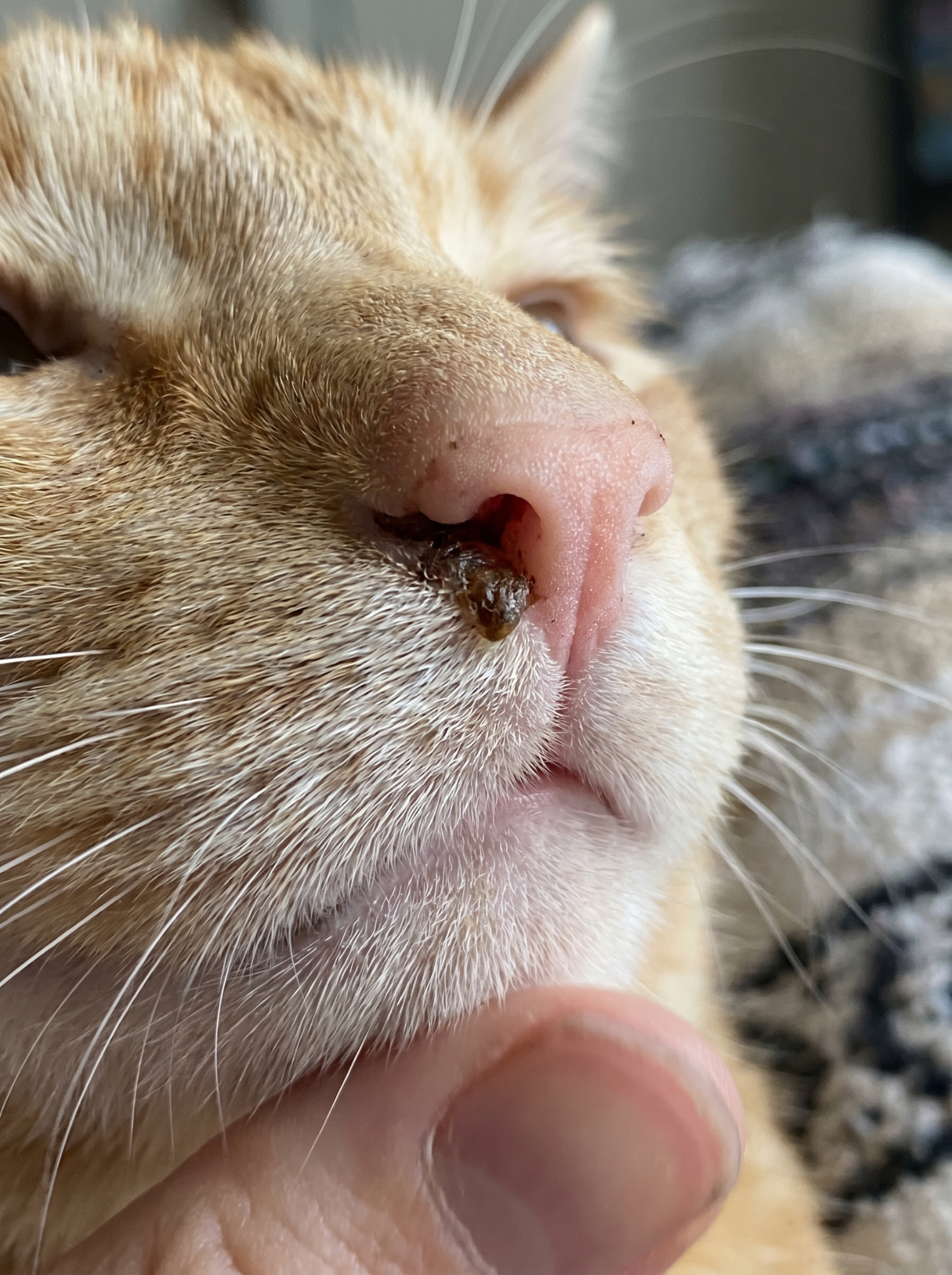
Nobody told me that a sneezing cat could become a dying cat. Not the rescue workers. Not the first vet. Not even the second vet. Not one person in the 11 months I spent giving my cat lysine every single day while she got progressively worse looked me in the eye and said this is where untreated chronic sneezing goes if you don't fix the right thing. I had to find that out myself. The hard way… I'm writing this because I am a nurse and I know what it means when someone doesn't have the information they need in time. I have watched it happen in clinical settings. I have watched it happen in my own home. And I am done staying quiet about a treatment that the science stopped supporting years ago while cat owners everywhere keep faithfully giving it and wondering why nothing is changing. If your cat has been sneezing for weeks or months and lysine hasn't fixed it, read everything here. Because what I found changes everything. My name is Diane. I'm 55. I've spent twenty-two years as an emergency room nurse in Seattle. I live alone now since my kids moved out and my house felt too quiet in a way I hadn't anticipated. So 11 months ago I adopted a cat. Her name is Fig. She's 8 years old with an underbite and an attitude problem and she came from a local rescue that had pulled her from a hoarding situation. She'd been in the rescue system for almost a year before I found her. The rescue told me upfront — Fig had feline herpesvirus. Very common in rescue cats, especially ones that had lived in close quarters with many other animals under stress. They said it was manageable. They said most cats with FHV live completely normal lives. They said to give her lysine if she ever started showing symptoms and sent me home with a bag of lysine chews. I brought Fig home on a Saturday. By Wednesday she was sneezing. Not occasionally. Persistent fits, multiple times a day. Her eyes were watering and crusting. She'd wake up from naps and immediately start sneezing before she'd even fully opened her eyes. I'd watch her go eight, nine, ten times in a row and just sit there afterward looking exhausted and confused. I started the lysine immediately. One chew every morning mixed into her wet food. I'm a nurse. I follow protocols. I was consistent from day one. Three weeks in she was still sneezing. I called the vet. Very common for rescue cats. Keep going with the lysine. Give it time. Six weeks in. Still sneezing. If anything the fits were lasting longer. I switched to the powder because I'd read in a cat health forum that some cats absorb it better that way. Added colostrum on top of it because three separate people in a Facebook group swore by the combination. Still sneezing. I posted in a cat adoption group asking if anyone had experience with FHV not responding to lysine. The responses came in fast. "Try the gel version. The powder loses potency." "Make sure you're giving it twice a day, once isn't enough." "Some cats just take longer. Be patient." I tried the gel. I moved to twice daily. I was patient. 11 months later. 11 months of daily lysine in every form it came in. 11 months of wiping Fig's face every single morning before I'd even made coffee. 11 months of cleaning snot off surfaces, listening to sneezing fits at 3am, watching a cat I'd adopted to fill a quiet house make that quiet house louder in the worst possible way. And then something shifted that scared me badly. The fits started sounding different. Heavier. She started sneezing out thick green discharge instead of the clear mucus I'd gotten used to. Sometimes there was blood mixed in it. She became less interested in food. She spent more time sleeping in corners instead of following me around the kitchen the way she'd started doing in her first weeks home. I know what those signs mean. I'm an emergency room nurse. I know what a body looks like when it's losing a fight it's been fighting for too long. I took her to a different vet. Described everything. 11 months of lysine, every form, every combination. The changing discharge. The lethargy. The appetite drop. The vet ran a panel. Called me the next day. Early signs of secondary bacterial sinusitis. Not severe yet. But developing. She explained it the way vets explain things to people they assume don't have medical backgrounds, which I let her do because I wanted to hear how she framed it. “When feline herpesvirus causes chronic sneezing that goes unresolved, the constant inflammation and irritation in the nasal passages creates an environment where bacteria can take hold. A weakened immune system, one that has been fighting an active viral threat for months without proper support, doesn't have the resources needed to fight the virus and bacterial infections simultaneously. The bacteria moves in. Into the sinuses first. Then deeper. Into the airways, the inner ear, surrounding tissue. At a certain point the infection becomes severe enough to be life threatening and impossible to fully reverse.” She said we'd caught it early. She put Fig on antibiotics and told me to continue the lysine. Continue the lysine! I went home and sat with Fig in my lap and thought about what I'd just been told. A secondary infection developing after 11 months of doing exactly what I'd been told to do. And the answer was to keep doing what I'd been doing. I have been a nurse for twenty-two years. I know what it means when a treatment isn't working and the response is to give more of the same treatment. It means someone doesn't know what else to do. That night I did what I should have done 11 months earlier. I went looking for research that questioned the lysine recommendation rather than supported it. I am trained to evaluate clinical evidence. I applied that training. What I found made me close my laptop and sit in the dark for a while. Multiple systematic reviews. Peer reviewed. Published in veterinary journals over the last decade. All reaching the same conclusion with the same language. Lysine has no antiviral effect on feline herpesvirus. Zero. One review was blunt about it. Lysine keeps getting recommended because vets were taught to recommend it. Not because the research says it works. The research says the opposite. The original theory had been tested repeatedly and disproven repeatedly. Lysine was supposed to interfere with viral replication by competing with arginine. That doesn't happen. The science had established this years before I adopted Fig. Years before the rescue sent me home with a bag of lysine chews and told me this was how you manage FHV. 11 months. Twice daily dosing. Clinical consistency. For something that had been scientifically disproven before I'd even started. I kept reading. Because knowing what doesn't work still left me with a cat developing a bacterial sinus infection and no idea what actually does. Everything in the current research pointed toward the same mechanism. NAD+. Nicotinamide Riboside. The coenzyme that powers our immune system at the most fundamental biological level. The cellular fuel that white blood cells run on when they do their primary job, identifying, targeting, and suppressing viral threats in our body before they activate and cause damage. Now why does this matter to cats? Fig carries the herpesvirus permanently. Every cat that contracts FHV carries it for life. It lives in them forever. What keeps it completely silent is a strong immune system with enough fuel to suppress it. That fuel is NAD+. The problem is as cats get older their NAD+ levels drop, so their immune system gets weaker. When Fig came to me from the rescue she had already spent a year under significant stress. Stress accelerates NAD+ depletion. So her immune system had already weakened significantly before she ever sneezed in my kitchen on that Wednesday. The herpesvirus wasn't new. It had been dormant for years. It activated because her immune system ran out of the fuel needed to keep it suppressed. And lysine does nothing to restore that fuel. Nothing. Every chew, every powder, every gel dose had already been proven to not work. While her actual NAD+ levels continued to drop and her immune system continued to weaken. I found Jakkies NAD+ Support Chews at 2am going through a veterinary immunology forum. A retired veterinary immunologist had written a detailed breakdown of why the delivery mechanism matters. Standard NAD+ supplements in liquid or powder form are largely destroyed by digestion before reaching the immune cells that need them. Jakkies uses a lecithin-based delivery system that wraps the NAD+ in a protective lipid layer to bypass digestion entirely, and delivers it directly into the bloodstream. Into the cells. The full dose arrives where it needs to go. I ordered them before I went to sleep. I gave Fig 1 every morning. She loved it which was great to see. Day 9. I noticed at 8pm that I hadn't heard a single sneezing fit all day. I stood in the kitchen trying to remember if I'd missed one. I was almost certain I hadn't. Week 3. The sneezing fits were fewer and shorter. She was eating her full bowl again. She had so much energy again, running between rooms, jumping on things, getting into things she had no business getting into. For the 1st time since the sneezing started, she was visibly getting better and looked like she was enjoying life again. Week 5. Four consecutive days without a single fit. No green discharge. No congested breathing at night. Just Fig moving freely around a quiet house that finally felt like the right kind of quiet. Week 7. She sneezed once in the last seven days. Once. After 11 months of multiple fits every single day. Week 10. I took her back to the vet who had diagnosed the early sinusitis. She examined Fig thoroughly. Read her previous notes. Checked her nasal passages, her chest, her eyes. Then looked at me with an expression I recognised from my own clinical practice — the one that means the outcome is better than expected. "Diane, the sinusitis has completely resolved. Her nasal passages are clear. Her immune markers are strong. Whatever you've changed — it's working. Keep doing exactly this." I told her about the peer reviewed studies disproving lysine. About NAD+ depletion and cellular fuel and why 11 months of the standard protocol had been aimed at the wrong mechanism the entire time. She listened carefully. Made notes. "I'm going to look into this research," she said. Fig is asleep on my lap as I write this. The house is quiet in a way that feels completely different from the quiet that made me adopt her in the first place. She sneezed once today. Once. And then went back to sleep like it was completely beneath her. I think about those 11 months often. The rescue, the first vet, the second vet. Not one person questioned the lysine. Not one person mentioned NAD+. Not one person told me what chronic untreated sneezing could turn into or why the standard recommendation wasn't addressing the root cause. I am an emergency room nurse. I had the skills to find this research myself. I am angry that I had to. Most cat owners don't have a clinical research background. They trust the recommendation they're given. They give the lysine faithfully and wait for it to work and wonder why it doesn't and try harder and spend more money and watch their cat keep sneezing while something more serious quietly develops. That is not acceptable to me. If your cat has been sneezing for more than a few weeks and lysine hasn't fixed it — it is not going to fix it. The NAD+ shortage is already getting worse. The immune system is already getting weaker. And every month that passes is a month closer to exactly what Fig was developing. Don't wait. Restore your cats NAD+ today! → tryjakkies.com/pages/cat-chew-nad-7rw-listicle-1 P.S. 11 months of lysine while Fig's NAD+ levels kept dropping and a secondary bacterial infection began to develop. I found the right answer eventually. I almost found it too late to avoid the infection but I was early enough to reverse it. Don't wait that long. Start now. P.P.S. The studies disproving lysine have been published for years. Not one vet mentioned them. Not one asked why the immune system was losing. Lysine is proven to not work and is kept alive by habit, long after the evidence stopped supporting it. This is what the evidence actually points to. NAD+ is what saved Fig.
Where the ad sends people
tryjakkies.com
Why Lysine Isn't Helping Your Sneezing Cat
If your cat is still sneezing on lysine, you need to read this. I spent 11 months doing the same thing you were doing and my cat was still sneezing. But everything changed when I learned this.
Order now: jakkies.co(opens in a new tab)