Julie Anderson
 Facebook ad: “Feel Like Yourself Again”
Running for 26 days since October 9, 2026. Crush last saw it on November 4, 2026.
Run by Julie Anderson on Facebook. Crush is not the advertiser and does not verify its claims. See this ad in Meta's Ad Library(opens in a new tab)
Make your own version of this ad
Crush makes it, launches it in your own Meta ad account, scales the winners and pauses the losers.
About this ad
- Meta Ad Library ID
- 1161983436388090
- Platforms
- Facebook, Instagram, Audience Network, WhatsApp and Threads
- Relaunches
- 0
Ad text
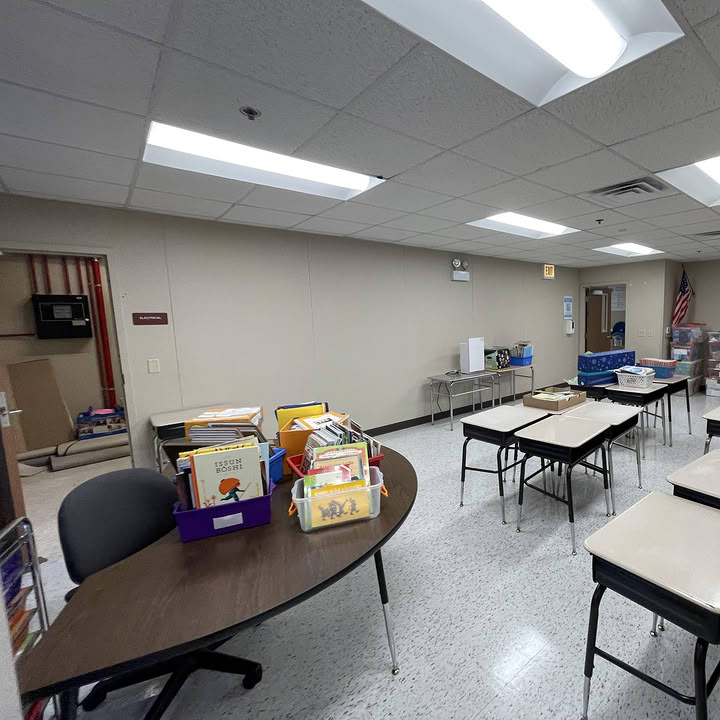
A tenth grade boy named Adan Perez raised his hand during my preterite versus imperfect lesson and asked if I was okay. I want you to picture where I was standing when he asked. I was at the whiteboard at the front of Room 214 at Cibola High School in Yuma, Arizona, at 1:47 PM on a Wednesday in October, and I was writing the imperfect ending "aba" in green dry erase marker on the board with my right hand, and my left hand was pressed flat against the front of my blouse over my sternum, and I could feel my whole face going the color of a nectarine. The classroom was 74 degrees. I know because Cibola runs its AC hard in October and I always have to bring a cardigan. I was not wearing the cardigan. The cardigan was draped over the back of my chair behind the desk because 15 minutes into fifth period the first wave had come, and I had taken it off casually the way a person takes off a cardigan when the room warms up, and I'd kept teaching. Then the second wave had come, and I had turned to face the board and written a sentence in the preterite, and I had felt the sweat break out on the back of my neck under my hair. The third wave was the one Adan Perez saw. He was in the second row, three seats from the door, a good kid with a beat up JanSport backpack and a Yuma Criminals hoodie he wore even in the desert heat. He raised his hand slowly, the way a 15 year old raises his hand when he's not sure if he should. And he said, "Miss, you good?" I said "sí, gracias, Adan, mira aquí," and I tapped the board where I'd been writing. I did not look at him. I did not turn around to face the class. I stood at that board with my back to 32 sophomores for the next 90 seconds pretending to fix a marker mark that didn't need fixing, and I waited for the wave to pass, and when it passed I turned around and I said "so the imperfect is what you were doing, and the preterite is what happened," and I finished the lesson, and I went to the teachers' lounge on my prep period and I sat in a folding chair and I stared at a bulletin board about the fall book fair. My name is Sylvia. I am 54 years old. I have been a Spanish teacher at Cibola High School in Yuma, Arizona for 19 years, and I have a son in college in Tempe, and a daughter who is a nurse in Tucson, and a husband named Manny who owns a small commercial refrigeration repair business, and until about 2 years ago I had never once in my life been embarrassed by my own body in a classroom. I want to tell you what those 2 years have been like, because I have not been able to tell anyone else. I started noticing something around my 52nd birthday. Just a little internal thermostat drift. I'd be at Manny's cousin's quinceañera in Somerton and everyone else would be fine and I'd be dabbing my forehead with a napkin at the head table. I'd be at parent teacher conferences in the school library at 6 PM and I'd have to keep excusing myself to the water fountain. I told myself it was Yuma. Yuma is one of the hottest towns in the United States. It's 108 degrees for 4 months of the year. My mother, God rest her, used to say "Yuma isn't hot, it's honest," which I never fully understood but I've said myself a hundred times. So for a while I told myself the heat was catching up with me. I'd lived in Yuma my whole life. Everybody hits a wall eventually, I said. Then it stopped being just the summer. It was February when I first woke up at 3 in the morning with my nightgown soaked through. Not sweaty. Wet. Like I'd been walking in the rain. Manny was asleep next to me and I got up quietly and I went to the bathroom and I took the nightgown off and I sat on the edge of the tub with a hand towel pressed against my chest for 20 minutes. I didn't tell Manny in the morning. I put the nightgown in the wash before he woke up. The next month I bought a small oscillating fan and I put it on my nightstand and I told him I liked white noise now. He laughed and said "since when," and I said "since I turned 52," and he laughed again and kissed my head. By March I had two fans. By May I was sleeping with a towel folded under my pillow because my hair was wet by 2 AM every night. By June I had switched to sleeping in cotton T shirts because the nightgowns weren't cutting it anymore. I went to see my primary care doctor, Angela, in July. Angela is 58 and she has been my doctor since 2013 and she is a good, kind, careful woman. I told her about the sweats. I told her about waking up 3 or 4 times a night. I told her about the tiredness. She asked me when my last period had been. I did the math and told her it had been 14 months. She smiled at me the way you smile at someone who has just answered their own question. She said "Sylvia, you're in it." She said the medical term. She said the average length. She said the range of what people experience. She said that for some women it's mild and for some it is not mild, and she was sorry, and she said there were a few things we could try if I wanted. She listed them. She was kind about it. She did not push. She left it up to me. I did not want any of the things on the list. My mother had been on hormones in the 90s for something else and she'd had a bad stroke at 66 and I know now that the two things may not have been connected, but I could not shake that association. I told Angela I wanted to think about it. I thought about it for 2 years. In those 2 years the sweats moved from nighttime to daytime. That's what I did not know was coming. The first daytime wave happened at Fry's on 32nd Street. I was in the produce section holding a bag of grapes and I felt a heat rise up my chest into my face like someone had opened an oven in front of me. I stood there holding the grapes for 45 seconds pretending to read the price sign until it passed. The second daytime wave happened at a bridal shower for one of Manny's nieces. The third was in the parking lot at Home Depot. The fourth was in the copy room at Cibola in September. By October I was having them 6 to 8 times a day, and one of them was during fifth period Spanish, and a tenth grade boy named Adan Perez raised his hand and asked me if I was okay in front of 32 sophomores. I want you to know what that felt like. It felt like everything I had built for 19 years as a professional had been sitting on top of my body being a body I could count on. And I had never noticed that. And now I couldn't count on it. And a 15 year old had noticed. I went home that Wednesday and I did not tell Manny. I did not know how to tell Manny. Not because Manny would have been unkind, Manny would have been the kindest man in Yuma about it. But because saying it out loud would have made it real in the house, and I wasn't ready for it to be real in the house. I sat at the kitchen table and I graded 32 sentences using the preterite and the imperfect and I made myself a piece of toast and I went to bed at 8:30. The next day I went to school and I stopped in the doorway of Renata Cárdenas's classroom before homeroom. Renata is the department chair of the World Languages department. She is 61. She teaches AP Spanish and she has been at Cibola for 27 years and she is the kind of colleague who other teachers go to when they don't know who else to go to. She had lost her husband, Emiliano, to a heart attack in 2018 and she had come back to work 3 weeks later and finished the school year without missing a beat, and I had watched her do it, and I had held a small piece of respect for her in my chest ever since. She was writing something on her whiteboard in blue marker when I stopped in her doorway. She saw me. She said "morning Silvia," and then she looked at me a little longer, and she put the cap on her marker, and she said "you okay." I did not mean to cry. I stood in her doorway and my eyes went hot and I said "Adan Perez asked me if I was okay yesterday during fifth period." She did not ask which fifth period. She did not ask which Adan Perez. She said "come in and shut the door." I shut the door. I sat down in the front row student desk. Renata sat on the edge of her own desk and she looked at me and she said "how long." I said "2 years, but bad for 3 months." She said "day time or night time or both." I said "both." She said "how many a day." I said "6 to 8." She said "have you told Manny." I said "no." She looked at me for a second. And then she said, "Silvia, meet me at the Denny's on 4th Ave after school. 4 PM. I want to tell you what got me through this." I said "you had this." She said "I had this for 4 years." I said "you never said anything." She said "no one ever does." I sat across from Renata Cárdenas in a booth at the Denny's on 4th Avenue in Yuma, Arizona at 4:15 PM on a Thursday in October, and she told me a story I want to tell you. She said when Emiliano had died in 2018 she had been 55 years old. She had been in the thick of the same thing I was in. Waking up 3 and 4 times a night. Daytime waves at parent teacher conferences. Standing at her own whiteboard with her back to the class waiting for her face to cool down. She had gone to her doctor and she had gotten the same list I got from Angela. She had said no to all of it, for the same reason I had said no. And then she had lost her husband, and she had come back to school 3 weeks later, and she had not had the emotional bandwidth to keep managing what her body was doing on top of what her heart was doing. She said her daughter Ximena, who is a hospital pharmacist in Phoenix, had come home that Christmas and had sat her mother down at the kitchen table with a stack of printed pages. Ximena had told her mother that the body has a whole system for keeping its own temperature steady. And that system runs on the blood vessels near the surface of the skin, opening and closing to release or hold heat. And that the signal that tells those vessels when to open and when to close is the same signal that controls all the vessels in the body, and it runs on something called nitric oxide, and it runs on the antioxidant environment inside the vessels, and both of those things get worn down over the years by something called oxidative stress. Renata said Ximena had explained it to her this way: your body used to know how to handle its own temperature. It used to open the vessels when you were warm and close them when you were cool and you never had to think about it. But when the hormonal signal changes in your 50s, the whole system is more sensitive. The vessels get thrown by every little thing. A warm drink can trigger a wave. Standing under bright classroom lights can trigger a wave. Feeling embarrassed can trigger a wave. And Ximena had said the system that controls the vessels, the nitric oxide signal, and the antioxidant environment that protects it, are both things that can be supported. Renata said Ximena had gone into her briefcase and pulled out an article. The article was about pomegranate. Specifically about the peel of the pomegranate, which most people throw away, which contains compounds called punicalagins. Ximena had underlined a paragraph explaining that the punicalagins have been studied for how they support the body's own antioxidant defenses, and how those defenses protect the nitric oxide signal that keeps blood vessels working the way they're supposed to. Ximena had also underlined a paragraph about aromatase, which is an enzyme in the body that is involved in how the body handles its hormonal signals, and how certain compounds in pomegranate, including one called ellagic acid, have been studied for how they interact with that pathway. Renata said she hadn't understood all of it. She said Ximena had said "Mom, you don't have to understand it, you just have to know what to look for." What to look for was this. Not pomegranate juice. Not pomegranate seeds. Not the fruit in the produce aisle. Not most pomegranate extracts either, because most extracts are standardized to ellagic acid, which is a compound found in a lot of fruits and doesn't reliably tell you if the punicalagins are actually in the bottle. Ximena had said the important compounds are the punicalagins, and they are specifically in the peel, and the extract has to be from the peel and standardized to the punicalagins for it to matter. Ximena had brought her mother a bottle a few weeks later. Auniva. Organic concentrated pomegranate peel extract. Standardized to punicalagins. 2 capsules a day. Made in the USA. Renata had been taking it for a little over 3 years. I sat there across the booth from her with a plate of untouched fries between us. I said "how long did it take." She said "the first month, nothing. Second month, I noticed that when I was folding laundry in the afternoon I hadn't taken off my sweater. That was it." She said "somewhere in the fifth week I woke up in the middle of the night and I realized I was cold. I hadn't been cold in bed for 2 years. I pulled a sheet over me. That was the first sign." She said "by month 3 the daytime waves were softer. They still came. They weren't gone. They were shorter, and I could keep talking through them, and I stopped feeling like I was going to have to leave the room." She said "by month 6 I could stand at my whiteboard in a cardigan and teach a lesson and not feel my whole self flip. I want to be honest with you, Silvia. It didn't feel like magic. It felt like something that had been turned up loud got turned down to normal." She said "I still get them. I got one last week. But they're the volume of a person, not the volume of a fire alarm." I asked her the question I had come here to ask. I said "did your doctor tell you about this." She said "no. My daughter told me. And I am not putting my daughter and my doctor in the same category. My doctor is doing her job. My daughter was doing something else." I sat with that. She said one more thing at that Denny's. She said "Silvia, if you order this, do not tell Manny for the first month. Not because you should hide it from him. Because I want you to be the one who notices first. I want you to know it was you who felt it." I ordered the bottle that night from my kitchen table after Manny had gone to bed. The URL Renata gave me was auniva.co/pom/5. I want to tell you what the next 8 weeks were like. Week 1, nothing. I took 2 capsules with my coffee at 6:15 AM and I went to school and I had 7 waves during the day and I woke up twice at night. Week 2, nothing that I could point at. Week 3, one thing. I noticed on a Thursday afternoon in the copy room at Cibola that I had been running the copier for 10 minutes and I hadn't felt anything come up. That used to be a place where I got at least one wave a day. I made 60 copies of a preterite worksheet and I walked back to Room 214 and I sat down at my desk and I thought "that was strange." Week 4, the sheet. I want to tell you about the sheet. I woke up at some point in the middle of a Sunday night early in November, and I was cold, and I pulled the sheet over my shoulders. I lay there for a minute with my eyes open in the dark. I had not pulled a sheet over myself in the middle of the night in 2 years. I had been kicking sheets off, not pulling them on. I lay there with my eyes open until I was sure I wasn't dreaming. Then I fell back asleep. I did not tell Manny in the morning. Renata's voice was in my head. Week 5, the daytime waves started getting shorter. They still came. They were not gone. But instead of a 45 second wave that made me stop talking, I would feel a 12 second wave I could talk through. My students didn't notice. Adan Perez did not raise his hand. Week 6, Manny noticed. We were in bed on a Saturday morning and he reached across and touched my forehead with the back of his hand the way he does when he thinks I might be getting a cold. He held his hand there and then he said "you're not sweating." I said "I know." He said "since when." I said "a little while." He looked at me a long time. He didn't ask what I meant. He said "Silvia, are you all right." I said "I think I might be." I told him then. About Adan Perez. About the doorway of Renata's classroom. About the Denny's on 4th Ave. About Emiliano. About Ximena. About the peel of a pomegranate. He held my hand through all of it. He didn't say a single word. When I was done, he said "why didn't you tell me any of this." I said "because I didn't know how to say it out loud." He said "next time." I said "next time." Week 7, I gave a lesson on the subjunctive and I stood in front of the class in a cardigan and I did not take the cardigan off during the entire 55 minute period. Week 8, we had a staff meeting in the library after school on a Thursday. It was 84 degrees outside and the library was warm because the AC in that wing struggles in the afternoon. I sat through 90 minutes of a curriculum discussion and I had one small wave in minute 47 and it lasted maybe 15 seconds and I kept taking notes. I want to be careful about what I am telling you. I am not telling you I am fixed. I am not telling you the waves are gone. I am not telling you my body is 45 again. I am telling you the volume has come down. I am telling you that a system that had been in the red zone for 2 years has moved out of the red zone, and my life fits inside my body again. I still get waves. Not 6 to 8 a day. Some days I get 1. Some days I get 2. They are short and they are the volume of a person and not the volume of a fire alarm, and I can keep teaching through them, and my students don't notice, and I don't excuse myself to the water fountain. I have not raised my hand in the classroom in 3 months to press it against my chest. I want you to understand the size of that for me. If you are a woman reading this at your own kitchen table at 9 PM, and you have a fan on your nightstand you told your husband was for white noise, and you have a cardigan you've stopped bringing to work because you know you're going to end up taking it off in front of 32 sophomores, and you have a doctor you like who has given you a list of things you have not been able to say yes to, I want you to know something. There is a Spanish teacher in Yuma, Arizona, whose department chair told her about her department chair's daughter, who told her about the peel of a pomegranate. And I have been on the other side of it for a little while now. And I am telling you what she told me. The company is called Auniva. The product is their organic concentrated pomegranate peel extract, standardized to the punicalagins that come from the peel, not to ellagic acid like most of the pomegranate products on the shelves. 2 capsules a day. Made in the USA. They give you 90 days. If it isn't working for you, you send the bottle back and they refund you every penny. That is what let me press the order button on a Thursday night in October at my kitchen table. You can order from the same URL Renata gave me. 👉 https://auniva.co/pom/5 P.S. I want to be specific about the peel one more time. I almost missed this myself. If you go to the grocery store and buy a bottle of pomegranate juice and drink a glass every morning, that is not what this is. The punicalagins are in the peel. Not the seeds and not the juice. Most extract products on the shelves are standardized to ellagic acid, which is a different compound found in a lot of fruits and doesn't reliably tell you what's actually in the bottle. Auniva standardizes to the punicalagins from the peel. That is the specific piece Ximena underlined for Renata. It is why Renata uses theirs. It is why I use theirs. P.P.S. About the 90 days. It is a real return guarantee. If it isn't working for you at day 89, you ship the bottle back to Auniva and they refund you. That is the piece that got me to press the button. I did not know if it was going to work for me. But I had already spent 2 years not knowing, and the risk of trying it was 90 days of not knowing more. P.P.P.S. The one thing I want to say to you, teacher to teacher, mother to mother, woman to woman, is this. Do not sit on your couch on day 5 waiting to feel something. That is not how this works. Renata told me and I say to you. You take the 2 capsules with your coffee. You live your Tuesday and your Wednesday. And one Sunday night, four or five or six weeks in, you pull a sheet over your shoulders in the dark, and you lie there with your eyes open, and you know. 👉 https://auniva.co/pom/5
Where the ad sends people
auniva.co
Feel Like Yourself Again
"This actually worked, thank you so much." - Emily T.
Learn more: auniva.co(opens in a new tab)