ThinkBodie
ThinkBodie Facebook ad: “Anxiety-Free”
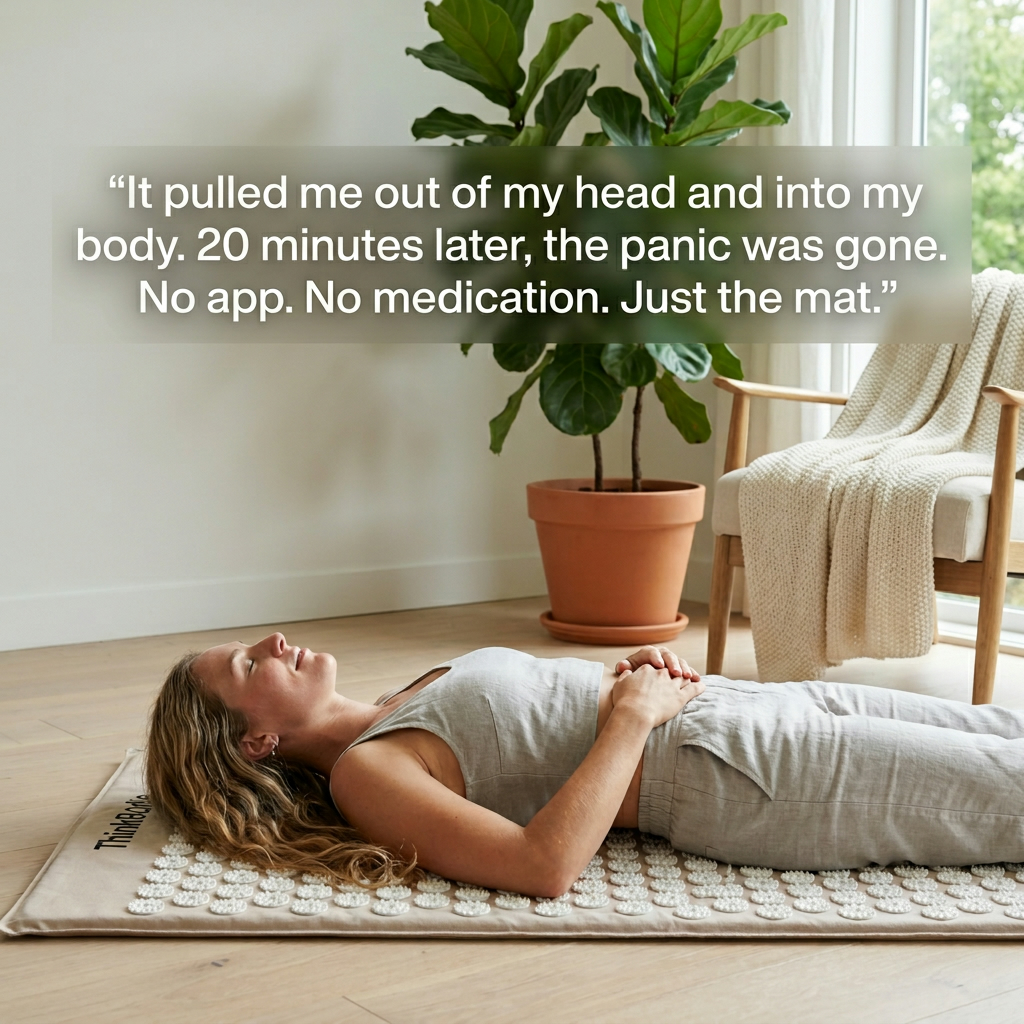
Ran for 2 days, from March 4 to March 6, 2026, the last day Crush saw it.
Run by ThinkBodie on Facebook. Crush is not the advertiser and does not verify its claims. See this ad in Meta's Ad Library(opens in a new tab)
Want an ad like this for your product?
Crush makes new ad images for your product from this ad: your logo, your product photo, your offer.
Trials from $19.95 USD, then $79.95 USD a month. Cancel anytime.
About this ad
- Meta Ad Library ID
- 1163386122402038
- Platforms
- Facebook, Instagram, Audience Network, Messenger and Threads
- Relaunches
- 0
Ad text
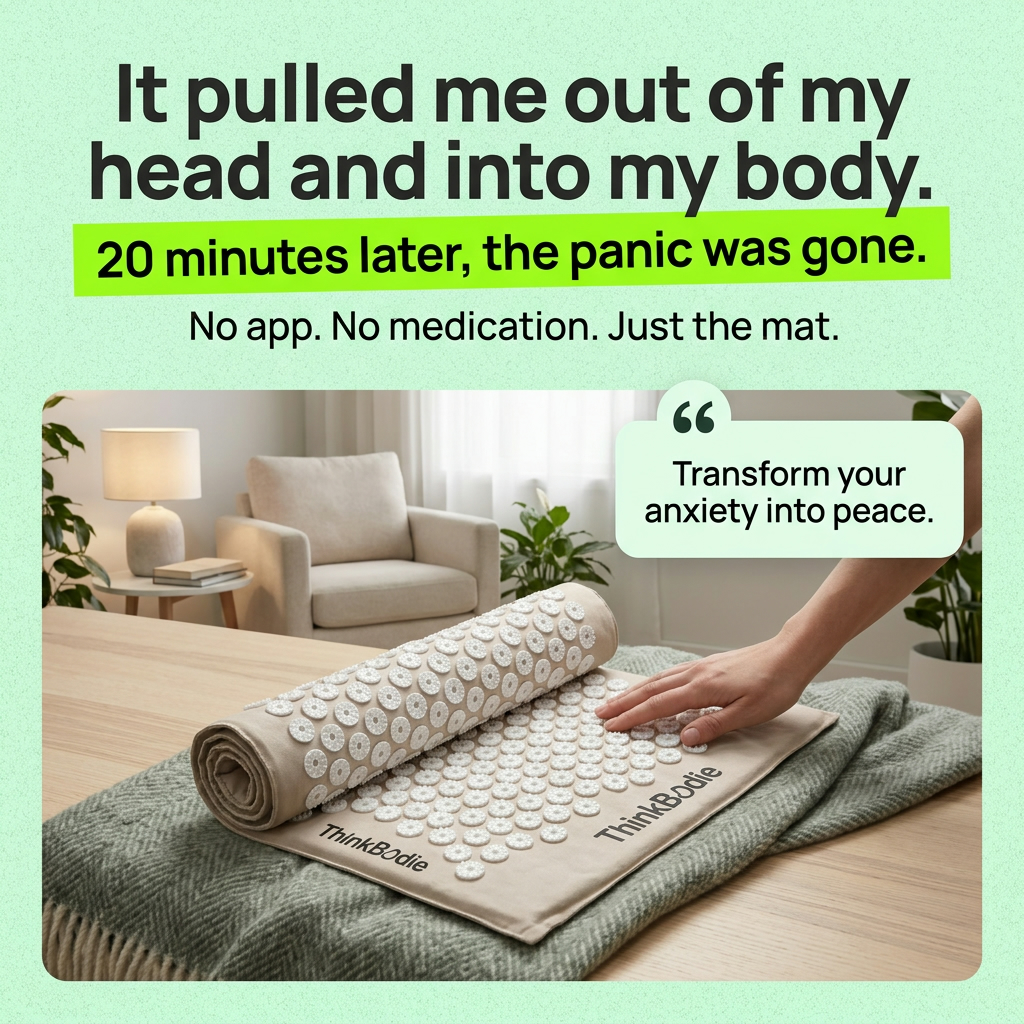
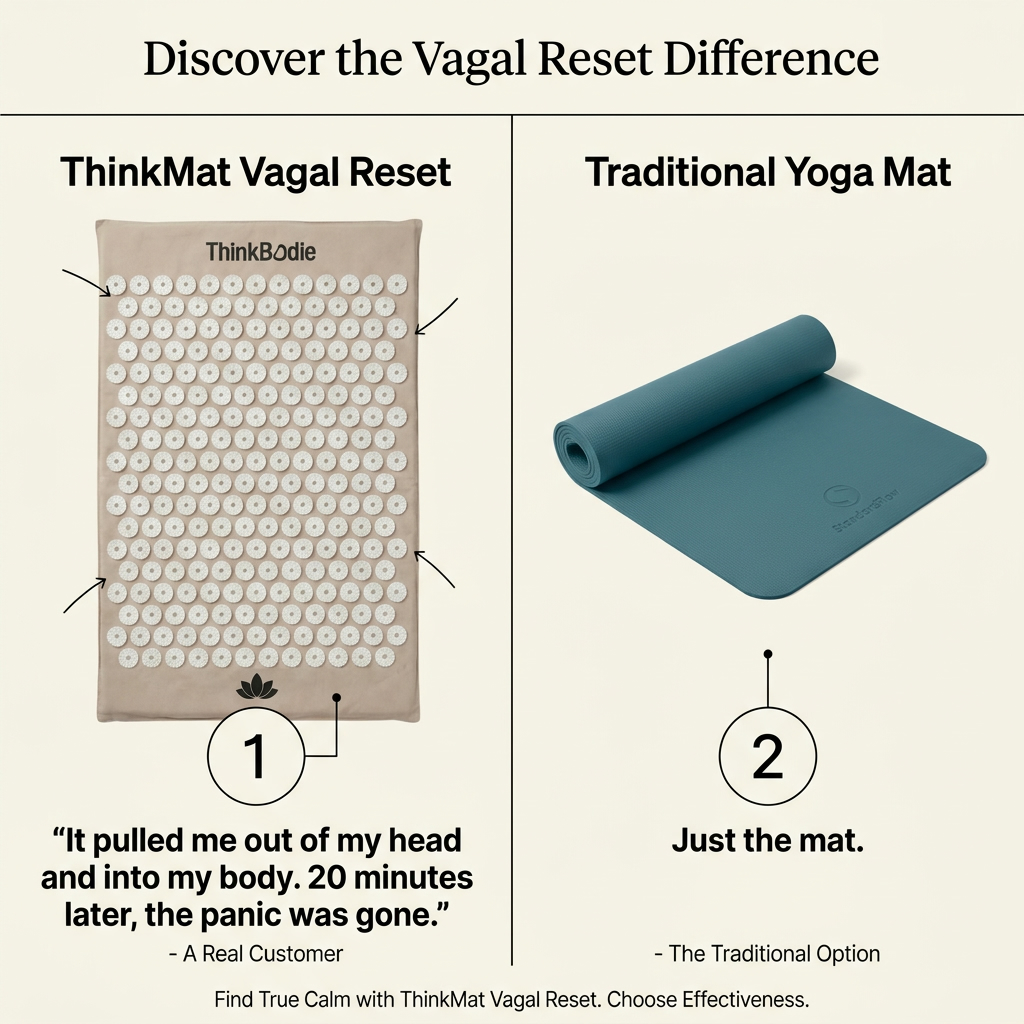
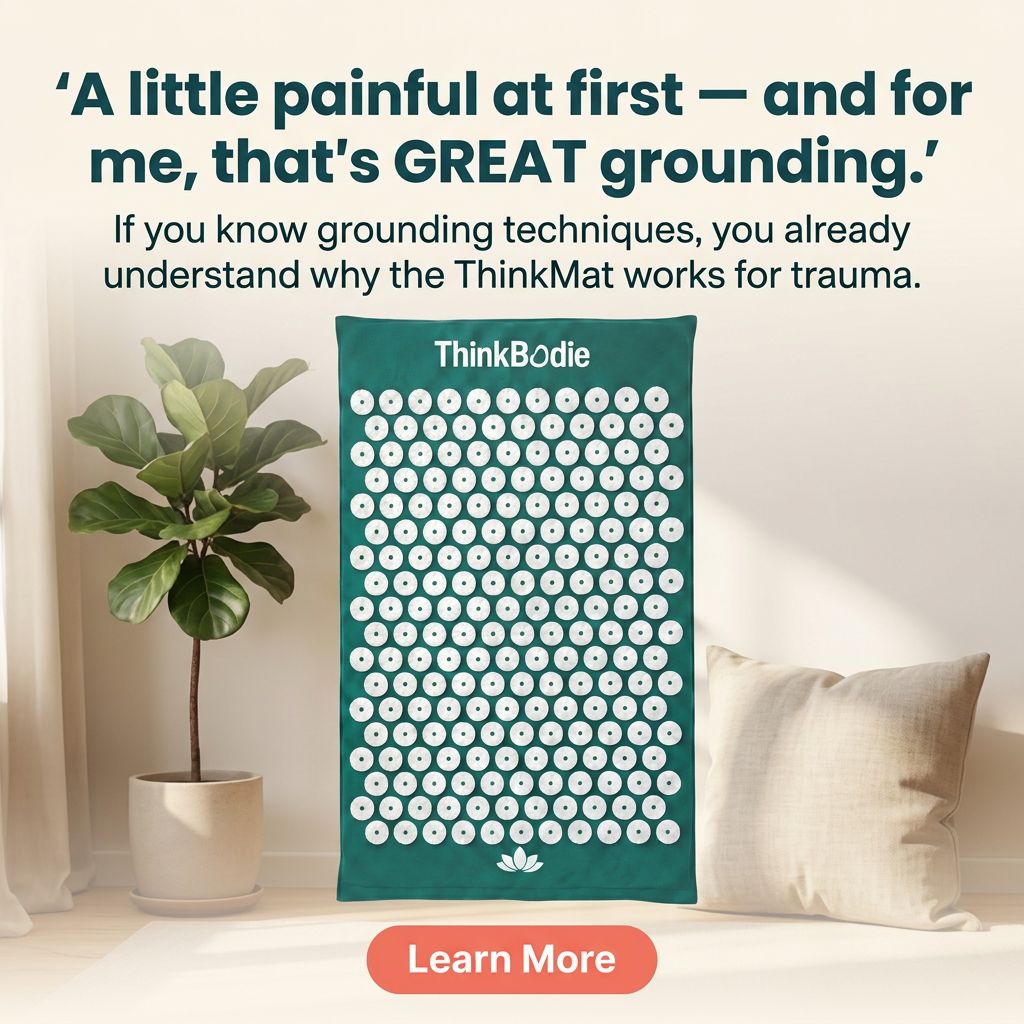
To People Who Take Anxiety Medication—But Still Have Physical Symptoms I Spent Three Years Trying To Calm My Anxious Mind... Until A Doctor Explained I Was Trying To Fix The Wrong Thing I was sitting in my car in the grocery store parking lot, hands shaking, unable to walk inside. Not because anything was actually wrong. Just... Tuesday. 2pm. Groceries. My therapist called it "generalized anxiety." My doctor wrote prescriptions. My sister sent me meditation apps. I tried breath work. I tried CBD oil. I tried eliminating caffeine, sugar, gluten—anything that might be "triggering" me. Nothing worked. The anxiety wasn't getting better. It was becoming my baseline. That low-grade panic humming under everything—waiting for emails, sitting in traffic, lying in bed at 3am with my mind spinning through tomorrow's disasters. I'd started to believe this was just who I was now. Broken. Unfixable. A person whose nervous system decided to malfunction somewhere between 35 and 38, and there was nothing I could do about it. Then my physical therapist said something that stopped me cold: "You're not anxious because you can't calm your mind. You're anxious because your body is stuck in emergency mode. And no amount of positive thinking is going to fix that." She explained that my nervous system—the actual biological wiring that controls my stress response—had been hijacked. That years of chronic stress (work deadlines, financial pressure, caregiving, the pandemic, notifications at all hours) had essentially rewired my body to interpret everything as a threat. My nervous system was stuck in "fight-or-flight." Permanently. And the therapy? The meditation? The breathing exercises? They were trying to calm my mind. But they couldn't reach my nervous system. That's when she told me about something called the vagus nerve—the biological "off switch" for stress that most people have never heard of. And a simple, physical way to activate it that had nothing to do with mindfulness or medication. What happened next changed everything. Not gradually. Not "I felt a little calmer over time." I mean the first time I tried it, I lay there crying—not from pain, but from relief. From feeling quiet for the first time in three years. I need to back up and tell you how I got to that physical therapist's office in the first place. Because three years earlier, I was fine. Normal levels of stress. Normal sleep. I could sit through a work meeting without my heart racing. I could make dinner without feeling like the walls were closing in. Then everything started piling up at once. My mom got sick. My company restructured. The pandemic hit. My son started having trouble at school. Normal life stuff—except it all happened in an 18-month window, and my body never got a chance to recover between crises. By month six, I wasn't sleeping through the night anymore. By month twelve, I was having what I thought were heart attacks in the middle of Tuesday afternoons. By month eighteen, I couldn't remember what "calm" felt like. My doctor ran tests. Everything came back normal. She suggested Lexapro. It took the edge off, but I still felt like I was vibrating at a frequency no one else could hear. Still woke up at 3am with my jaw clenched and my mind already catastrophizing about things that hadn't happened yet. I tried therapy. My therapist was kind, competent, evidence-based. We did cognitive behavioral therapy. We worked on my "thought patterns." She taught me to challenge my anxious thoughts, to reality-test my fears. It helped. A little. For maybe an hour after our sessions. But the anxiety always came back. Because my thoughts weren't the problem—my body was living in a state of constant emergency, and my thoughts were just trying to explain why. I tried everything I could find on the internet: Ashwagandha supplements. ($240 over three months. No change.) Headspace meditation app. (Fell asleep during every session from sheer exhaustion, woke up more anxious.) A weighted blanket. (Made me feel trapped.) Cutting out coffee. (Now I was anxious and tired.) A $2,000 mattress because "maybe I just needed better sleep." (I didn't sleep any better.) I spent over $8,000 trying to fix myself. Nothing worked. The worst part wasn't the money. It was the creeping realization that maybe this was permanent. That I'd somehow broken my own brain, and now I'd just have to white-knuckle my way through the rest of my life, pretending I was okay while internally screaming. That's the headspace I was in when I threw my back out reaching for a box on a high shelf. My physical therapist—Dr. Sarah Chen—was treating me for the back spasm. But during one session, she noticed my breathing. Shallow, rapid, high in my chest. She asked if I'd been feeling stressed. I laughed. The kind of laugh that's almost crying. "I've been stressed for three years straight." That's when she said the thing that changed everything. She explained that my vagus nerve—this massive nerve that runs from my brainstem down through my chest and abdomen—is basically the biological off-switch for the stress response. When it's activated, it tells your body: You're safe. Stand down. Return to normal. But chronic stress can essentially break that switch. Your sympathetic nervous system (fight-or-flight) gets stuck in the "on" position. And your vagus nerve stops doing its job. "That's why nothing you've tried has worked," she said. "Therapy addresses your thoughts. Medication adjusts your brain chemistry. But neither one is retraining your actual nervous system to exit emergency mode." "So what do I do?" I asked. She pulled out what looked like a yoga mat covered in plastic spikes. I'm not going to lie—my first thought was: This is the dumbest thing I've ever seen. She explained that acupressure stimulates thousands of nerve endings simultaneously. That intense stimulation triggers a cascade: endorphin release, increased circulation, and—most importantly—vagus nerve activation. It forces your parasympathetic nervous system to engage. "It's not about relaxing your mind," she said. "It's about giving your body a physical reset." I took it home. I didn't expect anything. That first time, I lay down on it in my bedroom at 9pm. The sensation was intense—thousands of pressure points against my back. Not quite pain, but close. My first instinct was to get up. But I stayed. Within two minutes, I felt warmth spreading across my entire back. My breathing started to slow down—not because I was "trying" to breathe slowly, but because my body just... did it. Five minutes in, the tightness in my chest released. That constant knot I'd been carrying between my shoulder blades for three years started to dissolve. Eight minutes in, my mind got quiet. Not "I'm trying to meditate and force my thoughts to stop" quiet. Just... quiet. Like someone turned down the volume on the static that had been running in the background of my brain since 2019. I lay there for twenty minutes. When I got up, I felt like I'd woken up from anesthesia. Loose. Warm. Present in my body in a way I hadn't been in years. That night, I slept seven hours straight. No 3am wake-up. No jaw clenching. No dreams about drowning. I woke up the next morning and realized I wasn't bracing for the day. I was just... awake. Normal awake. The kind of awake I used to be. I've been using it every night for eight months now. The constant background hum of anxiety? Gone. The 3am spiral sessions? Gone. The feeling like I'm always waiting for something terrible to happen? Gone. I'm not "managing" my anxiety anymore. I don't have to. Because my nervous system isn't stuck anymore. And here's what I need you to understand: This isn't about me being special or doing it "right." This is about biology. Your vagus nerve wants to do its job. It just needs the signal. If you've tried everything—if you've spent years and thousands of dollars searching for something that works—this might be the piece you've been missing. Not another way to manage your thoughts. A way to reset your actual nervous system. The tool that gave me my life back costs less than two therapy sessions. I don't know how long you've been stuck in fight-or-flight. But I know what it feels like to believe you'll never feel normal again. And I'm telling you: There's a way out. A real, physical, biological way out. You just have to give your body the reset it's been begging for.
Where the ad sends people
thinkbodie.com
Anxiety-Free
ThinkBodie
Shop now: thinkbodie.com(opens in a new tab)