
Inactive· since Jun 30, 2026
- 71
- days it ran
- 0
- relaunches
Ad copy
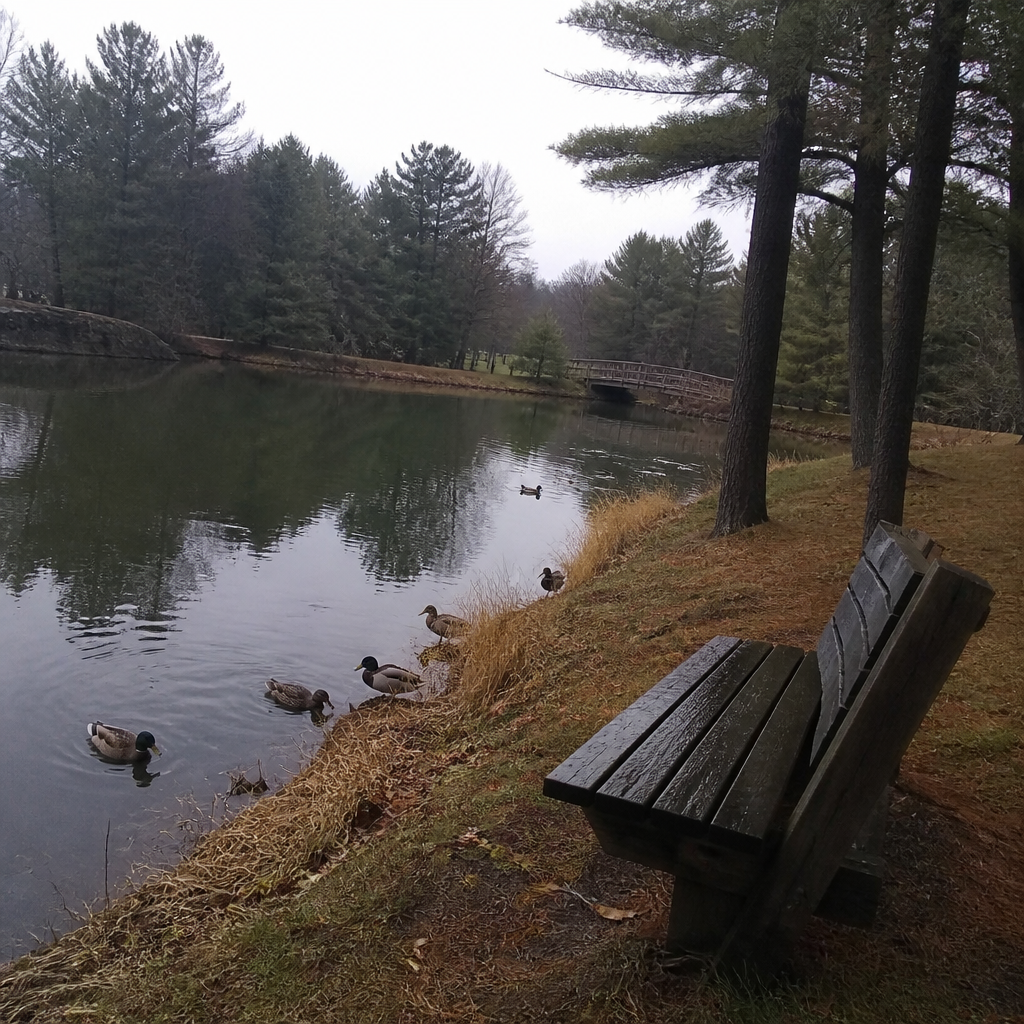
My granddaughter asked me last summer why I don't take her to the park anymore. I was sitting in the kitchen with my feet up on the other chair because I'd been on them for maybe 11 minutes putting away groceries and I was already done. Wiped. The kind of tired where your body just quietly informs you the day is over, at 10 in the morning, after carrying four bags from the car. She climbed up in my lap. She was 6. She smelled like the cherry chapstick her mom lets her wear because it keeps her from biting her lip when she gets nervous. She said, "Grandpa, are you sick?" I didn't answer her right away. Because the honest answer was I don't know, baby, and the doctors don't know either, and your grandma cries about it in the bathroom when she thinks I'm watching the game, and I haven't walked you to the duck pond in 14 months because by the time we'd get there I wouldn't have anything left to get us home. So I just kissed the top of her head and said, "Grandpa's batteries are just low today, honey." She accepted that. Kids do. They accept the strangest things if you say them with enough certainty. Then she climbed down and went to find her grandmother, and I sat there with my hands on my knees and thought, well. That's it then. That's the day my granddaughter figured out something is wrong with me. I'm Walter. I'm 56. I live in Bangor, Maine, in the same gray ranch house my wife Linda and I bought in 1994 when our oldest was still in diapers. I delivered mail in this town for 32 years. Thirty-two years. I walked routes through ice storms that closed the schools. I walked through blackfly season in the woods off Stillwater Ave when the bugs got in your ears and you just kept walking because the next mailbox isn't going to wait for you. I walked the day after my father's funeral because I'd already taken my bereavement and the route still had to go out. My energy was the most reliable thing about me for three decades. I was the guy who never sat down. And now I was done after 11 minutes of groceries. Let me back up and tell you how it started, because if you're reading this and something like it is creeping up on you, I want you to know what I wish I'd known. It didn't start with the exhaustion. It started with the sleep. I'd always slept like a man who'd walked 14 miles — out cold, sunup to alarm. Then, somewhere around 53, I started waking up. Three in the morning, on the dot, wide awake, my mind running everything — the route I didn't have anymore, Linda's car, the gutters, my mother in her last years. I'd lie there till five and get up feeling like I'd never been to bed. Then the mornings got stiff. Hands, lower back, the first half hour on my feet, like the whole machine had to warm up before it would carry me. I figured, fine, 32 years of pavement, that's the bill. Then the exhaustion moved in for good. And here's the part nobody warned me about. It got worse after I retired. You'd think retirement would be when you finally rest. After 32 years of pounding pavement, you'd think hanging up the boots would feel like a vacation. That's what I told everyone at my party — "finally getting my rest." What actually happened was the opposite. The minute I stopped moving 14 miles a day, my sleep fell apart completely and the tiredness swallowed me whole. By 2 in the afternoon I was gone. I'd "rest my eyes" in the recliner and lose two hours. I was drinking coffee from breakfast straight through to supper. And there was a fog over the whole day — I'd walk into the garage and forget the garage, lose the back half of a sentence at the table and have to wave my hand and say never mind. I saw doctors. Three of them, over a couple of years. And I want to be fair about this, because it's the most important part of what I'm telling you: they did right by me. They ran the bloodwork. Checked my thyroid, my heart, my sugar, my iron — the things this kind of exhaustion can sometimes actually mean. They ruled the frightening stuff out, and that mattered. But then it was the same thing each time, in slightly different words. "It's stress. It's age. You just retired, your whole routine's gone, your sleep's a mess. Cut the caffeine, set a bedtime, walk more." One of them called it deconditioning and told me to walk. So I walked. It didn't touch it. They weren't wrong, exactly. The scary things were off the table, thank God. But there was nothing in any of those exam rooms for the actual problem, which was a body that had spent 32 years getting up before dawn and had simply forgotten how to shut off and rest. By the fall of 2023 I was lying awake most nights, exhausted and wired at the same time, and one night Linda asked if I was okay and I said I was fine and then I went into the bathroom and stood in the dark and cried like a kid. Quietly. Because I didn't want her to hear. I'm not telling you that for sympathy. I'm telling you because I know somebody reading this has stood in a dark bathroom too. You know who you are. Linda figured it out eventually. Wives do. She started leaving little things around the house. A book from the library about sleep. A printout from some website about cortisol and stress and the body that I'd never heard about and didn't want to read. I put it under the mail on the counter and let it get buried. Because here's the thing nobody tells you about getting older. You don't want it to have a name. If you're just tired, it's still just being tired, and you can pretend it's a phase, pretend the next doctor will fix it. The minute it has a name, it has a story, and the story you're afraid of is the kind that ends with you fading into a recliner for good, a ghost in your own house. So I didn't read the printout. I just lived with it. And I stopped taking my granddaughter to the park. The thing that finally broke it wasn't a doctor. It was Ray Donnelly. Ray was my supervisor for the last 17 years I was at the post office. He retired three years before me. He'd had bad knees and a bad back and the man dragged himself around like he was carrying a sack of sand the whole time I knew him — gray, worn out, asleep on his feet by mid-afternoon. The day he retired I remember thinking, that man's going to be in a recliner inside of two years. My retirement party was in October 2022. Ray came. And he walked across that union hall like a different person. Lighter. Awake inside himself, telling a story to my brother-in-law and using his hands the way people do when they've actually got energy to spare. I didn't say anything that night — I was on my feet for four hours and so exhausted I was sweating into my dress shirt and trying not to show it. But I thought about Ray all winter. Then this past April I ran into him at the True Value on Hammond Street, buying paint, standing on that concrete floor easy and rested, no shifting, no dragging. I said, "Ray. You look 10 years younger than the last time I saw you." He said, "Walt. I feel 10 years younger." I said, "What's the trick?" He laughed and said, "There's no trick. There's one thing I started about 15 months ago and everything changed." I stood in that paint aisle with him for 26 minutes. A guy needed to get past us to the rollers and I just sidestepped him without breaking eye contact, because I needed to hear it. He told me his daughter, who works at a hospital down in Portland, had been after him for years about something. He'd ignored her — "I'm not a vitamins guy." Then his wife had a small health scare in early 2024, his daughter came up for a week, and she sat them both down at the kitchen table and said, "I'm not asking anymore. You're trying this." Fifteen months on it, he told me, his sleep had come back inside the first month. He'd lost weight because he finally had the energy to move again. His wife slept through the night now too, because he wasn't up pacing the kitchen at three. I asked him what it was. He said, "Walter, take a picture of the bag. I keep one in the truck." We walked out to his Silverado. It was Harmonia. I'd never heard of it. That's the point where I want to slow down, because I spent the next 11 days reading everything I could find about it, and I want to tell you what I learned in plain English. No jargon. No selling. Just what makes sense once somebody explains it. Here's what I didn't understand about myself until I read about this. It comes down to a stress hormone called cortisol. In a body that's running right, cortisol is high in the morning to get you up and going, and it falls off at night so you can wind down, sleep deep, and repair. That rise and fall is the rhythm that lets you rest. It's the off-switch. But run a body hard for decades — stress, broken sleep, 32 years of getting up before the sun and never truly winding down — and that off-switch can quit working. Cortisol stays up when it's supposed to come down. The body never gets the signal to stand down. So you lie awake at three with your mind going. You're exhausted but you can't truly rest. And when you finally do go under, it's in a recliner at two in the afternoon, because a system that's been red-lining that long grabs sleep wherever it can. That was me. Every doctor had been treating the edges — the caffeine, the bedtime, the walking. Good advice, none of it wrong. But nothing was helping my body bring that rhythm itself back where it belonged. It was like a breaker stuck in the on position, and everyone kept telling me to turn off a few lamps. So I read about what was actually in Ray's bag — the ingredients, one at a time, including the parts the research hedges on, because I'd want you to have those too. KSM-66 ashwagandha is the one with the most behind it — a specific standardized extract that's been through a number of randomized controlled trials, several showing lower cortisol and lower self-reported stress against a placebo. I'll be honest with you: studies are studies, not a promise about you or me or Ray. But of everything in it, that's the one I felt best about. Phosphatidylserine is the one that caught me for the three-in-the-morning problem specifically. There's research it can blunt an oversized cortisol response, some of it aimed right at the evening and overnight window — exactly when mine was misfiring. The cheap stuff doesn't bother to include it. Rhodiola rosea has research around fatigue and feeling worn down by stress — the "done by two o'clock" feeling. I'll tell you plainly the evidence there is more mixed than the ashwagandha evidence. Then L-theanine, the calm-but-not-drowsy thing in tea, plus myo-inositol and turmeric, each with smaller stories around settling the nervous system, the stress response, and everyday inflammation. None of it is a drug. None of it does anything dramatic in an afternoon. What the research actually supports is slower and quieter: support for a stressed-out system, support for sleep quality, support for the body's own ability to come back down. That's the honest size of it. And it came with a money-back guarantee, which is the reason I felt safe trying it. I ordered it that night, April 22nd. I remember the date because Linda came in while I was on the website, looked at the screen, and said, "What's that?" and I said, "Ray's thing." She didn't ask another question. She just kissed the top of my head and went to bed. It came four days later in a small brown box. A scoop in a glass of water in the morning. I took my first one with my coffee on a Tuesday. I'm going to be honest about what happened next, because the temptation in this kind of story is to say "and the next morning I was a new man," and I won't do that to you. The first week, nothing. The second week, I slept through. I woke up one morning and it was 6:15 and I realized I hadn't been up at three. I lay there almost suspicious of it, waiting for the catch. It happened again the next night, and the next. The third week, the afternoon wall stopped knocking me out. I made it to suppertime without the recliner taking me, on one cup of coffee instead of a pot. And the morning stiffness eased — not gone, I'm 56 and 32 years of routes are allowed to leave a mark — but I stopped dreading the first half hour on my feet. The fourth week, I walked my granddaughter to the duck pond. I want to tell you about that walk, because it's the one I didn't think I was ever going to take again. The duck pond is four-tenths of a mile from my house. We used to do it every Sunday when my kids were little — down a side street, through a stand of pines, across a wooden footbridge the city put in years ago, to a bench where you watch the ducks fight over Wonder Bread. I picked her up at 9:15. Her name is Hazel and she's 7 now. She had on a yellow raincoat even though it wasn't raining, because she'd just gotten it for her birthday and wanted to wear it everywhere. She didn't ask if I was sick this time. She just took my hand and said, "Grandpa, can we go to the ducks?" And I said yes. Without thinking. The way I used to say it. We walked the four-tenths of a mile. We stopped on the footbridge so she could throw bread to a mallard she'd named Henry on a visit two summers ago. She remembered which duck was Henry. I didn't, but I pretended I did. I sat on the bench, and I wasn't fading, and I wasn't wishing I was home, and I had what I needed to get us both back. I'm not going to tell you I felt 25. I felt 56. I felt tired in the way a man who's walked 32 years of mail routes is allowed to feel tired. But I was awake. I was there. I was present for the whole thing instead of counting down to a couch. Hazel sat next to me and threw the last of the bread and said, "Grandpa, your batteries got charged up." I have no idea where she got that. Maybe Linda told her what I'd said. Maybe she just remembered. Kids remember things. I said, "Yeah, baby. Grandpa's batteries got charged up." She nodded like that was a perfectly normal thing for a grandpa to do. That was a year ago. I'm still on it, a scoop every morning with my coffee. Linda started taking it too about six months ago, because her hands had been doing a stiff thing in the mornings she'd never told me about and she figured if it was good enough for Ray it was good enough for her. I'm not going to make you a list of promises. I don't know your sleep. I don't know your story. I don't know how long you've been waking up at three or fading at two or feeling like your batteries are dead by mid-morning. But I know what it's like to stand in a dark bathroom at two in the morning, wired and exhausted and scared. And I know what it's like to walk your granddaughter to the duck pond a year later. If you're somewhere in between those two things, I want to tell you there's a way the body can wake back up. Not a miracle. Not a guru. The off-switch that quit can be supported. The rhythm that's been gone for years doesn't have to stay gone. But here's the most important part, and it isn't the powder. Go to your doctor first. I mean it. Get the bloodwork. Let them rule out the real things that bone-tired and foggy can sometimes mean — I did, and the peace of mind alone was worth it. This is for what's left over after the frightening stuff is off the table: the stress, the broken sleep, the wrung-out. It is not a substitute for your doctor, and anyone who tells you to skip that step is selling it to you the wrong way. It didn't work in a day for me, and it might not be your thing at all. The research behind the ingredients is real, but it's research, not a guarantee about you. What made it easy to try was the guarantee. Harmonia gives you 30 days, money back, no fight, even if the bag's near empty. Try it the full month. If you're still waking at three and fading by two, you send it back and you're out nothing but the time. That's not nothing, by the way. The time. I lost a year of duck pond walks before Ray ran into me at the True Value. A year of my granddaughter thinking Grandpa was sick. A year of my wife crying in the bathroom when she thought I wasn't watching. I can't have that year back. What I can have is the year ahead. And so can you. 👉 https://www.drinkharmonia.com/cortisol P.S. The thing about this kind of exhaustion is it doesn't stay still. It either gets supported or it keeps grinding you down. I waited eight months taking advice that addressed the edges before I found the piece nobody had handed me. Those are eight months I'll never get back. If you're waking at three, fading by two, lying there wired and wrecked at the same time — please don't wait eight months to do something about it. P.P.S. Ray told me one thing at the True Value I want to repeat. He said, "Walter, you'll feel it before your energy shows it." What he meant is the sleep changes first. Then the mood. Then the energy. Because when the rhythm comes back, the deepest-worn part of you gets fed last. Don't quit at week two because you're still dragging. Week two is the sleep coming back online. Weeks three and four are when the daylight starts to follow. P.P.P.S. Harmonia has that 30-day money-back guarantee. Send the bag back, get your refund, no hoops. Think about what that tells you about a company. The advice that didn't work didn't come with a guarantee. The year I lost didn't come with a refund. They'll give you a month to find out, with nothing on the line but the postage. P.P.P.P.S. I keep a backup bag in the kitchen drawer now — one for me, one for Linda — and I order the next one when the current one's half gone, because the mornings I miss it, I can tell by the afternoon. If you've been running on empty for a while and you've finally decided to do something about it, decide once. Order once. Take it with your coffee tomorrow. Maybe walk your own version of the duck pond next month.
My granddaughter asked why I don't take her to the park anymore.
Discover Harmonia—the smart cortisol cocktail that lowers stress, balances hormones, improves sleep, and boosts energy. Vegetarian, natural & USA-made.
LEARN MORELike this ad? Make it yours.
Crush rebuilds this exact creative around your product — your brand, your colors, your offer — in about a minute.