
Inactive· since May 29, 2026
- 15
- days it ran
- 1
- relaunches
Ad copy
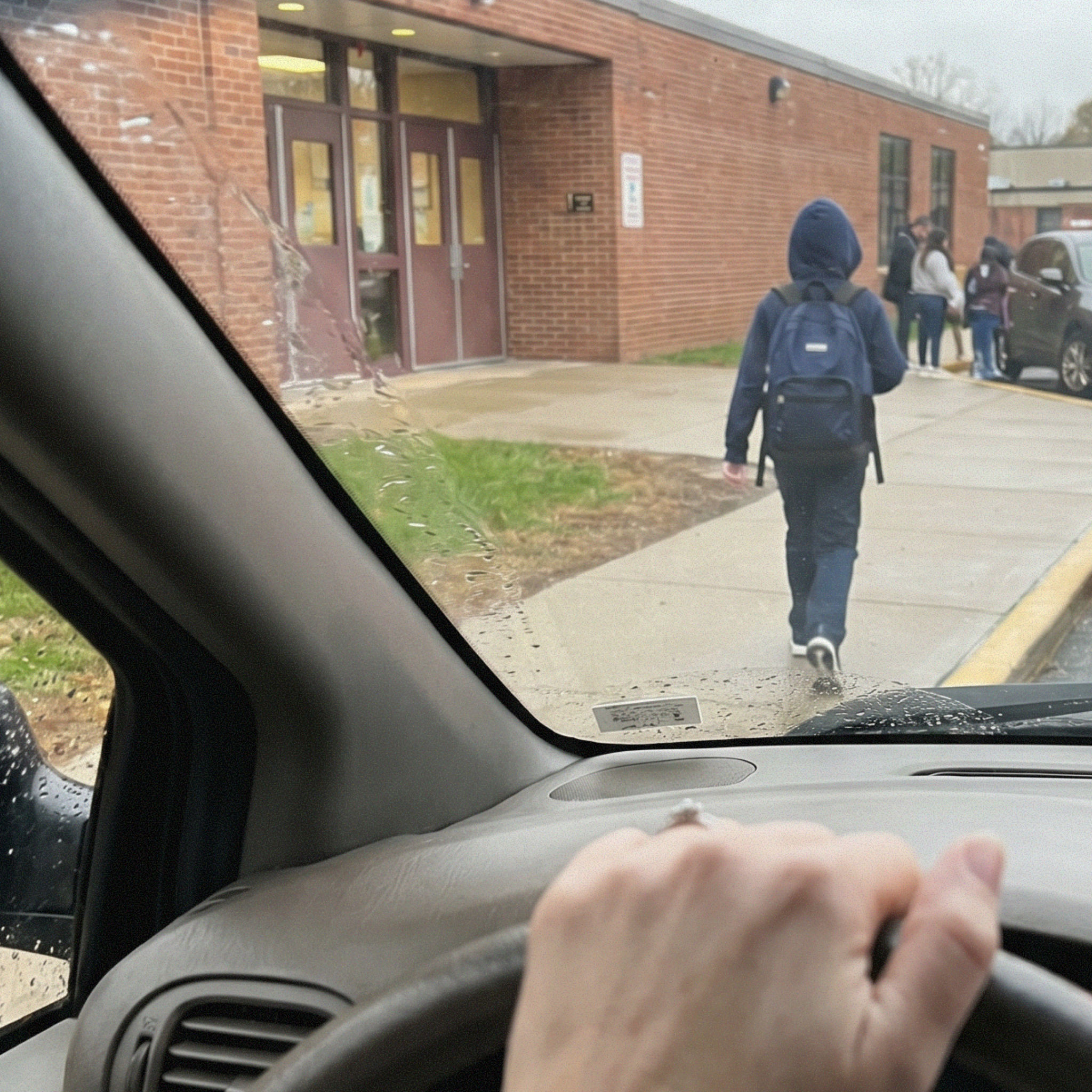
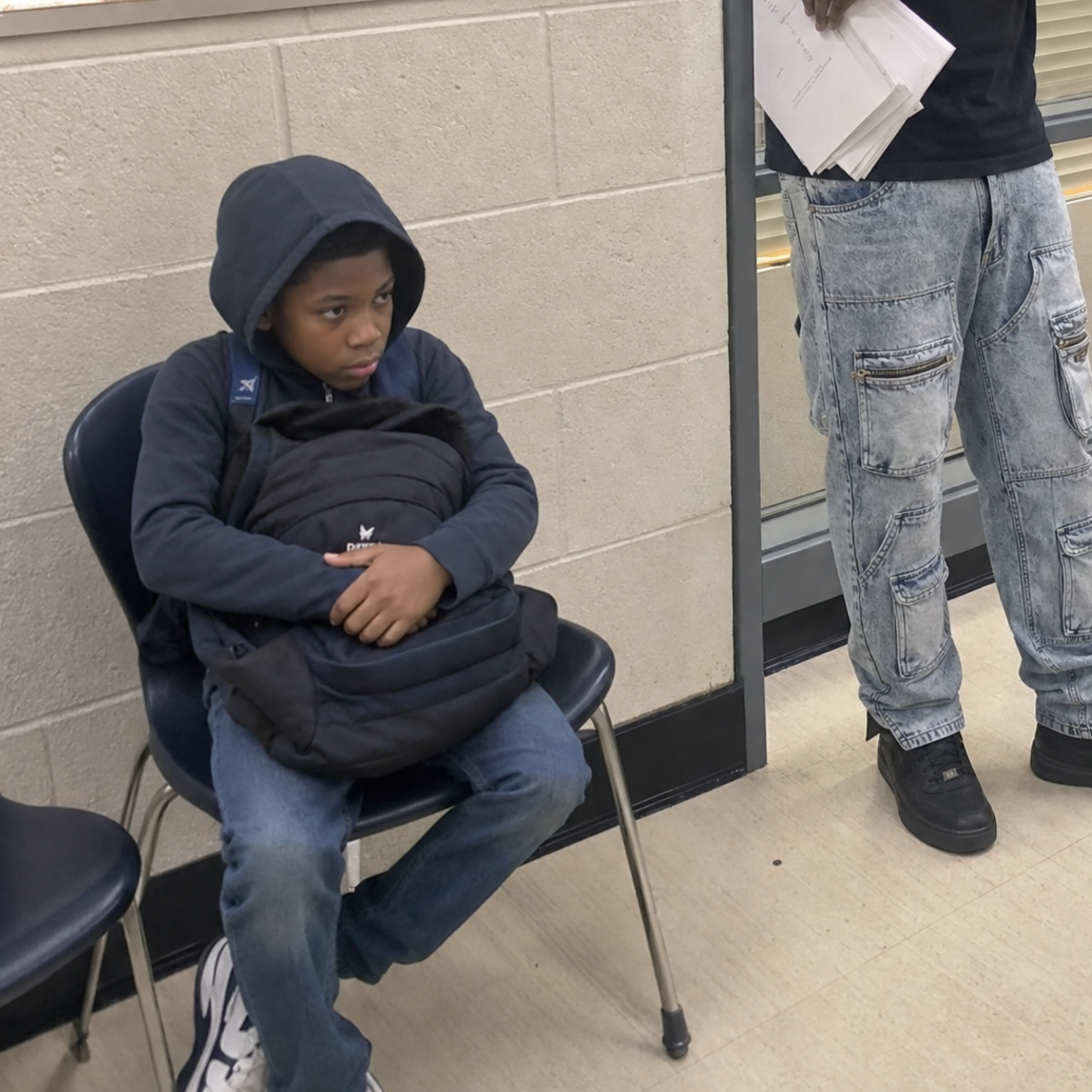
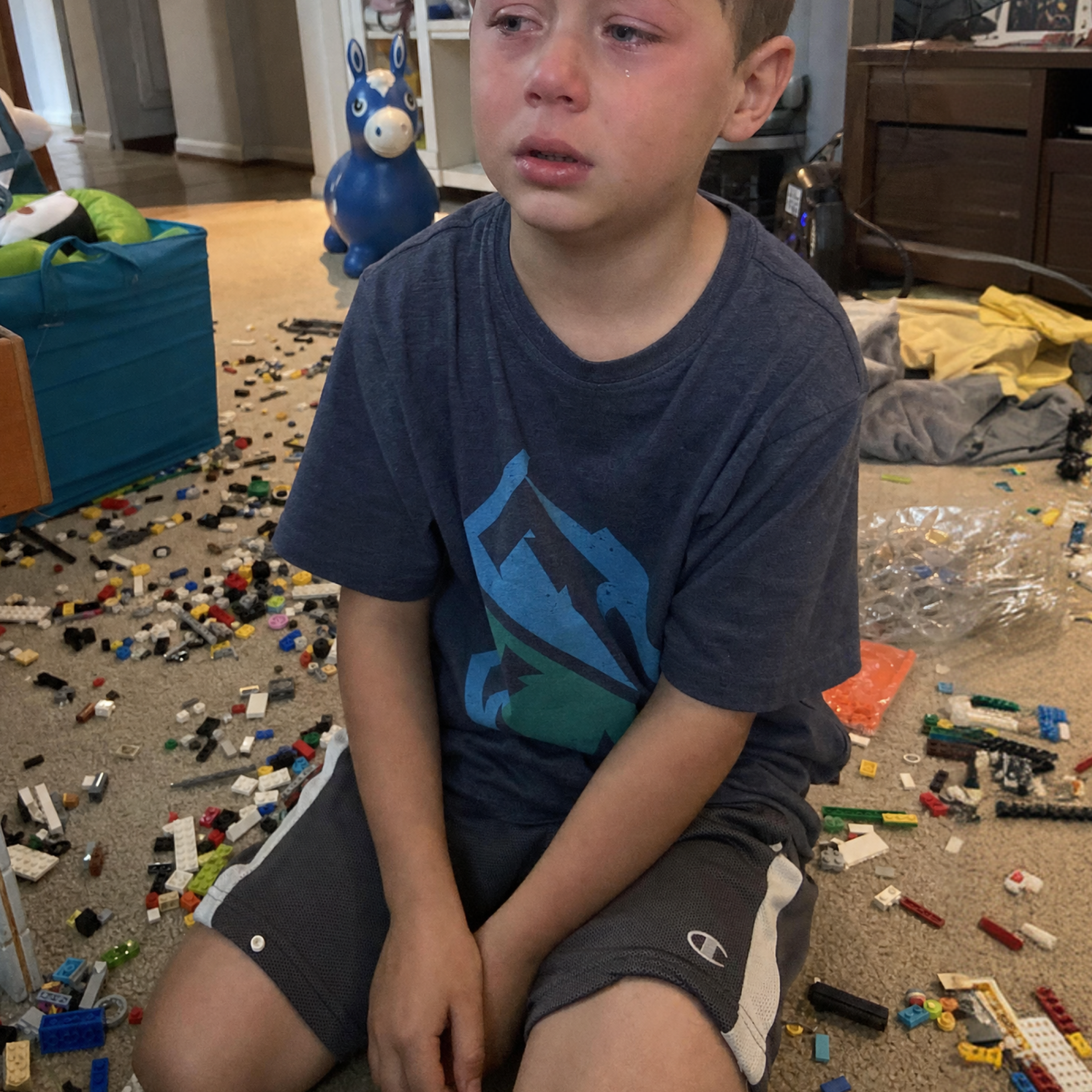
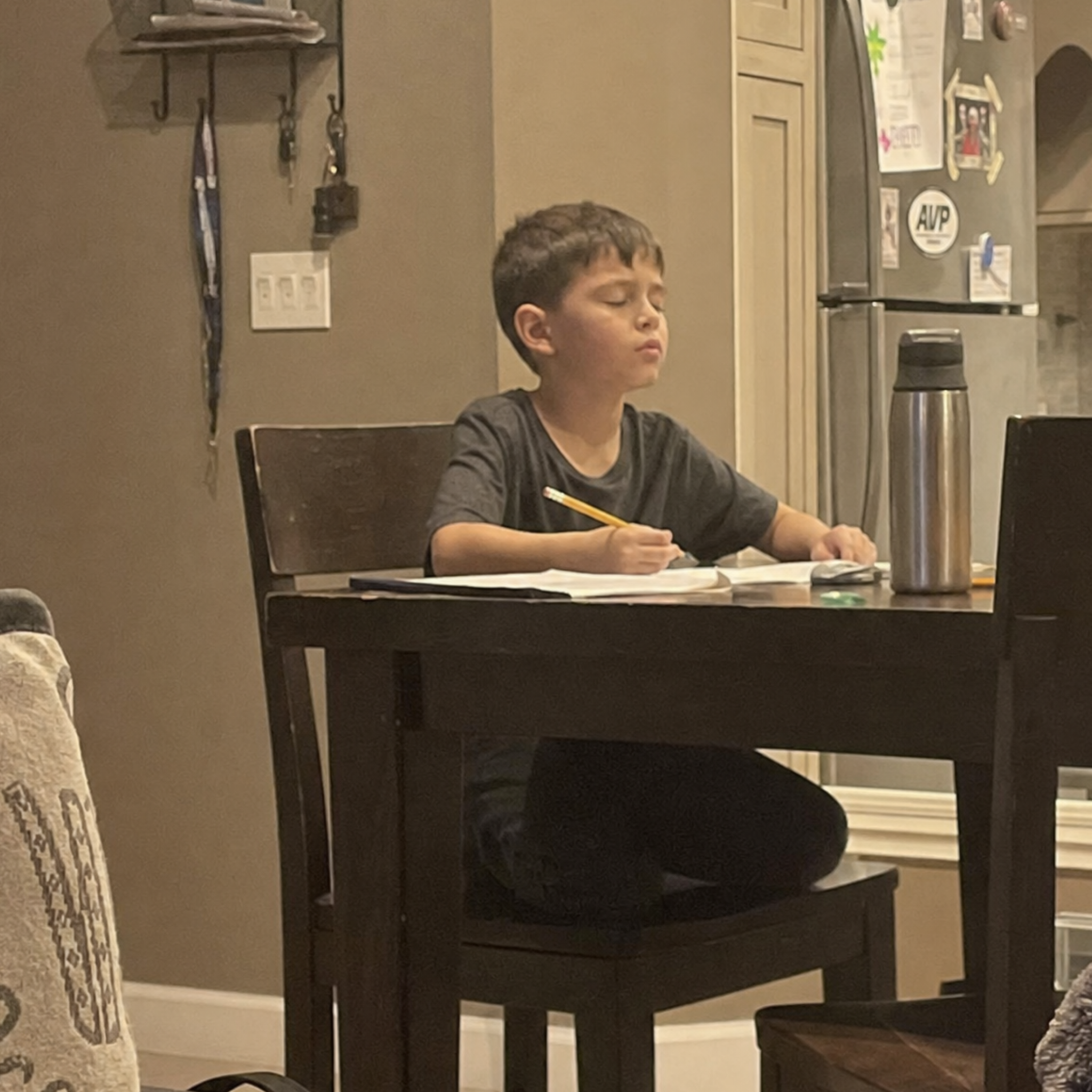
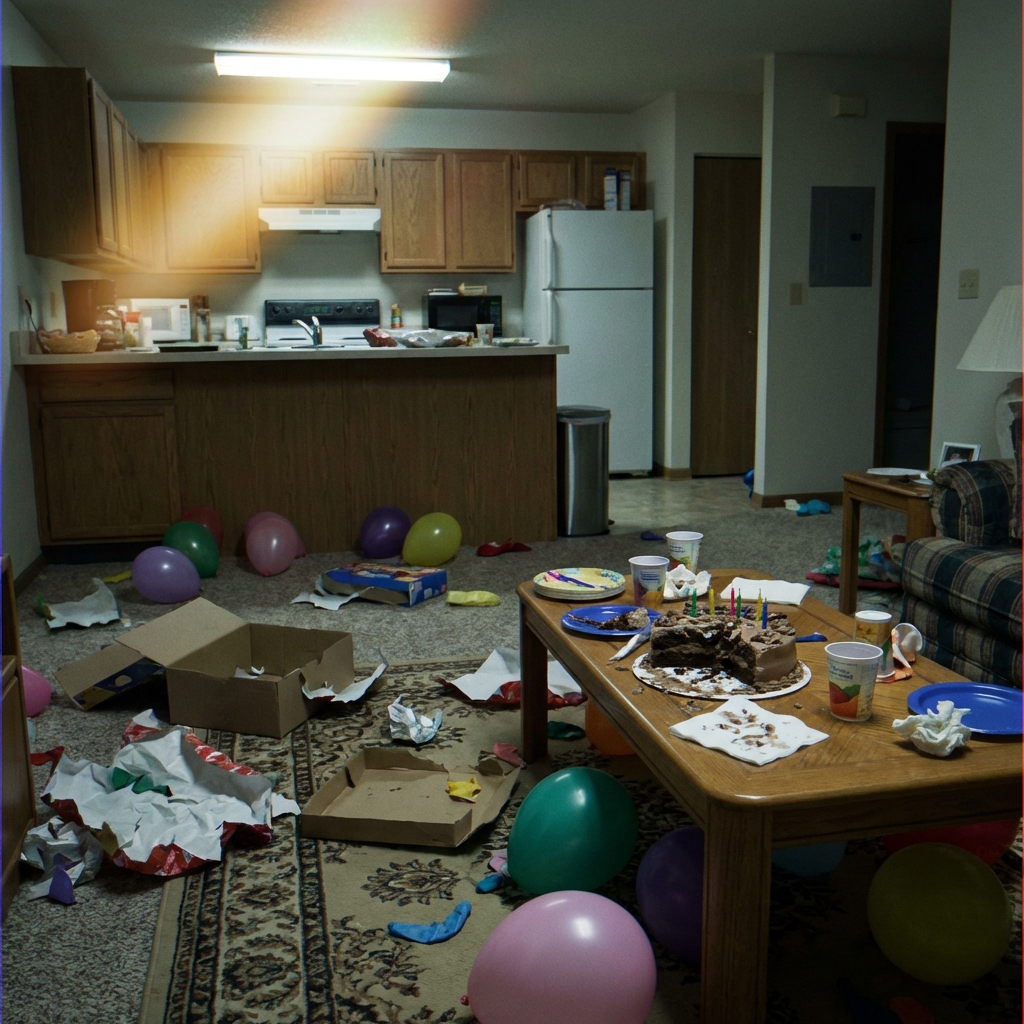
There's a video on my phone I will never show anyone. It's 47 seconds of my 7-year-old beating his own forehead against the playroom floor, screaming "I'm the worst kid in the world" through a curtain of snot and tears. I recorded it so I could show his therapist. I've watched it 31 times trying to figure out what I did wrong. The video starts 58 minutes into a Lego build. You can hear him before you see him — that low, focused humming he does when he's locked in. The good sound. The Saturday afternoon sound. Then the camera swings around and there he is, on the playroom rug, tongue out, bent over the instruction booklet. Peaceful. The last brick is a tiny white 1x1. The antenna piece. He pinches it. Lines it up. Pushes down. It clicks onto the wrong stud. The tower wobbles for half a second. Tips. Crashes into the corner of the rug. You can see it on his face before he reacts — that flicker where a seven-year-old realizes 58 minutes of work just ended. Then his whole body changes. He picks up the base. Both hands. Full force. Hurls it at the wall. The sound on the video is what gets me. Not the crash. The little gasp behind the camera — me — like I got punched in the stomach watching it happen. Then he's face-down on the rug. Beating his fists into the carpet. Then his forehead. Then his fists again. "I CAN'T DO ANYTHING RIGHT." "I'M THE WORST KID IN THE WORLD." "I HATE MYSELF." On the video, you can see my hand reach into the frame. You can see him twist away from it like it burned him. You can't see his little sister. But you can hear her bedroom door upstairs. The soft click of her shutting it. She's six. Nobody had to teach her that. The video ends at 47 seconds because that's when I stopped recording. Not because he stopped screaming. He screamed for another hour and eleven minutes. I know because I checked the clock when he finally collapsed against my chest, hiccuping, soaked through his shirt. That was Saturday. Sunday morning he came down for breakfast and asked for waffles like nothing had happened. Ate two. Then watched me from across the table while I poured coffee with hands that wouldn't quite stop shaking. "Mommy?" "Yeah, bud." "Are you mad at me?" I said no. I said it like a reflex. He nodded. Looked back down at his plate. Picked up his fork and started cutting his waffle into smaller and smaller squares until they weren't really squares anymore. He didn't eat any of them. It's 2:47am now and I'm sitting on the playroom floor. The Legos are still scattered across the rug because I couldn't bring myself to put them back in the bin. I keep finding the white 1x1. It's in three different spots tonight. I keep picking it up and putting it down somewhere else. Like maybe if I move it enough times, the last hour of Saturday afternoon will come unstuck from the wall it's been frozen against in my head. It doesn't. It just sits there in my palm. Smaller than my thumbnail. A piece of plastic that taught my 7-year-old he hates himself. So I did what every mother in my situation does. I threw money at the problem. $180 a session. Every Wednesday at 4pm. A child therapist with a waitlist and a wall full of credentials. She was kind. She was patient. She taught my son to name his feelings like a tiny psychologist. "I'm frustrated." "I'm disappointed." "I'm overwhelmed." He could label the tornado perfectly. The tornado didn't care. He'd scream "I KNOW I'M FRUSTRATED" while hurling a controller at the TV. The feelings had names now. They just didn't have brakes. I sat in her waiting room every Wednesday writing checks and whispering the same prayer — please let this be the week it clicks. It never clicked. And here's what nobody told me until I was six months in and three thousand dollars deep… Nobody — not the therapist, not the gentle parenting books, not the breathing apps, not the school counselor — was actually building anything inside my son. They were all just trying to lower the volume on a kid whose confidence was quietly bleeding out. Then somewhere around 4am, scrolling on autopilot, I read something that stopped me cold. It was a post from a researcher who studied kids for a living. She said the thing nobody had ever said to me in six months of therapy: The meltdowns aren't the problem. They're the symptom. The actual problem — the thing underneath every meltdown, every "I hate myself," every face-plant into the carpet — is that my son has no confidence. Not the loud kind. Not the "raise your hand in class" kind. The deep kind. The kind that lets a 7-year-old look at a collapsed Lego tower and think "I can rebuild it" instead of "I'm the worst kid in the world." The kind that lets him fail without setting himself on fire. And here's what hit me hardest… Confidence isn't a personality trait my son was or wasn't born with. It's a skill. Like reading. Like multiplication. Like riding a bike. And like every other skill — it has to be taught. Then I sat there on the playroom floor and I started thinking about every single thing my son had ever been taught in his seven years on earth. He'd been taught his letters. His numbers. How to swim. How to share. How to tie his shoes. He'd been taught the entire solar system, the names of every dinosaur in the Cretaceous period, and how to spell "Wednesday." He had not been taught how to recover from a setback. Nobody had. Not at school — there's no "Confidence" class between math and recess. Not at home — because his father and I were never handed a playbook for it either. Not in therapy — because therapy processes feelings, it doesn't build skills. The most important piece of his entire education — the one that determines whether he becomes a happy adult or a broken one — had been left completely to chance. Not because my son is broken. Not because I'm a bad mother. Because confidence is a skill — and nobody had ever taught him how to do it. You have to train it. Every day. The same way you train a muscle. That was the moment everything changed. Not because I had a solution yet. Because for the first time in eleven months, I finally understood the problem. At the bottom of that post was a link to a program called Legends. Five minutes a day. Done on my phone. With my son sitting next to me on the couch. That's it. That's the whole thing. No waitlist. No $180 sessions. No driving across town at 4pm on a Wednesday with a kid who doesn't want to go. Five minutes. The same five minutes I used to spend doom-scrolling Instagram while he played alone on the floor. Now we do it together. Every day after school. And here's the part I didn't see coming… That five minutes has become the calmest, closest part of our entire day. He picks the story. I sit next to him. He laughs at something. He tells me something I didn't know about him. Five minutes. Then it's done. The thing that sold me was that Legends is built on research from Harvard, Yale, and Duke. Not Instagram. Not TikTok. Actual scientists. Actual confidence research. Built into a daily training that a 7-year-old will not just tolerate but ask for. And for the first time in almost a year, I'm not outsourcing my son anymore. I am the one sitting next to him on the couch. I am the one training the skill that nobody else was going to train. Unlike everything else we've tried, this is actually something that works. I'm starting to really see a difference. Here's the timeline of what actually happened. Week 1: He learned a tool called "Catch & Replace" — catching his inner critic in the act and swapping the words for something true. Week 3: Tuesday night homework. He erased the same word three times. I braced for the paper-ripping. Instead he stopped, did Box Breathing on his own, picked his pencil back up, and finished the page. Week 6: Saturday afternoon. New Lego set. 200+ pieces. The kind that used to end in shrapnel. He built it for an hour. Then a piece went on the wrong stud and the whole top section collapsed. I froze. He looked at the pile. Took a breath. Said his mistake ritual out loud — "Shake it off" — gave a little shoulder shimmy he made up himself… …and started rebuilding. I stood in the doorway with my hand over my mouth so he wouldn't hear me crying. The same kid. The same Legos. The same collapse. A completely different child. For about a week I kept waiting for the other shoe to drop. Was it a fluke? A good phase? Was I just seeing what I wanted to see? So I went looking. I read every review I could find. Hundreds of stories from other parents. A mom named Cathleen, after her son's very first day… "My son actually cried at the end of it and told me how happy he was that I bought this for him. He said he really talks to himself in a negative way and wants to stop." A mom named Lisa, six months in with her 9-year-old… "It has truly improved his ability to handle stressful situations. His confidence has greatly improved." A single mom named Kristle, with 8-year-old twin boys who used to be "negative about most things"… "THANK YOU LEGENDS YOU'VE GIVEN ME HOPE." A dad named Brandon, after his son told him he was scared to talk to other kids at school… "Now he's running around with his buddies giving fist bumps saying 'Dad, I had a great day.' There was this kind of switch that flipped." A mom named Shannon, who'd already tried therapy and meds… "This app has been, hands down, one of the best things to happen to my kid. He BEGS for Legends every single night." Thousands of parents. The same story over and over again. The meltdowns, the negative self-talk, the "I'm stupid" and "I hate myself" — they didn't end by accident. They ended because somebody finally taught their kid the skill nobody else was teaching. I wasn't crazy. I wasn't seeing what I wanted to see. I was just the latest mom watching it actually work. Right now, you have two paths in front of you. Path one — you close this tab. You go back to the breathing apps that don't work. The therapist who teaches him to label what he can't control. The Pinterest charts on the fridge. You already know where that road goes. You've been walking it for months. Maybe years. The meltdowns don't stop. They just get bigger as he gets bigger. The "I hate myself" doesn't go away. It goes underground. Gets whispered into pillows instead of screamed into rugs. And the version of your son who could have learned the skill — the kid who could look at a collapsed Lego tower at 12, at 15, at 25, and know how to rebuild it — that version slowly stops being possible. Or… Path two — you give him five minutes a day. Five minutes is less than one meltdown. Less than one car ride home from a hard birthday party. Less than the time you spent googling "why does my kid hate himself" at 1am last week. Five minutes. On the couch. Together. Legends comes with a full money-back guarantee. Try it with your kid. Do a few weeks of workouts together. Watch what happens. If you don't see a shift — in the meltdowns, in the self-talk, in the way he handles the next collapsed Lego tower — you get every dollar back. No questions. No hoops. You are not risking a single thing. Your son has everything to gain. P.S. — I still have that 47-second video on my phone. I haven't deleted it. I don't think I ever will. Not because I want to remember it. Because I want to remember what it felt like to be the mom who didn't know there was another way. If you're sitting where I was sitting — on a playroom floor at 2am, on a kitchen tile after a meltdown, in a parked car in your own driveway because you can't bring yourself to walk inside yet — please hear me on this one thing. Your kid is not broken. You are not failing. You were just never handed the playbook for the one skill that matters most. You're holding it now. Five minutes a day. That's the whole thing. That's all it takes to teach a 7-year-old that he can be the kind of kid who picks up the bricks and starts again.
Like this ad? Make it yours.
Crush rebuilds this exact creative around your product — your brand, your colors, your offer — in about a minute.