
Inactive· since Mar 15, 2026
- 33
- days it ran
- 0
- relaunches
Ad copy
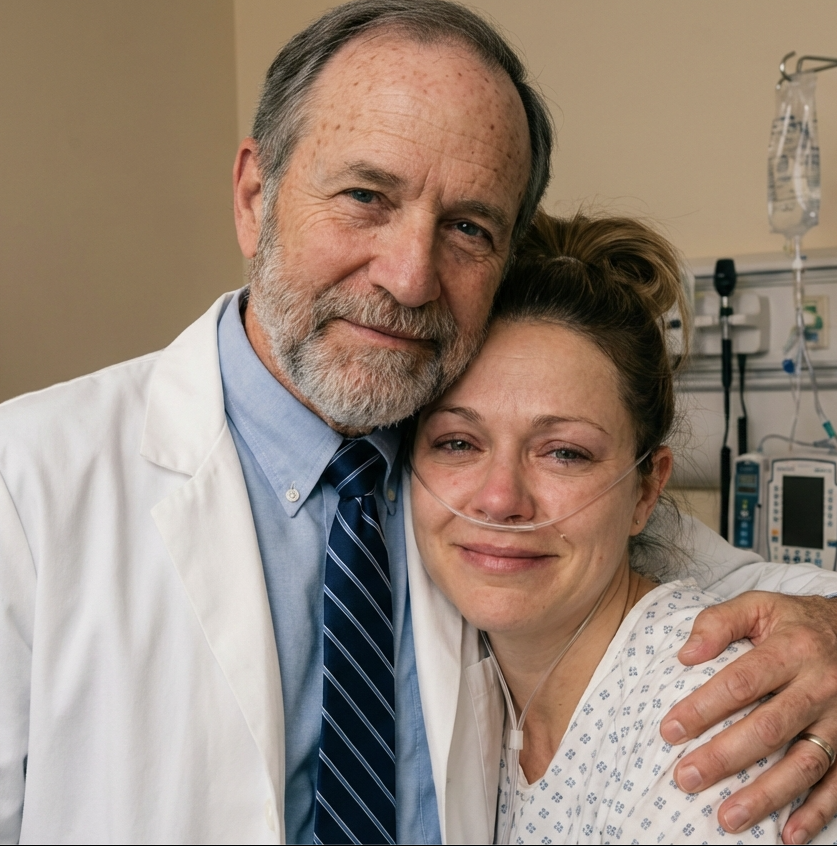
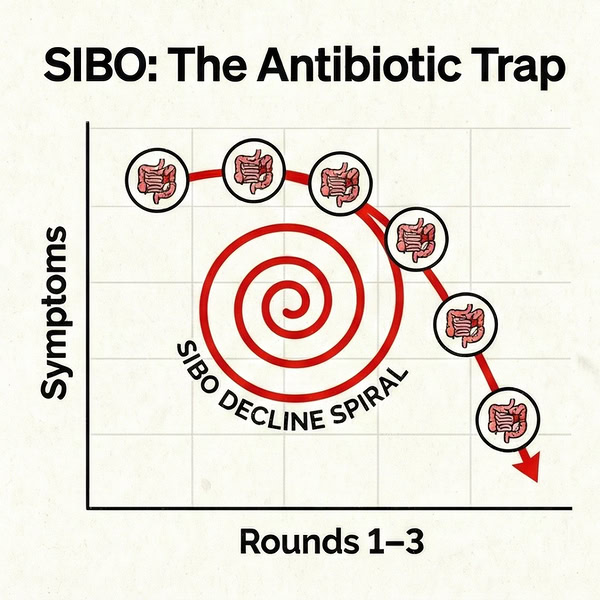
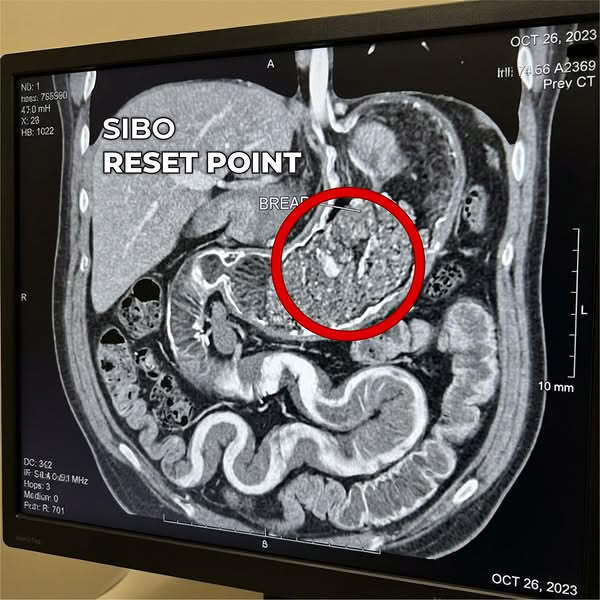
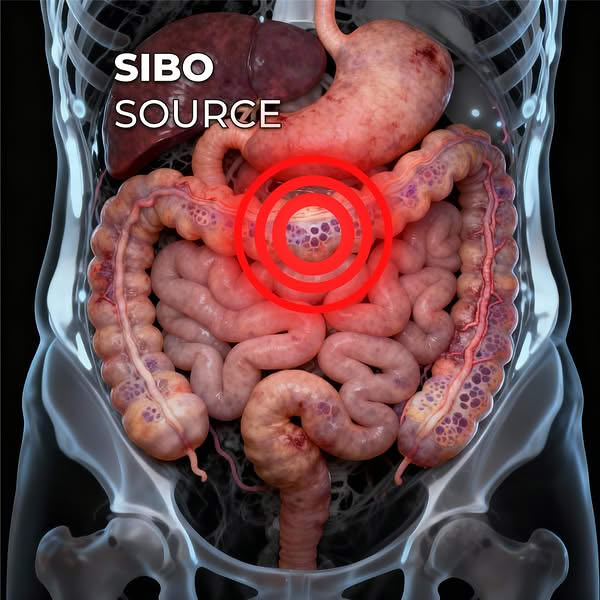
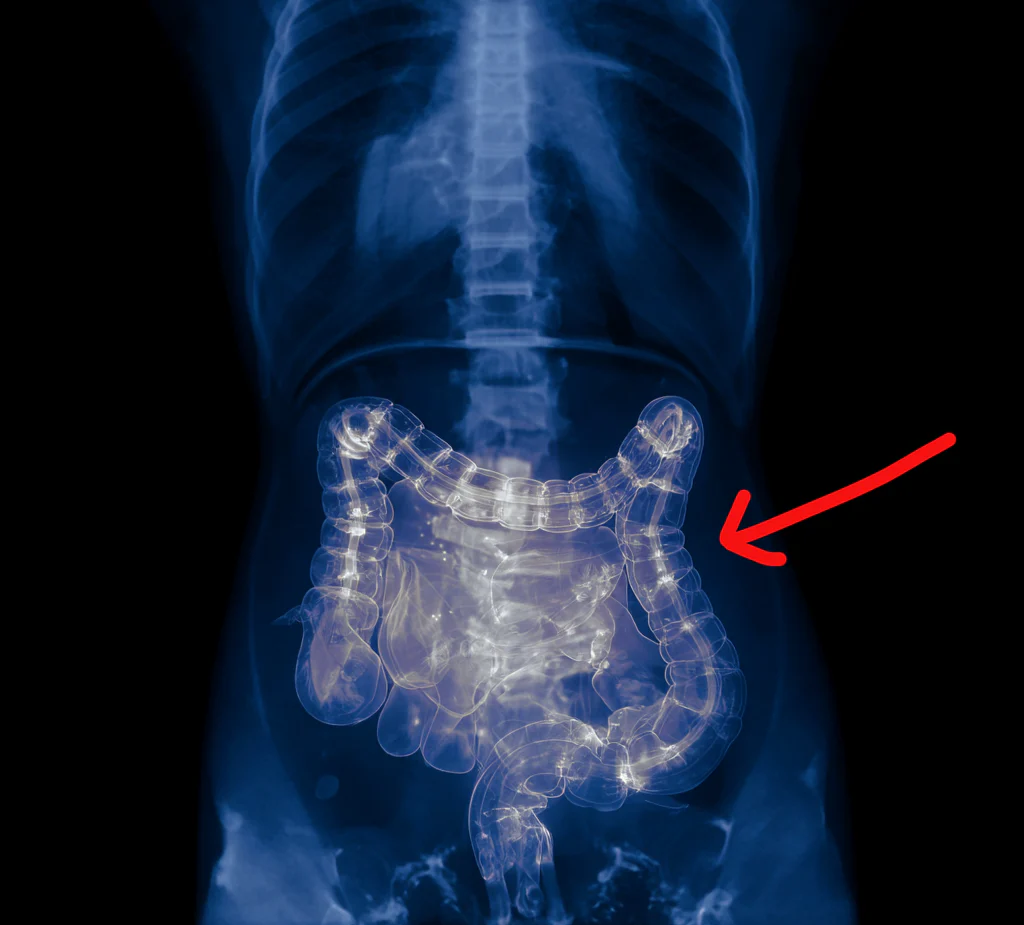
If your friends have stopped inviting you to dinner because they know you "can't eat anything" - if you haven't been on a date in months because you can't imagine explaining your stomach to someone new - if your world has gotten so small that your entire social life is you, your couch, and the same five meals you rotate because they're the only things that don't destroy you... I need you to know something: SIBO didn't just wreck your gut. It stole your life. And nobody around you—not your doctors, not your friends, not even you—fully realizes how much it's taken. And by the time I'm done explaining what happened to my wife Sarah, you're going to see exactly how bacterial overgrowth quietly dismantles a person's entire existence—relationship by relationship, invitation by invitation, experience by experience—until one day you look up and realize you don't have a life anymore. You have a medical condition with a person attached to it. Because there are three things happening right now that go way beyond bloating and cramping: One - SIBO doesn't just affect your gut. It affects every decision you make—where you eat, who you see, whether you go out, whether you travel, whether you say yes or no to literally any plan that involves food, which is basically every plan that exists Two - The social isolation that comes with chronic SIBO is invisible to everyone around you. They see someone who "cancels a lot" or "is picky about food" or "just doesn't go out anymore." They don't see someone whose body punishes them for participating in normal life And three - Every month you spend "managing" SIBO instead of eliminating it is another month your world contracts—another friend who stops reaching out, another experience you skip, another piece of the person you used to be that quietly disappears Let me tell you what SIBO took from Sarah. Not what it did to her gut. What it did to her LIFE. Before SIBO, Sarah was the person who organized everything. She was the one sending the group text: "Trying that new Thai place Saturday, who's in?" She hosted dinner parties. She planned the birthday celebrations. She was the gravitational center of our friend group—the person who pulled everyone together and made things happen. She loved food. Not in a foodie-Instagram way. In a human way. Meals were how she connected with people. Sunday dinners at her parents' house. Long lunches with her best friend where they'd split three appetizers and a bottle of wine. Date nights where we'd pick a random neighborhood and just walk until we found something that looked good. Food wasn't just fuel for Sarah. It was the medium through which she experienced every relationship in her life. Then SIBO took it all. It started gradually. So gradually that neither of us noticed the walls going up. THE RESTAURANTS DISAPPEARED FIRST After her SIBO diagnosis—breath test at 66 ppm hydrogen, 18 ppm methane—she started low FODMAP. Immediately, restaurants became a minefield. "Does this have garlic?" "Is there onion in the sauce?" "Can I get it with no seasoning?" "Is the rice freshly cooked or reheated?" "What oil do you cook with?" Every meal out became an interrogation. Waiters who didn't understand. Kitchens that couldn't guarantee there wasn't garlic in the pan. Dishes that arrived with modifications she didn't ask for. And even when she ordered perfectly—plain grilled chicken, steamed vegetables, white rice—she'd still bloat. Because the bacteria in her small intestine fermented whatever she ate, regardless of how carefully she ordered. So she stopped going to restaurants. Not dramatically. Not with an announcement. She just... started saying no. "Actually, I think I'll stay in tonight." "I'm not feeling great, you guys go ahead." "Can we do something that doesn't involve food?" Within three months, she hadn't eaten at a restaurant once. THEN THE FRIEND GROUP SHRANK Here's what nobody tells you about chronic digestive conditions: human social life revolves almost entirely around food. Think about it. When's the last time you saw friends that DIDN'T involve eating? Dinner. Brunch. Coffee. Happy hour. Birthday cake. Holiday meals. Barbecues. Potlucks. Food is the scaffold that human connection is built on. When you can't eat normally, you can't socialize normally. Sarah's friends tried at first. God, they tried. "We'll cook something FODMAP-friendly!" But they'd accidentally use garlic powder, or the sauce had onion in it, or the rice had been sitting out too long. "We'll go somewhere you can eat!" But there's nowhere she could eat safely. Every restaurant was a gamble she'd lose. "You don't have to eat, just come hang out!" But sitting at a table watching everyone else eat while your stomach churns—smelling food you can't have, watching people enjoy meals without consequence, answering questions about why you're not eating—is its own special kind of torture. Sarah went to one dinner party where the host had made a huge, beautiful spread. Lasagna. Garlic bread. Caesar salad. Tiramisu. None of it was safe for her. She'd brought her own tupperware of plain chicken and rice. She sat at the table eating bland food out of a plastic container while everyone around her ate together. Shared dishes. Passed plates. Ripped bread. Clinked glasses. She told me on the drive home, staring out the window: "I felt like I was behind glass. Like I was watching normal life happen and I couldn't reach it. Everyone was sharing a meal together and I was eating alone. At the same table. But completely alone." She stopped going to dinner parties after that. The invitations kept coming for a while. Then they slowed. Then they stopped. Not because her friends were cruel. Because people stop inviting someone who always says no. It's not malice. It's just human nature. If someone declines five times in a row, you stop asking. You assume they don't want to come. They didn't know she was sitting at home crying because she DID want to come. She just couldn't participate in the fundamental human activity that the entire gathering was organized around. By month eight, Sarah's social circle had contracted from about twelve close friends she saw regularly to three—the three who were willing to come to our house and eat whatever Sarah could safely cook. Twelve to three. In eight months. Not because of a fight. Not because of drama. Because SIBO made it physically impossible for her to show up for the social rituals that maintain friendships. THE FAMILY GATHERINGS BECAME UNBEARABLE Sarah's family is Italian. Sunday dinner at her parents' house was sacred. Her mom would spend all day cooking. Pasta. Meatballs. Sausage and peppers. Garlic bread. Cannoli from the bakery down the street. After SIBO, Sarah would sit at her parents' table—the table she'd grown up eating at—with her own container of safe food while her entire family ate her mother's cooking. Her mom tried to adapt. Made plain pasta. Skipped the garlic. But it was never safe enough. There was always something—a seasoning, a cooking method, cross-contamination—that would set Sarah off. And the questions. Every single Sunday. "Are you sure you can't have just a little?" "How about if I make it without the—" "You used to love this. Can't you just try some?" Her mom's voice, worried: "You're getting too thin, honey. You need to eat more." Her dad, frustrated: "I don't understand this diet. When does it end?" Her brother's kids asking why Aunt Sarah doesn't eat like everyone else. Every Sunday was a reminder of what SIBO had taken. Not just food. The experience of sharing food with people she loved. The tradition. The warmth of a full table where everyone eats from the same dishes. The normalcy of being part of a family meal. Sarah started skipping Sundays. First occasionally. Then most weeks. Then she stopped going altogether. Her mom called, hurt. "We never see you anymore." "I know, Mom. I'm sorry. It's just... hard." How do you explain that you're avoiding your own family's dinner table because your body has turned their love language into a punishment? DATING AND INTIMACY VANISHED For couples dealing with SIBO, the relationship toll is devastating in ways that are almost never discussed. Sarah and I stopped going on dates. Where would we go? Every date revolves around food. Dinner. Drinks. A movie with snacks. A weekend trip where meals are half the experience. We tried a few times early on. Sat at restaurants where she'd order the most stripped-down thing on the menu and still spend the drive home doubled over in pain. It stopped being worth it. The anxiety of choosing a restaurant, the stress of ordering, the waiting to see if she'd react—all of it drained the joy out of every outing. So we just stopped. Our evenings became her meal prepping while I ate takeout she couldn't share. Watching TV in silence because she was too bloated and exhausted to do anything else. Going to bed at 9pm because the fatigue had consumed her. Physical intimacy suffered in ways neither of us were prepared for. When you're bloated to the point of looking pregnant, when your stomach is distended and hard and painful, when you feel like a swollen, exhausted version of yourself—the last thing you want is to be touched. To be seen. To be vulnerable with another person when your body feels like a betrayal. Sarah stopped changing in front of me. She'd wait until I left the room. If I walked in while she was getting dressed, she'd cover her stomach with her hands reflexively—as if I hadn't seen her body a thousand times before. "I don't feel like myself," she said once. "I don't feel like someone you'd want to be close to. I feel like a bloated, foggy, exhausted version of a person who used to be attractive and fun and present." SIBO didn't just steal her health. It stole her sense of self as a partner. As a desirable person. As someone with something to offer beyond medical limitations and dietary restrictions. TRAVEL BECAME IMPOSSIBLE We used to travel constantly. Weekend trips. Vacations. Spontaneous drives to somewhere new. Half the point of travel for us was eating—trying the local food, finding the hole-in-the-wall place, eating things you can't get back home. SIBO eliminated travel completely. Can't eat at restaurants? Can't travel. Can't eat anything you haven't prepared yourself? Can't travel. Need to know exactly what's in every meal? Can't travel. Terrified of being stuck somewhere without safe food while your gut destroys you? Can't travel. Sarah packed coolers of pre-made meals for a weekend trip to the coast early on. Spent more time preparing food for the trip than enjoying the trip itself. Sat on the beach eating cold chicken and rice from tupperware while the boardwalk restaurants around us served fresh seafood and fries and ice cream. She looked at me and said, "Why did we even come?" We didn't take another trip for 14 months. HER CAREER TOOK THE HIT Nobody talks about this one, but SIBO can quietly wreck a career. Sarah was a project manager. Sharp. Organized. High-performing. The kind of person who ran meetings that actually accomplished things and delivered projects on time without drama. Then the brain fog moved in. She couldn't track complex conversations. She'd lose her train of thought mid-presentation. She started writing everything down because she didn't trust her own memory. The fatigue hit her hardest in the afternoons—exactly when her job demanded the most focus. She'd sit at her desk after lunch, stomach distended, mind foggy, trying to will herself through emails that used to take minutes and now took an hour. She turned down a promotion. A PROMOTION. Because she didn't trust her brain to handle the increased responsibility. "I can't run a bigger team when I can barely run myself," she told me. "What if I forget something important? What if the fog hits during a presentation to leadership? I'll embarrass myself." SIBO cost her career momentum. Salary growth. The confidence that used to make her exceptional at her job. All of it eroded by bacteria in her small intestine producing gas and endotoxins that inflamed her brain. I'M LOOKING AT THE FULL PICTURE AND IT'S DEVASTATING So let me add it all up. Let me show you the actual scope of what SIBO took from Sarah over two years: Restaurant meals: gone Friend group: collapsed from twelve to three Family Sunday dinners: abandoned Date nights: nonexistent Travel: eliminated Physical intimacy: fractured Career advancement: stalled Body confidence: destroyed Spontaneity: impossible Mental sharpness: compromised Energy: depleted by 2pm daily Social identity: erased She went from being the person who pulled everyone together—the organizer, the connector, the one who made things happen—to someone who spent most evenings alone on the couch, eating the same five foods, too exhausted and bloated and foggy to participate in her own life. And the worst part? Everyone around her thought she'd just... changed. Become more introverted. Less social. Quieter. They didn't understand that she hadn't changed at all. She was the same person, trapped inside a body that punished her for trying to live normally. Every restaurant meal, every dinner party, every date night, every family gathering, every trip—they all came with a physical price she couldn't afford to keep paying. So she stopped paying it. And her world shrank to the size of her kitchen. THAT'S WHEN I REALIZED: MANAGING SIBO ISN'T LIVING. ELIMINATING SIBO IS. After two years of watching Sarah's life contract—watching her lose friends, skip family events, turn down promotions, avoid intimacy, abandon travel, and retreat into the smallest possible version of herself—I understood something with absolute clarity: Low FODMAP wasn't saving her. It was helping her survive in the cage. Making the cage slightly more tolerable. But the cage was still there—defined by what she couldn't eat, where she couldn't go, who she couldn't be. Symptom management doesn't give you your life back. It gives you a smaller life with slightly less pain. The only way to get her life back—her ACTUAL life, with restaurants and friends and family dinners and travel and dates and spontaneity and career confidence—was to eliminate the bacteria that were making all of those things impossible. Not manage them. Not reduce symptoms by 30%. ELIMINATE them. So I dug into the research on actual bacterial elimination—not dietary restriction, not symptom management, not another supplement to "support gut health." And I found three specific compounds that work together to do what two years of FODMAP restriction never came close to accomplishing: BERBERINE HCL (500mg) This is the core antimicrobial. A plant-derived alkaloid that's been tested head-to-head against Rifaximin—the $1,800 prescription antibiotic—and delivered matching bacterial clearance rates in clinical trials. But berberine has two massive advantages over Rifaximin: First—it works against BOTH hydrogen-producing bacteria AND methane-producing archaea. Rifaximin primarily targets hydrogen bacteria, leaving 30-40% of SIBO patients with methane overgrowth essentially untreated. Sarah had both populations. She needed complete clearance, not a partial job. Second—berberine supports gut motility. It activates the migrating motor complex (MMC)—the natural cleaning wave that sweeps bacteria out of the small intestine between meals. This is critical because impaired motility is WHY bacteria colonized the small intestine in the first place. If you kill bacteria but don't fix motility, they just recolonize. That's why Rifaximin has a 45% relapse rate—it mops the floor without turning off the faucet. Berberine tackles the infection AND the root cause simultaneously. Rifaximin and low FODMAP address neither completely. ALLICIN (350mg, from Garlic Extract) This is the compound that specifically destroys methane-producing archaea—the organisms responsible for methane SIBO that Rifaximin leaves almost entirely intact. Here's why methane matters beyond just gas production: Methane slows gut motility. The more methane archaea produce, the slower your gut moves. The slower your gut moves, the more bacteria accumulate. It's a self-reinforcing cycle that dietary restriction does nothing to break. Allicin disrupts archaeal cell membranes in ways that conventional antibiotics structurally cannot. Research referenced by Dr. Cody Miller showed that allicin-based antimicrobial combinations achieved superior methane clearance compared to Rifaximin alone. Sarah's methane was at 18 ppm—nearly double the normal limit. Every treatment approach she'd tried before—low FODMAP, oregano oil, even a round of herbal antimicrobials—had left those methane archaea completely untouched. Allicin was the first compound that could actually reach them. PIPERINE (15mg, from Black Pepper Extract) This is the difference between berberine that works and berberine that doesn't. Berberine has one critical weakness: terrible bioavailability. Only about 5% of an oral dose actually absorbs. The other 95% passes through without reaching therapeutic concentrations. Sarah had tried standalone berberine twice before—basic Amazon capsules. No improvement. Not because berberine is ineffective, but because without enhanced absorption, the dose that actually reaches the bacteria is negligible. Piperine amplifies berberine absorption by up to 2,000%. It blocks the enzymes that degrade berberine prematurely, allowing the full clinical dose to reach the overgrowth in the small intestine. Without piperine: 500mg capsule delivers roughly 25mg of usable berberine. A whisper against entrenched overgrowth. With piperine: 500mg capsule delivers full therapeutic antimicrobial pressure. Enough to eliminate both hydrogen bacteria and methane archaea. Sarah found a functional medicine practitioner who understood that SIBO treatment isn't about restricting food—it's about eliminating the organisms that make food a problem. "You've been managing symptoms by avoiding the bacteria's fuel," the doctor said. "But the bacteria are still there. That's why your life has gotten smaller—because management means permanent restriction, and permanent restriction means giving up everything that makes life feel normal. We need to KILL the bacteria so your life can expand again." She started the 90-day antimicrobial protocol. We had to source each compound individually at first. Different suppliers. Over $280 a month. But after watching Sarah lose two years of her life to symptom management, $280 to potentially get it back felt like nothing. Here's what happened—and I'm going to describe it not in terms of breath test numbers, but in terms of the life that came back: WEEK 2: The bloating began easing. But more importantly—Sarah said yes to something. Her friend texted asking if she wanted to grab coffee. Normally Sarah would have declined. Coffee shops have pastries, and the smell of food she couldn't eat was its own kind of pain. But she went. Ordered a black coffee. Sat for two hours talking. Didn't eat anything. But she showed up. For the first time in months, she showed up. "It's small," she told me that night. "But it felt huge." WEEK 4: Bloating had dropped significantly. But the bigger change was this: Sarah cooked dinner for us using garlic for the first time in over a year. Not a lot. Two cloves, minced into a stir fry. She stared at the pan like it might explode. We ate together. Same meal. Same plate. Same ingredients. For the first time in two years, we shared a meal that wasn't her eating from a separate container. She had mild discomfort. Not the violent bloating and cramping she'd experienced before. Manageable. Like a normal body processing food. "I just ate garlic," she whispered. Like she'd gotten away with a crime. WEEK 6: She went to a restaurant. Her idea. Not mine. "I want to try," she said. "If it goes badly, we leave." She ordered a chicken dish with a light sauce. Didn't interrogate the waiter. Didn't ask about every ingredient. Just... ordered. Ate the meal. Her stomach stayed flat. No pain. No bloating. No desperate drive home. She ordered dessert. DESSERT. A slice of cake she wouldn't have touched six months ago. Ate half of it. "I'm sitting in a restaurant eating cake," she said, looking at me with this expression I hadn't seen in so long I'd almost forgotten it. Joy. Actual, unguarded, uncomplicated joy. "Is this real?" WEEK 8: She texted the group chat. The one she'd been silent in for months. "Trying that new Italian place Saturday. Who's in?" The old Sarah. The organizer. The one who pulled everyone together. Sending the text that used to come naturally and had been impossible for two years. Six people said yes. People who hadn't seen her in months. Saturday night she sat at a table with six friends. Ordered pasta with garlic and olive oil. Drank wine. Ate bread from the shared basket. Tried someone's risotto. Split a tiramisu. She ate from the same menu as everyone else. Shared dishes. Passed plates. Did every single thing she'd spent two years watching from behind glass. No separate container. No interrogation. No anxiety. Just a woman eating with her friends at a restaurant on a Saturday night—the most normal, unremarkable thing in the world. She came home glowing. Actually glowing. And she said something I'll carry with me forever: "I forgot what it feels like to be part of things. Not watching from outside. Part of it. I forgot what it feels like to just... be a person." WEEK 12: RETEST Hydrogen: 6 ppm (normal is under 10) Methane: 3 ppm (normal is under 10) Both gases. Solidly normal. The bacteria that had been running her life for two years—dictating where she went, who she saw, what she ate, what she wore, how she felt about herself—eliminated. Her functional medicine doctor looked at the numbers and said: "Your overgrowth is cleared. Both populations. But I want to ask you something beyond the test results—what does your life look like right now compared to three months ago?" Sarah started listing things. Then she started crying. Not sad tears. The kind of tears that come when you suddenly realize how much you lost by hearing yourself describe how much you've gotten back. "I went to a restaurant. I cooked with garlic. I hosted dinner at our house. I went to Sunday dinner at my parents'. I said yes to a weekend trip next month. I ate birthday cake at my friend's party. I went on a date with my husband to the place where we had our first date. I ate the same thing I ordered that first night." The doctor let her finish. Then: "None of that is about your gut. All of it was taken by your gut. That's why we eliminate the bacteria instead of managing symptoms. Because bacterial clearance doesn't just fix digestion. It gives you your life back." I'M LOOKING AT SARAH NOW. 14 MONTHS LATER. Her social calendar is full again. Not because she's forcing herself to go out. Because she CAN go out. Without fear. Without planning. Without a cooler of safe food and an escape route. She went back to Sunday dinners at her parents'. Eats her mom's cooking. The full spread. Pasta with garlic. Meatballs. Sausage and peppers. Her mom doesn't have to make a separate dish anymore. Sarah eats what everyone eats. Her mom cried the first time Sarah took seconds. Our friend group expanded back. Not just to the original twelve—bigger. Because Sarah is organizing again. Planning again. The gravitational center is back, pulling people together over meals and outings and experiences that food poisoning of the soul had made impossible. We travel again. We went to Portugal last month. Ate at a different restaurant every night. Seafood. Pastéis de nata. Wine with lunch. Street food. She didn't pack a single container of safe food. She ate the country. We go on dates. Real dates. "Let's try that new place" dates. The kind where you walk in without a reservation and order whatever looks good and share bites off each other's plates and stay for dessert because you're having too good a time to leave. She got the promotion. The one she'd turned down during the worst of her SIBO. Same role opened up again eight months after she completed the protocol. Brain clear, energy steady, confidence restored. She applied. Got it. Thriving in it. Physical intimacy came back in a way I'm not going to detail, but I'll say this: when someone feels at home in their body again—when they're not bloated and exhausted and ashamed—everything changes. The lights stay on. She's not "managing" SIBO. She's living as though it never happened. Because the bacteria that caused it are gone, and the life they'd stolen came back. That's when I found Berbino. The exact three-compound antimicrobial formula that gave Sarah her life back in twelve weeks: Berberine HCL – 500mg (full clinical dose for complete bacterial clearance—both hydrogen AND methane populations—plus motility restoration to prevent recolonization) Allicin from Garlic Extract – 350mg (targeted destruction of methane archaea—the organisms that dietary restriction, Rifaximin, and most herbal protocols leave completely intact) Piperine from Black Pepper Extract – 15mg (up to 2,000% berberine absorption enhancement—the difference between a supplement that barely registers and one that eliminates overgrowth at therapeutic levels) Not a management tool. Not a diet supplement. Not another product designed to make the cage more comfortable. An antimicrobial that eliminates the bacteria keeping you in the cage. So you can walk out. When Sarah was assembling these compounds individually? $280+ per month. One bottle of Berbino? Under $40 for a 30-day supply. Ninety-day elimination protocol? Around $105 total. Compare that to the cost of a life stolen by "symptom management": Two years of low FODMAP specialty products: $2,400-4,800 Dietitian and GI appointments: $2,000-4,000 Supplements that support without eliminating: $2,000-4,000 The career opportunities you turned down because your brain couldn't keep up: incalculable The friendships that faded because you stopped showing up: incalculable The family moments you missed because the dinner table was a minefield: incalculable The dates that didn't happen. The trips that were canceled. The invitations you declined. The clothes you can't wear. The photos you're not in. The promotions you didn't take. The years of your one life spent surviving instead of living: no number covers it Sarah takes Berbino for maintenance—2 capsules, 3-4 times weekly. Breath tests stay clean. Hydrogen: 5-7 ppm. Methane: 2-4 ppm. Both gases negative for 14 consecutive months. But the numbers she actually cares about: Restaurants visited in the past six months: 30+ Friends she sees regularly: back to a full, thriving circle Family dinners attended: every single Sunday Trips taken: four, including international Date nights: weekly Career trajectory: upward, confidently Her own assessment of her life: "I'm back." Now here's what I need you to truly understand: If SIBO has shrunk your life—if you've lost friends, skipped gatherings, stopped dating, abandoned travel, turned down opportunities, retreated from the person you used to be—it's not because you've changed. It's because there are bacteria in your small intestine making it physically impossible to participate in normal life. And every strategy you've been given—dietary restriction, symptom management, FODMAP apps, safe food lists—is designed to help you cope within the cage. Not escape it. The cage doesn't open with better food choices. It doesn't open with a more precise elimination diet. It doesn't open with another probiotic or digestive enzyme. The cage opens when the bacteria building it are eliminated. Every month you spend managing SIBO instead of destroying it is another month of: Your social world shrinking Friendships quietly dissolving Family connections weakening Romantic intimacy fracturing Career potential going unrealized Spontaneity dying The distance between who you are and who you used to be widening I put the link below. One bottle. Twelve weeks. Not to manage your symptoms better. To eliminate the bacteria that stole your life so you can start getting it back. Say yes to the next dinner invitation. Plan the trip. Send the group text. Go on the date. Show up for Sunday dinner. But first—go get the thing that makes all of it possible again. 👉 https://berbino.com/products/berbino™-berberine-supplement *P.S. - SIBO stole more than your digestion. It stole your social life, your confidence, your spontaneity, your relationships, and your sense of who you are. Low FODMAP didn't give any of it back—it just made the loss more manageable. Berbino eliminates BOTH hydrogen bacteria and methane archaea, clearing the overgrowth that made normal life impossible. Stop managing a smaller life. Eliminate what's shrinking it. The person you used to be is still there. They're just waiting for the bacteria to be gone.*
Like this ad? Make it yours.
Crush rebuilds this exact creative around your product — your brand, your colors, your offer — in about a minute.