
Stopped· since Jan 30, 2026
- 24
- days it ran
- 0
- relaunches
Ad copy
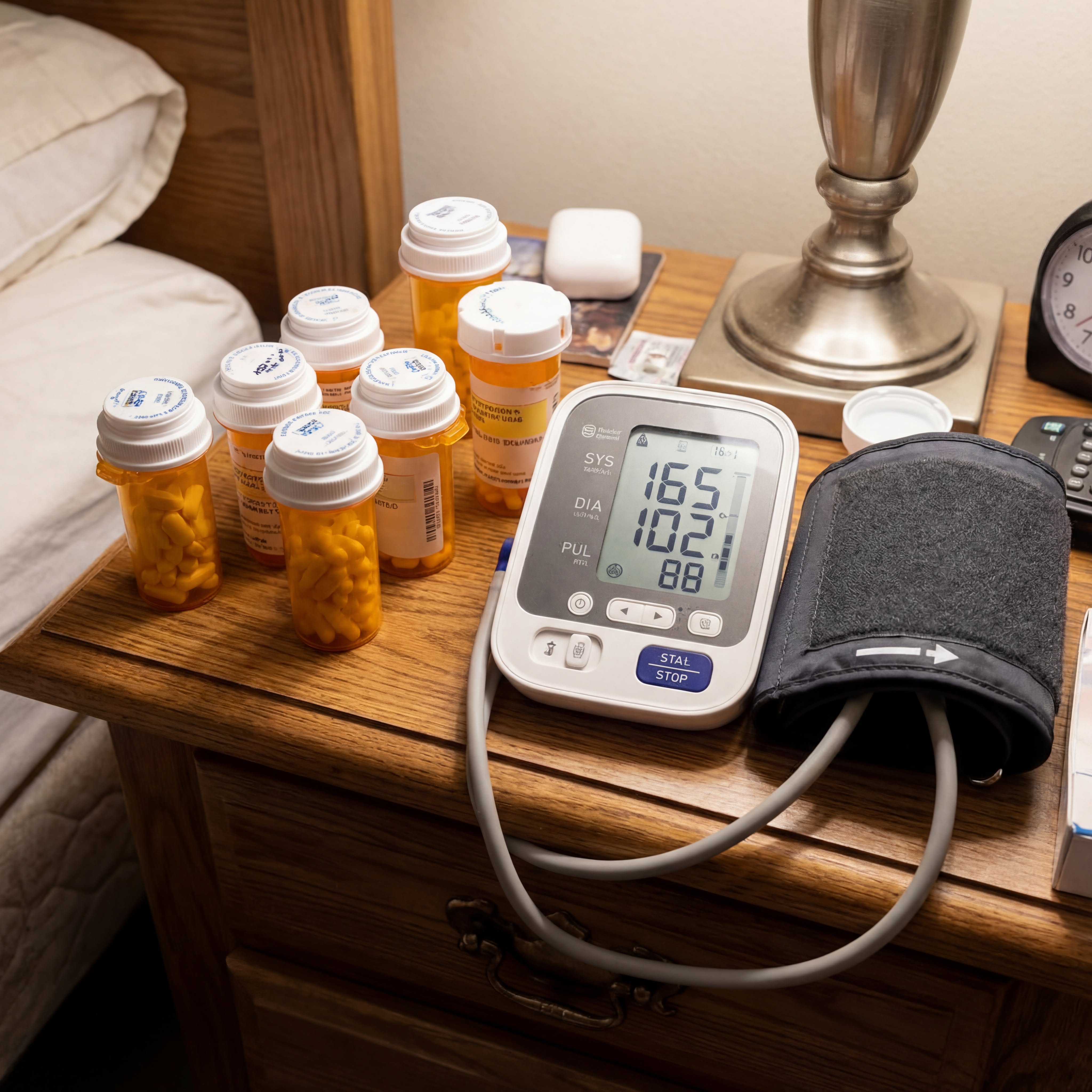
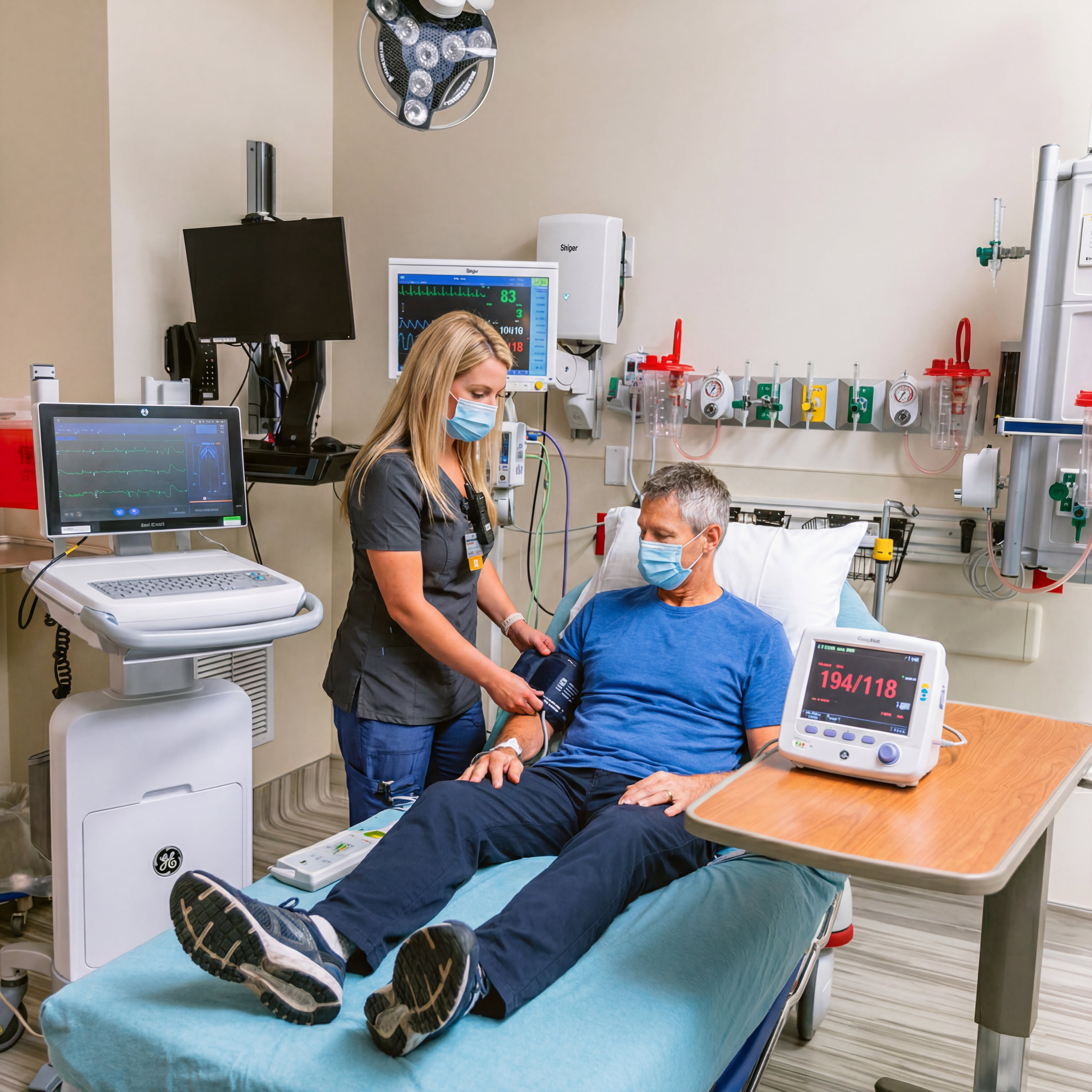
The fourth time I ended up in the ER, the doctor asked me something no one had asked in 11 years of blood pressure problems. His question — and what he explained after I answered — changed everything I thought I knew about why my blood pressure wouldn't stay down. I'm sharing this because I spent over a decade doing everything right and still ending up in hospital beds. If you're on blood pressure medication and your numbers still won't behave, this might be the most important thing you read this year. I'm 59. Father of two. Grandfather of three. I've been on blood pressure medication since I was 48. Started with Lisinopril. Then they added Metoprolol. Then Amlodipine. Three medications. Every single day. For eleven years. I never missed a dose. I did everything they told me. And I still kept ending up in the ER. The pattern I couldn't break. The first ER visit was at 52. Blood pressure hit 194/118 out of nowhere. No warning. No chest pain. Just a headache that wouldn't quit and a number that terrified the nurse. They gave me IV medication. Monitored me overnight. Sent me home with a higher dose. The second visit was at 54. This time it was 201/124. They called it "hypertensive crisis." I didn't even know that was a thing. I thought I was having a stroke. Couldn't feel my left arm. Couldn't think straight. My wife was crying in the waiting room. They adjusted my medications again. Added the third pill. Told me to reduce stress. The third visit was at 57. I was at my grandson's birthday party. Had to leave because I couldn't see straight. Blood pressure was 188/116. Another night in the hospital. Another medication adjustment. Another lecture about sodium. Every single time, I told them the same thing: "I take my pills every day. I don't understand why this keeps happening." And every single time, they gave me the same answer: "Some people just have resistant hypertension. We'll try a different combination." I started to believe my body was just broken. That my blood pressure was something I'd be fighting — and losing to — for the rest of my life. The family curse. Here's what made it worse: Every man in my family has had high blood pressure. My father. His father. My two uncles. My older brother. My father died of a stroke at 67. He was on four medications when it happened. My uncle had a massive heart attack at 61. He'd been "managing" his blood pressure for twenty years. My brother had a TIA at 58. Mini-stroke. Doctors said he was lucky to be alive. I watched all of them take their pills. Do what the doctors said. And still get taken out by this thing. So when my blood pressure kept spiking despite three medications, I thought: this is just my genetics. This is my inheritance. The men in my family don't make it to old age. That's just how it is. I stopped hoping. I just waited. Waited for the stroke. The heart attack. The night my wife would find me and I wouldn't wake up. The fourth ER visit. It happened eight months ago. I was in my living room, watching TV with my wife. Felt fine. No stress. Just a regular Tuesday night. Then my vision went blurry in my left eye. Just for a second. Then my arm felt heavy. Then my chest got tight. I knew the feeling. I'd felt it before. "We need to go," I told my wife. "It's happening again." Blood pressure in the ER: 211/127. They rushed me back. IV medications. Monitors. The whole routine. I'd been through it so many times I knew the nurses' names. But this time was different. This time, an older doctor came in. Not the usual ER physician. Someone different. He looked at my chart for a long time. Then he pulled up a chair. Sat down next to my bed. And asked me a question no doctor had ever asked in eleven years: "Tell me about your father." The question that changed everything. I didn't understand at first. "My father? He died. Stroke. At 67. Why?" "And his father?" "Heart attack. I was young, I don't remember much." "And your brother?" "TIA. Mini-stroke. Two years ago." The doctor nodded slowly. "And you've been on blood pressure medication for how long?" "Eleven years. Three different pills. Never miss a dose." "And you're here for the fourth time." "Yes." He was quiet for a moment. Then he said: "Has anyone ever explained to you why the medications aren't fixing the problem?" I stared at him. "What do you mean? They're supposed to lower my blood pressure." "They do lower it. Temporarily. They force your blood vessels to relax. But they don't address WHY your blood pressure keeps spiking in the first place." I didn't understand. He pulled out a pen. Drew a simple diagram on the back of my chart. "There are three things happening in your body right now that your medications don't touch. Arterial inflammation — your blood vessel walls are chronically inflamed and stiff. Nitric oxide depletion — your body has stopped producing enough of the molecule that keeps vessels flexible. And poor microcirculation — blood isn't flowing efficiently to your organs, even when the big numbers look okay." He tapped the diagram. "The pills force the numbers down. But the inflammation stays. The nitric oxide depletion continues. The circulation problems persist. That's why you keep ending up here. The underlying damage never stops accumulating — even when you're medicated." I felt sick. "So what you're saying is... I've been on three medications for eleven years... and they've never actually been fixing the problem?" "They've been managing a symptom. Not addressing the cause. That's why your numbers spike when your body is under any stress. The foundation is unstable. The medications are just holding back a flood." I thought about my father. My uncle. My brother. They were all "managing" too. Until they weren't. What he said next. "Here's the thing," he said. "This isn't genetics. Not the way you think." "What do you mean? Every man in my family—" "Every man in your family was treated the same way. Medications that mask the numbers without fixing the underlying issues. You all have the same inflammation, the same nitric oxide depletion, the same circulation problems. And you're all being treated identically — with drugs that don't address any of it." He leaned forward. "You don't have a genetic destiny. You have a family pattern of incomplete treatment. There's a difference." I sat there. Eleven years of believing I was doomed. That my body was broken. That I was just waiting for the stroke that would take me like it took my father. And this doctor was telling me it wasn't fate. It was a gap in the treatment. A gap that could be filled. What he told me to look into. He couldn't prescribe what he was about to tell me. Said it wasn't his place. But he told me to research something on my own. "There are liquid formulas designed to address what the medications miss. The inflammation. The nitric oxide. The circulation. Cayenne, beetroot, turmeric — in liquid form so they actually absorb. I've seen patients stabilize in ways medication alone never achieved." I was skeptical. "I've tried supplements. Beetroot capsules. Garlic pills. None of it worked." "Capsules don't absorb well. Most of what you swallowed passed right through you. Liquid is different. It enters your bloodstream in minutes. You'll actually feel it working." He stood up. "I can't tell you what to do. But I can tell you that doing the same thing for another eleven years will get you the same results. You'll be back here. Maybe next time it won't be a crisis you walk away from." He left. I lay there in that hospital bed, staring at the ceiling. Eleven years. Four ER visits. Three medications. Thousands of pills. And no one had ever told me what this doctor just told me. The morning I broke the family pattern. I did my research. Found a liquid formula with cayenne, beetroot, and turmeric. Designed specifically for what the ER doctor described. I was skeptical. After eleven years of failed attempts, I didn't expect much. But I also remembered what he said: doing the same thing for another eleven years would get me the same results. First morning. Took the dropper. Within maybe twenty minutes, something happened. This warmth spreading through my chest and down my arms. Not burning. Not heartburn. Just... warmth. Like blood was actually flowing for the first time in years. I walked to my blood pressure monitor. I hated that thing. It had been my enemy for over a decade. Every reading was a gamble. Would today be the day I ended up back in the ER? I strapped it on. Hit the button. Watched the numbers. 147/91. Not perfect. But for me — after years of readings in the 160s, 170s, spiking into the 180s and higher — 147/91 was something I hadn't seen in longer than I could remember. I took it again. 144/89. Consistent. Stable. No wild swing. I sat there for a minute. Then I called my wife into the room and showed her. She didn't say anything. Just hugged me. Six weeks later. I went back to my cardiologist. Not the ER. My regular appointment. He looked at my logs. Weeks of readings. All stable. Nothing above 150. Most in the 130s and low 140s. No spikes. No crises. He looked at me. "What happened?" I told him about the ER doctor. The explanation. The liquid formula. He was quiet for a long moment. Then he said: "Whatever you're doing, it's working. Your numbers haven't looked like this in years." Then he said something I never thought I'd hear: "If this continues, we should talk about reducing one of your medications at your next visit." Reducing. Not adding. In eleven years, no doctor had ever said reducing. What my son said. When I got home, I called my son. He's 34. Just had his first kid. My newest grandchild. I told him what had been happening. The ER visits. The fear. What the doctor explained. What I'd found. He was quiet. Then he said: "Dad, I've been worried about you for years. Every time my phone rings late at night, I think it's going to be Mom telling me something happened to you." I didn't know that. I didn't know he'd been carrying that. "I'm not going anywhere," I told him. "Not if I can help it." "Good," he said. "Because my kid needs his grandfather." I thought about my father. He never met my children. Stroke took him before they were born. I thought about my uncle. He missed his grandchildren's weddings. Heart gave out too soon. I'm not going to be another name on that list. Nine months later. My blood pressure has stayed stable for nine months. I've been to the ER zero times. My doctor reduced one of my medications. I'm on two pills now instead of three. First time in eight years. The headaches that used to pound behind my eyes every night? Gone. The fatigue that made me useless by 6pm? Mostly gone. I have energy I haven't had in years. The fear that lived in my chest every single day — the waiting for the stroke, the heart attack, the night I wouldn't wake up? It's quieter now. Not gone completely. But quieter. What this is. The product is called Vascuflow. Made by a company called Onaise. I need to be clear: this isn't a cure. It's not magic. It's not a replacement for your medications — at least not right away, and not without your doctor knowing. But it addresses what my medications never touched. The inflammation. The nitric oxide depletion. The circulation. The things that kept sending me to the ER even though I never missed a pill. The liquid matters. I tried the capsules and powders for years. Waste of money. This actually gets into your bloodstream. You feel the warmth. You feel something actually happening. It's only sold on their website. Not Amazon. Not stores. There are cheap knockoffs out there that don't absorb. I wasted money on those too. They offer a 30-day money-back guarantee. If it doesn't work for you, you get your money back. Who this is for. If you're on blood pressure medications and your numbers still won't stay down... If you've been to the ER more than once and you're sick of that feeling... If you take your pills every damn day and still don't understand why you keep having problems... If every man in your family has had high blood pressure and you're waiting for your turn to get taken out by it... If you want to be around for your kids, your grandkids, the life you haven't lived yet... This didn't just lower my numbers. It broke the family pattern. It got me off one of my medications for the first time in eleven years. It gave me nine months without an ER visit after having four in seven years. And it gave my son one less thing to worry about when his phone rings late at night. I don't know how much time I have left. None of us do. But for the first time in over a decade, I feel like I might actually get to use it. https://onaise.com/products/cleanse2 P.S. — I sent this to my brother. The one who had the TIA. He'd been on medication for fifteen years. Started the liquid formula six weeks ago. Called me last night and said his doctor used the word "remarkable." Said his numbers hadn't been this stable since his 40s. He asked me why no one told him about this sooner. I didn't have an answer. But I'm telling you now.
Like this ad? Make it yours.
Crush rebuilds this exact creative around your product — your brand, your colors, your offer — in about a minute.