
Stopped· since Jul 24, 2026
- 29
- days it ran
- 0
- relaunches
Ad copy
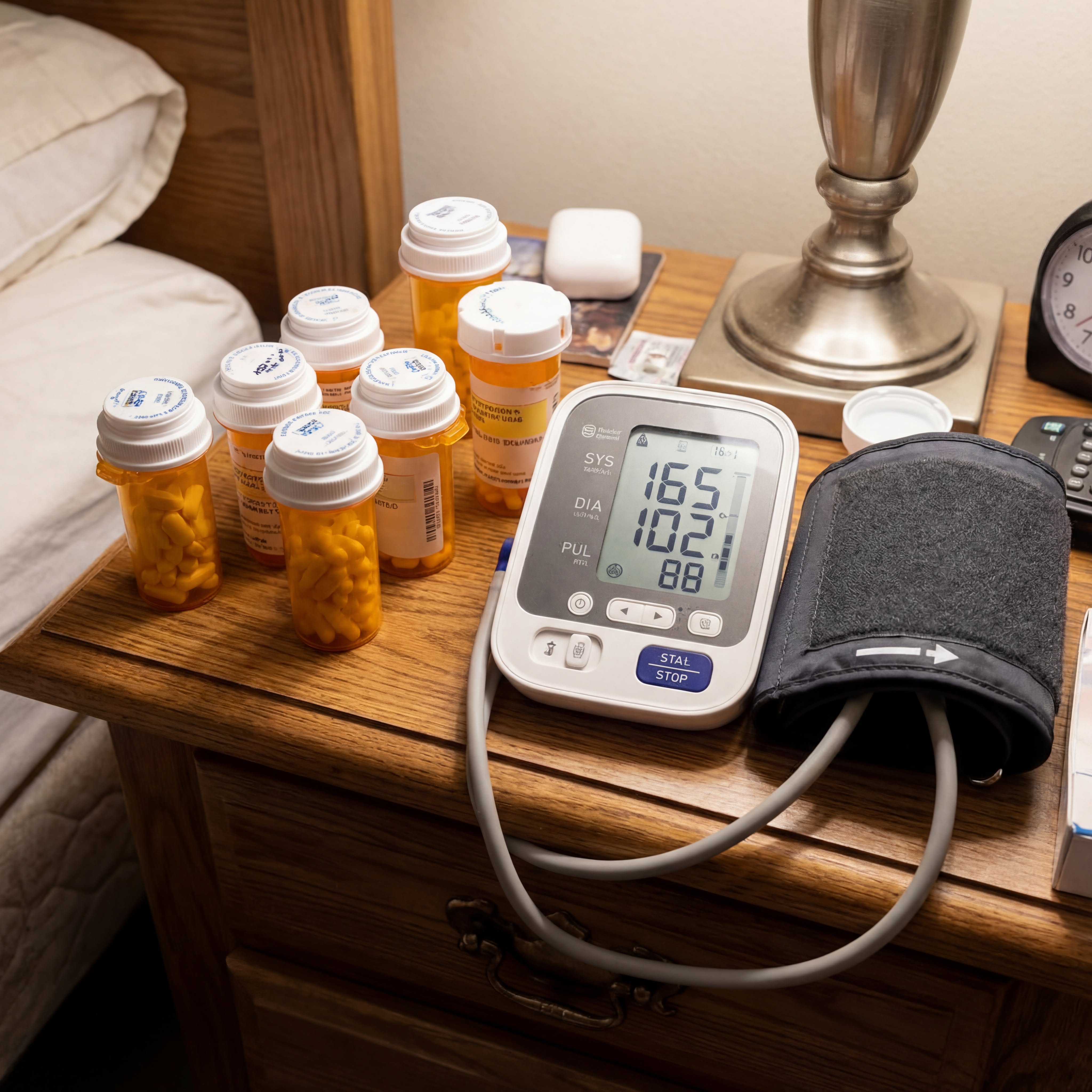
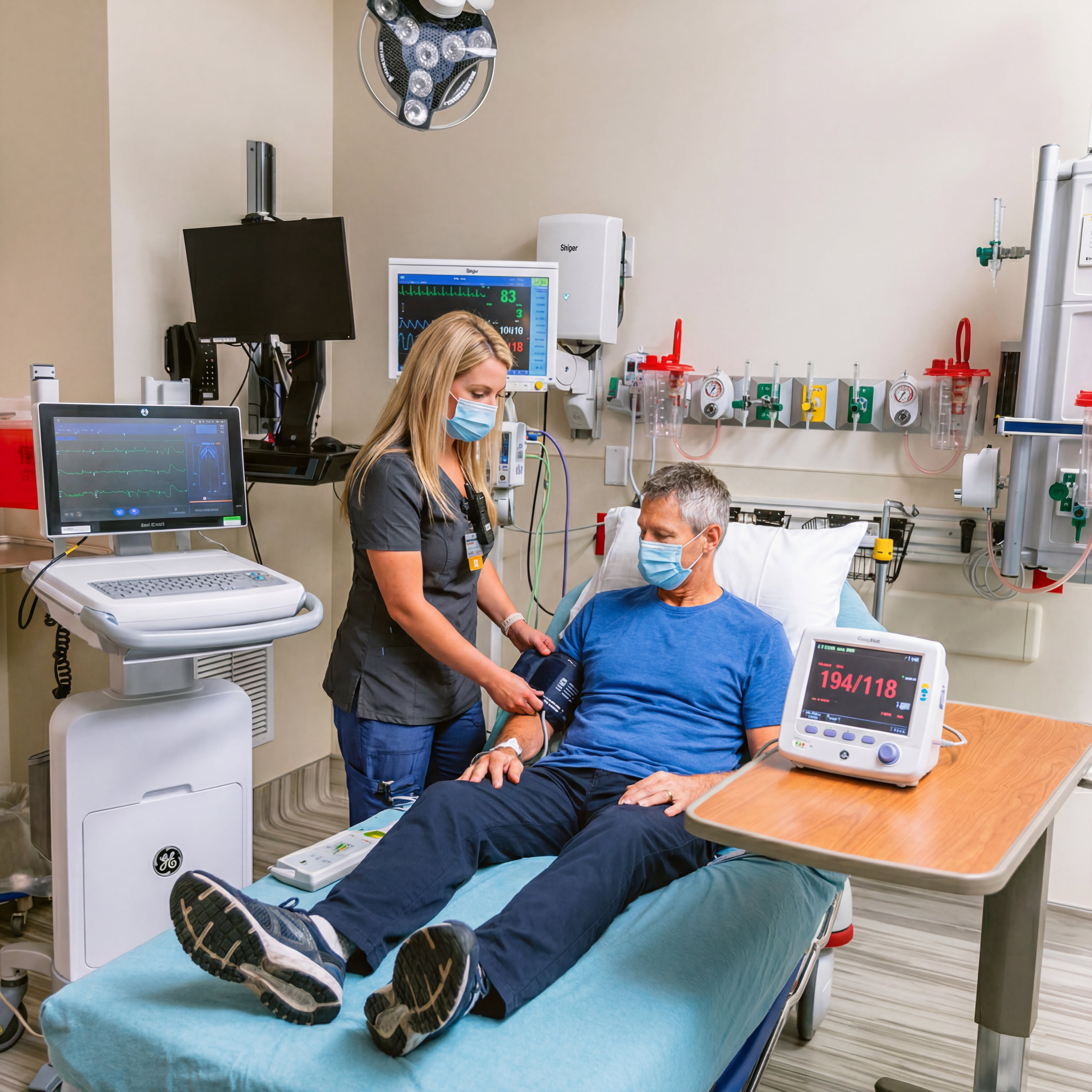
If you are a man on Lisinopril, Amlodipine, or similar blood pressure medication, and your numbers keep creeping back up no matter how many pills they add, you have somewhere between three and five years before the same silent damage reaches your heart or your brain. I am a cardiologist with 21 years of practice. I have spent the last decade watching this exact timeline play out in men on long-term blood pressure medication while telling almost none of them what was actually coming. I am writing this letter to break that silence. Men on long-term Lisinopril, Amlodipine, Losartan, Atenolol, and Metoprolol keep getting their cuff number "managed" while the lining of their arteries keeps failing underneath it — because the number on the cuff is the only outcome the eight-minute appointment is measuring. Almost none of these men are told that the same medication that is lowering their reading is doing nothing to touch the chronic inflammation that drove the pressure up in the first place. They are told the medication is "protecting their heart." That phrase, in isolation, is one of the most expensive half-truths in modern medicine. I'm Dr. David Parks. I'm a board-certified cardiologist who spent fifteen years writing eight-minute prescriptions and stacking a third and a fourth pill onto men without ever telling them what was quietly happening to them underneath the number. When my own numbers started climbing at 53, I understood something I had never explained to a single patient. The reading on your cuff is not the disease. The swollen ankles are not the disease. The cough that has kept your wife in the guest room is not the disease. They are all symptoms of one underlying problem — the chronic arterial inflammation that drove your pressure up in the first place, and that your medication is masking on paper while doing nothing to repair the vessel underneath. Almost every drug we add to a blood pressure protocol turns down one more symptom while the underlying damage keeps compounding. I have treated thousands of men on long-term blood pressure medication. I have seen what happens at year three on Lisinopril. Year five. Year eight. Year eleven. And I have seen what almost no cardiologist documents properly, because the appointments are too short and nobody is asking about the things men do not volunteer. The 61-year-old. On Lisinopril and Amlodipine for nine years. Cuff readings "managed" at 134 over 86 every visit. His primary care doctor was satisfied. The dry cough had been there for seven years — a known effect of ACE inhibitors — and he had been told to live with it. The swelling in his feet and ankles had been there almost as long, and he had been told to elevate his legs at night. His numbers kept creeping anyway, so a third pill got added, then the dose went up. He never complained. Two years later he had a stroke in his own driveway. His pressure on admission was 132 over 84. "Managed." His arteries had been silently inflaming the entire time, and not one visit had ever looked at them. The 57-year-old. Diagnosed at 47. On Losartan, Amlodipine, and Metoprolol for the last decade. Cuff reading "perfect." The fatigue and the brain fog had been there for years, and he had been told it was just age. Somewhere in year six a water pill got added for the swelling in his ankles — swelling the Amlodipine itself was causing. A drug prescribed to fix what another drug caused, and nobody in the chain ever said that sentence out loud. He was what we call medication resistant — every increase brought more side effects and almost no benefit. He told me once, flatly, "I'm on my 5th different set of medications." His numbers still spiked for no reason. Then, on a Tuesday, chest pain. It was a heart attack. His coronary calcium score came back at 340. His numbers had been "well managed" the entire time the plaque was quietly building underneath the reading. I see these men in follow-up. They do not complain. They are grateful their cuff reading looks good and that someone is "managing" it. But I know what they lost. They had years to address the inflammation that drove their pressure up in the first place. Years to restore the signal their arteries use to open on their own. Years to get out ahead of an event their medication was never able to prevent — because the disease was never the number the medication was built to move. Their bodies had been screaming the warning the entire time. The prescriptions just turned down the volume, one symptom at a time, while the real damage kept building. Here is what almost no doctor explains to a man whose numbers won't stay down. The pressure on your cuff is the downstream readout of how well the lining of your arteries is doing its one job: producing nitric oxide, the molecule that tells your arteries to relax and open when blood needs to move. A healthy lining makes enough of it, your vessels open on their own, and your pressure sits where it should. When that lining is inflamed, it goes quiet. It stops producing the signal. The muscle in the vessel is intact — it is simply no longer being told to open. So your heart has to shove blood through vessels that have stopped relaxing, and the number on your cuff climbs. That number is not your blood pressure problem. It is the readout of a lining that has been silenced. You don't have a hardened artery. You have a silenced one. Your doctor's answer to the climbing number is a prescription. Each class works differently, and this part matters, so read it slowly. ACE inhibitors like Lisinopril block the enzyme that tightens your vessels. Less tightening, the number drops. But they do nothing about the inflammation. The dry cough most men on Lisinopril develop is a byproduct of that same drug chemistry — and if you have ever thought that cough is insane, you already know the medication is doing things in your body that have nothing to do with fixing the cause. Calcium channel blockers like Amlodipine force the muscle around your arteries to relax from the outside. The number drops. The swollen feet and ankles most men on Amlodipine develop are the same effect showing up in the legs. The inflammation stays exactly where it was. Beta blockers like Metoprolol and Atenolol slow the heart down. The number drops. The fatigue and the fog come with it. The inflammation is untouched. Each class moves the number. None of them repair the lining. That is not a flaw in the drugs — it is simply not what they were built to do. So read your own chart the way I have learned to read them. The number that will not stay down no matter how many pills they add is not the warning. The swelling in your feet and the cough that moved your wife to the guest room are the warning. The fatigue and the 2 o'clock fog that came before either of them — the tiredness you were told was just age — are the warning before the warning. And the stroke or the heart attack your medication cannot prevent, because the damage is inflammatory and not just a matter of the reading — that is the disease. High blood pressure is called the silent killer for a reason — the CDC will tell you it often gives no warning at all, and that the number on the cuff is the only thing anyone measures. The American Heart Association is blunter than most doctors are: when the pressure stays high on three medications, that should trigger a search for the real cause underneath. Almost nobody runs that search. They just add the fourth pill. Your climbing numbers are not you being weak or genetic or broken. They are your early-warning system. And the warning is louder than your cuff reading. I was not going to start on myself the cascade I had been writing for thousands of my own patients. And I needed a path that actually addressed the cause instead of masking the next symptom. I tried what everyone tries. Lifestyle changes. The Mediterranean diet. More exercise. Losing the weight. All of it helped a little, and none of it moved the number the way it needed to. Then the standard supplements. Beetroot powder. Garlic capsules. Magnesium. Fish oil. The whole graveyard. Did not move the needle. My numbers stayed managed by Lisinopril and Amlodipine. But my inflammatory markers stayed high, my ankles stayed swollen, and the cough kept my wife in the other room. The medication had moved the number while the thing underneath kept going. But I kept coming back to something that made no sense in standard practice. An inflamed, silenced artery lining can recover — even on long-term blood pressure medication — if you actually calm the inflammation and restore the signal. Nitric oxide production can be brought back. The cardiology research on how that molecule keeps arteries open had been sitting there for years. Almost no one in primary care was applying it. So why was I not applying it to myself? March 3rd. 11:40 PM. I was reviewing journals after a long clinic day, and I couldn't sleep. My ankles were worse. The number that evening had been 148 over 94 despite everything. I was scrolling through research on how to reverse a damaged artery lining. Not looking for anything in particular. Just exhausted. I found a paper on a receptor called TRPV1 in the lining of blood vessels, and the one thing that switches it on. More specifically, the compound in cayenne pepper: capsaicin. It activates TRPV1 receptors in the lining of every blood vessel in the body, and that triggers a sustained release of nitric oxide through a pathway that does not depend on the drug chemistry Lisinopril interferes with, or the calcium channels Amlodipine suppresses. It works at the source — the lining itself — telling the artery to open the way a healthy one does on its own. David Julius at UCSF won the Nobel Prize in 2021 specifically for discovering how that receptor works. I sat there at 11:40 PM staring at the diagram. Lisinopril was managing my number while doing nothing for the inflammation. The Amlodipine was already forcing the muscle around my vessels to relax from the outside. And the third pill — the thiazide my own protocol said to add next — would have pulled fluid off and moved the number one more time while restoring nothing. All of it working on the surface. None of it touching the cause. Capsaicin activates the lining directly, on a pathway that sits outside the drug cascades entirely, so the artery's own signal comes back at the source. The lining heals instead of being chemically overridden. I have been a cardiologist for 21 years. And I had never once connected cayenne pepper to the exact vascular problem I treat every single day. The shared mechanism was never part of any cardiology curriculum I sat through. At 12:05 AM I went looking for a properly made version. And what I learned in that search is something every man on blood pressure medication needs to know before he wastes another $20. You cannot get there from the tub of cayenne powder or beet powder in your cupboard. Swallow a dried powder in a capsule and most of the active compound is destroyed by your stomach acid before it ever reaches your bloodstream. You absorb maybe 10 or 15 percent of it. That is not a knock on beetroot — beetroot is real, and the nitrates in it are exactly the raw material a working lining turns into nitric oxide. You had the right idea. You had the wrong form. Nobody can eat 30 pounds of beets, and the dried whole-beet powder in the cupboard is not a concentrate that actually arrives where the vessel is. What arrives is a liquid extract. Concentrated, absorbed in minutes instead of destroyed in the stomach, and dosed at study-grade strength — cayenne reduced 20 pounds into one, beetroot 30 into one, in a form your body takes up directly. I found one brand that was made this way. Onaise Vascuflow. A liquid, not a capsule. Cayenne extract at 100 mg, 20 to 1 — the engine, the ingredient the whole formula is built around. Beetroot extract at 100 mg, 30 to 1. Hawthorn berry. Turmeric, whose active compound curcumin is one of the few things shown to calm chronic arterial inflammation directly. Vitamins D3 and K2. And everything in the bottle is there to serve the one mechanism I found that night. The capsaicin switches the lining's signal back on through TRPV1 — you feel a real warmth in your chest within about 15 to 20 minutes, which is the circulation opening — while the turmeric puts out the inflammation that was silencing the lining in the first place, and the beetroot keeps the reawakened lining supplied with the raw nitrate it turns into its own nitric oxide. One engine, two supports. The capsaicin turns the signal back on. The turmeric clears what was smothering it. The beetroot feeds it. I ordered it that night. One dropperful every morning with breakfast. I did not change a single one of my medications, and I want you to hear that clearly. I started March 4th. March 11th. One week in. A gentle warmth in my chest fifteen minutes after the dropper, and the first night in months the cough did not wake me. March 18th. Two weeks in. The 2 o'clock crash easing. Sleeping deeper. April 1st. Four weeks in. I pressed a thumb into my ankle at the kitchen table and the dent came back up the way it used to when I was 47. The swelling was going. My numbers were steadier — less of the bouncing, no random spikes. My wife asked what I had changed. "Different approach," I told her. "Whatever it is, keep doing it." April 29th. Eight weeks in. Repeat bloodwork. My pressure was down from 148 over 94 to 128 over 82 at the same medication dose. My primary care doctor looked at three weeks of my logged readings and took me off one of my two pills. My inflammatory markers were down across the panel. I went to a cardiologist colleague — a man I trained with — for a second read on the numbers. He looked at my chart. Looked at his notes from six months before. "David, what did you do?" I explained the TRPV1 receptor. The nitric oxide pathway that comes back at the source. The way it sits outside the drug chemistry entirely. He was quiet for a long moment. "I have hundreds of patients on Lisinopril and Amlodipine whose numbers I keep chasing with another pill. If what you are describing is reproducible..." "The mechanism is real." He started recommending it to his own patients whose numbers would not stay down. I am not writing this letter because I am against blood pressure medication. These medications save lives. They prevent catastrophic strokes and hypertensive emergencies. If your doctor has prescribed one, please do not stop it without that conversation. But your medication does not repair the inflamed lining underneath the number. It moves the reading while the real disease keeps progressing in a quieter form — showing up first as the swelling, the cough, the fog, and the number that climbs back up for no reason no matter how many pills they add. The pills mask the problem. The inflammation is the real thing. And nobody ever told you there was a root cause to address, because the appointment was only ever measuring the number. You don't have a hardened artery. You have a silenced one. Your swollen ankles are not failing you. Your climbing numbers are not failing you. They are warning you. I think about what I almost did. I almost added the third pill on top of the first two. I almost accepted the swelling and the cough and the fog as the price of a "managed" number, and let my arteries keep going while the reading looked fine on the chart. Eight weeks. That is how long it took for my numbers to come down further, my swelling to go, my fog to lift, and my own doctor to reduce a dose he had never once talked about reducing before — while I stayed on my medication the entire time and let my body, not a schedule, decide. Onaise Vascuflow costs $36 for a full month — less than a single month of most of the co-pays and specialist visits this disease already charges you. It comes with a 30-day money-back guarantee. If your readings, your energy, and the way your body feels have not changed, you send it back for a full refund, no questions asked. https://onaise.com/products/vascuflow-heart-health-booster — Dr. David Parks, MD Board-Certified Cardiologist, 21 years Practicing physician P.S. — Give it 30 to 60 days. Track your cuff reading in the morning. Track your energy. Track the swelling and the cough. If the trend lines do not move, send it back. The downside is a refund. The upside is not becoming the man who added two more pills to manage side effects the first pills created. P.P.S. — You are not too late yet. A silenced artery is not a hardened one — the muscle in the wall is intact, and the signal can still be switched back on. Your medication is doing exactly what it was designed to do for the number on your cuff. Now do the one thing it will never do for you: calm the inflammation and restore the signal, before the damage your appointment keeps missing reaches the organ everyone finally pays attention to.
Like this ad? Make it yours.
Crush rebuilds this exact creative around your product — your brand, your colors, your offer — in about a minute.