Cheryl Lee Anthony
Cheryl Lee Anthony Facebook ad: “Read this if your outside stopped matching your inside.”

Ran for 5 days, from March 21 to March 26, 2026, the last day Crush saw it.
Run by Cheryl Lee Anthony on Facebook. Crush is not the advertiser and does not verify its claims. See this ad in Meta's Ad Library(opens in a new tab)
Want an ad like this for your product?
Crush makes new ad images for your product from this ad: your logo, your product photo, your offer.
Trials from $19.95 USD, then $79.95 USD a month. Cancel anytime.
About this ad
- Meta Ad Library ID
- 1203818405158030
- Platforms
- Facebook, Instagram, Messenger and Threads
- Relaunches
- 2
- Niche
- Skincare & Beauty
Ad text
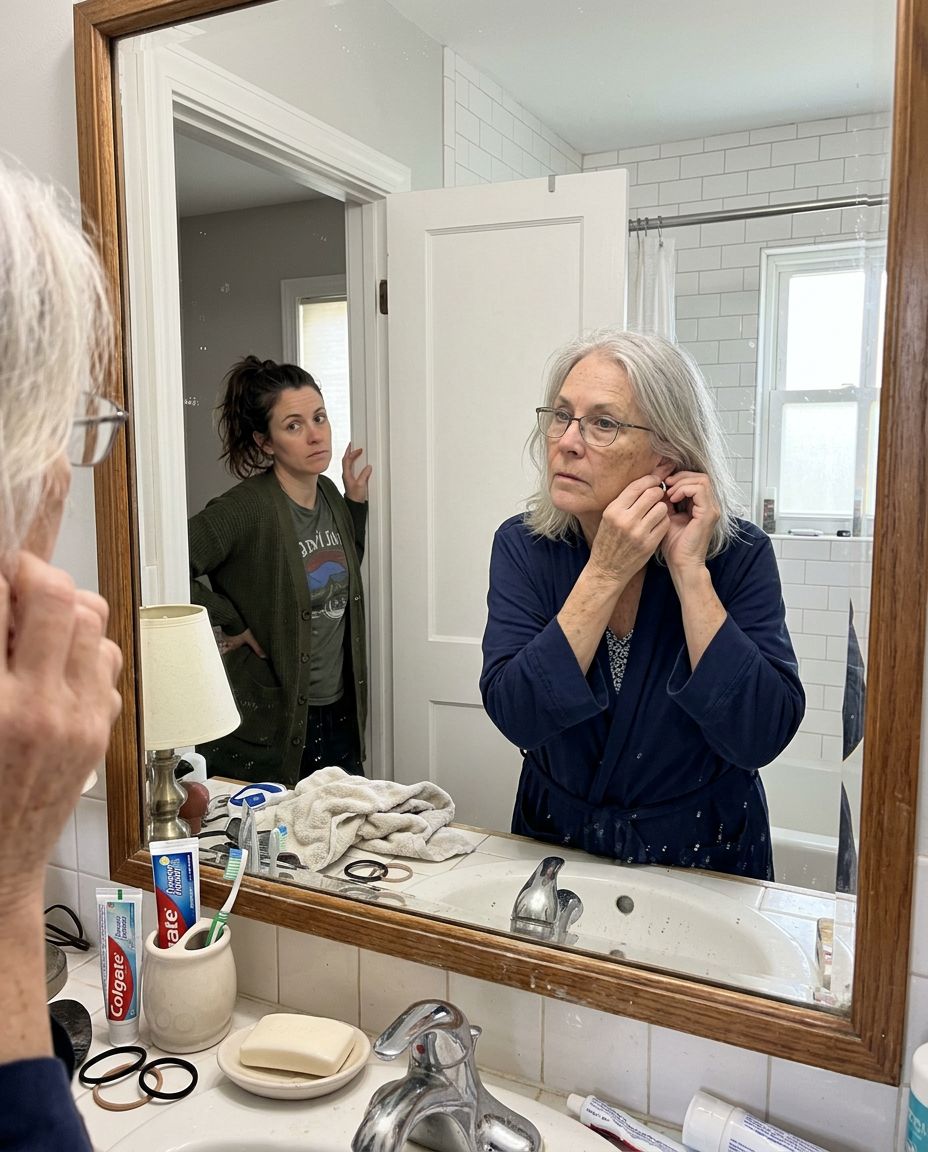
My husband took a candid of me laughing at dinner and when I saw it I asked him to delete it. He said, "Why? You look happy." I couldn't explain that happy wasn't the problem. The problem was that the woman in that photo wasn't me. I don't mean that in some poetic, metaphorical way. I mean I looked at my own face in that picture and my first thought was "who is that." The skin looked dull and tired. Thin in a way that made every line deeper and every shadow harsher. The skin around my eyes looked like it belonged to someone fifteen years older than the woman I see when I close my eyes and picture myself. And the worst part? My husband genuinely didn't understand why I wanted it deleted. Because to him, it happened gradually. He sees me every day. He adjusted. But I hadn't adjusted. Because inside my head, I'm still the woman from 2019. The one in the photos on our mantle. The one whose skin had a glow to it, a thickness, a bounce — like there was life behind it. I started avoiding cameras after that dinner. Not obviously. Just... positioning myself behind people in group shots. Offering to be the one who takes the photo. Leaving the room when someone pulled out a phone. My daughter tagged me in a photo at Easter and I untagged myself within an hour. I told myself this was normal. Everyone hates photos of themselves. That's just being a woman over 55. But it wasn't that. And I knew it wasn't that. It was grief. Actual grief. For a face I used to recognize. I tried to fix it the way you try to fix everything at this age. I spent money. A lot of it. An $85 retinol from a brand my dermatologist recommended. It made the surface smoother but the dullness, the thinning, the crepey texture that made my skin look lifeless — untouched. Like putting fresh paint on a wall that's rotting from the inside. A collagen powder my friend swore by. It clumped in my coffee every single morning. It tasted like something between chalk and fish. I forced it down for six weeks and saw absolutely nothing change. Not my skin. Not my nails. Not one thing. A NuFace device I found on sale for $189. Used it maybe five times. Twenty minutes a day, twice a day, and any tightening I thought I saw disappeared by the next morning. I spent probably $2,000 in a year chasing something I couldn't name. And every product I tried made me feel more stupid for believing it would work. Then one night — and I mean 1 AM, couldn't sleep, my phone too bright in the dark — I was reading about why collagen production drops after menopause. Not looking for a product. Just trying to understand what was actually happening to me biologically. Why it felt like my skin changed overnight even though I know it didn't. And I found something that made me sit up in bed. The collagen in your skin isn't just "moisture" or "hydration" or whatever the skincare industry has been telling us. It's the foundation. It's what gives your skin its thickness, its firmness, its bounce, its ability to hold moisture from the inside. It's the difference between skin that looks alive — glowing, resilient, dewy — and skin that looks flat and tired no matter how much you sleep. And after menopause, your body doesn't just slow down production. It drops off a cliff. The collagen density in the dermal layer starts depleting rapidly. Not at the surface where your creams can reach it. Deep underneath, where no topical product on earth can go. That's why my skin looked different in photos. Not because I'd aged. Because the internal density that gave my skin its glow and thickness had been quietly depleting for years. And everything I'd been buying was trying to fix the surface of a building whose foundation was thinning from the inside. The retinol. The creams. The serums. The device. None of them could reach the dermis. None of them could touch the layer where collagen actually lives and does its work. They were all treating the roof while the foundation deteriorated. I felt sick. Not because it was bad news. Because it explained everything. It explained why I'd spent thousands and seen nothing change. It explained why my skin felt thin and papery even when it was "hydrated." It explained why the dullness and thinning kept progressing no matter what I put ON my face. The problem was never on my face. It was underneath it. I started researching what could actually reach the dermal layer. And most of what I found was disappointing. Cheap collagen pills that the body breaks down into basic amino acids before they ever reach the skin. Powders with huge doses that sound impressive until you learn the molecules are too large to survive digestion intact. Then I learned about hydrolyzed marine collagen peptides — collagen that's been pre-broken down into molecules small enough to actually pass through digestion and signal the body to produce its own collagen again. Not bovine. Marine. Smaller peptides. Higher bioavailability. No gamey taste. I was skeptical. I'd earned the right to be skeptical. But I found a gummy that delivered 2,500mg per serving. Not the 100 or 200mg most collagen gummies hide behind. Twenty-five hundred. With hyaluronic acid and vitamin C to support the actual synthesis process. Marine-sourced. Sugar-free. Two gummies with my morning coffee. That was the entire routine. I didn't expect anything. I had trained myself not to expect anything. Week three, my nails stopped peeling. I almost didn't notice. I was cutting them and realized I couldn't remember the last time one had cracked. Week six, I touched my cheek and something felt different. Not dramatic. Just... not dry. There was a density there that hadn't been there. A thickness. Like the skin had something behind it again instead of just sitting there, thin and tired. Week ten, my daughter took a photo of us at brunch. I looked at it and didn't ask her to delete it. I didn't look twenty years younger. I didn't look "transformed." My skin looked healthy. There was a glow to it — a dewiness, a warmth — that I hadn't seen in years. The dull, flat, exhausted look that had been making me avoid every camera for two years was lifting. Not because of a filter. Because the skin itself looked hydrated and alive in a way it hadn't for a long time. My husband saw the photo and said, "That's a great picture of you." I almost cried. Not because of the compliment. Because for the first time in two years, the woman in the photo looked like the woman I still feel like inside. I'm not sharing this to sell you something. I'm sharing it because I spent two years thinking I was losing my face to aging and there was nothing I could do about it. And that was wrong. I wasn't aging. I was depleted. And depletion is something you can actually address — once you understand what's really happening underneath the surface. If you've been deleting photos of yourself, if you've been untagging yourself, if you've been quietly making your world smaller because the woman in the camera doesn't match the woman you still are — the problem might not be what you think it is. And the answer might be a lot simpler than everything you've already tried.
Where the ad sends people
gethalolabs.com
Read this if your outside stopped matching your inside.
Gethalolabs
Shop now: gethalolabs.com(opens in a new tab)