
Active· since May 18, 2026
- 120
- days running
- 0
- relaunches
Ad copy
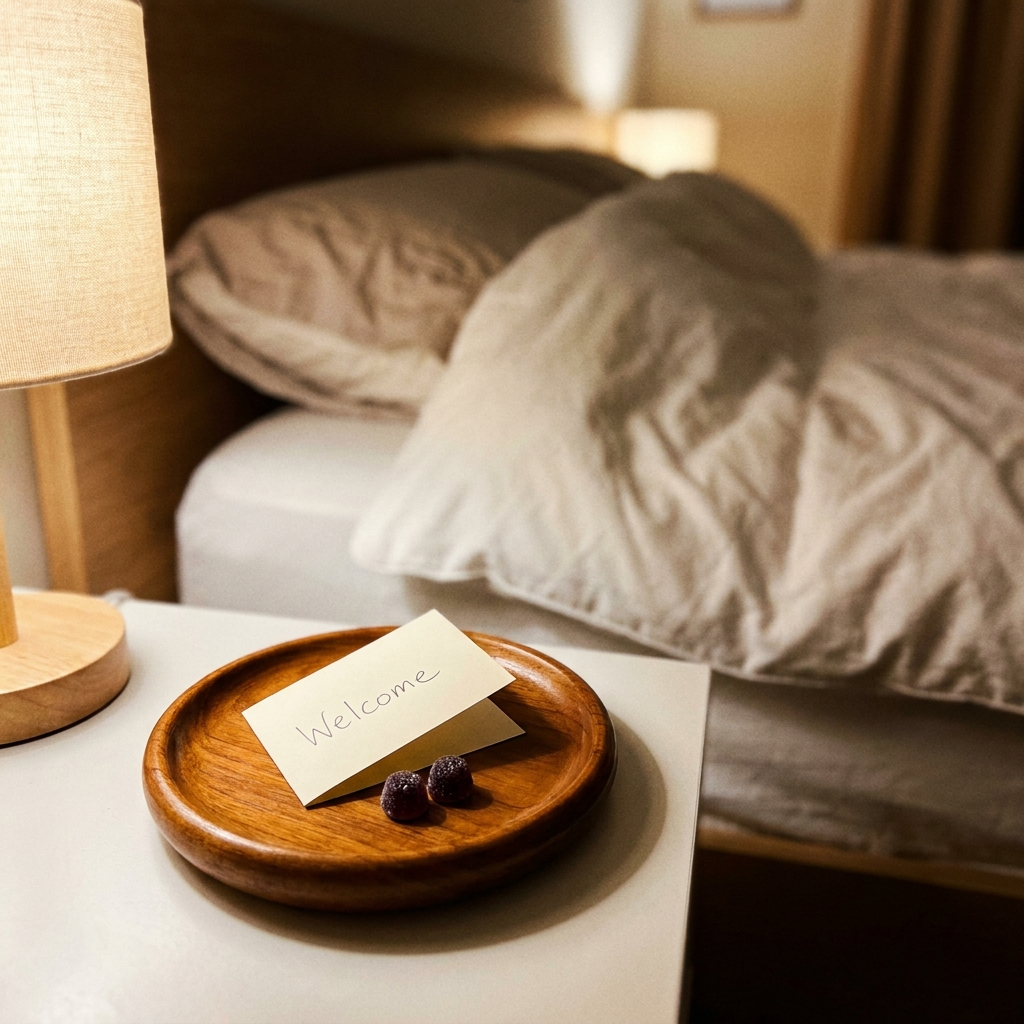
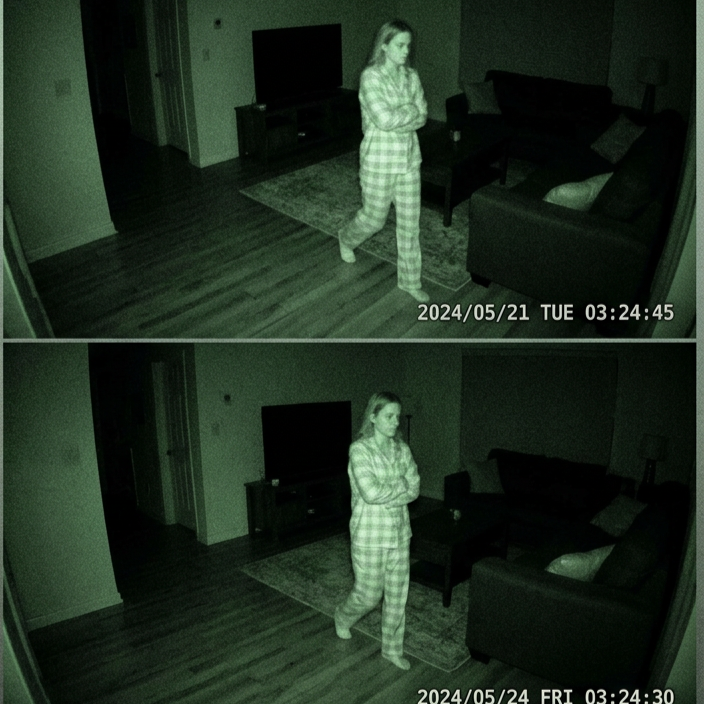
I work at a luxury longevity clinic in Scottsdale. Every night before I leave my shift, I knock on each guest room door and hand them a small wooden dish with two gummies and a card that says part of your evening protocol. What happens by day three is always the same. I've been wanting to write this down for a while. Not because I'm trying to sell anything. Because I've watched the same thing happen over and over again for almost two years, and I think most people have no idea. I'm not a doctor. I'm not a nutritionist. I'm not a longevity coach. I'm the person who greets guests at the front desk, coordinates their daily schedule, and handles anything they need while they're here. I'm the one they see most. The one they talk to when the coaches are in sessions, and they have a question they don't want to sound stupid asking. So I hear everything. And I see everything. The guests who come here are a very specific kind of person. Mostly women, mostly in their 40s and 50s, mostly very successful by every measure that's supposed to matter. They're paying $2,800 a night because they haven't slept properly in years and their body is falling apart because of it. You can see it the moment they walk in. Dark circles under expensive concealer. Puffy faces. Stiff movements like their bodies are ten years older than their age. They're not tired the way you're tired after a long day. They're tired in a way that has settled into their bones and won't leave no matter how much they rest. Almost all of them tell me the same thing during intake. They fall asleep fine. That's not the problem. The problem is 3AM. Their eyes snap open. Their heart is racing. Their brain switches on like someone flipped a light. The to-do list. The worry. The replaying of conversations. They're wide awake and exhausted at the same time. And no amount of deep breathing or relaxation techniques will get them back down. They lie there for two or three hours and then the alarm goes off and they start the day already in a deficit. And it's not just the sleep. It's what the years of broken sleep have done to the rest of their body. Their joints are stiff every morning. Their muscles cramp at night. Their brain feels foggy by noon. They forget words mid-sentence. Their face is puffy. They've gained weight around their middle that won't come off no matter what they do. They feel like they're aging faster than they should be. Most of them think these are separate problems. The sleep is one thing. The joint pain is another. The brain fog is another. The weight is another. They've been to different doctors for each one. Nobody has ever connected them. Nobody has ever told them that every single one of these problems is downstream of one thing that happens at 3AM. They're here because they've accepted that normal channels aren't going to fix this. On day one, they go through the full program. Infrared panels in the morning, IV therapy midday, guided somatic sessions in the afternoon, an early dinner with nothing processed. They sleep a little better that first night, and they assume it's because they're finally off their phone or because the drive in from the airport wiped them out. They don't read much into it. Day two, something changes. I see it at breakfast. Their face isn't as puffy. Their eyes aren't as heavy. One woman told me she woke up on day two and realized she hadn't woken up at 3AM for the first time in years. She'd slept straight through. She said it felt like her brain had finally shut off instead of running all night. Another guest told me her knees didn't hurt getting out of bed. Another said the fog was lighter. She could finish a sentence without losing the word. A few credit the IV therapy. Others think it's the infrared. Some think it's the food. It's always different guesses. Always wrong. By day three, it's obvious. There's no other word for it. They look like they got some essential piece of themselves back. The puffiness is gone. Their body moves differently. They walk to breakfast instead of shuffling. They're sharper. They're laughing. They'll come to me before the morning session and say something like I don't know what you're doing here, but whatever it is, it's working, and they're in disbelief because they've spent years and thousands of dollars trying to get to this exact feeling. And they thank the clinic. They thank the doctors. They write reviews about the IV protocols and the infrared therapy and the regenerative medicine approach. They think it's the environment. The expertise. The $2,800-a-night program built by doctors with decades of experience. But after watching this happen hundreds of times, I know that's not what's doing most of it. It's the gummies on the wooden dish. Dr. Hale is the medical director here. She designed the entire guest protocol. She's the one who told me to include the gummies in the evening handoff when I first started. She said they were non-negotiable. That every guest gets them from night one, no exceptions. She said the IV therapy and the infrared and the somatic work all matter. But without the gummies, the transformation guests experience by day three doesn't happen the way it does. I thought that was a strange thing to be firm about. They're gummies. Two little raspberry-flavored gummies on a wooden dish. How could that be the thing driving the transformation in a clinic that offers $500 IV infusions and $800 infrared panel sessions? I asked Dr. Hale about it once on a slow afternoon. She sat me down and explained something that changed how I understand what's happening to every woman who walks through our doors. She said the 3AM wake-up is not a sleep problem. It's a cortisol problem. She said cortisol is your body's stress hormone. During a healthy night it follows a specific pattern. It drops to its lowest point between 10PM and 2AM so your body can enter deep restorative sleep. Then it gradually rises through the early morning hours so you wake up naturally around 6 or 7 feeling rested and alert. She said in most of the women who come here that pattern is broken. Their cortisol doesn't drop at night the way it's supposed to. It stays elevated. Or worse — it spikes at 3AM when it should be at its absolute lowest. That spike is what jolts them awake. Heart racing. Brain running. Wide awake and wired even though their body is exhausted. She said once cortisol fires at 3AM it suppresses melatonin. Melatonin is the hormone that keeps you asleep. When cortisol spikes it shuts melatonin off. So the woman isn't just awake — she's chemically unable to fall back asleep. She lies there for two or three hours not because she's stressed about tomorrow but because the hormone that's supposed to keep her sleeping just got overridden by the hormone that woke her up. No amount of deep breathing will fix a chemical override. She said and here's what nobody tells these women. That 3AM cortisol spike isn't just ruining their sleep. It's ruining everything else. When cortisol stays elevated night after night the body never completes its repair cycle. Sleep is when your body heals. Your joints repair. Your muscles recover. Your brain clears out the fog. Your face loses the puffiness. Your metabolism resets. When cortisol keeps interrupting that repair cycle night after night for years, the damage accumulates. The joints stiffen because they never got repaired. The muscles cramp because they never got recovered. The brain fogs because it never got cleared. The face puffs because the fluid never got processed. The weight settles around the middle because cortisol tells the body to store fat in the abdomen. She said every woman who walks through our door with stiff joints and brain fog and puffy face and belly weight and leg cramps thinks she has five separate problems. She has one. Her cortisol is wrecking her sleep. And her wrecked sleep is wrecking everything else. She said the reason their cortisol is out of control is because the mineral that regulates it has been depleted for years. Magnesium. Magnesium is what tells cortisol to stand down at night. It's what activates the GABA receptors in the brain — those are the off-switches that bring cortisol down and let the nervous system power off. Without enough magnesium the GABA switches don't work. Cortisol has no brake. It runs all night. It spikes whenever it wants. And the body never gets the deep sleep it needs to repair itself. She said the form matters more than the dose. The form she uses at the clinic is magnesium bisglycinate. It's magnesium bonded to two glycine molecules. The body recognizes it as an amino acid instead of a mineral so it absorbs at a rate most other forms can't match. It crosses the blood-brain barrier and reaches the nervous system where cortisol regulation actually happens. Most other forms of magnesium sit in the gut and never get to where the cortisol switch is. This form does. She said glycine itself has a calming effect on the nervous system. So the bisglycinate form does two things at once. The magnesium activates the GABA receptors that bring cortisol down. The glycine quiets the nervous system so the cortisol drop holds through the night instead of bouncing back up at 3AM. Together they restore the natural cortisol rhythm — low at night, rising in the morning. The body enters deep restorative sleep for the first time in years. And when the sleep restores, the repair cycle restores. And when the repair cycle restores, everything else starts resolving on its own. She said that's why guests feel the shift by day two instead of day twenty. The cortisol rhythm starts resetting from the first night. By the second night the body is entering deep sleep it hasn't had in years. By the third morning the repair cycle has run long enough that the joints loosen, the fog lifts, the puffiness goes down, and the body feels like it's healing instead of fighting. She said she builds it into the evening protocol because if she just told guests to take magnesium bisglycinate, most of them would say they've already tried magnesium and it didn't work. So she just gives it to them. By day two they feel the difference. By day three they're asking her what changed. And then she explains. I started taking the gummies myself that week. By day two I noticed something I hadn't expected. My lower back, which had been stiff every morning for about a year, was loose. I'd been blaming my desk chair. I'd bought a $400 ergonomic seat and a standing desk converter. The stiffness had never gone away. Two days of actually sleeping through the night and it was gone. Because my body had finally completed the repair cycle it had been failing to complete for months. By day four my legs stopped cramping at night. I'd been getting them once or twice a week. Sharp cramps in my calves that would wake me up and leave the muscle sore for two days. Gone. By the end of the second week my brain felt different. Clearer. I wasn't reaching for words at 3PM. I wasn't crashing after lunch. I had a kind of steady energy I hadn't felt in years. Not caffeine energy. Just my body finally working the way it was supposed to work because it was finally sleeping the way it was supposed to sleep. I didn't realize how much my body had been falling apart from bad sleep until the sleep got fixed and everything else got fixed with it. A guest named Patricia came through around six months into my time here. She was 58. She hadn't slept through the night in four years. Every single night she'd bolt awake at 3AM with her heart racing and her brain running and she'd lie there until the alarm. In those four years everything else had collapsed. Fatigue so deep she could barely function past 2PM. Brain fog that made her forget words mid-sentence. Joint pain that moved around her body week by week. Leg cramps twice a week. Puffy face every morning. Fifteen pounds around her middle that wouldn't budge no matter what she did. She'd seen four different specialists. Every test came back normal. She was convinced something was seriously wrong with her that nobody could find. She stayed four days. She slept through the night on day two for the first time in four years. No 3AM wake-up. No racing heart. No brain running. She just slept. By day three the joint pain was almost gone. The fog had lifted. No cramps. The puffiness was down. She checked out with tears in her eyes telling Dr. Hale she felt like she'd gotten a decade of her life back. She came back four months later. Everything had come back. The 3AM wake-ups. The fatigue. The fog. The cramps. The joint pain. She was crushed. She thought the clinic was the only place her body worked. I asked her if she'd been taking the gummies after she left. She said she'd gone to Whole Foods the week she got home and bought magnesium. She thought it was the same thing. I asked her what form. She didn't know. She said the label said magnesium and that seemed close enough. I told her gently that not all forms of magnesium reach the brain where cortisol regulation happens. Most forms sit in the gut. The form we use at the clinic is bisglycinate because it crosses into the nervous system and actually activates the switches that bring cortisol down at night. That's why it works in two days here and the form she bought at home didn't work in four months. She said "I spent four months thinking my body was broken. It wasn't broken. I just wasn't sleeping. And I wasn't sleeping because my cortisol had no brake." She ordered the right form from her phone in the lobby before she even went to her room. She messaged me through the clinic app about two weeks later. Sleeping through the night. No 3AM wake-ups. Joint pain gone. Fog lifted. Cramps stopped. At home. In her regular life. Without the $2,800-a-night protocol around it. Same transformation. No clinic required. Because the cortisol regulated, the sleep restored, and when the sleep restored, the body repaired itself. That's what nobody tells you when you leave a place like this. The environment helps. The doctors are exceptional. The programming is real, and it matters. All of it contributes. But the reason most guests feel the shift by day three isn't the setting. Dr. Hale told me she believes the gummies drive the majority of the transformation. After watching hundreds of guests go through the same arc, I have no reason to disagree with her. If you haven't slept through the night in years. If you bolt awake at 3AM with your heart racing and your brain running and you can't get back down. If your body is falling apart and nobody can tell you why. If your joints ache and your brain fogs and your legs cramp and your face is puffy every morning and you've been to three specialists and everything comes back normal — it's not in your head. It's in your cortisol. And the reason your cortisol won't calm down at night is the reason everything else is breaking down. There's an article I keep bookmarked that explains the whole thing. How cortisol disrupts sleep and how broken sleep drives everything else. Why most forms of magnesium never reach the brain where cortisol regulation happens. Why bisglycinate is different. And the brand we use at the clinic. It's written in plain language, not medical language. It's what I wish I could hand every guest when they arrive instead of quietly knocking on their door with a wooden dish and hoping they don't ask too many questions. The link is below. Five minutes and you'll understand more about what's happening inside your body than three specialists and six rounds of bloodwork ever told you.
Like this ad? Make it yours.
Crush rebuilds this exact creative around your product — your brand, your colors, your offer — in about a minute.