
Active· since Apr 19, 2026
- 148
- days running
- 11
- relaunches
Ad copy
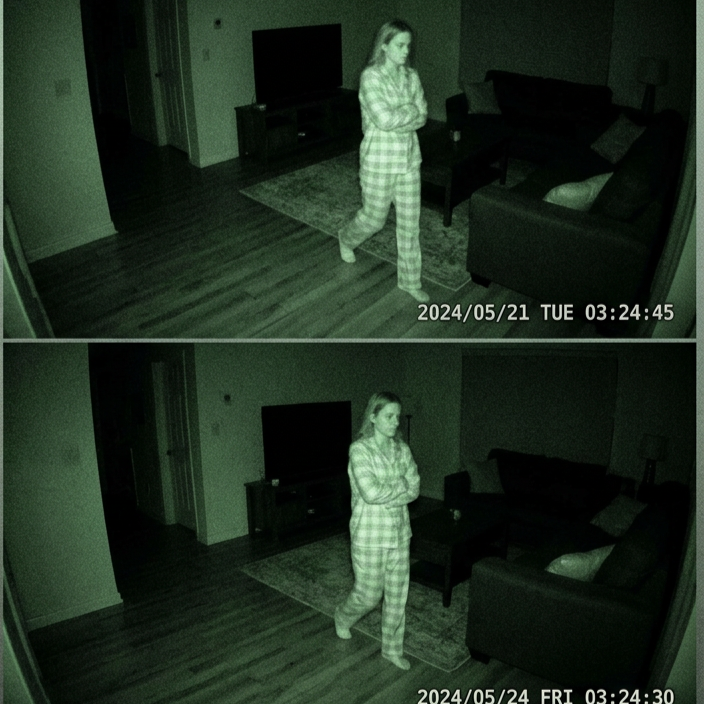
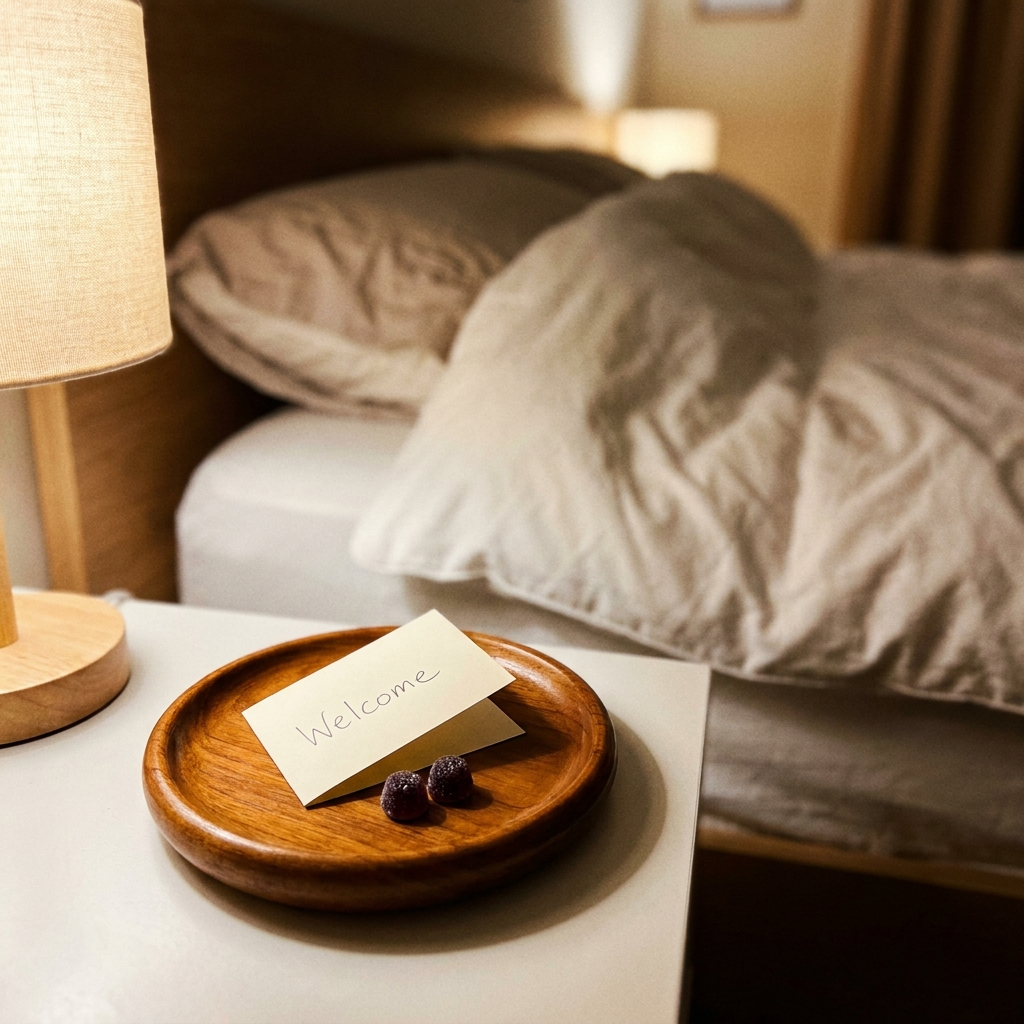
I work at a $2,800-a-night private longevity clinic in Scottsdale. Every night before I leave my shift, I knock on each guest room door and hand them a small wooden dish with two gummies and a card that says part of your evening protocol. What happens by day three is always the same. I've been wanting to write this down for a while. Not because I'm trying to sell anything. Because I've watched the same thing happen over and over again for almost two years, and I think most people have no idea. I'm not a doctor. I'm not a nutritionist. I'm not a longevity coach. I'm the person who greets guests at the front desk, coordinates their daily schedule, and handles anything they need while they're here. I'm the one they see most. The one they talk to when the coaches are in sessions, and they have a question they don't want to sound stupid asking. So I hear everything. And I see everything. The guests who come here are a very specific kind of person. Mostly women, mostly in their 40s and 50s, mostly very successful by every measure that's supposed to matter. They're paying $2,800 a night because something isn't working, and they've run out of ideas. You can see it the moment they walk in. These are women who hold entire organisations together during the day and then spend their nights staring at the ceiling. They've got dark circles under expensive concealer. They move like their bodies are heavier than they should be. They're not tired the way you're tired after a long day. They're tired in a way that's been going on for so long, they've started to think it's just who they are now. Almost all of them tell me the same thing during intake. They wake up between 2 and 4 in the morning. Every night. Sometimes they fall back asleep, sometimes they don't. Their brain just starts. The mental list. The worry spiral. The replaying of conversations. They've tried melatonin. Magnesium. Prescriptions. Sleep hygiene routines. Podcasts about nervous system regulation. Some of them have seen three different specialists and been told everything looks normal. They're here because they've accepted that normal channels aren't going to fix this. On day one, they go through the full program. Infrared panels in the morning, IV therapy midday, guided somatic sessions in the afternoon, an early dinner with nothing processed. They sleep a little better that first night, and they assume it's because they're finally off their phone or because the drive in from the airport wiped them out. They don't read much into it. Day two, something changes. I see it at breakfast. Their face isn't as tight. One woman told me she slept so hard on night two that she didn't even remember her dreams, which apparently meant something because she'd been having vivid, anxious dreams for years. She couldn't explain it. Said it felt like someone had turned the volume down. I've had guests ask if we changed their mattress between night one and night two. Others think it's the altitude. A few have credited the water. It's always different guesses. Always wrong. By day three, it's obvious. There's no other word for it. They look like they got some essential piece of themselves back. Their eyes have something in them again. They laugh more easily. They sit differently. The shoulders drop. The jaw unclenches. Some of them sit there quietly at breakfast on day three like they're trying to figure out who they were before they got this tired. They'll come to me before the morning session and say something like I don't know what you're doing here, but whatever it is, it's working, and they're in disbelief because they've spent years and a lot of money trying to get to this exact feeling. And they thank the clinic. They thank the doctors. They write reviews about the IV protocols and the somatic therapy, and the regenerative medicine approach and how it's unlike anything they've tried before. They think it's the environment. The expertise. The $2,800-a-night program was built by doctors with decades of experience. But after watching this happen hundreds of times, I know that's not what's doing most of it. It's the gummies on the wooden dish. Dr Hale is the medical director here. She designed the entire guest protocol. She's the one who told me to include the gummies in the evening handoff when I first started. She said they were non-negotiable. That every guest gets them from night one, no exceptions, and it's not optional, even if they say they already take magnesium. I thought that was a strange thing to be firm about. It's magnesium. Everyone's heard of magnesium. My mom buys it at Costco. I used to take it myself for a while and noticed nothing. I figured it was one of those supplements that works for some people and not others. I asked Dr Hale about it once on a slow afternoon. She asked me what kind of magnesium my mom was buying. I didn't know. She said that was the whole problem in one sentence. She explained it simply. There are different forms of magnesium, and they are not even close to equivalent. The form that dominates drugstore and grocery shelves is magnesium oxide. It's the cheapest form to manufacture. Your body absorbs maybe 4% of it. The rest creates digestive trouble and exits without doing anything useful. It will never help you sleep because it never actually gets into your cells. The gummies she uses at the clinic are magnesium bisglycinate. Completely different mechanism. The magnesium is bonded to glycine molecules that protect it all the way through your digestive system and allow it to absorb directly into the cells, where it can actually work. Your body uses the vast majority of it. It reaches your nervous system. It reaches your muscles. It gets to where it needs to go. And here's the part I didn't expect. Glycine, the amino acid it's bonded to, has its own calming effect on the brain. So you're getting two things at once: magnesium telling your muscles to let go of the tension they've been holding all day, and glycine quieting the mental noise that starts up the second your head hits the pillow. She said magnesium is essentially the signal your nervous system needs to power down. Without enough of it reaching your cells, your body stays in a state of low-level activation. Your cortisol stays elevated at night. Your thoughts keep running. You're physically exhausted, but your system doesn't have the raw material to actually switch off. You lie there wired and drained at the same time. She said almost every guest who walks through the door has been depleted for years. And almost every single one of them has tried magnesium and told her it didn't do anything. Every single time, when she digs into what form they were taking, it's oxide. Or something that says glycinate on the front and hides oxide in the fine print on the back. She said, They've never actually taken real magnesium. They just think they have. I went home that night and found my old bottle in the cabinet. The front label said Magnesium Glycinate. I flipped it over. Ingredient list: magnesium from magnesium glycinate and magnesium oxide. That is the entire trick. It means the product is cut with oxide. Glycinate on the front to sound premium. Oxide on the back because it costs pennies. I started taking the bisglycinate that week. Slept through the night on day two. I'd been waking up tense, jaw sore, brain already moving before I was even fully conscious. I didn't realise how braced my whole body had been until it wasn't there anymore. It wasn't just the sleep. It felt like something I'd been carrying without knowing I was carrying it had finally been set down. By day four, the 3 AM wakeups were gone. I kept waiting for them to come back. They didn't. A guest named Patricia came through around six months into my time here. She stayed four days, slept better than she had in years, and left feeling like herself again. She credited the clinic completely. I watched her check out with tears in her eyes, telling Dr Hale she felt like she'd gotten a decade of her life back. She came back four months later. The sleep had fallen apart at home. She was crushed. She thought she needed to return every few months just to function. She'd built an entire story in her head about how her body only worked in this specific place with this specific level of care around it. I asked her if she'd been taking the gummies after she left. She pulled out a bottle from her bag. She'd gone to Whole Foods the week she got home and bought something that said magnesium glycinate on the front. She thought it was the same thing. I read the back of her bottle. Magnesium oxide was the primary source listed. She'd been taking the cheap form for four months and couldn't understand why the results from the clinic wouldn't follow her home. Because they couldn't. She was never taking the same thing. She was angry. Not at me. At the label. At herself for not knowing how to check. She ordered the right form from her phone in the lobby before she even went to her room. She messaged me through the clinic app about two weeks later. Sleeping through the night. At home. In her regular life. Without the $2,800-a-night protocol around it. Same transformation. No clinic required. That's what nobody tells you when you leave a place like this. The environment helps. The doctors are exceptional. The programming is real, and it matters. All of it contributes. But the reason most guests feel the shift by day three isn't the setting. Dr Hale told me she believes the gummies drive the majority of the sleep transformation. After watching hundreds of guests go through the same arc, I have no reason to disagree with her. Most people reading this have already tried magnesium. Most people reading this were never actually taking the form that gets absorbed. There's an article I keep bookmarked that breaks down the whole thing. It shows you exactly what to look for on the back of a label so you don't spend another year taking something your body can't actually use. It explains the different forms, what absorption really means, and how the front of a supplement bottle can say one thing while the back tells a completely different story. It's written in plain language, not medical language, and it covers the specific form used in protocols like ours. It's what I wish I could hand every guest when they arrive instead of just quietly knocking on their door with a wooden dish and hoping they don't ask too many questions. The link is below. Five minutes and you'll understand more about this than most people who've been taking magnesium for years.
Like this ad? Make it yours.
Crush rebuilds this exact creative around your product — your brand, your colors, your offer — in about a minute.