
Inactive· since Feb 26, 2026
- 21
- days it ran
- 3
- relaunches
Ad copy
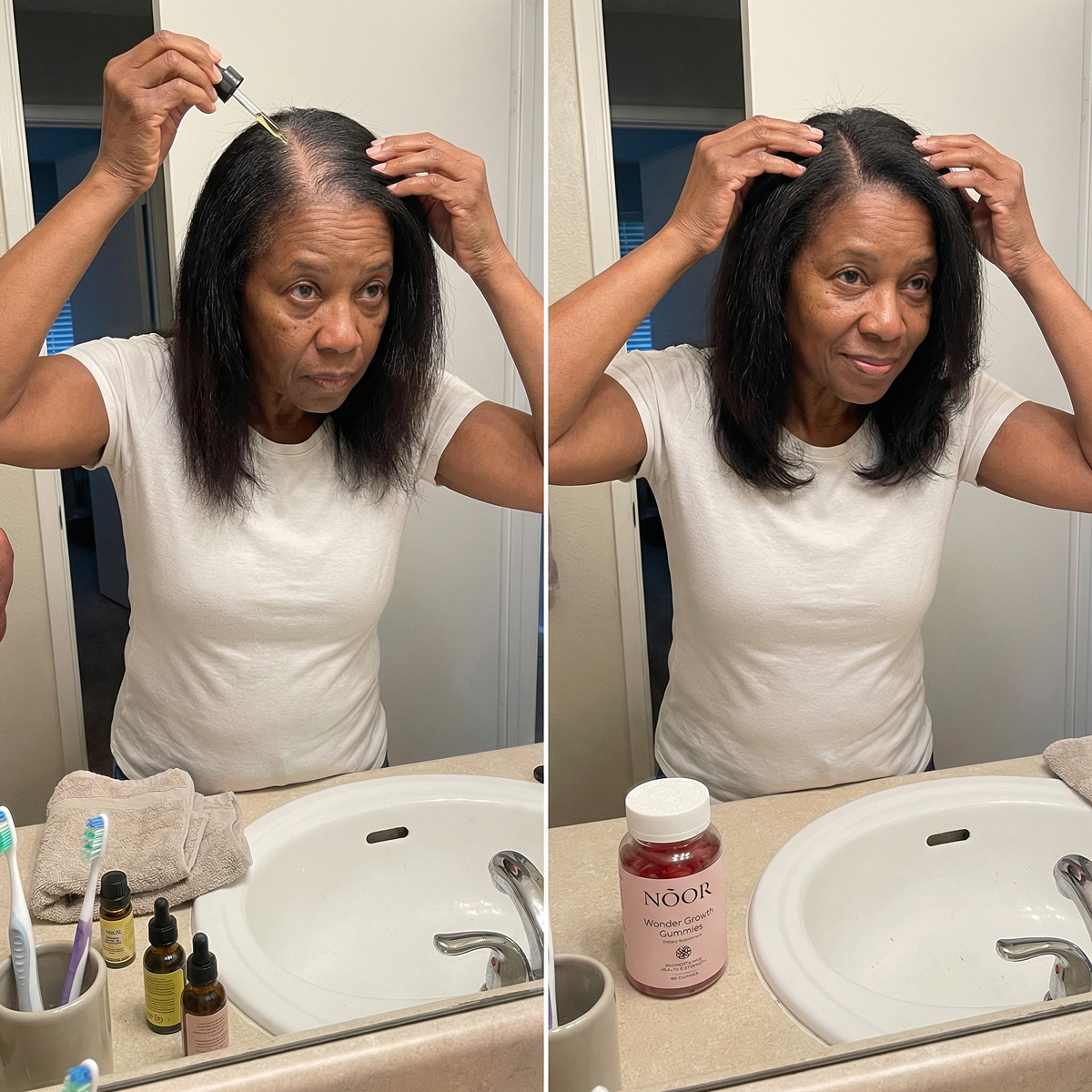
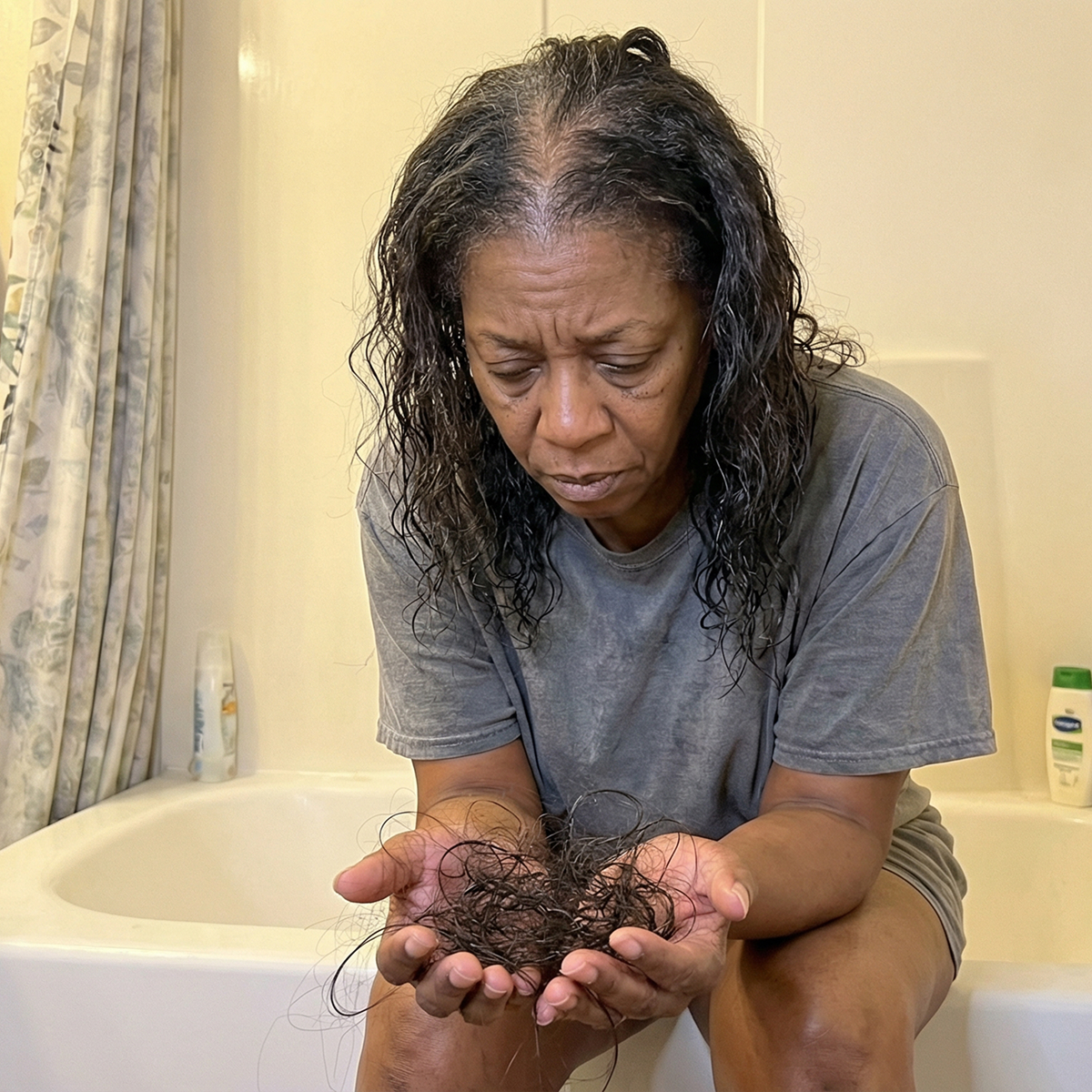
Menopause widened my part line. I watched it happen. Year by year. Photo by photo. And every doctor, every article, every well-meaning friend said the same thing: "It's hormonal. It's permanent. Accept it." I accepted it for four years. Then I found out they were wrong. About the permanent part. ======== I'm 65 years old. I live outside Philadelphia, Pennsylvania. Suburb called Bryn Mawr. I was a registered dietitian for 30 years. Hospital-based. Spent my career understanding how the body uses nutrients. So when menopause came and my hair started going with it, I didn't panic. Not at first. I understood the biology. Estrogen drops. Androgen ratios shift. Follicles miniaturize. Hair thins. Textbook. I'd read the studies. I knew what was happening. Understanding it didn't make it easier to watch. But at least I knew why. Or thought I did. ======== My part started widening at 61. One year after my last period. Right on schedule. I noticed it the way you notice things you're scientifically prepared for but emotionally unprepared for. I was styling my hair one morning. Parted it where I always part it. Left side. Same spot for forty years. And the part looked... open. Not just a line. A gap. I could see scalp through it. Not a peek. A view. I leaned into the mirror. Tilted my head under the bathroom light. White scalp. Pink in some spots. Clearly visible through the hair on either side of the line. I stood up straight. "Well," I said to my reflection. "There it is." Menopause had come for my hair. I'd been expecting it. I'd read every study. Knowing it was coming didn't soften the arrival. ======== I did what a dietitian does. I researched. Not Google-level research. PubMed research. Clinical studies. Review papers. I spent three weeks reading everything published on post-menopausal hair loss. And the consensus was clear: Estrogen decline after menopause leads to a relative increase in androgens. Androgens cause follicular miniaturization. Miniaturized follicles produce thinner, shorter, weaker hair. The part line widens because the follicles along the part — the most exposed — miniaturize first. Result: visible scalp along the part. Widening over time. Treatment options: Minoxidil (topical). Spironolactone (anti-androgen). Hormone replacement therapy. None guaranteed. All with side effects. Some significant. I sat at my desk with thirty research papers and thought: This is it. This is the hormonal hand I've been dealt. ======== I tried the medical options. Minoxidil first. Topical. Applied twice daily. Month one: Initial shedding. Terrifying. My part widened faster in one month than it had in the previous year. "Initial shed. Normal. Stick with it." I stuck with it. Three months. The initial shed never recovered. My part was wider. My scalp was more visible. I stopped at month four. Spironolactone next. Oral. Anti-androgen. My blood pressure dropped. I felt dizzy. Light-headed. "Some women adjust after a few weeks." I adjusted by nearly fainting in a grocery store. Stopped after six weeks. HRT was a conversation with my gynecologist. "The risks at your age, with your family history... I'd recommend caution." Caution meant no. I was 62 years old. No Minoxidil. No Spironolactone. No HRT. And a part that was wider every month. ======== Here's what a dietitian does when medicine doesn't work. She turns to nutrition. I knew the studies. Biotin supports keratin production. Zinc supports follicle cycling. Vitamin D is linked to follicle health. So I supplemented. Precisely. Clinically. Not randomly. Not from a grocery store shelf. I calculated doses based on research. Chose forms with highest bioavailability. Biotin: 5,000mcg daily. Zinc: 30mg daily. Vitamin D: 4,000 IU daily. Iron: 25mg (my ferritin was low-normal). Collagen peptides: 10g daily. I tracked everything. Daily intake. Weekly photos. Monthly measurements. If anyone was going to make nutritional supplementation work for post-menopausal hair loss, it should have been a registered dietitian with thirty years of clinical nutrition experience. It should have been me. ======== Six months of precise supplementation. Clinically dosed. Perfectly tracked. Zero missed days. Part: Still widening. Same rate. Same trajectory. As if I wasn't taking anything at all. I looked at my data. Six months. Five supplements. Clinical doses. Zero impact on the trend line. This didn't make sense. As a dietitian, I knew the nutrients were correct. The doses were adequate. My compliance was perfect. The inputs were right. But the output wasn't changing. Which meant the problem wasn't the nutrients. It was something between the nutrients and the follicles. Something I wasn't addressing. ======== I doubled down on research. Year two of the widening part. Year one of failed supplementation. I went back to the studies. But this time, I wasn't reading about hair loss. I was reading about nutrient delivery. How do nutrients travel from the bloodstream to hair follicles? And what changes about that process after menopause? What I found over the next three months changed everything I thought I knew. ======== Here's what thirty years as a dietitian didn't teach me: I knew how nutrients are absorbed. I knew how they're metabolized. I knew recommended intakes and optimal forms. But I'd never deeply studied the LAST MILE of delivery. How nutrients move from the bloodstream to the specific tissue — in this case, hair follicles. And that last mile is where everything breaks down after menopause. Three layers. Three breakdowns. All happening simultaneously. ======== Layer 1 breakdown: Iodine and the master switch. Iodine is essential for thyroid function. The thyroid is the body's master switch for metabolism — including how nutrients get distributed throughout the body. After menopause, dietary iodine intake often declines. The thyroid slows. Not enough to trigger a clinical hypothyroid diagnosis. Not enough to show up as "abnormal" on standard bloodwork. But enough to slow the distribution system. Nutrients enter the blood. But they don't get routed efficiently to peripheral tissues. Like hair follicles. This was the piece I'd missed. My thyroid labs were "normal." But "normal" on a standard TSH panel doesn't measure iodine sufficiency. It doesn't measure actual distribution efficiency. The master switch was dimming. And I'd never checked. ======== Layer 2 breakdown: B12, folate, and the delivery trucks. Red blood cells are the physical vehicles that carry oxygen and nutrients through capillaries to hair follicles. Red blood cell production depends on B12 and folate. After age 60, B12 absorption from food decreases by up to 30%. Folate status often declines alongside it. Fewer functional red blood cells means fewer delivery trucks. My B12 blood levels were "normal." But blood levels measure circulating B12 — not how efficiently it's being used to produce red blood cells. Not delivery function. The trucks were disappearing. And the standard blood tests I'd had weren't designed to catch it. ======== Layer 3: The raw materials I was already taking. Biotin. Zinc. Vitamin D. Collagen. All correct. All clinically dosed. All floating in my bloodstream. With a dimming master switch and a depleted truck fleet. Never arriving at my follicles. I'm a dietitian. I'd spent thirty years focused on what to put INTO the body. I'd never focused on whether the body could DELIVER it to where it's needed. Because in a young, healthy person, delivery works automatically. But after menopause, it doesn't. The distribution slows. The trucks thin out. And all the perfectly dosed supplements in the world sit in the bloodstream going nowhere. That's why six months of clinical supplementation didn't change my part by a single millimeter. The nutrients were perfect. The delivery was broken. ======== This reframed everything I thought I knew about menopause and hair loss. The conventional understanding: Menopause → hormonal shift → follicle miniaturization → permanent thinning. What I now understood: Menopause → hormonal shift AND delivery system breakdown → follicle starvation → thinning that APPEARS permanent but may be reversible. The hormonal shift is real. Androgens do affect follicles. But the delivery breakdown is equally real. And it's the piece nobody talks about. Because here's the critical insight: If follicles were only miniaturized by hormones, nutritional supplementation would do nothing. Which is what most doctors believe. But if follicles are also STARVING because the delivery system is broken... Then rebuilding the delivery system could reawaken them. Not by changing hormones. By feeding what hormonal change starved. The part line isn't permanent damage. It's dormant follicles along the most vulnerable area of the scalp. Dormant because they're starving. Not because they're dead. ======== I spent a month verifying this framework. Post-menopausal iodine decline and thyroid-mediated distribution. Documented. Age-related B12 malabsorption and red blood cell production decline. Documented. Follicular dormancy versus permanent miniaturization. Well-documented that many follicles retain viability for years. Nutrient delivery via capillary blood supply to follicles. The primary mechanism. The science was there. And as a dietitian, I was embarrassed I'd missed it. I'd been supplementing Layer 3 — raw materials — for six months. While Layers 1 and 2 were broken. No distribution. No trucks. Just cargo sitting in a warehouse. I knew the nutrients. I didn't know the logistics. ======== Then I found Noor Wonder Growth Gummies. And for the first time, I saw a product that matched the three-layer framework I'd been building in my research. Not just nutrients. A system. Layer 1 — The Master Switch: Iodine from marine sources. Supports thyroid function. Restores the metabolic distribution system that dimmed after menopause. The layer I'd never supplemented. Layer 2 — The Delivery Trucks: B12 + Folate at clinically relevant doses. Supports red blood cell production. Rebuilds the physical vehicles that carry oxygen and nutrients to follicles through capillaries. Layer 3 — The Raw Materials: Biotin + Zinc + Vitamin D. The same nutrients I'd been taking — but now with a distribution system to route them and trucks to deliver them. All three layers. In order. This is what I should have been doing from the beginning. Not just supplementing nutrients. Rebuilding the delivery infrastructure those nutrients depend on. $39.95 a month. 180-day money-back guarantee. After six months of clinical supplementation that cost me over $120 a month... $40 for a product that addressed the layers I'd been missing? As a dietitian, the logic was inescapable. I ordered it immediately. And I threw out five bottles of individual supplements. ======== Two gummies every morning. Instead of five separate supplements totaling nine pills and one powder. Two gummies. And I tracked it with the same rigor I'd tracked everything else. Weekly photos. Monthly measurements. Clinical eye. ✅ Week 2: Shedding reduced. Brush lighter. The first measurable change in over a year of supplementation. ✅ Week 3: Drain cleaner. Noticeably. The trend that had been constant for three years — consistent shedding — was breaking. ✅ Week 4: Overhead photo. Part width: stable. First stable measurement in over two years. The widening had stopped. ✅ Week 6: Part narrower. Measured four times. Different lighting. Same result. Narrower. As a dietitian, I understood what this meant. The delivery system was coming back online. The master switch was brightening. The trucks were running. And nutrients were reaching follicles for the first time in years. ✅ Week 8: Baby hairs along the part line. I examined them under magnification. New anagen growth. Active. Emerging from follicles that had been dormant. Not miniaturized. Not dead. Dormant. And now waking up. Because they were finally being fed. ✅ Week 10: More growth along the part. Hair thickening on both sides of the line. The gap closing. ✅ Week 12: My hairdresser — who'd been gently managing my thinning for three years — parted my hair and went quiet. "Virginia, there's new growth everywhere along your part." "I know." "This is significant. What are you taking?" "Something that addresses the delivery system. Not just the nutrients." She looked confused. So I explained it the way a dietitian would. "Think of it like feeding a patient through an IV. You can have the perfect nutrition formula. But if the IV line is kinked, nothing reaches the patient. After menopause, the IV line kinks. Iodine drops, thyroid slows, distribution fails. B12 declines, red blood cells drop, the trucks disappear. The nutrients I was taking were the perfect formula. But the line was kinked. This unkinks it." She understood immediately. "So the nutrients you were taking before—" "Were the right formula through a kinked line. Now the line is open." ✅ Month 4: Part approaching its pre-menopausal width. Baby hairs maturing into real, visible hair along the line. ✅ Month 5: I could part my hair and not see scalp. I'll say that again. I could part my hair. And not see scalp. After four years. ✅ Month 6: My part looked the way it looked before menopause started widening it. Not because the hormones reversed. Because the delivery system was rebuilt. And the dormant follicles — the ones menopause supposedly killed — woke up. Because they were never dead. They were starving. And now they're fed. ======== I need to tell you the part that matters most. Not as a woman with thicker hair. As a dietitian. For thirty years, I told patients what to eat. What to supplement. What nutrients their bodies needed. And I was right. The nutrients matter. But I was incomplete. Because nutrients without delivery is like food without digestion. It exists. It's present. It's correct. But it's not being used. After menopause, the delivery changes. The nutrients don't change. The delivery does. And every supplement on the market — including the five I was taking — addresses only the nutrients. Not the delivery. That's why a dietitian with thirty years of clinical nutrition experience couldn't stop her own part from widening. Because the problem wasn't nutrition. It was logistics. And Noor is the first product I've found that addresses the logistics. Layer 1. Layer 2. Then Layer 3. In that order. The order matters. ======== I went to my gynecologist last month. Dr. Torres. The one who told me HRT was too risky for my profile. She looked at my hair. "Your hair looks fuller." "It is." "Did you start HRT elsewhere?" "No. No hormones." "Then what?" "I addressed the nutrient delivery system. Iodine for thyroid-mediated distribution. B12 and folate for red blood cell production. Then biotin, zinc, and Vitamin D as building materials." She paused. "So you're saying the thinning wasn't purely hormonal?" "The trigger was hormonal. Menopause started it. But the ongoing thinning was a delivery problem. The follicles weren't destroyed by hormones. They were starving because the delivery system broke down at the same time." "And rebuilding the delivery system—" "Fed the dormant follicles. And they woke up." She was quiet. "I've been telling patients this is permanent." "I know. I believed you." "But it wasn't permanent?" "The hormonal shift is permanent. The follicle starvation isn't. Not if you address the delivery." She asked me to send her everything. The studies. The framework. The product. Because she has patients right now. Menopausal women. Widening parts. Being told it's permanent. Being told to accept it. The way I was told. And accepted. For four years. ======== I can map my menopause timeline by my part line. 2019: Barely visible. Pre-menopause. Full coverage. 2020: Last period. Estrogen declining. 2021: Noticeable widening. First year post-menopause. 2022: Clearly visible scalp. Started supplements. 2023: Supplements failing. Part at its widest. 2024: Found Noor. Started the three-layer system. 2025: Part closed. Baby hairs mature. Hair full. Six years of timeline. The first four years: widening. The last year: reversing. Not because hormones changed. Because delivery was restored. ======== If menopause widened your part... If you watched it happen year by year... If doctors told you it's hormonal, it's permanent, accept it... They were half right. The trigger is hormonal. Menopause starts it. But the ongoing starvation is a delivery problem. Your follicles aren't destroyed by hormones. They're starving because the delivery system broke down at the same time. Iodine dropped. The master switch dimmed. Distribution slowed. B12 absorption declined. Red blood cells dropped. The trucks disappeared. The raw materials — biotin, zinc, Vitamin D — floated in your blood. Never arriving. Your follicles went dormant. Not dead. And your part widened. Not permanently. Rebuild the delivery. Feed the dormant follicles. They can wake up. Even after four years. Even after you've been told it's permanent. Dormant isn't permanent. Starving isn't dead. ======== 👉 Click "LEARN MORE" below to see Noor's Wonder Growth Gummies 💝 180-Day Money-Back Guarantee 🌿 Clinical Doses — Iodine + B12 + Folate + Biotin + Zinc + Vitamin D 📍 Made in USA, FDA-Registered Facility ⭐ Trusted by thousands of women over 60 Because here's what a dietitian learned after thirty years: Nutrients are only half the equation. Delivery is the other half. After menopause, the delivery breaks. Fix the delivery. The nutrients arrive. The follicles wake up. The part narrows. Menopause started the story. It doesn't have to write the ending.
Your part line isn't permanent. Here's why
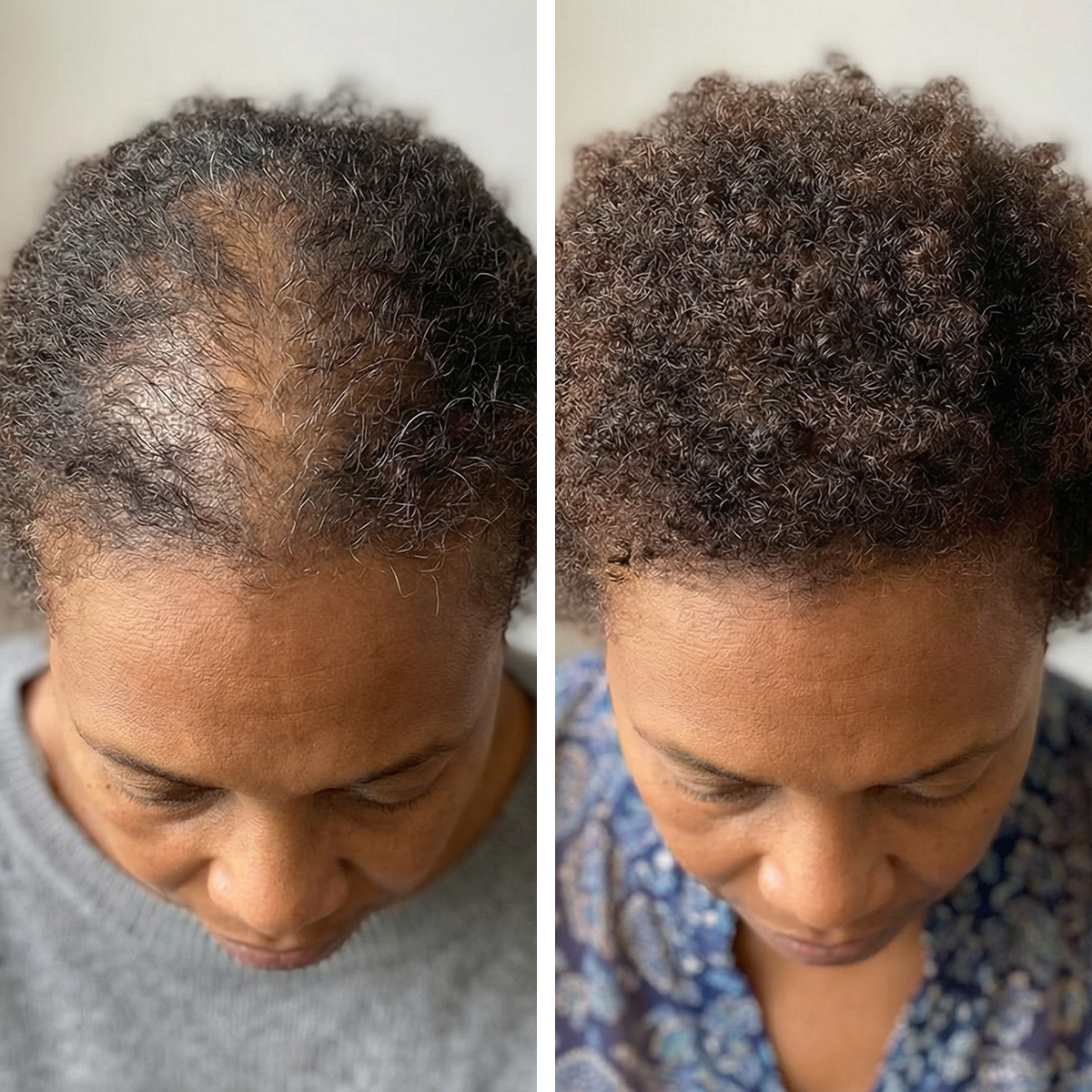
How this red sea moss remedy can help any sister over 40 transform their bald spots, crown, and edges in just 6 weeks (even after years of chemicals and heat damage)
LEARN MORELike this ad? Make it yours.
Crush rebuilds this exact creative around your product — your brand, your colors, your offer — in about a minute.